Niah Caves
Niah Caves, Malaysia
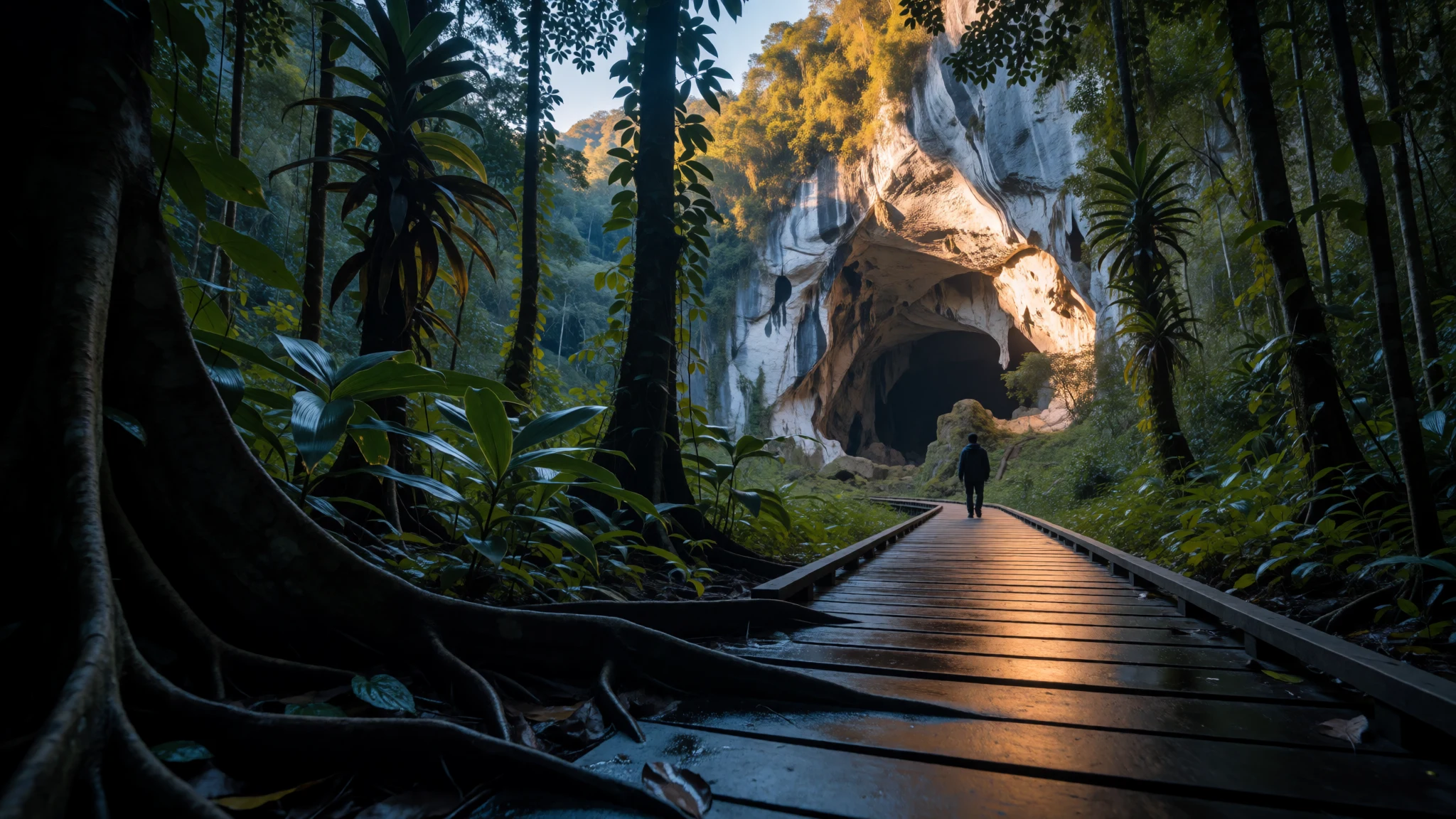
Niah Caves is a vast limestone cavern in Sarawak's rainforest, where people sheltered for a very long time and rare cave paintings survive.
The place
Niah Caves sit inside Niah National Park, in the Miri Division of Sarawak, on the Malaysian side of Borneo. The caves open on the northern flank of Gunung Subis, a limestone hill that rises out of low rainforest, about 15 km inland from the South China Sea. The best-known entrance is the west mouth of the Great Cave. It lies around 50 m above sea level and measures about 150 m across and 75 m high, so large that first-time visitors often stop talking when they reach it.
The approach is part of the experience. A raised boardwalk crosses damp forest, passing roots, ferns, bracts of wild ginger and the grey walls of the hill itself. The air is humid and smells of earth, and the temperature drops noticeably as the cave mouth nears. Inside, the floor is uneven, the light fades quickly and the ceiling disappears into darkness. Bats and swiftlets live here in great numbers, and their droppings coat parts of the floor.
The park was founded in 1974 and the site is also tied to a UNESCO listing. It is an archaeological site as much as a natural one, which is why paths are fixed and some areas are fenced. Sarawak is thinly visited compared with the peninsula, so the caves are rarely crowded, though school groups and weekend visitors can fill the boardwalk. Expect heat, sweat, slippery planks and a lot of walking in the dark.
Its story
Niah Caves entered the written record through the Victorian naturalist's network in Borneo. Alfred Russel Wallace was staying with a mining engineer, Robert Coulson, who had travelled through northern Sarawak looking for ore and had noticed bones in several caves. Wallace's curiosity was caught, and in 1864 plans were made for a proper survey. The job passed through a few hands before Alfred Hart Everett took it on, eventually surveying 32 caves in three areas, among them the Niah and Subis district near Miri. Later research showed that the first published account of the Subis caves was actually written by William Maunder Crocker, not Everett as long believed.
The modern story begins in the 1950s with Tom Harrisson, curator of the Sarawak State Museum, who was hunting for traces of ancient people in the region. His first look at Niah turned up little obvious evidence. But he reasoned that a cave that was cool, dry and full of bats and swiftlets offered a ready supply of food, and that early people would have found it very attractive. That reasoning led to long excavations, and the cave has since become one of the key places for understanding early human life in Southeast Asia.
The wider Sarawak background is colonial. In 1841 James Brooke became Rajah of Sarawak, and his family ruled until the Japanese invasion of the Pacific War, after which the territory passed to the British crown.
What to see
- The Great Cave — Niah National Park, Gunung Subis
The main chamber is why most people come. The west mouth is huge, and the interior opens into a hall where light fades slowly and the ceiling is lost in shadow. Bring a head torch, watch the slippery floor, and give yourself time for your eyes to adjust.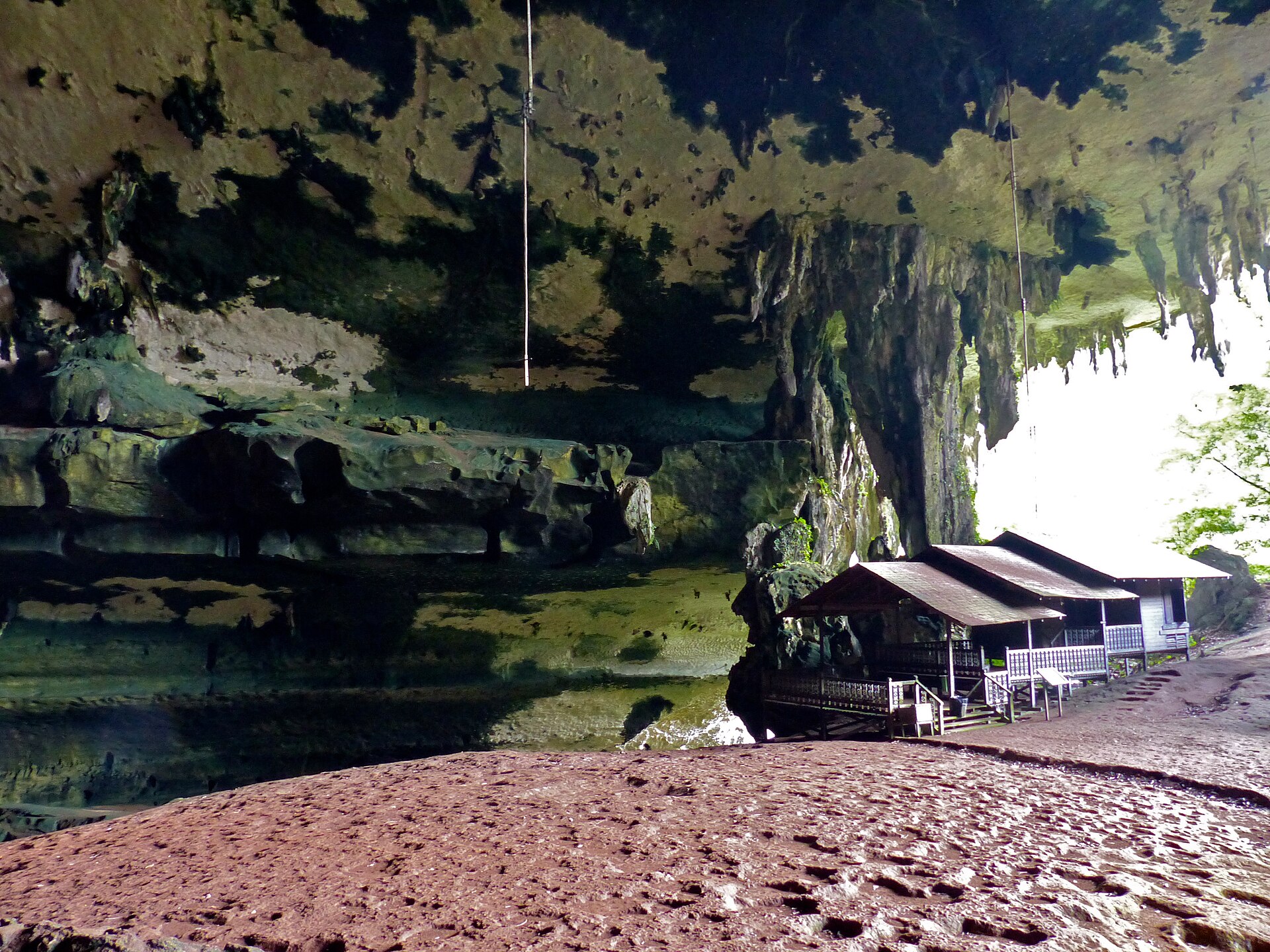
- The Painted Cave (Kain Hitam) — Beyond the Great Cave, Niah National Park
A small cave with great archaeological weight. Faded red figures survive on its walls, and nearby wooden death-boats were once placed here. It is a short walk beyond the main cave, usually viewed from behind a barrier, and the paintings are subtle, so go with realistic expectations.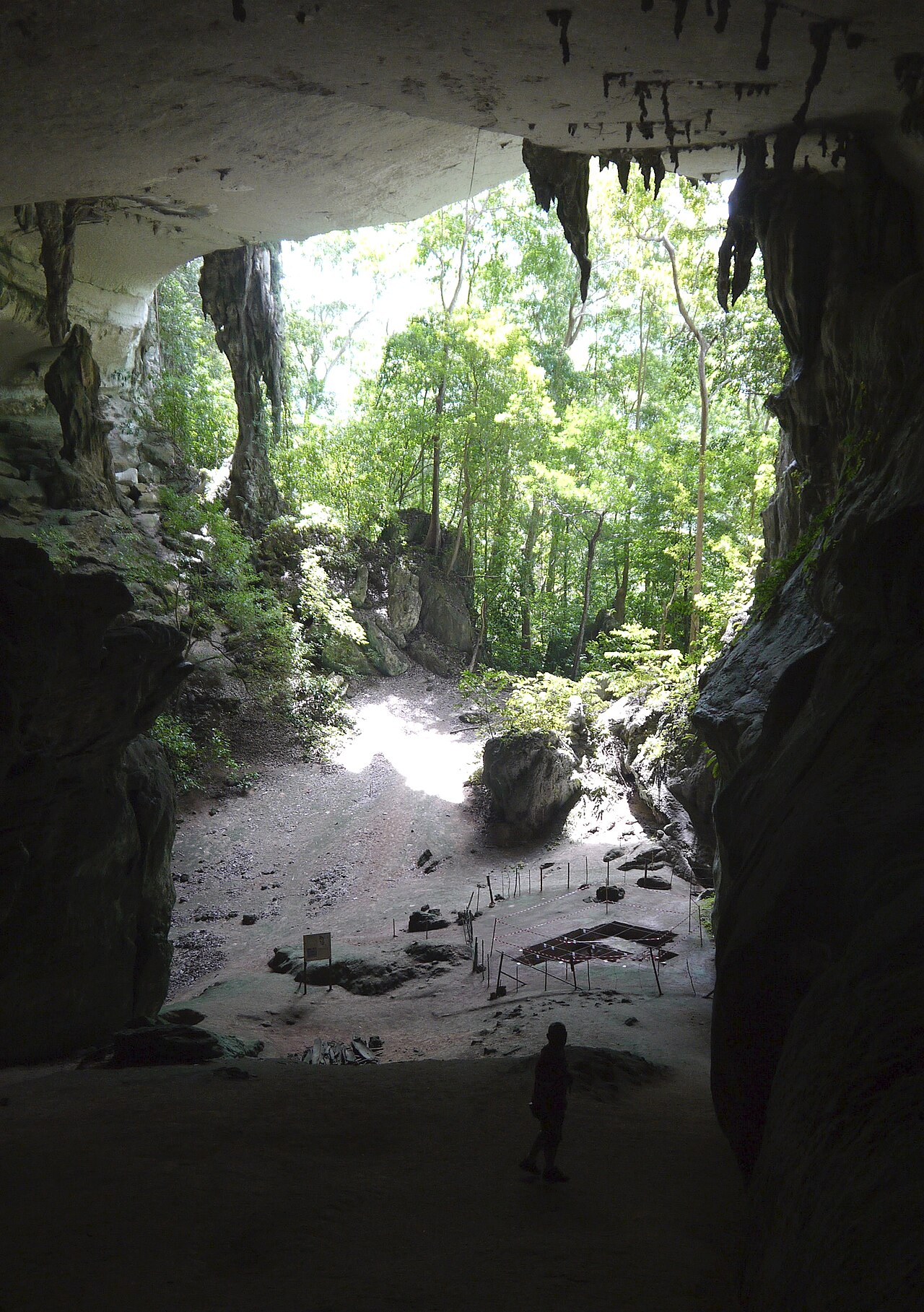
- Traders' Cave — Along the entrance boardwalk
This cave sits near the start of the boardwalk and is named for the traders who once gathered here to deal in cave products. It is an easy first stop that gives a sense of scale, and it is often quieter than the main chamber.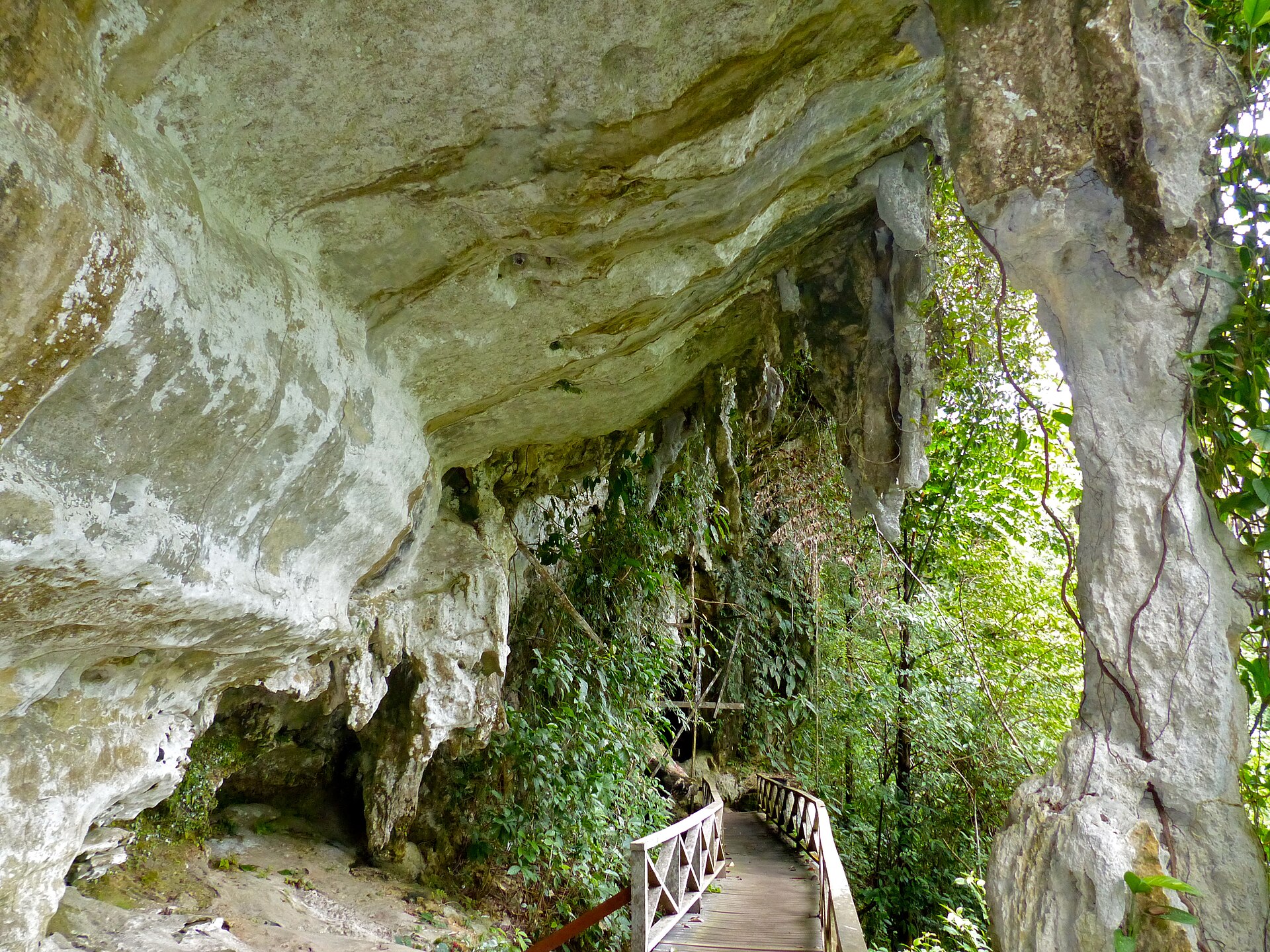
- The forest boardwalk — Between park headquarters and the caves
The walk in is a sight in itself. Planks run through dense forest growing on broken limestone, with buttress roots, orchids, insects and birdsong. It is easiest early in the day, before heat and humidity build, and it rewards slow walking more than hurrying.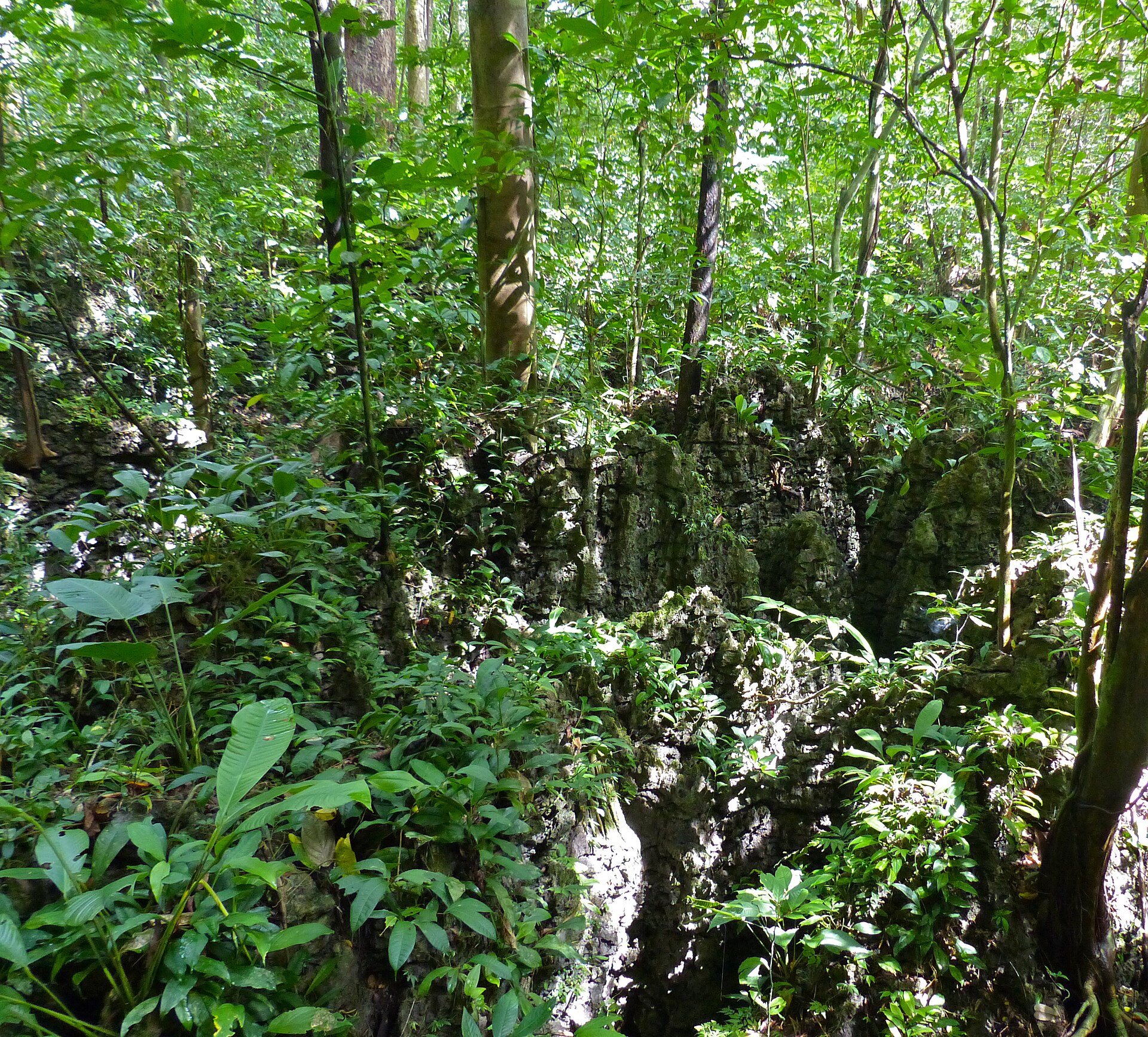
- Dusk at the cave mouth — West mouth of the Great Cave
Towards evening, the bats and swiftlets begin their daily changeover at the cave entrance, a long stream of wings against the sky. Check the park's current rules on late visits and guided access before planning this, since access can change.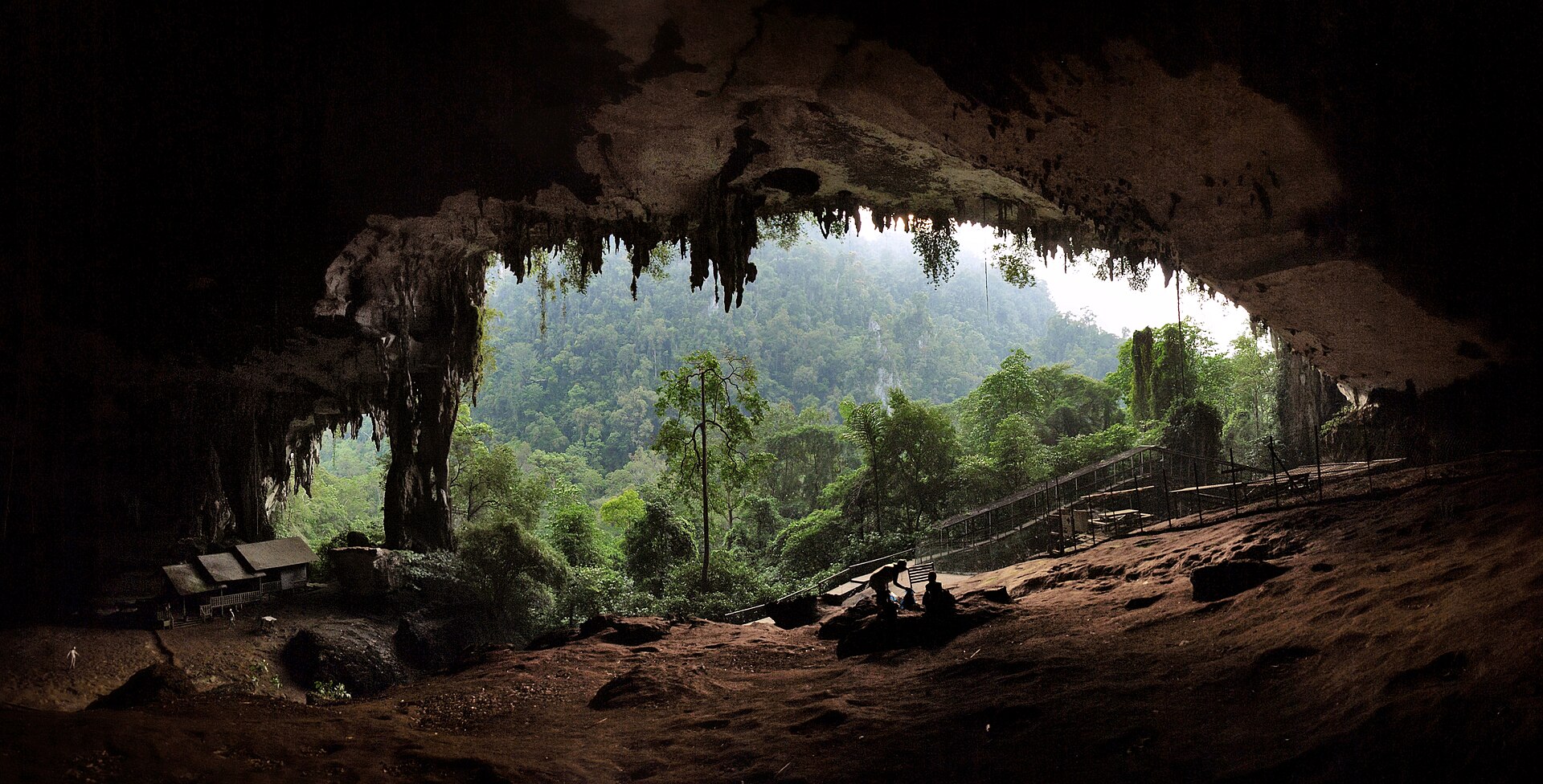
Culture
Niah Caves belong to a state whose cultural life is shaped by the Iban, Bidayuh, Melanau and many other communities, and also by a long colonial and trading past. Around the caves, the human story is much older than any of them. Archaeologists have used the site to understand how early people lived by the forest, hunted, gathered and buried their dead, and the park is protected partly for that reason.
Local people have long gathered edible swiftlet nests from the cave walls and collected bat guano, and traders came to buy both. That economy still exists in places, with nest collectors working under licence and passing along ladders and poles that look improbable from the ground. Seeing it is a reminder that the caves are a workplace as well as an attraction.
Beyond the park, longhouses remain central to rural life in Sarawak. Visits are usually arranged through guides or local operators, and hospitality can include rice wine called tuak. Sarawak also keeps its own immigration rules, even for Malaysians from elsewhere in the country, which is a small sign of how distinct the state sees itself.
In the caves, stay on the marked boardwalk and paths, do not touch the painted walls or the old burial sites, and keep your voice low so you do not disturb the bats and the people who work there.
What to wear
Niah Caves lie in Sarawak, where traditional dress varies by community. Iban women have historically worn woven cloth such as the pua kumbu, a ceremonial textile with dyed patterns, along with silver ornaments and beaded jewellery for festivals. Men's ceremonial dress can include feather headdresses and woven jackets. Melanau, Bidayuh and Orang Ulu groups each have their own beadwork and patterns, usually worn at weddings, harvest festivals and cultural events rather than every day.
Everyday clothing around Miri and the park is simple and practical. People wear cotton T-shirts, light trousers or skirts, sandals and caps. Many Malay Muslim women wear a tudung headscarf with a loose blouse, and clothing in towns is generally modest rather than strict. Rubber boots are common among workers and guides.
For a visit, dress for heat, wet and rough ground. Light, quick-drying long trousers and a breathable shirt protect from insects, scratches and the sun. Closed shoes with good grip matter more than anything else, because the boardwalk is slippery after rain and the cave floor is uneven and sometimes coated with droppings. A cap or hat helps outside, a thin rain jacket is useful, and a head torch with spare batteries is essential. Shoulders and knees do not need covering inside the caves, but modest clothing is sensible in villages and longhouses.
What to eat
- Sarawak laksa — Morning coffee shops in Miri
A fragrant noodle soup with a spiced paste base, prawns, shredded chicken and egg. It is a breakfast staple across the state and tastes different in every kitchen. Order it in the morning at a coffee shop in Miri. - Kolo mee — Noodle stalls and kopitiam in Miri
Springy egg noodles tossed in a light dressing, usually with minced pork or chicken and slices of meat. It is quick, filling and good before a day of walking. Look for it in simple noodle stalls. - Midin — Local rice-and-dish eateries in Miri
A wild jungle fern, stir-fried with garlic or belacan so it stays crisp and slightly sweet. It is a seasonal local vegetable and a good side to rice and fish dishes. - Manok pansoh — Longhouses and Dayak restaurants
Chicken cooked inside a length of bamboo with lemongrass, ginger and tapioca leaves, a traditional Iban way of cooking. The bamboo keeps the meat moist and scented. It is best eaten on a longhouse visit. - Tuak — Longhouses and supermarkets
A homemade rice wine, lightly sweet and often cloudy, which is offered generously at longhouses and festivals. Strength varies a lot, so take it slowly. Commercial bottled versions are easier on the stomach.
Plan it
Best time. March to August is generally the easier stretch, with fewer heavy downpours, although Sarawak is equatorial and rain can come at any time. The wetter months towards the end of the year make the boardwalk slick and the cave floor muddier. Check the current forecast before you go.
How long. 1–2
Getting there. Fly to Miri airport (MYY), which has connections from Kuala Lumpur, Kota Kinabalu and Singapore. From there, go by road to Niah National Park, then walk the boardwalk to the caves. Check the official park site for current access, transport and any permits.
Budget. mid
Tips
- Start early, before the heat and humidity build and before school groups arrive
- Bring a head torch with spare batteries, as the cave interior is very dark
- Carry water and some cash, because facilities near the park are limited
- Wear closed shoes with grip and check the boardwalk condition after rain
- Check the official park site for opening arrangements and any booking requirements
Etiquette
- Stay on marked paths and do not touch painted walls or archaeological areas
- Keep noise low so you do not disturb the bats and swiftlets
- Ask permission before photographing nest collectors, guides or people in longhouses
Nearby
Sources
- Wikidata Q1984562 (CC0)
- Wikipedia: Niah National Park (rev 1382733910) (CC BY-SA 4.0)
- Wikivoyage: Sarawak (rev 5314426) (CC BY-SA 4.0)
- Photo 01, The main entrance to the Niah Caves at sunset (Starlightchild) (CC BY 3.0)
- Photo 02, Gua Niah Painted Cave archaeological site (Azreey) (CC BY 3.0)
- Photo 03, Niah Cave skull (Ryan Somma) (CC BY-SA 2.0)
- Photo 04, Cane Reed bracts (Bernard DUPONT) (CC BY-SA 2.0)
- Photo 05, Entrance of Traders' Cave (Bernard DUPONT) (CC BY-SA 2.0)
- Photo 06, Forest on limestone formations (Bernard DUPONT) (CC BY-SA 2.0)
- Photo 07, The Great Cave (Bernard DUPONT) (CC BY-SA 2.0)
- Photo 08, Niah Cave (Clayborneoguy) (CC BY-SA 4.0)


