Nha Trang
Nha Trang, Vietnam
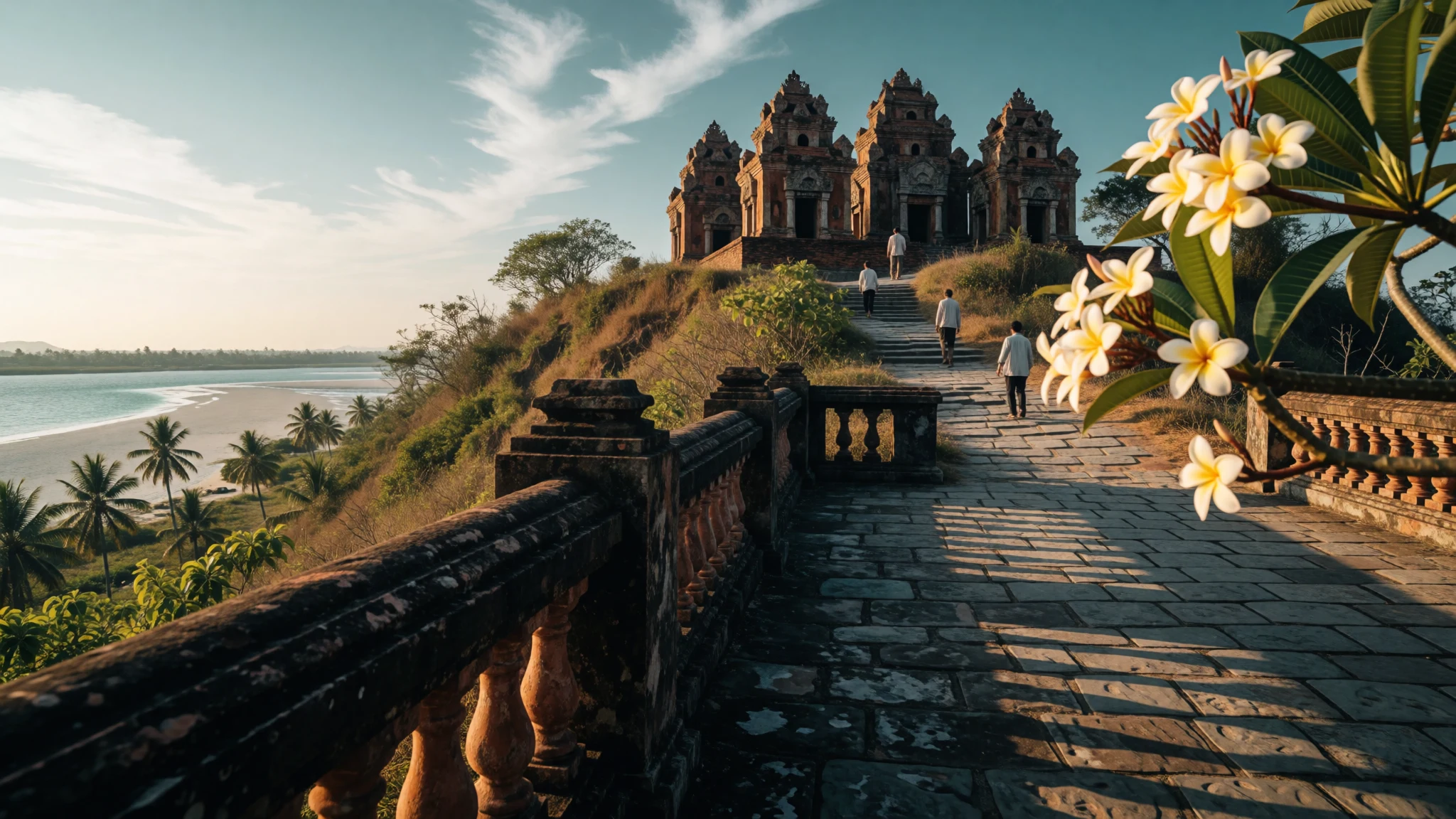
Nha Trang pairs a long city beach and reef diving with ancient Cham brick towers and a lively street-food scene.
The place
Nha Trang is a coastal city on the South Central Coast of Vietnam and the capital of Khánh Hòa Province. It is a working port as much as a resort: fishing boats go out from the river mouth, and a marine science institute studies the waters of the bay. Those waters are the main draw. Hon Mun, an island group offshore, is a marine protected area recognised by the IUCN, and diving and snorkelling trips leave from the harbour most mornings. Backpackers come for affordable dives and a lively night scene, Vietnamese families come for the long city beach, and cruise ships sometimes anchor in the bay and send passengers ashore for the day. The result is a seafront of high-rise hotels, beach clubs and tour desks, busy and a little brash, with the older town tucked behind it. Away from the front, the place feels more local. Hills carry a French-era cathedral and a large white Buddha, a brick Cham temple complex stands above the river mouth, and the side streets around the central market are full of small eateries. Heat is constant, so the sensible rhythm is sea and sights early, shade at midday and the promenade after sunset. Weekends and Vietnamese holidays fill the beach quickly. Local government has recently been reorganised, and Nha Trang no longer exists as a separate municipal city on paper, but the name remains in everyday use on signs, tickets and maps. Local notices are posted on the official site, http://nhatrang.khanhhoa.gov.vn/.
Its story
Nha Trang's story begins with the Cham, whose kingdom of Champa ruled this stretch of coast. The area was known as Kauthara, one of the Cham realms, and its religious centre stood where the brick towers of Po Nagar still rise above the river. Cham worship blended Hindu gods with older local belief. The goddess honoured here, Yan Pu Nagara in Cham and Po Nagar in Vietnamese, grew from a local mother-goddess who was merged with the Hindu goddess Bhagavati. That layering explains why a temple with Hindu-style towers is still visited by Vietnamese worshippers who burn incense to her. After Cham power faded, the coast was thinly settled. From the seventeenth century through much of the nineteenth, the area was largely empty, wild country where tigers still roamed, administered as a corner of a larger district rather than as a town. Change came fast under French rule. Early in the twentieth century the colonial government of Indochina declared Nha Trang an urban centre, and the street grid, the seafront and the hill cathedral date from that period. Alexandre Yersin, the Swiss-born scientist who worked here, tied the town to medical research, and the marine institute continues that thread. Fishing stayed at the base of local life throughout. Tourism came later, first with Vietnamese holidaymakers and then with foreign divers and backpackers. The brick towers, the cathedral and the beachfront are three layers of one town, each from a different era.
What to see
- Po Nagar Cham Towers — North of the centre, by the river mouth
Four brick towers stand on a hill above the river mouth, built by the Cham to honour the mother goddess of the kingdom. Incense still burns inside, and local worshippers come alongside visitors. Go early, before the tour buses and the worst of the heat, and allow time to look at the brickwork.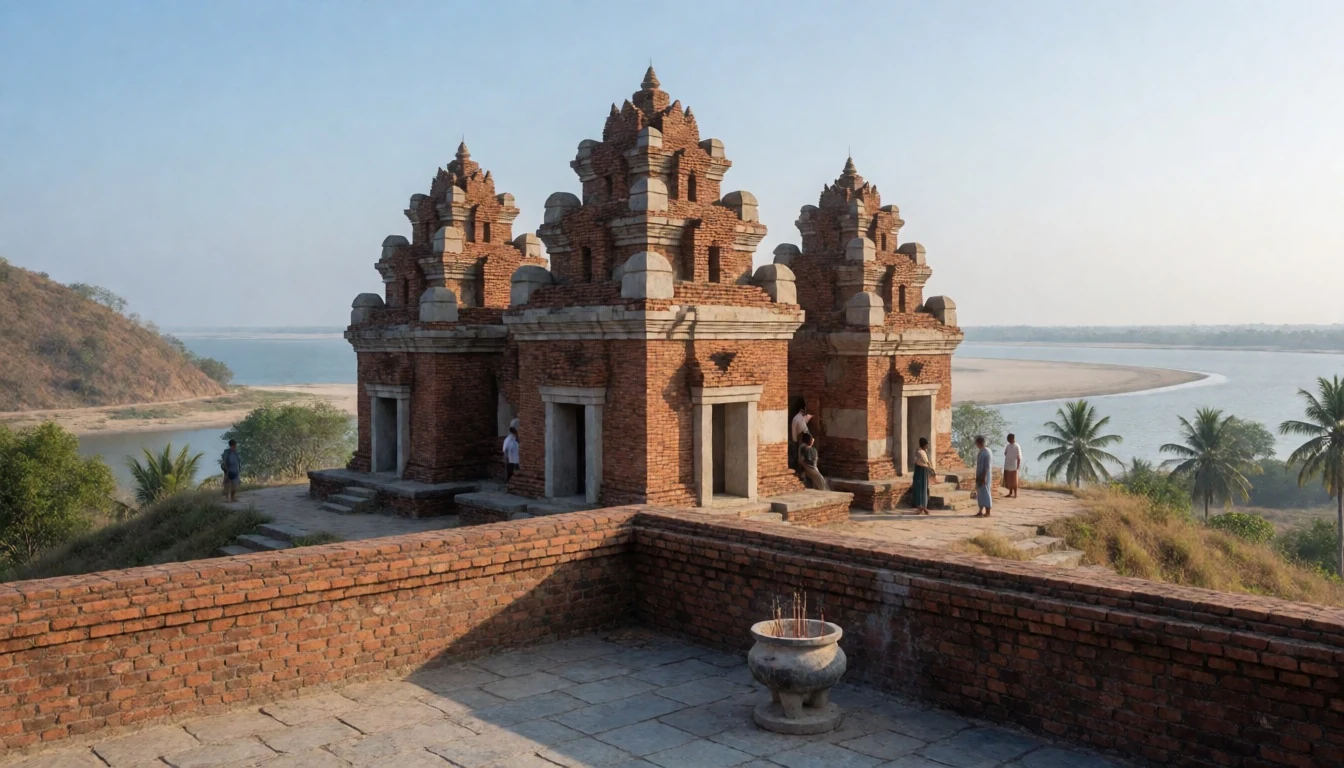
- Long Son Pagoda — West of the city centre
A working Buddhist pagoda on a hillside west of the centre, best known for a large white seated Buddha visible over the rooftops. The climb is by steps, with views across the city at the top. It was founded to remember monks and nuns who died in protest. Dress modestly.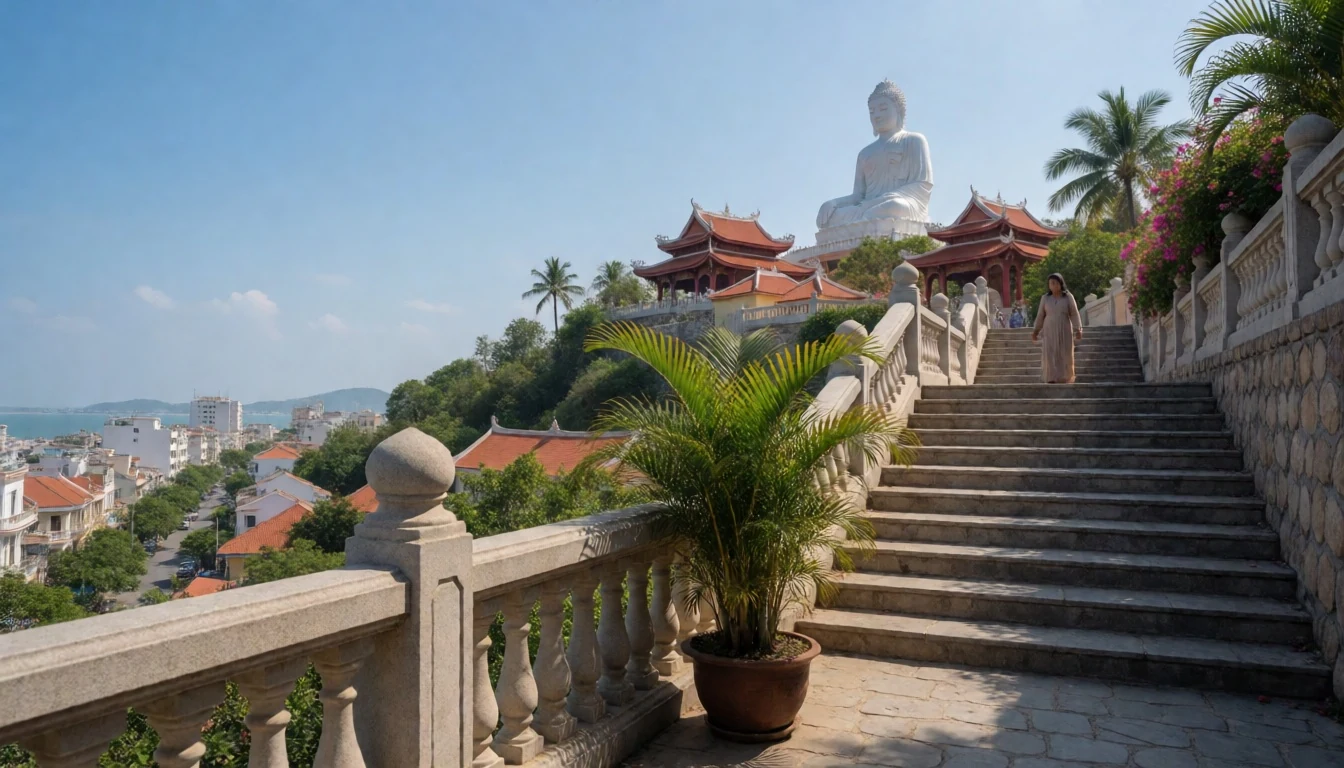
- Nha Tho Nui Cathedral — Central Nha Trang, on a hill near the station
A French-era Catholic cathedral on a small hill above the railway line, its grey stone a surprise among the palms. The Nha Trang area still has a sizeable Catholic community, and religious shops cluster around the base. Check for mass times before visiting, and keep voices low inside.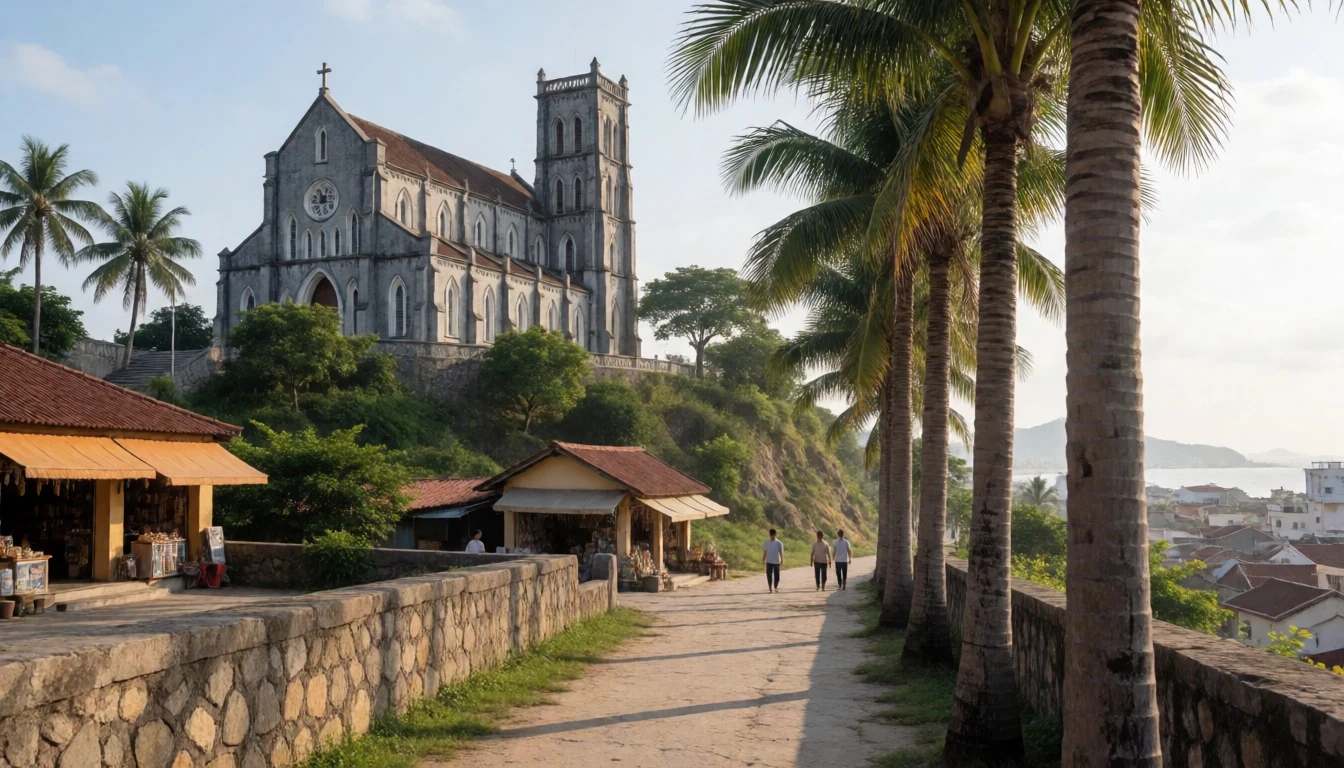
- Alexandre Yersin Museum — Central Nha Trang
A small scientific museum devoted to the Swiss-born doctor who made his home in Vietnam and studied infectious disease. Instruments, books and photographs show how he worked and what he cared about. It is quick, quiet and air-conditioned, a good break from midday heat. Check the opening hours locally.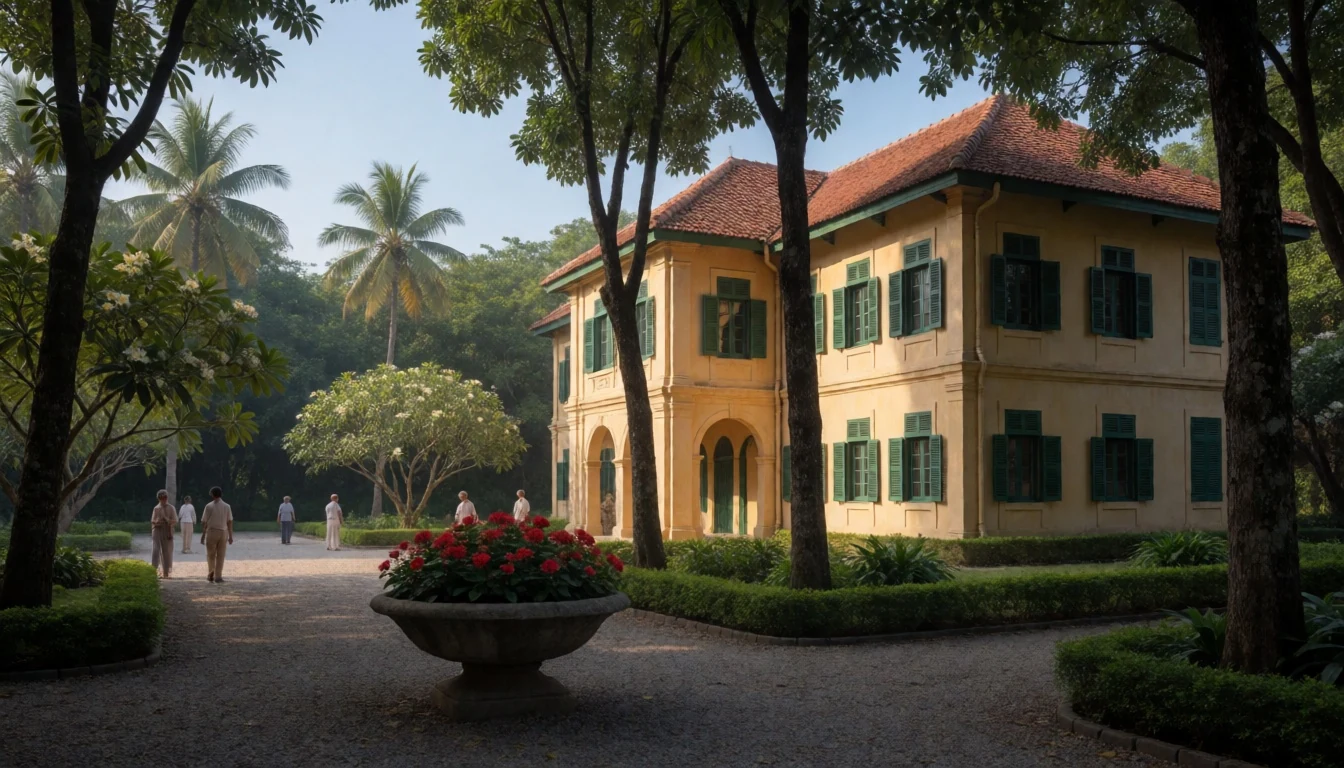
- Khánh Hòa Museum — Central Nha Trang
The provincial museum shows Cham statues and the everyday objects of the ethnic minorities of the Nha Trang area. It makes a useful companion to the Po Nagar towers, since many sculptures here came from Cham sites. Expect modest displays and little crowding.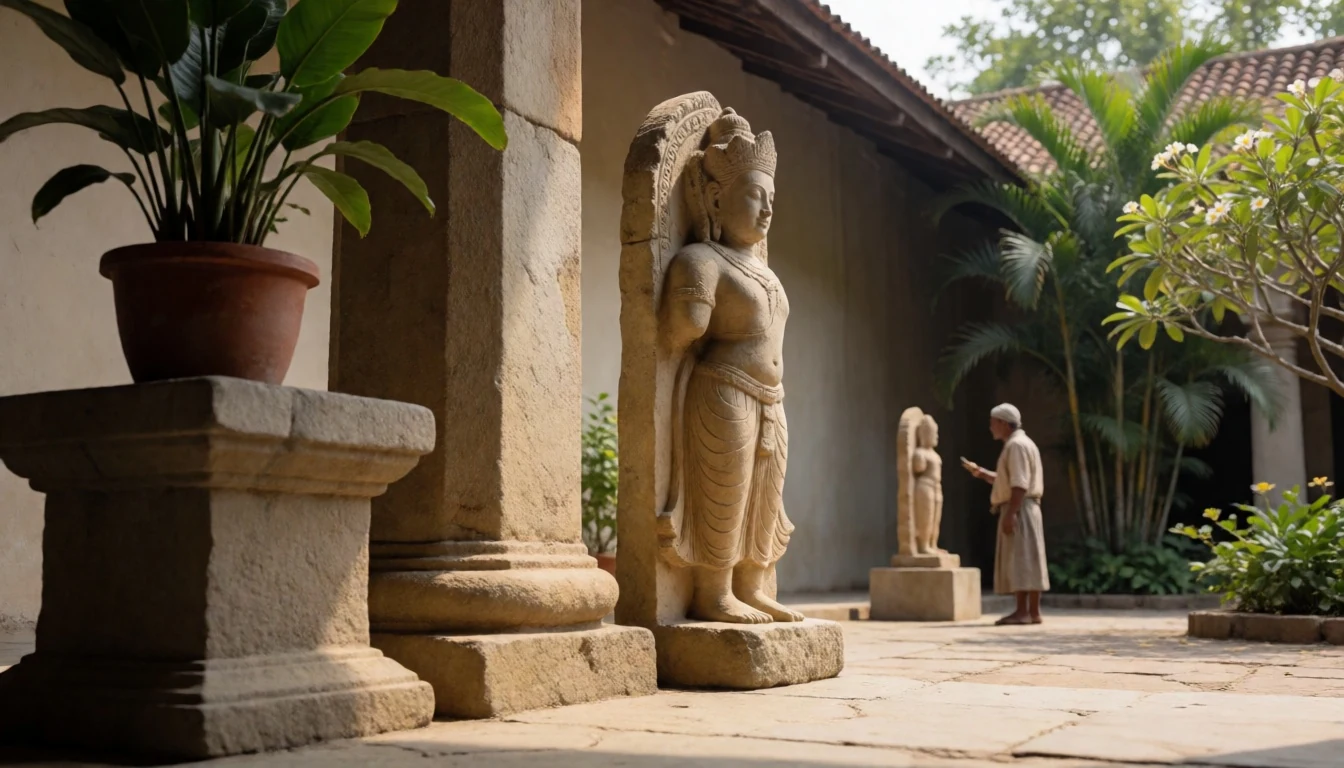
Culture
Nha Trang's culture is shaped by the sea and by layers of belief. Fishing families have long organised life around the tides and the weather, and the sea itself is treated with respect: boats carry small altars, and offerings of fruit and incense are common at the shore. The Cham heritage lives on in the Po Nagar towers, where Vietnamese Buddhists and others still honour the goddess. Buddhist pagodas such as Long Son sit alongside a sizeable Catholic community around the hill cathedral, and the town is comfortable with both. Vietnamese holidaymakers treat the beach as a social space, with picnics, group swims and evening strolls, so the seafront is lively well after dark. The city hosts a Sea Festival every two years, with performances and events that celebrate the coastal way of life. Food is a point of local pride, built around fresh seafood and light cooking, and people will happily point visitors toward their favourite stall. Everyday manners are warm but reserved. A smile and a few words of Vietnamese go a long way, and bargaining at markets is normal but should stay good-humoured. Remove your shoes and cover your shoulders and knees before entering Po Nagar, Long Son Pagoda or any other temple or pagoda, and ask before photographing worshippers.
What to wear
The best-known traditional dress in Vietnam is the áo dài, a fitted long tunic split at the sides and worn over loose trousers, usually in silk or a silk-like fabric. In Nha Trang it appears at weddings, Tet and school ceremonies rather than in daily life. Women in rural areas also wear the conical palm-leaf hat, called nón lá, against sun and rain, and fishing families may still wear it on the water. The Cham communities of the wider region have their own weaving tradition, with patterned cotton and brocade cloth, and examples can be seen in the local museum. Day to day, people in the city wear light, practical clothes: T-shirts, shorts, cotton trousers and sandals, with scooter riders adding long sleeves, masks and gloves against sun and dust. On the seafront, swimwear is normal on the sand but not in the streets behind, where people dress more conventionally. A visitor should pack light cotton or linen that dries fast, plus a hat, sunglasses and high-factor sun protection, since the sun is strong all year. Carry a shirt or scarf that covers shoulders, and trousers or a long skirt that cover knees, for temples and pagodas. Sandals that slip on and off easily suit temple doors, and a pair of closed shoes helps on the steps up to the Buddha at Long Son. A light rain jacket is useful in the wetter months.
What to eat
- Bánh căn — Small family eateries in the streets near the central market
Small rice-flour cakes baked in clay moulds until crisp at the edges, with an egg, meat or seafood in the middle. They come in plates of several with a dipping sauce, and are the local speciality, eaten for breakfast or as a snack.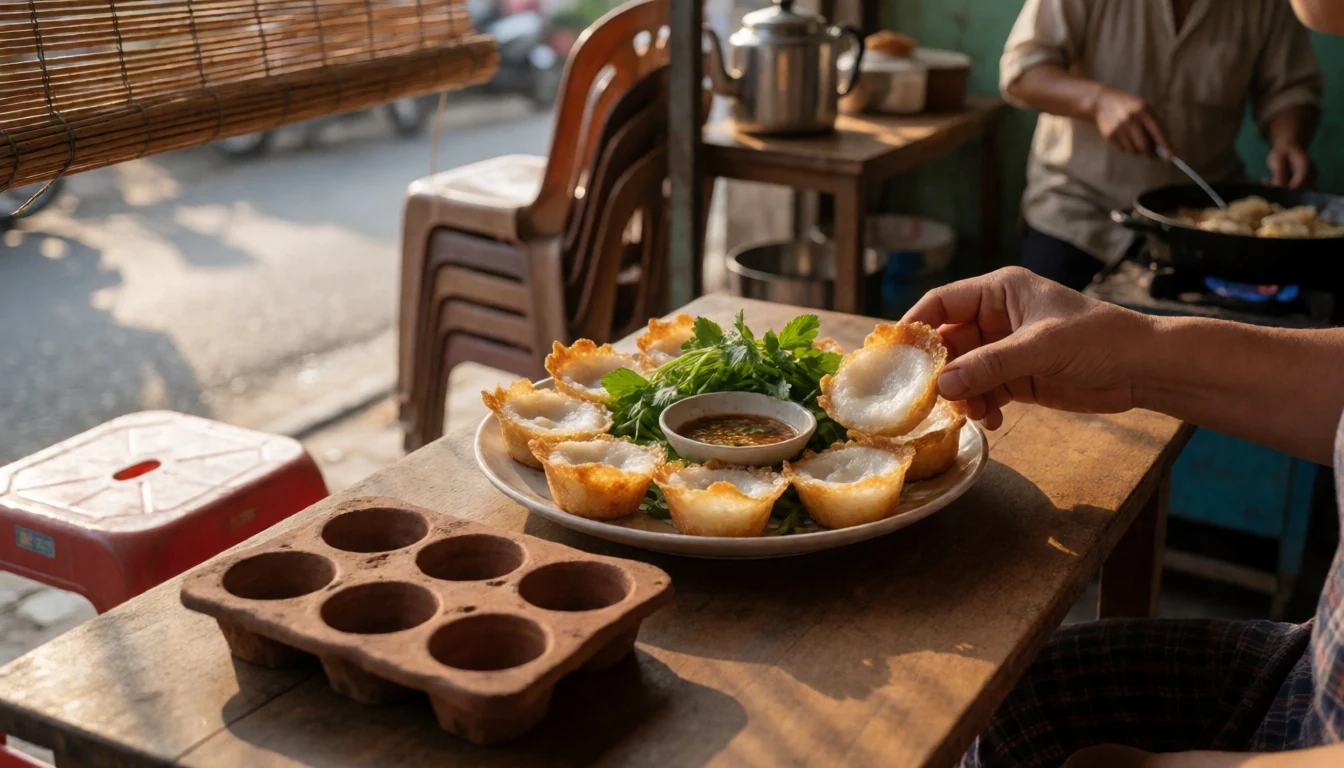
- Bún cá — Morning noodle stalls and local eateries across the centre
A noodle soup built on fish, either as fish cake or as jellyfish in a clear, lightly sweet broth. It reflects the town's fishing roots and is eaten mostly at breakfast and lunch, with herbs and chilli on the side.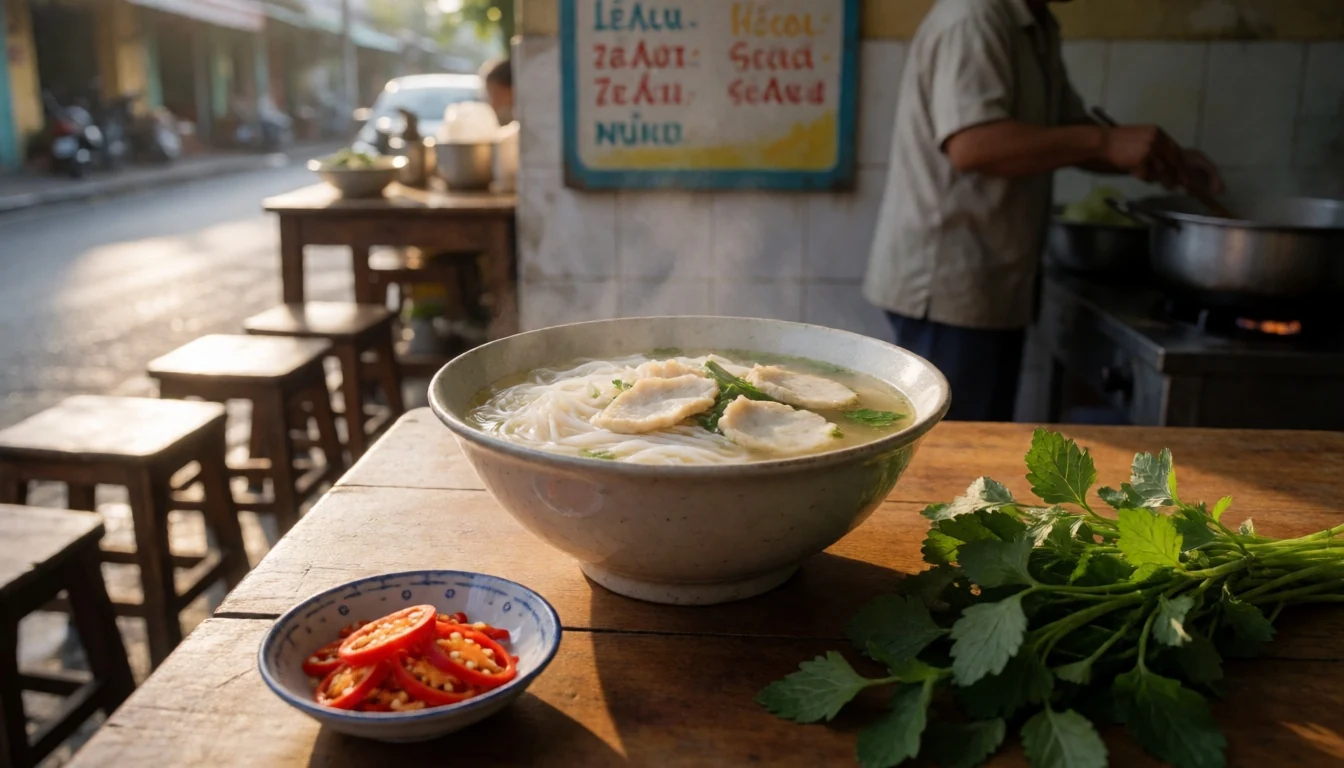
- Nem nướng — Grill-and-roll restaurants in the town centre
Grilled pork sausage, served with rice paper, fresh herbs and a thick dipping sauce. You roll your own at the table, which makes it a good dish for a group. The sauce is the part locals argue about. - Gỏi cá — Seafood restaurants near the harbour and along the seafront
A raw fish salad, usually made with small local fish and dressed with herbs, lime and crunchy vegetables. It is fresh and sharp, and it suits hot weather. Choose a busy place with a high turnover of seafood. - Bánh hỏi — Cheap local eateries along the street beside the central market
Fine rice vermicelli woven into small bundles and eaten with grilled meat, herbs and a dipping sauce. It is light and inexpensive, and appears in many forms across the town.
Plan it
Best time. February to April is the best window, with sunny, drier weather and calm seas that suit diving and boat trips. The wetter months bring heavier rain and rougher water towards the end of the year, and the summer heat is intense, so check recent conditions before booking boat trips.
How long. 2–3
Getting there. Fly into Cam Ranh International Airport, which serves Nha Trang, then take a taxi or an airport bus to the city centre. Domestic flights link it to Ho Chi Minh City, Hanoi, Da Nang and other cities, and there are some international routes within Asia. The last leg is a road transfer into town.
Budget. mid
Tips
- Book dive and island boat trips a day ahead and check the operator's safety record
- Visit Po Nagar and Long Son early, before the heat and tour buses
- Carry some cash for markets and small eateries, as cards are not accepted everywhere
- Drink bottled or filtered water and use strong sun protection, as the sun is fierce all year
- Expect crowds on weekends and Vietnamese holidays, and book accommodation early then
Etiquette
- Cover shoulders and knees and remove shoes at temples and pagodas
- Ask before photographing worshippers or people at work
- Keep swimwear to the beach and dress more modestly in town
Nearby
Sources
- Wikidata Q19491 (CC0)
- Wikipedia: Nha Trang (city) (CC BY-SA 4.0)
- Wikivoyage: Nha Trang (CC BY-SA 4.0)
- Photo: Nha Trang, Khánh Hòa, Việt Nam (Chris Lewis) (CC BY 3.0)
- Photo: Nhà thờ Núi Nha Trang (Hoangvantoanajc) (CC BY 3.0)
- Photo: Sapphire Princess anchored in Nha Trang Bay (bvi4092) (CC BY 2.5)
- Photo: Long Son Pagoda (Phương Huy) (CC BY-SA 4.0)
- Photo: Ponagar Hindu temples complex (Ms Sarah Welch) (CC0 1.0)
- Photo: Une plage à Nha Trang (ntt) (CC BY-SA 1.0)
- Photo: Plan de la ville de Nhatrang (Service géographique de l'Indochine française) (Public domain)
- Photo: Tours Cham à Nha Trang (Étienne André) (CC BY 3.0)


