Nalanda Mahavihara
Nalanda Mahavihara, India
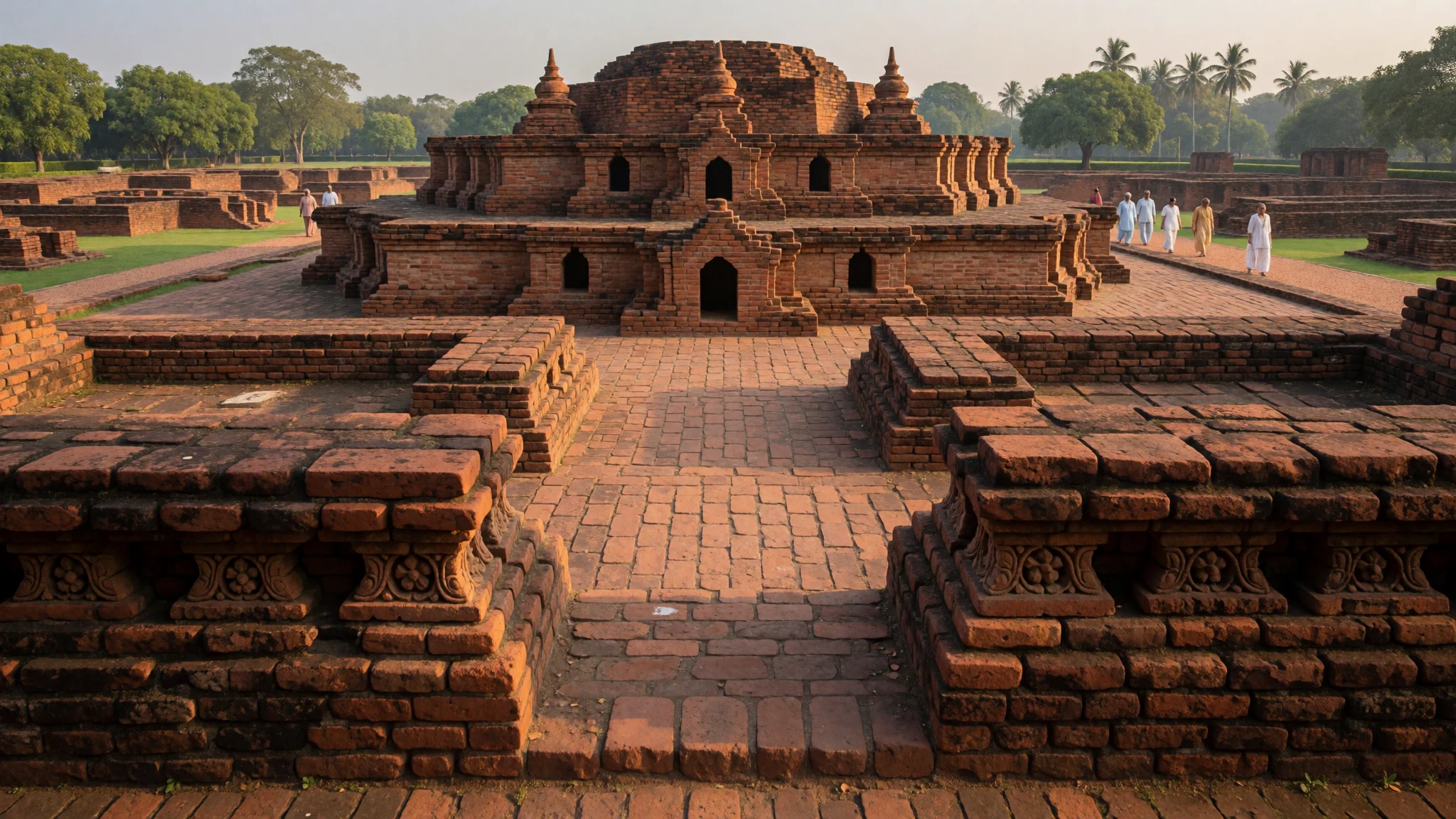
Nalanda Mahavihara is the quiet, thought-heavy heart of eastern India’s old learning world—ruins, museums and a real sense of continuity.
The place
Nalanda Mahavihara is the medieval monastery complex of Nalanda, in present-day Bihar. What you’re visiting today is the excavated footprint: terraces, stupa remains and stonework laid out across a broad archaeological zone, not a single intact building. It’s a place that reads in layers—religious architecture, learning culture and centuries of change—so going slowly matters more than ticking boxes.
Nalanda was a mahavihara (a great monastic institution) in Magadha, and the site is strongly associated with Buddhist scholastic life. The modern “university” comparison gets discussed by historians, but the atmosphere on the ground still feels academic in a way few ruins do: courtyard-like spaces, structural foundations and the spatial rhythm you’d expect of long-term study and residence.
For a first visit, the mix is what makes the day work. The museum adds the “what exactly are these stones?” layer, and nearby memorials help connect the site to the wider Buddhist world—Chinese pilgrims and texts travelled far beyond Bihar. In practical terms, the experience is also about people: it’s a popular stop on the Buddhist tourism circuit, so expect groups at peak hours.
Weather can also steer the mood. In the cooler months the walkways and open areas feel more comfortable, while hotter afternoons can make even short stretches feel long. The entrance area tends to have small stalls and helpers; some will be friendly and useful, others push a bit. A calm pace, a hat, and a plan to start earlier will make Nalanda feel like it belongs to the day, not the queue.
Its story
Nalanda’s story starts long before the monastery you see now. Archaeological findings in the region point to human settlement centuries earlier, with the area around Nalanda tied to early communities in Magadha. Then, in the early centuries CE, the monastic institution becomes the centre of the narrative.
A common anchor is the Gupta period: Nalanda is associated with imperial support around 427 CE, and the monastery is described as drawing patrons from different communities. Over time, rulers in later dynasties continued to back the place, so the site becomes less a single “founding moment” and more a long-running system of teaching, studying and cultural exchange. That long span—from the early 5th century onward—helps explain why there are multiple architectural phases and why excavation can feel like reading an evolving curriculum in stone.
Text and travel stories also matter. Early Buddhist traditions place Buddha-related episodes near Rajagriha, and later accounts connect Nalanda to learned circles and journeys. One figure repeatedly linked with Nalanda is Xuanzang, the Chinese Buddhist monk and teacher whose memory is kept through a memorial hall. His presence points to a wider reality: Nalanda wasn’t only local. Ideas, manuscripts and teachers moved across regions, carried by pilgrims and translators.
The “university” label is debated by scholars, and that nuance is worth holding gently while you’re there. On-site, Nalanda still feels like a place built for sustained learning, with the infrastructure and community that learning needs. The ruins may be weathered and incomplete, but the logic of the complex remains.
What to see
- Excavated remains of Mahavihara — Nalanda archaeological site
The core archaeological remains sit across terraces and smaller stupa remnants. Look for how the ground-plan opens into courtyards and study-space like arrangements, rather than expecting a single intact temple. The ticket desk is across the road from the entrance, and you’ll likely meet beggars and shopkeepers around the approach.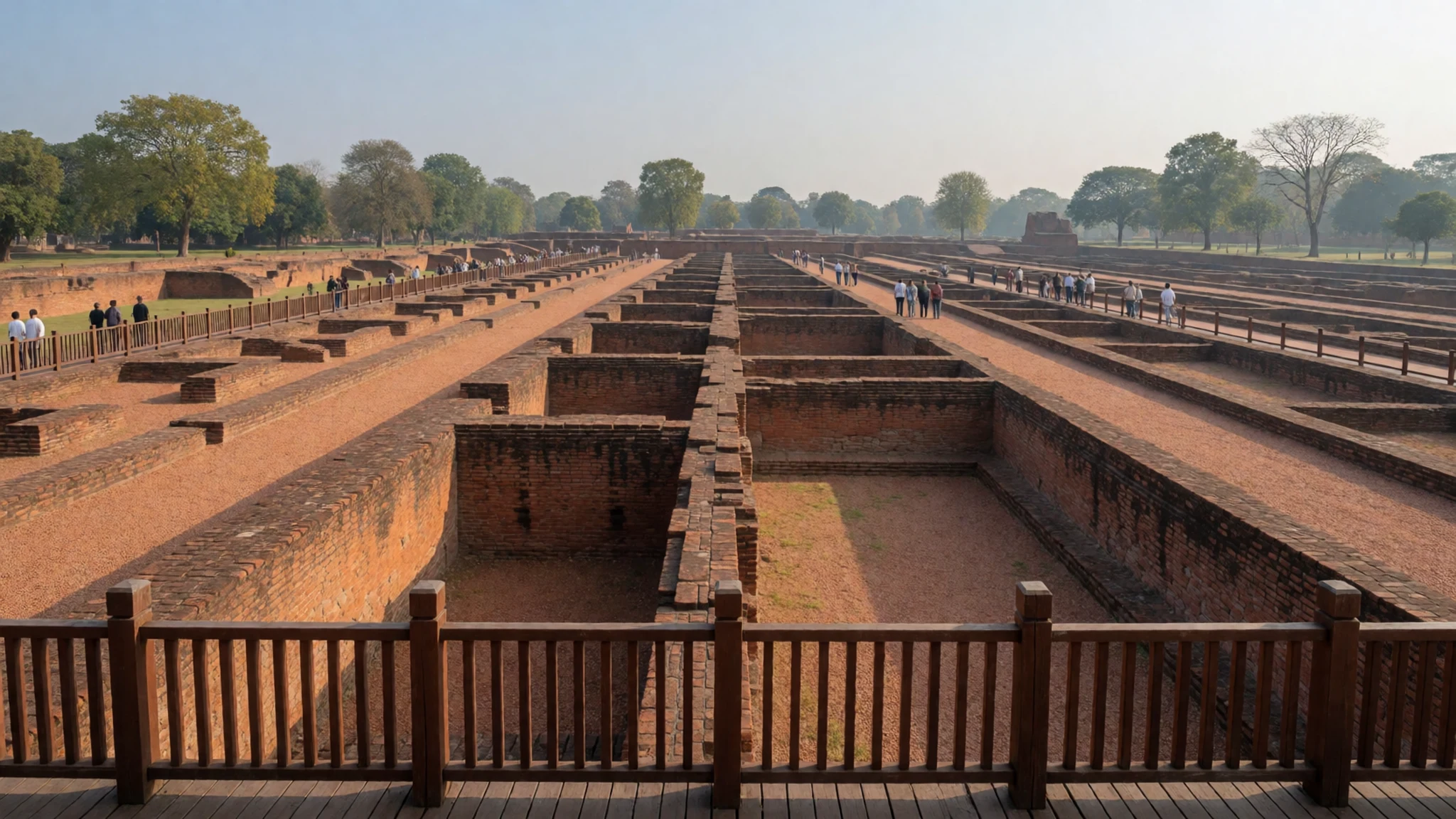
- Nalanda Archaeological Museum — Nalanda museum area
If you want context, this is the time-saver. The museum displays statues connected with Pala and Mauryan periods, pulled from excavations in and around Nalanda. It also has several air conditioned rooms, which is a small blessing when the heat picks up. Expect to spend a focused hour reading labels and tracing the timeline in objects.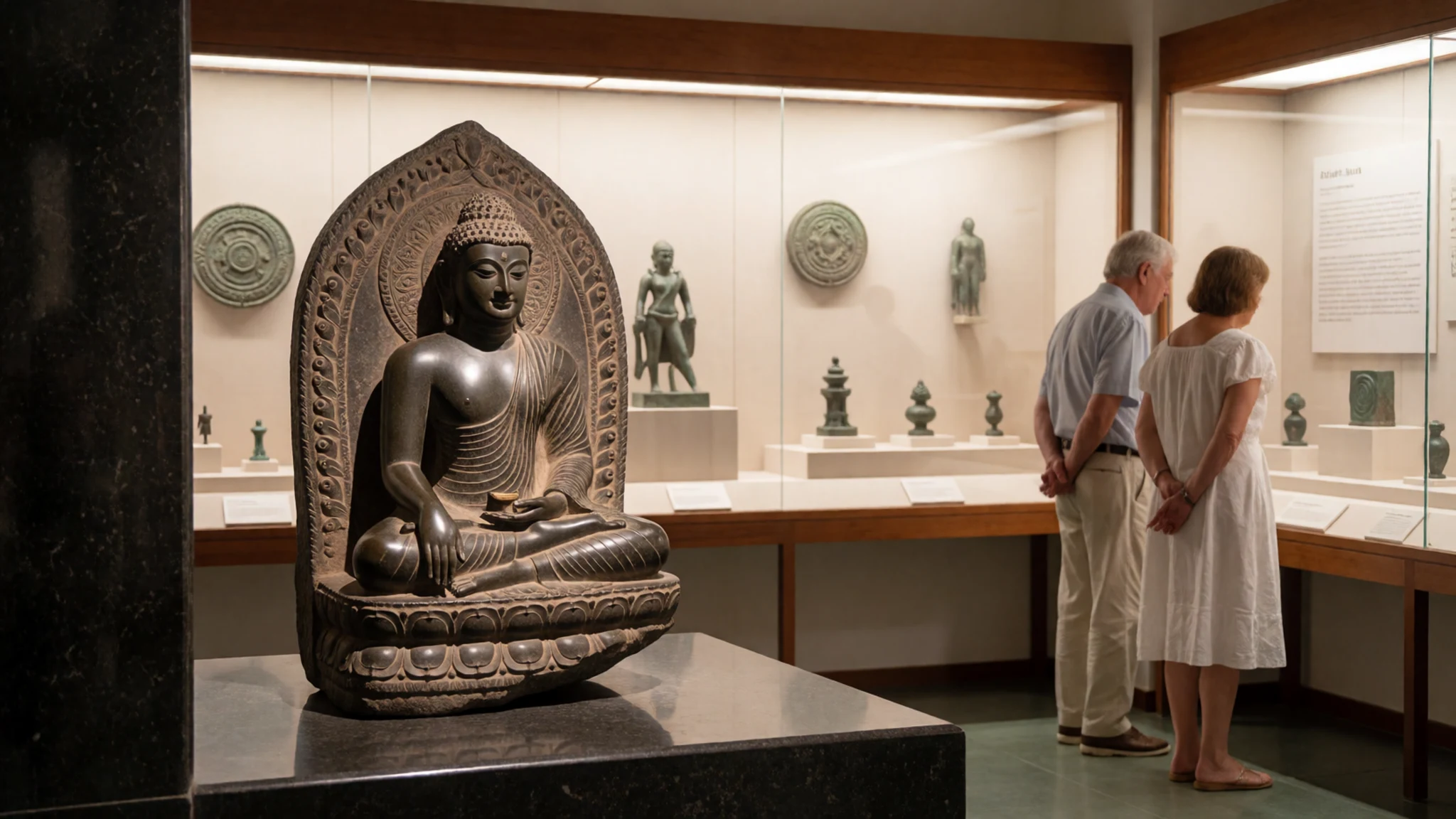
- Xuanzang Memorial — Xuanzang memorial area
Xuanzang (also known as Hiuen Tsang) was a 7th-century Chinese Buddhist monk and teacher, and the memorial helps anchor Nalanda in the broader pilgrimage routes. It’s a quieter stop than the main excavations, and a good place to step back after walking the site. The atmosphere is more reflective than archaeological.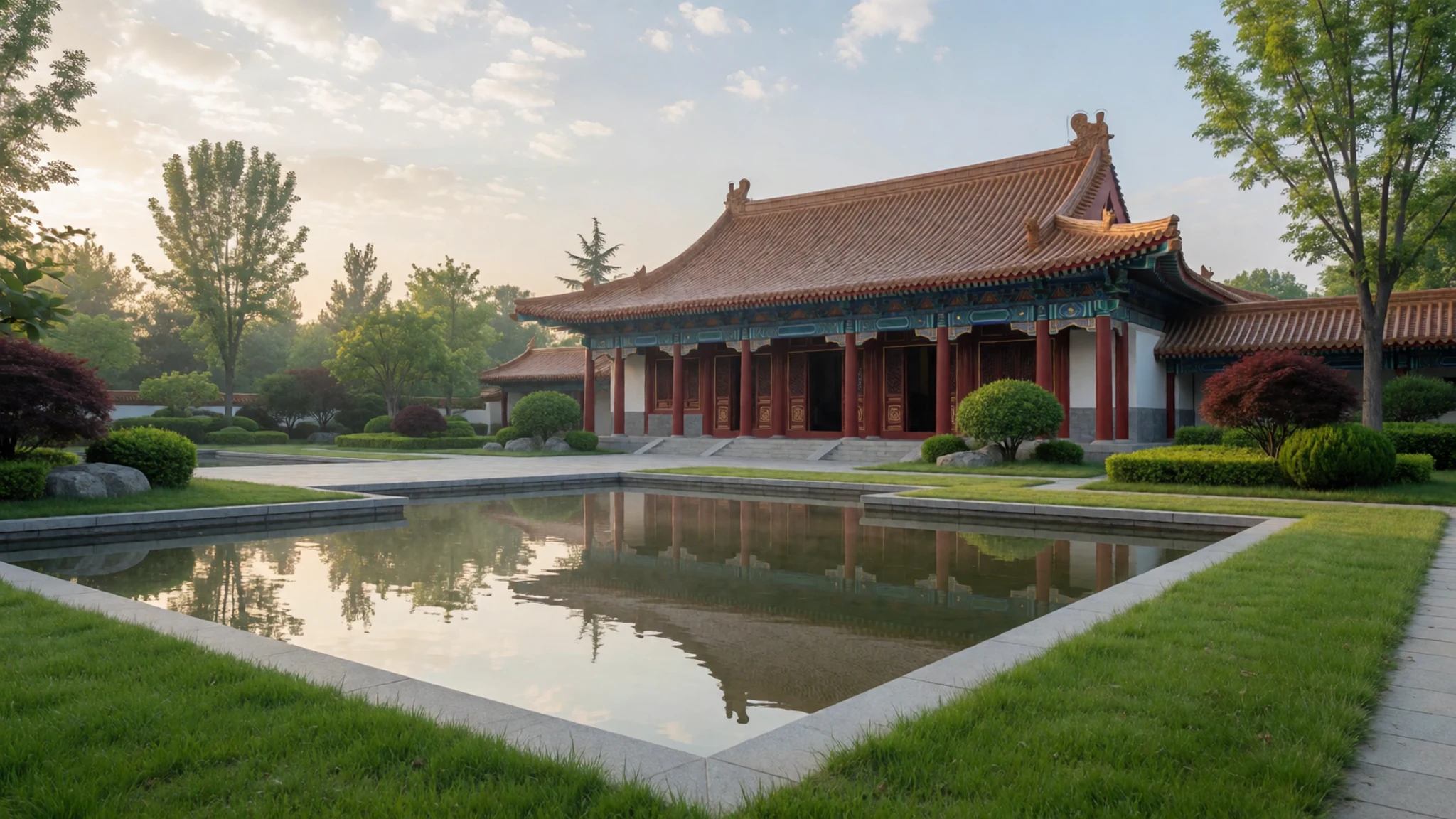
- Nalanda Multimedia Museum — Near the excavated site
A more modern add-on near the excavated area, the multimedia museum uses 3-D animation and other presentations to explain Nalanda’s history. It’s useful when you’re struggling to imagine what the complex looked like before excavation. Even if you’re not a “multimedia” traveller, it helps connect the stones you’ve seen.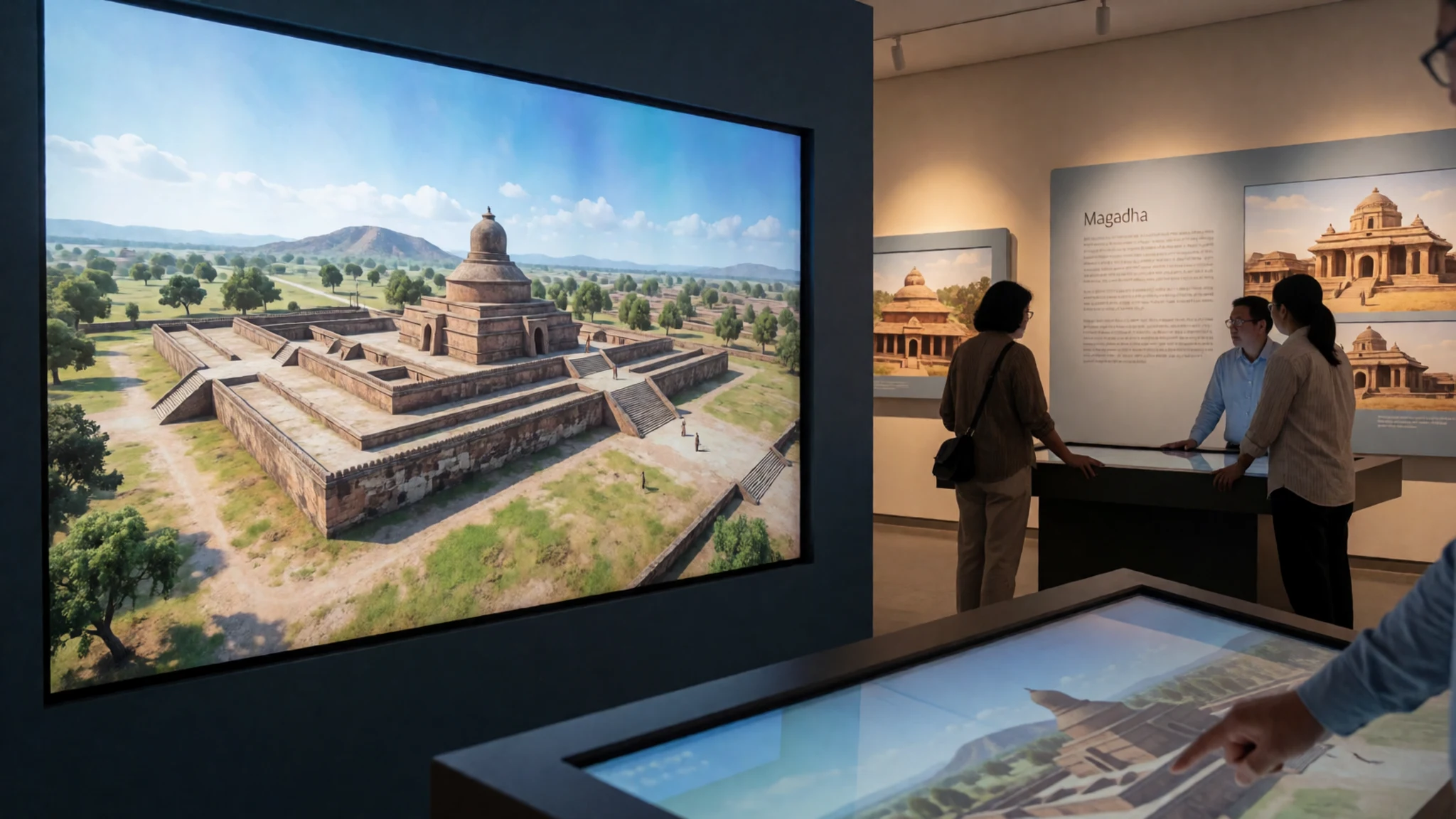
Culture
Nalanda Mahavihara is a religious heritage site, so the tone is generally respectful even when tourism is busy. You’ll see visitors moving between open excavations, museums and memorial areas—some treating it like an archaeological walk, others treating it like a pilgrimage stop. Neither approach is wrong, but it helps to match your behaviour to the space: keep voices low in quieter halls and avoid blocking pathways when groups pause for photos.
Dress-wise, modesty is the safest bet in this part of Bihar, especially around religious structures and memorial spaces. Shoulders and knees covered keeps things simple, and comfortable footwear matters because the terrain can be uneven around excavated areas. Photography is usually possible, but it’s wise to watch for signs and for how people around you are behaving. If someone is cleaning, guarding, or guiding, don’t rush them for your shot.
Crowds tend to swell during peak hours, so the calmer rhythm comes from starting earlier in the day and giving yourself time between the excavated site and museum. That also reduces the pressure that makes visitors forget their manners.
Visitor etiquette: remove shoes where you see a step up and slippers waiting, and keep voices down near memorials.
What to wear
Nalanda is visited by people from across Bihar and beyond, so at heritage sites you’ll see a blend: local visitors in everyday cottons and tourists in light casuals. What most people choose tends to be practical for warm weather—breathable fabrics and modest coverage—and the ground and walking can be uneven around the excavated areas, so comfort and ease of movement matter.
What people wear now at the site is usually practical: breathable shirts, trousers or salwar-kameez, and sandals or sturdy shoes depending on how much walking people plan. In and around the archaeological zone, sun and heat can make lightweight layers feel essential.
What a visitor should wear: a breathable, modest outfit (covered knees and shoulders), comfortable shoes with grip for uneven ground, and a light layer you don’t mind wearing into museums. If you’re visiting around cooler months, add a warmer layer for early mornings and evenings, while still keeping footwear comfortable. Keep a cap or hat handy for open-air stretches, and carry a small water bottle to avoid getting slowed down by the heat.
What to eat
- Samosas and fried snacks — Roadside stalls near the entrance to Nalanda historical site and museum
Just inside the entrance to the Nalanda historical area and around the museum, you’ll find roadside stalls with samosas and other quick snacks—good for a light bite between the ruins and the exhibits.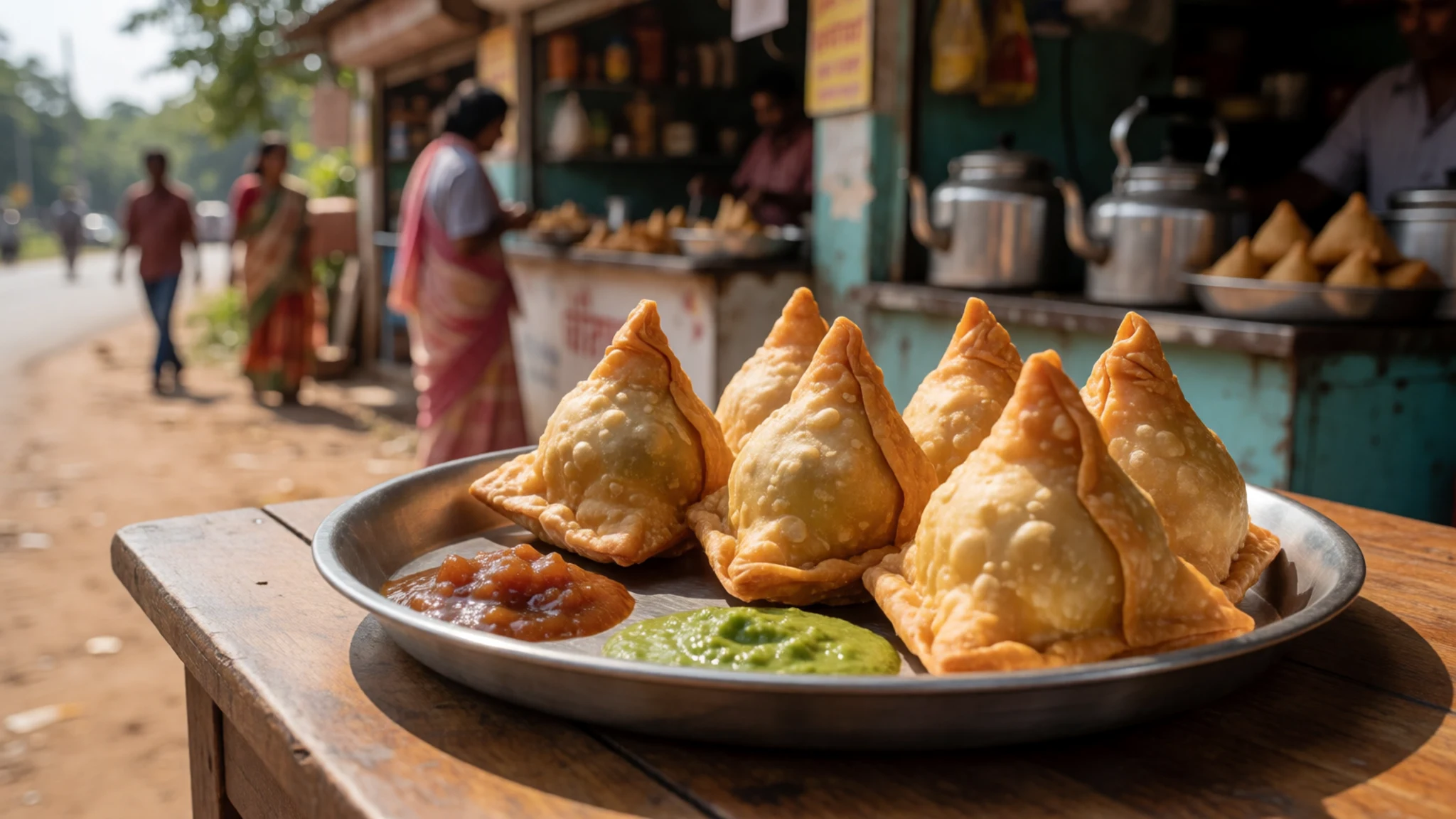
- Tea and small refreshments — Visitor approach areas near the site and museum
After walking in the open, a cup of tea is often the easiest reset. Look for simple stall set-ups near the main visitor areas, where you can grab a quick hot drink without needing a full meal.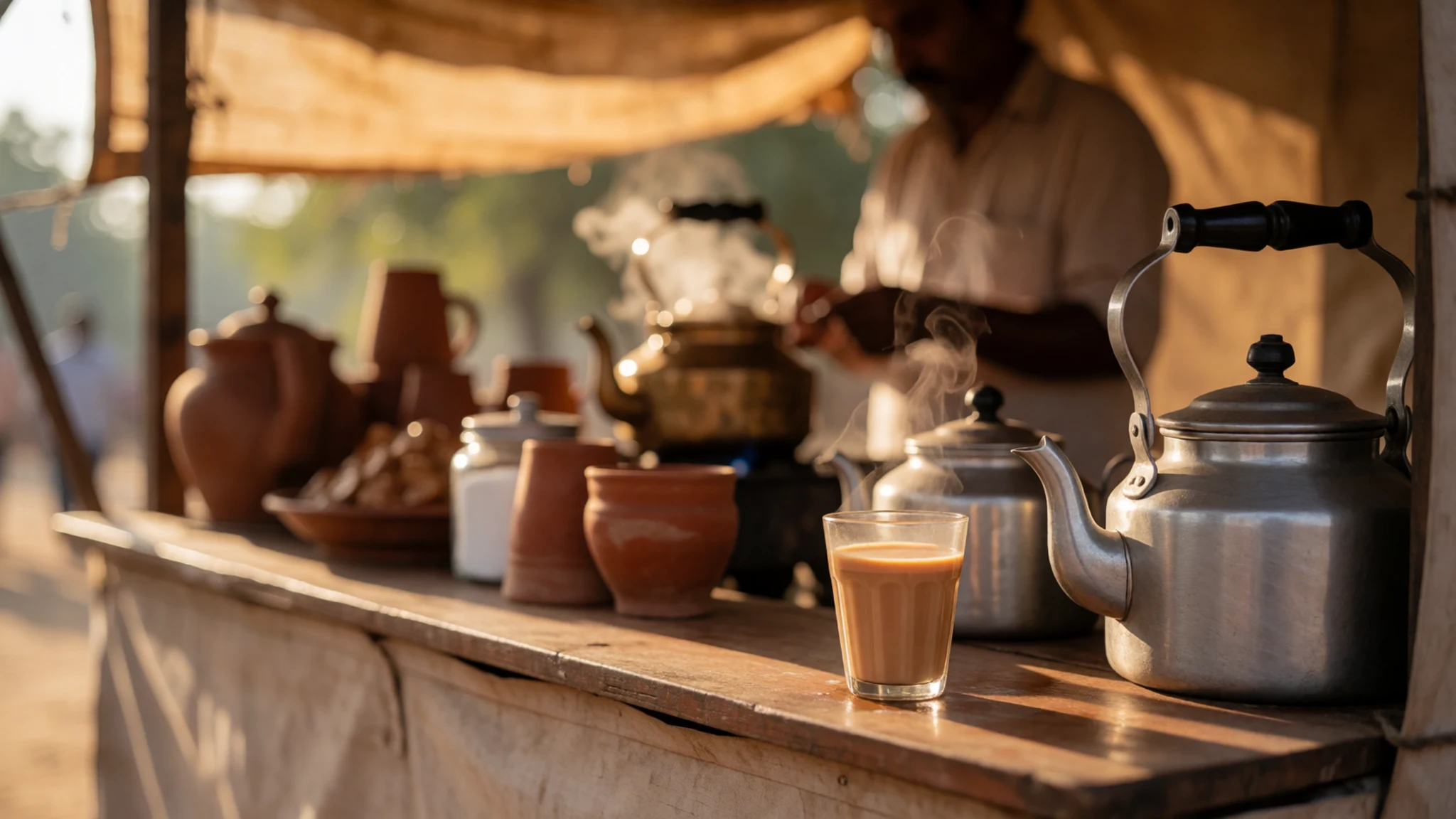
- Street-style bottled drinks — Stalls and shops around the site entrance
At Nalanda, the simplest refresh is to stick with bottled drinks and avoid experimenting when you’re tired. The site area is a practical place to buy a reputed brand and keep going. - Simple lunch at a nearby restaurant — Down from the ticket office towards the museum
For an actual sit-down meal, there’s a restaurant a short walk from the ticket office towards the museum. It’s the kind of place built for visitors who want something straightforward after a morning of ruins.
Plan it
Best time. March–April and October–November are generally the most comfortable, with lower highs and far less rain than the monsoon months. June and the July–August period are the hottest and wettest stretches—June is especially rainy, while July and August bring heavy monsoon showers (July is the wettest month, followed by August).
How long. 3–4
Getting there. Fly into Patna (nearest practical base), then travel onward by rail or road to the Nalanda-Rajgir area. From Rajgir, shared jeeps connect toward Bihar Sharif and stop at the turn-off for Nalanda; a short road leg (2 km) brings you to the main gate.
Budget. mid
Tips
- Start the excavations earlier in the day to beat heat and make the ruins feel quieter
- Pair the ruins with the Archaeological Museum on the same day so objects “click” as you walk
- Carry cash for small purchases around the entrance area and museum vicinity
- Prefer bottled drinking water and a reputed brand, especially in hotter months
- Budget time for memorial stops like Xuanzang so the day isn’t only about stonework
Etiquette
- Follow any shoe rules at steps and entrances, using slippers where they’re provided
- Be mindful around people soliciting at entrances; keep your movement calm and don’t reward aggressive behaviour
- Dress modestly and keep voices down in memorial or religious spaces
Nearby
Sources
- Wikidata Q216243 (CC0)
- Wikipedia (rev 1370243277) — Nalanda mahavihara (CC BY-SA 4.0)
- Wikivoyage (rev 5412174) — Nalanda (CC BY-SA 4.0)
- Photo photos/01-nalanda-the-great-stupa.jpg (CC BY-SA 4.0)
