Mozia
Mozia, Italy
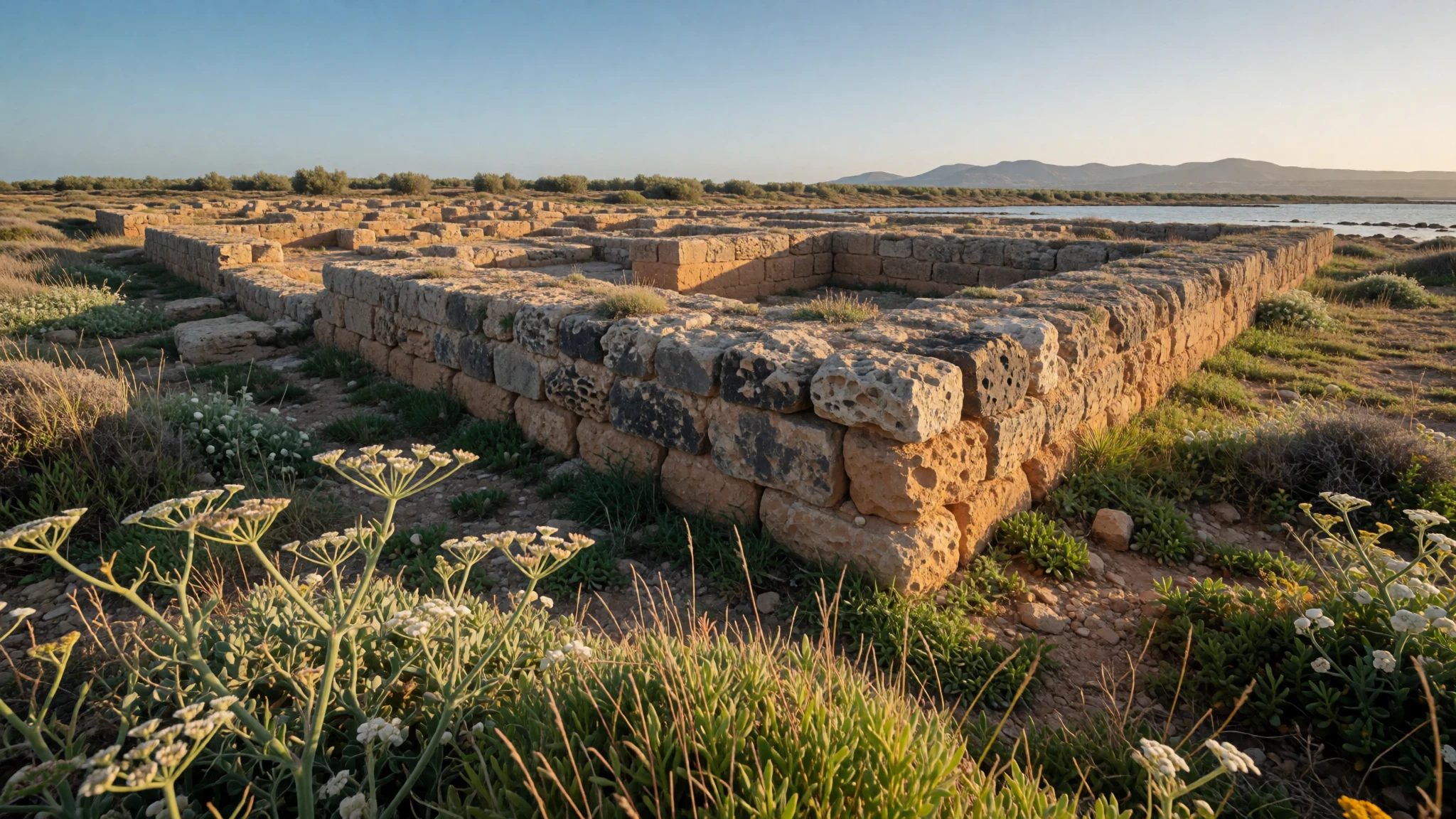
Visit Mozia to walk among the remarkably preserved ruins of an ancient Phoenician island city set in a tranquil Sicilian lagoon.
The place
Mozia, historically known as Motya, occupies a low rocky island in the Stagnone Lagoon off the western coast of Sicily, nestled between modern Trapani and Marsala. The island sits in a shallow coastal bight shielded by a fringe of low islets, creating a protected marine basin that once served as a secure maritime hub. Visitors cross the calm waters from the mainland jetty at Punta San Teodoro by a short boat ride, landing on an island that feels entirely removed from contemporary life. Olive groves, vineyards, and wild coastal scrub now blanket the terrain, concealing foundations, ancient street grids, and heavy defensive walls built from local stone. The confined geography of the site meant that ancient houses rose high and solid, separated by narrow lanes designed for intense urban defense. Today, the entire island is privately operated and maintained by a cultural foundation, preserving its quiet atmosphere for travelers who come to explore the open-air archaeological park. Walking paths wind through the scattered excavations, past domestic courtyards, sanctuaries, and defensive towers that offer wide views across the shimmering shallows of the lagoon. The atmosphere is peaceful, broken only by the sound of coastal winds and the gentle lap of water against the old submerged causeway that once linked the settlement directly to the Sicilian mainland.
Its story
The history of Mozia began in the early period of Mediterranean colonization when Phoenician traders established a commercial station on the island during the eighth century before the common era. Drawn by the natural shelter of the lagoon, these settlers transformed the isolated landmass into a flourishing and affluent port city with maritime routes stretching across the western sea. As wealth accumulated, the community faced growing rivalry from Carthage on the North African coast despite shared cultural roots. Around the middle of the sixth century, Carthaginian forces under General Malchus attacked and destroyed the settlement. Rather than abandoning the site, the resilient inhabitants rebuilt the town on a grander scale, erecting some of the earliest monumental defensive walls in the central Mediterranean region. Classical historians such as Thucydides noted Mozia as one of the principal Phoenician strongholds on Sicily during the Athenian expedition. The city's golden age came to a dramatic end in the fourth century before the common era when the Syracusan general Dionysius launched a ferocious siege against the island. Despite desperate resistance from the inhabitants fighting through narrow streets and from lofty houses, the city was overwhelmed and burned. Although partially reoccupied later, it never fully regained its former commercial and military preeminence, eventually fading into agricultural obscurity beneath the Sicilian sun until modern excavations brought its remarkable past back to light.
What to see
- Whitaker Museum — Near the island landing stage
Housed within the historic Palazzina Whitaker near the landing stage, this small museum safeguards an extraordinary collection of Phoenician and Punic artifacts discovered across the island. The centerpiece of the exhibition is the famous Motya Charioteer, an exquisite fifth-century marble sculpture of Greek origin that demonstrates the remarkable artistic exchanges of the ancient Mediterranean world alongside carved tomb stelae and delicate ceramics. - Kothon & Temple Area — Southern sector of the island
This fascinating archaeological zone features a rectangular freshwater basin carefully carved directly into the coastal rock and fed by a natural underground spring. Long interpreted as a sacred ritual pool rather than a standard maritime harbour, the basin is surrounded by the ruined foundations of ancient temples dedicated to deities such as Baʿal and Astarte, highlighting the deep religious life of the early Phoenician urban community. - House of Mosaics — Central archaeological zone
An important aristocratic domestic residence that reveals the sophisticated lifestyle enjoyed by wealthy residents during the city's prosperous eras. The highlight of the complex is a well-preserved central courtyard featuring intricate pebble mosaics arranged in striking geometric patterns alongside lively hunting scenes, showcasing the blend of Punic architectural traditions with later Hellenistic artistic influences found throughout the settlement. - City Walls & East Tower — Eastern perimeter
Massive stone fortifications built using the traditional opus quadratum technique, with defensive thickness reaching up to five metres in places to protect the vulnerable coastline. The circuit includes reinforced square bastions, with the remarkably preserved East Tower offering visitors a tangible sense of ancient Phoenician military engineering, heavy defensive strategy, and the sheer scale of the monumental rebuilding efforts undertaken after early conflicts. - Porta Nord & Submerged Causeway — Northern tip of the island
The imposing northern gateway complex features monumental triple arches flanked by heavy defensive towers that controlled access to the territory. Just beyond the gate lies the starting point of the ancient stone-paved causeway, a remarkable one-kilometre engineering feat that once allowed horse-drawn chariots to cross directly to the Sicilian mainland and whose submerged path remains clearly visible through the shallow lagoon waters.
Culture
Mozia shares the warm, unhurried cultural rhythm of western Sicily, deeply rooted in maritime traditions, agricultural heritage, and historical preservation. Though uninhabited today except for museum staff and vineyard workers, the island reflects centuries of layered Mediterranean influences where Phoenician, Greek, Punic, and Italian histories converge. Local stewardship is managed with great care by cultural foundations and regional winemakers who view the landscape as a living open-air museum rather than a standard tourist attraction. Visitors walking the quiet archaeological paths will notice an atmosphere of quiet reverence, as the site functions simultaneously as an active excavation ground and a memorialized ancient sanctuary. Traditional Sicilian hospitality prevails on the surrounding mainland coast, where family-run trattorias and salt-pan workshops welcome travelers with regional culinary specialties and local vintage wines. When exploring the fragile archaeological ruins, please remain on designated walking paths and avoid climbing on ancient stone walls or touching delicate mosaics.
What to wear
Traditional dress across the broader Trapani province reflects practical rural and coastal Sicilian heritage, utilizing durable cottons and linens suited to a warm Mediterranean climate. Historically, local agricultural and fishing communities favored modest, functional garments designed to withstand intense summer heat and coastal winds, though traditional costumes are now reserved primarily for regional festivals and historical pageants. Today, locals and visitors on the mainland dress in relaxed, contemporary European casual wear, prioritizing lightweight fabrics, comfortable denim, and breathable shirts. For a day of exploring the archaeological park on Mozia, travelers should prioritize comfort and practicality above all else. Because the island terrain consists of open, unshaded walking paths, uneven stone foundations, and dusty tracks, sturdy walking shoes or supportive trainers are essential footwear. Visitors must also pack sun protection, including a wide-brimmed hat and sunglasses, alongside modest layers that respect the tranquil, historic nature of the island sanctuary.
What to eat
- Museum Café Refreshments — Near the island museum entrance
Situated right beside the island museum entrance, this casual spot is the sole food outlet on Mozia. It offers simple snacks, freshly made sandwiches, cold beverages, and Italian coffee, providing a welcome shaded resting place during a long morning of exploring the open-air archaeological site. - Lagoon Seafood Trattorias — Mainland coast near Punta San Teodoro
Scattered along the mainland coastline near Punta San Teodoro and the historic salt pans, these casual restaurants serve traditional western Sicilian seafood dishes, including fresh catches from local waters, served with outdoor terrace seating overlooking the lagoon and distant island. - Marsala Wine Tastings — Marsala coastal wine cellars
Produced in nearby historic cellars across the coastal plain, this famous fortified wine comes in dry and sweet varieties. Local tasting rooms offer glasses paired with regional pastries, showcasing the rich viticultural heritage that defines this corner of the Sicilian coast. - Grillo White Wine — Local wine bars and mainland restaurants
A distinctive local white wine crafted from indigenous Grillo grapes grown in the sandy, saline soils of the region, including revived historic vineyards on Mozia itself. It features crisp citrus notes and a refreshing mineral finish that pairs perfectly with seafood. - Trapani Pesto and Pasta — Traditional osterie in Trapani and Marsala
A signature local pasta dish featuring trenette noodles tossed in a raw sauce made from crushed almonds, fresh basil, ripe tomatoes, and garlic. It is a flavorful staple found across traditional osterie in nearby Trapani and Marsala.
Plan it
Best time. April to May and September to October offer pleasant mild weather for exploring the open island paths, while summers are intensely hot with minimal natural shade.
How long. 1–2
Getting there. Fly into Trapani or Palermo airports, travel to the mainland coast near Marsala, and take the frequent short passenger boat from Punta San Teodoro across the Stagnone Lagoon.
Budget. mid
Tips
- Wear sturdy walking shoes suitable for uneven archaeological paths
- Bring plenty of drinking water and sun protection as shade on the island is limited
- Check boat schedules in advance, as service can be suspended during bad weather
- Carry some cash for boat tickets and small purchases on the island
Etiquette
- Stay strictly on marked paths and do not climb on ancient ruins or stone walls
- Respect the quiet, contemplative atmosphere of the archaeological park
- Ask permission before photographing local workers or fellow visitors
Nearby
Sources
- Wikidata Q962184 (CC0)
- Wikipedia (rev 1380729306) (CC BY-SA 4.0)
- Wikivoyage (rev 5314616) (CC BY-SA 4.0)