Moscow
Moscow, Russia
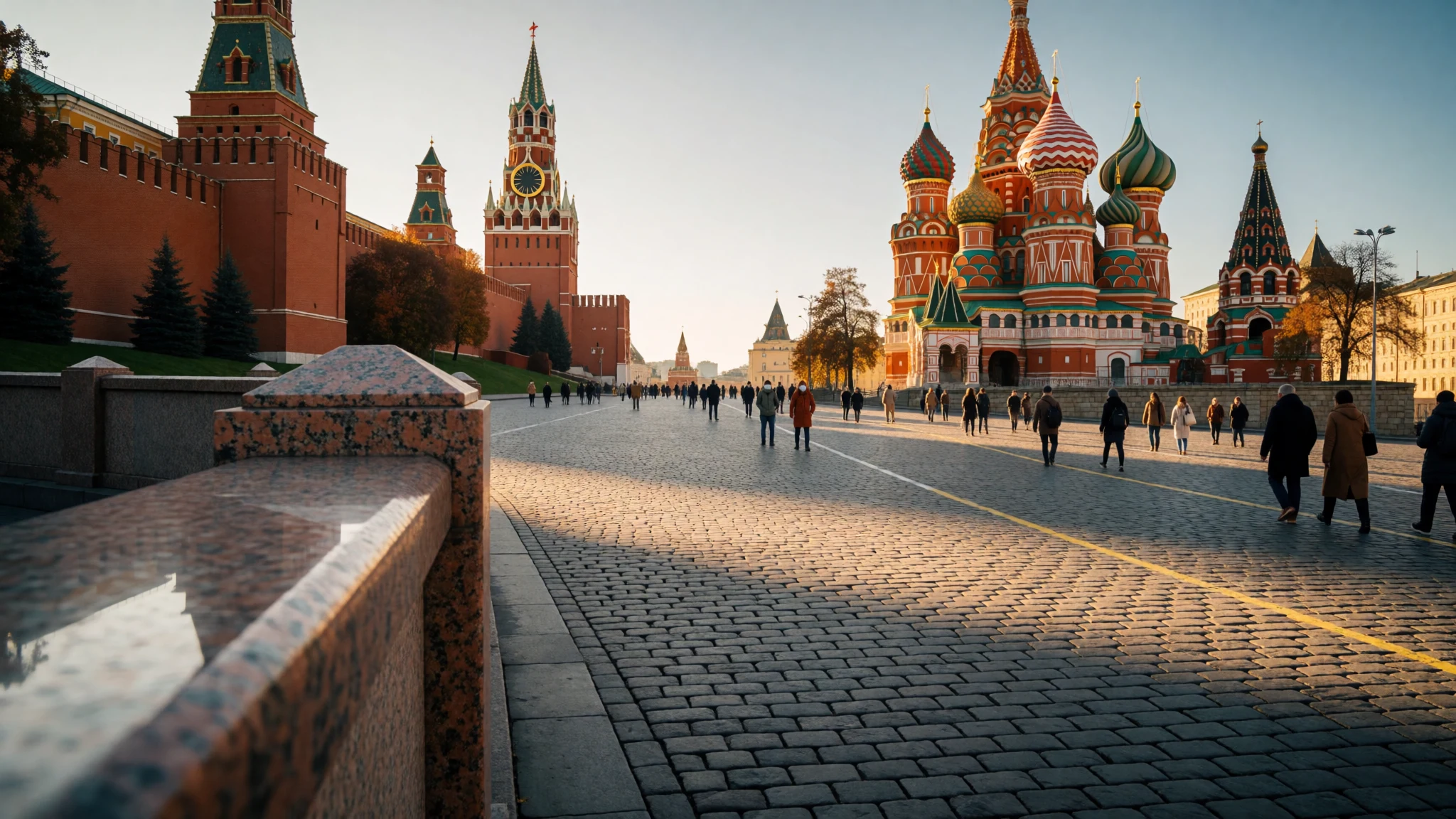
Moscow holds the Kremlin, Red Square and a river city of about 13.3 million, still the political heart of Russia.
The place
Moscow is Russia's seat of government and the city with the most residents, a federal city spread along the Moskva in the middle of the country. Inside the municipal boundary live about 13.3 million people, and the high point, Teplostan Upland, stands 255 metres above sea level.
The historic core is a compact bend of the river. The Kremlin, a walled citadel, occupies a rise above the water, with Red Square immediately outside its eastern wall. Saint Basil's Cathedral closes the square's southern end in a cluster of patterned onion domes. Around that core, broad rings of boulevards and a dense metro carry the city outward into residential districts, industrial belts and new office clusters. Moscow-City, the international business centre, is a group of glass towers west of the centre, visible from the river and from the older skyline.
Green space is part of the everyday map. Gorky Park occupies a long bend of the Moskva, mixing walking paths with courts for sport and platforms for outdoor shows, and tree-lined embankments continue the walk in both directions. In winter the river freezes at the edges and the parks turn to snow; in summer the same banks fill with walkers. The scale is the thing a first-time visitor misjudges: a single errand can cross a distance that would be a whole town elsewhere, and the metro, rather than the street, is how most people stitch the city together.
Moscow has been a capital, lost that role, and taken it back. It remains the home of national government and a centre of theatre, galleries and Orthodox worship, while the business towers show a city that also runs on offices, universities and trade.
Its story
Moscow's ground was lived on long before a chronicle gave it a name. Finds tied to the Lyalovo culture point to Neolithic hunter-gatherers, and in the tenth century two Slavic peoples, the Vyatichi and the Krivichi, were on this part of the river. The Vyatichi are reckoned to have formed much of the population the later town grew out of.
A chronicle of the mid twelfth century is the first surviving mention, when the settlement was a minor border town of Rostov-Suzdal, one of the principalities left after Kievan Rus broke apart. Yuri Dolgorukiy and Sviatoslav Olgovich are recorded meeting there. Weight gathered through the rest of that century: a gorod, a fortified town, took shape on the hill, and the earliest Kremlin walls belong to the same period. Horde troops later destroyed the town in the same sweep that ruined Ryazan, and the timber city had to be raised again.
Daniel, Alexander Nevsky's youngest son, was the earliest prince to rule Moscow in his own right. His successors in the Grand Principality pulled neighbouring lands inward across the fifteenth century until the city sat at the middle of one Russian state. Once the realm took the title of tsardom in the sixteenth century, government and trade still ran through Moscow for a long stretch of years. Peter the Great then planted a new capital on the Baltic, Saint Petersburg, early in the eighteenth century, and Moscow spent the imperial era in second place, still full of merchants, churches and old families. The Duchy of Moscow, the Grand Principality, the Tsardom, the Russian Empire and, much later, the Soviet Union are the states that, in turn, ruled from or through this bend of the river.
What to see
- Saint Basil's Cathedral — Red Square
Saint Basil's Cathedral stands at the southern end of Red Square in Moscow, a brick church of patterned onion domes, each one a different colour. The interior is a cluster of small chapels rather than a single nave, so the outline that postcards show is really an outside view from the cobbles. Morning light on the domes is the calmest time to look, before the square fills.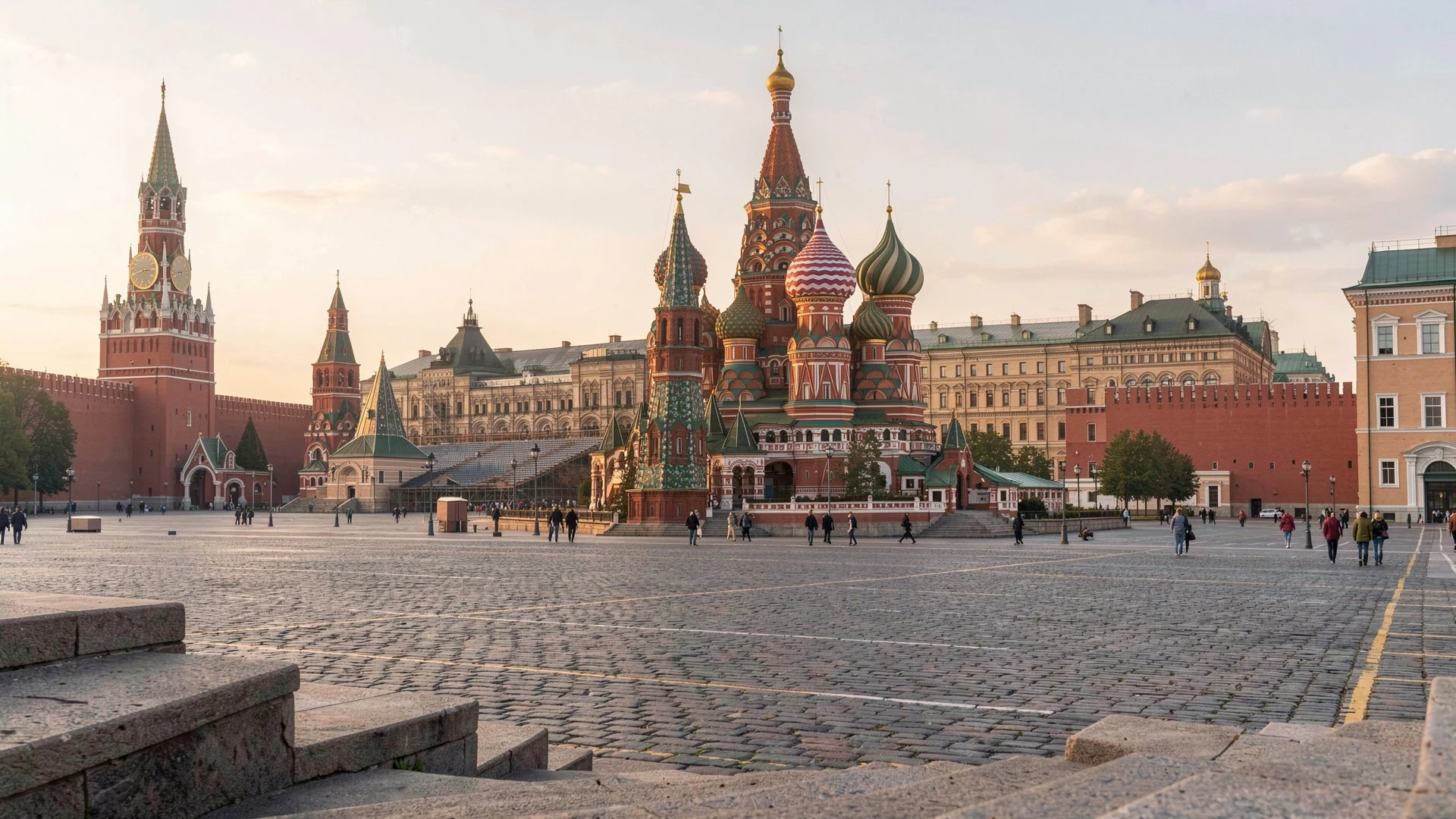
- Moscow Kremlin — Kremlin
The Moscow Kremlin is a walled citadel above the Moskva in Moscow, still the seat of state and a complex of cathedrals, palaces and museums. Spasskaya Tower looks onto Red Square and is the gate most people frame first. Inside, Cathedral Square packs the old court churches into a small paved space. The grounds are large, so a single morning rarely covers both the ramparts and the interiors.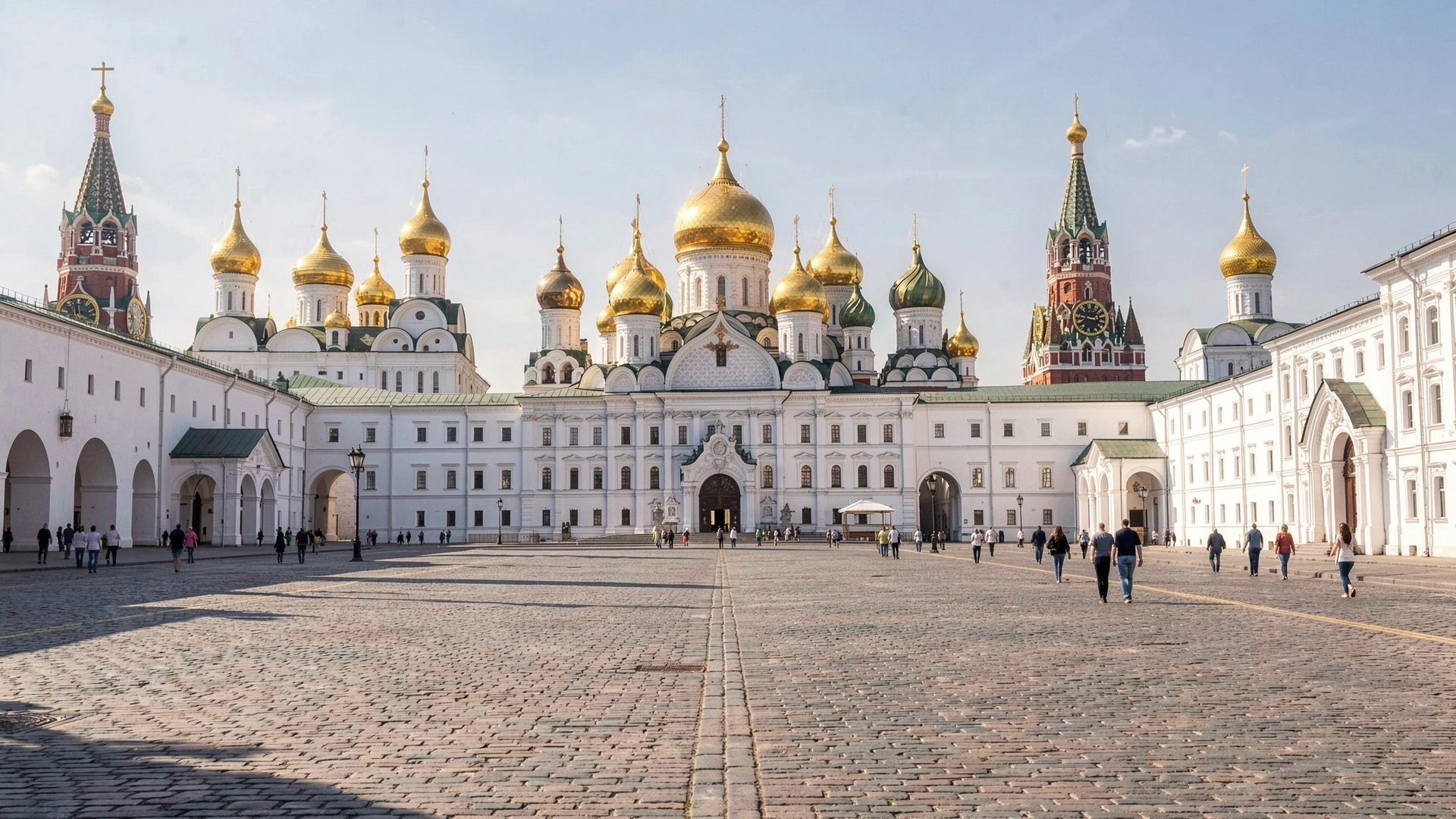
- Cathedral of Christ the Saviour — Yakimanka, on the Moskva
The Cathedral of Christ the Saviour sits on the north bank of the Moskva in Moscow, a vast white church with a gold dome that reads clearly from the bridges. It is the city's main cathedral and a working place of worship, so liturgy, not only sightseeing, sets the mood inside. The terrace around the building looks back toward the Kremlin and across the river.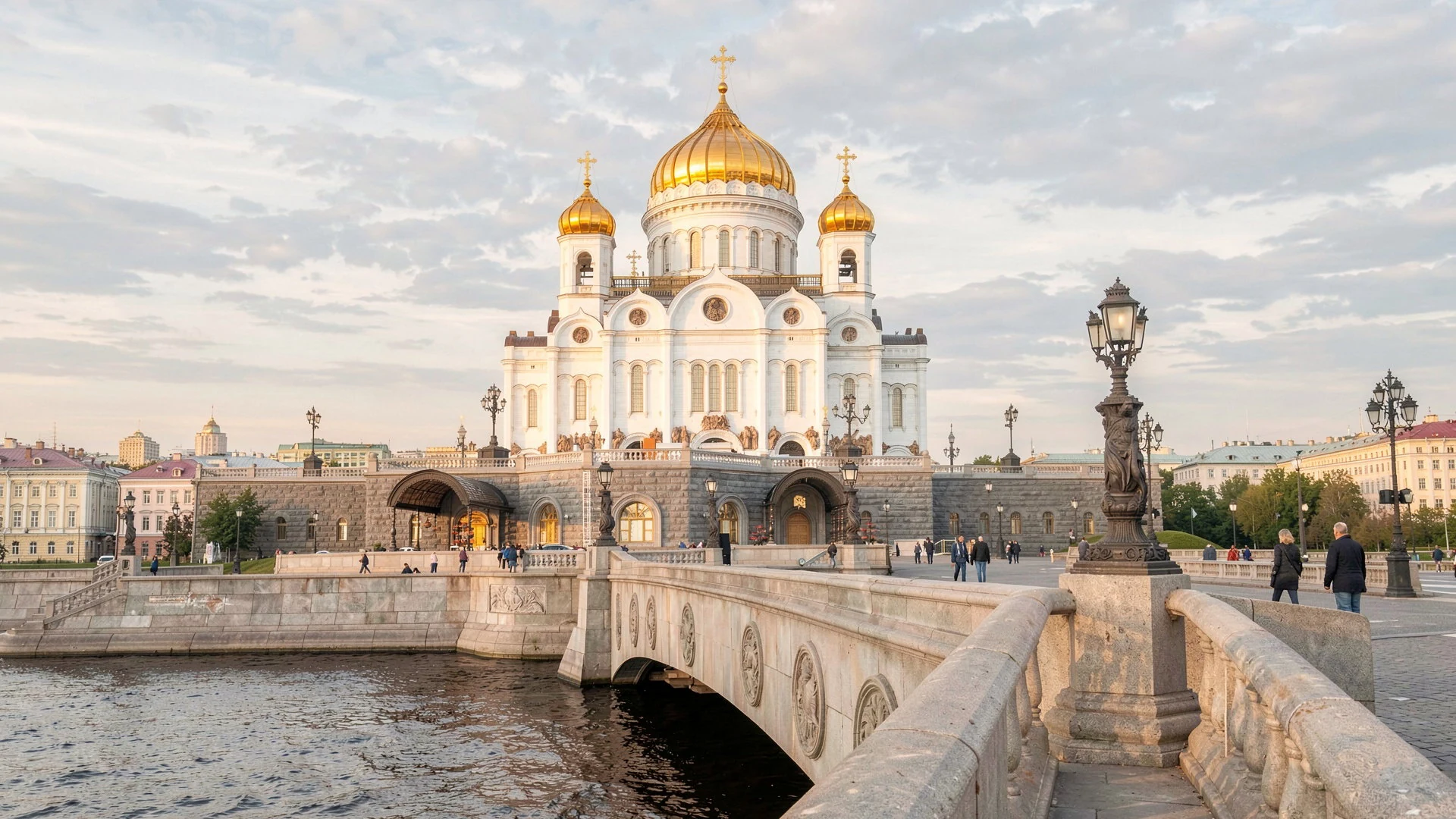
- Bolshoi Theatre — Theatre Square
The Bolshoi Theatre faces Theatre Square in central Moscow, its columned portico and sculpted chariot lit after dark. Ballet and opera fill a working house with a heavy season, not a museum that happens to have a stage. The square outside is a useful landmark between the Kremlin and the shopping streets to the north. If a performance matters, booking ahead is wise; the theatre's own site carries the programme.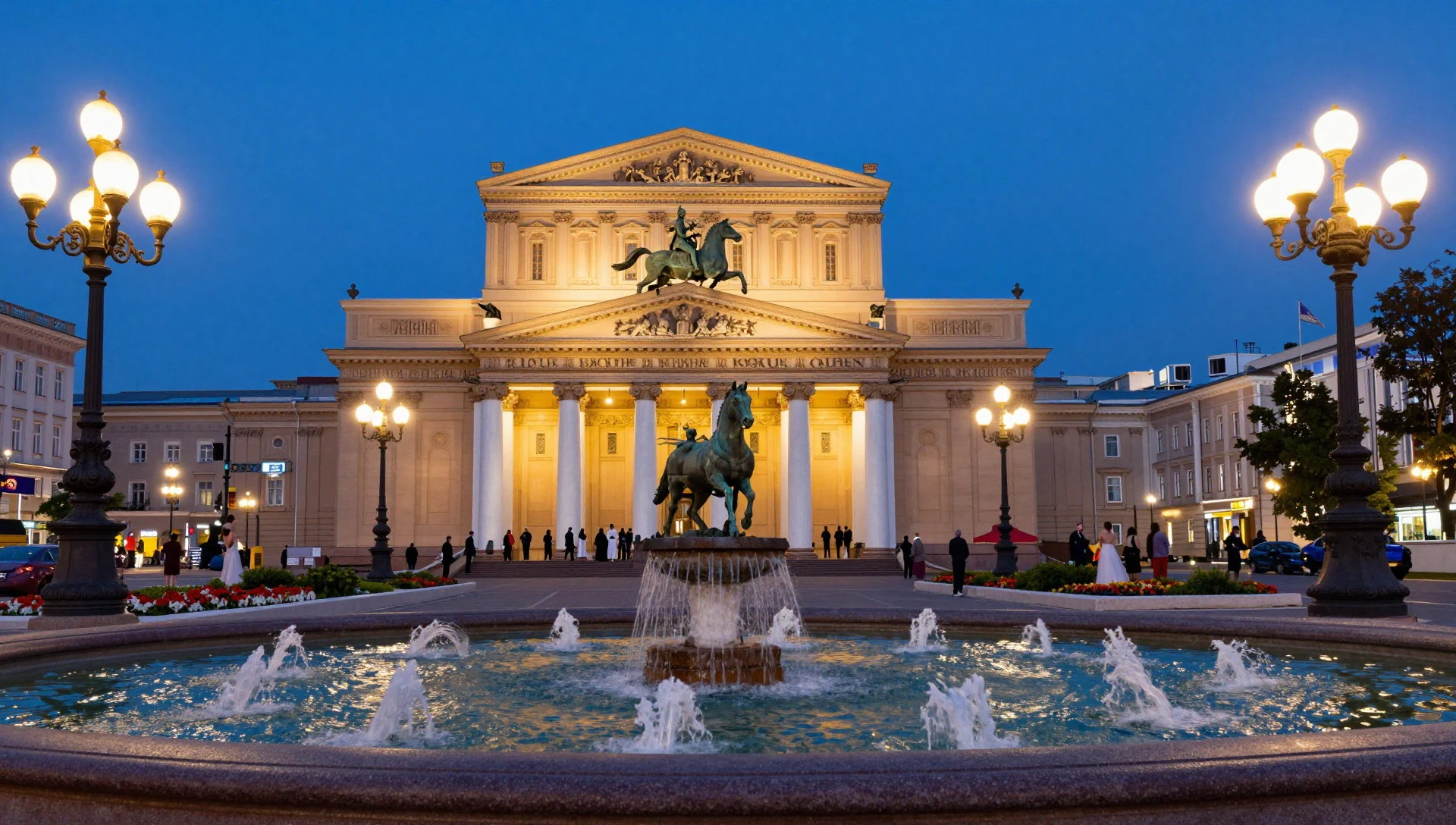
- Moscow-City — Presnensky District
Moscow-City, the international business centre, rises west of the historic core in Moscow as a tight group of glass towers above the river. The skyline is new, corporate and very tall beside the low domes further east, and it is the view that shows how far the city has pushed its offices out along the water. Embankment paths and a metro stop put the towers within an ordinary afternoon's reach.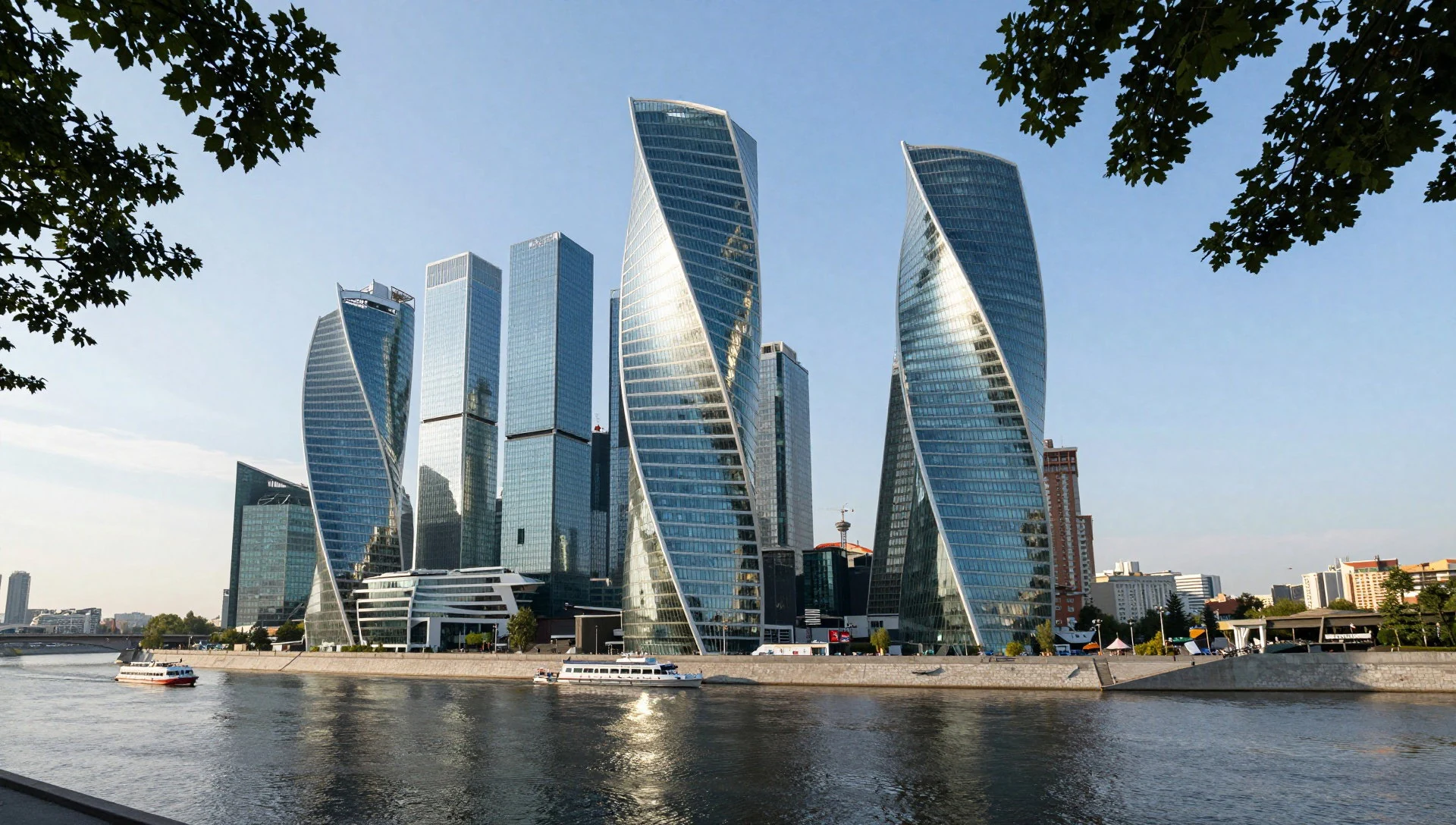
Culture
Moscow's cultural life runs on galleries, a large theatre circuit and the Orthodox calendar, often in the same neighbourhood. Russian painting is the Tretyakov Gallery's brief. Pavel Tretyakov assembled it as a private holding and then gave it to the city. Icons and canvases from before the revolution, Andrei Rublev among the icon painters and Ilya Repin among the later ones, hang mainly in the older halls across the river; Soviet and newer work sits in the twentieth-century building, and the years around the revolution are where the two collections meet. The Pushkin Museum of Fine Arts looks outward instead, lining up ancient cultures with European pictures from later centuries, antiquities and modern painting under a single roof.
Worship and looking at art sit side by side. Several Kremlin churches, and the Cathedral of Christ the Saviour, still hold services, and a liturgy can take a chapel out of the tourist circuit. The informal city is Gorky Park and the Moskva embankments: dancing, games and a Sunday crowd when the weather is kind.
In an active church, cover your shoulders and knees, take off a hat if you are a man, and keep a headscarf to hand if you are a woman.
What to wear
Moscow dresses for a long winter, and the old wardrobe did too. Festive dress centres on the sarafan, a long pinafore, over a rubakha, a full-sleeved linen or cotton shirt, with embroidery at collar, cuffs and hem. Women covered their hair; the kokoshnik, a stiff crescent headdress, was for ceremonies and is now mostly stage and festival wear. Linen and wool were everyday textiles, silk and velvet the court ones. Sheepskin, felt valenki and a fur hat handled the deep cold.
Weekday Moscow looks like any large European business city: dark coats, tailored jackets, jeans, trainers and heavy winter boots, with sharper clothes around Theatre Square at night. Folk costume appears for performances, holidays and wedding photographs, not on the metro.
Visitors need a warm coat, hat, gloves and waterproof boots in the cold months, and lighter layers in July and August, when embankments are hot by day and cool at night. For churches, cover shoulders and knees, take shoes that slip off easily, and bring a scarf for women. Cobbles, metro stairs and slush punish thin soles in every season.
What to eat
- Borscht — stolovaya canteens and home-style Russian eateries
Borscht is a beetroot soup, deep red and usually served with a spoon of sour cream, that turns up in Moscow stolovaya canteens and in home-style Russian eateries all over the city. Rye bread on the side is the usual companion.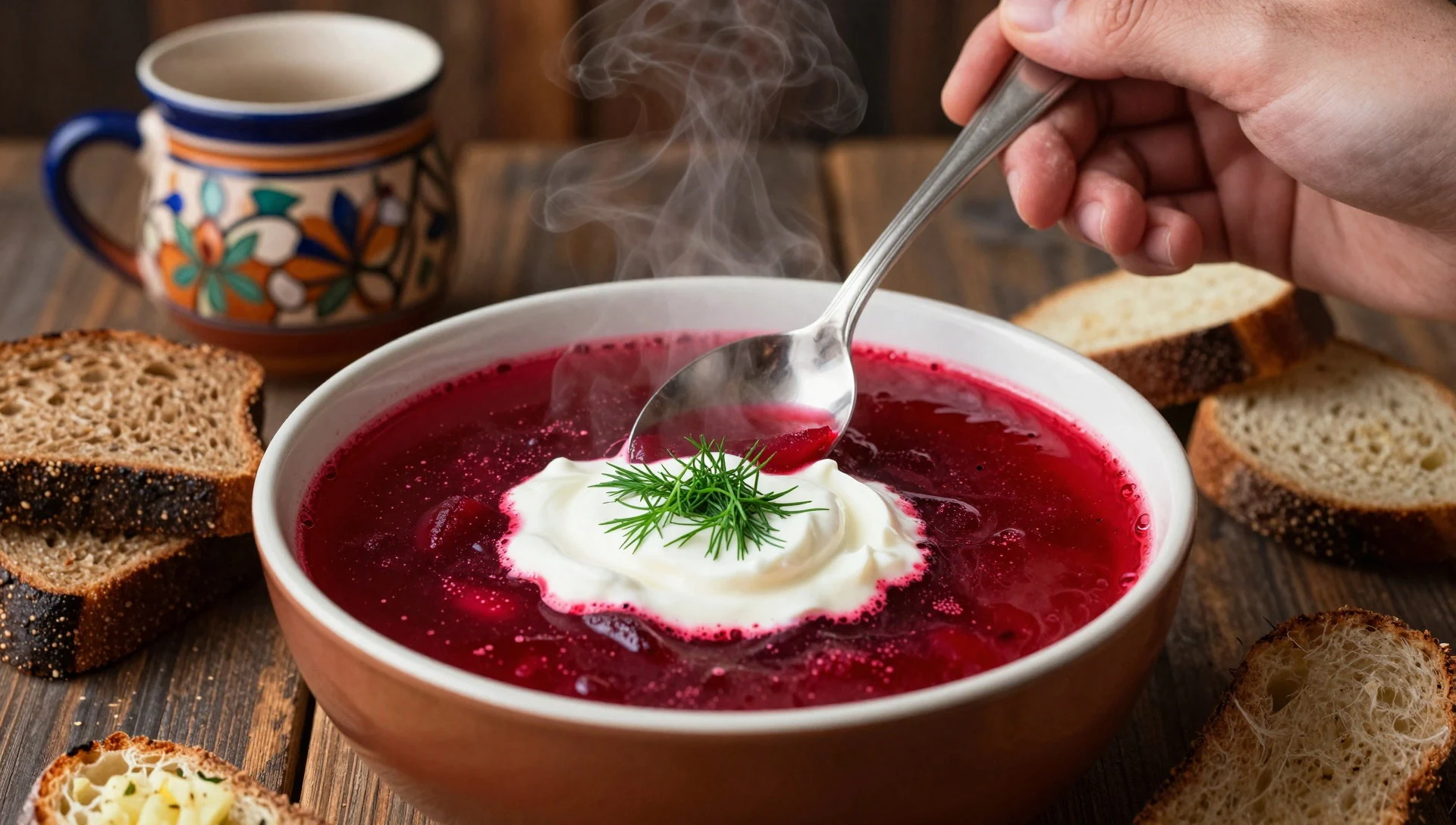
- Pelmeni — dumpling cafés and stalls by metro stations
Pelmeni are small meat dumplings, boiled and served with butter, sour cream or vinegar, and they are Moscow comfort food in the cold months. They turn up in dumpling cafés, in food stalls by metro stations and on the set menu of plain Russian eateries.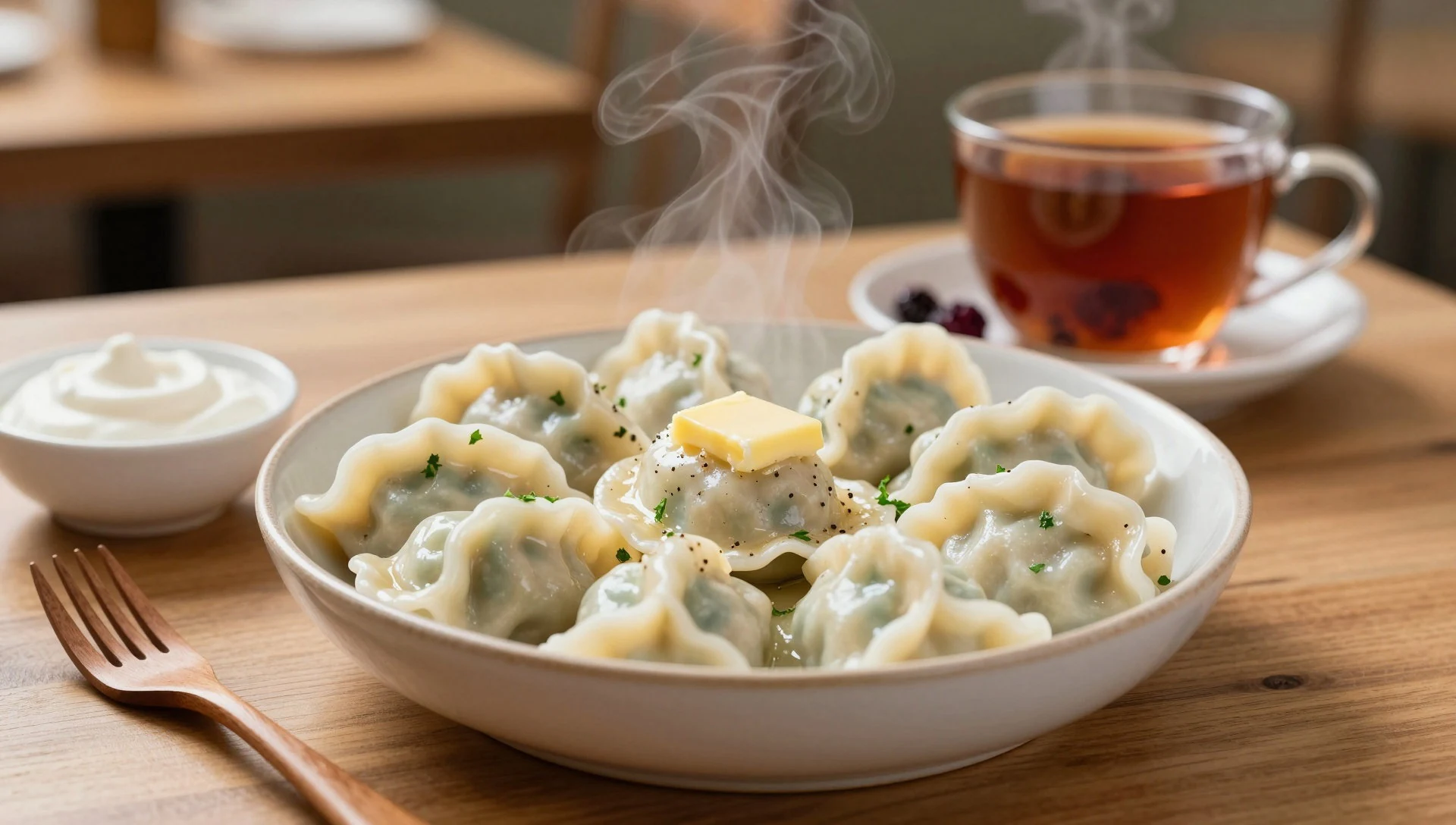
- Blini — cafés, bakery counters and Russian restaurants
Blini are thin pancakes, eaten in Moscow with sour cream, jam, smoked fish or a spoon of caviar when the table is celebrating. Cafés and bakery counters sell plain ones all year; the richer toppings belong to festive menus and to Russian restaurants that still do a zakuski spread. - Pirozhki — bakeries near metro exits and station kiosks
Pirozhki are hand-sized baked or fried pies sold across Moscow, filled with cabbage, meat, egg and spring onion, or sweet cheese. Bakeries near metro exits, station kiosks and market counters sell them warm, wrapped in paper. - Beef Stroganoff — Russian eateries that cook one region's food
Beef Stroganoff is strips of beef in a sour-cream sauce, a Moscow restaurant classic that still appears on Russian menus across the city. It is a sit-down plate, not stall food, so look for an eatery that specialises in Russian cooking rather than a mixed European and Caucasus board.
Plan it
Best time. July and August suit walking in Moscow: August is the hottest month, and July the wettest and the most comfortable. Winter is long, cold and dark, better for museums and theatres than for river paths. Summer is warm and the Moskva parks get busy. Check a forecast before you book.
How long. 4–5
Getting there. Fly into Sheremetyevo and take the Aeroexpress to Belorussky railway terminal, or into Domodedovo and on to Paveletsky, then the metro into central Moscow. Confirm visa rules nationally, and city practicalities at https://visit-moscow-city.ru/.
Budget. mid
Tips
- Use the metro for any cross-town hop; surface traffic is slow and the city is huge.
- Start Red Square and the Kremlin early in the day, before coach groups settle in.
- Carry some cash for kiosks, small churches and markets; cards cover most central cafés.
- Book Bolshoi tickets and any popular museum slot before you fly.
Etiquette
- In working churches, cover shoulders and knees, remove men's hats, and keep women's hair covered with a scarf.
- Ask before photographing people, and skip flash or cameras where a service or a sign forbids them.
- Keep your voice down in cathedrals and on museum routes; the buildings are crowded and often still in use.
Nearby
Sources
- Wikidata Q649 (CC0)
- Wikipedia (rev 1383089166) (CC BY-SA 4.0)
- Wikivoyage (rev 5411542) (CC BY-SA 4.0)
- Photo photos/01-saint-basil-s-cathedral-and-the-red-square.jpg (Public domain)
- Photo photos/02-cathedral-of-christ-the-saviour-1.jpg (CC BY 3.0)
- Photo photos/03-moscow-city-2025.jpg (CC BY-SA 4.0)
- Photo photos/04-moscow-bolshoi-theare-1.jpg (CC BY 3.0)
- Photo photos/05-moscow-international-business-center7.jpg (CC BY 4.0)
- Photo photos/06-.jpg (CC BY-SA 4.0)
- Photo photos/07-polish-plan-of-moscow-1610.png (Public domain)
- Photo photos/08-moscow-stbasilcathedral-d28.jpg (CC BY 3.0)


