Modena
Modena, Italy
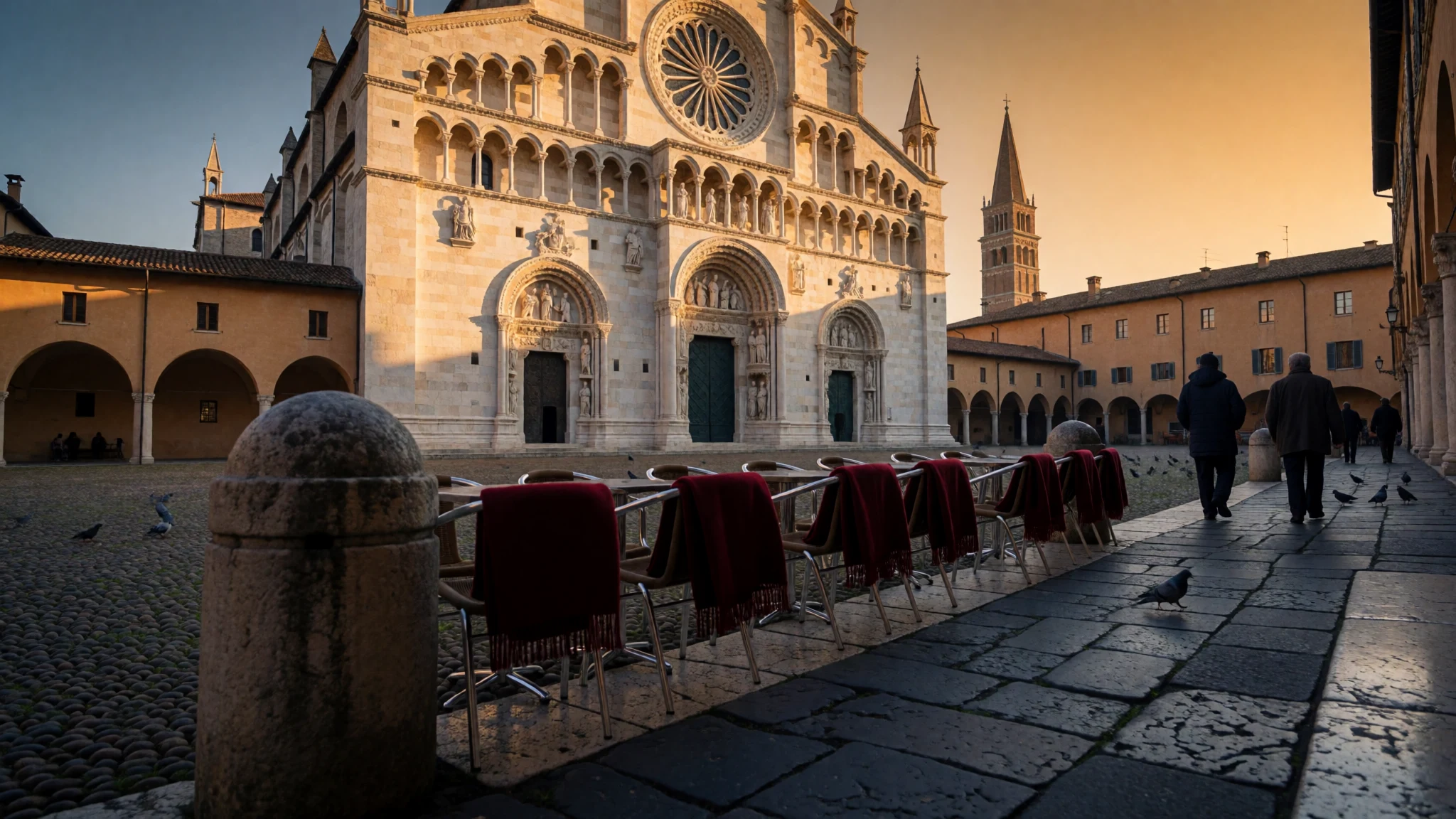
Modena combines Romanesque architecture, world-renowned motor heritage and celebrated regional dining on the southern edge of the Po Valley.
The place
Modena sits on the southern side of the wide Po Valley within the Emilia-Romagna region of northern Italy, home to a population of about 184,000 people living at an elevation of roughly 34 metres. As an established municipal centre and the seat of an archbishop, the city is internationally renowned for its automotive heritage. Historic high-performance car marques such as Ferrari, Maserati, De Tomaso and Pagani established their roots or manufacturing operations here and in the surrounding countryside, cementing the city's identity with speed and engineering craftsmanship. Beyond its roaring engines, Modena has long nurtured intellectual traditions. Its university ranks as one of the oldest in the country, originally founded in the twelfth century and later expanded under ducal patronage to focus on law, economics and medicine. The stately Palazzo Ducale now serves as a training ground for Italian military officers, while the municipal library preserves thousands of fragile historical manuscripts and volumes. At the heart of daily life lies the medieval core, where civic authority, religious devotion and urban gathering spaces converge in a UNESCO-recognised zone that has anchored the region for centuries. The surrounding municipal territory benefits from rich agricultural land and thriving manufacturing enterprises, creating an affluent local economy that supports both traditional trades and modern industrial innovation. Visitors walking through the historic streets will encounter arcaded walkways, lively open squares, and a distinct atmosphere shaped by generations of ducal rulers, artisans, scholars, and master chefs who have left an indelible mark on the town's architectural and cultural landscape.
Its story
Long before Roman legions marched across the northern plains, the territory around Modena was inhabited by Iron Age Villanovans, followed by Ligurian tribes, Etruscans, and the Gaulish Boii. Although the precise date of its earliest foundation remains lost to history, the settlement was already established by the third century before Christ. During Hannibal's dramatic invasion of the Italian peninsula, the local Boii revolted and laid siege to the fortified citadel where Roman magistrates had sought refuge. Following the turbulent Punic conflicts, the settlement was refounded as a strategic Roman colony to serve as a military base, rapidly growing into the most important centre in Cisalpine Gaul due to its position at the intersection of major roads. Political instability continued to plague the strategic outpost into the first century before Christ, when the city endured two separate sieges. During the first of these conflicts, the garrison held out until severe hunger forced a surrender, after which the defending populist leader fled before meeting his fate elsewhere in the region. Over subsequent centuries, control of the territory shifted through various medieval powers until the rise of the Este family, who ruled the duchy for generations and transformed the urban fabric with magnificent palaces, grand art collections, and formal gardens. The legacy of these ducal rulers remains visible across the historic centre, where civic pride and historical memory continue to shape the daily rhythm of life in this northern Italian municipality.
What to see
- Cathedral of Modena — Piazza Grande
The cathedral stands as a masterpiece of Romanesque architecture, featuring intricate marble carvings on its façade and an interior rich in historical sculpture. Audio guides are available to help visitors explore the sacred altars, crypts, and adjacent ecclesiastical museums. - Torre Ghirlandina — Piazza Grande
Soaring above the rooftops, this slender bell tower reaches a height of 86 metres and serves as the unmistakable symbol of the city. Together with the adjoining cathedral and central square, it forms an integral part of the local UNESCO World Heritage designation. - Palazzo Ducale di Modena — Piazza Roma
This immense baroque palace served for centuries as the official residence of the ruling dukes before the unification of Italy. Today, the stately building functions as the headquarters for the national military academy, displaying an ornate marble façade facing a spacious public square. - Palazzo dei Musei — Largo Porta Sant'Agostino
Established within a sprawling eighteenth-century complex originally built to house the less fortunate, this cultural institution now preserves the extensive painting collections, rare books, and artistic treasures accumulated by the Este family over centuries of dynastic rule. - Palazzo Comunale — Piazza Grande
The historic town hall anchors the southwestern side of the main civic square, uniting several older medieval structures under a continuous colonnaded portico. It houses historical council chambers and civic collections that trace the administrative history of the municipality.
Culture
Modena carries a deep sense of civic identity shaped by its centuries as an independent ducal capital and its position at the heart of Italy's industrial and agricultural prosperity. The intellectual life of the community revolves around its ancient university and its active military academy, lending the streets an orderly, traditional rhythm quite distinct from the larger tourist metropolises to the south. Artistic patronage under the Este dynasty left behind remarkable galleries, libraries, and public collections that locals view with immense pride. Social life unfolds naturally in the porticoed streets and lively squares, where residents gather for morning coffee, evening promenades, and unhurried meals in neighborhood trattorias. While the city celebrates its global reputation for high-performance sports cars and exceptional gastronomy, daily interactions remain grounded in courteous restraint and refined northern Italian manners. When entering churches or historical monastic interiors, visitors should ensure shoulders and knees are covered as a mark of respect for sacred spaces.
What to wear
Traditional attire in Modena reflects the practical, industrious spirit of the Emilia-Romagna plain, historically favouring durable wools, sturdy cottons, and functional garments suited for both agricultural labour and craft workshops. While distinct regional folk costumes are reserved strictly for historical pageants and cultural festivals, everyday wear among contemporary residents leans towards smart, understated elegance. Local style prioritises tailored jackets, neat knitwear, leather footwear, and classic coats that offer comfort during damp winters and warm summers. Visitors exploring the city will fit in best by adopting a neat, casual style—avoiding overly beach-oriented clothing even in warmer months. Comfortable walking shoes are essential for navigating the uneven cobblestones of the historic centre and the grand courtyards of the ducal palaces, while a light waterproof layer is recommended for sudden seasonal showers.
What to eat
- Tortellini in Brodo — Traditional trattorias across the old town
These tiny, handmade pasta rings are stuffed with a savory mixture of pork, prosciutto, and Parmigiano-Reggiano, then served steaming in a rich, clear capon broth that warms the soul on cooler days throughout local trattorias. - Veal Escalope with Balsamic Sauce — Historic city centre restaurants
A tender cut of veal gently pan-fried and glazed with authentic, aged traditional balsamic vinegar from local producers, creating a harmonious balance of savory meat and complex sweet-and-sour reduction. - Torta Barozzi — Historic pastry shops near the market streets
A rich, flourless chocolate and almond cake flavoured with a hint of rum and coffee, originally invented by a local pastry chef as a tribute to an iconic Renaissance architect from the region. - Bollito Misto — Traditional neighbourhood osterias
A hearty traditional platter of assorted boiled meats cooked to tender perfection, traditionally served alongside green herb sauces and pungent fruit mustards in classic family-run dining rooms. - Traditional Balsamic Vinegar — Speciality food shops and local markets
A legendary local condiment aged for a minimum of twelve to twenty-five years in successive wooden barrels, producing a dark, syrupy nectar prized by chefs worldwide for its intense aroma.
Plan it
Best time. April to May and September to October offer pleasant weather for walking, while July and August can be very hot and humid across the plain.
How long. 2–3
Getting there. Fly into Bologna Guglielmo Marconi Airport, then take the direct SACA bus to Modena, or travel by train via the regional rail network.
Budget. mid
Tips
- Book tables at renowned dining establishments well in advance
- Wear comfortable shoes for walking on historic stone pavements
- Carry some cash for small purchases in traditional food markets
- Check opening hours for museums as midday closures may apply
Etiquette
- Dress respectfully with covered shoulders and knees when entering churches
- Greet shopkeepers politely when entering local businesses
- Observe quiet behaviour in residential quarters during late evening hours
Nearby
Sources
- Wikidata Q279 (CC0)
- Wikipedia (CC BY-SA 4.0)
- Wikivoyage (CC BY-SA 4.0)