Milan
Milan, Italy
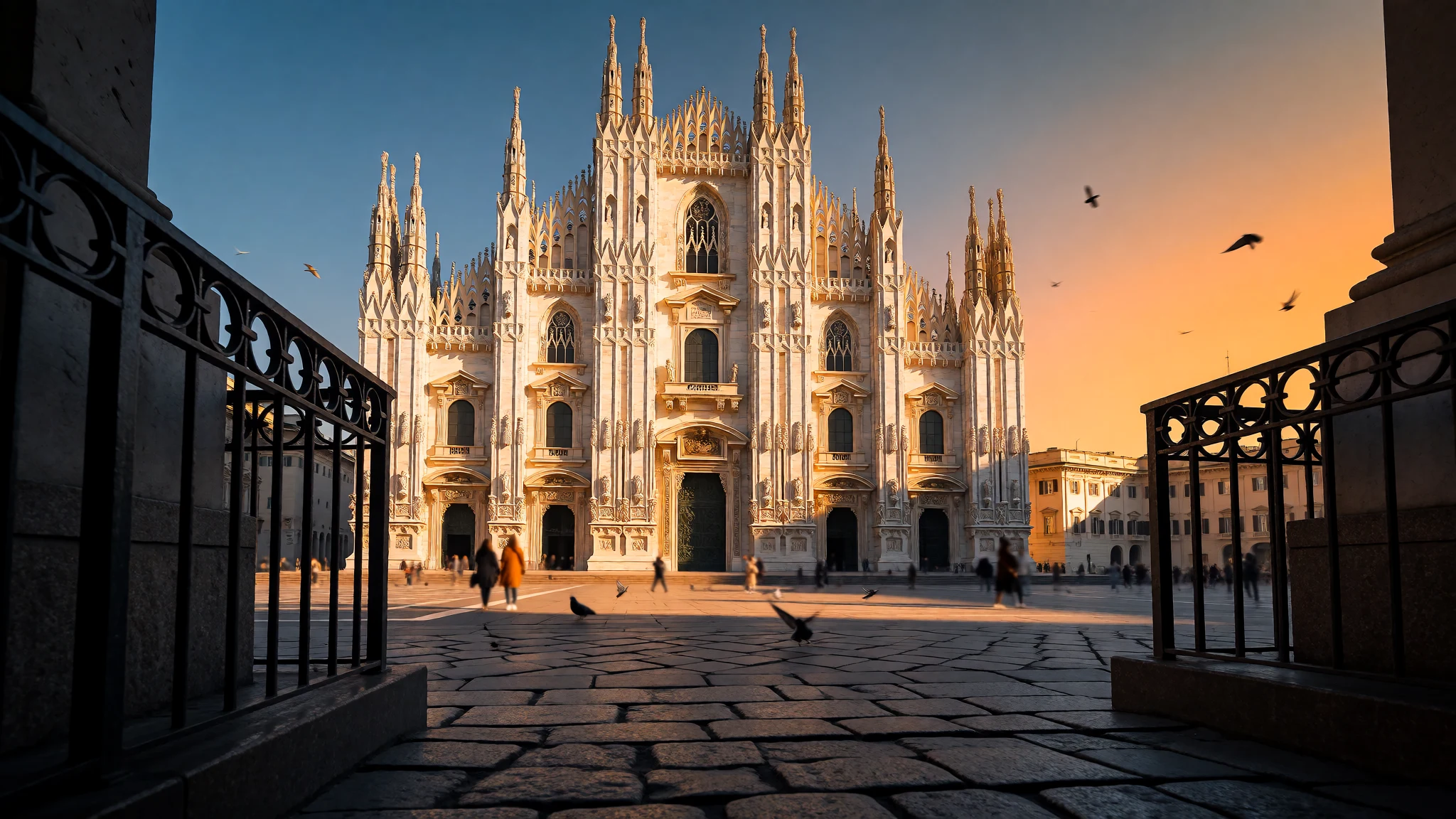
Go for the Gothic Duomo, Renaissance art, and the sharp, fast-paced energy of Italy’s commercial capital.
The place
Milan is the beating heart of northern Italy, a city where medieval spires look straight down at the sleek glass towers of the Porta Nuova business district. Its highest point is 122 metres above sea level, and the city is broad and flat, giving it a vast, open horizon that makes the cathedral seem to float above the pavement. With a population of just over 1.35 million, it is a dense, fast-moving urban centre that serves as the economic engine for the entire region of Lombardy. The city’s identity is a layering of eras: Roman, medieval, and modern coexist without quite blending. The air here is often thick with the scent of fresh bread from corner bakeries and the exhaust of scooters weaving through the traffic. Milan is a city that talks. The buzz of the Piazza del Duomo at midday is a roar of languages and commerce, and even on a quiet Sunday morning, the city centre has a constant, low-frequency hum of life. The city’s layout is concentric, shaped by the old canal network on a flat plain, with the Alps and lakes lying to the north. This geometry is partly a product of its engineering-focused history and partly a deliberate choice to keep the views open. The modern verticals of the business district create a sharp contrast to the grey limestone of the old town, making for a skyline that is distinctly Milanese. It is a place of contrasts: high-end fashion boutiques sit next to neighbourhoods where people have lived for generations, and the grandeur of the opera house exists alongside the gritty, vibrant energy of the inner-city clubs. This is not a city that moves at a slow, postcard pace. It is a place that values efficiency, beauty, and style, often at the same time. If you are used to the relaxed tempo of southern Italy, Milan’s energy will initially feel intense. It is a city that wraps you in its own rhythm, and once you are in it, the pace becomes second nature. The light in Milan during the shoulder seasons is particularly good, casting long, soft shadows that make the city’s grey limestone look severe without the harshness of summer heat.
Its story
The history of Milan begins long before the Romans arrived. Around 600 BCE, the Insubres, a Celtic tribe, settled the area under the name Medhelanon. According to ancient legend, the settlement grew around a sacred sanctuary, an elliptical wooded grove aligned with astronomical points, which served as a focal point for religious gatherings. This ancient core gave way to Roman rule; in 222 BCE, the Romans conquered the settlement and Latinised its name to Mediolanum. The city’s importance grew rapidly, and from AD 284 to 402, it served as the capital of the western Roman Empire. This era left a lasting mark on the city’s religious landscape, as many of the oldest churches in Italy were built here while it was the seat of imperial power. Following the fall of Rome, Milan entered a complex period of rule, shifting between the Visigoths, the Ostrogoths, and the Byzantines. The city became the centre of the Duchy of Milan in the Middle Ages, a period that saw it emerge as a major European power. The economic wealth of the duchy, particularly in wool and textiles, funded the city’s cultural explosion. In the 15th and 16th centuries, Milan was a powerhouse of the Italian Renaissance. The city’s courts, including those of the Sforza family, became centres of art and intellectual life, attracting figures who would reshape European aesthetics. This legacy of wealth and patronage was not just a historical footnote; it established a culture that valued craftsmanship, fine art, and public building. As the centuries turned, Milan became a hub for the Enlightenment, and its people played a central role in the political movement that led to Italian unification. The struggle against foreign domination, particularly from the Austrian Empire, forged a strong civic identity in the city’s populace. This long thread of industrial, political, and cultural ambition defines the city today. It is a place that has always looked outward, seeking to be a leader in its field, whether that is finance, fashion, or art.
What to see
- Milan Cathedral — Centro Storico
The Duomo is the city's most recognisable landmark and a masterclass in late Gothic architecture. Its facade, carved from white and pinkish marble, is a dense forest of statues and pinnacles. Visiting the rooftop terraces is a must; the view over the grey stone roofs of the city is vast, and the ironwork of the spires feels precarious and exciting. Allow extra time if you want to reach the top, as the lines for the elevator can be long.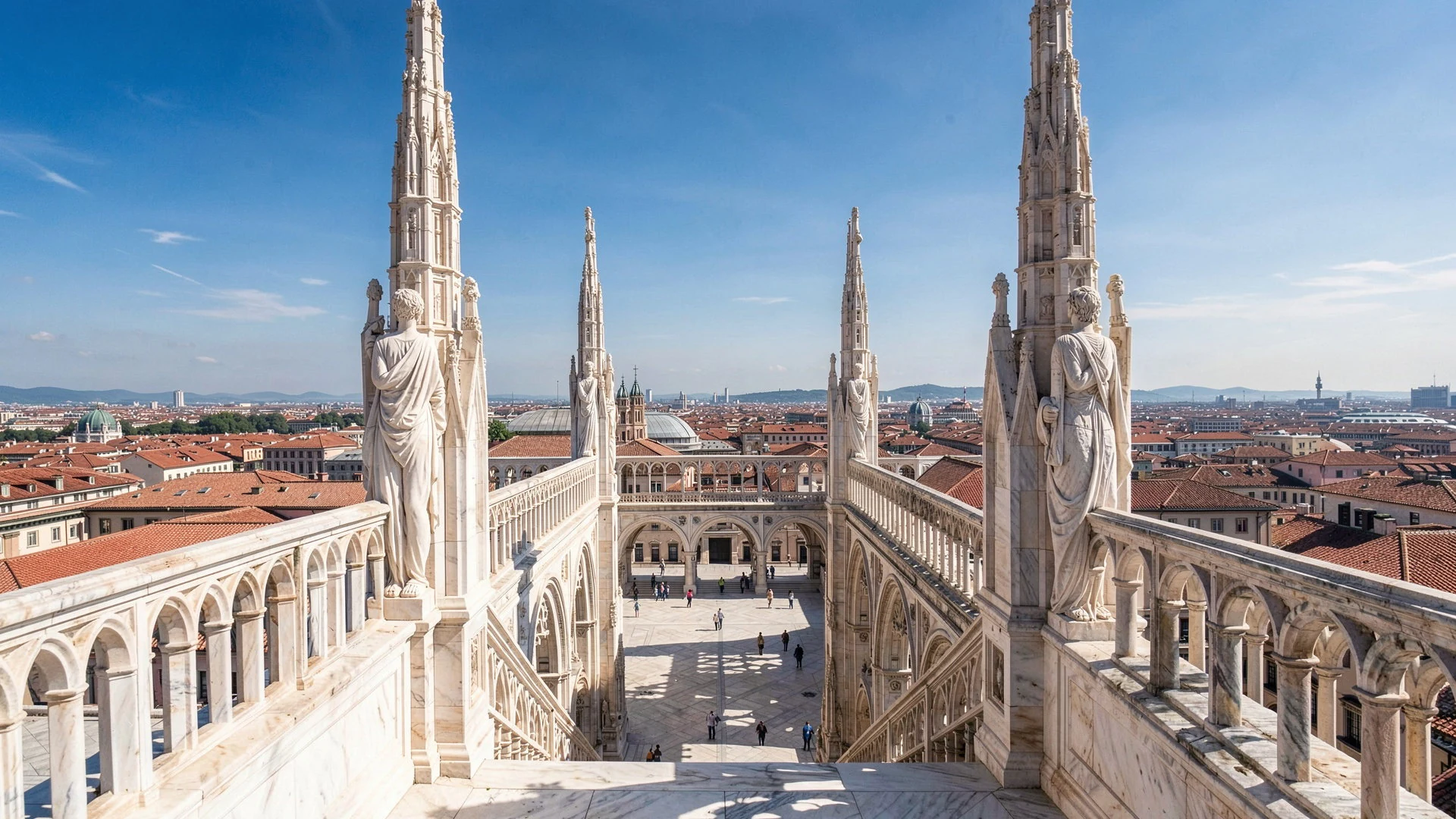
- Galleria Vittorio Emanuele II — Centro Storico
This glass-vaulted arcade connects the cathedral square to the theatre district. Step on the bull’s hide mosaic in the floor (a local tradition for good luck) and look up at the intricate ironwork and stained glass. It is a perfect place to watch the city go by, from the sleek fashionistas to the tour groups, without ever having to move from a comfortable café seat.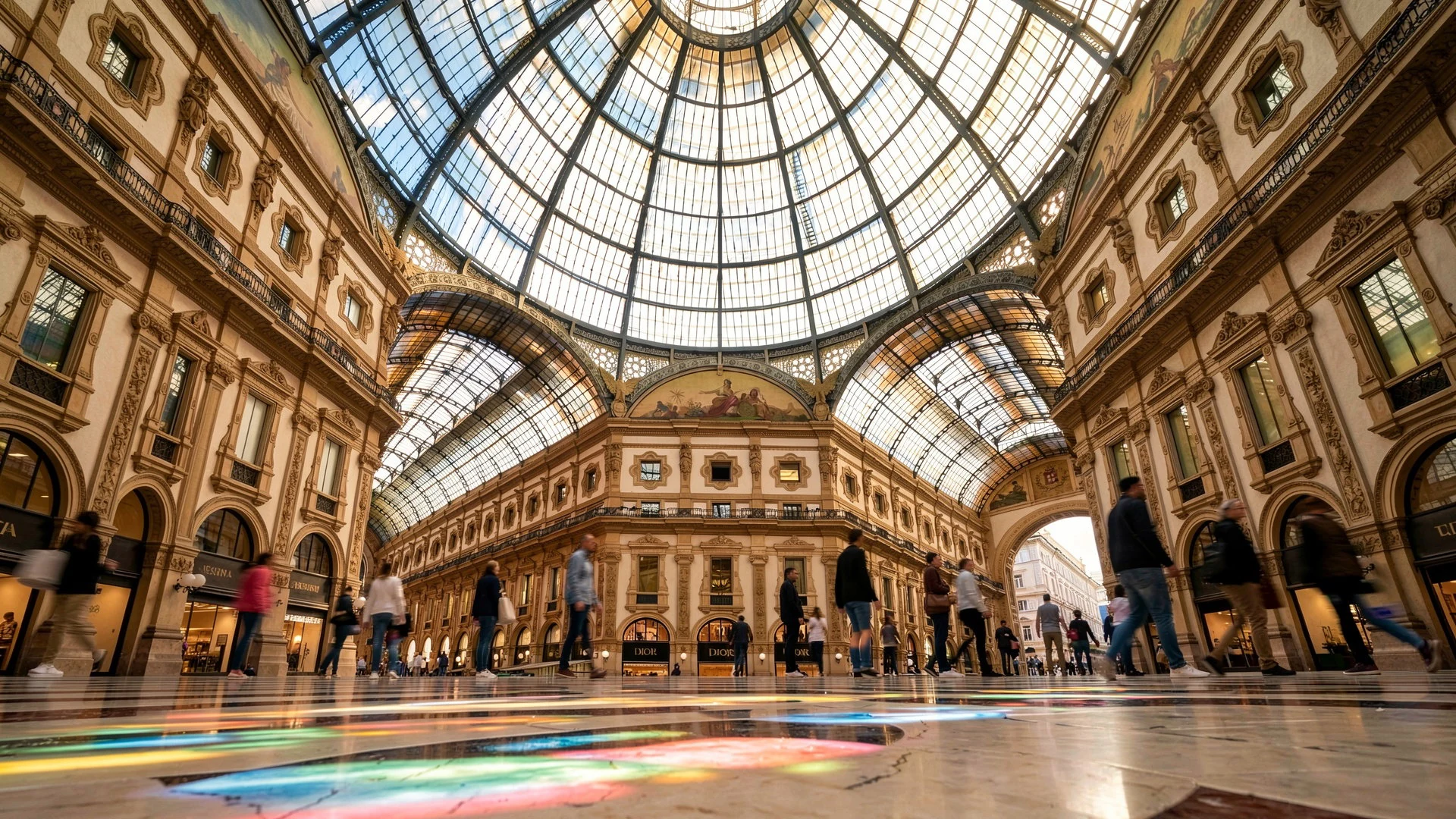
- The Last Supper — Brera
Leonardo da Vinci’s mural is a fragile and hauntingly perfect fresco, preserved in Santa Maria delle Grazie, in the west of the city, a UNESCO site. Tickets are incredibly difficult to get and must be booked online well in advance. The visit itself is short—just a few minutes in the room. The sheer calm of the painting, against the chaotic history of Milan, is a powerful experience that rewards patience and careful planning.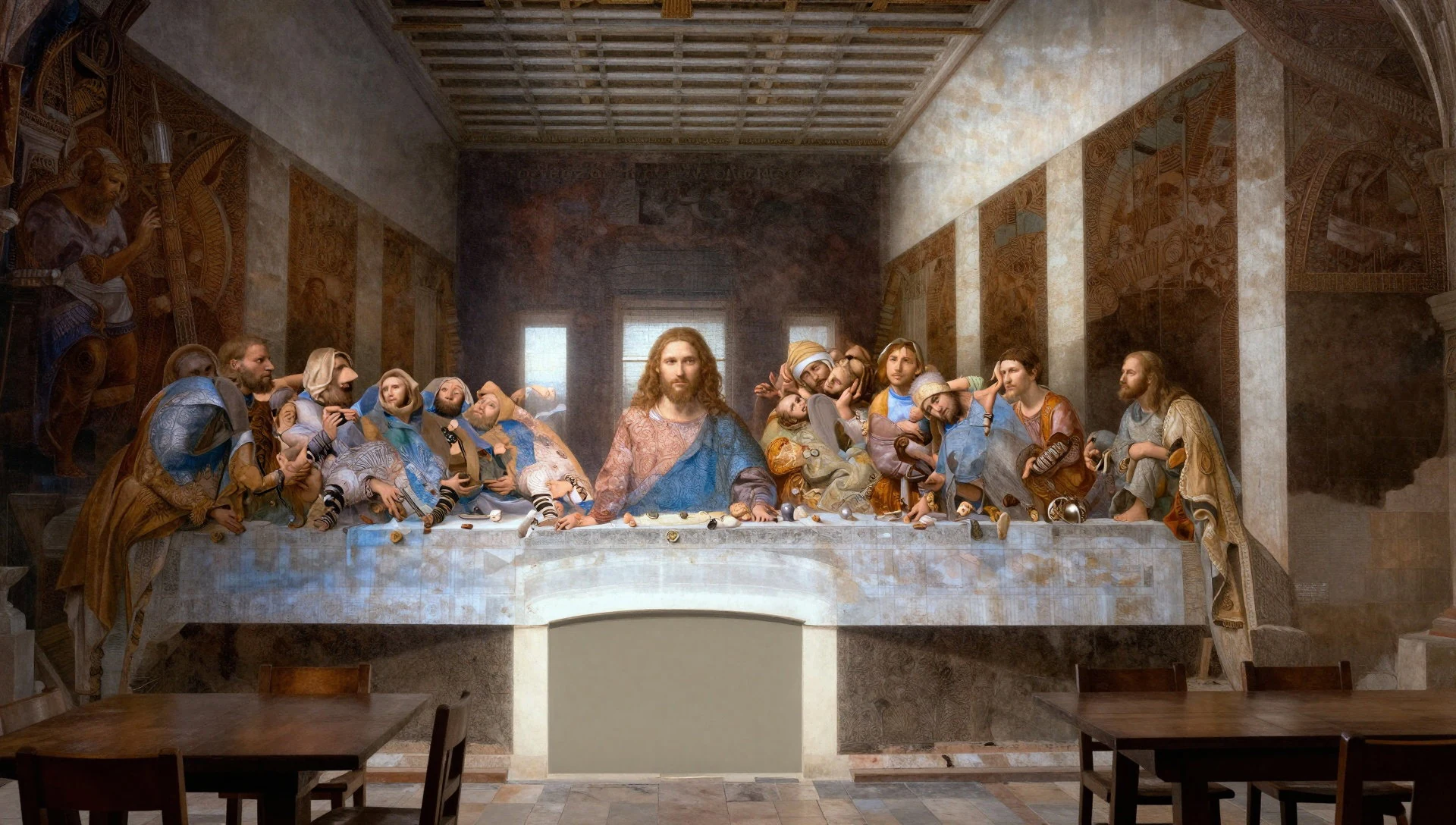
- Castello Sforzesco — City Centre
This sprawling fortification once served as the residence of the Sforza family. Its walls are vast, and the ramparts offer a bird’s-eye view of the surrounding gardens and the long Statale road. The courts inside are quiet and atmospheric, providing a stark contrast to the noise of the city centre. It is an ideal spot to take a break from the crowds and find some peace.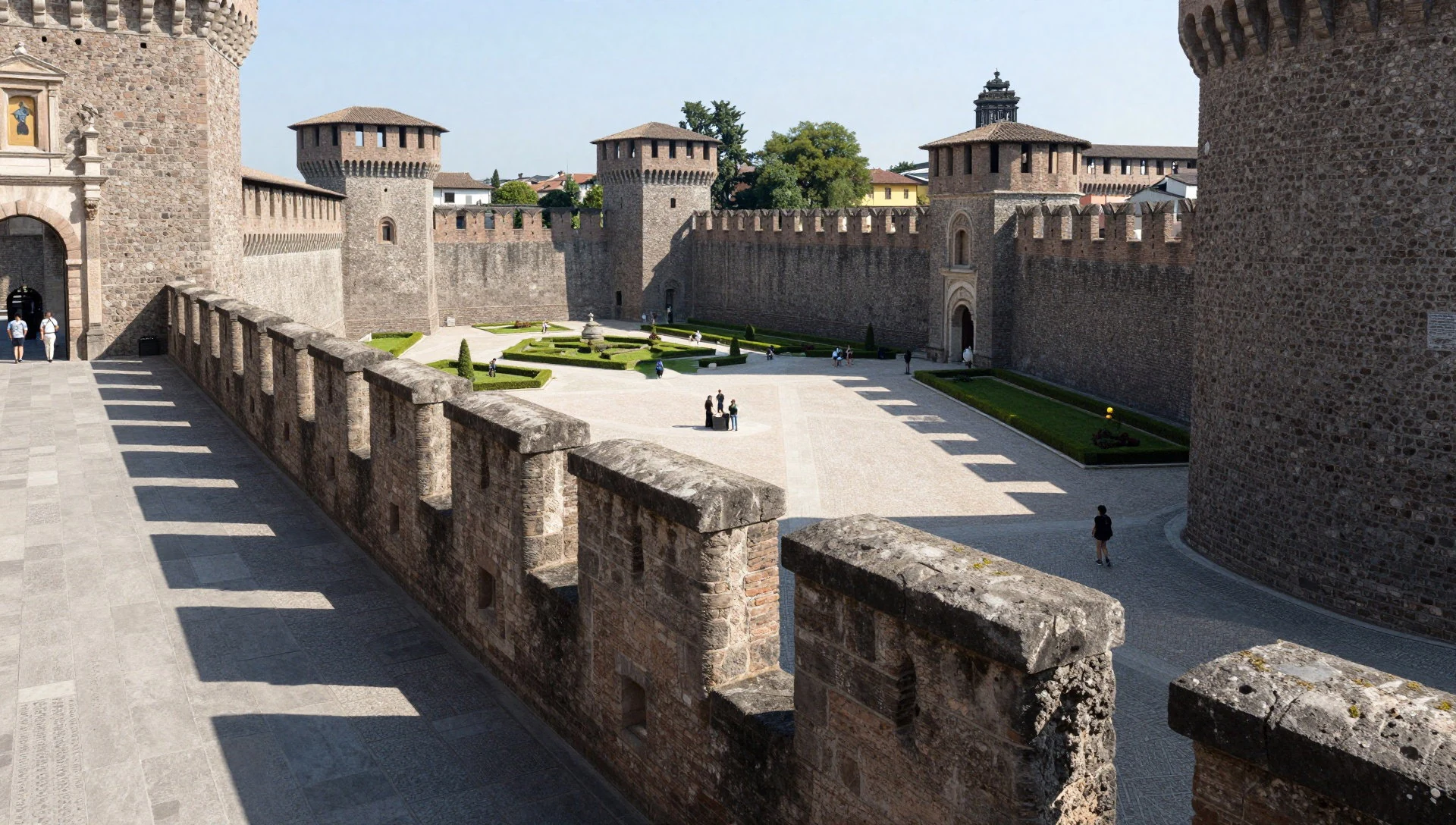
Culture
Milan is a city that treats culture as a daily routine rather than a weekend special. The Pinacoteca di Brera is one of the foremost art galleries in the country, holding a range of Italian masterpieces from the 14th to the 19th century. The Pinacoteca del Castello Sforzesco, housed within the castle, boasts a different quality of grace, including Michelangelo's Rondanini Pietà and a rich collection of decorative arts. The city’s musical heritage is also immense; the La Scala opera house is one of the world’s great stages, and even attending a less prominent performance or a guided tour of the red plush seats feels remarkably cinematic. Milanese culture is also heavily influenced by its status as a fashion and design hub. This isn't just about expensive clothes; it’s a broader ethos of presentation. People dress well, not just for a special occasion, but for a run to the bakery or a walk in the park. This attention to detail is woven into the city's social fabric, from the architecture of the buildings to the design of a simple cafe menu. Visiting Milan is an immersion into an environment where aesthetics are considered a fundamental part of the human experience. You will see this in the way people carry themselves, the way they look at a building or a painting, and the way they navigate a room. There is a constant, underlying confidence here. The city expects its people to have an opinion about beauty, and it is a vibrant place for anyone who shares that interest. It is a culture of achievement and refinement, where the past is kept clean and the future is built with the same eye for detail. Visitors will find that the cultural offerings are vast and deeply integrated into the city's public spaces, making it easy to stumble upon a masterwork while simply walking from one square to another. Keep in mind that while the culture is grand, the etiquette is informal; a nod of the head and a smile are usually sufficient to navigate the city's social currents. When visiting cathedrals, remember that shoulders and knees should generally be covered, and to keep your voice at a conversational level in the main naves.
What to wear
The fashion of Milan is a complex tapestry of history and modernity. The traditional garments of the region, such as the 'giacca' (jacket) and 'brache' (trousers), were once staples of the working class, made from sturdy wools and linens to withstand the cold Po Valley winters. In the past, these were often hand-tailored, and the textile trade was a major economic driver. Today, however, these traditional costumes are mostly reserved for specific regional festivals or historical reenactments. The modern reality is a reflection of Milan’s identity as the world’s fashion capital. People here dress with a deliberate sharpness; a well-fitted blazer or a clean, well-cut shirt is common, even for casual outings. Street style in Milan is known for its monochromatic palettes and attention to quality over quantity. You will rarely see people in overly casual sportswear in the city centre; instead, you will see a preference for smart, streamlined clothing that blends comfort with a sense of style. For a visitor, the wardrobe should reflect both the local aesthetic and the practical needs of the city. In summer, light cotton and linen are essential to deal with the heat and humidity; in winter, the cold is bone-deep, so a high-quality coat is a must. Footwear is important, as the city is best explored on foot, and the historic centre features cobbled streets that are best handled by sturdy, comfortable shoes. For those visiting modern architectural sites or the newer business districts, a more contemporary, minimalist look feels more at home. Ultimately, while there are no strict dress codes, adopting a neat, well-put-together appearance is a way to show respect for the local culture. It’s a city that responds well to those who show a little effort in their presentation, not through grand gestures, but through careful attention to fit and fabric.
What to eat
- Risotto alla Milanese — Traditional trattorias in the Brera district
A creamy, saffron-yellow rice dish that is the signature of the city. It is rich and warmly spiced, often served with a local wine. It’s a heavy but deeply satisfying meal that reflects the agricultural wealth of the Po Valley. The milk used in the preparation gives it a distinct, luxurious texture that sets it apart from other Italian risottos.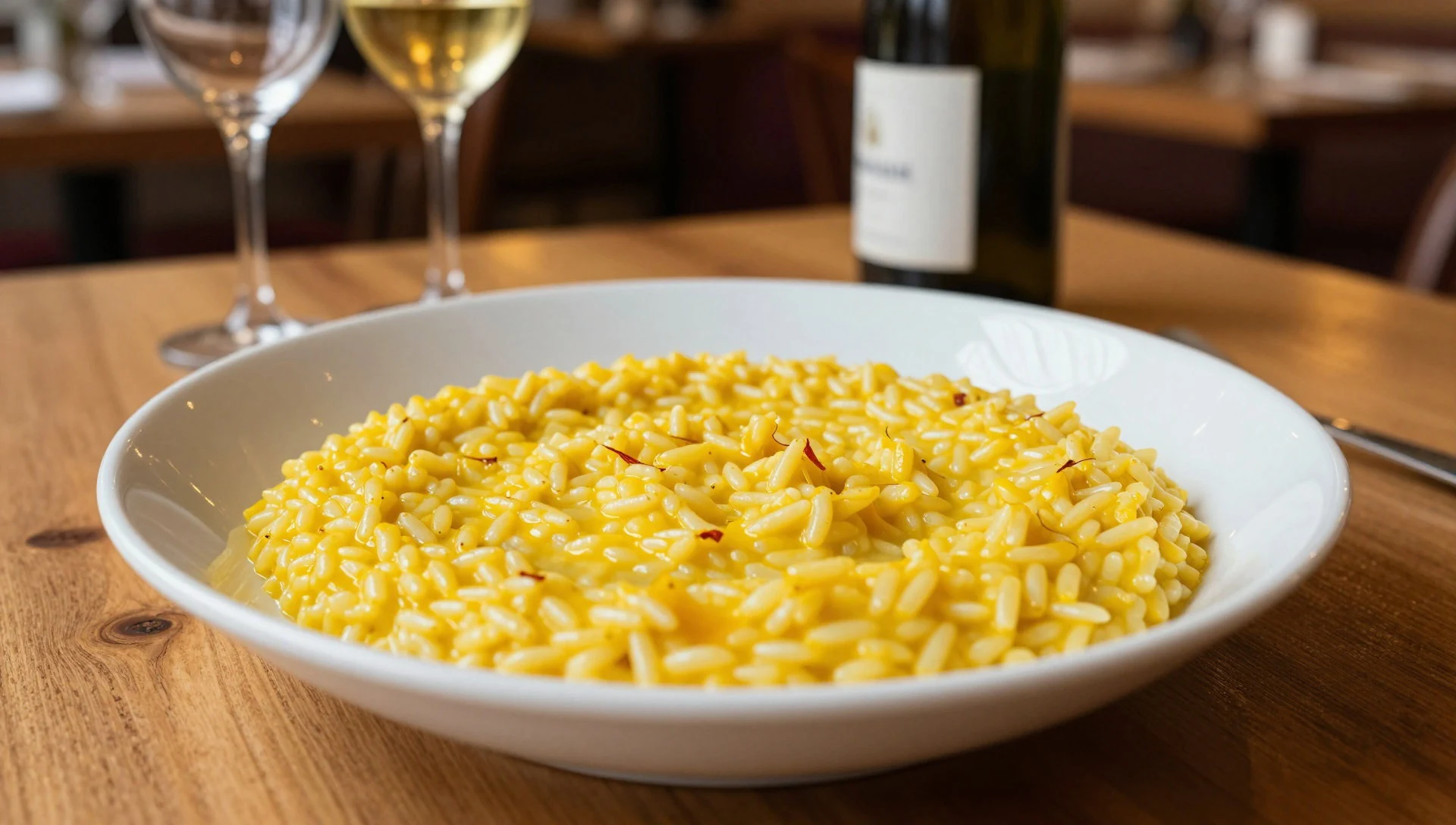
- Caffè e Cornetto — Morning bars (bar mleek) in the city centre
The foundation of a Milanese morning. A strong, frothy espresso served with a flaky, buttery pastry. It is an exercise in speed and quality; the act of standing at the marble counter, ordering quickly, and drinking while walking is part of the city's energetic identity. It’s a small ritual that happens at a hundred different corners every morning.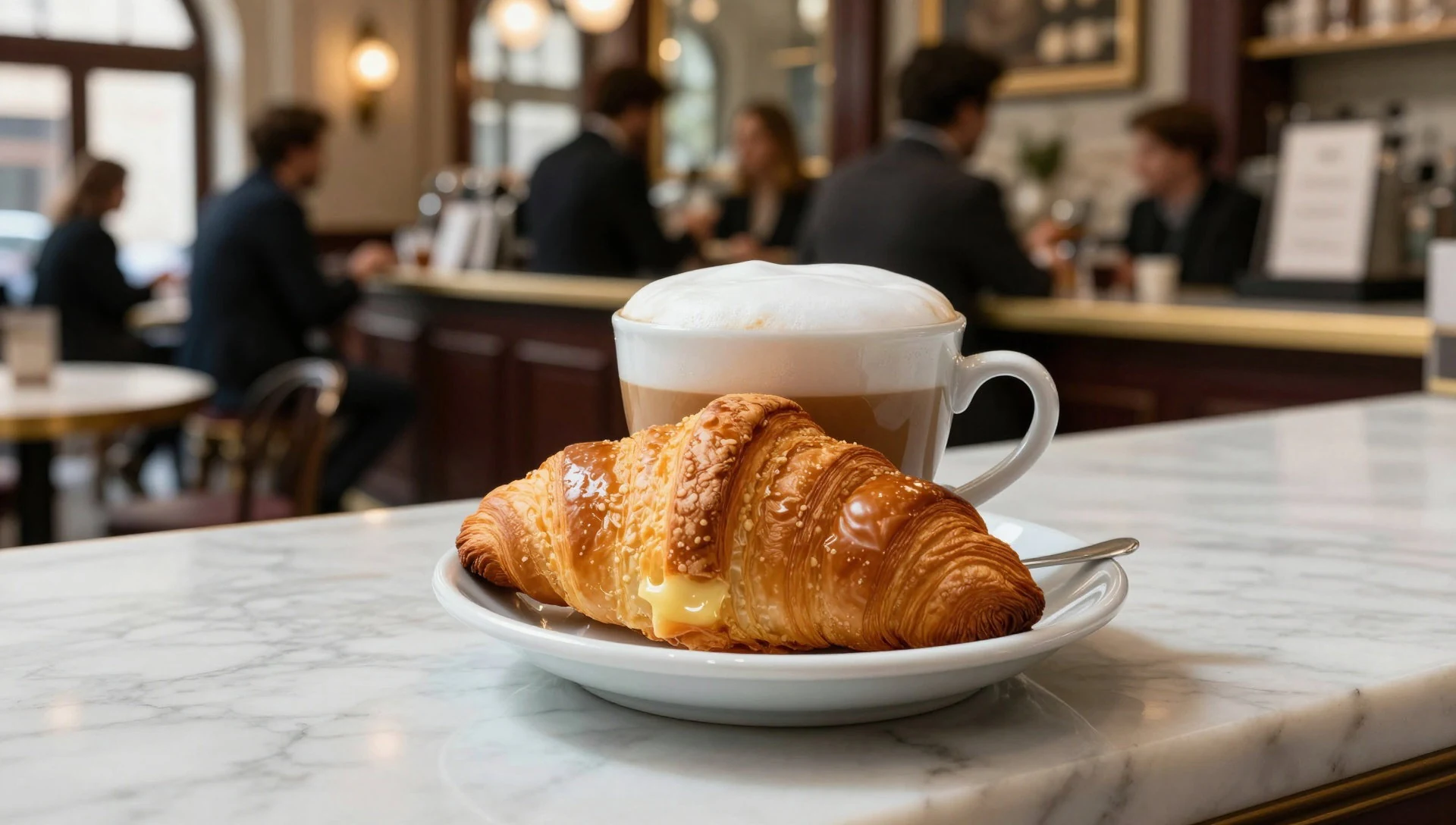
- Panzerotti — Street food kiosks near the Duomo
A deep-fried pastry, originally from Naples but a staple of Milanese street food. It is filled with a chunky tomato sauce and usually a generous amount of mozzarella or ricotta. The outside is thin and crisp, while the inside is molten and hot. It’s a portable and messy delight that is perfect for a quick snack while exploring the streets. - Vespa — Dessert bars and wine bars (enoteche)
A classic Milanese dessert that is a pure indulgence. It consists of a generous biscuit base (usually a 'Biscotto') topped with a soft, vanilla-flavoured 'zabaione' and a layer of fresh cream. The texture is a study in contrasts—the crunch of the biscuit against the delicate, melt-in-the-mouth zabaione. It is a light finish to a heavy meal but visually striking. - Cresciondi — Rustic restaurants in the periphery
Cresciondi are a type of hand-rolled pasta, often made with durum wheat flour and eggs. The dough is thin, with a slightly rough texture that is perfect for holding onto sauces. In Milan, they are often served with a rich ragù or a simple sauce with garlic and parsley. They are a comfort food that speaks to the city's deep roots in manual, family-style cooking. - Ossobuco — Up-market restaurants in the city centre
Braised veal shank with a sprig of rosemary and a thick, savoury sauce. The meat is so tender it falls off the bone, and the flavour is slow-cooked and intense. It is a dish that takes time to cook and requires patience from the diner, but it is often the centrepiece of a Milanese special occasion. It’s a dish for when you have an evening to sit and enjoy the company.
Plan it
Best time. Spring and autumn are the pleasant seasons, September the most comfortable, August the hottest and November the wettest, and the city is worth visiting year-round.
How long. 3–4
Getting there. Arrive at Malpensa (MXP) or Linate (LIN) airports; from there, use the scheduled trains or metro to reach the city centre.
Budget. high
Tips
- Buy tickets for The Last Supper months in advance, as they sell out quickly.
- Carry a light layer in summer, as temperatures can spike.
- Explore the Brera district on foot to avoid traffic and discover hidden courtyards.
- Bring a small water bottle; there are many public fountains, but they are not always obvious.
Etiquette
- Keep your voice down in the cathedral; it is a place of active worship.
- Dress modestly when entering religious sites.
- Dispose of litter carefully, as the city centre is heavily maintained.
Nearby
Sources
- Wikidata Q490 (CC0)
- Wikipedia (rev 1384052213) (CC BY-SA 4.0)
- Wikivoyage (rev 5411179) (CC BY-SA 4.0)
- Milan (Lombardy, Italy) – Milan Cathedral – view from the southwest over the Piazza del Duomo (Cathedral Squ (CC BY-SA 4.0)
- Picture showing the skyline of Milan. (CC0 1.0)
- Milan Cathedral from Piazza del Duomo (CC BY 3.0)
- Scala de Milan (CC BY 3.0)
- This image showcases the interior of the Galleria Vittorio Emanuele II in Milan, highlighting the lavish decor (CC0 1.0)
- Southeast Side/Facade & Filarete Tower of the Sforza Castle, Milan, Province of Milan, Region of Lombardy, Ital (CC BY-SA 4.0)
- Peace Arch, Milan, Province of Milan, Region of Lombardy, Italy (CC BY-SA 4.0)
- Front entrance portico of Stazione Centrale, Milan (CC BY 3.0)


