Maulbronn Monastery
Maulbronn Monastery, Germany
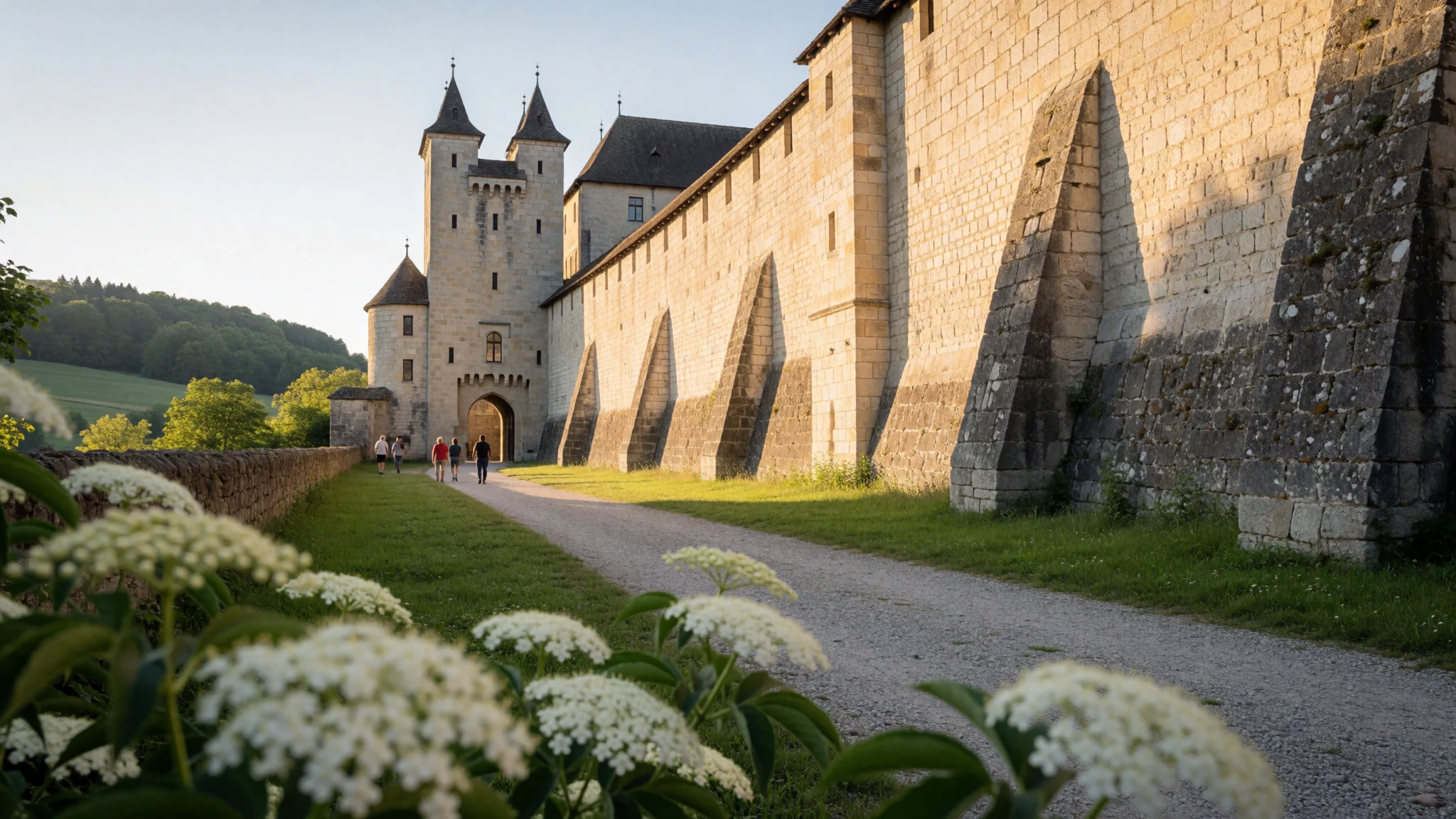
Maulbronn Monastery is a beautifully intact Cistercian complex where medieval stone, water, and quieter church life still feel close.
The place
Maulbronn Monastery (Kloster Maulbronn) sits in Maulbronn, Baden-Württemberg, and it’s the sort of place that rewards patient wandering. This was once a Cistercian abbey—complete with the defensive, turreted walls and a tower gate—and today the overall complex still reads as one enclosed world. The monastery church and cloister spaces give off that “planned stillness”: broad stone surfaces, careful sightlines, and courtyards that make it easy to forget the outside road.
What makes Maulbronn unusual is how many different civic and educational functions now share the same historic fabric. Within the walled grounds, there’s an Evangelical seminary and a boarding school, and the complex also hosts administrative offices including the town hall and a police station. That living use is why you’ll see ordinary movement—students, visitors, staff—rather than a complete museum hush.
It was founded in 1147, and later it shifted from monastic life towards later Protestant education, after the Cistercian community was dissolved. Even with that historical churn, the physical shell remains remarkably coherent: the church, the courtyard-adjacent buildings, and the enclosure walls together create a compact, legible site.
Crowds are usually modest compared with Germany’s “big-ticket” castles, but weekends in good weather can still bring tour groups. The best moments tend to be early in the day, when the stone cools down and the light hits the courtyards gently. Do expect country-walk conditions around the complex—stable shoes help, and a light jacket is wise in the shoulder seasons.
Its story
Maulbronn Monastery began as a Cistercian project that had to move for practical reasons. A free knight donated an estate to the order, but the first location didn’t suit the needs of the monks. The monastery community was then relocated to a new site, chosen for water and pasture, and the main construction of the complex followed shortly after.
Once the buildings were underway, the monastery’s story quickly became about growth and organisation. The early centuries saw steady economic expansion and increasing security, helped by powerful patrons associated with the Holy Roman Empire. Like many medieval ecclesiastical institutions, Maulbronn wasn’t just a place of worship; it also acted as a centre that managed land, relationships, and legal rights.
Over time, the narrative turns harder. The later medieval period brought hardship, with difficult decades that affected prosperity and stability. In the following era, renewed success returned, and the monastery’s influence extended through acquisitions and the founding of related institutions.
A major shift came when the Cistercian monastery was dissolved and replaced by Protestant schooling. Maulbronn then became tied to administration: it served as the seat for an important district of Württemberg and later the Kingdom of Württemberg. The result is a complex with layered identities—church, school, and civic space—still enclosed in the medieval walls that were built to keep both the community and its operations distinct.
What to see
- Klosterkirche & the Vorhalle (“Paradies”) — Main church precinct
Maulbronn Monastery’s church area is the heart of the complex. Look for the Vorhalle (“Paradies”) setting the tone—stonework, entrances, and the way the corridor-to-church layout frames views. It’s a good stop when you want quiet, because people naturally slow down near the sacred core.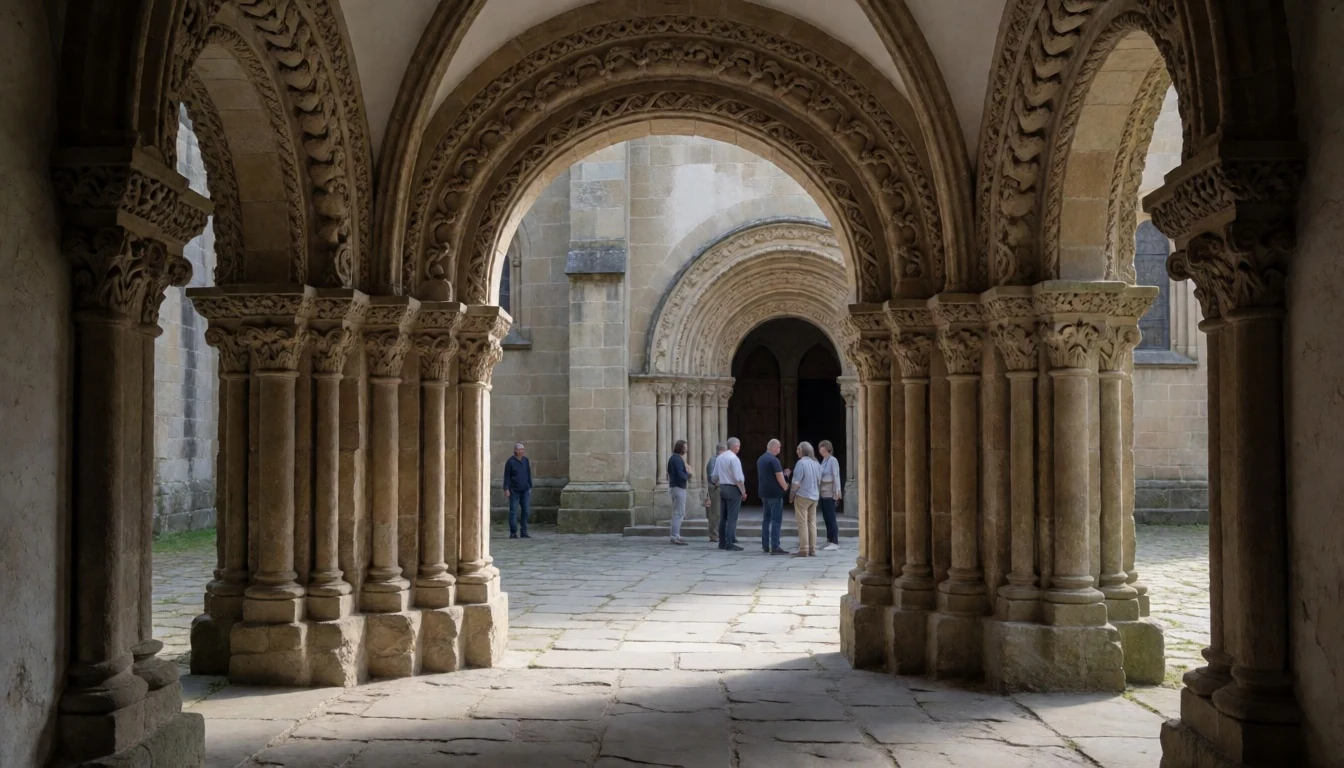
- Courtyard facade and ordered complex — Inner courtyard buildings
Maulbronn Monastery’s inner buildings wrap a sense of enclosure around the courtyard spaces. Follow the facade lines and the way structures sit in relation to each other—there’s a clear, planned feel to the whole complex, not a scattered collection. It’s one of the easiest places to “read” the layout.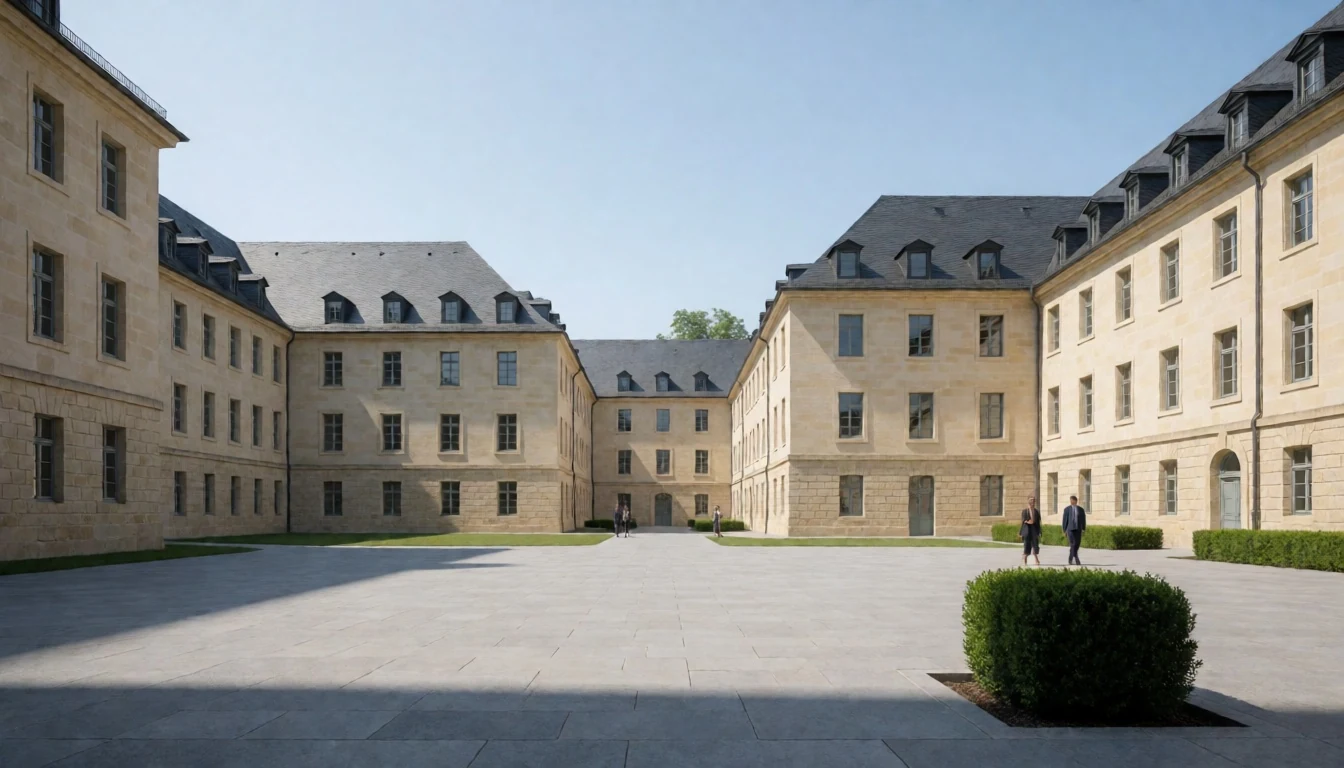
- Forest register-books viewpoint — Woodland edge viewpoint
Maulbronn’s surroundings include a wooded feel, and one of the most evocative angles comes from the forest register-books viewpoint. It’s a spot where the complex looks like it belongs to the landscape, not apart from it. Try it in softer light for depth and easier photography.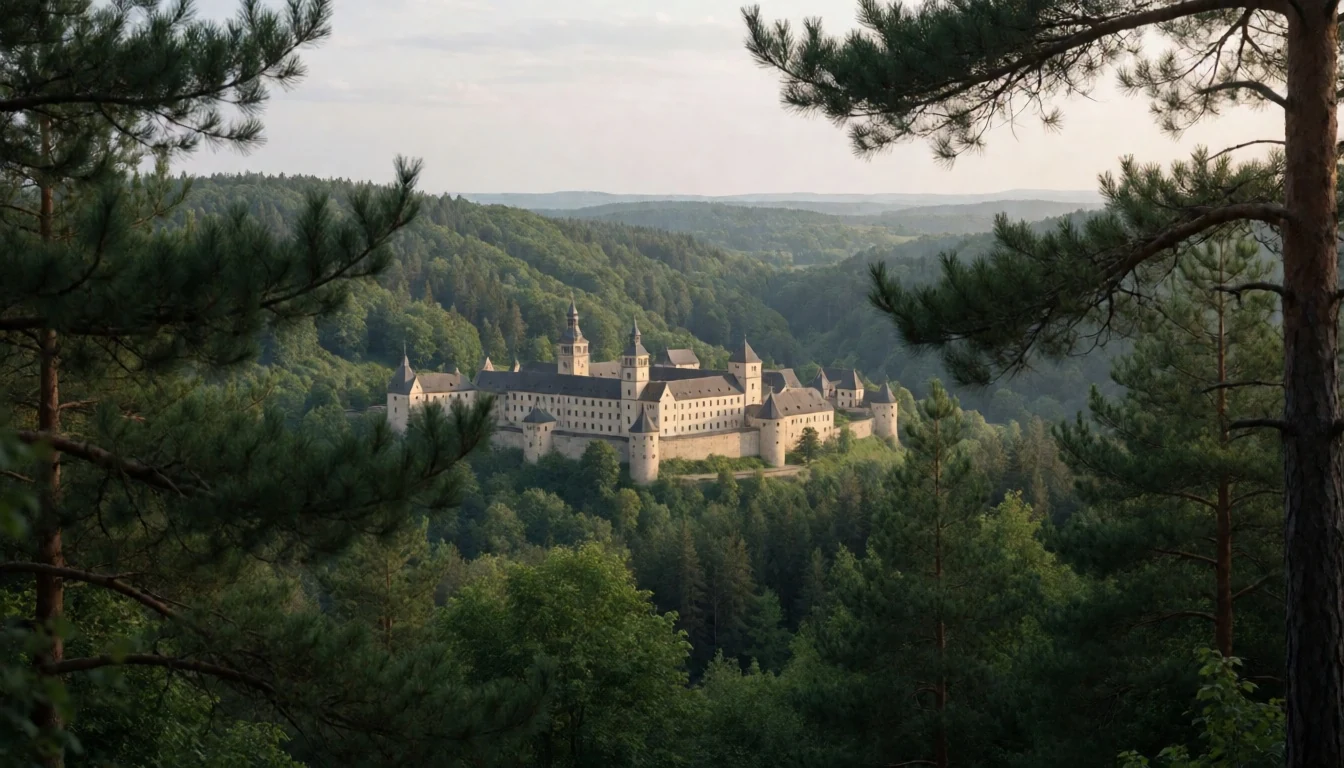
- Aerial view from the southeast — Southeast approaches
From the southeast, an aerial perspective makes Maulbronn Monastery’s enclosed layout click. You can trace the walls and the way the main church and surrounding blocks sit inside the perimeter. This viewpoint also helps with orientation later on foot, so you don’t keep wandering in circles.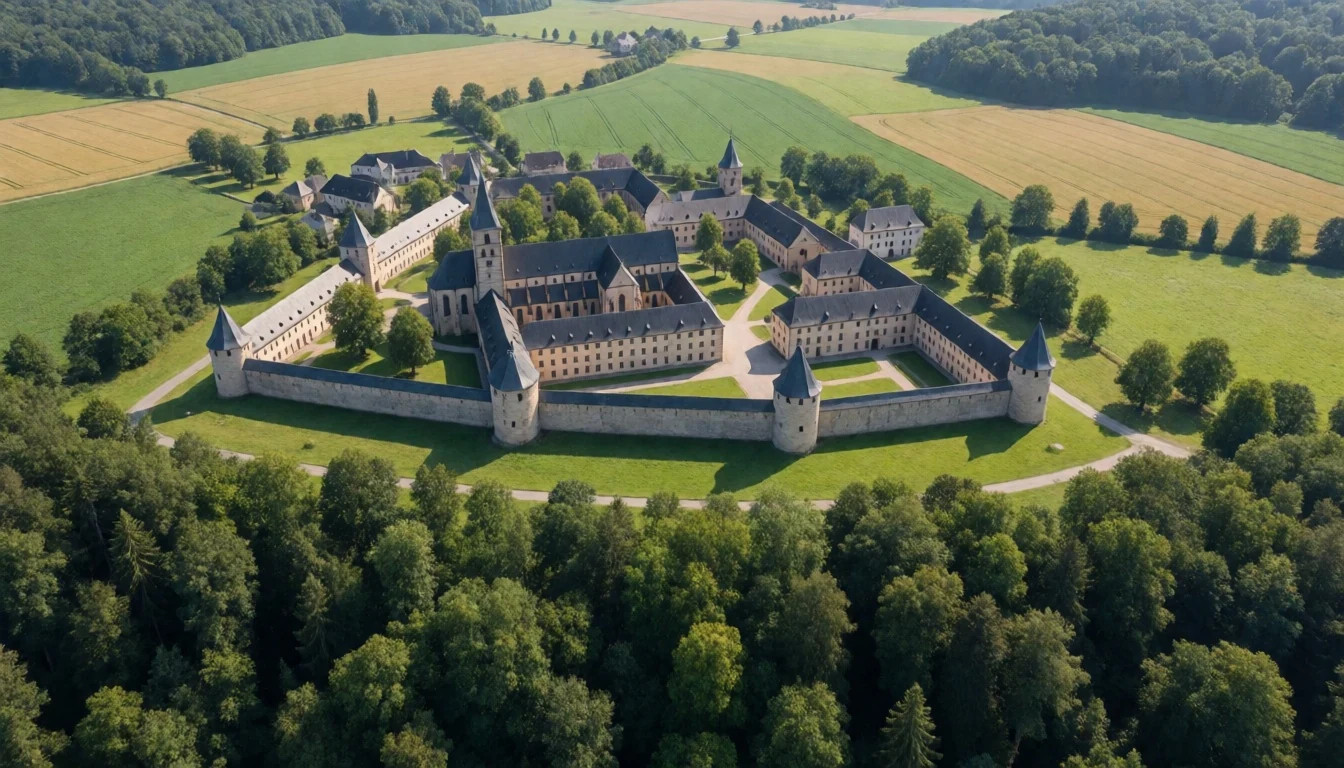
- Lageplan overview map — At-entry orientation area
Maulbronn Monastery’s Lageplan overview is useful when you want a straightforward route. Use it first to locate the church precinct, courtyards, and main entry points inside the walls. Even if you don’t stick to a “plan”, the map keeps the complex from feeling maze-like, especially on busy days.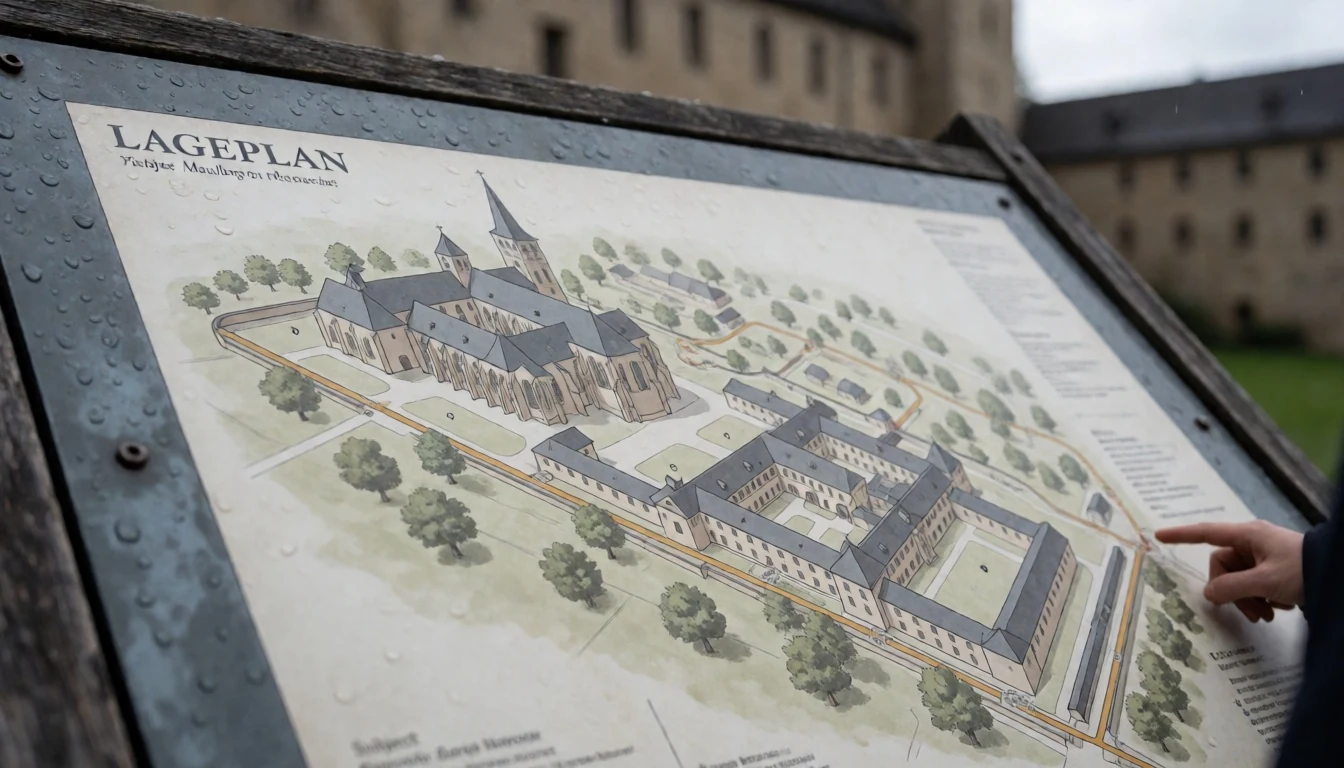
Culture
Maulbronn Monastery is more than a historic stone set: it’s still used for education and public life, so the culture here is about respectful normality. You’ll see the site functioning alongside visitor sightseeing—students and staff move through corridors, and the complex’s administrative roles mean it doesn’t feel abandoned.
That living aspect changes behaviour. Inside church areas, the atmosphere asks for the same restraint you’d expect in any active place of worship: voices down, no blocking entrances, and a slower pace near altars and sacred rooms. In the courtyards and corridors, people often pause for photos, but the best shots tend to be the ones that don’t interfere with foot traffic.
The other cultural layer is the Cistercian feel—order, clarity, and the sense that architecture was designed to support routine. It’s a good place to notice details rather than “speed-run” landmarks: doorways, wall surfaces, and how spaces connect.
Crowds are typically manageable, but weekend tours can make the key church areas busy for brief windows. If that happens, shifting to courtyards and quieter edges usually restores calm.
Visitor etiquette: keep voices low in church areas, avoid blocking walkways for photos, and follow any signage about entry rules for parts of the complex used by the seminary and school.
What to wear
At Maulbronn Monastery, dress is generally comfortable but modest pays off. The setting is a church-adjacent complex, and even if sightseeing is casual, it’s still a working religious site in parts. Traditional Cistercian clothing is not worn by visitors, of course, but the heritage matters in how people dress: expect practical, understated outfits rather than anything flashy.
What people wear now is typical Central European sightseeing attire—jeans or trekking trousers, long sleeves for cooler mornings, and a light waterproof layer when the weather turns. Footwear is the real consideration. The grounds involve walking between courtyards, entrances, and paths around the enclosure, so trainers with grip (or light walking shoes) are more useful than smooth-soled shoes.
For a visitor, aim for layers: a warm top for March–April or late autumn, and something breathable if you’re visiting in warmer spells. If the day starts cool and bright, a mid-layer is often the difference between enjoying the walk and rushing back to the car. If you plan to spend time near church interiors, keep shoulders and knees reasonably covered out of respect.
In short: wear comfortable shoes for stone and gravel paths, bring a light rain layer, and keep your outfit neat and modest for church areas.
What to eat
- Käsespätzle — Town-centre restaurants and local German eateries
Maulbronn and the surrounding region often serve Käsespätzle—chewy egg noodles tossed with cheese—at local German eateries. Look for it in the town or nearby villages, especially where traditional Swabian-Baden comfort food is the focus.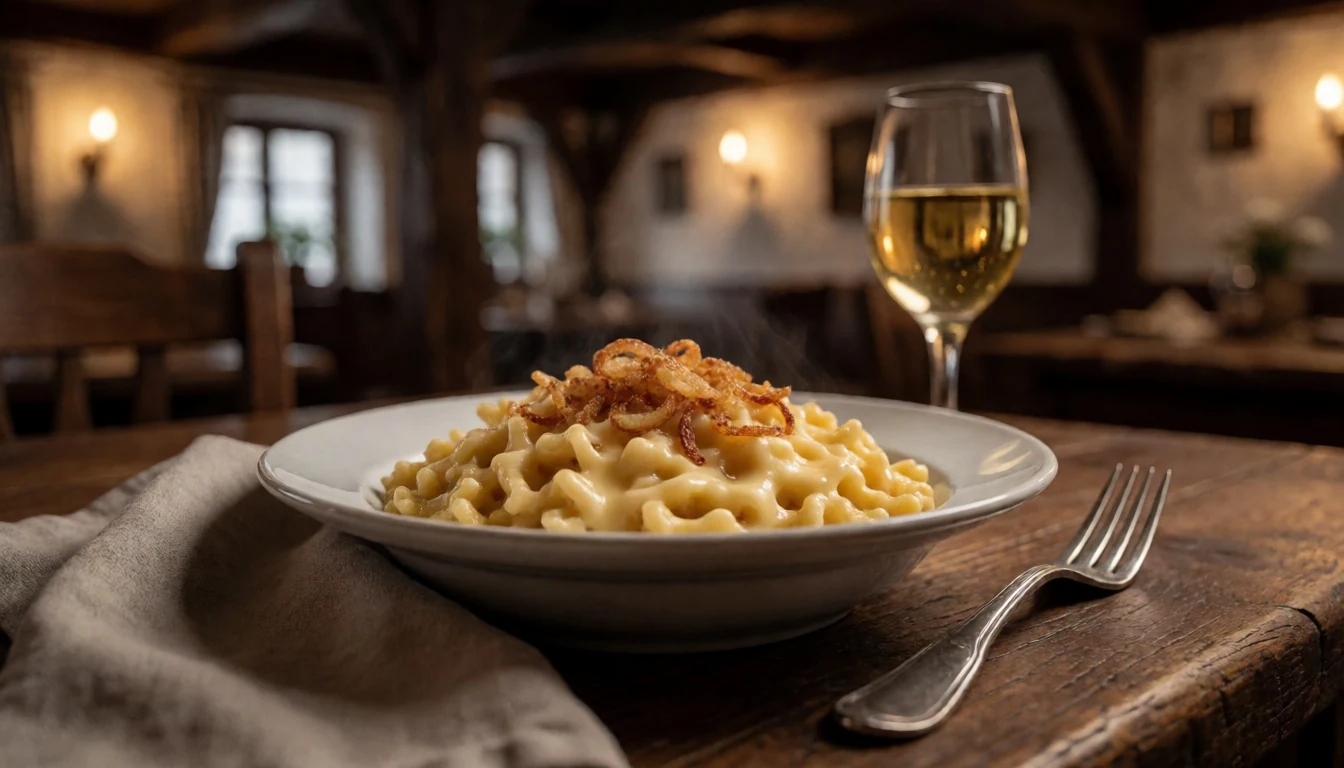
- Maultaschen — Local taverns and regional eateries
Maultaschen are stuffed dumplings, usually with a savoury filling and served with buttery broth or greens. In this part of Baden-Württemberg, you’ll find them on menus in regional eateries and traditional taverns, particularly around lunchtime.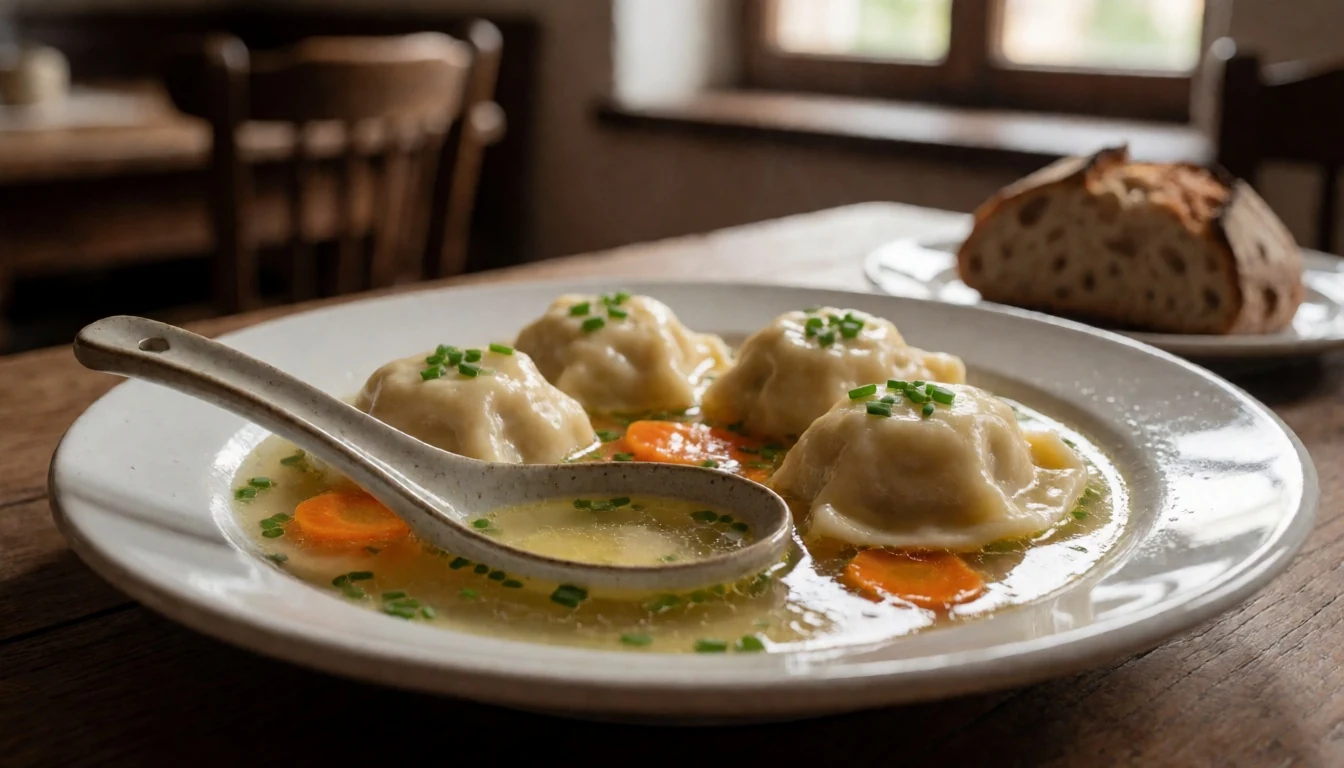
- Flammkuchen — Casual restaurants in Maulbronn and nearby towns
Flammkuchen (tarte flambée) is a thin, crisp pastry topped with sour cream, onions and often bacon. It’s a common choice in Baden-Württemberg-style menus, and it tends to show up in casual restaurants rather than formal fine dining. - Baden-style salads and seasonal sides — Everyday lunch spots and garden-vegetable menus
In Germany’s southwest, seasonal vegetables and hearty sides often accompany main dishes—think potato salad-style sides, simple greens, and regional pickles. These appear easily in everyday lunch spots, especially when you want something lighter than dumplings. - Black Forest–style cake (regional variants) — Cafés and bakeries in the local area
Around Baden-Württemberg, chocolatey, cream-filled cake styles are popular for a late-afternoon break. Expect variations that use local cream and cherries, found in cafés near main streets and in town bakeries.
Plan it
Best time. May through September is warmest, with July and August the hottest; rainfall peaks in May and December. For more comfortable walking and softer temperatures, aim for April to June or September to October, when it’s milder but not at its coldest.
How long. 2–3
Getting there. Fly into Frankfurt or Stuttgart, then continue by train toward the Maulbronn area, using regional services for the final approach as needed.
Budget. mid
Tips
- Aim for an early start so the church precinct feels calmer before tour groups arrive.
- Use a map at the site to avoid backtracking inside the walled complex.
- Bring a light layer and a small rain cover; weather in Baden-Württemberg can shift quickly.
- If travelling by rail, build in time for at least one connection depending on where you start.
- Keep some cash on hand for small purchases in town, even if major places accept cards.
Etiquette
- Keep voices low and avoid blocking entrances in active worship areas.
- Move aside if you’re photographing so other visitors can pass.
- Follow any signage for areas used by the seminary, boarding school, or offices.
Nearby
Sources
- Wikidata Q157886 (CC0)
- Wikipedia (Maulbronn Monastery, rev 1382804517) (CC BY-SA 4.0)
- Wikivoyage (Karlsruhe (region), rev 5137988) (CC BY-SA 4.0)
- Photo photos/01-kloster-maulbronn-2009.jpg (CC BY 3.0)
