Lipari
Lipari, Italy
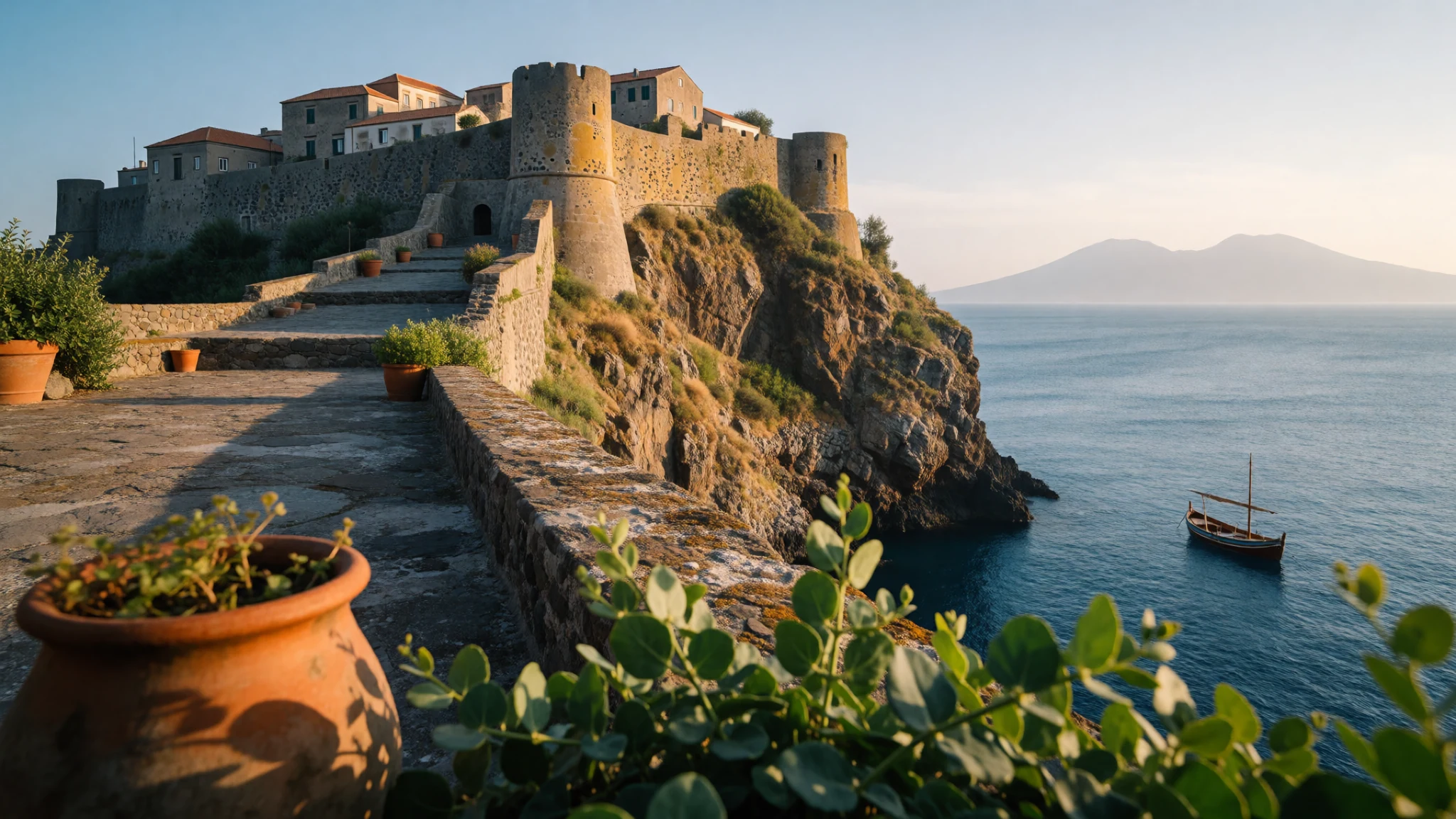
Lipari is the largest of the volcanic Aeolian Islands, offering dramatic coastal cliffs, ancient citadels, and timeless Mediterranean village life off the coast of Sicily.
The place
Lipari stands as the largest and most populated island within the seven principal islands of the Aeolian archipelago, sitting in the Tyrrhenian Sea off the northern coast of Sicily in southern Italy. Administered as a comune that includes six of the surrounding islands, Lipari balances a vibrant year-round community with a distinct island rhythm that swells considerably during the warmer months. While the permanent population centers around the main urban area and four outlying villages — Pianoconte to the west, Quattropani towards the northwest, Acquacalda on the northern coastline, and Canneto on the eastern shore — the landscape itself tells a story of intense volcanic origins. The island's terrain features rugged coastal formations, pale pumice quarries, and sweeping viewpoints overlooking neighboring islands like Vulcano. Visitors arriving by sea are greeted by the striking silhouette of the town's historic citadel rising above the harbor. Beyond the main town, winding roads cut through rocky hillsides dotted with caper bushes and vineyards, connecting quiet residential hamlets where daily life still follows the slow pace of the Mediterranean. The geographical isolation of the islands has preserved a unique character that separates Lipari from the Sicilian mainland, creating an atmosphere where maritime traditions, local crafts, and volcanic geology remain deeply intertwined.
Its story
Lipari holds a layered history stretching back deep into prehistoric times, shaped heavily by its unique geology and strategic maritime position. In the Neolithic period, the island served as a crucial Mediterranean centre for trading obsidian, a hard black volcanic glass prized for producing extremely sharp cutting edges. Archaeological findings reveal human habitation on Lipari dating back millennia, accompanied by local legends featuring leaders from Campania who gave the island its eponymous name. The early Bronze Age brought new settlers of Aegean origin from Mycenaean Greece, who utilized the islands as strategic outposts to control vital trading routes through the strait of Messina. Successive waves of civilization left tangible traces, particularly on the defensible acropolis where excavations have uncovered domestic structures and extensive necropoli spanning centuries. Classical antiquity linked Lipari deeply to mythology; the ancient Greek geographer Strabo identified the island with Aeolia, the mythical floating island of the winds where Aeolus dwelt according to Homer's Odyssey. Virgil later placed the fiery underground forges of the Cyclopes beneath Lipari's smoking rocks. Through centuries of subsequent conquests by various Mediterranean powers, the island repeatedly reinvented its defenses and settlements, culminating in the medieval and Renaissance fortifications that still crown the rocky promontory of the citadel today.
What to see
- The Castle of Lipari — Lipari town
The Castle of Lipari is a massive fortified citadel perched dramatically on a rocky headchopping promontory overlooking the sea. Enclosed by heavy medieval and Spanish ramparts, the complex houses a dense historical quarter containing archaeological excavations, ancient defensive walls, and centuries of architectural layers that reflect the island's strategic maritime importance.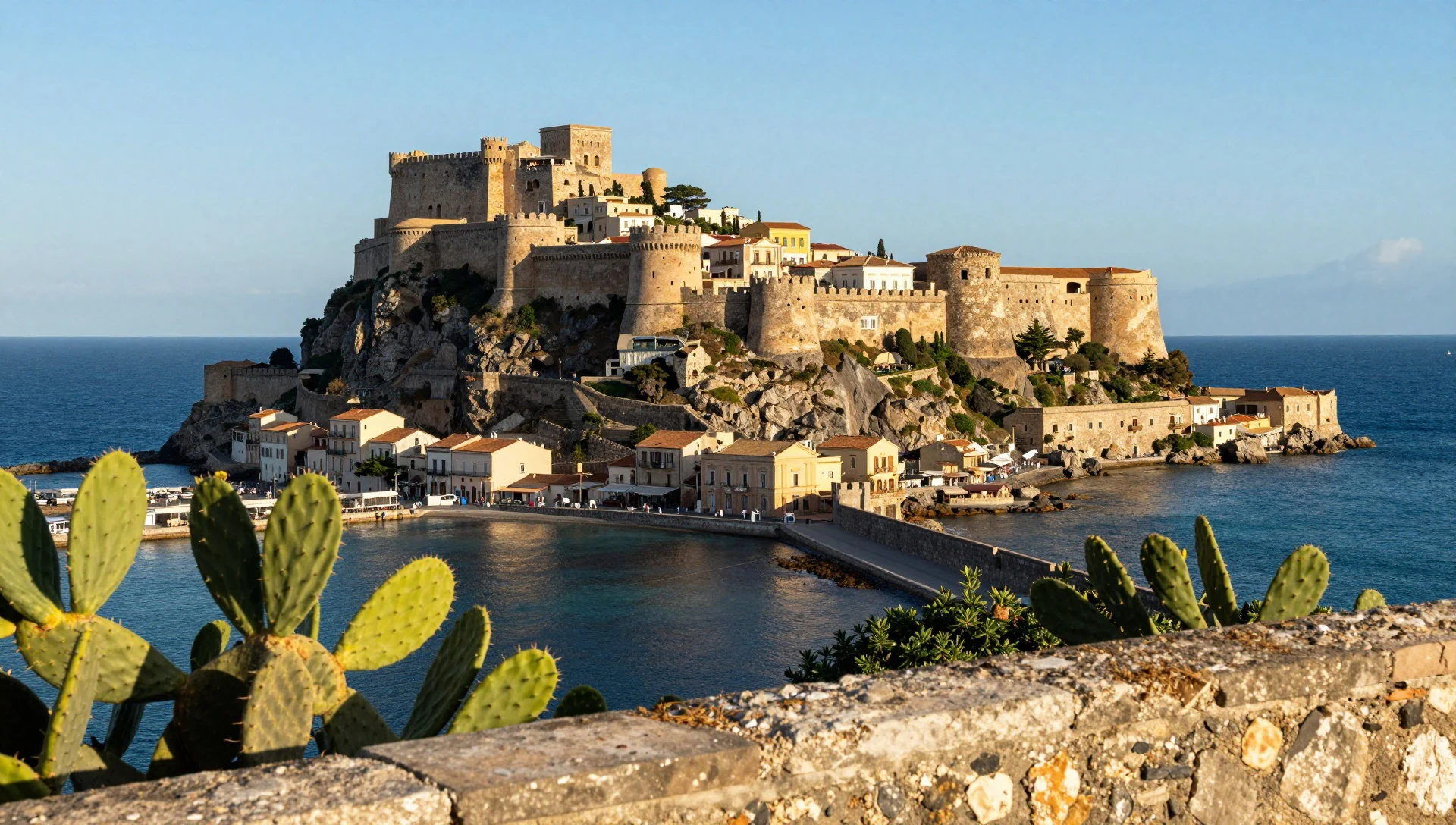
- Aeolian Archaeological Museum — Citadel, Lipari town
The Aeolian Archaeological Museum is widely celebrated as one of the finest regional museums in the Mediterranean. Located within the historic citadel, its extensive exhibition halls showcase prehistoric artifacts, obsidian trade relics, classical Greek pottery, and remarkably preserved maritime antiquities recovered from surrounding shipwrecks.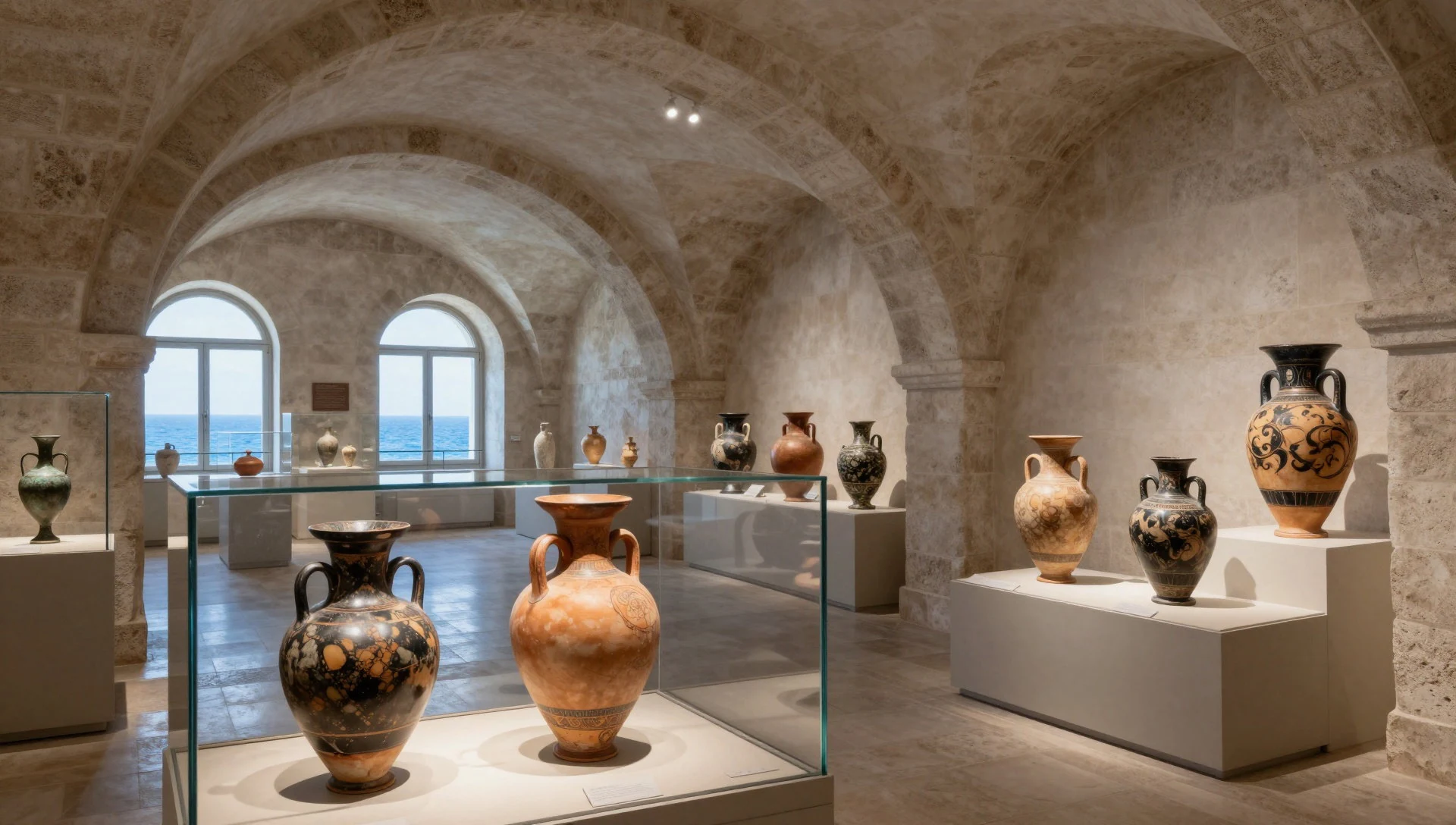
- Marina Corta — Waterfront, Lipari town
Marina Corta serves as the picturesque historic harbor and social heart of Lipari town. Framed by pastel-colored fishermen's houses, small churches, and outdoor cafes, the lively waterfront square is a natural gathering place where local residents converse under the sun and traditional wooden fishing boats bob gently in the sheltered basin.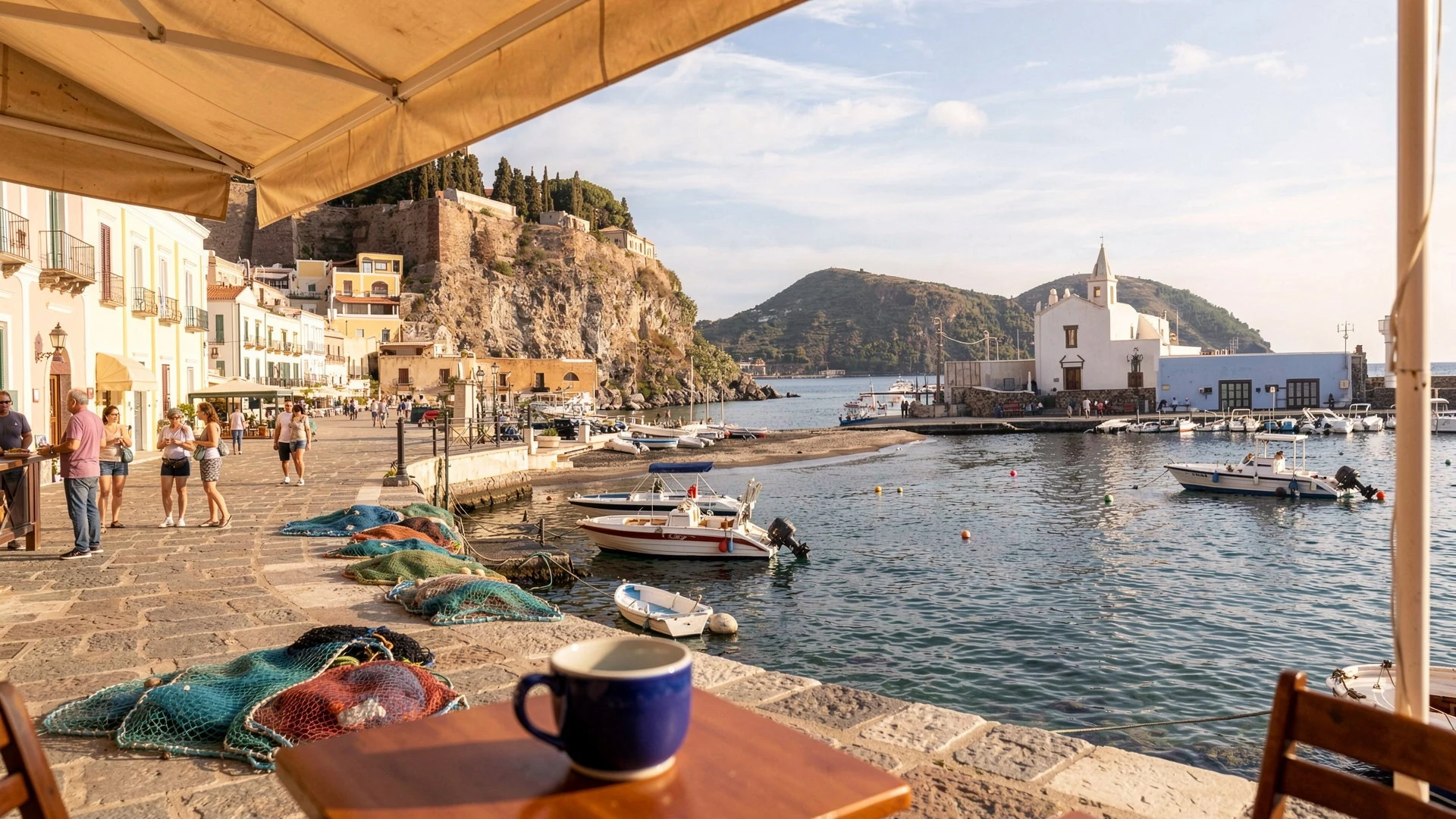
- Quattrocchi Viewpoint — Southwest coast
Quattrocchi Viewpoint offers one of the most magnificent coastal panoramas in the entire archipelago. Situated along the southwestern road from Lipari town, the scenic overlook provides sweeping views across rugged cliffs toward the neighboring island of Vulcano, capturing the raw volcanic beauty and deep blue expanse of the sea.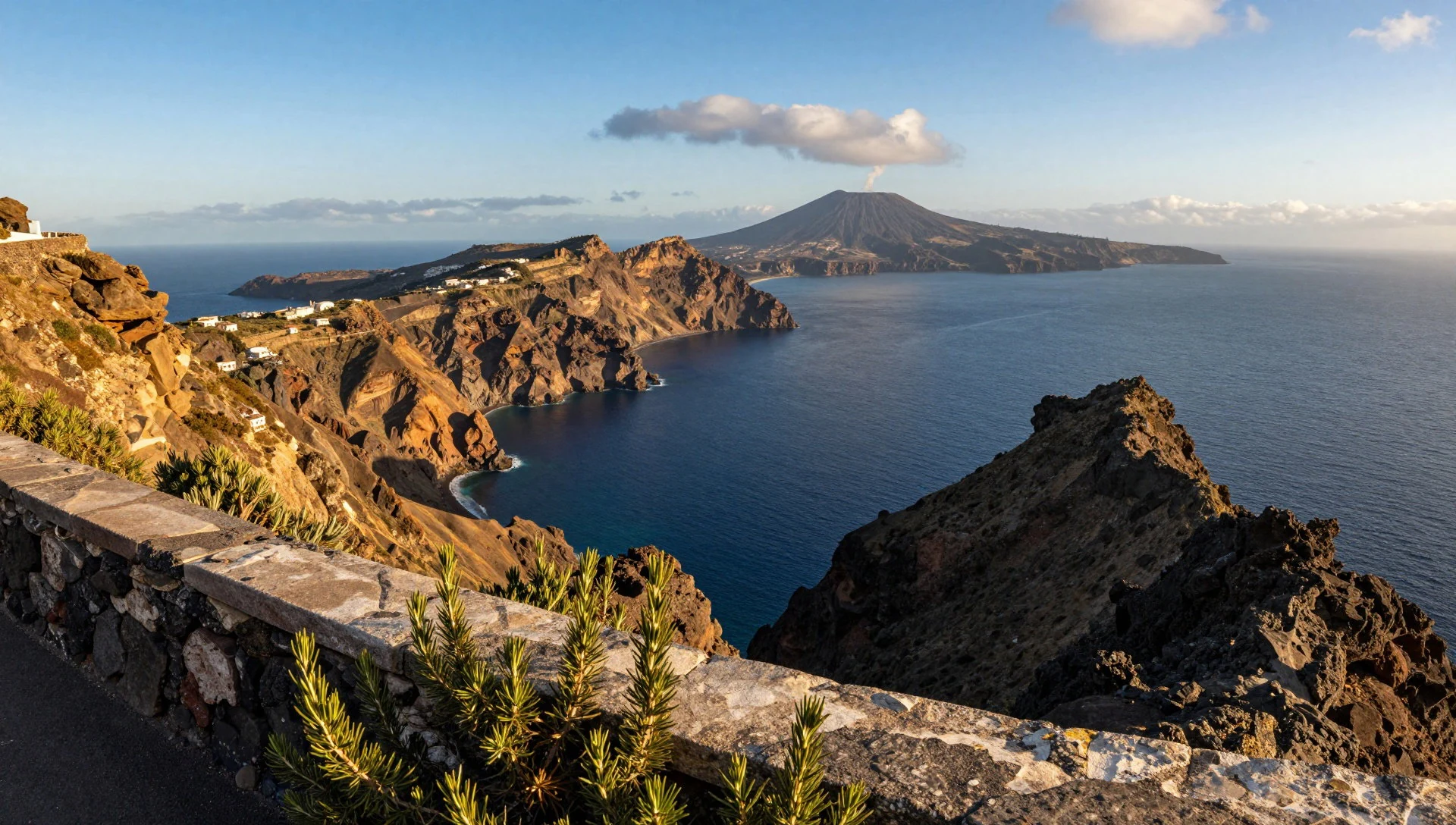
- Pumice Quarries of Acquacalda — Northern coast near Acquacalda
The pumice quarries near Acquacalda reveal the industrial and geological scars of Lipari's volcanic past. Towering white mountains of lightweight pumice stone drop steeply down to the northern coast, creating an ethereal, almost lunar landscape that contrasts sharply with the deep sapphire waters of the surrounding sea.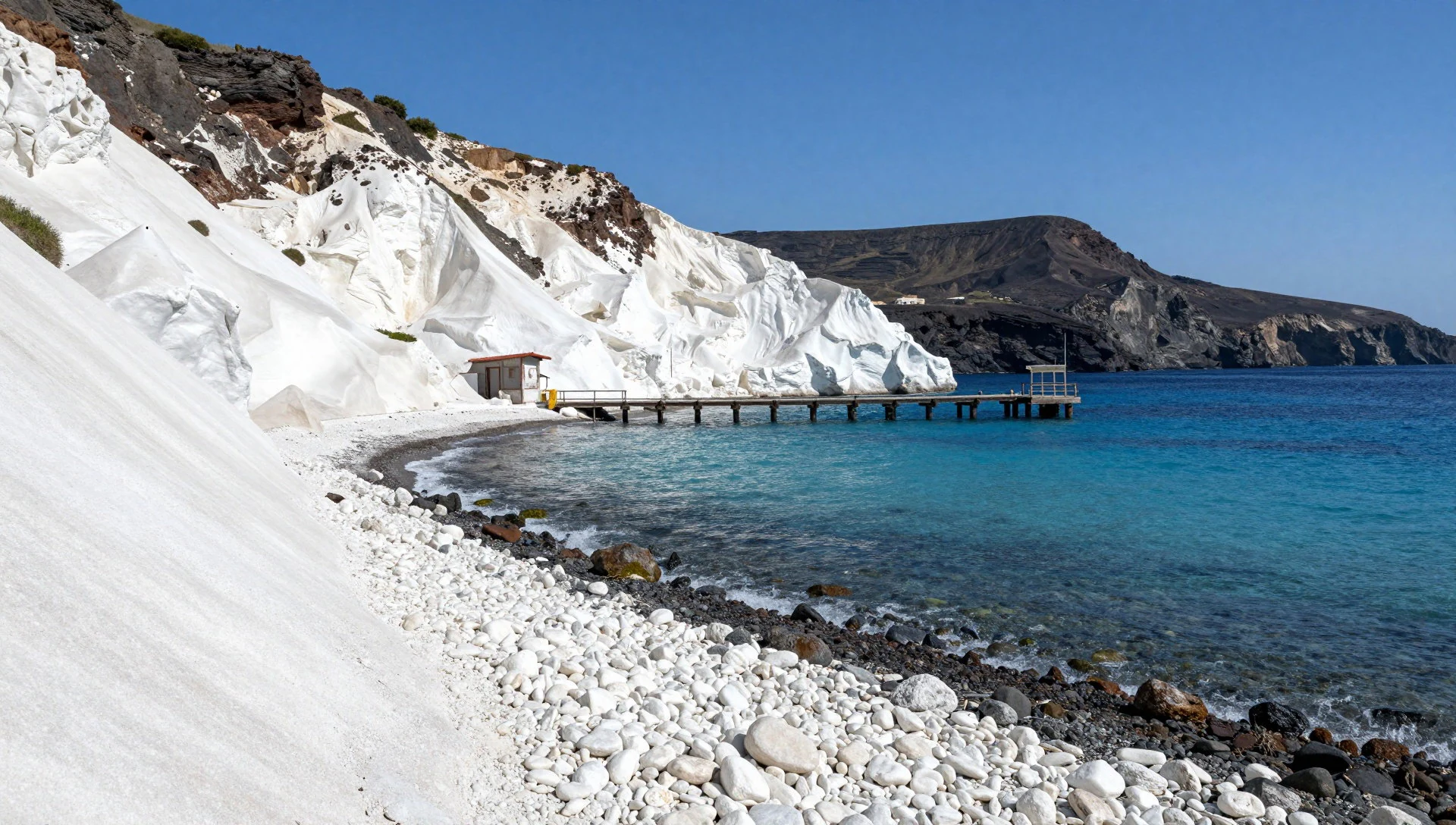
Culture
Lipari sustains a proud maritime and island identity deeply rooted in its volcanic heritage, ancient mythology, and historical resilience. The cultural calendar centers heavily on traditional religious observances, most notably the annual Feasts of Saint Bartholomew, commemorating the historical arrival of the Apostle's remains to the island in the sixth century. This deeply cherished festival brings the community together through solemn processions, traditional music, and vibrant maritime displays in the harbor. The daily rhythm of Lipari reflects a classic southern Italian pace, where afternoon rest is respected and public socializing in village squares forms the backbone of community life. While tourism brings a lively cosmopolitan energy during the warmer months, the islanders maintain a close-knit, welcoming social fabric shaped by generations of seafaring and agricultural labor. Visitors should dress respectfully when visiting churches and sacred sites, ensuring shoulders and knees are covered.
What to wear
Traditional attire on Lipari historically reflected the practical needs of a Mediterranean island community dependent on fishing, agriculture, and maritime trade, utilizing durable natural textiles suited for a warm coastal climate. While traditional folk costumes are now largely reserved for historical festivals and religious celebrations, everyday dress on the island is casual, practical, and relaxed. Local residents typically favor lightweight, breathable fabrics such as cotton and linen to cope with warm summer temperatures. For daily life, shorts, casual shirts, sandals, and comfortable walking shoes are standard wear for both locals and visitors exploring the narrow streets and rugged coastal paths. When heading away from the immediate beaches toward churches, religious monuments, or traditional village centers, modesty norms dictate that visitors should cover shoulders and knees out of respect for local customs. Sturdy footwear is essential for navigating the steep stone staircases, cobbled lanes, and volcanic terrain found across the island.
What to eat
- Aeolian Capers and Olives — Local markets and traditional eateries across Lipari town
Lipari is famous for its exceptionally flavorful local capers and unique olives cultivated in volcanic soil. Often preserved in coarse sea salt, these intensely savory ingredients are staples in local kitchens, adding depth to traditional island sauces, salads, and seafood dishes.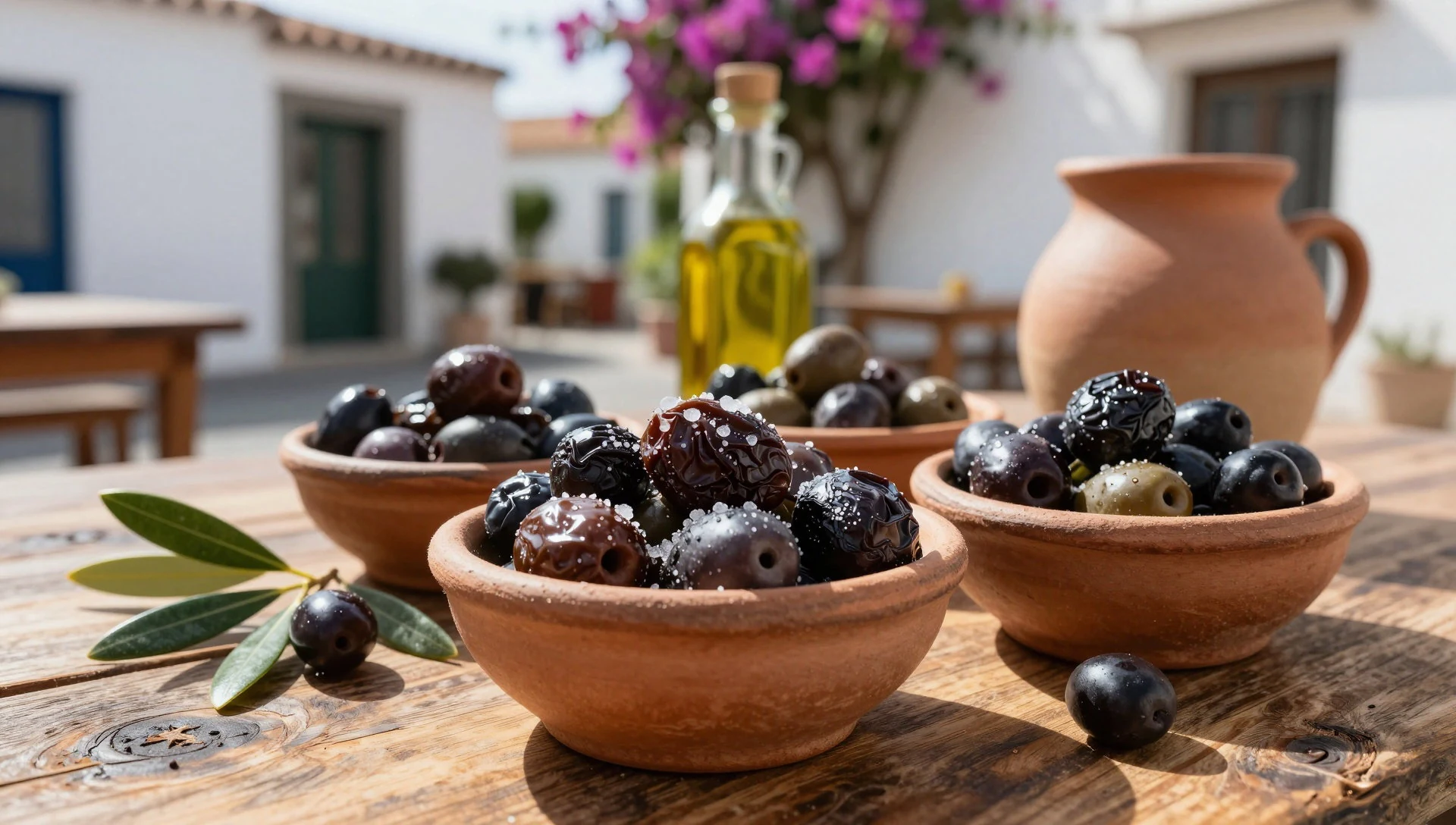
- Malvasia delle Lipari — Local wine bars and family-run vineyards throughout the island
Malvasia delle Lipari is a renowned sweet dessert wine produced from grapes grown on the volcanic terraces of the islands. Often referred to as the nectar of the gods, this amber-colored wine carries rich aromas of dried apricots, honey, and orange blossom.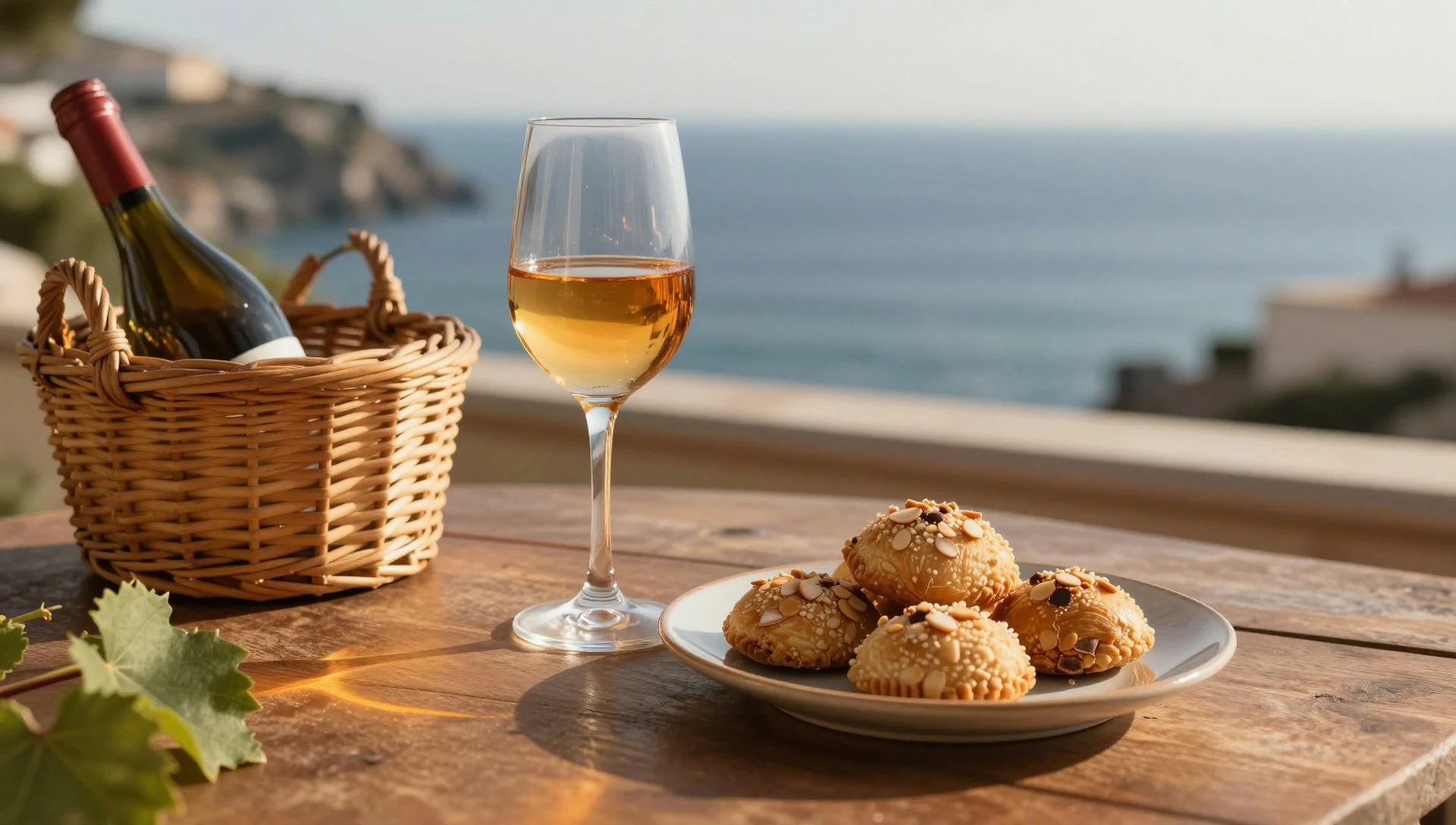
- Granita and Brioche — Cafes and pasticcerias around Marina Corta and the main town
A beloved Sicilian breakfast and afternoon tradition, artisanal granita is a semi-frozen dessert made from fresh fruit, almonds, or coffee, served alongside a warm, sweet brioche bun. It provides a refreshing and delicious respite from the midday Mediterranean heat. - Fresh Mediterranean Seafood — Seaside trattorias lining the harbors and coastal villages
Benefiting from its coastal location, Lipari's culinary scene features exceptional daily catches prepared simply with local olive oil, fresh herbs, citrus, and ripe tomatoes rather than heavy creams or butter, highlighting the pure flavors of the sea.
Plan it
Best time. May to September offers warm weather and reliable ferry connections, though July and August bring peak crowds and higher temperatures; spring and early autumn provide a quieter, more relaxed experience.
How long. 3–4
Getting there. Fly into Catania Fontanarossa Airport or Palermo Falcone–Borsellino Airport on Sicily, take ground transport to a northern port such as Milazzo, and catch a hydrofoil or ferry across to Lipari.
Budget. mid
Tips
- Book hydrofoil tickets and accommodation well in advance if visiting during peak summer months
- Carry cash for small shops, rural buses, and independent cafes where card machines may occasionally fail
- Start coastal walks and viewpoint visits early in the morning to avoid the strongest midday heat
- Check ferry timetables frequently, as sea conditions can occasionally disrupt island connections
Etiquette
- Dress modestly with covered shoulders and knees when entering churches and religious sites
- Greet shopkeepers and locals politely with a friendly buongiorno or buonasera before asking for assistance
Nearby
Sources
- Wikidata Q496389 (CC0)
- Wikipedia (CC-BY-SA 4.0)
- Wikivoyage (CC-BY-SA 4.0)