Le Havre
Le Havre, France
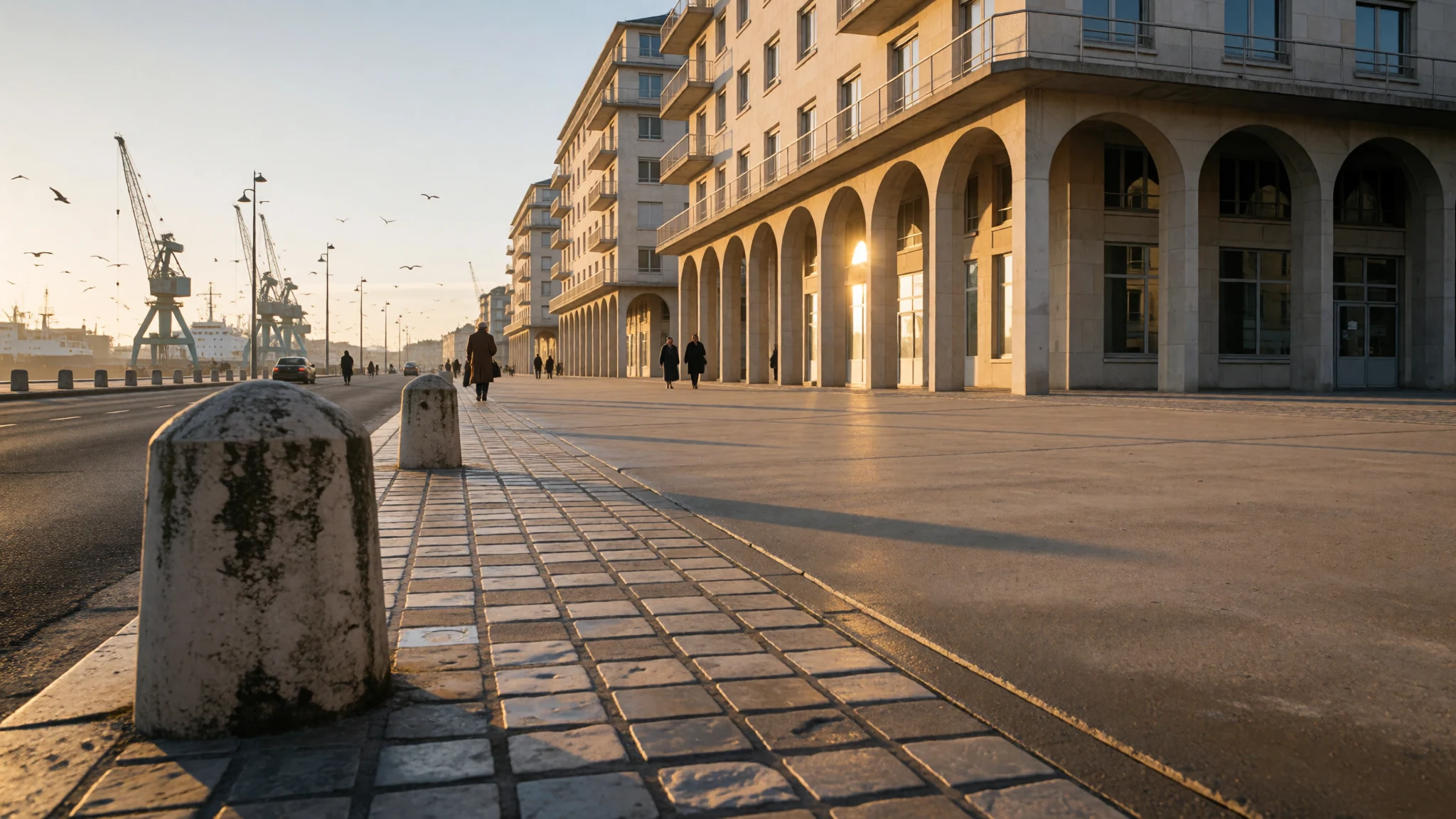
Le Havre offers a striking modernist urban landscape built by Auguste Perret after wartime devastation, sitting alongside a major Normandy maritime harbor.
The place
Le Havre sits along the northern French coastline in the Normandy region, positioned strategically on the right bank where the river Seine empties into the English Channel. As a significant territorial anchor in the Seine-Maritime department, the municipality functions primarily through its expansive maritime installations, managing a vast share of ocean-going freight entering northern France. The name itself translates directly to the harbor or the port, reflecting its enduring maritime identity. Geographically, the locality occupies terrain near the mouth of the estuary, serving as a vital link between river transport and cross-channel shipping lanes. Within the broader regional administrative network, the settlement stands out as an important subprefecture, characterized by a population that reaches well into six figures while maintaining a distinct urban character compared to nearby river hubs. Visitors arriving in Le Havre immediately encounter an environment defined by its mid-century urban planning rather than medieval alleys. Following severe wartime destruction, the municipality was comprehensively reimagined using reinforced concrete construction techniques under the direction of master planners. Today, the urban fabric presents a unified architectural vision of wide geometric avenues, rhythmic grid patterns, and soaring residential blocks that showcase the creative possibilities of industrial building materials on an ambitious civic scale.
Its story
Le Havre owes its initial creation to royal decree in the early sixteenth century, when sovereign authorities sought a replacement for silt-choked downstream anchorages along the estuary. Originally designated under a moniker honoring the reigning monarch, the settlement gradually assumed its present title as maritime trade expanded across the Atlantic. During the eighteenth century, the community experienced profound commercial growth fueled by transatlantic shipping routes, including colonial exchange and maritime commerce that linked continental markets with the West Indies. This era of mercantile prosperity transformed the settlement into a bustling gateway for raw materials, most notably dominating cotton imports destined for textile manufacturers throughout France and neighboring European states. The revolutionary period brought political renamings, briefly casting the municipality under titles honoring revolutionary figures before returning to its traditional harbor designation. Industrialization accelerated throughout the nineteenth century, establishing railway connections and expanding docks to accommodate larger steam vessels. The most radical chapter in the local narrative unfolded in nineteen forty-four, when catastrophic wartime bombardments reduced the historic core to rubble. Out of this devastation arose an unprecedented reconstruction project led by visionary designers who rejected traditional stylistic imitation in favor of experimental concrete architecture, creating a rebuilt urban landscape that eventually earned prestigious international heritage recognition.
What to see
- Saint-Joseph Church — City Centre
Saint-Joseph Church stands as a remarkable architectural masterpiece conceived during the post-war reconstruction by master planners. Its soaring central tower reaches high into the sky, constructed with slender reinforced concrete framing that encloses vast expanses of multi-coloured stained glass. Natural light filters through these vibrant panes, casting serene hues across the tranquil interior sanctuary and creating a contemplative atmosphere within the modern parish. - Town Hall — Place de l'Hôtel de Ville
The municipal town hall anchors one of the most expansive civic public squares found anywhere in the country. Visitors can explore the spacious interior rooms which offer helpful orientation materials regarding municipal layouts and architectural design principles. For panoramic vistas across the entire geometric urban grid, travellers can ascend the civic tower to observe the carefully orchestrated alignment of surrounding concrete avenues and port facilities. - Malraux Museum — Waterfront Boulevard
The Malraux Museum holds an extraordinary collection of fine art, featuring one of the largest assemblies of Impressionist canvases in France outside the capital. Transparent glass walls open towards the marine horizon, allowing natural light to illuminate works by legendary painters who captured the shifting light of the Normandy coast. Galleries showcase maritime scenes and luminous landscapes from past centuries alongside rotating modern exhibitions. - Oscar Niemeyer Cultural Centre — City Centre
The Oscar Niemeyer Cultural Centre, affectionately known locally as the Volcano due to its distinctive curving geometric form, serves as a primary hub for performing arts. Designed by a renowned international architect, this striking white structure provides a bold sculptural contrast to the strict orthogonal grid of the surrounding concrete reconstruction area, hosting concerts, theatre productions, and community gatherings throughout the cultural calendar year. - Maison de l'Armateur — Quartier Saint-François
Maison de l'Armateur represents a rare historic residence that miraculously survived the devastating wartime bombings that reshaped the district. This five-storey merchant townhouse offers a fascinating glimpse into eighteenth-century domestic life, featuring intricate period wood panelling, authentic maritime furnishings, and elegant nautical decor that reflect the lavish lifestyle enjoyed by wealthy shipowners during the height of the colonial trade boom. - Natural History Museum — Near Place Gambetta
The Natural History Museum occupies a distinguished older building that escaped destruction during the wartime air raids. Within its historic exhibition halls, visitors encounter extensive collections dedicated to regional geology, paleontology, and zoological specimens gathered during historic scientific expeditions. The museum provides an engaging educational retreat into natural sciences while highlighting local heritage that predates the twentieth-century urban renewal.
Culture
Le Havre sustains a vibrant community spirit rooted in its seafaring traditions and resilient industrial heritage. The cultural calendar unfolds across all seasons, beginning with springtime literary gatherings and extending into vibrant community celebrations like the Breton festival held annually in the Saint-François district. Summer brings outdoor animation through jazz music performances along the shoreline, street art spectacles across public plazas, and world music concerts staged at historic fortifications nearby. Maritime identity remains paramount, highlighted by spectacular biennial sailing races connecting local docks with distant shores across the Atlantic, alongside lively autumn fairs and festive street parades. Residents, known locally as Havrais and Havraises, take immense pride in their unique architectural identity and maritime history, welcoming visitors to share in local festivities. When dining out or exploring local establishments, remember to greet shopkeepers politely with a polite bonjour upon entering and merci upon departure.
What to wear
Fashion in Le Havre reflects its practical maritime heritage combined with modern urban French style. Historically, residents involved in port labor and seafaring wore durable canvas trousers, heavy woollen jerseys, and sturdy weather-resistant jackets designed to withstand chilling winds and damp conditions along the estuary. While traditional regional attire is now reserved for cultural festivals and historical pageants, the classic navy-and-white striped Breton shirt remains an enduring staple of everyday coastal style.
Today, locals dress in practical, contemporary European casual wear that suits a breezy coastal environment. Because ocean winds can sweep briskly across open concrete plazas and waterfront promenades, layering is essential regardless of the season. For visitors exploring the city, comfortable walking shoes are non-negotiable, as navigating the expansive pedestrian squares, long harbor quays, and stone staircases requires sturdy footwear. Smart-casual attire is suitable for most brasseries and cultural venues, while a windproof jacket or waterproof outer layer is always recommended to stay comfortable during sudden coastal weather changes.
What to eat
- Savory Crêpes — Crêperie Maryvonne
Traditional buckwheat galettes filled with regional cheeses, cured meats, and fresh eggs, offering a comforting meal inspired by neighboring Breton culinary traditions. - Brasserie Seafood — Le Lafayette brasserie
Freshly caught Atlantic fish and shellfish served simply with crisp accompaniments, reflecting the daily catch landed right at the local docks. - Diner Classics — Whoopies Diner
Hearty American-style comfort dishes and burgers served in a relaxed, retro-themed eatery popular with younger crowds in the downtown area. - Vietnamese Specialities — Dai Duong restaurant
Fragrant noodle soups and savory stir-fries prepared with authentic southeast Asian spices, representing the diverse culinary diaspora found within the port community. - Traditional Brasserie Fare — Le Chiquito
Classic French bistro dishes including steak frites, seasonal salads, and regional desserts served in a lively dining room near the main squares.
Plan it
Best time. May to August offers the warmest weather and longest daylight hours for exploring the beach and outdoor cultural festivals.
How long. 2–3
Getting there. Direct trains run regularly from Paris taking about 2 hours, often stopping at Rouen en route; ferries connect daily from southern England ports.
Budget. mid
Tips
- Wear windproof layers as coastal breezes off the English Channel can feel chilly even in summer
- Pick up a detailed downtown map at the cruise or tourist terminal before exploring the concrete grid
- Book accommodation well in advance if visiting during major maritime festivals or summer sailing events
- Wear sturdy walking shoes to comfortably navigate the vast open squares and waterfront docks
Etiquette
- Always greet shopkeepers with a polite bonjour upon entering any local establishment
- Respect quiet hours in residential apartment blocks designed by Auguste Perret
Nearby
Sources
- Wikidata Q42810 (CC0)
- Wikipedia (rev 1384201533) (CC BY-SA 4.0)
- Wikivoyage (rev 5408541) (CC BY-SA 4.0)
- Photo 01-le-havre.jpg (CC BY 3.0)
- Photo 02-panorama-of-le-havre-september-2019.jpg (CC BY-SA 4.0)
- Photo 03-cath-drale-notre-dame-du-havre-10-august-2021.jpg (CC BY-SA 2.0)
- Photo 04-star-princess-port-of-le-havre.jpg (CC BY 3.0)


