Lake Kenyir
Lake Kenyir, Malaysia
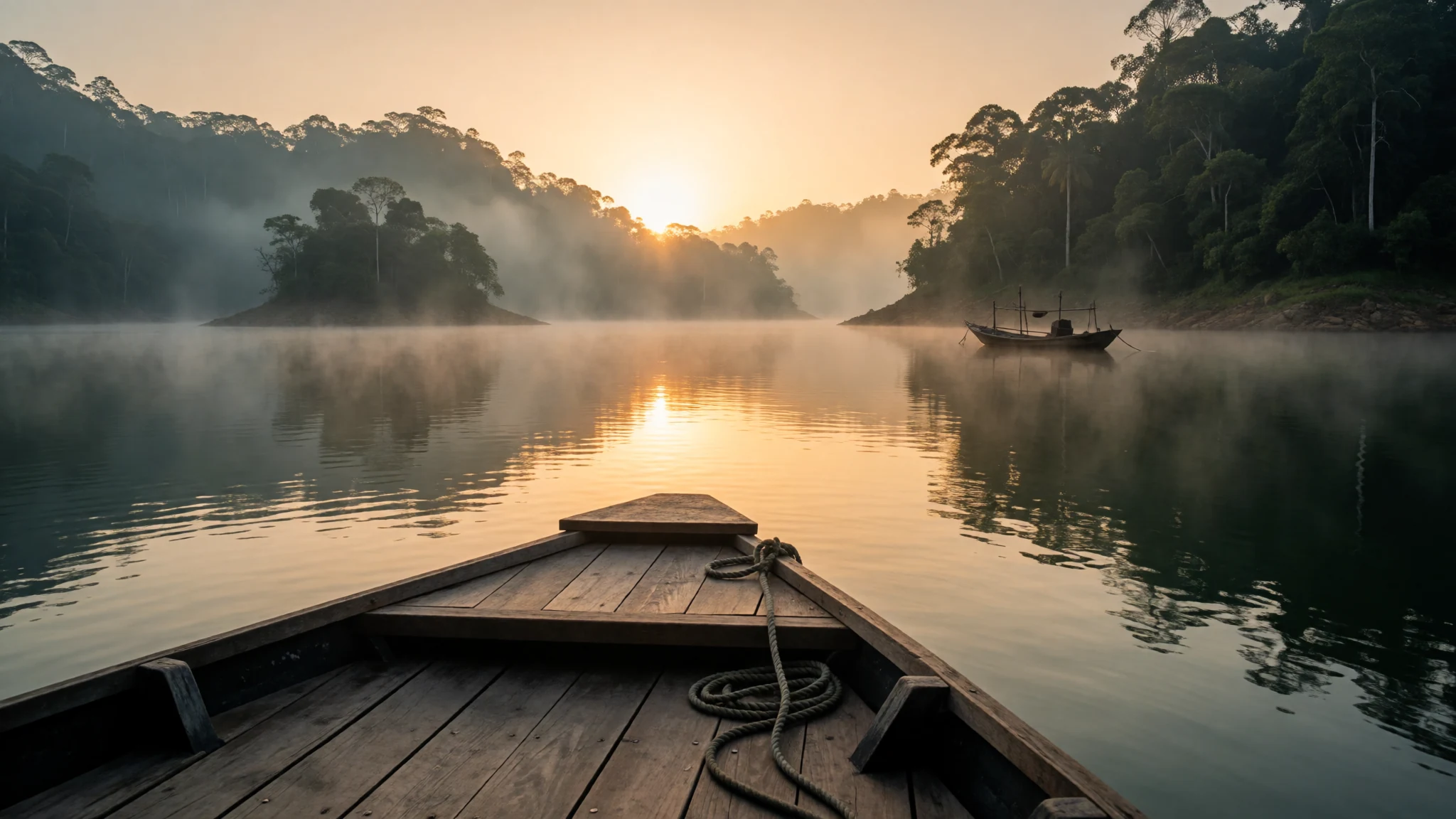
Visit Lake Kenyir to explore vast inland waters, hidden jungle waterfalls, ancient limestone caves, and quiet forested shores.
The place
Lake Kenyir, known locally as Tasik Kenyir, is nestled deep within the undulating hills of Hulu Terengganu in Malaysia. Set against the ancient backdrop of the Pantai Timur Range, this immense inland reservoir spans a massive expanse of water dotted with countless wooded islands and secret inlets. Because of its sheltered inland position and moderate elevation above sea level, the air around Lake Kenyir feels noticeably cooler and moister than the coastal plains of Terengganu. The surrounding landscape is blanketed by dense tropical rainforest that merges seamlessly with the southern edges of Taman Negara. Mornings often begin with a soft mist rising directly off the glass-like water, before the midday sun breaks through to illuminate the steep forest canopy. Visitors arriving here leave behind the rush of the modern highway, trading asphalt for timber jetties, small wooden boats, and the distant call of hornbills echoing across the quiet bays. The entire region functions as a sanctuary for outdoor travellers, offering miles of undisturbed shoreline where nature dictates the rhythm of every single day. Whether you glide across the peaceful surface on a traditional houseboat or watch the shadows lengthen from a quiet forested bank, Lake Kenyir delivers a profound sense of isolation and immersion in the natural world of the Malay Peninsula.
Its story
The story of Lake Kenyir is a tale of deliberate transformation that reshaped the geography and human life of Hulu Terengganu. Before the mid-1980s, this remote territory was a tangled maze of dense river valleys, steep jungle ridges, and fast-flowing waterways centered around the upper reaches of the Terengganu River. The landscape shifted permanently with the construction of the Kenyir Dam, an ambitious engineering project designed to harness regional hydro power and feed the Sultan Mahmud Power Station. As the massive concrete barrier blocked the rushing currents of the Kenyir River, water slowly spilled over millions of ancient trees, low-lying hills, and hidden riverbeds, creating a sprawling artificial sea where dry land once stood. Entire communities had to adapt as the rising waters forced families to relocate to higher ground along the edges of the valley, while wildlife retreated further into the shrinking perimeter of the old hills. Over subsequent decades, nature reclaimed the newly formed islands and shores, transforming what was once a heavy industrial footprint into a thriving secondary ecosystem. Today, sunken timber stands silently beneath the surface as ghostly reminders of the original forest, while regenerated jungle canopy covers the hundreds of islands that now punctuate the open water. This unique environment has evolved into a celebrated destination for eco-tourism, proving how human ingenuity and natural resilience can forge an entirely new landscape out of ancient river valleys.
What to see
- Pengkalan Gawi — Main jetty terminal, southern shore
Pengkalan Gawi serves as the main gateway jetty and transit hub for Lake Kenyir, where travellers secure boats, hire local guides, and step onto floating houseboats to begin their journey into the wider network of islands, waterways, and remote forest camps across the reservoir.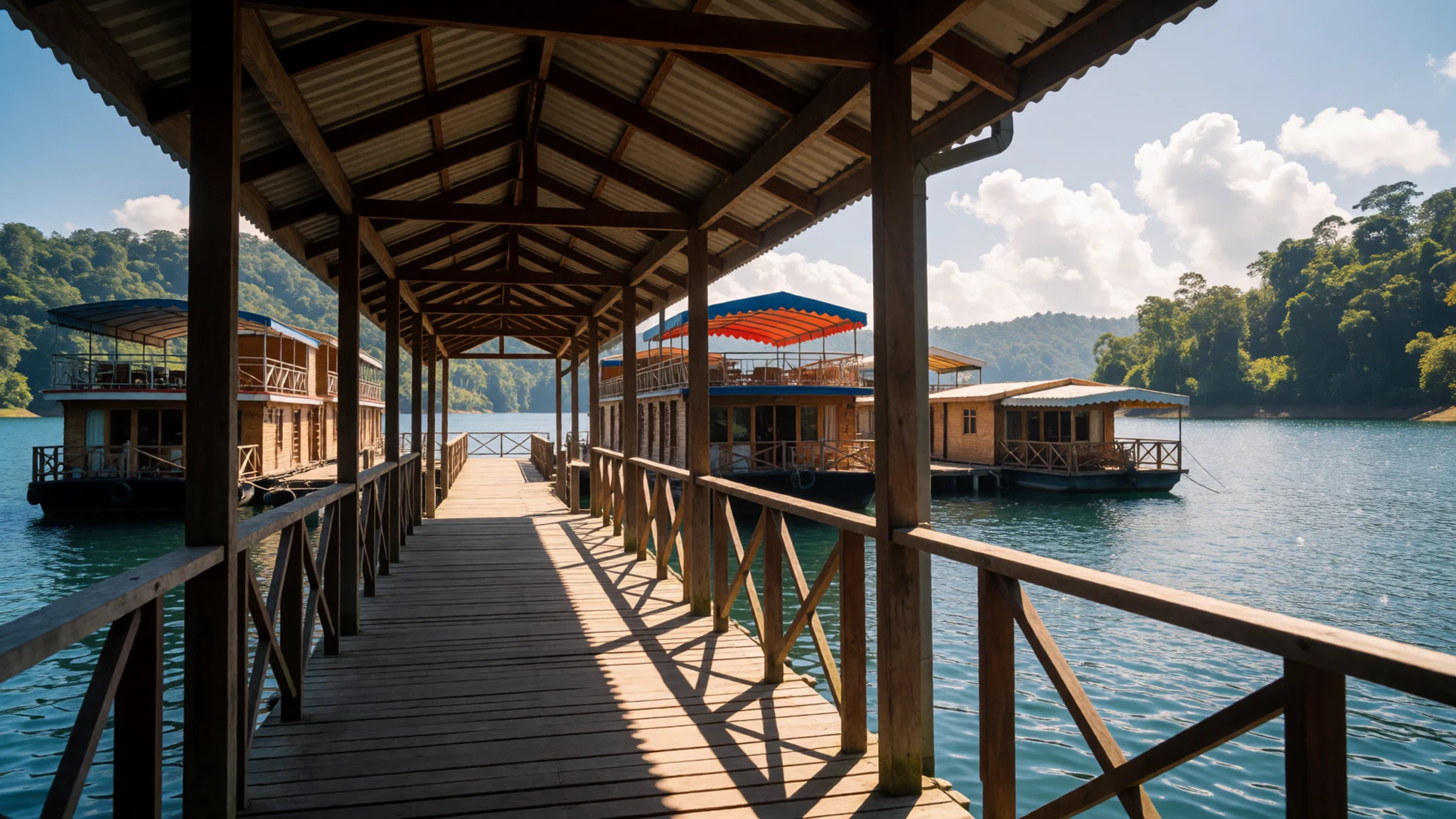
- Lasir Waterfall — Southern lake zone, accessible by boat
Lasir Waterfall plunges down multiple cascading tiers of smooth rock into the cool waters of the lake, creating a dramatic natural amphitheatre where jungle mists rise, ferns cling to wet boulders, and visitors can swim in the refreshing pools beneath the falling spray.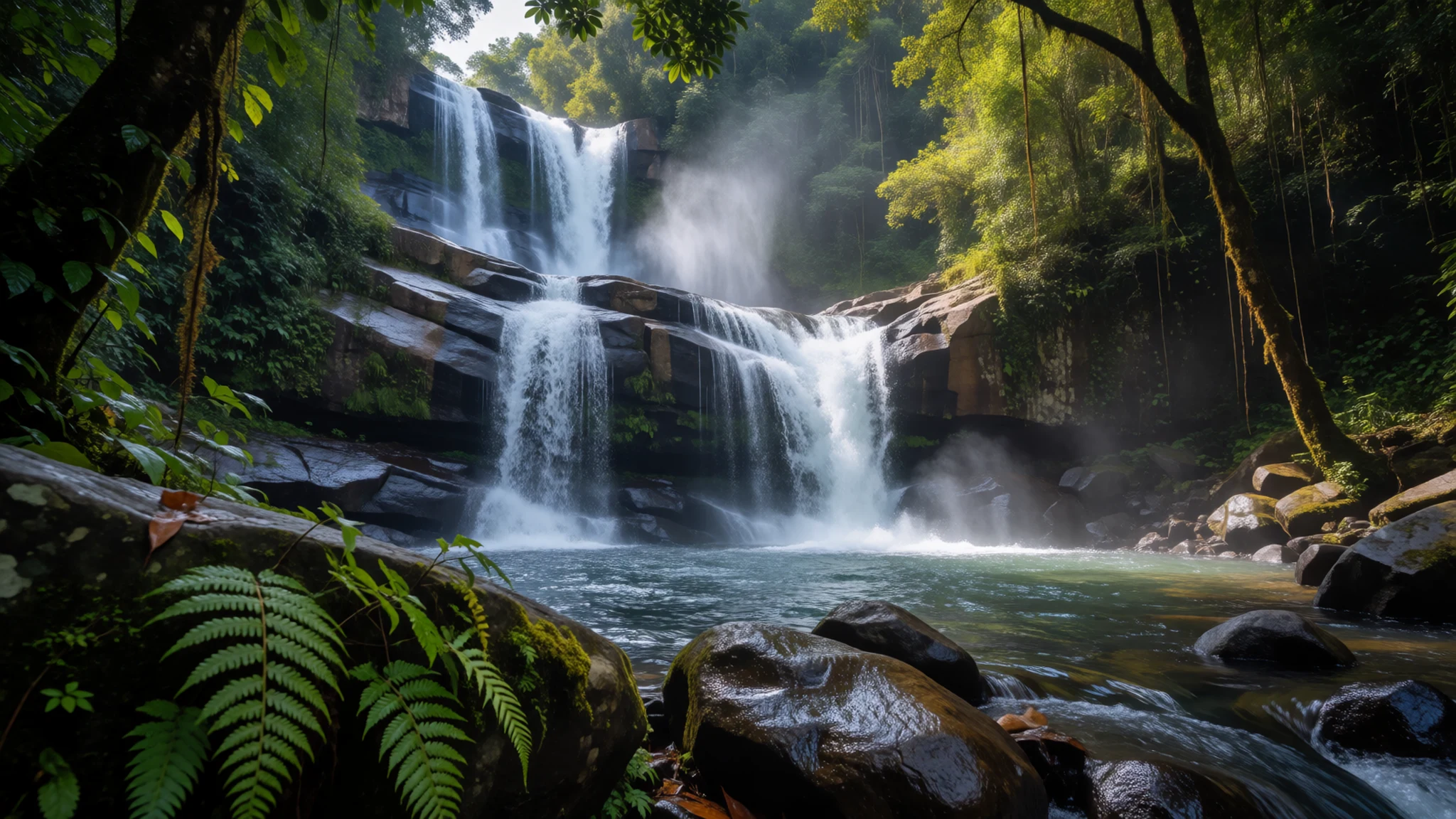
- Bewah Cave — Taman Negara boundary, western shore
Bewah Cave cuts deep into ancient limestone cliffs within the Terengganu section of Taman Negara, revealing massive chambers adorned with striking stalactites and stalagmites that once sheltered prehistoric human settlement and ancient burial remains hidden deep inside the dark interior.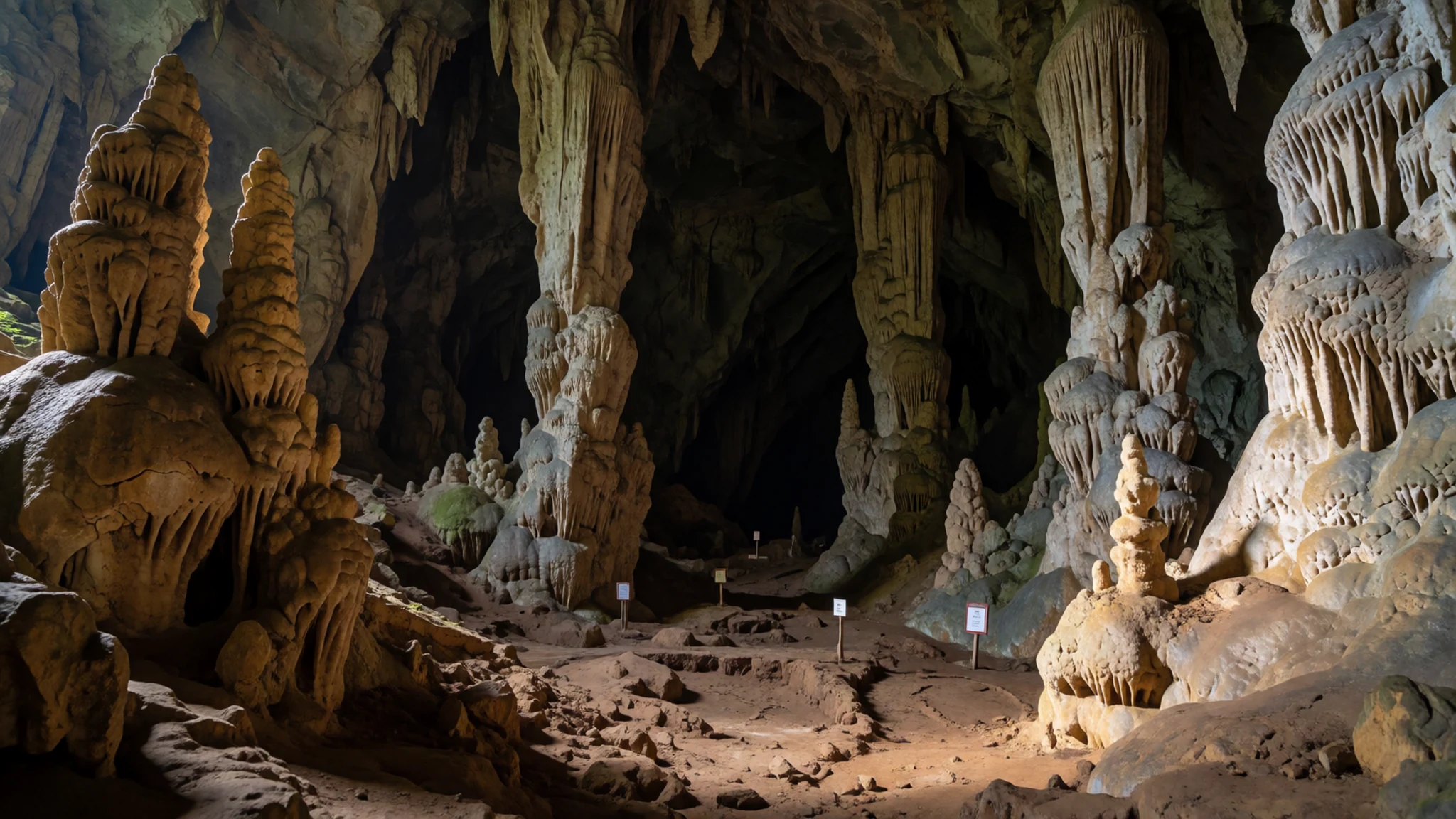
- Saok River — Western tributary, lake basin
Saok River winds through thick lowland rainforest to empty into the western reaches of the lake, offering a quiet tributary corridor where shaded riverbanks, crystal-clear shallow water, and overhanging tree roots create ideal spots for peaceful jungle trekking and spotting freshwater fish.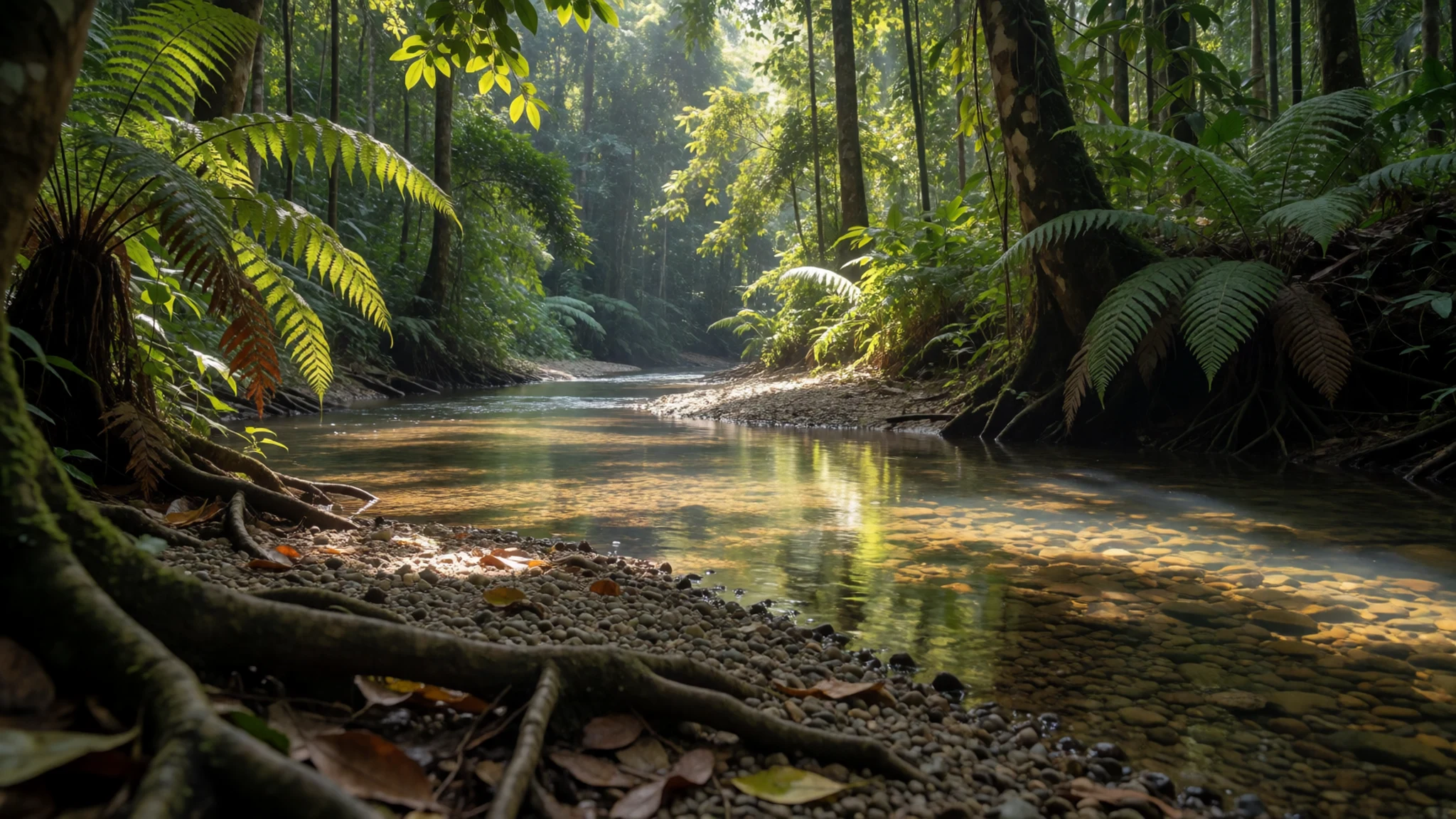
- Tembat and Lawit Rivers — Northern interior river system
Tembat and Lawit Rivers carve rugged paths through steep interior hills, providing adventurous travellers with challenging whitewater rapids, rushing currents, and remote riverside trails that demand sturdy footwear and a respectful appreciation of raw wilderness conditions.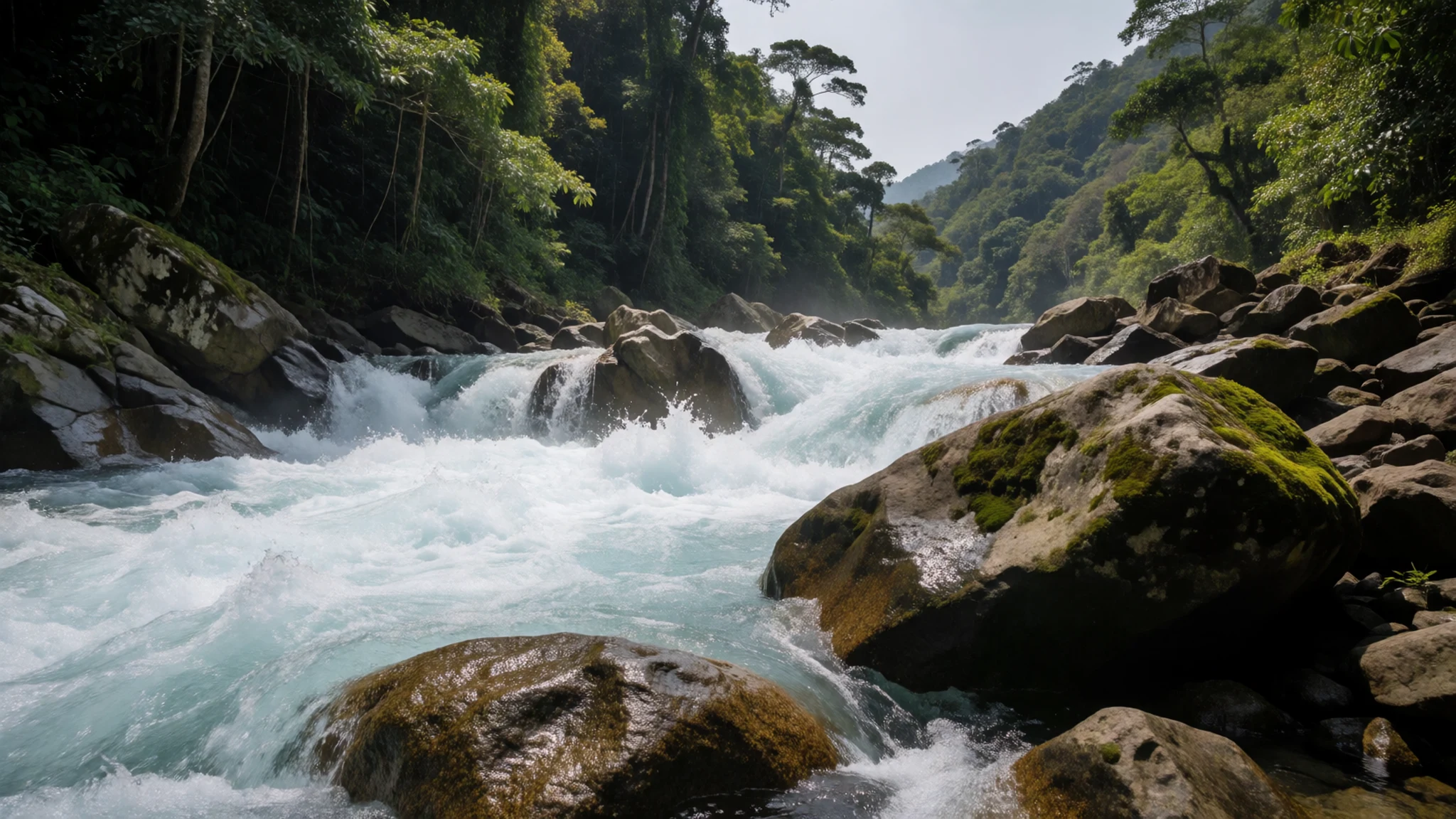
Culture
The cultural fabric around Lake Kenyir is deeply rooted in the traditional Malay heritage of Terengganu, where village life along the river valleys has long been shaped by the rhythms of monsoon rains, river fishing, and small-scale agriculture. Rural communities near the reservoir, often referred to as kampung settlements, maintain strong communal ties and a slower, more deliberate pace of life compared to the bustling urban centers on the western coast of Malaysia. Traditional crafts such as songket weaving and woodcarving reflect generations of artistic skill handed down through local families. Visitors will notice a profound respect for elders, traditional customs, and Islamic traditions that govern daily etiquette throughout the state. Hospitality is offered with genuine warmth, and social interactions are always guided by politeness, modesty, and consideration for local sensitivities. When visiting local villages or rural eateries near the lake approaches, dress modestly by keeping shoulders and knees covered as a sign of respect.
What to wear
At Lake Kenyir and throughout the surrounding Terengganu region, traditional attire reflects both practical tropical needs and Islamic modesty norms. Historically, local villagers wore loose garments made from breathable cottons and traditional batik textiles, well-suited to the high humidity and heavy rainfall of the peninsula interior. Today, residents in nearby towns wear modern casual clothing, though traditional baju kurung and baju melayu remain common during religious holidays, weddings, and formal community gatherings. For travellers exploring Lake Kenyir, practical outdoor wear is essential. Lightweight, quick-drying fabrics, long-sleeved shirts to ward off insects, and sturdy trekking shoes or water sandals with good grip are necessary for navigating damp forest trails, slippery boat decks, and steep limestone cave steps. Modest clothing that covers shoulders and knees should be worn when passing through rural kampung settlements or visiting local community areas to ensure respectful engagement with residents.
What to eat
- Gulai Terengganu — Local roadside stalls around Kuala Berang
Gulai Terengganu is a rich, aromatic local fish curry simmered with fresh turmeric, galangal, lemongrass, and tamarind, traditionally prepared using freshwater catches from the lake and served alongside warm white rice in rural roadside eateries.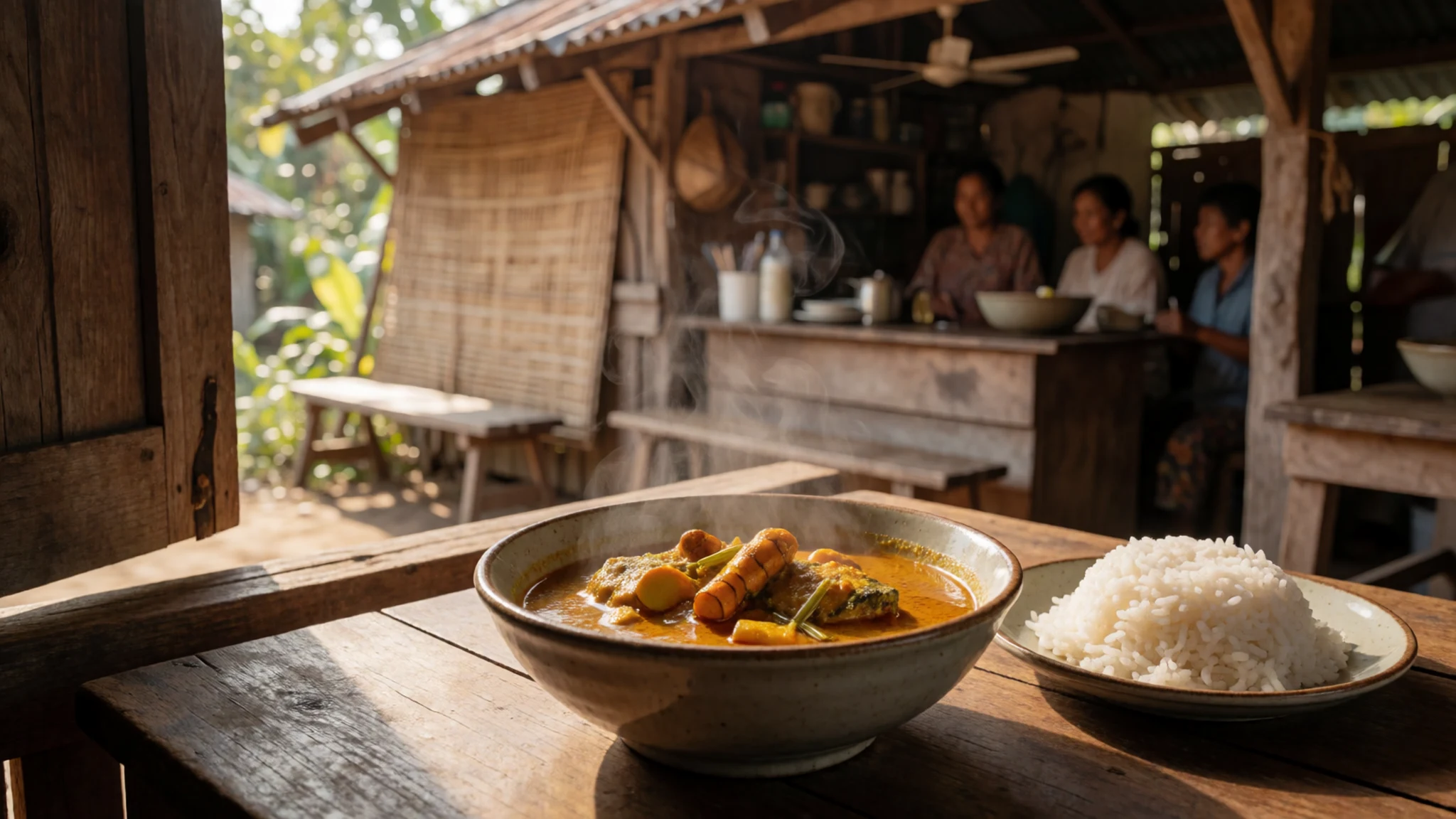
- Nasi Dagang — Morning stalls in nearby towns and villages
Nasi Dagang features fragrant grains of rice steamed in coconut milk and fenugreek, paired with a rich tuna or fish curry and pickled cucumber slices, enjoyed as a hearty morning meal across Terengganu markets.
- Keropok Lekor — Village snack stalls and roadside food stands
Keropok Lekor is a popular Terengganu snack made from minced fish paste and sago flour mixed together, shaped into savoury cylindrical logs, and deep-fried until chewy and crisp, served hot with a spicy chilli dipping sauce. - Ikan Patin Bakar — Floating eateries near Pengkalan Gawi
Ikan Patin Bakar showcases fresh river fish from the lake marinated in local spices, wrapped in banana leaves, and grilled slowly over hot coals until tender and smoky, found at simple floating restaurants on the water.
Plan it
Best time. March through October offers the most stable weather and lower rainfall, making it ideal for boating, trekking, and exploring waterfalls. August is widely considered the best season for fishing when lower water levels concentrate the fish.
How long. 3–4
Getting there. Fly into Kuala Terengganu or travel by car from the coast, navigating small local roads through rural kampung settlements past Kuala Berang until you reach the main jetty at Pengkalan Gawi.
Budget. mid
Tips
- Book houseboats and boat transfers well in advance if visiting during peak holiday periods
- Start jungle treks and waterfall visits early in the morning before afternoon tropical showers arrive
- Carry sufficient cash for small shops, boat rentals, and local eateries as card facilities are limited
- Pack dry bags to protect cameras and electronics from sudden rainstorms and boat spray
- Drink plenty of bottled water to stay hydrated in the humid jungle climate
Etiquette
- Dress modestly with shoulders and knees covered when visiting rural kampung settlements
- Remove your shoes before entering local homes or traditional prayer spaces
- Always ask permission before photographing local residents in nearby villages
Nearby
Sources
- Wikidata Q1420437 (CC0)
- Wikipedia (CC-BY-SA 4.0)
- Wikivoyage (CC-BY-SA 4.0)
- 01-kenyir-lake-1.jpg (CC BY 3.0)
- 02-kenyir-lake-2.jpg (CC BY 3.0)
- 03-adorable-view-at-kenyir-lake.jpg (CC BY-SA 4.0)
- 07-lake-kenyir-on-the-houseboat.jpg (CC BY-SA 4.0)


