Lake Ashi
Lake Ashi, Japan
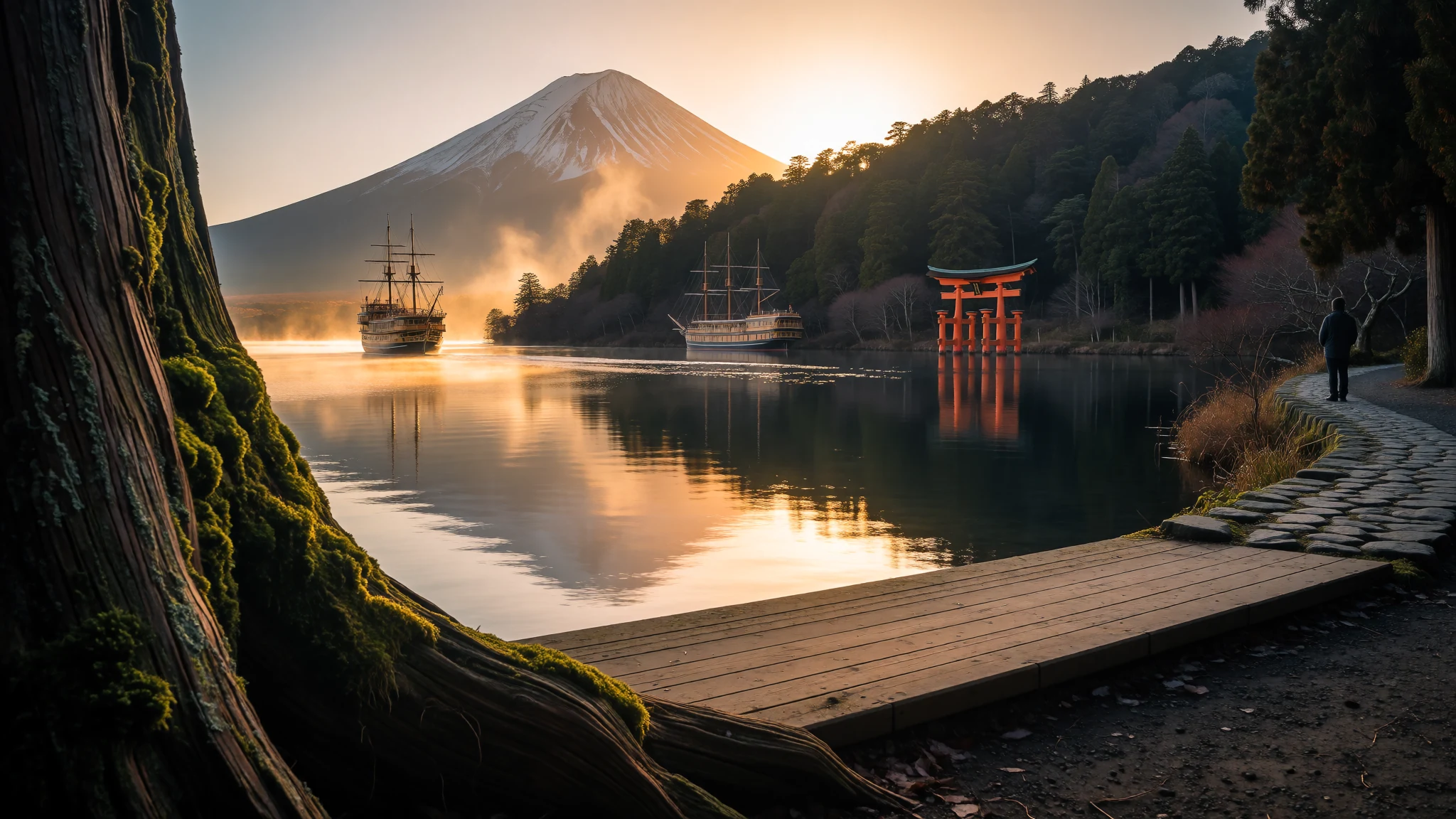
Lake Ashi offers volcanic caldera waters, historic hot springs, and sweeping mountain views along an ancient travel route.
The place
Lake Ashi rests inside the southwestern wall of a complex volcanic caldera in Kanagawa Prefecture, sitting at an elevation of 723 metres. Known locally as Ashinoko, this crater lake was formed by volcanic activity that culminated long ago, leaving behind a tranquil expanse of water fed by mountain streams and drained through an engineered aqueduct. The shores are wrapped in dense woodland, steep slopes, and misty steam vents that hint at the geothermal fire burning deep beneath the surface.
Travellers have journeyed to these waters for centuries, navigating the steep mountain passes that once connected the old imperial capital to the eastern provinces. Today, pleasure boats styled after historic sailing warships cruise across the water, carrying visitors between resort piers and lakeside hamlets. On clear days, the snow-dusted peak of Mount Fuji rises dramatically behind the northern shores, though changing weather frequently hides the mountain in thick mist. The surrounding hills are laced with walking trails that lead past ancient cedar avenues, mossy stone steps, and quiet shrines tucked away from the main tourist hubs.
While the natural scenery is undeniably striking, the area bears the hallmarks of immense popularity. The towns clinging to the water's edge are busy year-round with day-trippers from nearby urban centres, filling the narrow roads and ferry terminals. Yet step slightly away from the main piers onto a forest path or quiet temple ground, and the enduring stillness of the caldera reasserts itself, offering a glimpse of the timeless landscape that first drew travellers here ages ago.
Its story
Long before pleasure cruisers churned its surface, Lake Ashi was a feared and revered landscape shaped by volatile geological forces. The caldera itself is the legacy of colossal eruptions, and volcanic activity remained a constant, disruptive presence for those attempting to cross the mountains. The waters sit along the historic Tōkaidō, the vital artery that bound western authority to eastern power. Daimyō, samurai, merchants, and religious pilgrims trudged over the steep Hakone pass, stopping at checkpoints and resting their tired limbs in the local geothermal springs that bubbled up through the volcanic rock.
Spiritual devotion has shaped the lakeshore for generations. Hakone Shrine, nestled against the southern banks, became a powerful sanctuary where warriors prayed for safe passage and military victory before tackling the treacherous mountain tracks ahead. Emperors also sought solace here, establishing summer retreats in the cool mountain air above the water. The landscape inspired countless artists, most famously woodblock print masters who captured the dramatic interplay of mist, steep ridges, and distant sacred peaks.
Engineering also left its mark on the lake's history. Centuries ago, labourers altered the natural drainage pattern, carving an aqueduct through solid rock to channel water away toward neighbouring valleys rather than its original river route. This quiet transformation helped tame the surrounding watershed, allowing agriculture and permanent settlements to take root around the caldera. Today, these historical layers blend together seamlessly: ancient cedar trees shade the worn cobblestones of the old highway, while modern travellers trace paths walked by generations of pilgrims before them.
What to see
- Hakone Jinja Shrine — Moto-Hakone
Nestled on the south shore close to Moto-Hakone, this historic Shinto sanctuary features striking vermilion torii gates standing directly in the lake waters. Visitors walk beneath towering ancient cedars along stone staircases worn smooth by centuries of travellers seeking safe mountain passage.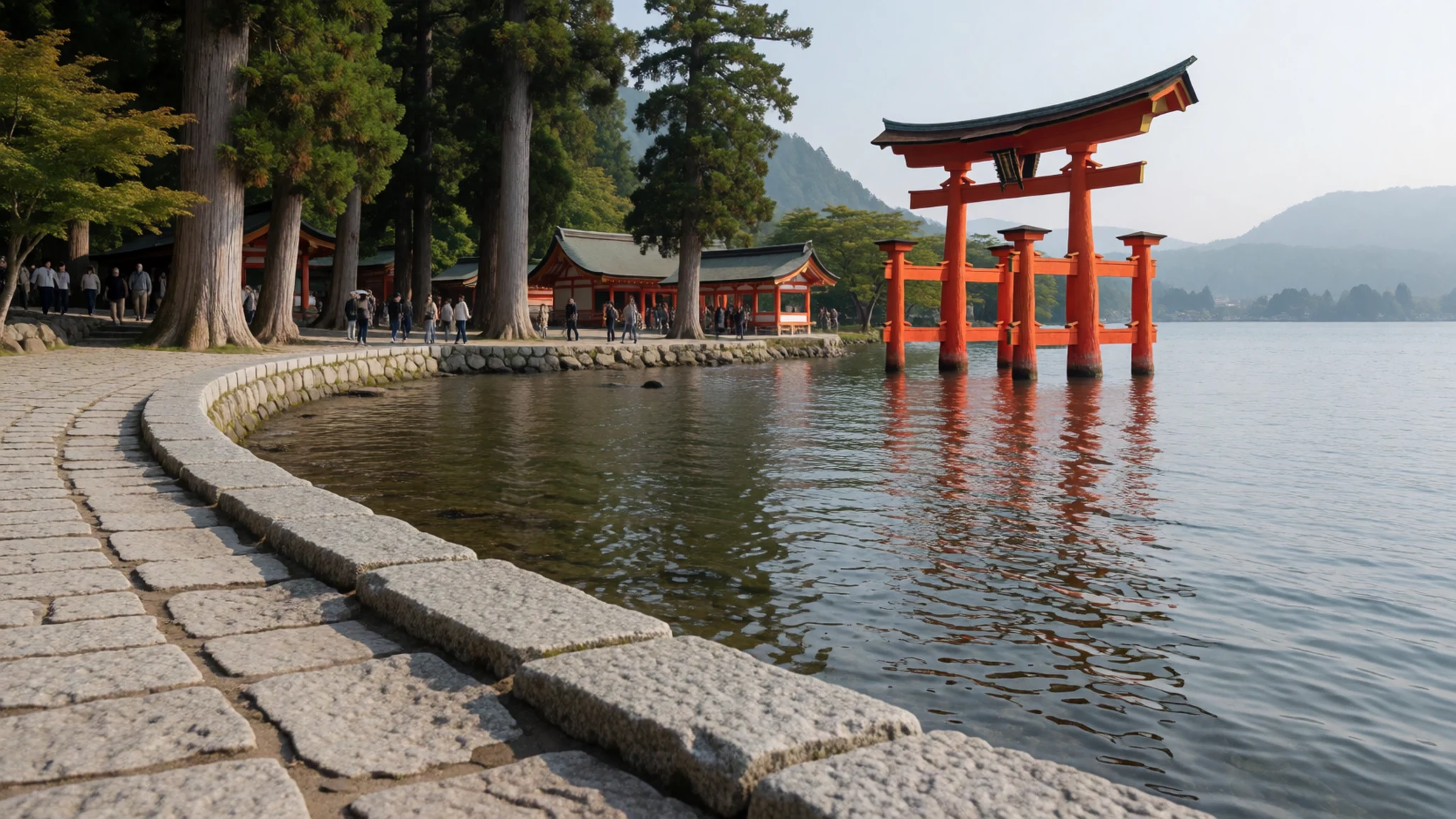
- Great Boiling Valley — Ōwakudani
An active volcanic zone filled with sulphurous hot springs, billowing steam vents, and boiling pools. Walking paths take visitors close to the raw geothermal forces that heat the region's famous mineral waters, with strong mineral scents filling the crisp mountain air.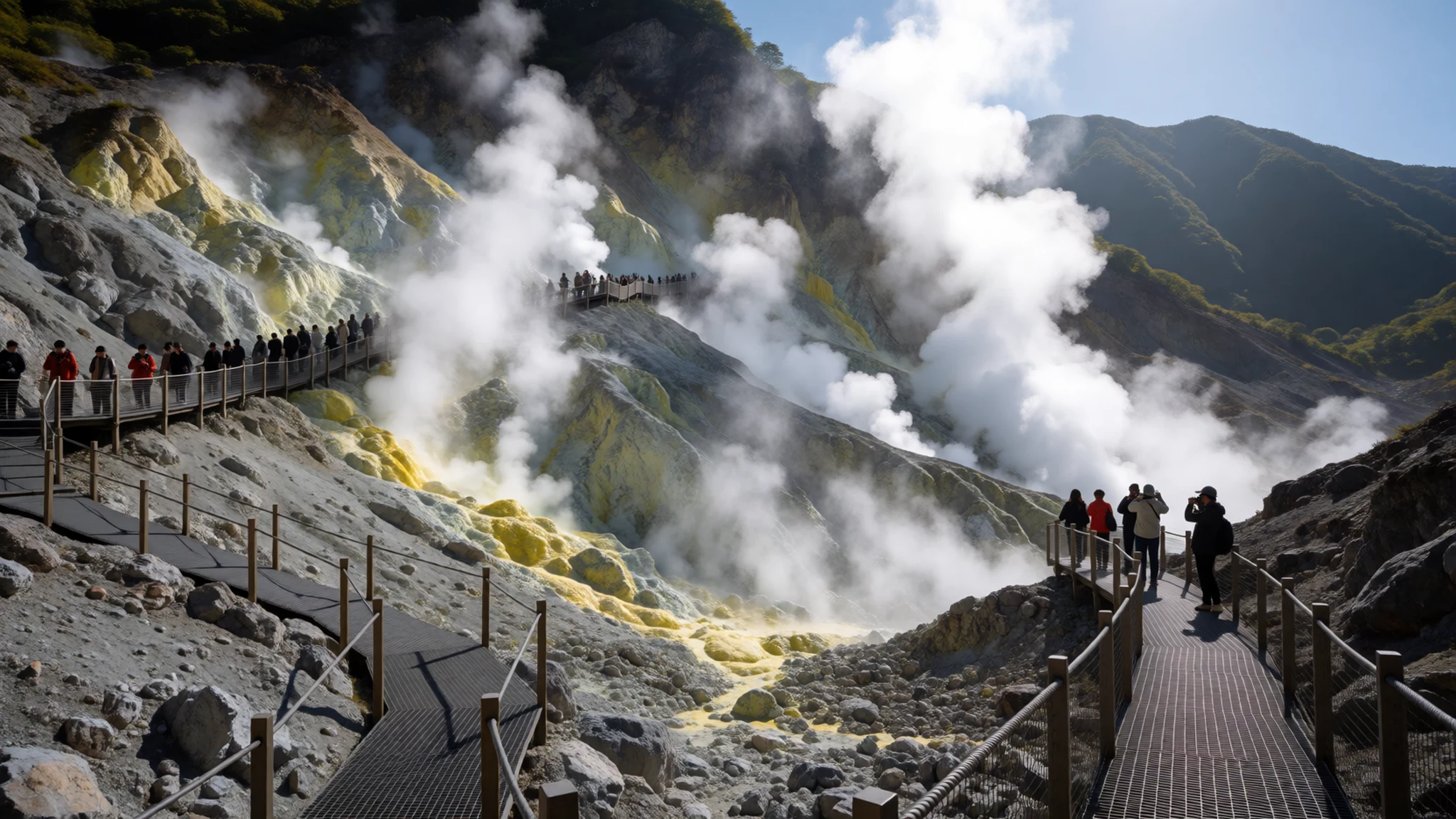
- Hakone Open Air Museum — Gora
A sprawling outdoor gallery set within a sweeping parkland setting beneath the mountain ridges. The grounds display a diverse collection of monumental sculptures and modern artworks by celebrated international and Japanese creators, alongside an indoor pavilion housing Picasso works.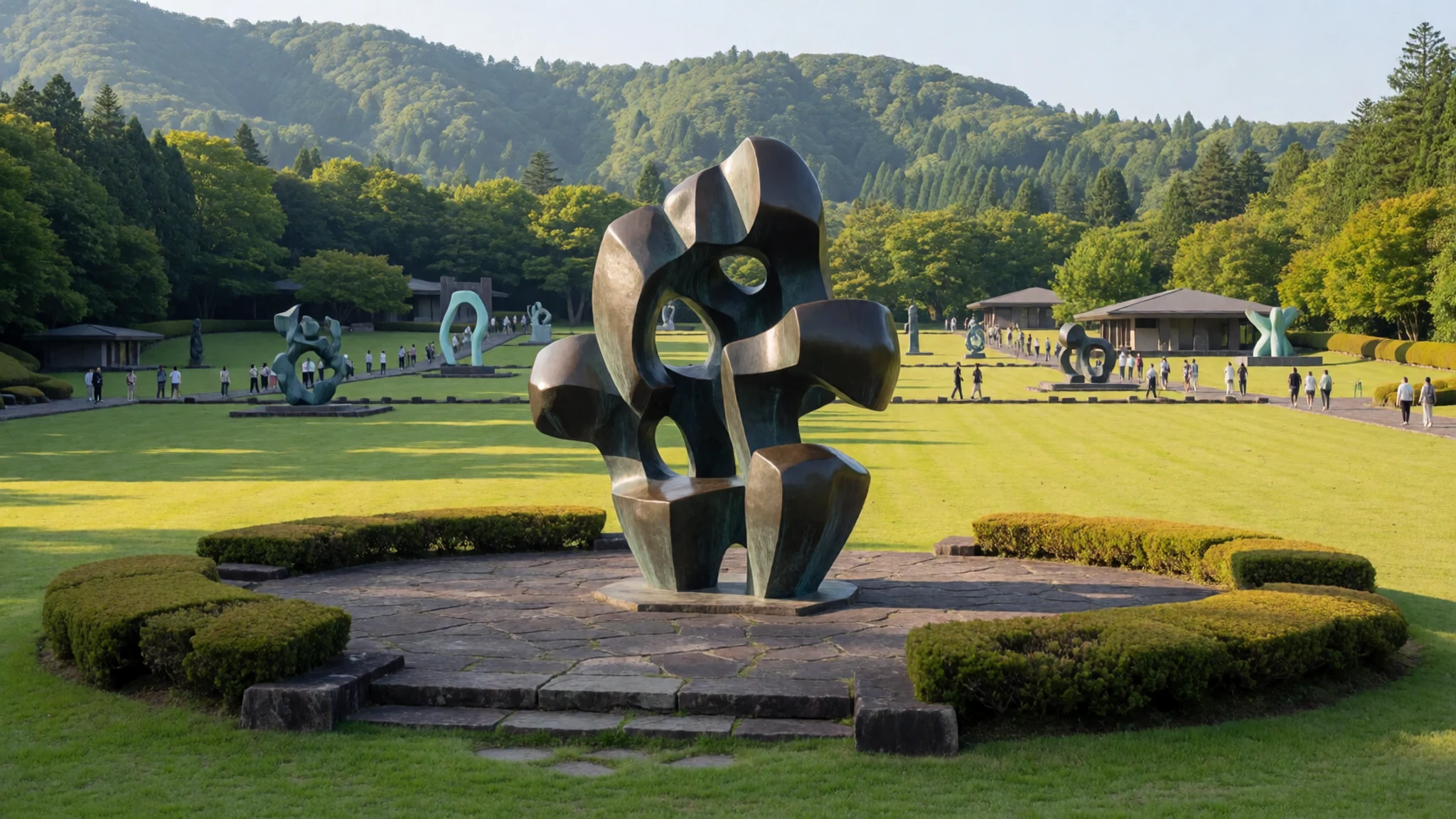
- Lake Ashi Cruise — Lake Ashi
Vessels styled after classic European sailing warships traverse the crater waters between multiple lakeside piers. The boat trips provide expansive views of the wooded caldera walls, shoreline shrines, and distant mountain peaks when weather permits.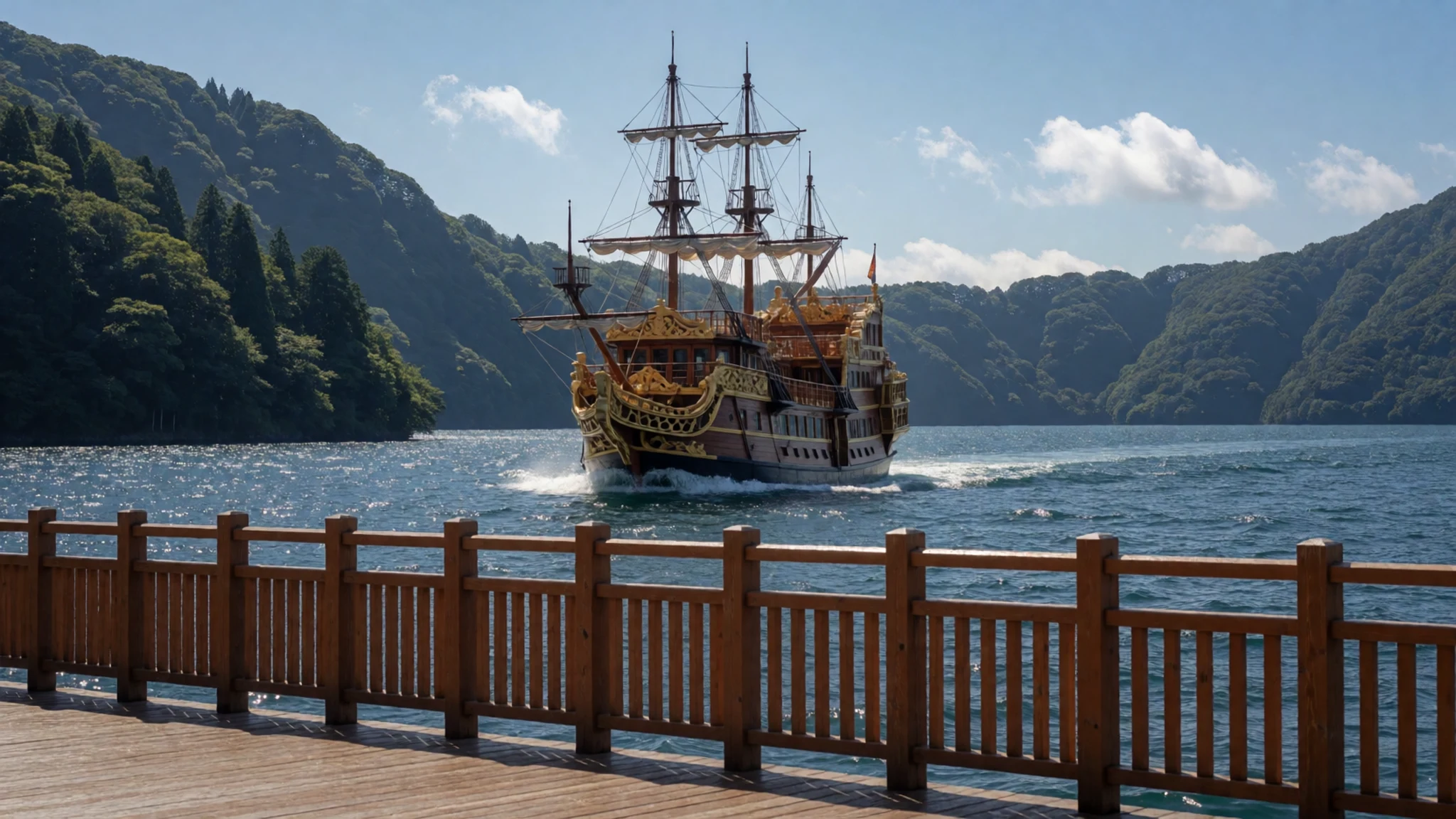
- Pola Museum of Art — Sengokuhara
A sleek, contemporary gallery tucked deep into a beech forest, holding a vast private collection gathered over decades. Galleries showcase European impressionism, Japanese paintings, glass art, and cosmetics antiques, all illuminated by clever architectural integration with the surrounding woodland.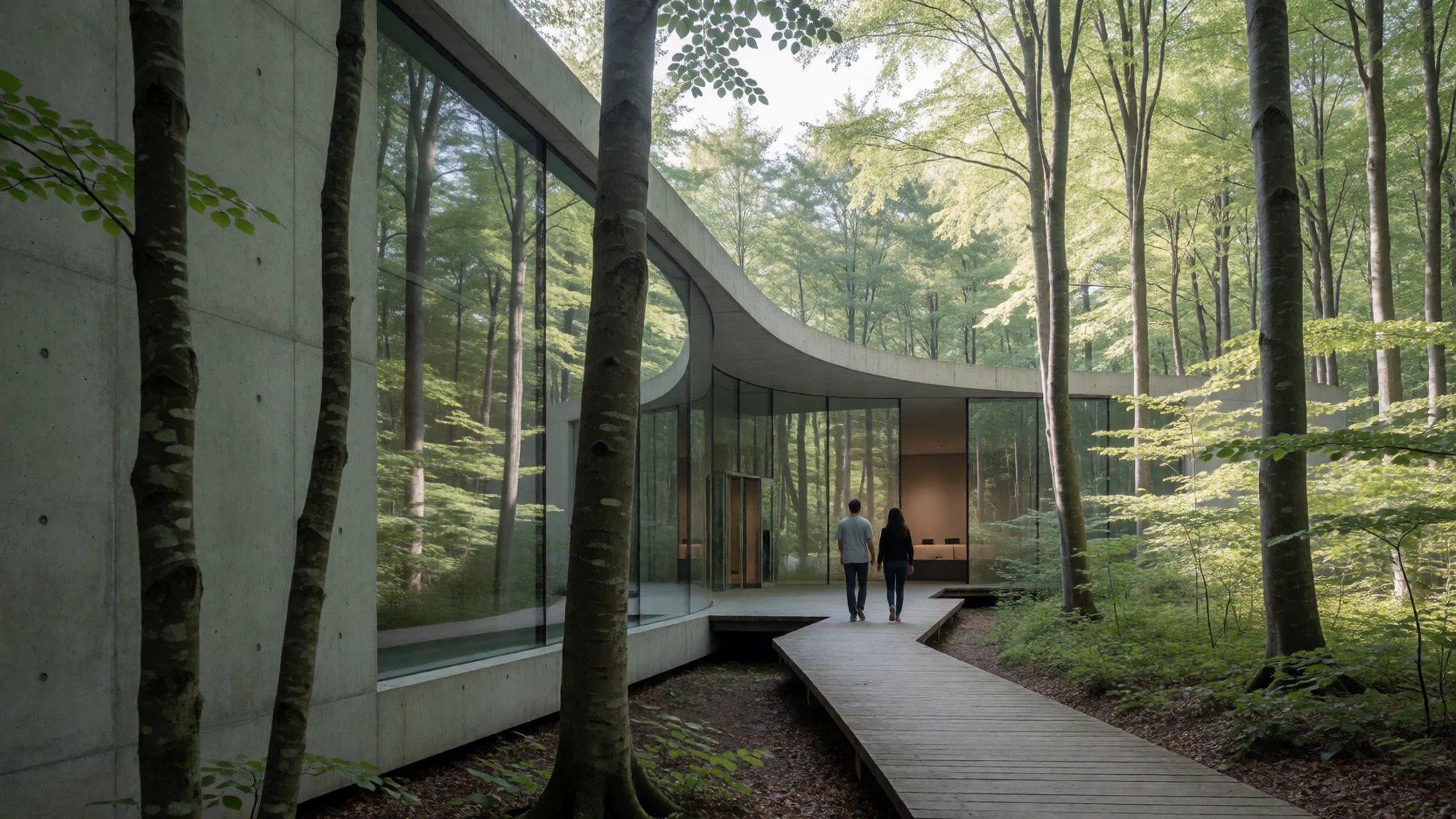
Culture
Culture around Lake Ashi is deeply rooted in the traditions of mountain asceticism, Shinto reverence, and the quiet hospitality of the Japanese hot spring inn. For centuries, the region functioned as a spiritual barrier and testing ground for travellers crossing Honshū, leaving behind sacred shrines, stone-paved highways, and ritual purification sites. Today, local life revolves around welcoming visitors to mineral baths and serving traditional cuisine crafted from mountain produce and crisp spring water. Art and craft also thrive here, from traditional marquetry woodwork known as Yosegi-zaiku to modern galleries nestled in the forest canopy. Visitors should observe quiet reverence at sacred sites, keeping voices low inside temple halls and shrines. Always remove your footwear when stepping onto raised tatami mats or entering traditional indoor spaces where slippers are provided.
What to wear
Traditional attire in the region reflects the needs of mountain travel and ryokan leisure. Historically, travellers wore cotton yukata robes at hot springs, sturdier layers for mountain passes, and woven straw sandals for the steep stone paths. While everyday local dress is now thoroughly modern and casual, the classic cotton yukata remains the standard evening uniform worn by guests strolling between their inn room and the communal baths.
For contemporary visitors, practical comfort is essential. The mountain weather around the lake changes rapidly, turning chilly or misty even after a warm afternoon, so layering is crucial. Pack sturdy walking shoes or trainers for exploring uneven forest paths, stone staircases, and gravel shrine precincts. If you plan to use public hot spring baths, keep in mind that swimwear is not worn; instead, modesty towels are provided by your accommodation. When visiting temples and shrines, dress respectfully with shoulders and knees covered, and ensure your footwear is easy to slip on and off.
What to eat
- Black eggs — Ōwakudani volcanic valley
Chicken eggs boiled directly in the sulphurous thermal waters of the volcanic valley. The mineral reaction turns the shells a mottled black colour while keeping the egg inside tender and savoury, traditionally said to add longevity to your life.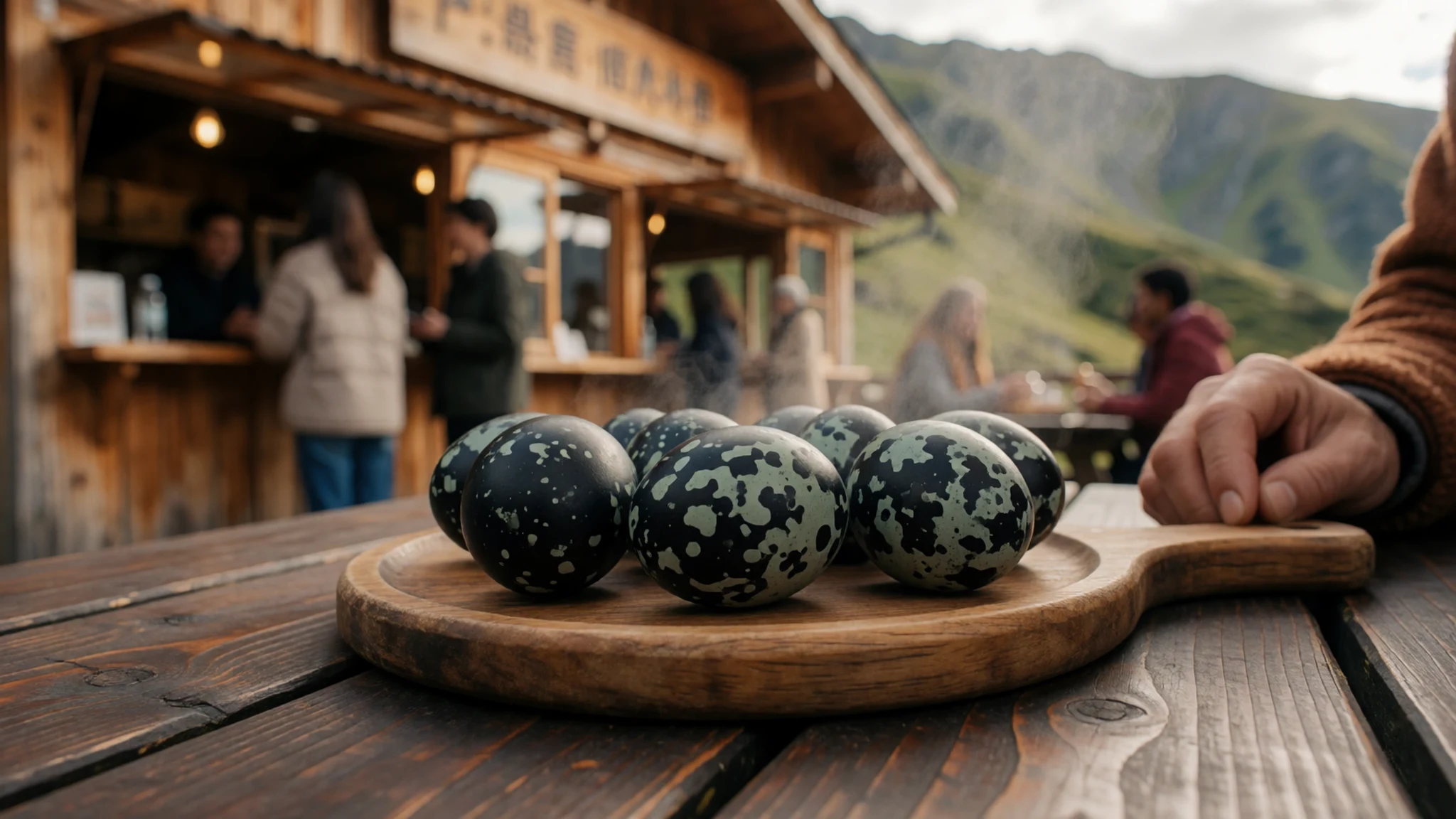
- Handmade Soba Noodles — Any traditional noodle shop across the Hakone region
Buckwheat noodles crafted using the region's pure natural spring water. Served either chilled with a dipping sauce or steaming hot in a clear broth, they are often accompanied by crisp seasonal tempura or mountain vegetables.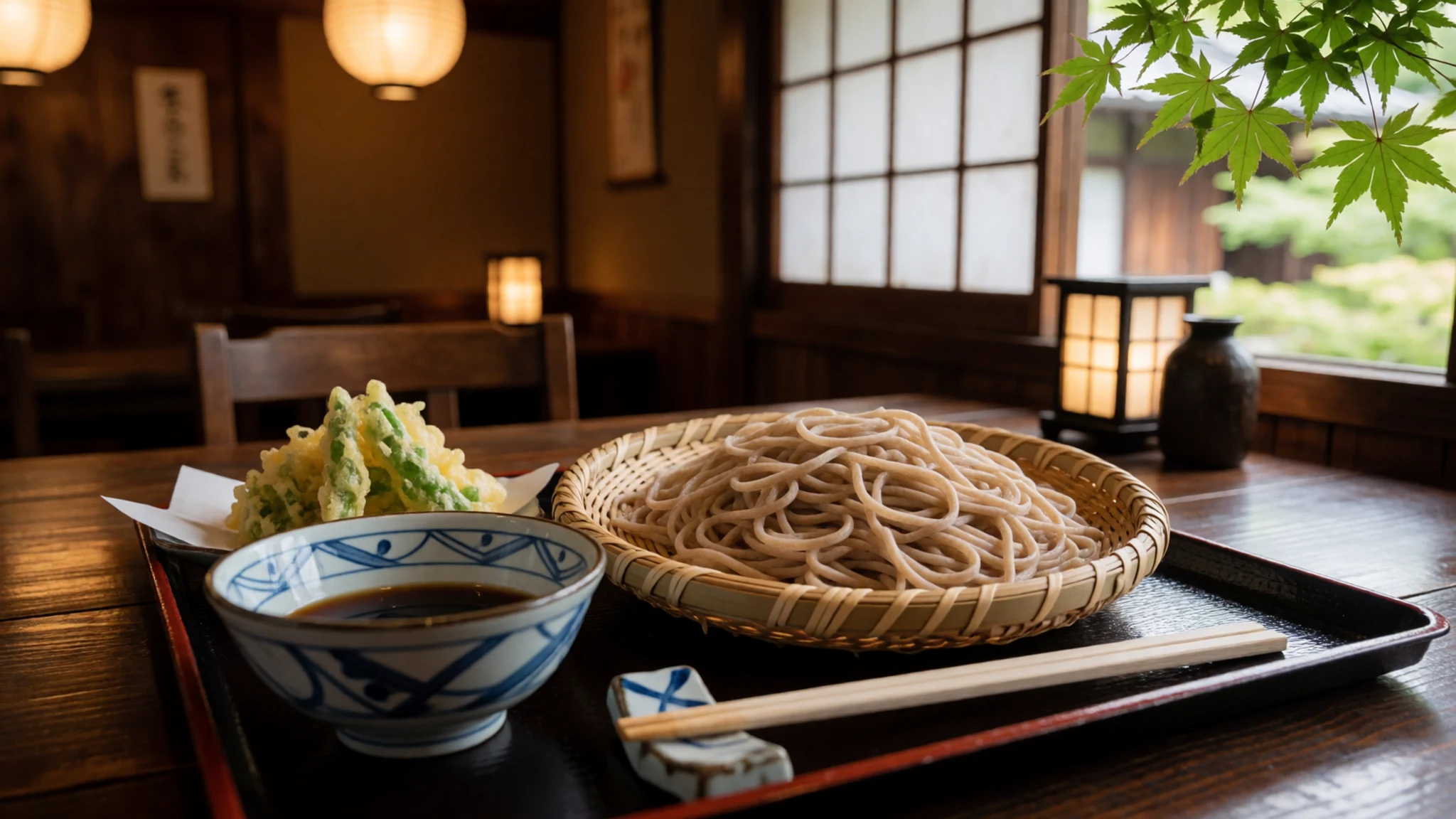
- Tofu Katsuni — Specialist eateries around Gora and Hakone-Yumoto
A savoury comfort dish featuring delicate tofu simmered in a sweet soy broth with beaten egg and onions, served sizzling in a small cast-iron pan. Vegetarian-friendly versions can be prepared upon request. - Mountain Brownies — Sagamiya bakery near the mountain railway stations
Rich, warm baked chocolate brownies prepared fresh on site by local patisseries. Their sweet aroma drifts through the mountain air, offering a comforting treat after a brisk walk along the lake trails. - Hakone Craft Beer — Small bars and taprooms around Gora
Local artisan brews crafted using pristine spring water filtered through the volcanic rock of the caldera. These refreshing ales and lagers pair wonderfully with local pub fare and regional snacks.
Plan it
Best time. March to May for spring blossoms and mild walking weather, or October to November for vibrant autumn maple colours; August is hot and humid, and June brings seasonal rains.
How long. 2–3
Getting there. Fly into Tokyo's Haneda or Narita airports, take the train to Odawara station, and transfer to the Hakone-Tozan mountain railway or bus for the final ascent.
Budget. mid
Tips
- Arrive at your ryokan at least one day after landing in Tokyo to avoid missing curfew or reserved dinner times
- Start your visits to popular lakeside shrines and viewpoints early in the morning before the tour buses arrive
- Carry sufficient cash, as many smaller shrines, local food stalls, and rural bus routes do not accept cards
- Pack layers and a light waterproof jacket, as mountain weather around the caldera shifts without warning
- Check weather forecasts carefully, as clear views of Mount Fuji are never guaranteed
Etiquette
- Remove your shoes whenever you encounter a step up and indoor slippers waiting
- Never photograph geiko or local shrine priests without asking permission first
- Observe quiet decorum on public transport and inside traditional inns
Nearby
Sources
- Wikidata Q187053 (CC0)
- Wikipedia (rev 1366151389) (CC BY-SA 4.0)
- Wikivoyage (rev 5403565) (CC BY-SA 4.0)
- Photo 01-lake-ashi-mt-fuji-hakone-shrine.jpg (CC BY-SA 4.0)
- Photo 02-260505-moto-hakone-hakone-japan01s3.jpg (CC BY-SA 4.0)
- Photo 03-hakone-loyal-ii.jpg (CC BY-SA 4.0)
- Photo 04-the-lake-of-hakone-in-the-segami-province.jpg (Public domain)
- Photo 05-lake-ashi-from-mt-komagatake-02.jpg (CC BY 3.0)
- Photo 06-hiroshige11-hakone.jpg (Public domain)
- Photo 07-hakone-volcano-3d-relief-map-b-srtm-1-ver3.jpg (Public domain)
- Photo 08-mt-fuji-from-mt-taikanzan.jpg (CC BY-SA 4.0)


