Kurashiki
Kurashiki, Japan
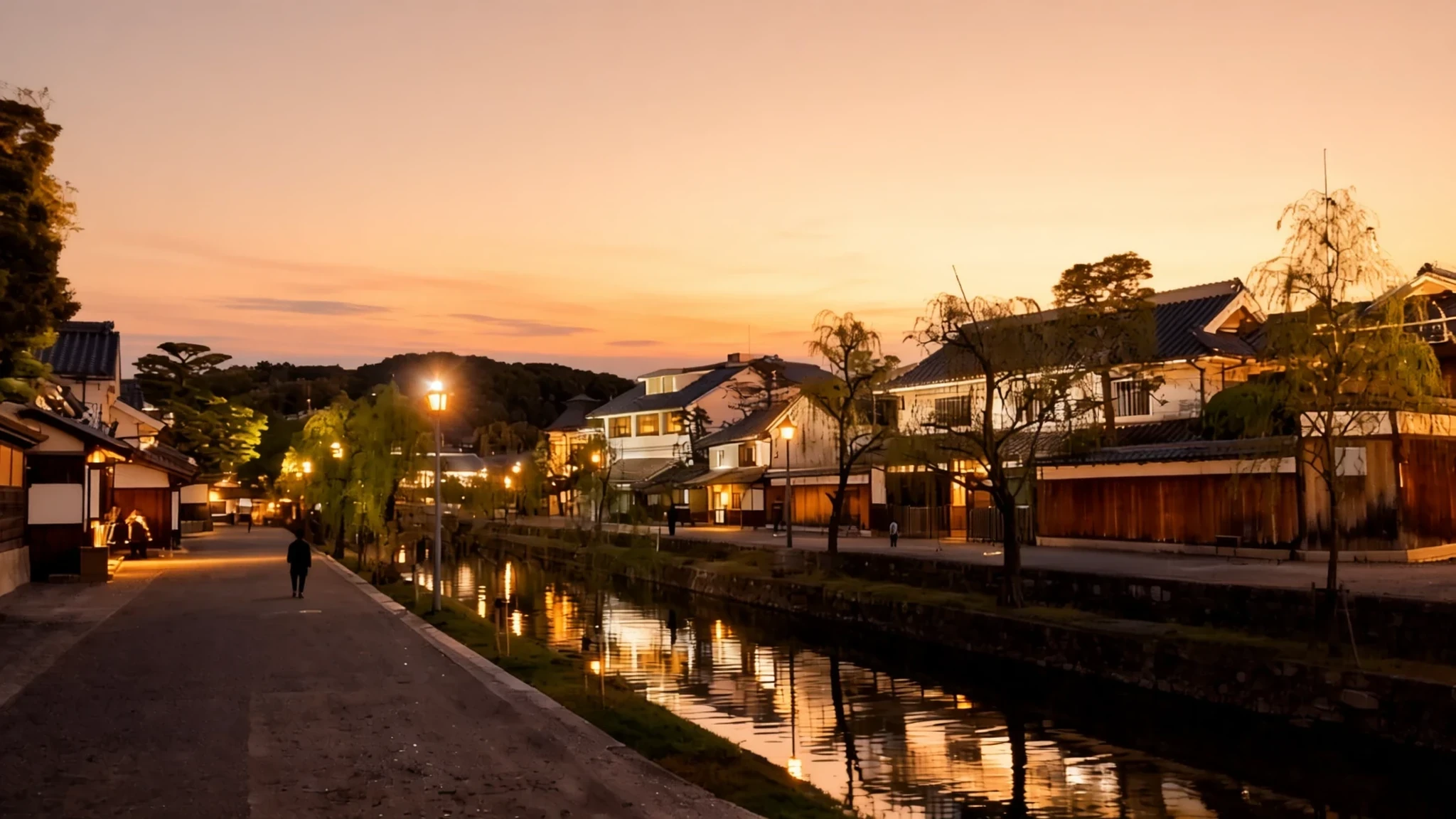
Step away from standard tourist tracks into Kurashiki, where preserved black-tiled canal warehouses conceal world-class Western art collections and quiet alleys.
The place
Kurashiki occupies a unique position in Okayama Prefecture, stretching down toward the Seto Inland Sea. The Takahashi River cuts through the western portion of the municipal area, feeding into marine waters past alluvial plains and extensive tracts of reclaimed land. If you study local geography closely, you discover that several districts retain the kanji character for island within their traditional names. Long ago, spots such as Kojima and Tamashima stood completely isolated in the sea before human engineering and land reclamation stitched them securely into the mainland. Today, the urban territory functions as a major counterpart to the adjacent prefectural capital, anchoring a thriving regional economy that balances modern manufacturing with remarkably intact historical preservation. Visitors walking through the historic canal district find themselves surrounded by calm waterways, stone bridges, weeping willows, and heavy timber-framed buildings that have survived profound shifts in Japanese society. The climate here brings distinct seasonal changes, shifting from cool winters to warm, humid summers where September typically records the heaviest rainfall of the year. Unlike the frantic pace found in Tokyo or Osaka, this city invites travellers to slow their steps, wander along narrow pedestrian pathways, and absorb the atmosphere of a former commercial hub that successfully honours its multifaceted past while meeting the needs of its sizable contemporary community.
Its story
The heritage of Kurashiki reaches deep into ancient times, long before canals and merchant storehouses defined its central quarters. Archaeological evidence shows human presence in the Bitchū Province region extending back through the Paleolithic era, leaving behind shell middens, burial mounds, and temple ruins. During the feudal eras, the Takahashi River estuary functioned as an active port, drawing competing clans and setting the stage for numerous historical conflicts across the surrounding plains. A major turning point arrived during the Edo period, when the old quarter and its vital harbour came under the direct administrative control of the central shogunate as special crown territory. Because the town served as a central collection depot for annual rice tributes gathered from distant domains, local administrators oversaw the construction of robust storehouses featuring white plastered walls and dark roof tiles designed to protect valuable grains from fire and moisture. Simultaneously, the regional magistrate recognized the economic value of independent merchants, granting them special privileges and administrative autonomy. This policy stimulated steady population growth alongside thriving local industries, notably cotton textile weaving and salt manufacturing. Following the sweeping reforms of the Meiji restoration, the modern municipal structure was formally established. Through careful civic planning and passionate local stewardship, these mercantile districts escaped wholesale wartime destruction, allowing contemporary visitors to witness authentic architectural testaments of Japan's pre-industrial economic expansion.
What to see
- Ohara Museum of Art — Bikan Historical Quarter
Established as the pioneer institution for Western art in the country, this distinguished gallery showcases an extraordinary permanent collection featuring masterworks by renowned European and American painters such as Picasso, Renoir, Monet, and Matisse, alongside significant pieces of Asian and regional craft traditions set within classical courtyard buildings.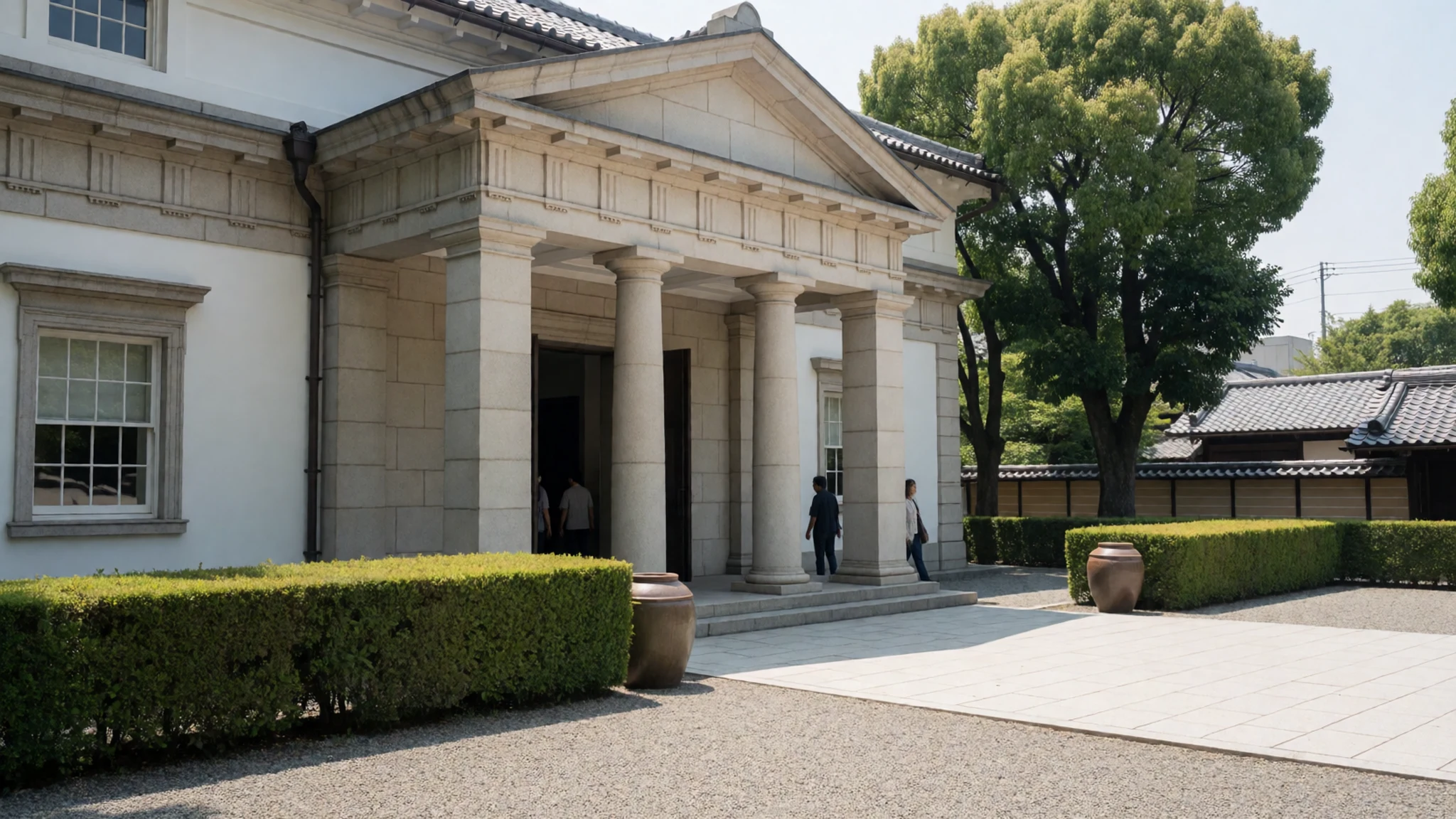
- Kojima Torajiro Memorial Hall — Bikan Historical Quarter
Dedicated to the visionary Japanese painter who travelled extensively through Europe to personally acquire the foundational masterpieces for the Ohara collection, this atmospheric exhibition space highlights his personal artistic evolution, capturing his unique synthesis of Western oil painting techniques with traditional Japanese subject matter and aesthetic sensitivities.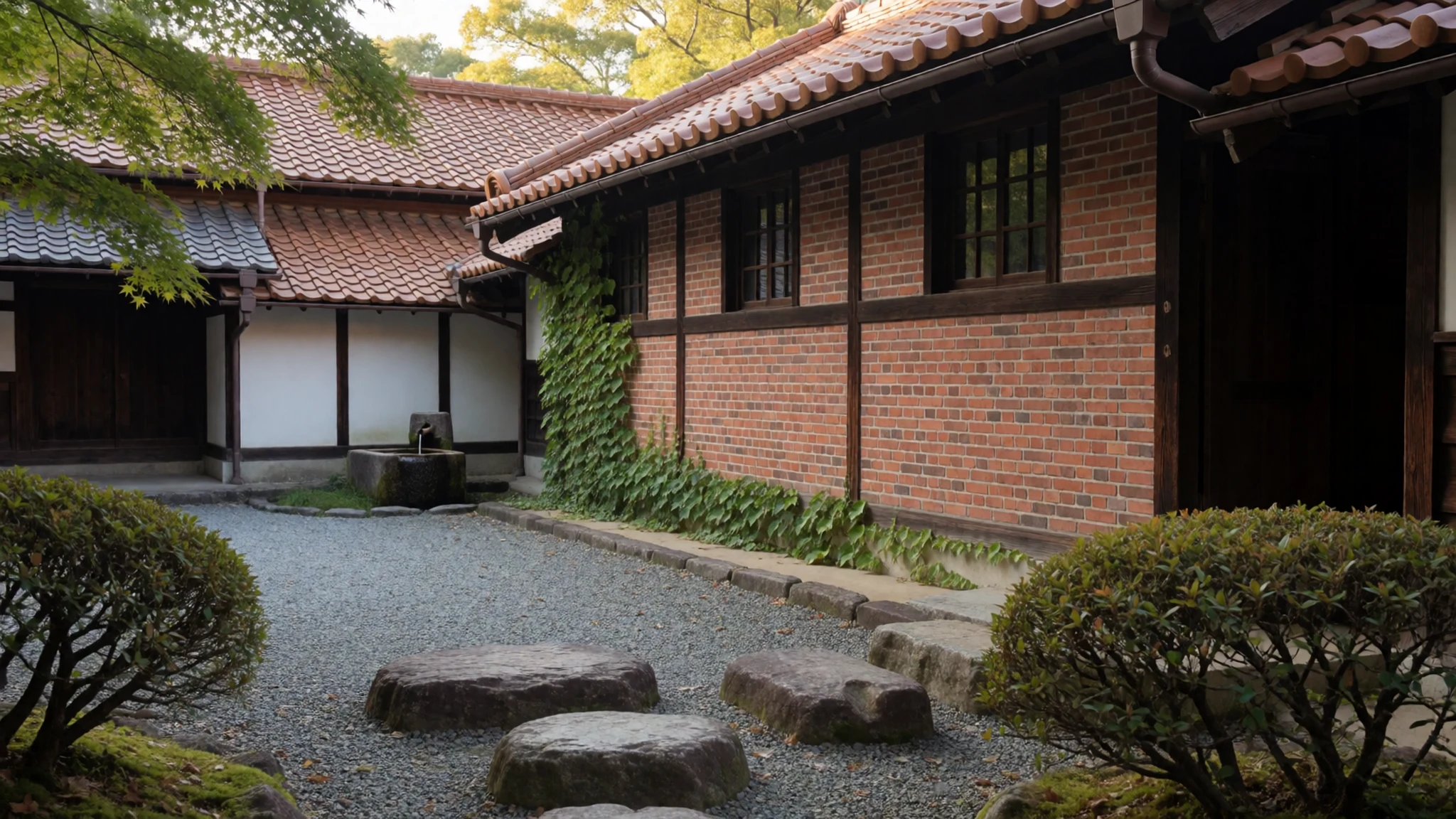
- Archaeological Museum — Bikan Historical Quarter
Situated thoughtfully inside a converted traditional rice warehouse with heavy wooden beams and white plaster walls, this specialized repository displays fascinating historical artefacts unearthed from regional sites, alongside valuable ancient objects originating from early Chinese dynasties and rare pre-Columbian cultures from South America.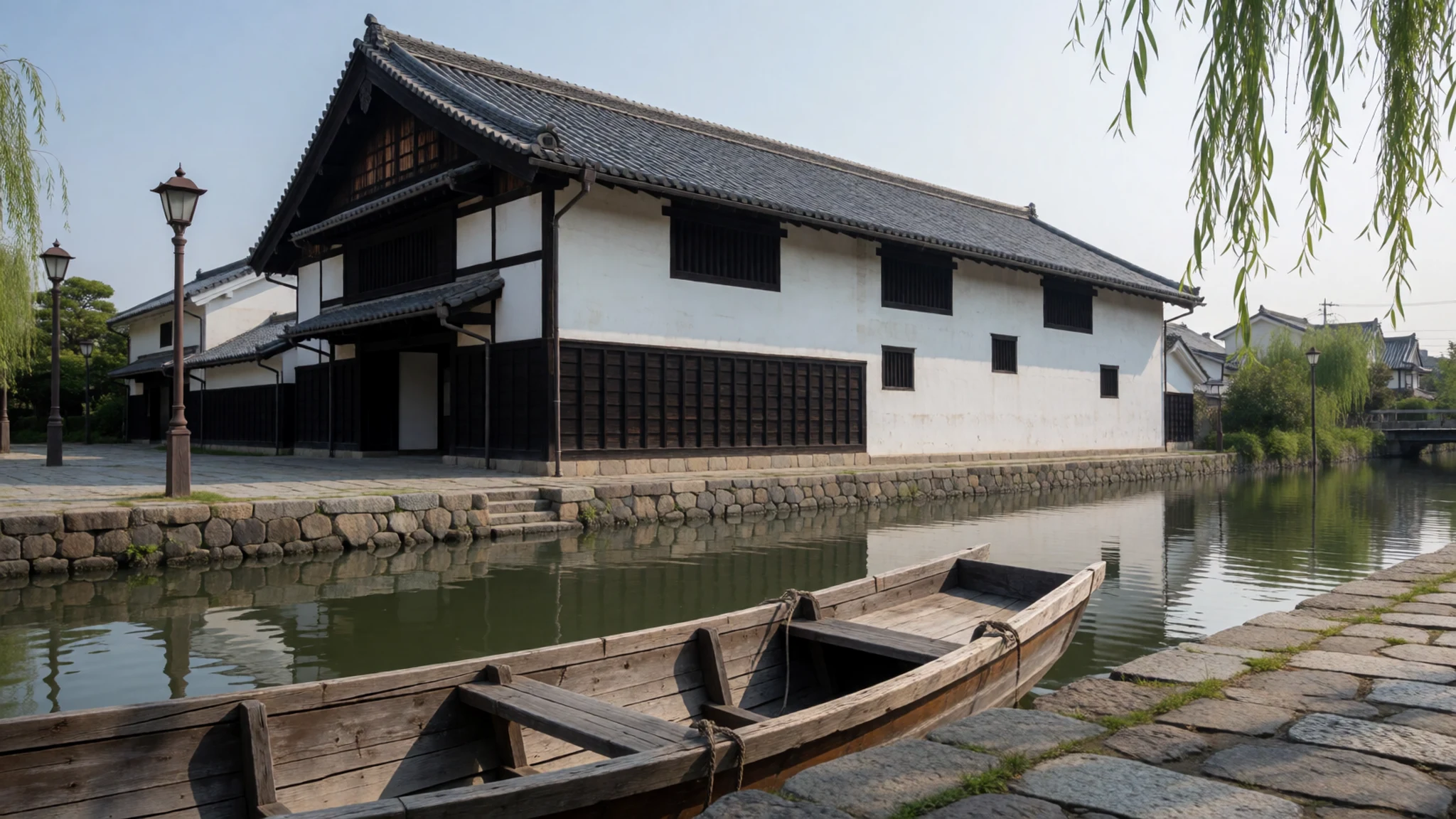
- Japanese Folk Toy Museum — Bikan Historical Quarter
Housed within a cluster of interconnected historical storehouses, this delightful institution preserves a vast inventory of handmade playthings gathered from across the nation, presenting whimsical folk artefacts ranging from painted wooden figures and paper dolls to mechanical novelties that evoke nostalgic childhood memories of eras past.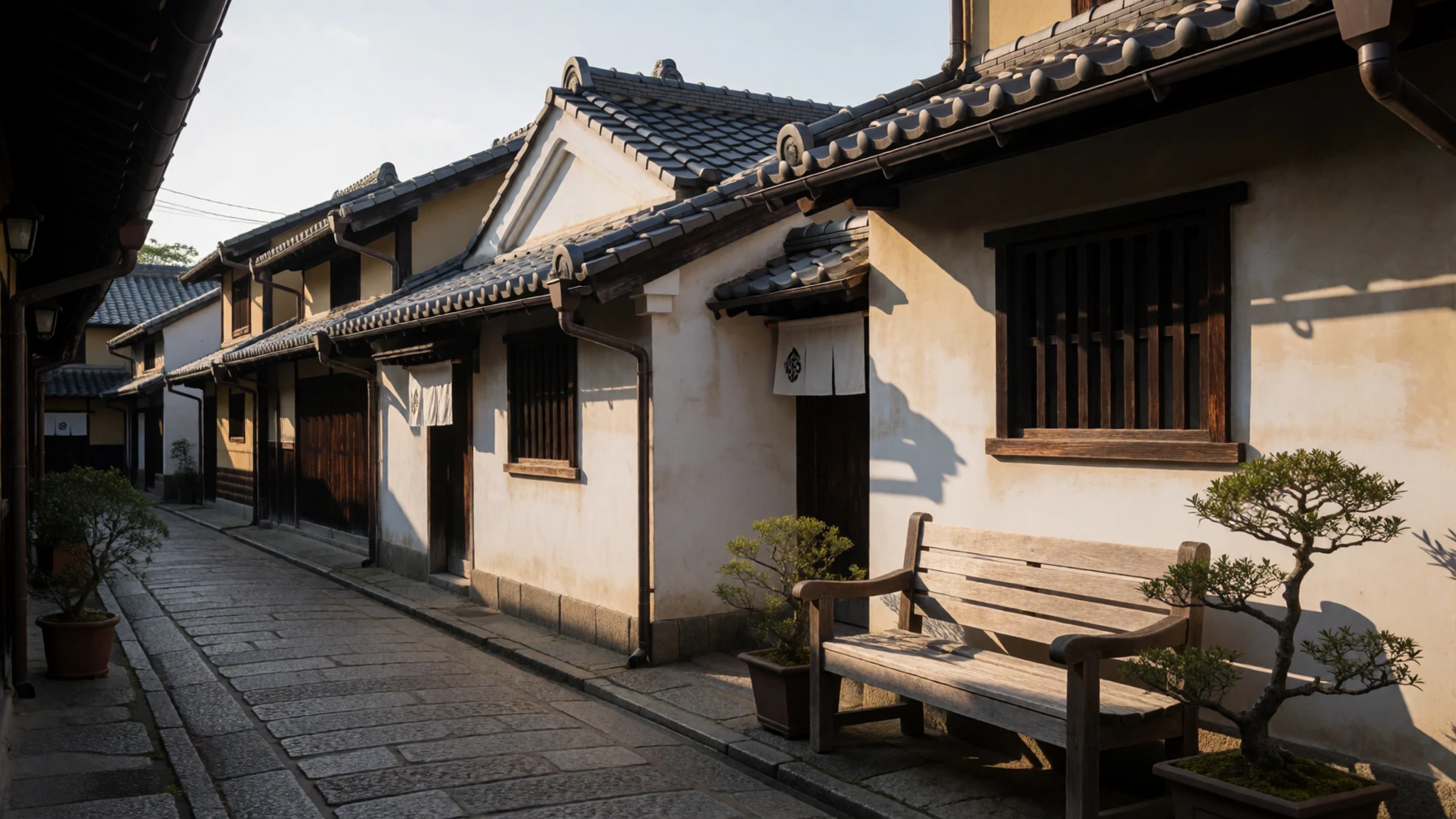
- Museum of Folkcraft — Bikan Historical Quarter
Operating under the philosophy of the domestic craft movement that championed everyday utilitarian beauty, this thoughtful cultural space exhibits ceramics, textiles, woodwork, and metalwork created by skilled artisans, celebrating functional items crafted with immense care, local materials, and unpretentious artistic integrity.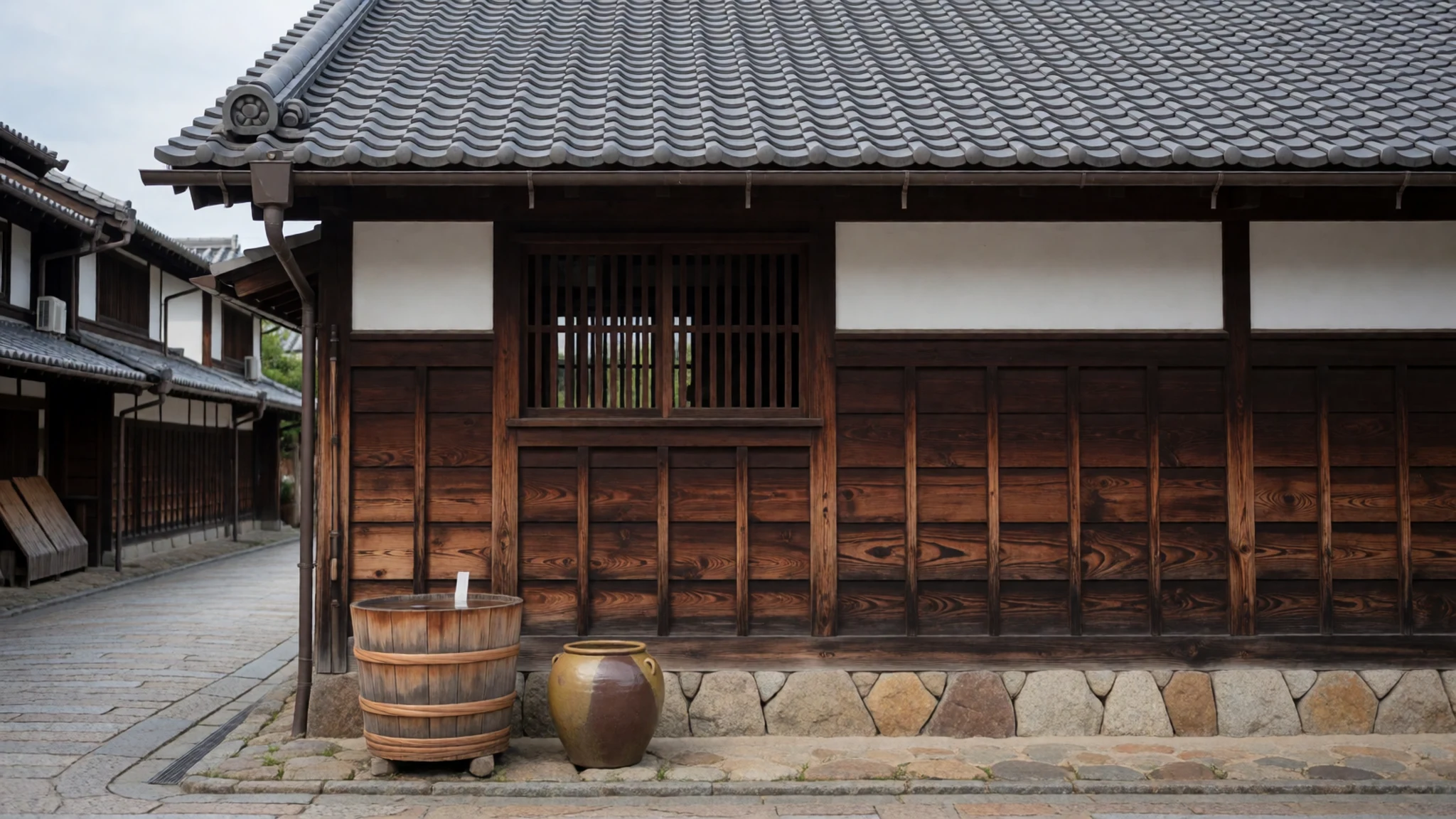
Culture
Kurashiki maintains a deep reverence for its artisanal heritage, balancing ancient craft traditions with a quiet, modern civic pride. The community places immense value on preserving the architectural integrity of its historic quarters, where generations have practiced textile dyeing, pottery making, and traditional carpentry. Local festivals reflect agricultural cycles and historical ties to the shogunate, drawing community members together in traditional attire to celebrate seasonal shifts with drum music and dance. Polite consideration defines daily interactions, and visitors will find that quiet patience and gentle etiquette are deeply appreciated by residents. When entering traditional inns, historical preservation halls, or temple buildings, always remove your footwear at the designated raised threshold and slip into the provided indoor slippers. Never step onto tatami mats with outdoor shoes or wheeled luggage.
What to wear
Traditional attire in Kurashiki is rooted in the region's historical standing as a textile production hub, particularly known for sturdy cotton fabrics and indigo-dyed garments worn by merchants and artisans during the Edo period. While daily life now sees residents wearing contemporary, practical Western-style clothing suited for urban work and travel, traditional garments like cotton yukata and kimonos remain a popular sight during summer festivals, local celebrations, and when strolling through the preserved canal district. For visitors, the practical approach involves dressing in layers depending on the season, keeping in mind the humid summers and chilly winter winds. Lightweight, breathable fabrics are essential for navigating the outdoor sights during warmer months, while a warm coat is necessary from December through February. When visiting sacred temple grounds or traditional interiors, modest attire that covers shoulders and knees is expected, and slip-on shoes are a distinct advantage given the frequency with which footwear must be removed.
What to eat
- Bukkake Udon — Specialist noodle shops near the canal district
The distinctive regional style of thick wheat noodles served chilled or warm in a concentrated dashi broth, topped with various garnishes. This culinary tradition carries subtle influences from Edo-period administrative connections.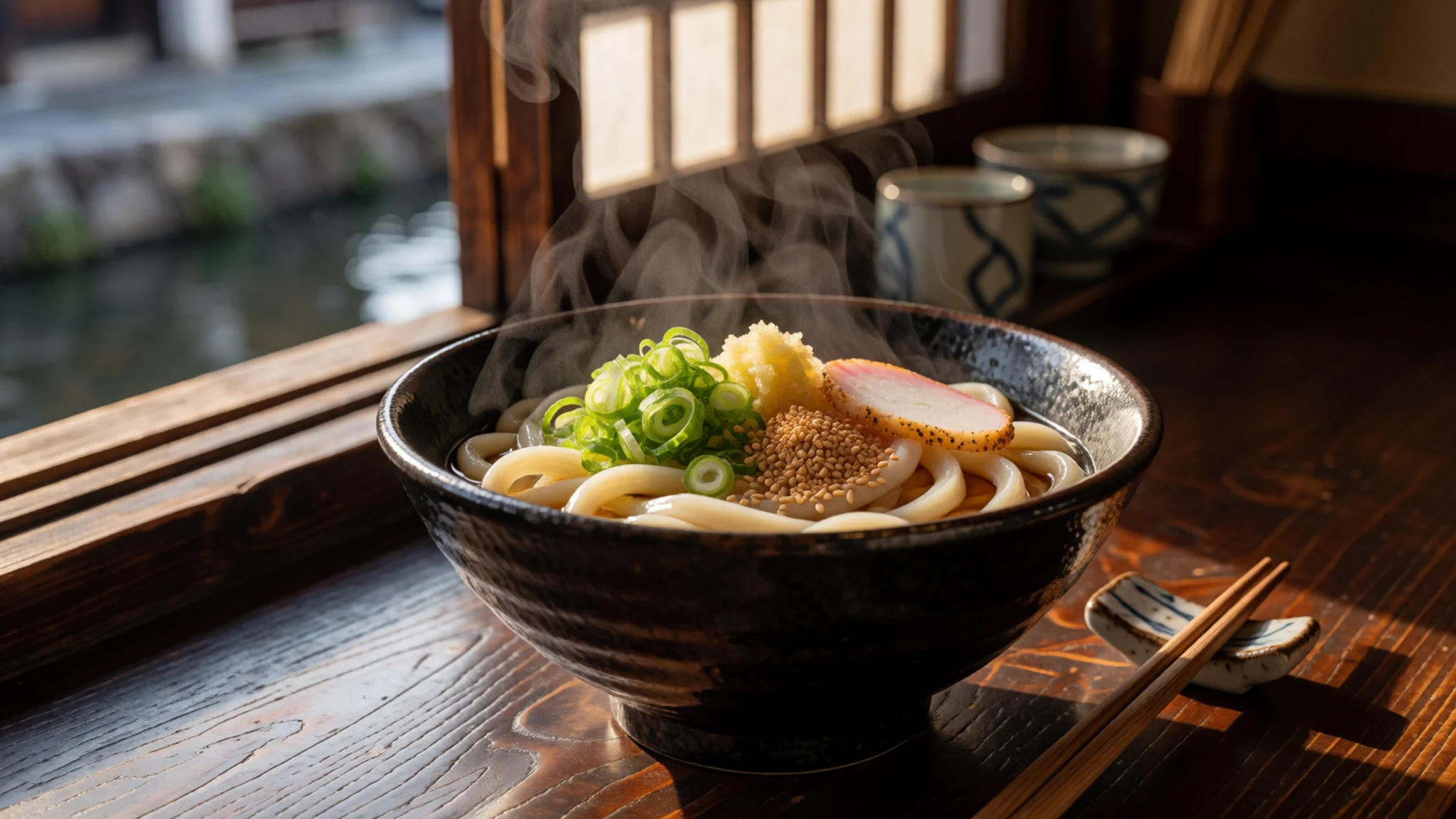
- Artisan Biscuits and Jellies — Specialist sandwich and snack shops in the old town
Delicate baked crackers and fruit-infused jellies created by local pastry cooks, offering a light, sweet accompaniment to afternoon tea within historic courtyard cafes.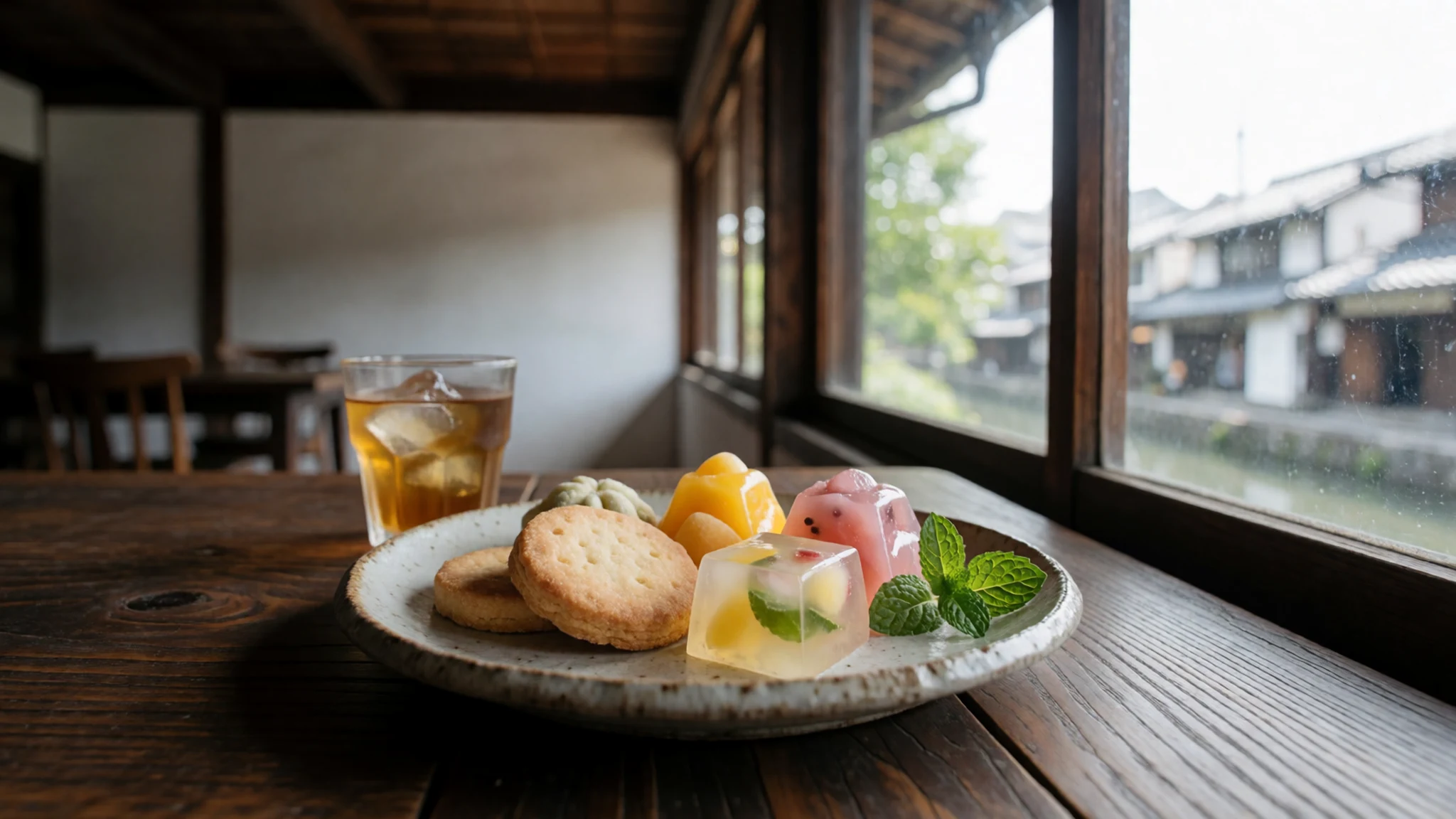
- Misokatsu — Traditional family restaurants along central lanes
Crispy, breaded pork cutlets fried without excess oil and smothered in a rich, savoury red-miso-based sauce, typically served over a generous bed of shredded raw cabbage. - Yakitori Skewers — Back-alley yakitoriya establishments in the Bikan Area
Juicy chicken pieces grilled over open charcoal flames in smoky, intimate back-alley taverns, seasoned simply with sea salt or brushed with a sweet soy glaze.
Plan it
Best time. March to April for cherry blossoms along the canals, or October to November for crisp autumn foliage; August is extremely hot and humid, while June brings the seasonal rains.
How long. 2–3
Getting there. Fly into Kansai International Airport or travel by Shinkansen to Okayama Station, then transfer to a local train on the San'yo Main Line for the short ride to Kurashiki.
Budget. mid
Tips
- Arrive in the historic canal district early in the morning before tour groups appear
- Carry sufficient cash, as smaller shrines, traditional craft shops, and food stalls may not accept cards
- Wear comfortable slip-on shoes for quick removal at historic sites and temples
- Stay hydrated during humid summer afternoons when exploring open-air sights
Etiquette
- Remove outdoor shoes immediately when stepping onto raised tatami floors or historic interior thresholds
- Keep voices low when visiting quiet residential alleys and temple precincts
- Ask permission before photographing local residents or traditional performers
Nearby
Sources
- Wikidata Q467487 (CC0)
- Wikipedia (CC-BY-SA 4.0)
- Wikivoyage (CC-BY-SA 4.0)