Kōyasan
Kōyasan, Japan
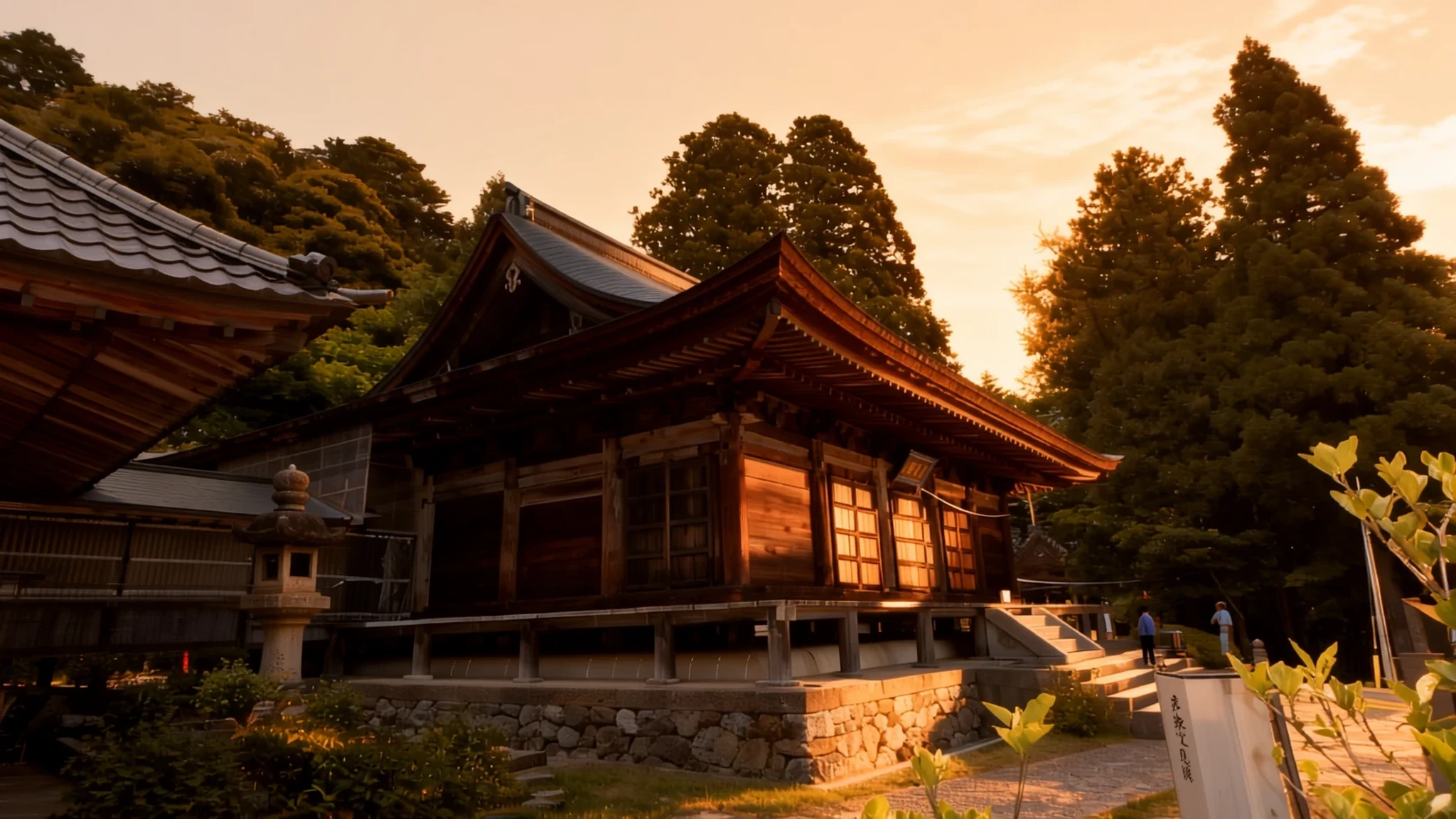
Mount Kōya offers a rare chance to sleep in a working Buddhist monastery, walk through ancient cedar forests, and experience esoteric temple life.
The place
Mount Kōya sits high in an elevated basin surrounded by eight peaks, creating a natural amphitheatre that feels entirely cut off from modern urban Japan. Arriving here requires winding mountain transport that leaves the noise of Osaka far behind, replacing city streets with cool mountain air, towering conifers, and moss-covered stone paths. This remote settlement functions as the headquarters for the Shingon school of esoteric Buddhism, a lineage focusing on direct spiritual awakening through sacred sounds, gestures, and visual mandalas. Visitors walk between dozens of active sub-temples where monks chant morning prayers and prepare traditional vegetarian meals. The atmosphere shifts dramatically between the daytime arrival of day-trippers and the quiet evening hours when overnight guests retreat behind paper sliding doors. Morning mist frequently clings to the temple rooftops and wooden corridors, creating a meditative mood that pervades every corner of the mountain basin. Even as tourism grows, Kōyasan maintains its deep religious identity, functioning simultaneously as a living monastic university, a peaceful residential community, and a profound spiritual retreat for travellers seeking stillness in the high mountains of Wakayama Prefecture.
Its story
The history of Mount Kōya began when the influential monk Kūkai, also known posthumously as Kōbō Daishi, sought a secluded mountain sanctuary far from the political intrigues of the imperial court. He chose this high basin because its ring of eight peaks reminded him of an unfolding lotus blossom, an auspicious symbol in Buddhist cosmology. Granted permission to establish his retreat, Kūkai began construction on the monastic complex, laying the foundations for an esoteric tradition that would shape Japanese spiritual life for centuries. Over generations, the original wooden halls expanded into a sprawling religious city complete with lecture grounds, administrative headquarters, and dozens of subsidiary lodgings run by individual monks. Although fires and the passage of time required rebuilding many structures, the sacred landscape preserved its medieval layout. Kūkai never truly left, according to devout followers; instead, he entered a state of eternal meditation within his secluded mausoleum at the edge of the great cemetery, where disciples continue to offer ritual meals every single day. This enduring legend draws pilgrims from across the nation who start or complete their spiritual journeys right here among the ancient cryptomeria trees, connecting contemporary visitors directly with the foundational era of Japanese Buddhism.
What to see
- Okunoin Cemetery — Eastern end of town
Japan's largest graveyard contains hundreds of thousands of mossy markers set beneath towering cedar trees. The winding paths lead past weathered stone monuments dedicated to historical figures, feudal lords, and ordinary families alike, culminating at the sacred mausoleum where the founder of Shingon Buddhism rests in eternal meditation.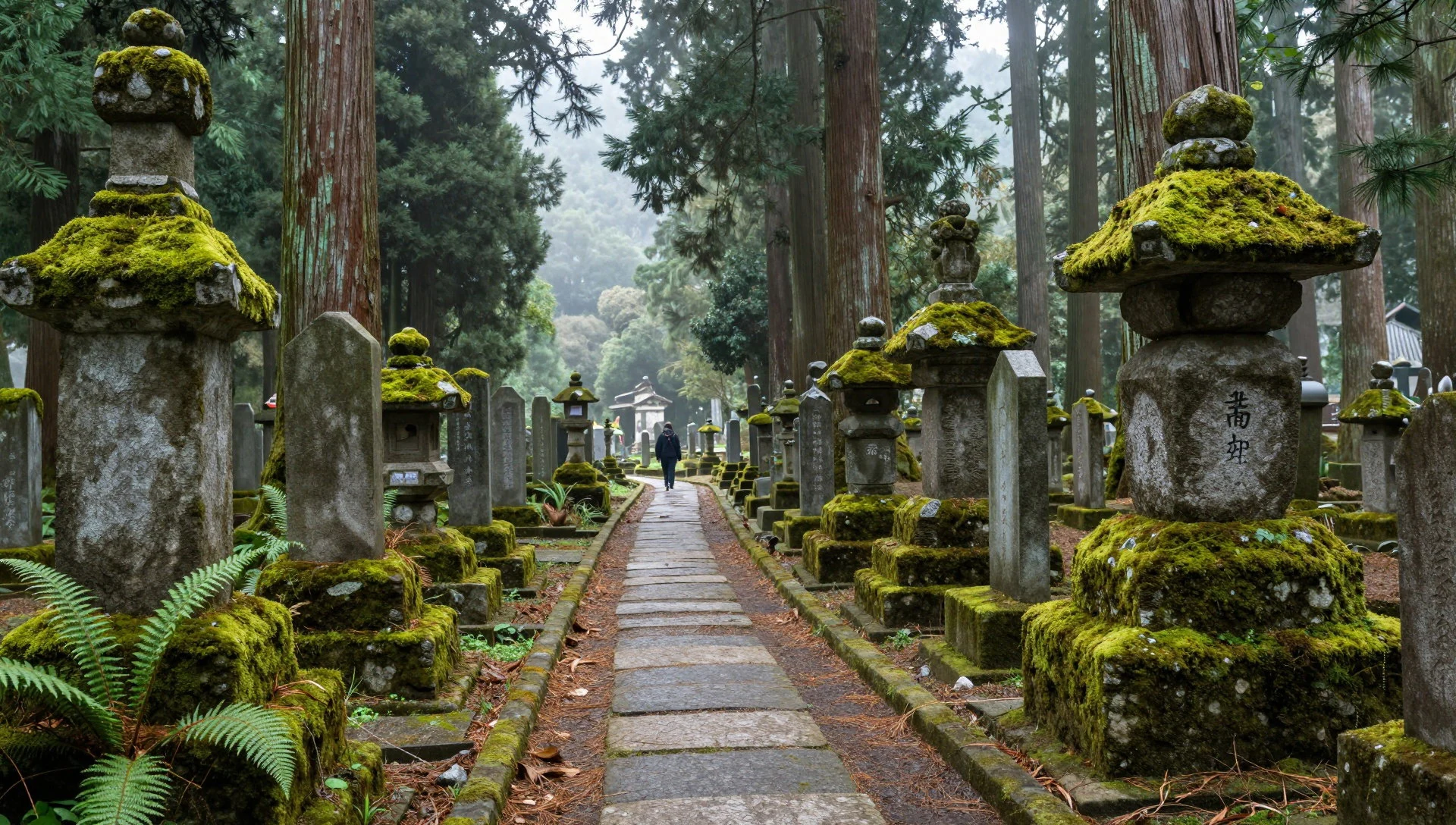
- Danjō-garan — Western side of town
This historic temple complex on the western side of the settlement was laid out by the founder to serve as the ritual heart of the mountain. Visitors wander among vermilion halls, multi-tiered pagodas, and prayer spaces that house ancient religious statues and demonstrate classical Japanese architectural mastery.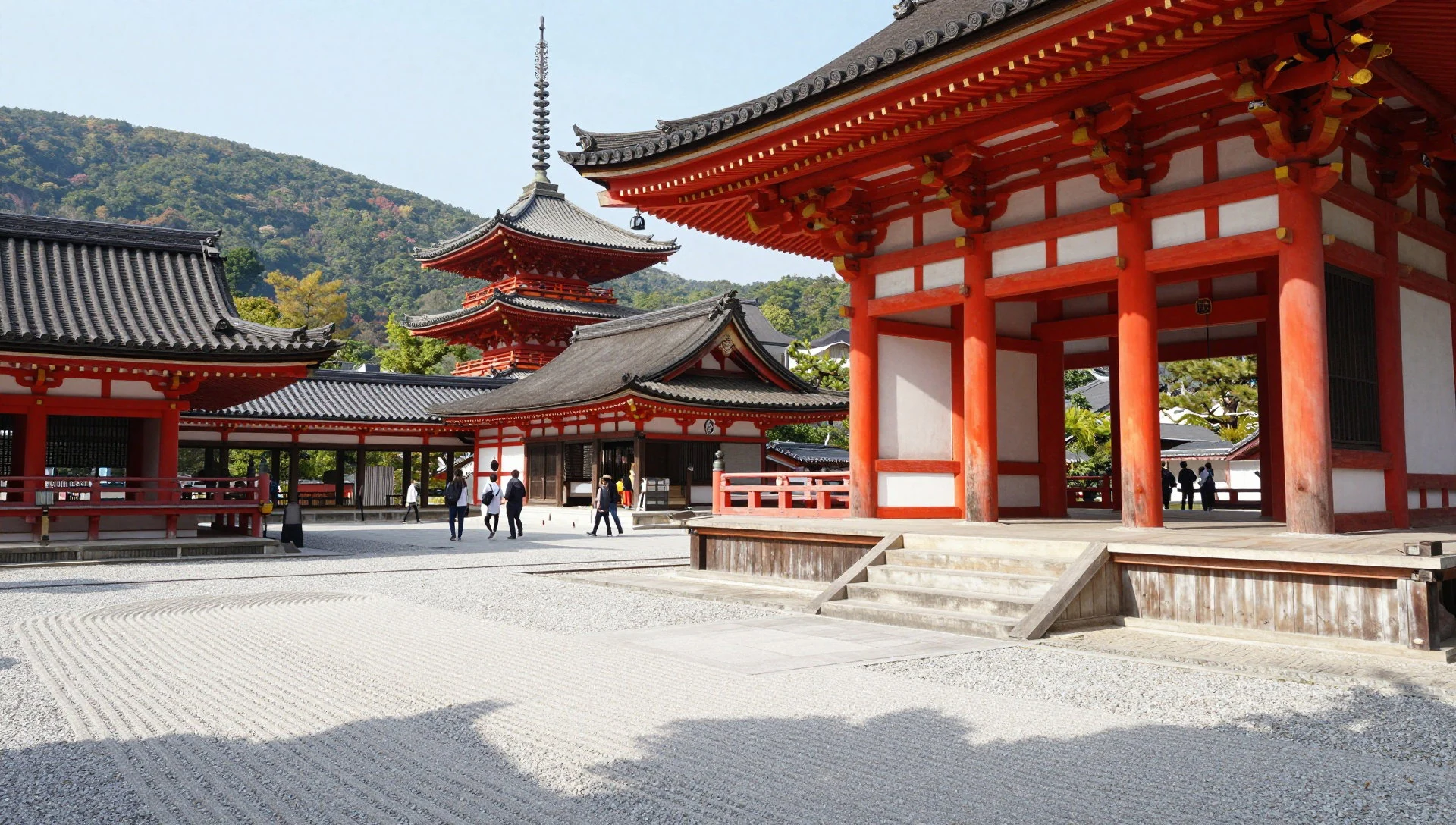
- Kongōbu-ji — Central Kōyasan
Serving as the sprawling headquarters of the Shingon sect, this historic temple features magnificent painted sliding doors and Japan's largest dry landscape rock garden. The raked gravel and granite arrangements symbolise two dragons emerging from a sea of clouds to protect the sacred religious halls.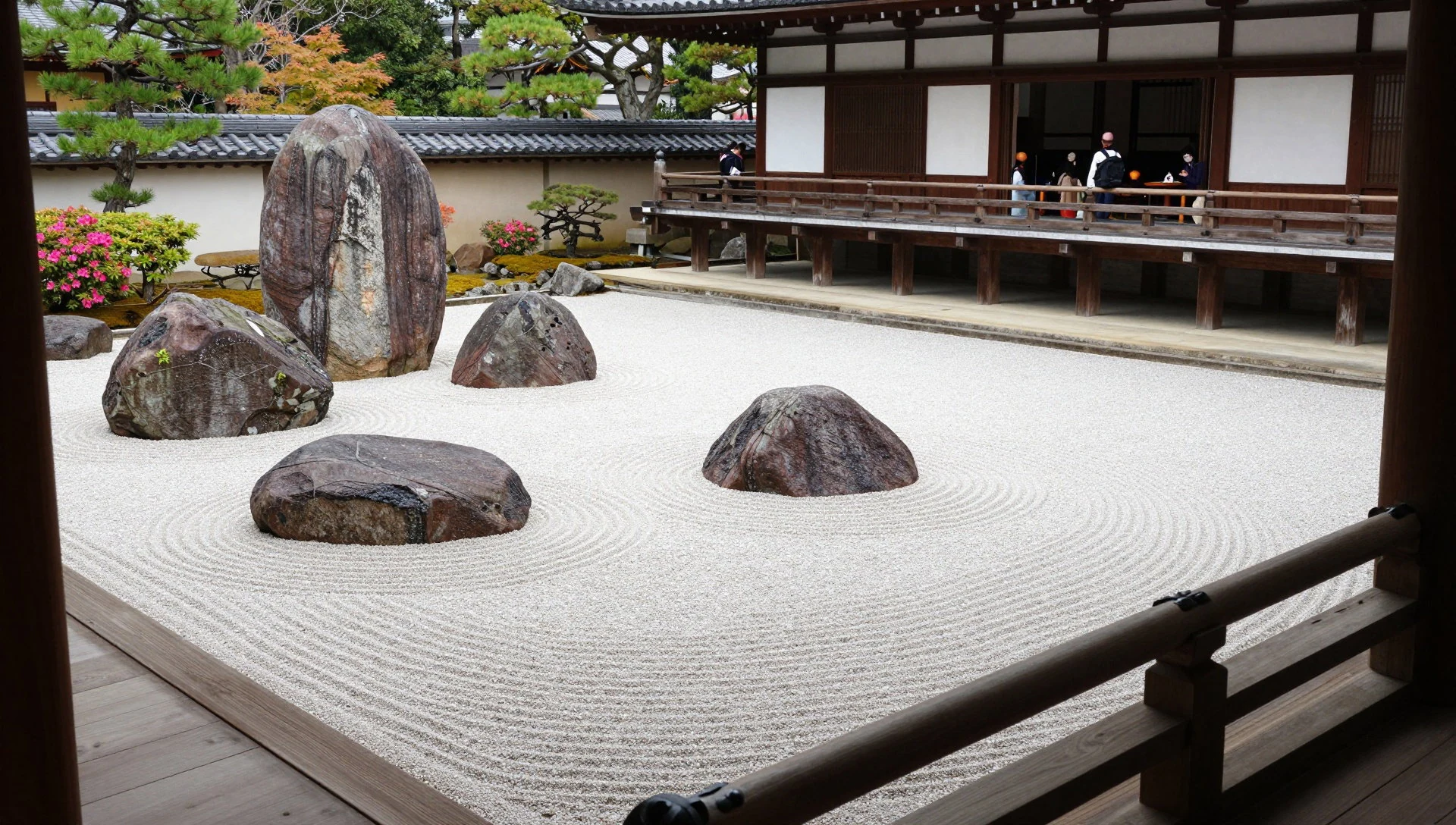
- Reihokan Museum — Near the central temples
Constructed to preserve and display the mountain's priceless religious art, this cultural institution houses statues, mandalas, and ritual implements gathered from local temples over centuries. The exhibitions rotate regularly, showcasing masterworks of Buddhist sculpture and painting within a traditional architectural setting.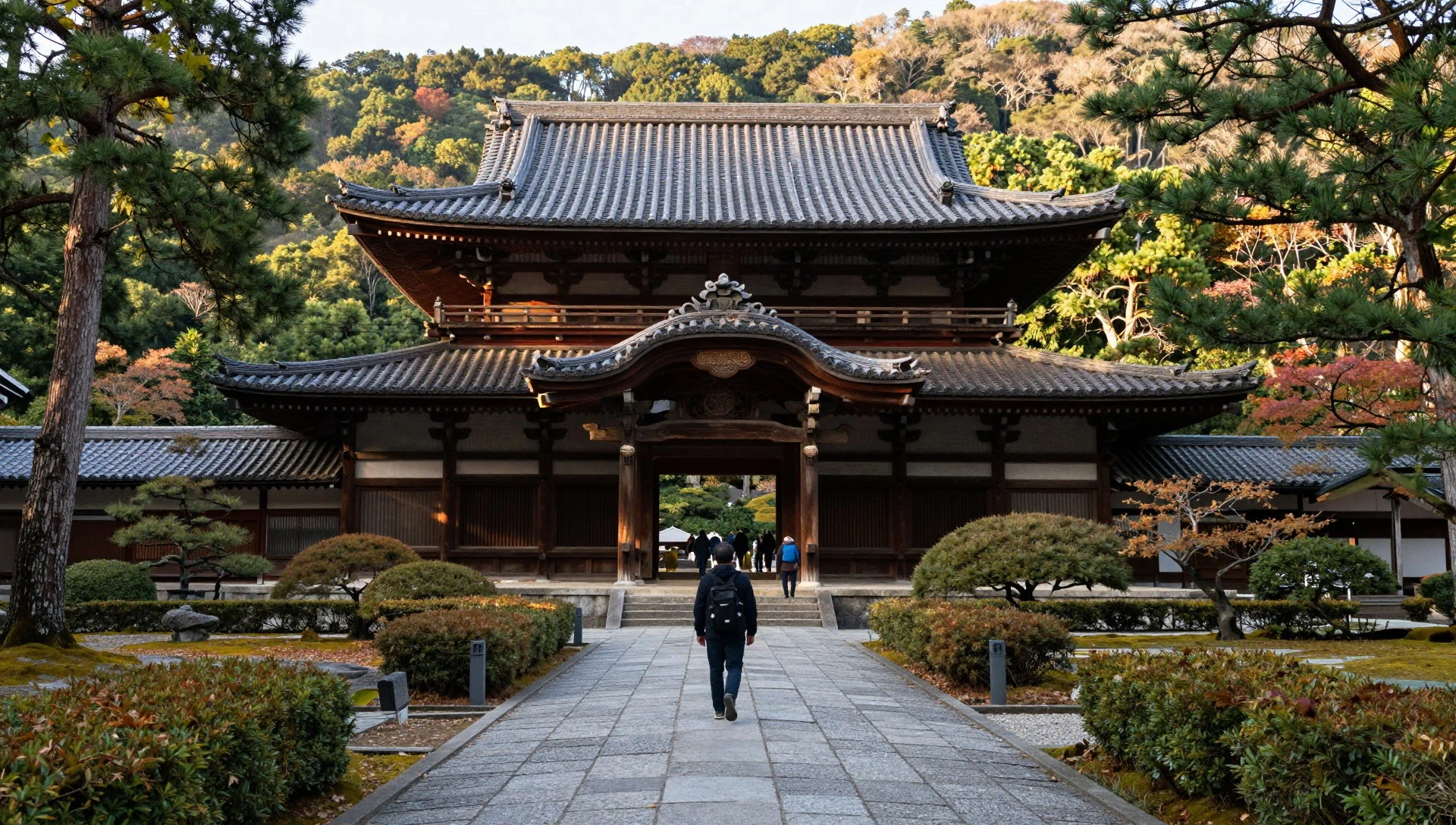
- Daimon — Western approach
Acting as the traditional grand entrance to the sacred mountain basin, this towering wooden gate features fierce guardian statues that watch over arriving travellers. The structure marks the historical boundary where pilgrims would pause to adjust their garments and prepare their minds before entering the holy precincts.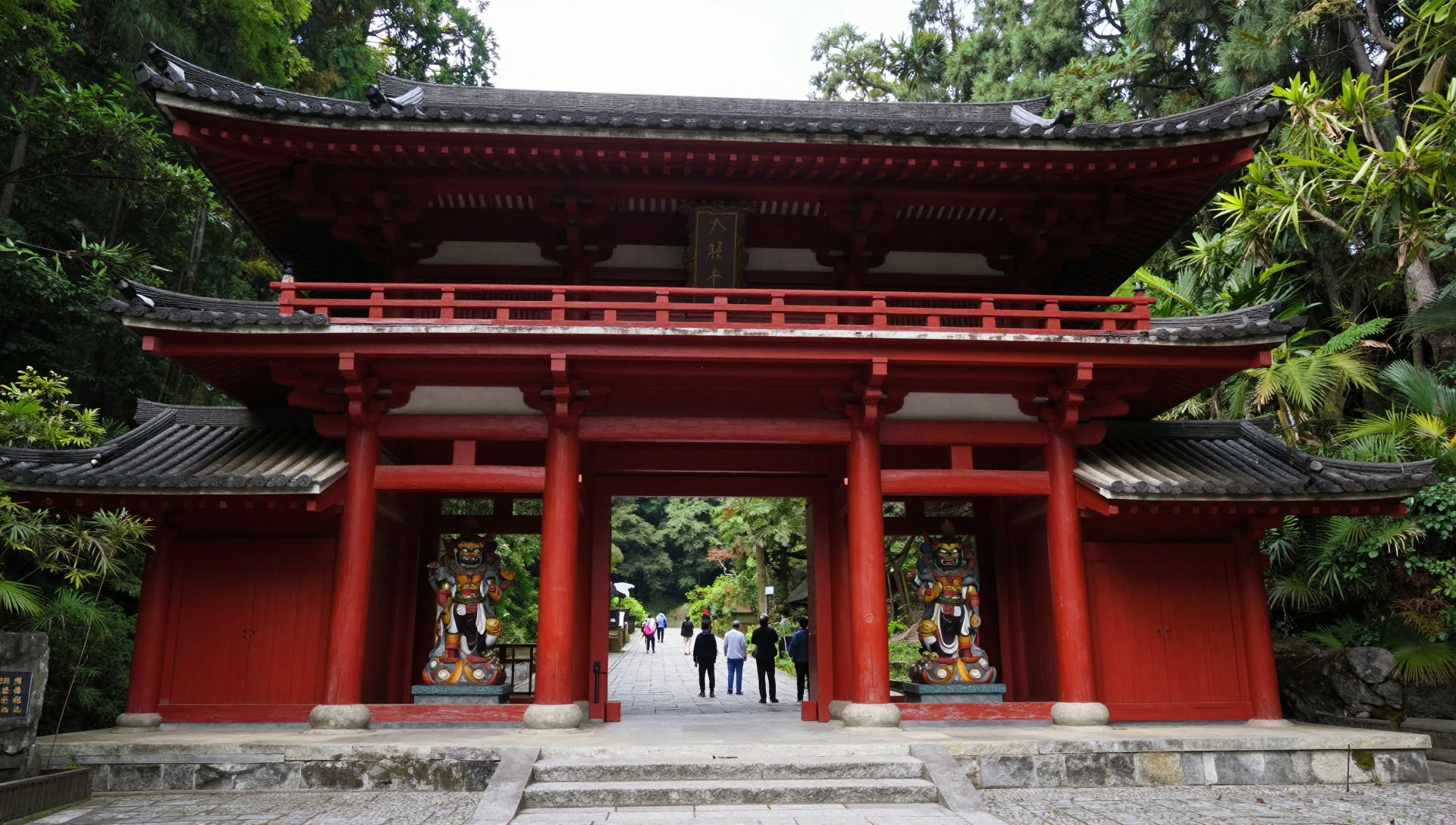
Culture
Life on Mount Kōya revolves around monastic routine, contemplative silence, and deep-seated respect for esoteric traditions that have endured for centuries. Monks and temple staff maintain a gentle, welcoming demeanour toward visitors, yet expect proper decorum within the sacred precincts. Temple stays offer a rare window into daily monastic discipline, where guests rise early to witness morning chanting ceremonies and participate in traditional rituals like the goma fire ceremony, accompanied by rhythmic drumming and meditative recitation. Photography is strictly prohibited inside temple halls and near sacred altars to preserve the sanctity of the spaces and protect ancient artworks from light damage. Visitors must remove their footwear before stepping onto traditional tatami mats, replacing outdoor shoes with provided slippers when walking along polished wooden corridors. Quiet conversation is essential, particularly near burial grounds and places of worship where pilgrims are deep in prayer. Always lower your voice inside temple buildings and remove your shoes when stepping onto tatami mats.
What to wear
Traditional attire on Mount Kōya reflects centuries of monastic heritage, primarily seen in the indigo, saffron, and white robes worn by resident monks and visiting pilgrims. Traditional Japanese garments are crafted from natural fibres like cotton and silk, designed for comfort during long hours of seated meditation and ritual chanting. Today, most local residents and temple workers wear contemporary casual clothing for daily errands, while priests maintain their distinctive robes for religious ceremonies. Visitors should dress in modest, conservative layers suitable for changing mountain weather and sacred environments. Because Kōyasan sits at a high elevation, temperatures remain significantly cooler than nearby Osaka or Kyoto throughout the year, making warm fleece or wool jackets essential even during milder seasons. Footwear should be easy to slip on and off quickly, as shoes must be removed constantly when entering temple halls, dining rooms, and traditional lodging quarters. Walking shoes with good grip are recommended for exploring the uneven stone paths and unpaved forest trails winding through the vast cemetery.
What to eat
- Shōjin Ryōri — Temple lodgings and traditional eateries
This traditional Buddhist vegetarian cuisine is prepared without meat, fish, garlic, or strong spices, relying on seasonal vegetables, tofu, sesame, and wild mountain plants. Enjoy it served across temple lodgings and speciality eateries throughout the mountain settlement.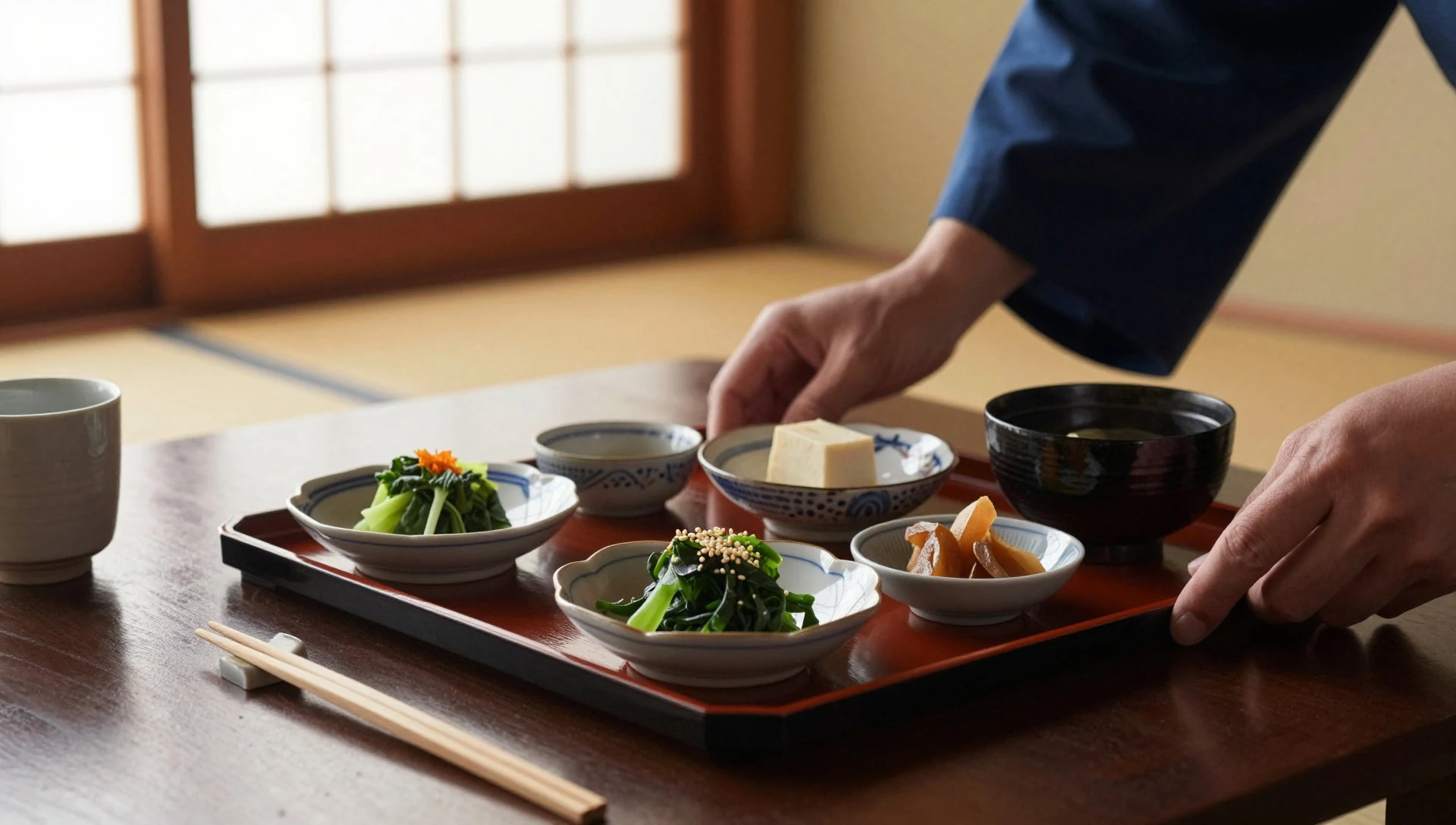
- Koyadofu — Local restaurants and temple dining halls
A local speciality made by freezing and drying bean curd, resulting in a spongy texture that absorbs rich dashi broths and soy flavourings during simmering. Find it featured in soups and set meals across local vegetarian restaurants.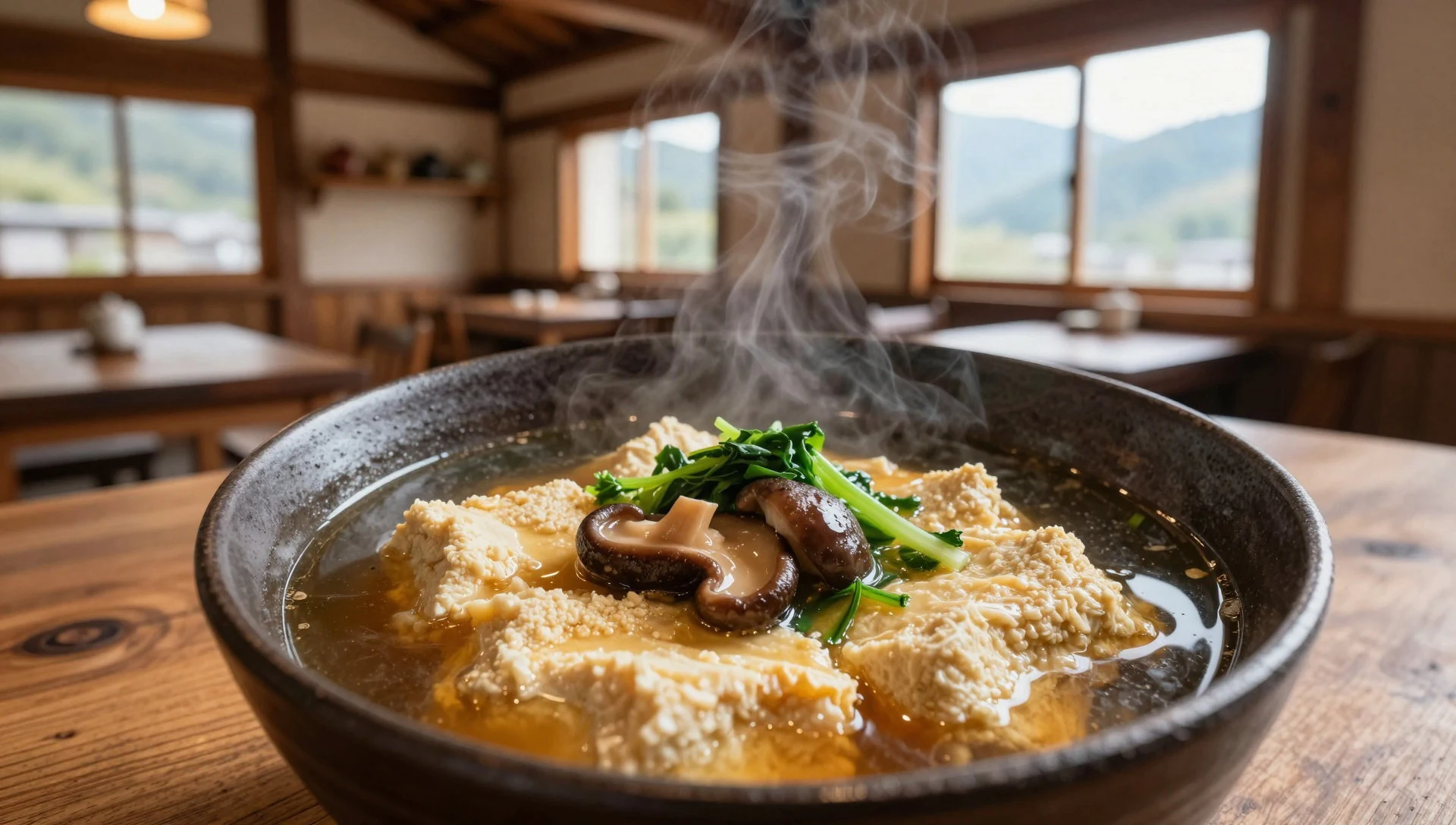
- Goma Dofu — Speciality cafes and temple dining rooms
Sesame tofu is a velvety delicacy crafted from ground sesame paste, water, and kudzu starch, cooked patiently until smooth and served chilled with a dab of fresh wasabi and soy sauce. Order it as an appetiser at traditional dining spots along the main street. - Buddhist Set Meals — Family-run eateries near the town centre
Multi-course vegetarian lunches highlight seasonal mountain harvests, featuring pickled vegetables, tempura, rice, and clear soups presented in small lacquered bowls. Sample these balanced dishes at family-run eateries near the central traffic lights.
Plan it
Best time. April to May brings pleasant spring weather and budding greenery, while October to November offers vibrant autumn maple colours across the mountain slopes; summer is warm and humid, and winters are cold with occasional snow.
How long. 2–3
Getting there. Take the Nankai Electric Railway limited express from Namba Station in Osaka to Gokurakubashi at the base of the mountain, then transfer to the cable car and a short local bus ride into town.
Budget. mid
Tips
- Book temple lodgings several months in advance as rooms fill quickly
- Bring plenty of cash because many smaller shops and temple stalls do not accept cards
- Pack warm layers since mountain temperatures drop sharply after sunset
- Arrive at major sights early in the morning before day-trippers arrive
Etiquette
- Always remove your shoes at temple entrances and step carefully on tatami mats
- Refrain from taking photographs inside sacred halls and near altars
- Maintain a quiet, respectful voice throughout temple grounds and cemeteries
Nearby
Sources
- Wikidata Q535065 (CC0)
- Wikipedia (rev 1380178893) (CC BY-SA 4.0)
- Wikivoyage (rev 5411621) (CC BY-SA 4.0)
- Photo 01-danjogaran-koyasan12n3200.jpg (CC BY 3.0)
