Kolmanskop
Kolmanskop, Namibia
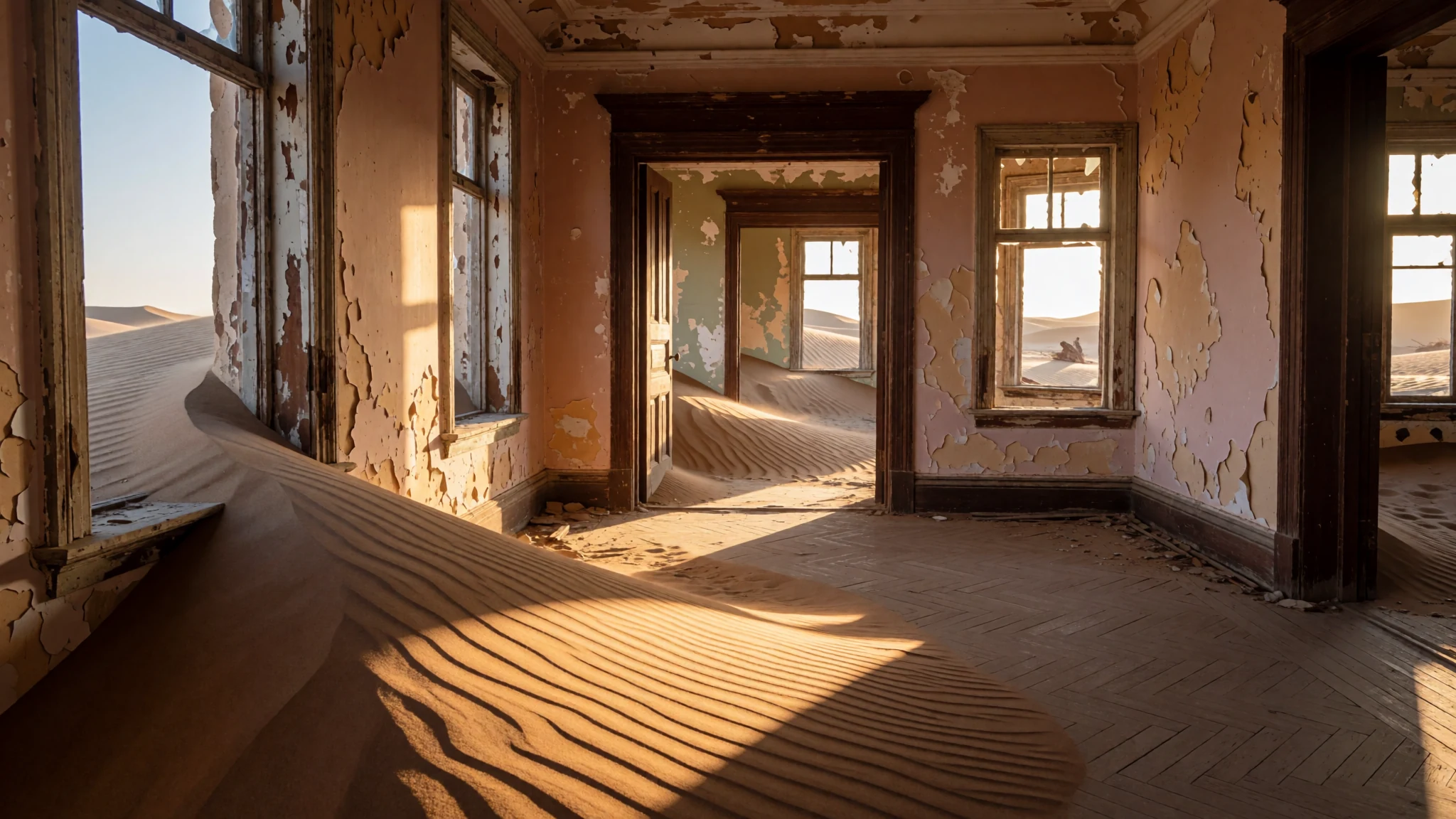
Walk through the wind-scoured ruins of Kolmanskop, where brilliant desert dunes have slowly reclaimed an opulent Edwardian diamond-mining village.
The place
Kolmanskop, known historically by its German name Kolmannskuppe, stands as a haunting ghost town in the vast expanse of the Namib in southern Namibia. Situated just inland from the coastal port town of Lüderitz, the settlement takes its name from an ox-wagon driver named Johnny Coleman, who abandoned his transport during a severe sandstorm on a small incline opposite the site. Today, Kolmanskop is managed as a popular tourist destination through a joint enterprise between the Namibian government and De Beers.
The surrounding ǁKaras region represents the southernmost and least populated territory in Namibia, stretching from the Atlantic coastline eastward toward South Africa and northward to the Hardap region. Much of the coastal western territory falls within the Sperrgebiet, a restricted diamond mining zone established during the colonial era. The landscape around Kolmanskop is shaped by the convergence of three distinct ecological biomes: the Southern Namib desert, the Nama Karoo, and the Succulent Karoo. While much of the terrain appears austere and barren, seasonal winter rains can trigger a dramatic transformation when wildflowers burst into vibrant colour across the plains.
Visitors walking through Kolmanskop today encounter a surreal landscape where natural geological forces have reshaped human ambition. Drifting desert sands pour through shattered windows and doorways, creating towering dunes inside grand domestic rooms and public buildings. The extreme aridity of the desert climate has paradoxically preserved the remnants of early twentieth-century architecture, offering an extraordinary window into a bygone era of sudden colonial wealth and sudden abandonment.
Its story
The story of Kolmanskop began in nineteen hundred and eight, when a railway worker named Zacharias Lewala stumbled upon a sparkling stone while shovelling sand near the tracks in German South-West Africa. He presented his discovery to his supervisor, German railway inspector August Stauch. Realising the ground held extraordinary riches, prospectors flooded the area, prompting the colonial administration to declare a vast coastal territory off-limits as the Sperrgebiet.
Fueled by incredible mineral wealth, residents transformed the isolated settlement into a lavish outpost mirroring provincial German towns. The community boasted a comprehensive array of civic amenities including a hospital, a grand ballroom, a power station, a school, a skittle-alley, a theatre, a sports hall, a casino, an ice factory, and even the southern hemisphere's first X-ray station. A railway line connected the village directly to Lüderitz, while narrow-gauge industrial lines serviced extraction sites further south.
Decline arrived swiftly with the First World War as diamond yields began to dwindle. The definitive blow fell when enormous diamond-bearing deposits were discovered further south near the Orange River. Prospectors and residents abandoned Kolmanskop almost overnight, leaving behind personal belongings, furniture, and grand houses as they rushed toward the new coastal terraces. By nineteen hundred and fifty-six, the settlement was entirely deserted, leaving the desert winds and a population of rare brown hyenas to take possession of the empty halls.
What to see
- Kolmanskop Ghost Town — Kolmanskop, near Lüderitz
Wander through the deserted residential houses and public halls of Kolmanskop, where drifting orange sand dunes spill dramatically across wooden floors and staircases. The stark architectural remains of the grand Edwardian buildings provide an extraordinary backdrop for photography against the bright desert light of the surrounding plains.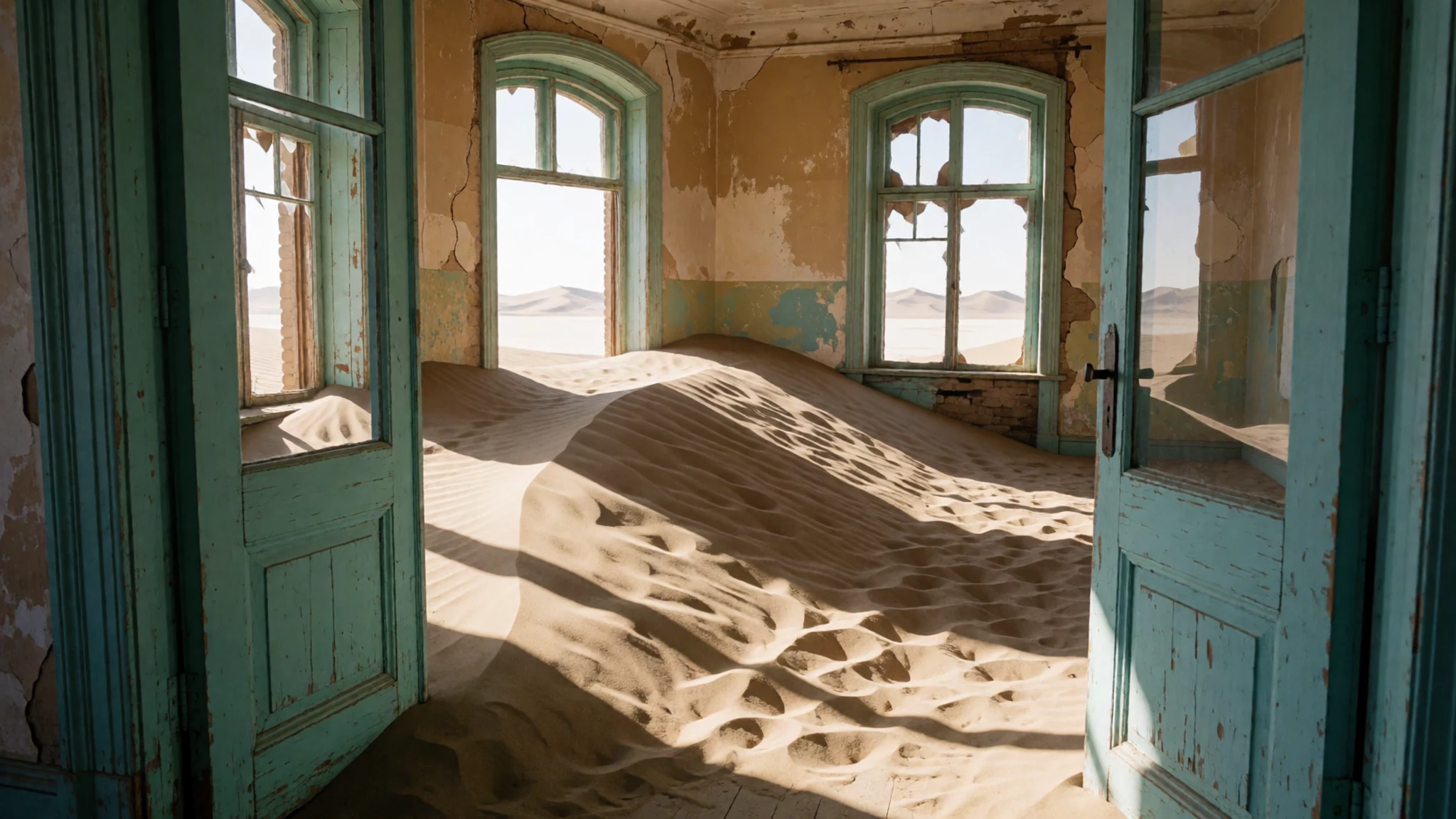
- Aus Wildflower Bloom — Aus, ǁKaras region
Witness the seasonal transformation of the arid plains around Aus into a vibrant carpet of blooming wildflowers. This rare natural spectacle occurs during August, contingent entirely upon sufficient winter rainfall during June and July to awaken dormant seeds across the desert floor.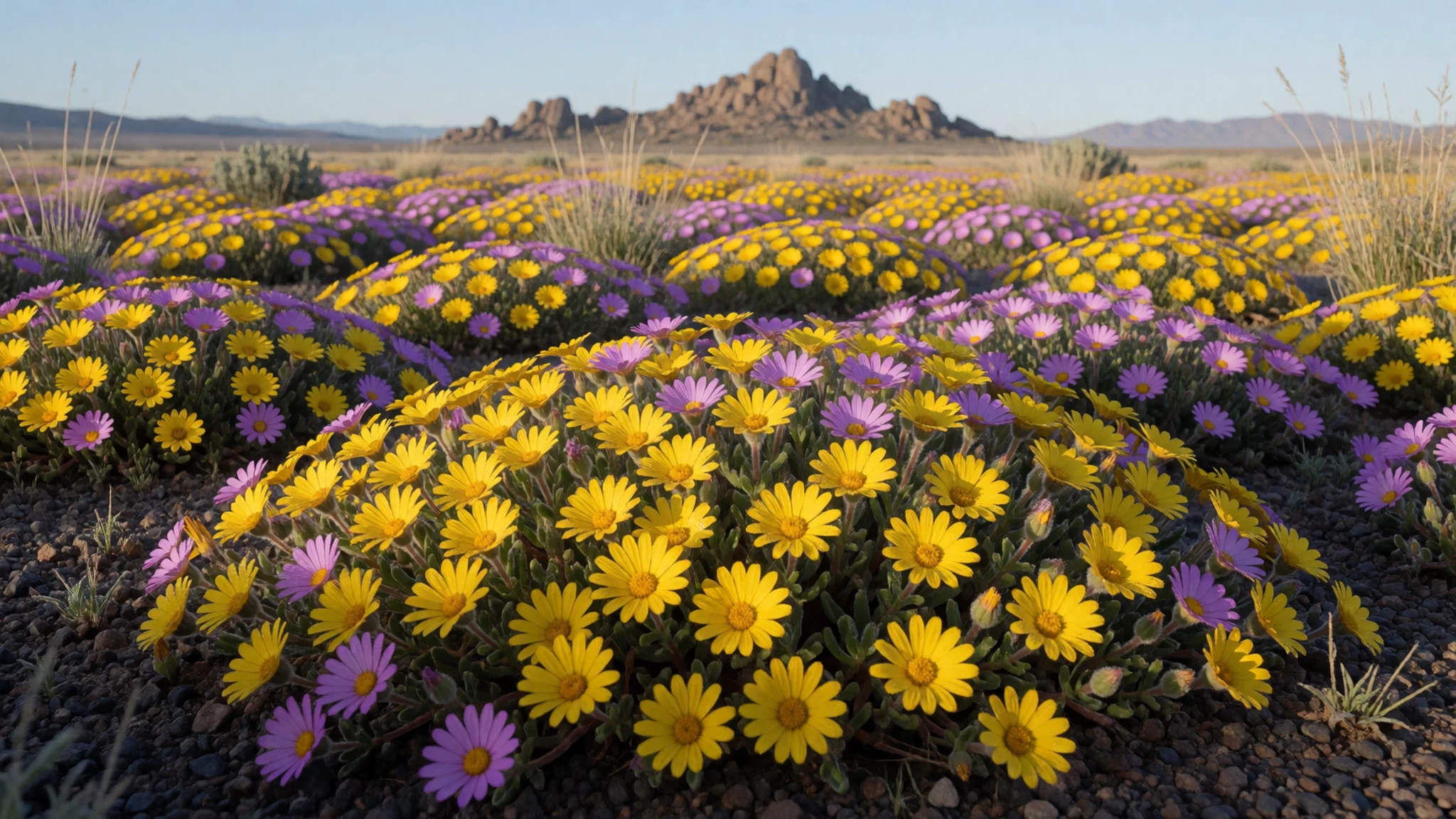
- Brukkaros Crater — West of the B1 highway, ǁKaras region
Explore the dramatic geological formation of Brukkaros, a massive collapsed volcanic caldera rising sharply above the flat surrounding terrain. The ancient crater sits west of the main highway, offering stark vistas across the expansive semi-desert landscapes of southern Namibia.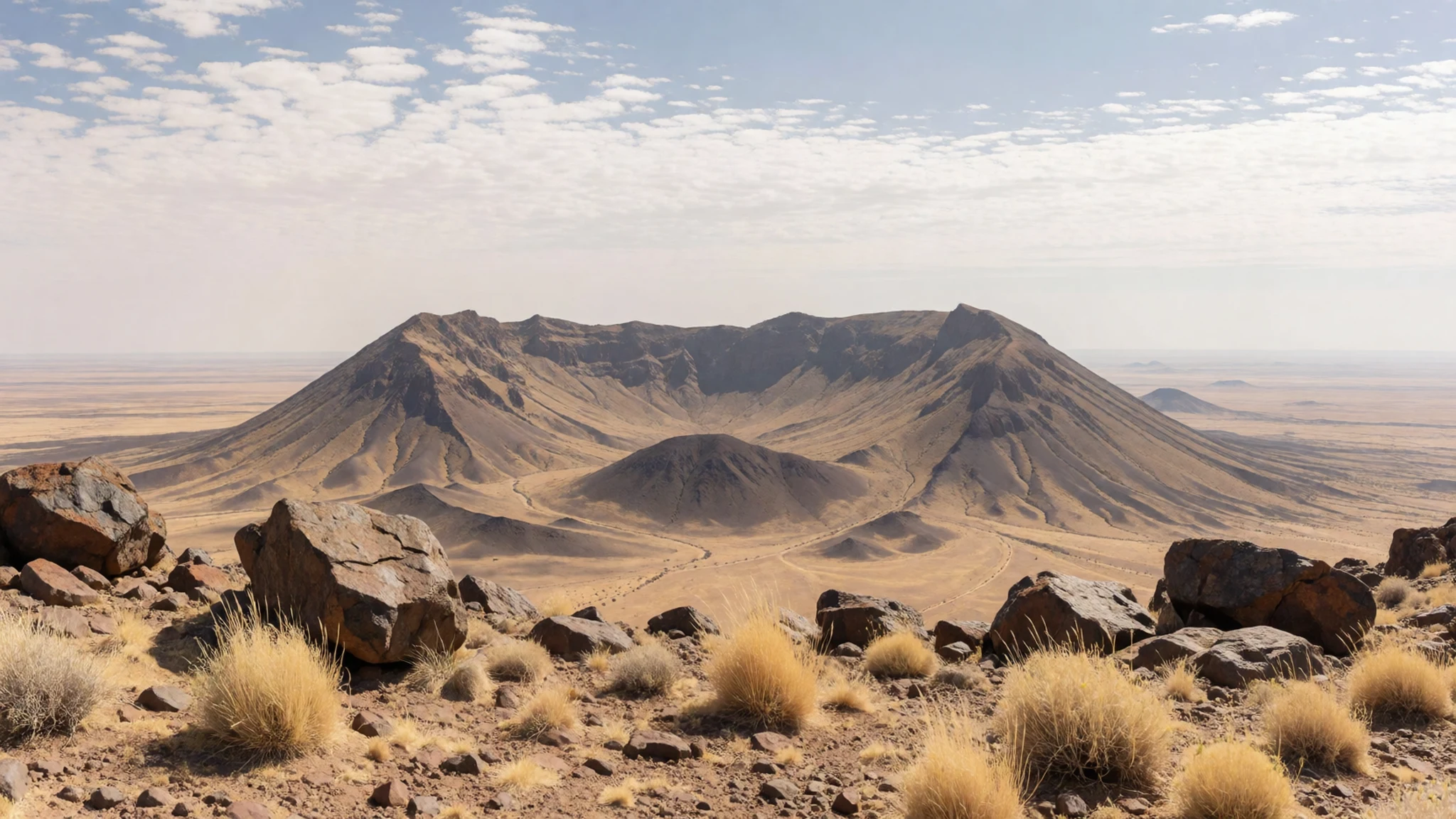
- Orange River Canoe Trips — Orange River valley, southern border
Paddle down the tranquil waters of the Orange River, the only permanent river flowing through southern Namibia. Guided and unguided canoe excursions allow travellers to navigate the calm, crocodile-free channel past steep riverbanks, dramatic desert canyons, and established riverside campsites.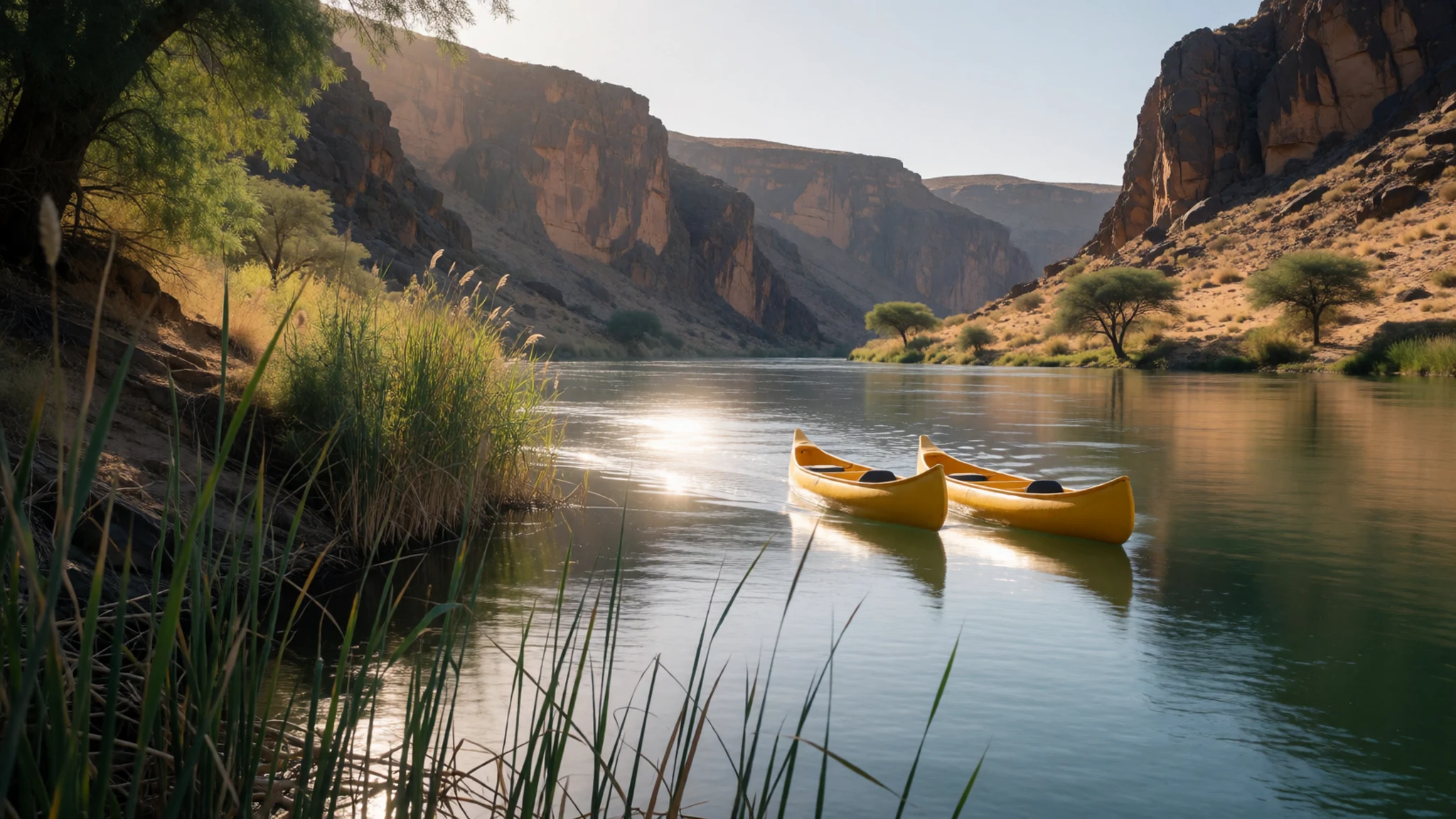
- Restricted Diamond Ghost Towns — Sperrgebiet coastal zone south of Lüderitz
Book a specialized guided excursion to explore the heavily restricted historical mining settlements of Pomona and Elisabeth Bay. These atmospheric ghost towns remain inside the controlled Sperrgebiet zone, preserving untouched relics of early diamond prospecting eras.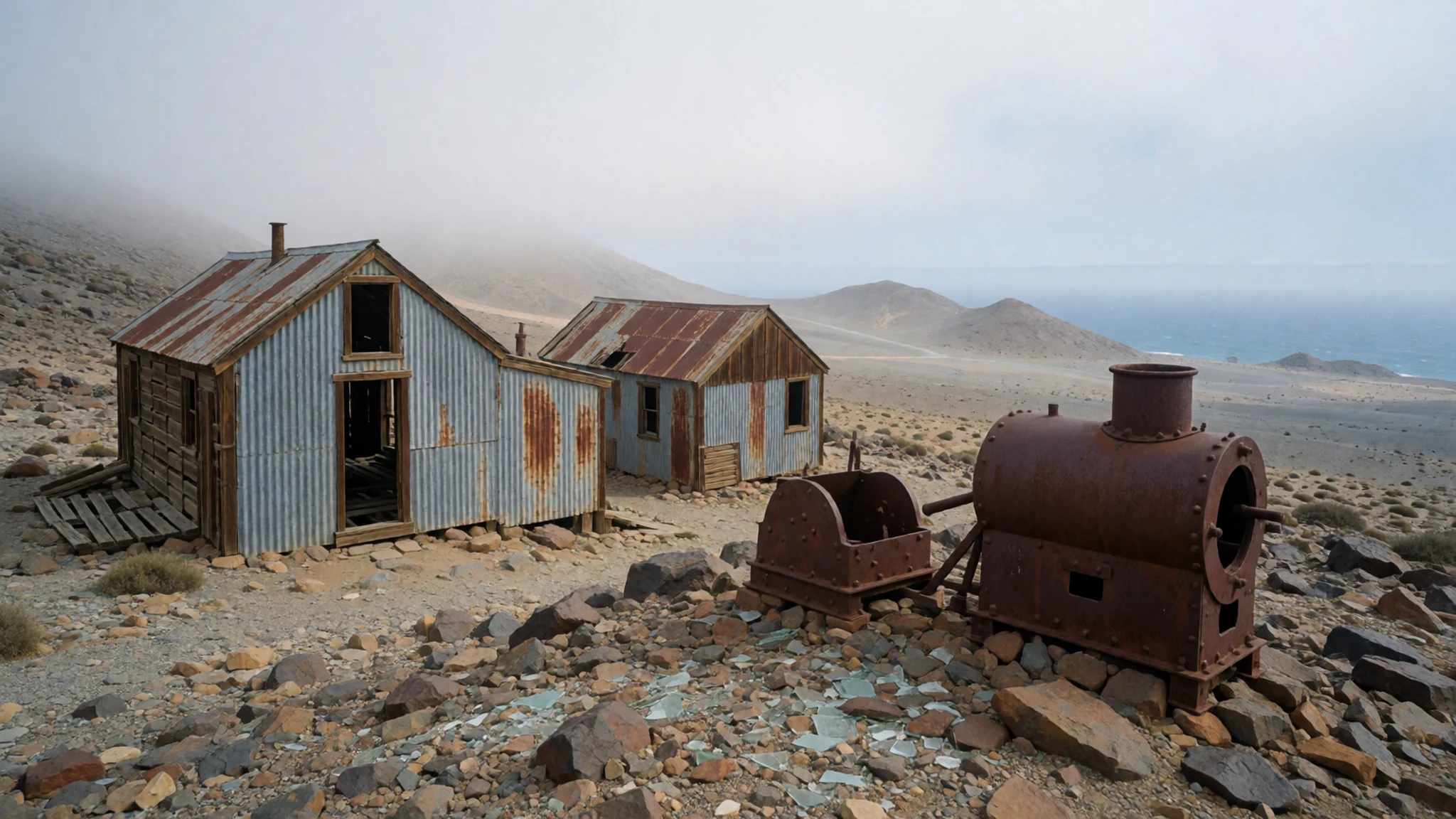
- Naute Kristall Cellar and Distillery — Naute Dam, near Keetmanshoop
Stop at the agricultural estate near the Naute Dam reservoir to sample distinctive Namibian spirits and wines. The distillery produces unique beverages infused with local botanicals such as Devil’s Claw, accompanied by a restaurant serving light lunches and refreshments.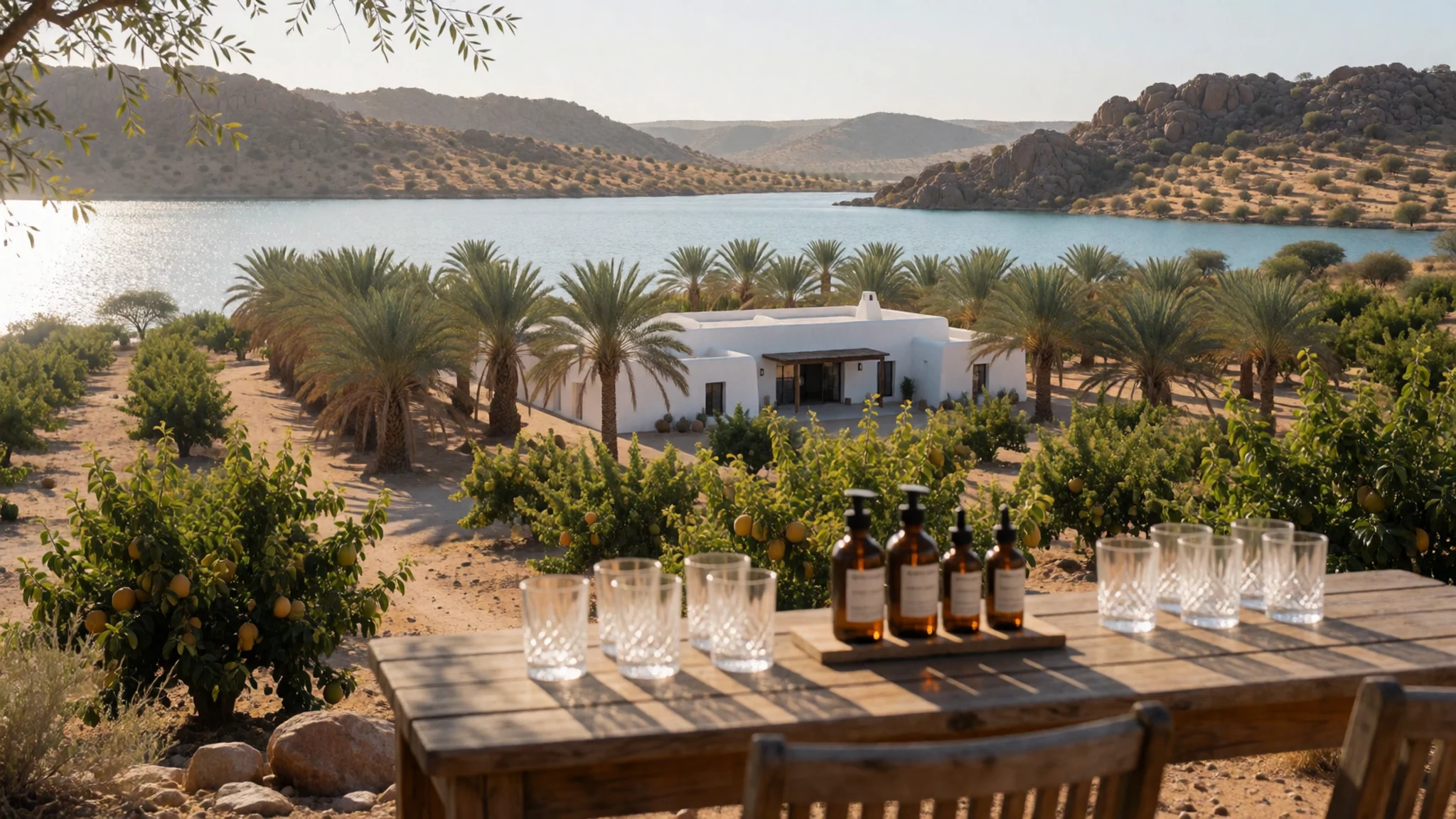
Culture
Kolmanskop and the surrounding ǁKaras region reflect a complex tapestry of colonial history and indigenous heritage, shaped by Nama communities, early European settlers, and generations of mineworkers. Traditional social structures in the territory often revolve around community gatherings, livestock herding in arid conditions, and shared oral histories that preserve survival skills honed across generations in harsh desert environments. Contemporary life blends rural traditions with influences from across southern Africa, visible in local music, community celebrations, and daily hospitality. Visitors will find that slow, deliberate communication and respectful greetings open doors to local insights. Always secure the necessary official permits before entering the restricted diamond zones around Kolmanskop.
What to wear
Traditional attire across rural southern Namibia emphasizes practical durability against intense heat and wind, historically featuring layered garments and protective headwear crafted from sturdy cottons and leathers. Indigenous Nama communities maintain distinct traditional dress styles, notably vibrant Victorian-influenced dresses paired with traditional headscarves, reflecting historical interactions with missionaries and traders. Today, locals in towns and settlements wear contemporary casual clothing such as jeans, t-shirts, and sturdy footwear suitable for daily work and travel. Visitors exploring Kolmanskop and the surrounding desert should dress in lightweight, breathable layers to manage extreme daily temperature fluctuations. Sturdy closed-toe shoes or walking boots are essential for navigating loose sand and uneven building ruins, while a wide-brimmed hat, sunglasses, and high-factor sun protection are vital safeguards against the harsh desert sun.
What to eat
- Boerewors and Braai — Local lodges and roadside eateries across ǁKaras
Sample traditional spiced sausage and grilled meats cooked over open wood coals, a foundational culinary tradition across southern Africa. These hearty outdoor meals are typically enjoyed at roadside lodges, campsites, and community gatherings throughout the region.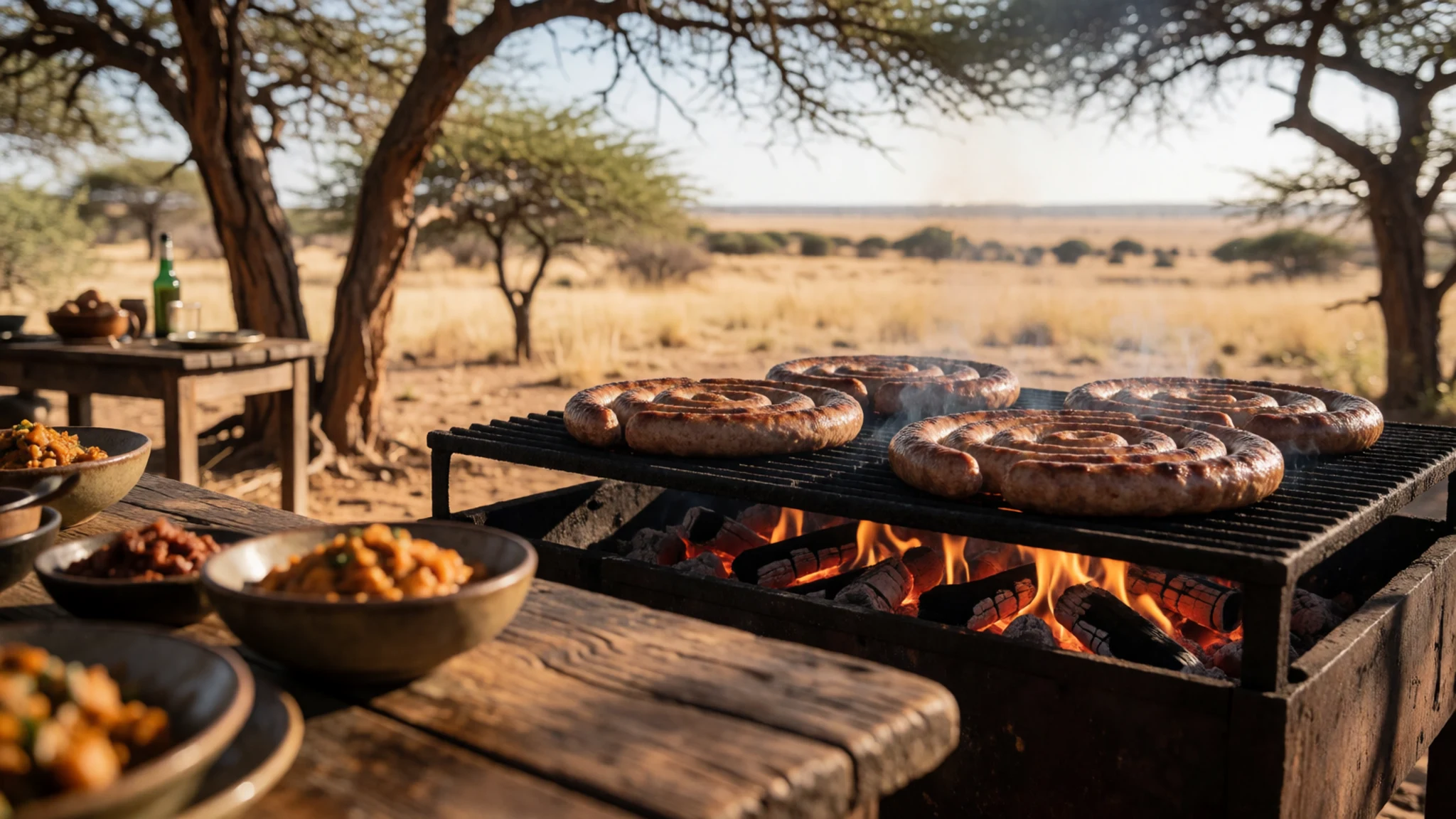
- Fresh Atlantic Seafood — Coastal restaurants and eateries in Lüderitz
Savour freshly caught fish and Atlantic seafood dishes prepared in coastal settlements. Local restaurants and harbour-side eateries feature catches from the cold Benguela current, including rock lobster and line fish.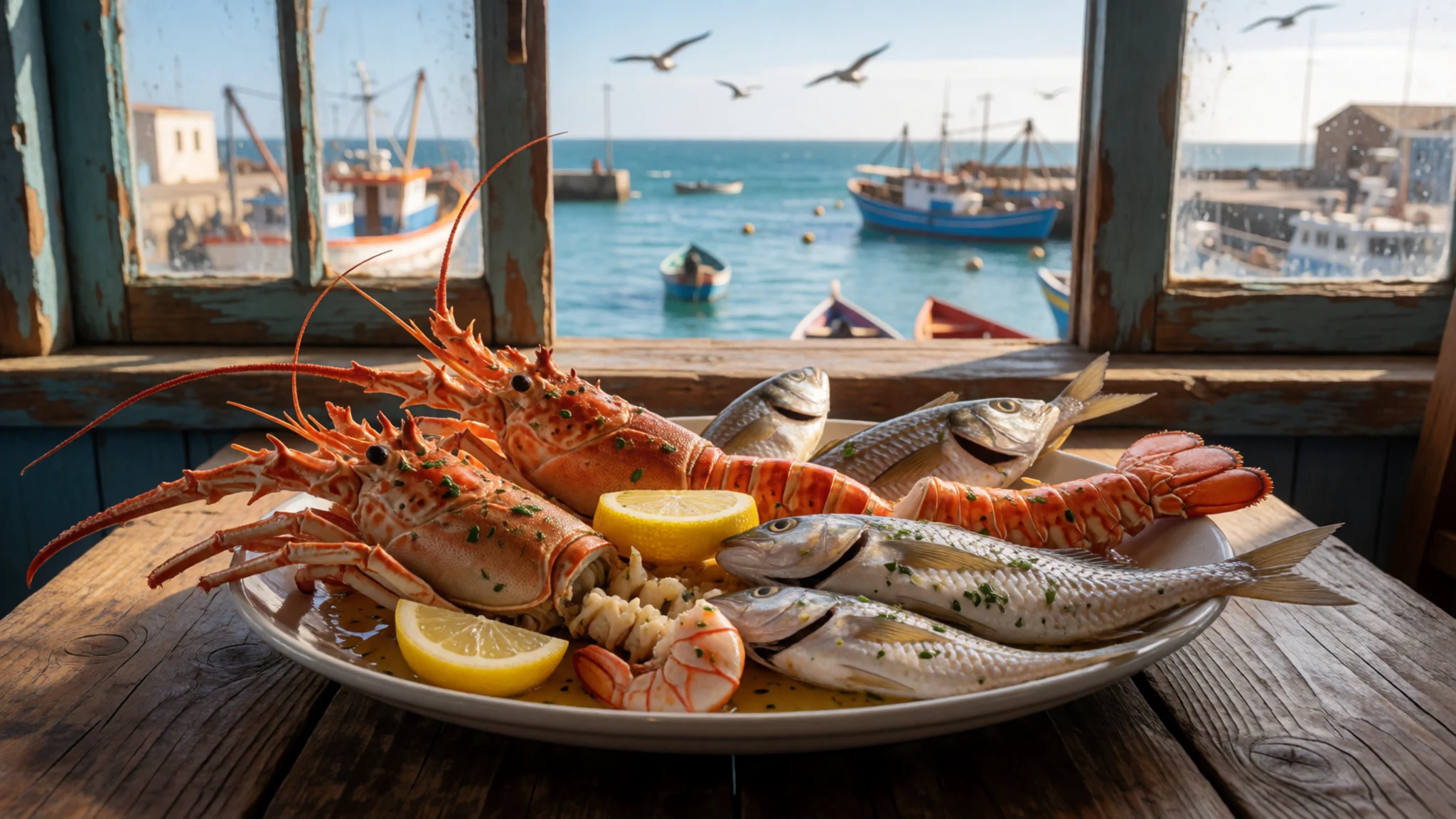
- Potjiekos — Traditional guesthouses and regional farmstays
Enjoy slow-cooked stews prepared in traditional cast-iron three-legged pots over open embers. Meats and vegetables simmer gently with aromatic spices for hours, resulting in a rich, comforting meal popular during cooler desert evenings. - Local Craft Spirits — Distilleries and estate tasting rooms near Keetmanshoop
Taste regionally produced gins and spirits infused with indigenous botanicals like Devil's Claw. These unique craft beverages highlight local flora and are served at estate tasting rooms and regional bars.
Plan it
Best time. March to April for comfortable daytime temperatures, or October to November for clear skies and pleasant exploration; avoid midday heat during the summer months.
How long. 2–3
Getting there. Arrive by car via major highways such as the B4 from Keetmanshoop to Lüderitz, or fly into regional airstrips at Lüderitz or Oranjemund.
Budget. mid
Tips
- Arrive early in the morning to experience the ghost town before daytime heat and tour groups peak
- Obtain your entry and photography permits in advance before visiting Kolmanskop
- Carry ample drinking water and sun protection when exploring exposed desert ruins
- Wear sturdy closed-toe footwear to protect against deep sand and sharp building debris
- Keep cash on hand for small purchases in smaller regional settlements where card facilities may fail
Etiquette
- Always secure the necessary official permits before entering restricted zones
- Respect fragile historical structures and do not remove artifacts from the ruins
- Ask permission before photographing local residents in nearby towns
Nearby
Sources
- Wikidata Q819123 (CC0)
- Wikipedia (rev 1381321984) (CC BY-SA 4.0)
- Wikivoyage (rev 5265059) (CC BY-SA 4.0)
- Photo 01-01kolmannskuppe.jpg (CC BY 2.5)
- Photo 02-kolmanskop-ghost-town.jpg (CC BY-SA 4.0)
- Photo 03-abandoned-building-kolmannskuppe-namibia.jpg (CC BY 2.5)
- Photo 04-abandonded-house-in-kolmanskop.png (CC BY-SA 4.0)
- Photo 05-kolmannskuppe-02.jpg (CC BY 2.5)
- Photo 06-kolmanskop.jpg (CC BY 2.5)
- Photo 07-kolmanskop-sand.jpg (CC BY 2.5)
- Photo 08-minenverwalter-kolmannskuppe.jpg (CC BY-SA 2.5)


