Knossos
Knossos, Greece
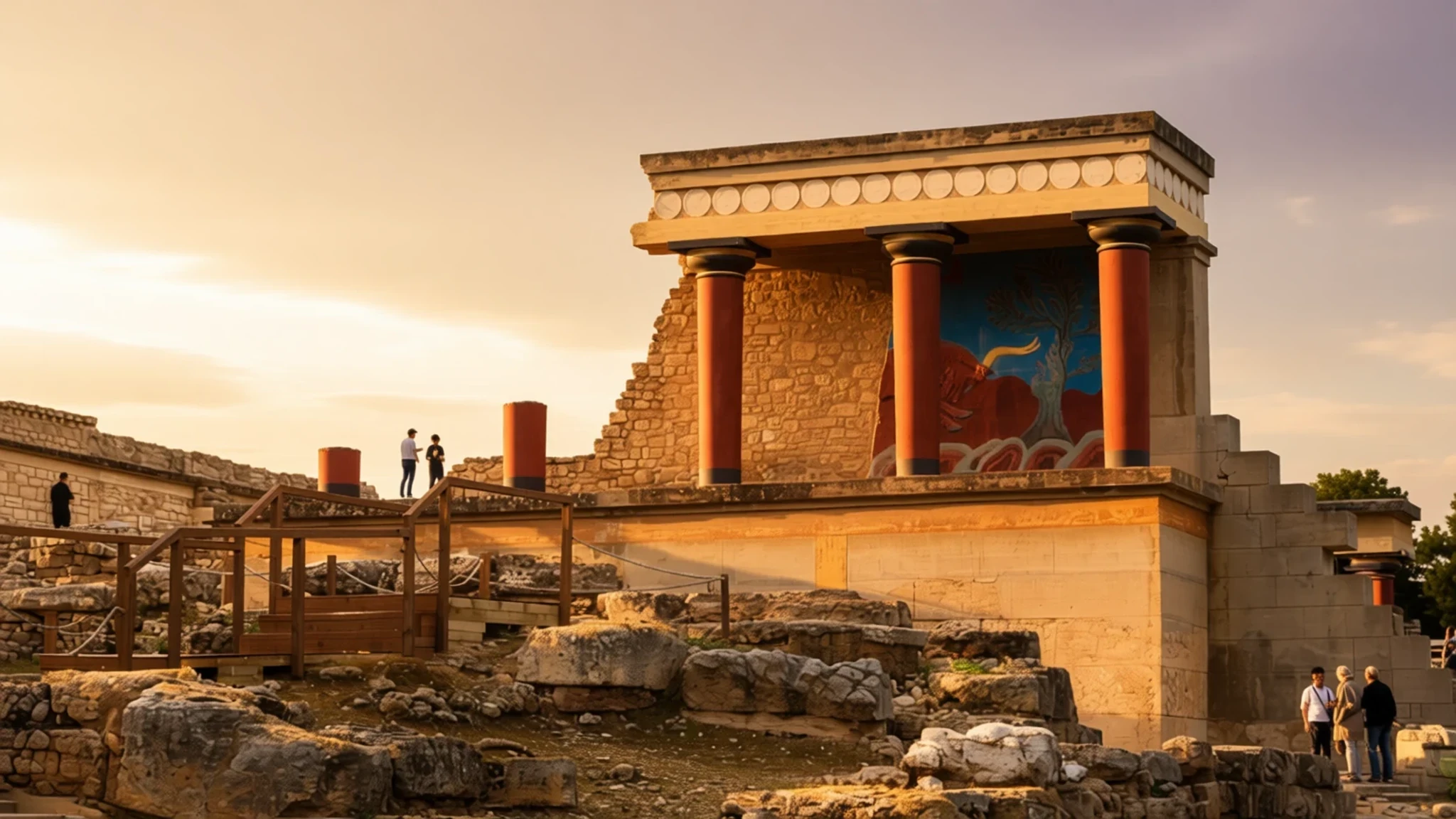
Knossos is the hilltop palace city where Crete's Minoan world was run, stored and later retold as the Labyrinth.
The place
Knossos stands on Kephala hill in Crete. Heraklion's built-up south reaches toward it, and the historic centre of that city lies about 5 km to the north. In modern Greek it is Knosos (Κνωσός); the older Knossos and the Linear B form ko-no-so name the same hill town. Digging here cuts through a palace-centred town lived in from Neolithic times and still occupied, in the valley, into the first millennium AD. Later Greek tradition counted it a polis.
Visitors come for the Palace of Minos, a knot of courts, stairways, magazines and light-wells. As with other Minoan palaces, it is read as a hub for government, stores, worship and public ritual. A king in residence is possible, and still disputed. Building on this already ancient hill began in earnest around 1900 BC. A destruction around 1700 BC was followed by a larger rebuilding, and the palace remained the valley's main monument through the Late Bronze Age. Another palatial destruction is commonly set near 1350 BC, with the timing of the final collapse still argued.
On the ground, dug masonry and later restoration share a single view. Concrete columns, repainted elements and fresco copies were added so missing upper storeys could be imagined. Those additions are now part of Knossos, and they demand upkeep alongside the Bronze Age fabric. Greek, Roman and early Byzantine life continued in the valley, which means the ruins record a place that thinned, rather than a city switched off on a single day.
Its story
Knossos begins with farmers on the summit of Kephala hill, later the palace site, around 7000 BC. That early Neolithic hamlet is among the first settlements on Crete known to have stayed, and among the Aegean places with a very long occupation. Flocks, fields and household making supported it. Pots, stone tools, figurines and house footings accumulated for centuries into a deep deposit, running from the Early Neolithic through Middle and Late phases into the Final Neolithic, when the community was no longer small. It went on growing through the third millennium BC.
From about 3000 to 1900 BC, still before a palace, Knossos became a more divided and better connected town. Tasks that had been everyone's work turned into specialist crafts, objects travelled beyond the immediate valley, and status differences show more clearly in the remains. Settlement across the area quickens as the second millennium BC starts. The hill was then prepared on purpose: older structures were taken down or moved until builders had a platform.
The palace raised around 1900 BC redirected the region. Rooms for storage, making and ritual point to an institution that took goods in, sent them out, organised labour and hosted ceremony. Whether a ruler's family lived inside is a separate, open question. Greeks of a later age looked at the tangled layout and called it the Labyrinth, attaching Minos, Pasiphaë, Ariadne, Daedalus, Icarus, Theseus and the Minotaur to Knossos. The myth explains the plan's reputation. It does not authenticate the bull-man.
What to see
- Palace of Minos — Kephala hill
The Palace of Minos is the building that holds Knossos together: courts, stairways, light-wells and magazines locked into each other on Kephala hill. The sober reading is of a centre for government, stores, worship and ceremony, with a royal home still unproven. Upper walls and coloured columns were put back in the early twentieth century so the missing storeys could be pictured.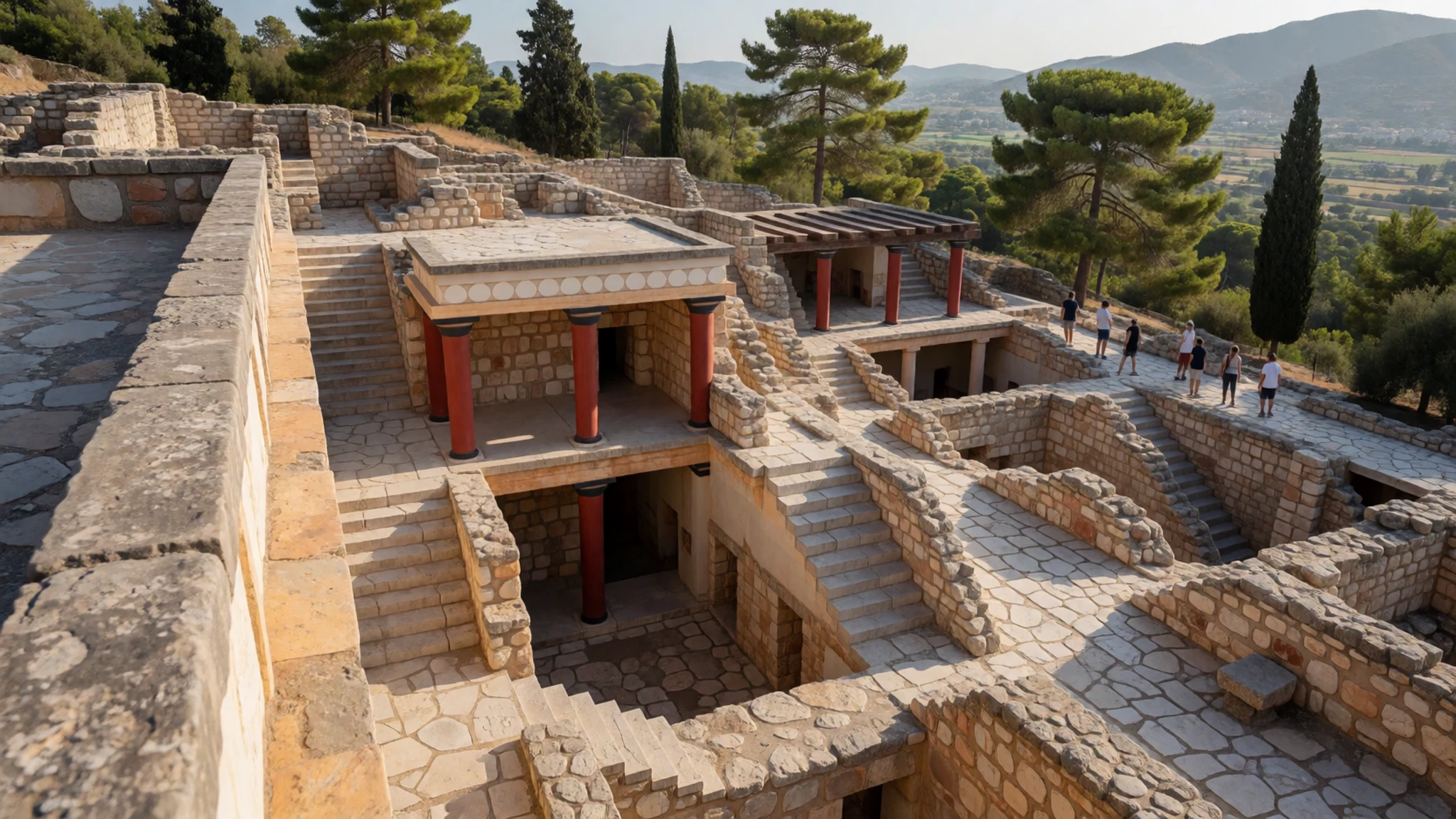
- North Portico — North side of the palace
The North Portico at Knossos is the columnar approach on the palace's north side, with restored shafts standing over the ancient line of the entrance. Stone bases and replacement columns share the frame, which makes the portico a plain lesson in excavation versus restoration. Coach parties compress into this passage, and the slabs underfoot are uneven.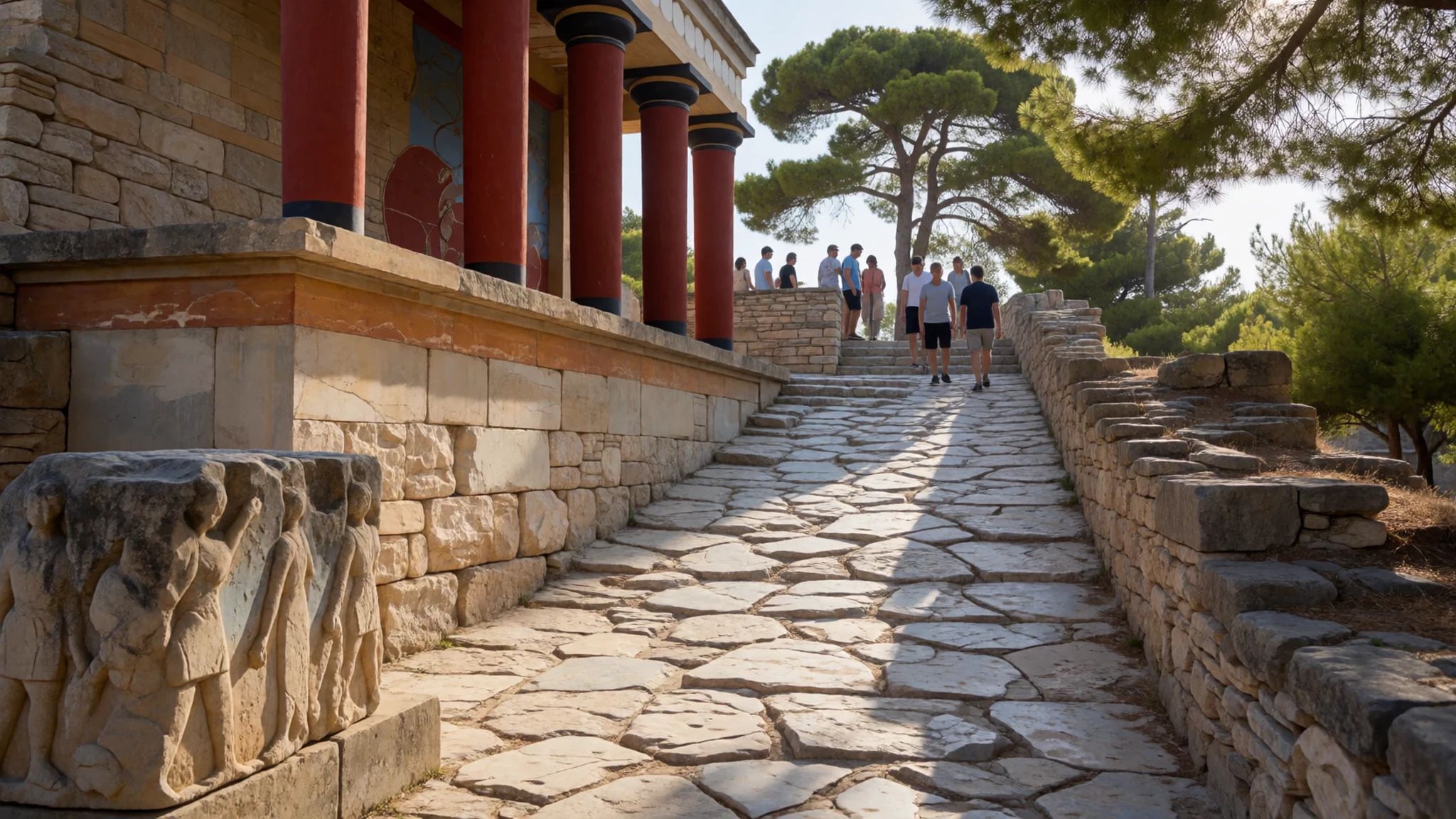
- Magazines and pithoi — Palace magazines
Pithoi at Knossos are the outsized storage jars lined up in the palace magazines. Their size gives weight to the idea that the Palace of Minos collected and held goods, alongside whatever ceremony happened in the courts. Some jars are whole, many are mended or rebuilt, and the difference is not always obvious from the path. Handles, rims and applied bands are where the potter's hand still shows.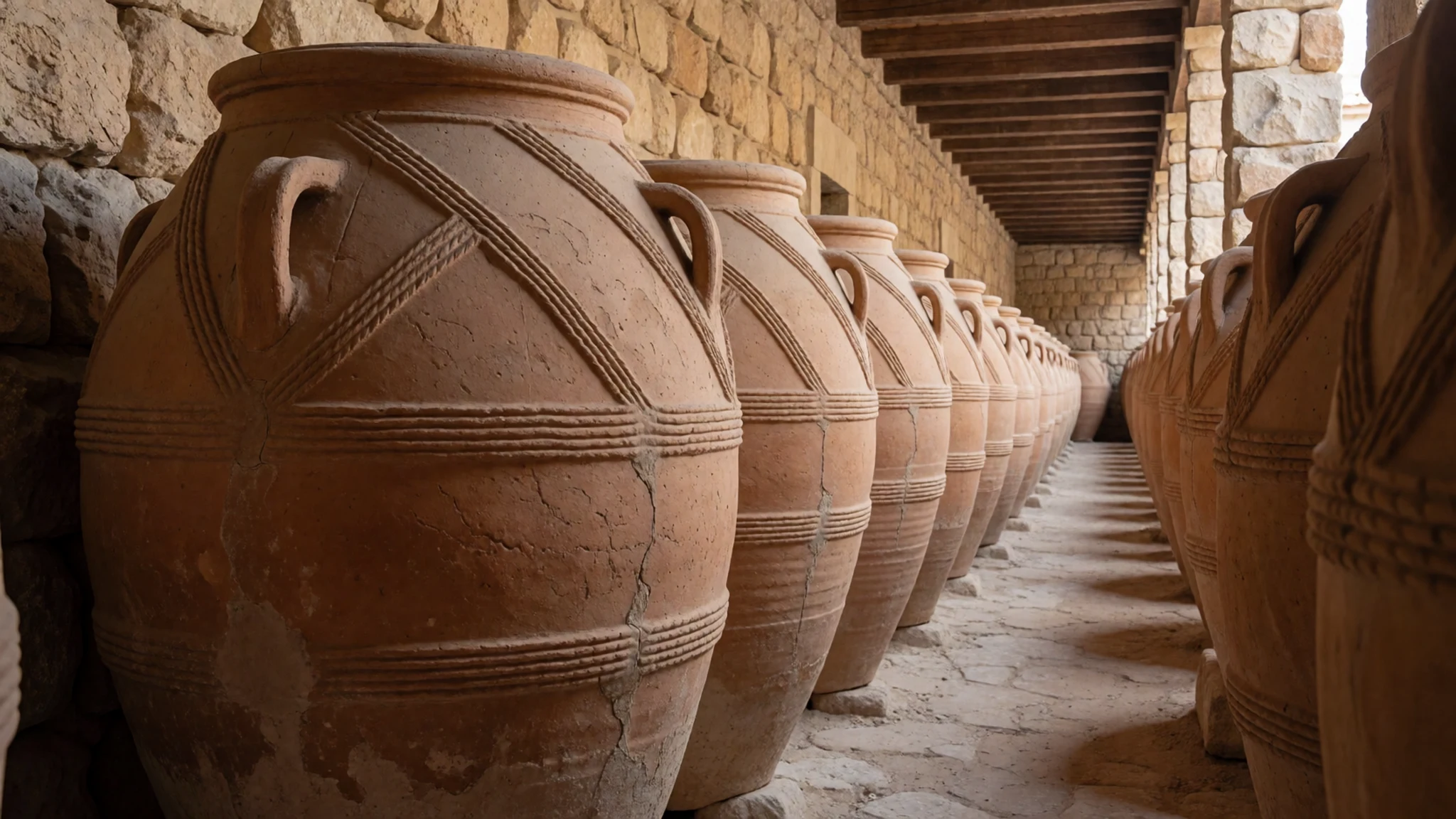
- Central court — Heart of the palace
The central court at Knossos is the open space the surrounding rooms address. At its north end a miniature fresco of a grandstand, or of a sacred grove and shrine, once belonged to the palace; what most people know is a reconstruction, including versions held far from Crete. Painted panels on the site itself are largely modern copies, useful for the original colours and risky if read as excavated paint.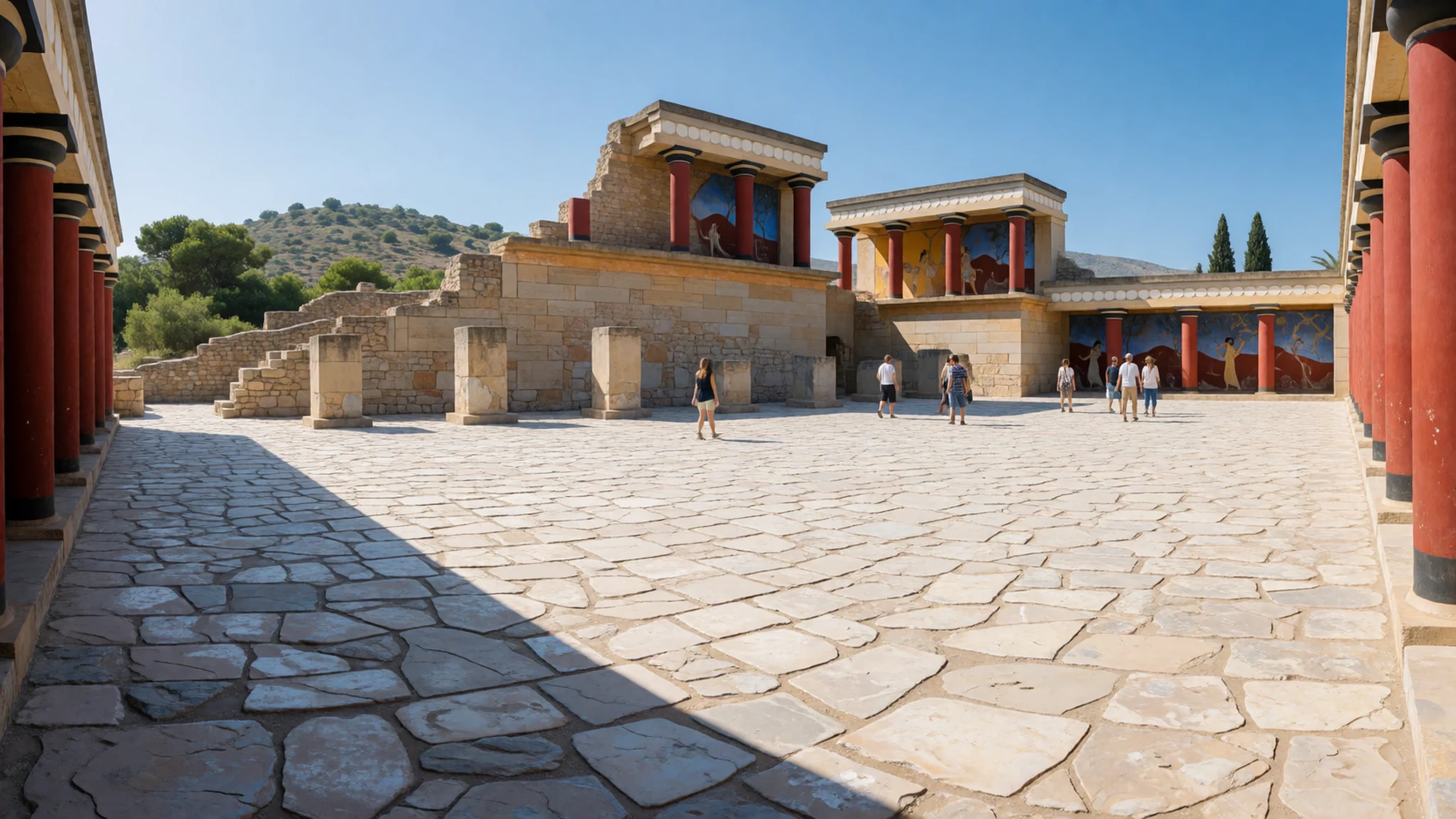
- Church of Saint Antony — Epano Vatheia
Epano Vatheia keeps the old church of Saint Antony, a small building whose remaining murals still cling to the walls, in the countryside near Knossos on Heraklion's southern side. Beside the Bronze Age palace it marks the valley's later life, which runs through Greek, Roman and early Byzantine centuries. The church is for worship, and the paintings are faint, so a quiet visit with covered shoulders is the right register.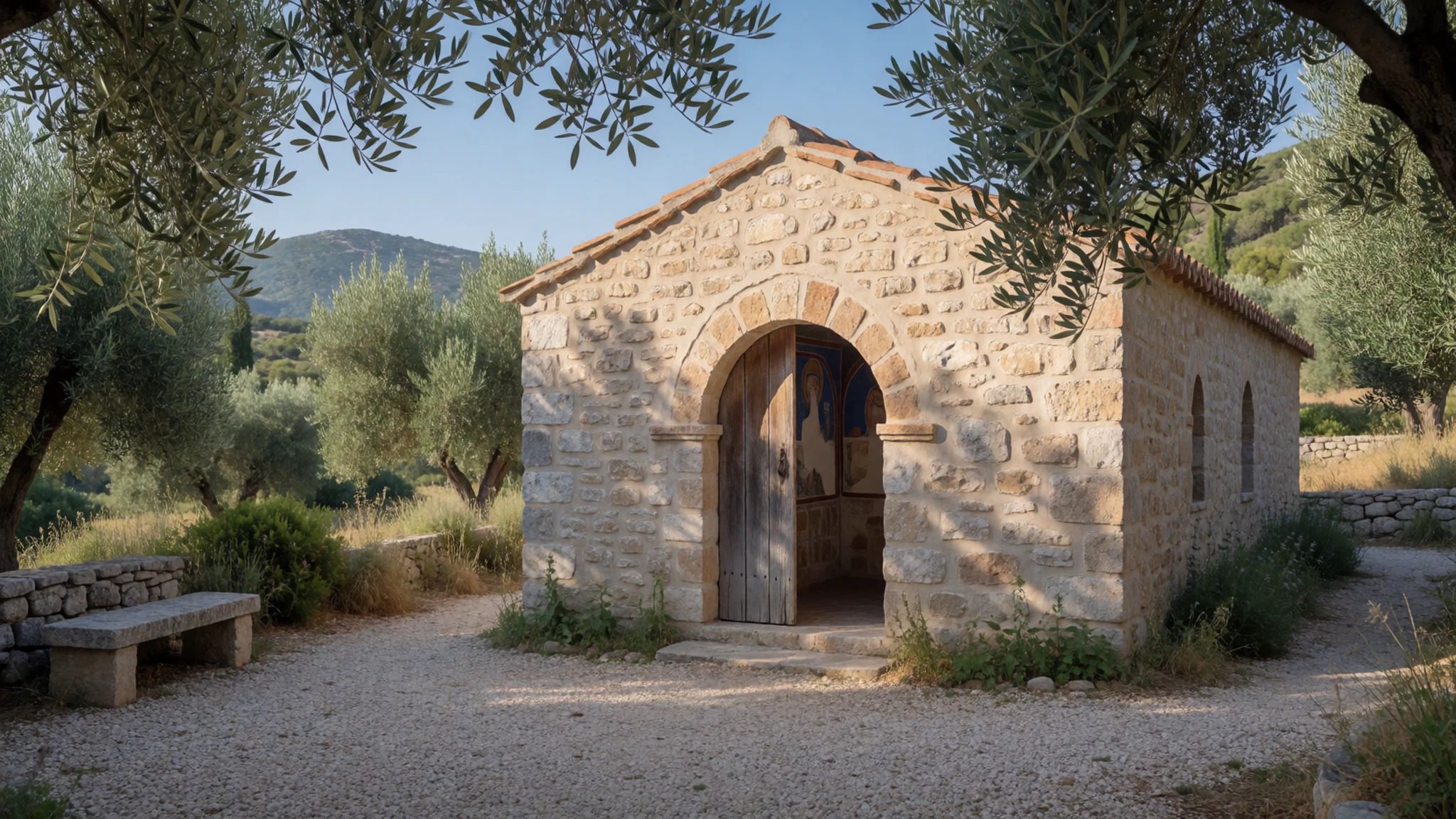
Culture
Knossos is the place where Crete's Minoan civilisation stops being an abstract label and becomes stairs, jars and courts. The palace is often described as a centre of Europe's earliest complex civilisation, and the hill town is often called Europe's oldest city. Both phrases are reputations carried by the scholarship, not measurements a visitor can check on a plaque. What the ruins do show is a long-lived administrative centre: storage, ritual, craft and ceremony sharing a plan. The Linear B spelling ko-no-so keeps the place-name in the script of the later Aegean. Greek myth supplied the plot people still arrive with — Minos, Pasiphaë, Ariadne, Theseus, Daedalus, Icarus and the Minotaur — and turned a complicated palace into the Labyrinth.
The visit is also a lesson in twentieth-century archaeology. Reconstructions associated with Evans, including columns, copied frescoes and rebuilt upper parts, were meant to make a low ruin legible. They now belong to the history of Knossos as much as the Bronze Age masonry, and they need the same care, especially with the crowds the site draws. Painted surfaces and ancient stone ask for different kinds of trust.
At Knossos, keep off the walls and reconstructed columns, and do not touch pithoi, fresco copies or loose masonry.
What to wear
Knossos itself is a ruin, so the cloth that belongs to it is Cretan rather than a Minoan costume anyone can honestly wear. Fresco copies recall highly styled ancient clothing, but they are reconstructions, not a living uniform. Traditional dress in Cretan villages comes out for festivals and dance: dark layered wool and cotton, embroidered scarves, woven aprons and, for men, baggy vraka breeches, a dark shirt, a fringed sariki headscarf and tall leather stivania boots. Almost nobody wears that kit around Heraklion on an ordinary day.
People near Knossos dress as they do in any warm Greek city — light shirts, trousers or skirts, trainers, sunglasses. Beach clothes appear toward the coast; evenings in town run a little smarter.
Visitors to Knossos should dress for an open hill of pale stone. A hat, sunscreen and a light layer beat anything delicate. Shoes need a grip: paving and stairways are worn and uneven. Covered shoulders and knees are the sensible habit when the day includes the church of Saint Antony at Epano Vatheia.
What to eat
- Dakos — Mezedopoleia and tavernas in Heraklion, and roadside eateries south of the city
Dakos is the barley rusk eaten around Knossos: ripe tomato, olive oil and a soft cheese such as mizithra. Mezedopoleia and simple tavernas in Heraklion, and roadside eateries on the drive south, serve it as a light meal.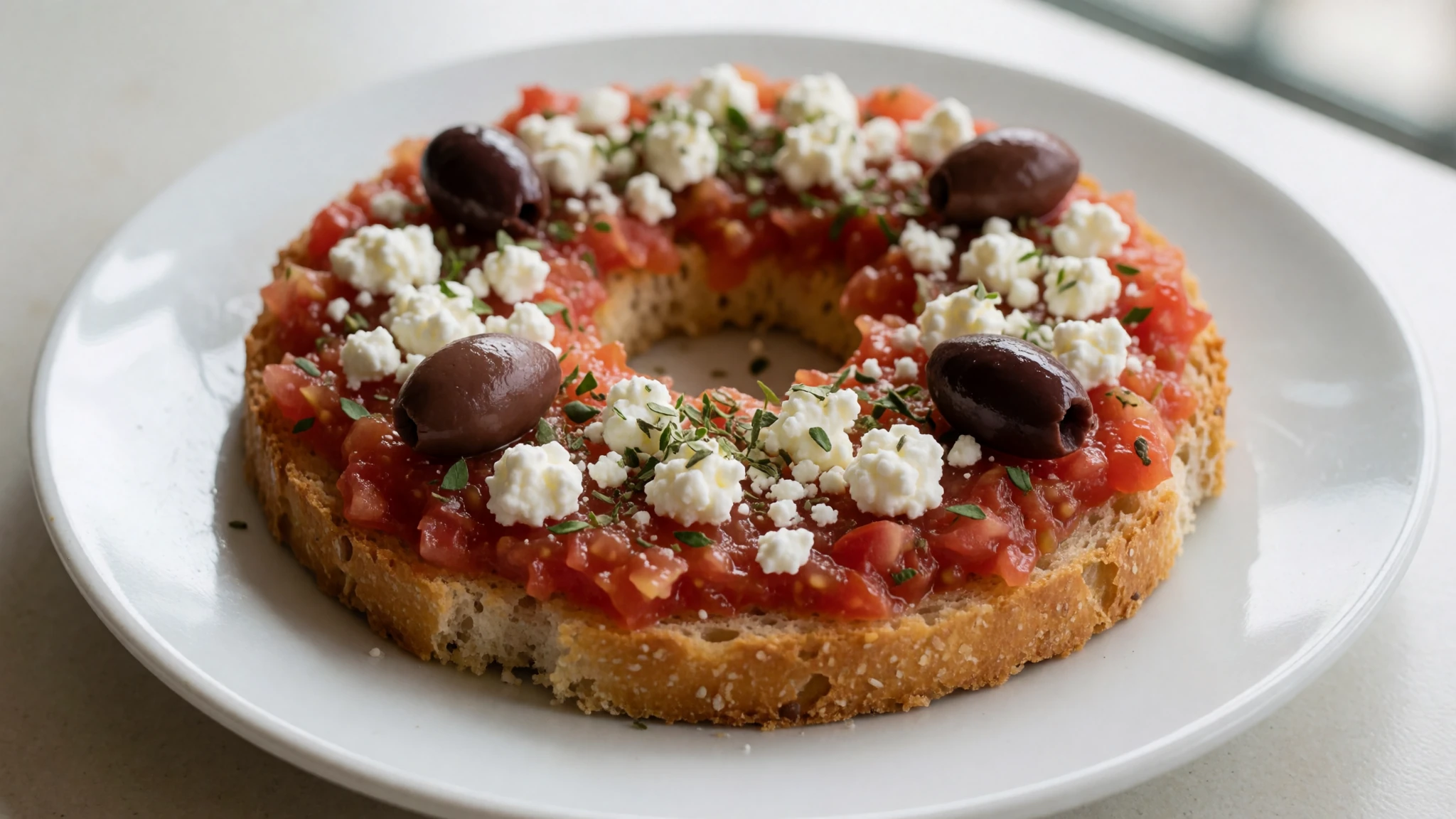
- Kalitsounia — Bakeries and morning cafés in Heraklion, and village shops south of Knossos
Kalitsounia near Knossos are small Cretan pies filled with sweet mizithra or wild greens. Bakeries and morning cafés in Heraklion sell them by the piece, and village shops on the southern roads still bake them for saints' days. They are better the day they are made.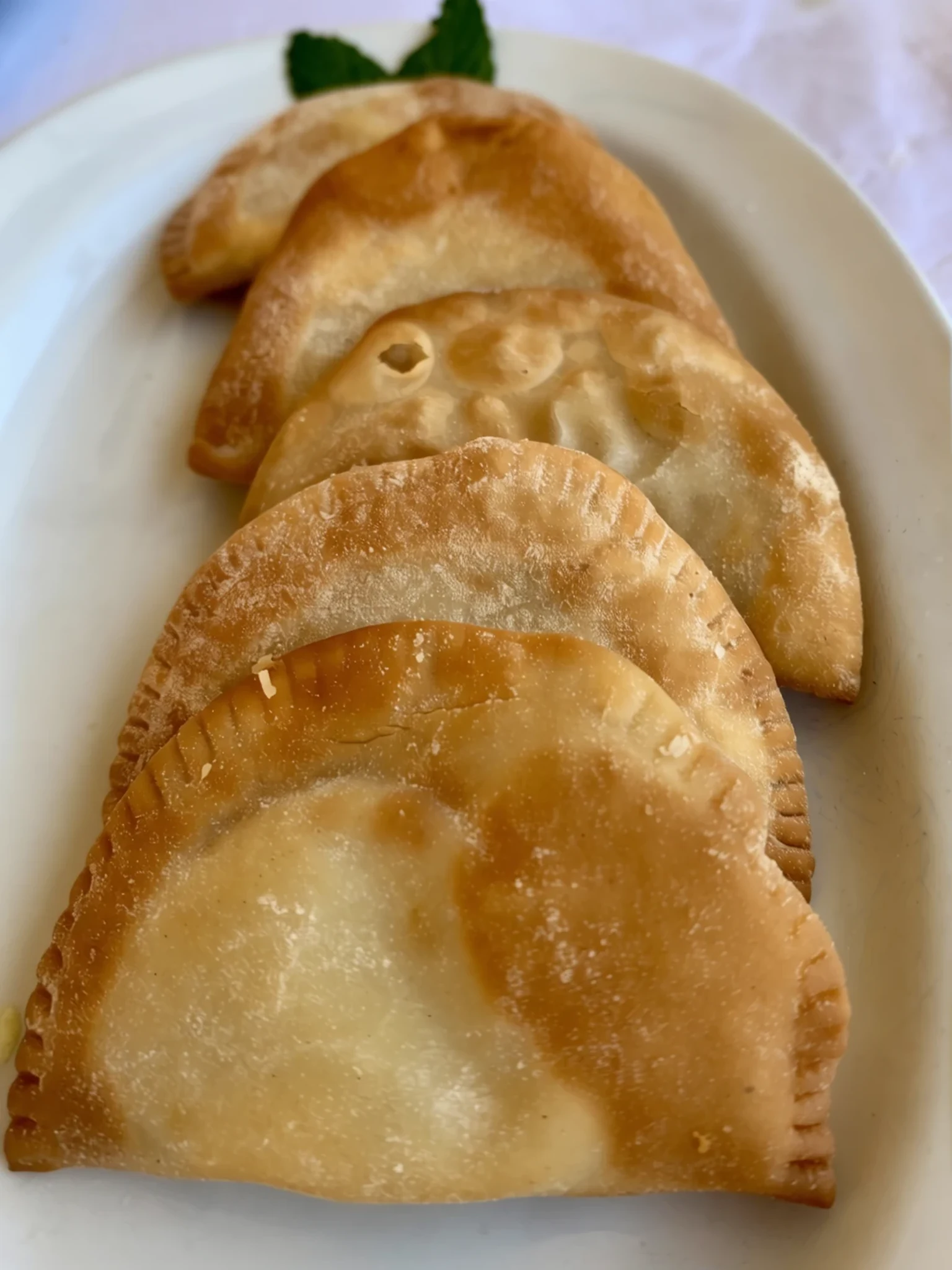
- Oven lamb — Village tavernas south of Knossos and family eateries on Heraklion's edge
Lamb at Knossos country tables is often an oven roast or an ofto-style joint: slow meat, potatoes or greens, and olive oil rather than a heavy sauce. Village tavernas south of the palace and family eateries on Heraklion's edge serve it at midday, especially at weekends. - Chochlioi boubouristi — Tavernas in Heraklion and in the villages around Knossos
Chochlioi boubouristi, a hot snail mezze with rosemary, vinegar and olive oil, show up on traditional tables around Knossos. Tavernas in Heraklion and in nearby villages send them out beside greens and bread. The portion is meant for sharing at the start of a meal. - Horta — Tavernas on the Heraklion outskirts and in the villages toward the palace
Horta, boiled wild greens dressed with lemon and raw olive oil, arrive with almost every traditional meal around Knossos. Tavernas on the Heraklion outskirts and in the villages toward the palace serve them beside cheese and bread. The mix follows whatever leaves the season offers.
Plan it
Best time. April, May, September and October suit an open site like Knossos. The palace is an open hill, so midsummer is harsh and crowded, while winter is quieter and the stone can be wet. Confirm closure days on the official site before you travel.
How long. 1–2
Getting there. Heraklion's airport, then a taxi into the city. The last leg is a short taxi ride: Knossos sits about 5 km south of Heraklion's historic centre.
Budget. mid
Tips
- Arrive at opening if you can; Knossos draws heavy crowds and the courts fill with groups through the middle of the day.
- Learn to separate Evans's reconstructed columns and fresco copies from the excavated walls, or the visit blurs the centuries.
- Carry water and a hat. Shade on Kephala hill is scarce, and the pale stone throws the sun back.
- Wear shoes that grip. Stairs, thresholds and worn paving are awkward in smooth soles.
- Check the official site for tickets and rules. Prices and hours change, and nothing on an old page should be trusted.
Etiquette
- Stay off walls, pithoi and reconstructed columns.
- Do not touch fresco copies or loose ancient stone.
- In the church of Saint Antony, cover shoulders and knees, and keep your voice low.
Nearby
Sources
- Wikidata Q173527 (CC0)
- Wikipedia (rev 1374770779) (CC BY-SA 4.0)
- Wikivoyage (rev 5092381) (CC BY-SA 4.0)
- Photo photos/01-knossos-north-portico-02.jpg (CC BY 3.0)
- Photo photos/02-neolithic-pottery-amh-079001.jpg (CC BY-SA 4.0)
- Photo photos/03-monnaie-drachme-argent-cnossos-cr-te-btv1b8570697m-2-of-2.jpg (Public domain)
- Photo photos/04-knossosnorthentrancecropped.jpg (Public domain)
- Photo photos/05-armon-knossos-p1060093.jpg (CC BY-SA 1.0)
- Photo photos/06-knossos-map-t-just-the-map.jpg (CC BY-SA 4.0)
- Photo photos/07-wall-painting-of-grandstand-or-sacred-grove-and-shrine-from-.jpg (CC BY-SA 4.0)
- Photo photos/08-pithoi-in-knossos.jpg (CC BY 3.0)


