Kerman
Kerman, Iran
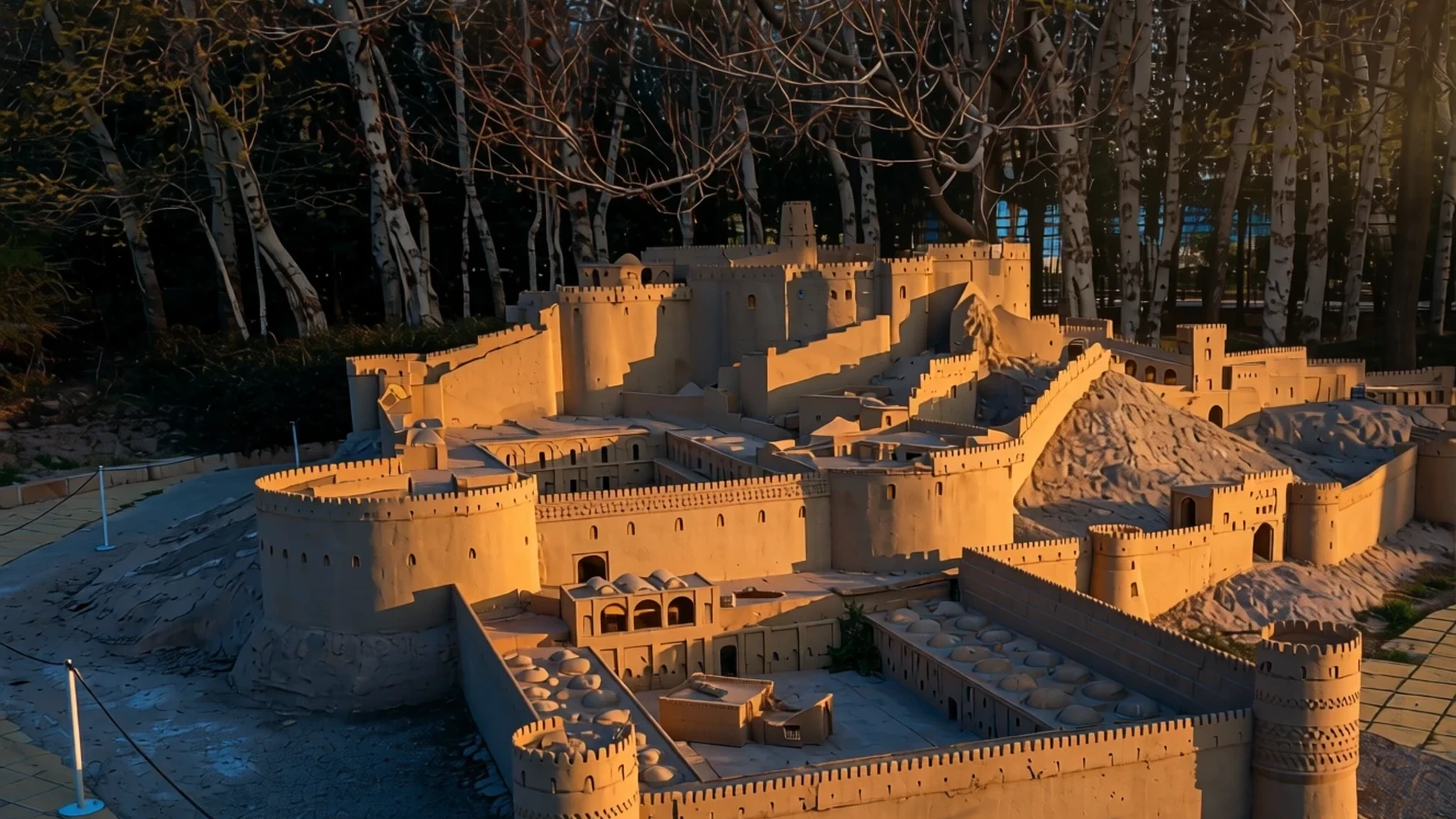
Perched high on the rim of the Lut Desert, Kerman blends ancient mud-brick citadels, labyrinthine bazaars, and green oasis gardens beneath mountain peaks.
The place
Kerman sits on a vast high-altitude plateau on the western edge of the Lut Desert in south-central Iran. Ringed by mountains whose peaks retain snow for much of the year, the city sits at an elevation of 1,760 metres. This high setting creates a climate of sharp contrasts: dry, scorching summer days give way to bitter winter nights where temperatures plunge far below freezing.
The urban landscape reflects centuries of adaptation to arid desert surroundings. Compact neighbourhoods of sun-baked adobe bricks and domed roofs line narrow alleys, while tall mud-brick windcatchers rise above the skyline to funnel cool air into interior rooms. At the centre lies a sprawling, roofed market network that has served as a trade nexus for overland caravans travelling between the Persian Gulf, Khorasan, and Central Asia.
Beyond the immediate city boundaries, the terrain transforms rapidly. To the north lies the dry expanse of the Lut, while southern valleys shelter alpine springs and lush terraced orchards. Home to over 500,000 residents, Kerman serves as both an administrative capital and a gateway to desert expeditions. Life here moves at an unhurried pace compared to Tehran or Isfahan. Streets fill in the cool late afternoons as shopkeepers raise their shutters, street sellers brew hot tea, and locals gather in courtyard gardens to socialise before the night cold sets in.
Its story
Kerman entered written history during the third century when Ardashir I, the founder of the Sasanian Empire, established a fortified outpost known as Veh-Ardashir to secure trade routes across the Iranian plateau. Following the Arab conquests of the seventh century, Islamic dynasties governed the region, though remote geography frequently granted local rulers considerable independence. By the eleventh and twelfth centuries under Seljuk rule, the city flourished as a commercial hub, extending its reach across the Persian Gulf to Oman.
When Marco Polo passed through during his thirteenth-century journeys, he recorded a prosperous city renowned for fine leatherwork, embroidery, and silk textiles. Under the Safavid dynasty, production shifted towards intricate hand-knotted wool and pashm carpets, which found eager markets across Europe. However, prosperity was repeatedly shattered by brutal invasions.
The most catastrophic event occurred in 1794, following a six-month siege by Agha Mohammad Khan Qajar. Furious at the townspeople for sheltering his rival Lotf Ali Khan, the victorious Qajar ruler ordered the slaughter or blinding of thousands of male inhabitants. Legend holds that thousands of severed eyes were brought before him in baskets. Despite this devastation, the city gradually rebuilt itself around its ancient bazaar, preserving its distinct cultural identity and deep-rooted Zoroastrian heritage through centuries of upheaval.
What to see
- Kerman Bazaar — City Centre
Stretching over a kilometre through the heart of old Kerman, this vaulted brick bazaar is one of the longest covered market networks in Iran. Intricate copperware workshops, spice merchants, and traditional carpet traders line the passageway, punctuated by historic bathhouses, caravanserais, and quiet tea rooms.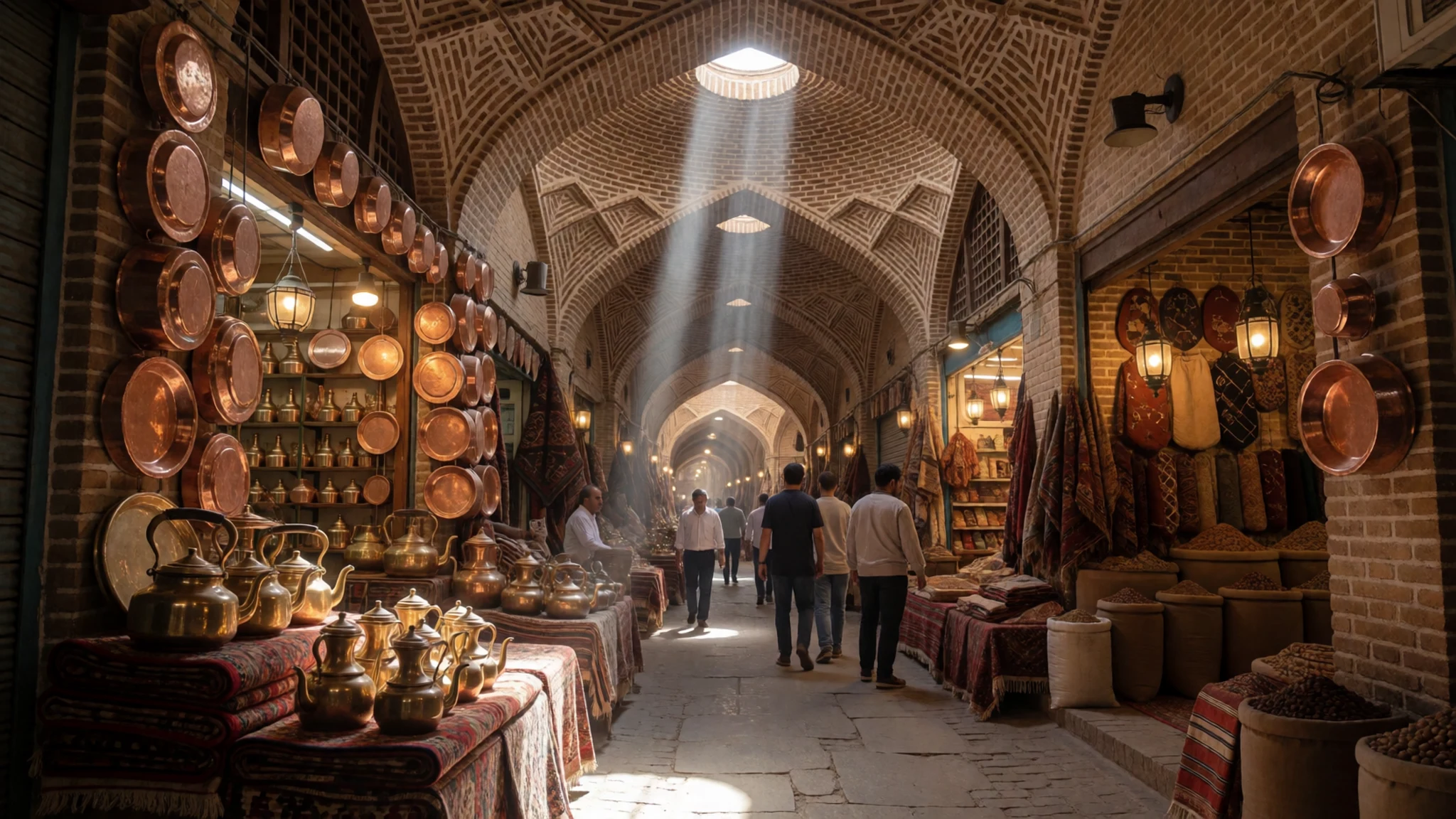
- Ganjali Khan Complex — Bazaar District
Built during the Safavid era around a spacious public square, this historic architectural complex includes a bathhouse, school, mint, and caravanserai. The highlight is the former bathhouse, now a museum featuring detailed wax figures, exquisite tilework, and engineered windcatchers designed to cool interior chambers during desert heat.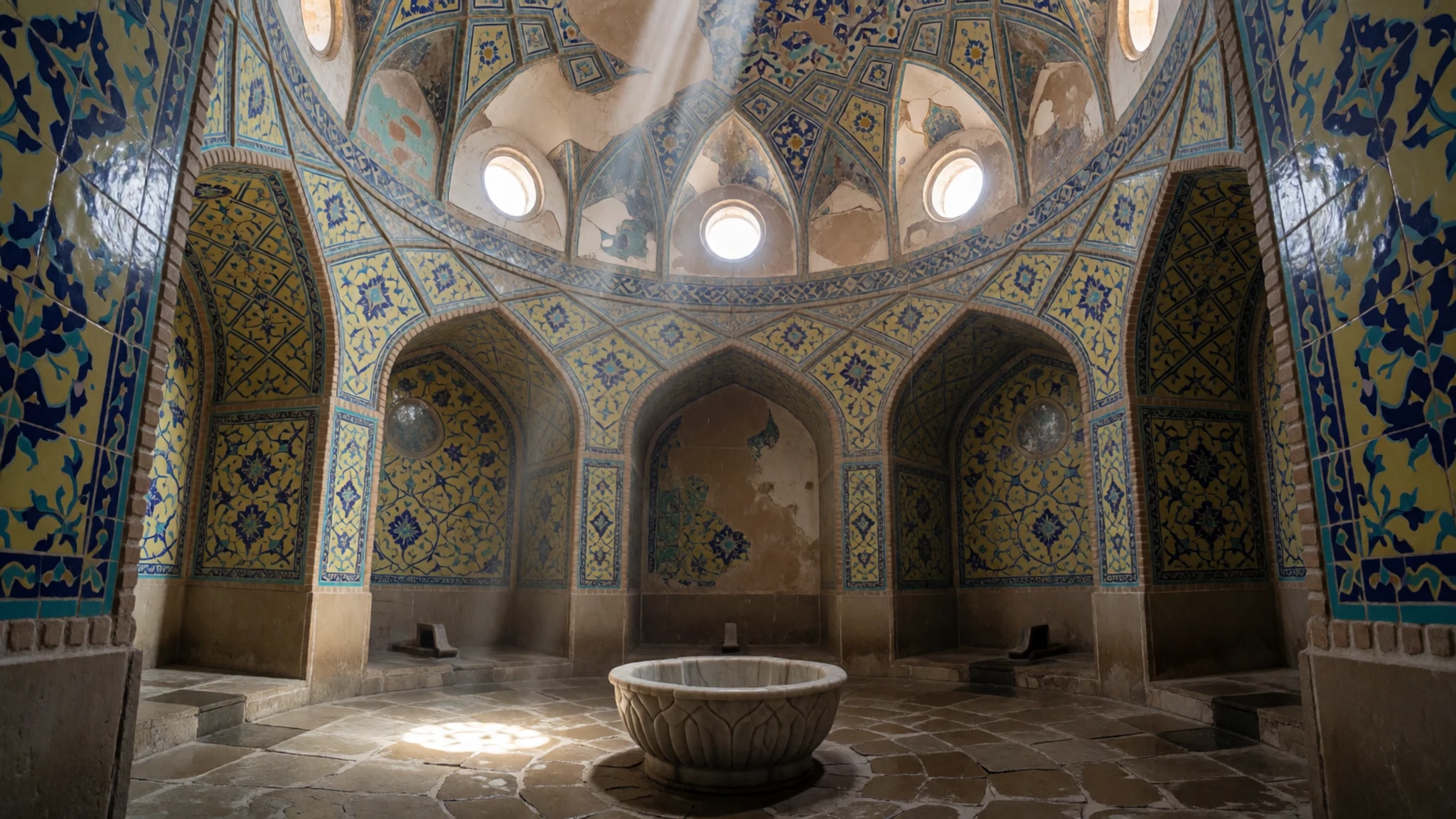
- Gonbad-e Jabaliyeh — Eastern Outskirts
Rising on the eastern edge of Kerman near the mountains, this octagonal stone dome dates back to pre-Islamic times. Constructed entirely from stone and mortar rather than adobe bricks, the impressive structure has survived centuries of harsh desert weathering and now houses a collection of ancient carved tombstones and stone artifacts.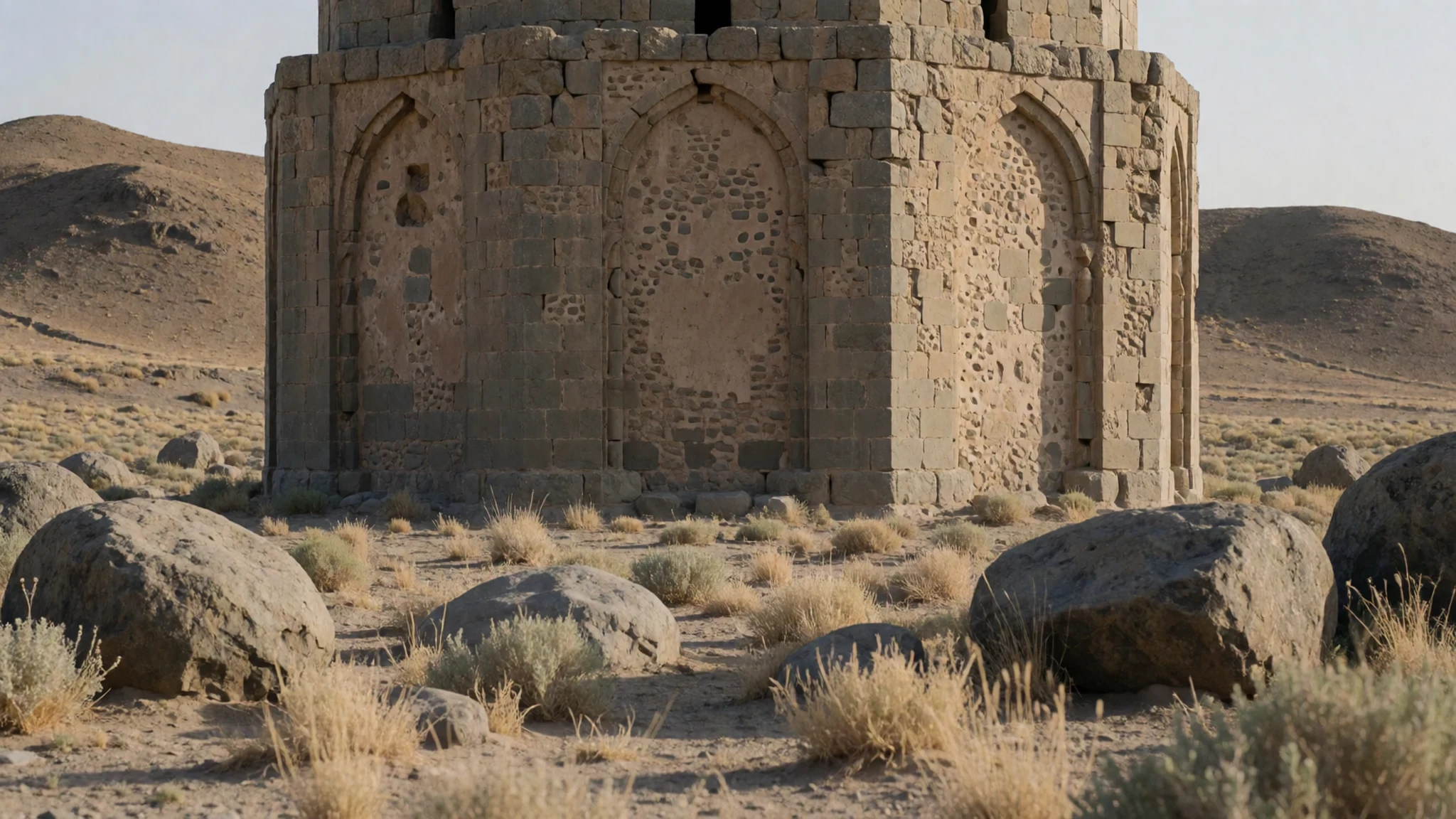
- Shazdeh Garden — Mahan (30 km southeast)
Located thirty kilometres outside Kerman near Mahan, this UNESCO-listed Persian garden creates a striking contrast against the arid desert backdrop. Tiered stone fountains and cascading pools fed by mountain snowmelt run down a central axis, framed by tall cedar trees, fruit orchards, and an elegant Qajar pavilion.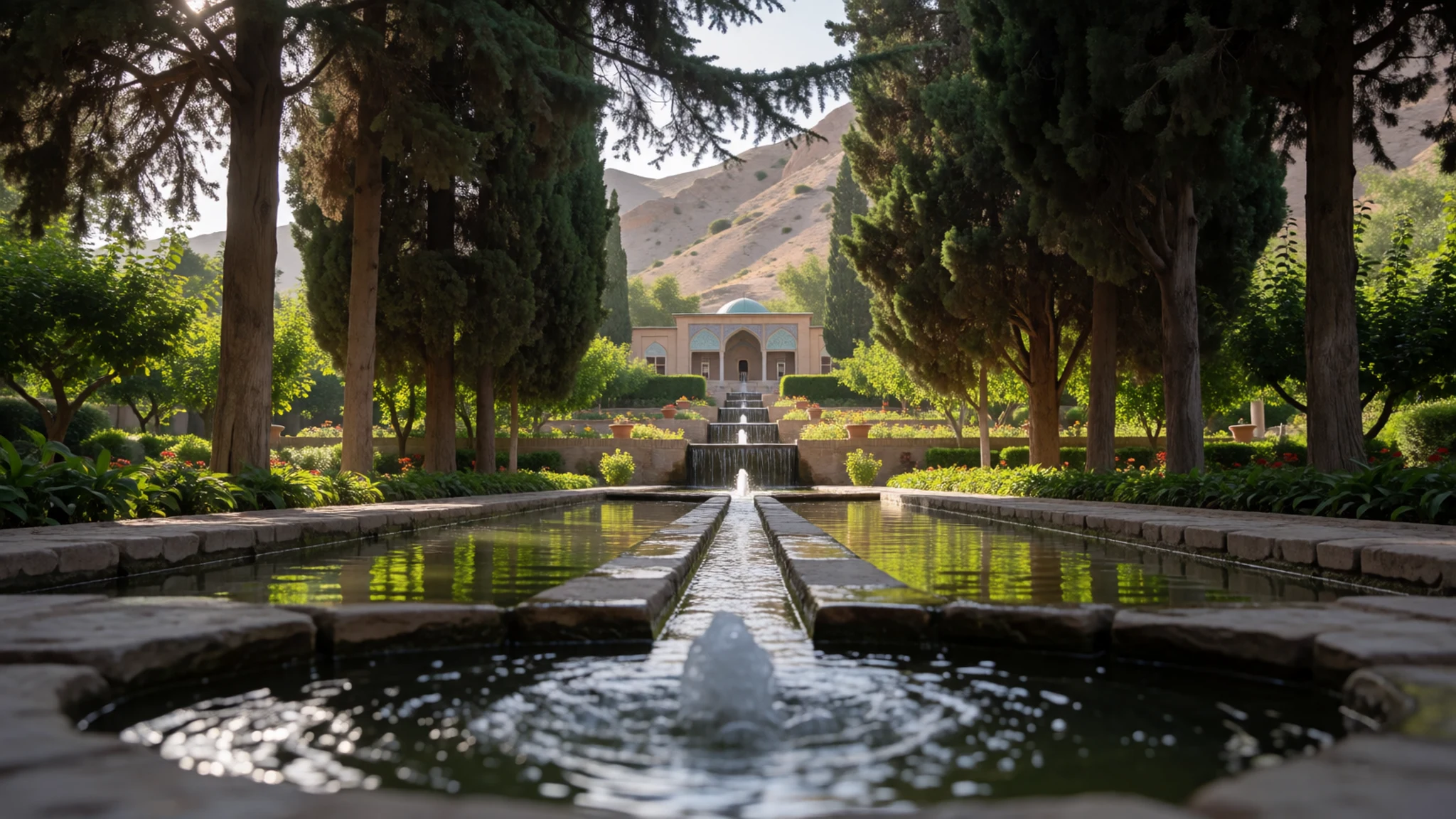
- Rayen Castle — Rayen (100 km southeast)
Situated south of Kerman, this remarkably preserved adobe citadel offers a clear picture of ancient mud-brick military architecture. Enclosed by massive fortified walls and watchtowers, the historic complex contains governor quarters, residential quarters, and artisan workshops, framed by dramatic snow-capped mountain peaks in the distance.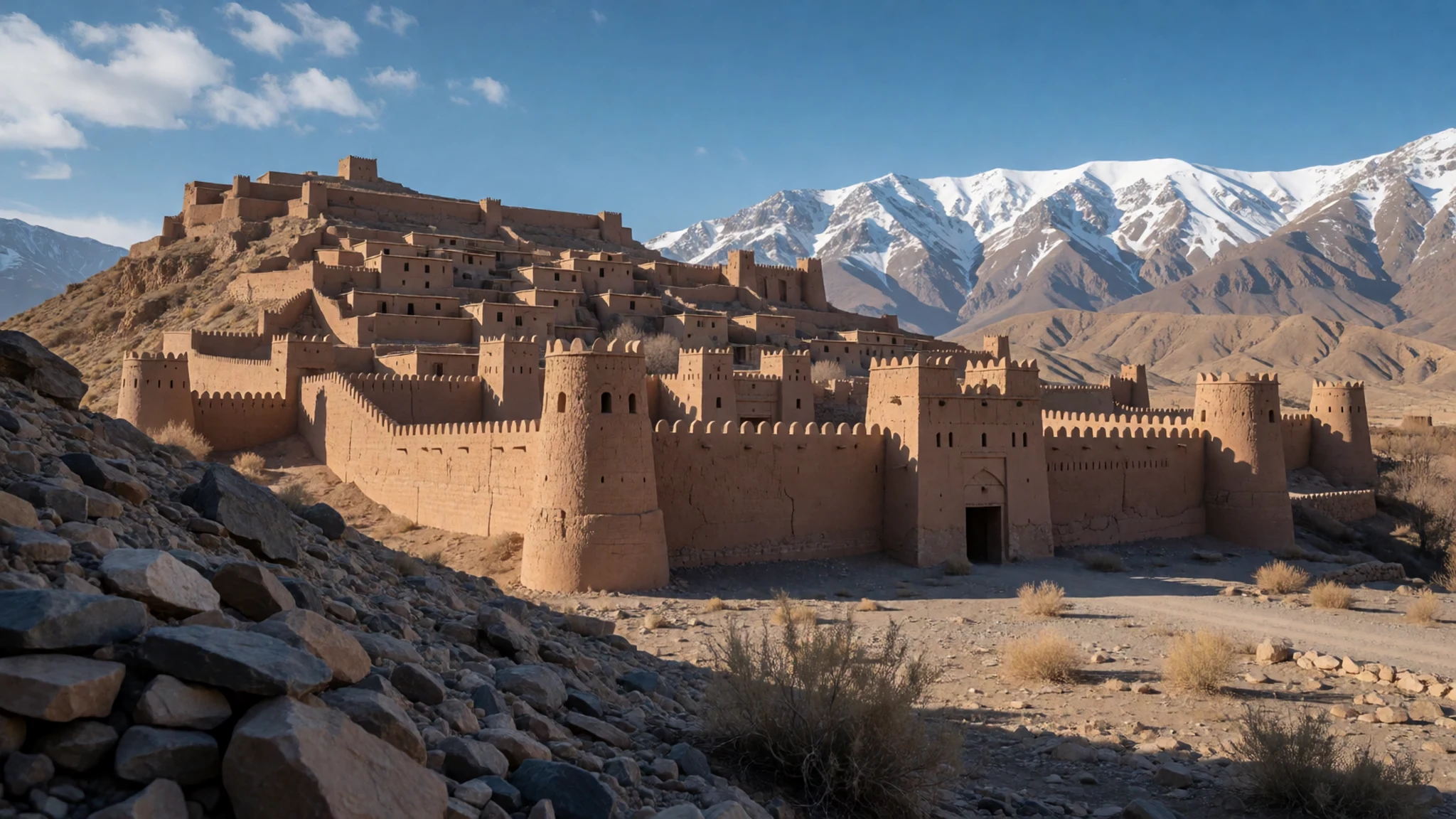
Culture
Kerman holds a unique position in Iranian cultural history as one of the enduring strongholds of the ancient Zoroastrian faith. While Islam became the predominant religion centuries ago, a vibrant Zoroastrian community remains active in the city, maintaining fire temples, traditional customs, and seasonal celebrations. The local fire temple houses a museum showcasing religious manuscripts, ceremonial attire, and historical artefacts that reflect thousands of years of continuous heritage.
Annual festivals such as Jashn-e Tirgan in midsummer celebrate water, rain, and autumn harvests, uniting residents across religious lines. The city's craftsman culture is equally distinct: generations of artisans have perfected copper engraving, fine wool embroidery known as pateh, and hand-knotted wool carpet weaving. Tea culture forms the backdrop of daily civic life, with locals gathering in vaulted subterranean teahouses to chat over cardamom tea and traditional sweets.
When visiting fire temples, religious shrines, or traditional residential neighbourhoods, dress modestly with long trousers or sleeves, and always request permission before taking photos of worshipers or local women.
What to wear
Fashion in Kerman reflects both desert climate adaptations and a renowned textile heritage. Historically, Kerman was world-famous for its pateh embroidery—intricate needlework stitched with dyed wool thread onto heavy felt fabric, worn as shawls, wraps, or ceremonial clothing. Traditional women's garments featured colourful layered skirts, embroidered headscarves, and long tunics, while men wore woollen vests woven from local pashm goat hair.
Today, daily attire in Kerman aligns with national Iranian modesty laws while responding to severe weather shifts. Men typically wear loose cotton or wool trousers with collared shirts, avoiding shorts in public. Women wear manteaus—loose-fitting coats or tunics extending to mid-thigh or knee—paired with trousers and headscarves (hijab), often in lightweight dark or neutral tones.
For visitors, adhering to dress codes is required by law throughout public spaces. Women must cover their hair with a headscarf and wear loose tunics over long trousers or maxi skirts. Men should wear full-length trousers and short- or long-sleeved shirts. Because Kerman experiences extreme temperature drops after sunset and rocky desert terrain, pack layers including warm fleeces for evening, along with sturdy closed-toe walking shoes for cobbles and dirt paths.
What to eat
- Fāloodeh-e Kermani — Bazaar dessert shops and traditional ice houses
Unlike the thread-like version found in Shiraz, Kerman’s signature desert ice dessert features tiny starch drops suspended in sweet iced rosewater. Drizzled with fresh lemon juice or sour cherry syrup, it offers a fragrant cooling break during hot afternoon walks through the bazaar.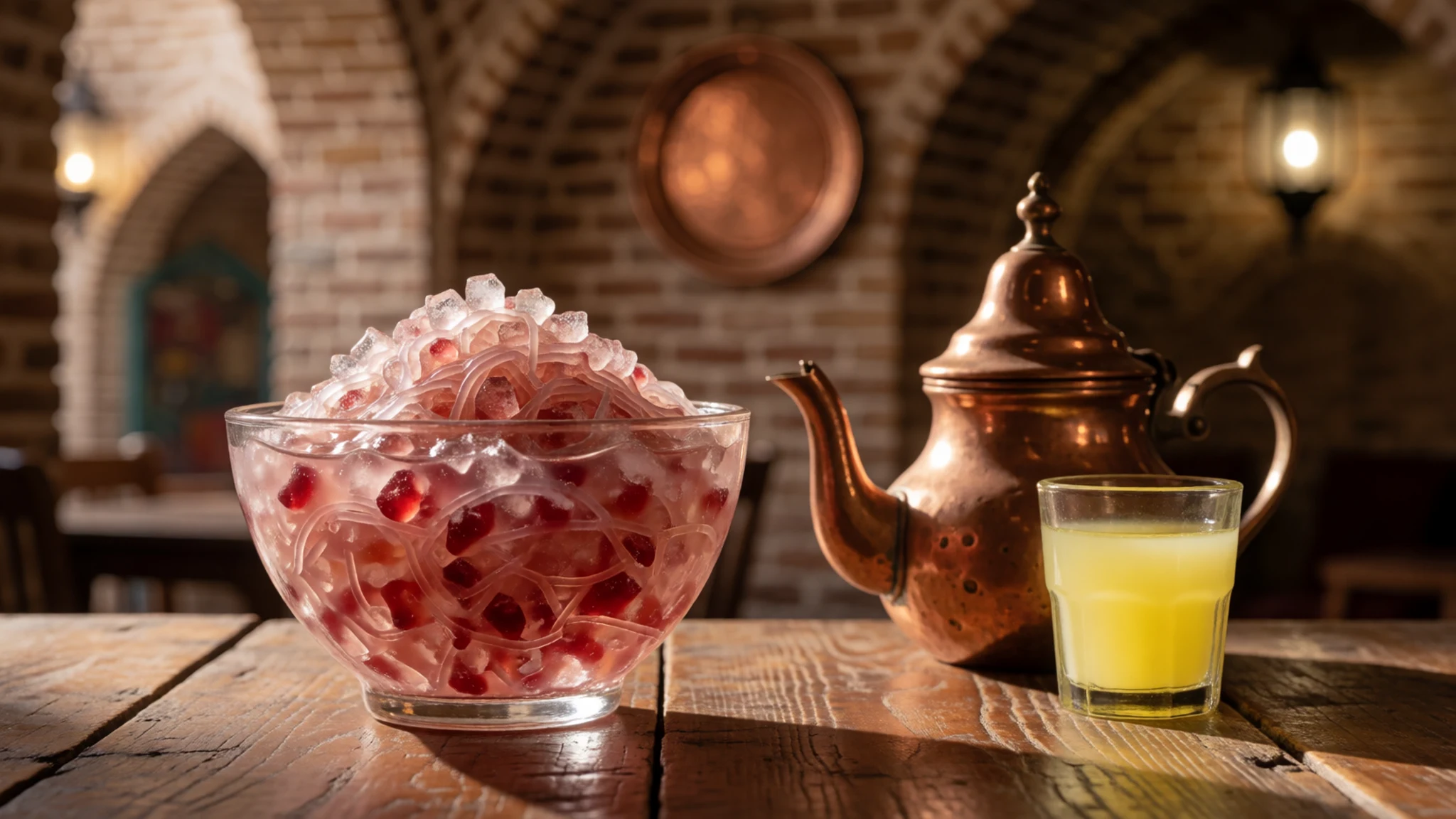
- Kermani Abgoosht — Traditional teahouses and local eateries around Ganjali Khan
This hearty meat stew combines tender lamb, chickpeas, white beans, potatoes, and dried limes, slow-cooked in earthenware pots. The broth is strained and eaten with flatbread, while the meat and pulses are pounded into a rich mash served with fresh herbs.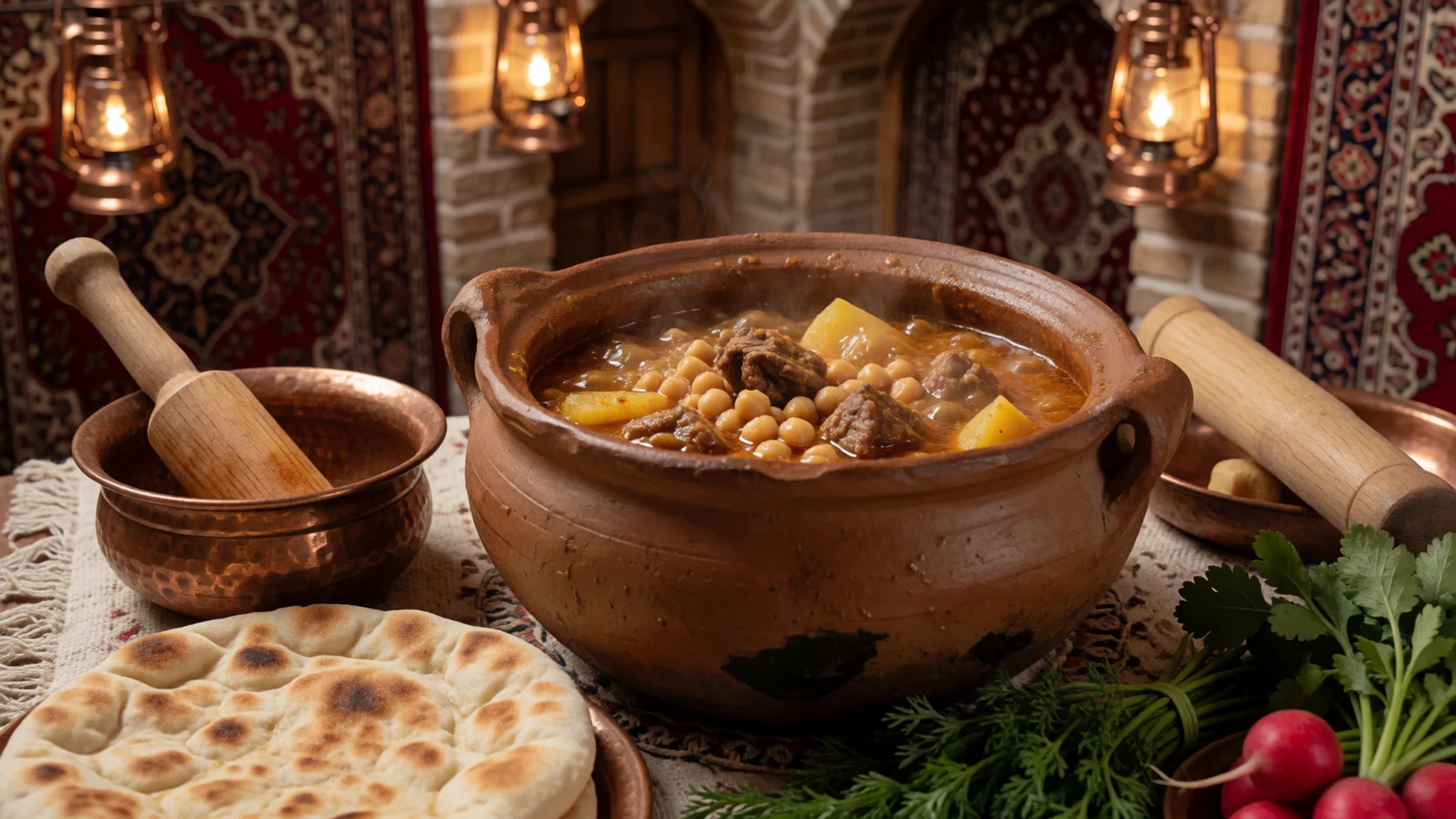
- Doogh — Street stalls, juice stands, and traditional restaurants
A refreshing, slightly sour yogurt drink seasoned with dried mint, salt, and crushed ice. Often naturally carbonated, this traditional beverage balances heavy meat dishes, quenches desert thirst, and helps restore hydration after long hours outdoors. - Aromatic Herbal Distillates (Araghyat) — Spice shops and herb vendors across the central market
Kerman is famous for its steam-distilled botanical waters made from wild mountain herbs, cumin, rose, and orange blossoms. Served chilled diluted with water or added to hot tea, these fragrant herbal essences are prized for their digestive and health properties. - Iranian Black Tea (Chāi) — Subterranean teahouses and bazaar courtyard stalls
Poured strong and piping hot into small glass cups, black tea is integral to Kermani hospitality. It is served with cardamom, rock sugar sticks, or local saffron sweets, providing a welcoming ritual in basement teahouses throughout the day.
Plan it
Best time. March–May and September–November offer comfortable daytime temperatures and mild nights; summer brings intense desert heat, while winter nights drop below freezing.
How long. 2–3
Getting there. Fly into Kerman International Airport from Tehran, or take overnight train and long-distance bus connections from Isfahan, Yazd, or Shiraz.
Budget. low
Tips
- Carry sufficient Iranian rial cash in small denominations as international credit cards do not function.
- Pack warm insulated jackets and thermals for evening winter temperatures, which drop rapidly after sunset.
- Start outdoor sightseeing and desert excursions early in the morning before midday heat peaks.
- Drink plenty of bottled water and stay hydrated throughout dry high-altitude days.
Etiquette
- Observe national dress guidelines strictly in all public spaces, covering legs, arms, and hair as required.
- Ask permission before taking photos of residents, especially women and religious ceremony participants.
- Remove shoes before entering private homes, mosques, or carpeted prayer halls.
Nearby
Sources
- Wikidata Q171714 (CC0)
- Wikipedia (rev 1378264667) (CC BY-SA 4.0)
- Wikivoyage (rev 5361752) (CC BY-SA 4.0)
- Photo photos/01-kerman-panorama.jpg (Public domain)
- Photo photos/02-.jpg (CC BY-SA 4.0)
- Photo photos/03-windcatcher-at-ganjali-khan-complex-kerman.jpg (CC BY-SA 4.0)
- Photo photos/04-bazaar-de-kerman-ir-n-2016-09-22-dd-38.jpg (CC BY-SA 4.0)
- Photo photos/05-shazde-garden.jpg (CC BY-SA 4.0)
- Photo photos/06-abbasid-al-mahdi-dirham-kirman-166ah.jpg (CC BY 3.0)
- Photo photos/07-rayen-castle-01.jpg (CC BY-SA 4.0)
- Photo photos/08-shah-nematollah-vali-shrine-02.jpg (CC BY 2.5)


