Kandovan
Kandovan, Iran
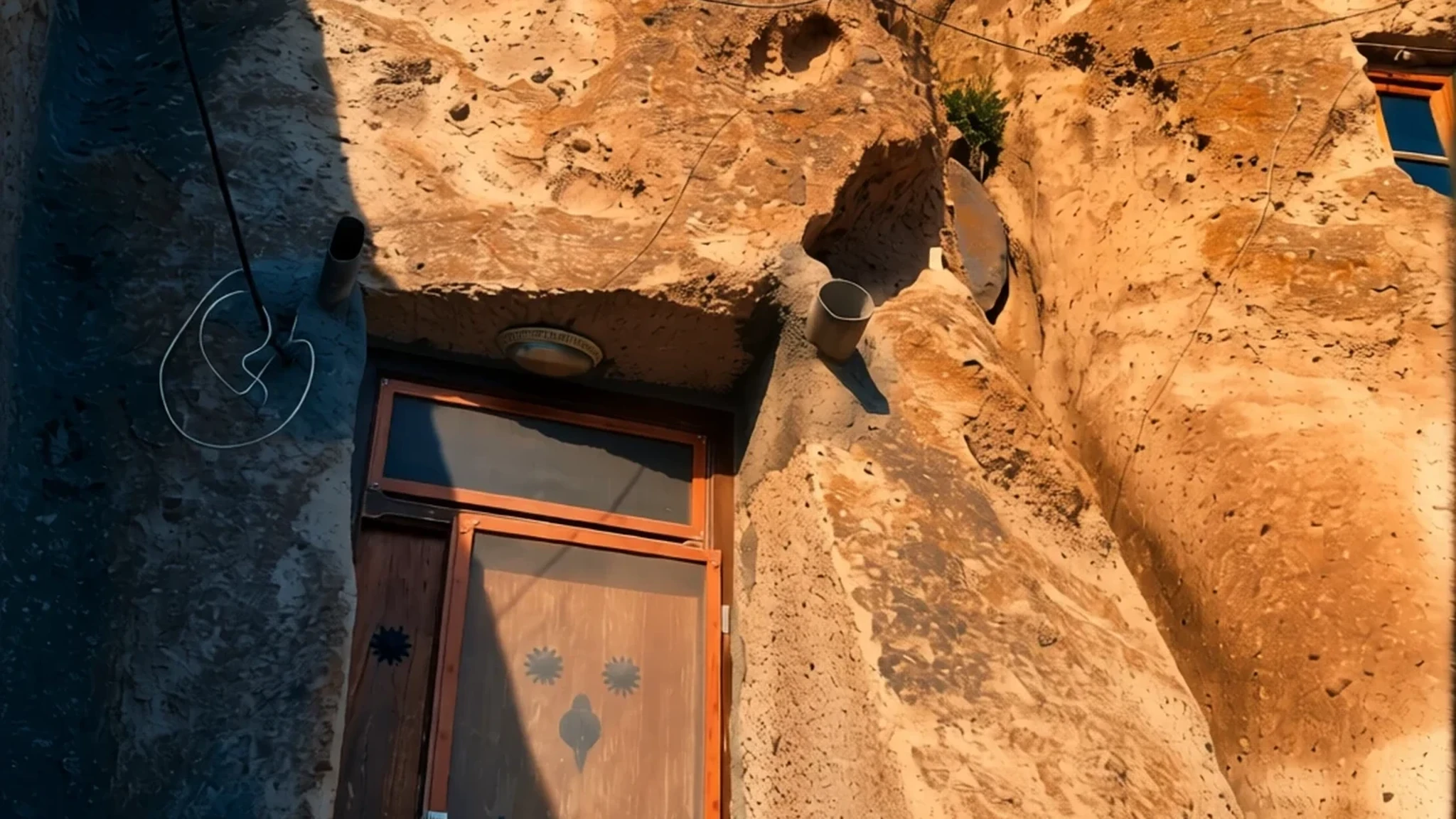
Visit Kandovan to explore a remarkable ancient village where people still live inside cone-shaped volcanic rock dwellings carved into the mountainside.
The place
Nestled away in the rugged foothills of Mount Sahand, Kandovan offers a living window into an ancient troglodyte world that feels entirely removed from modern city life. Located within Osku County in the East Azerbaijan province of Iran, this remarkable settlement is world-renowned for its extraordinary rock-cut architecture. Unlike similar cave dwellings found elsewhere, the homes here, known locally as karaans, remain fully inhabited by local families who have adapted their daily routines to the organic geometry of the stone. The dramatic landscape is defined by countless cone-shaped cliffs, which were sculpted over millennia through the natural erosion of volcanic ash-flow tuffs and pumice deposits left behind by ancient eruptions of Mount Sahand. Over time, natural water channels carved deep grooves through the soft rock, eventually separating the formations into distinct cones that now serve as the village streets, with ingenious stone bridges connecting dwellings across the gaps. Walking through the narrow, sloping pathways reveals a deeply textured community where doorways, windows and chimneys are hewn directly into the living rock, creating a striking visual harmony between human habitation and the raw geological forces of the Iranian highlands. The atmosphere shifts dramatically with the changing light across the valley, moving from sharp morning shadows on the pale volcanic stone to warm, amber glows in the late afternoon sun.
Its story
The story of Kandovan is written directly into the geology of the earth through centuries of volcanic activity and human persistence. Long before human hands touched the stone, massive eruptions from Mount Sahand blanketed the surrounding valleys in thick layers of pyroclastic material, depositing porous pumice and volcanic particles across the landscape. Over countless generations, weathering and water erosion shaped these thick deposits into the dramatic cone formations that characterise the valley today. The earliest human inhabitants recognised the potential of these soft, insulating rock towers, carving out subterranean shelters that provided natural protection against harsh winters and invading armies sweeping across the plateau. Living inside the ignimbrite rock offered exceptional thermal benefits, keeping interiors cool during the intense heat of summer and retaining precious warmth through freezing mountain winters. As families grew and generations passed, the cave dwellings expanded vertically and horizontally, connected by winding staircases, elevated pathways and rustic bridges spanning the ravines between separate rock cones. This unique architectural tradition survived largely insulated from the rapid modernisation of Iran's major urban centres, preserving a rare continuity of lifestyle. Today, the village stands as a living monument to human adaptability, where the ancient art of troglodyte living continues uninterrupted against the backdrop of the rugged East Azerbaijan mountains.
What to see
- The Upper Village Cones — Upper residential slopes
Wander through the upper tiers of the village where the density of ancient volcanic rock dwellings is highest. You can observe how natural erosion shaped the tall stone towers and see the ingenious bridges connecting separate homes across the narrow street ravines.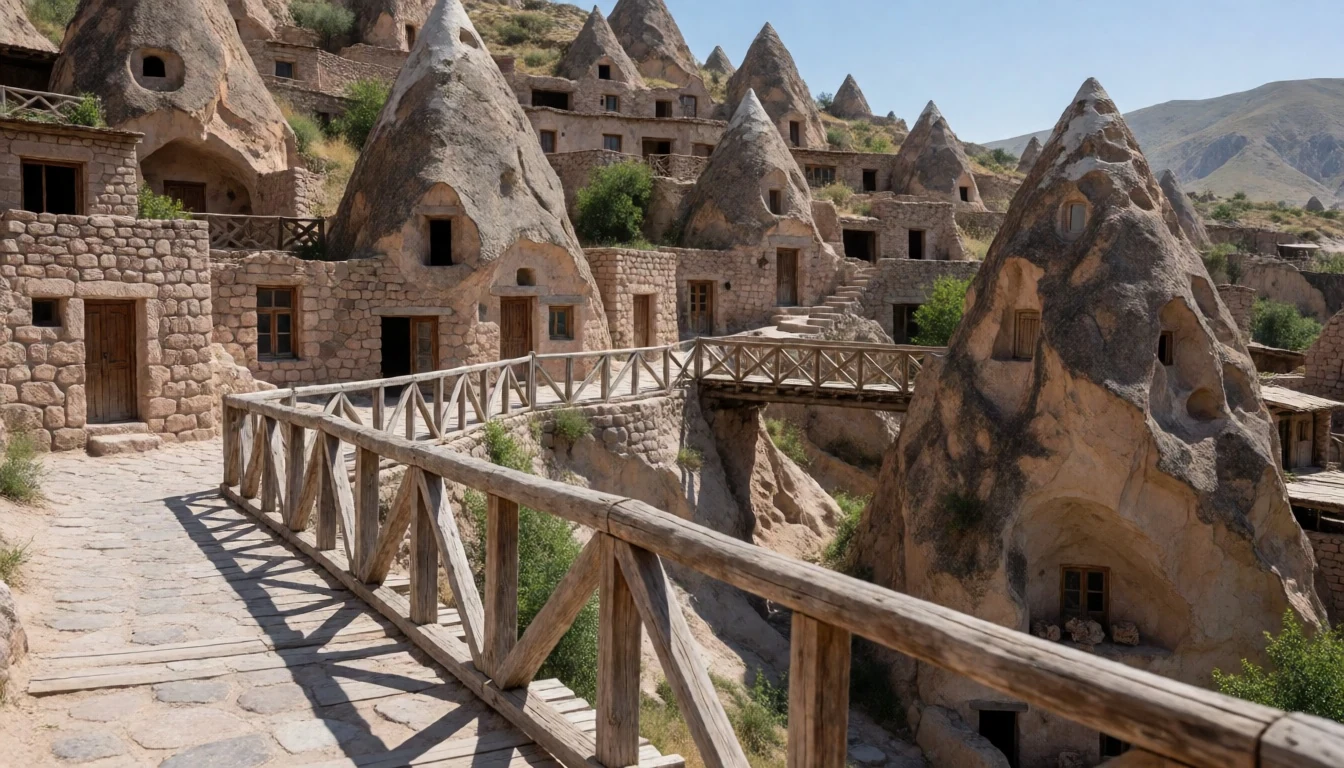
- The Sahand Foothills Overlook — Mountain ridge trails
Hike up the surrounding trails leading away from the village towards the lower slopes of Mount Sahand. The elevated vantage points provide sweeping panoramic views of the entire valley, showing how the geological formations stretch across the landscape.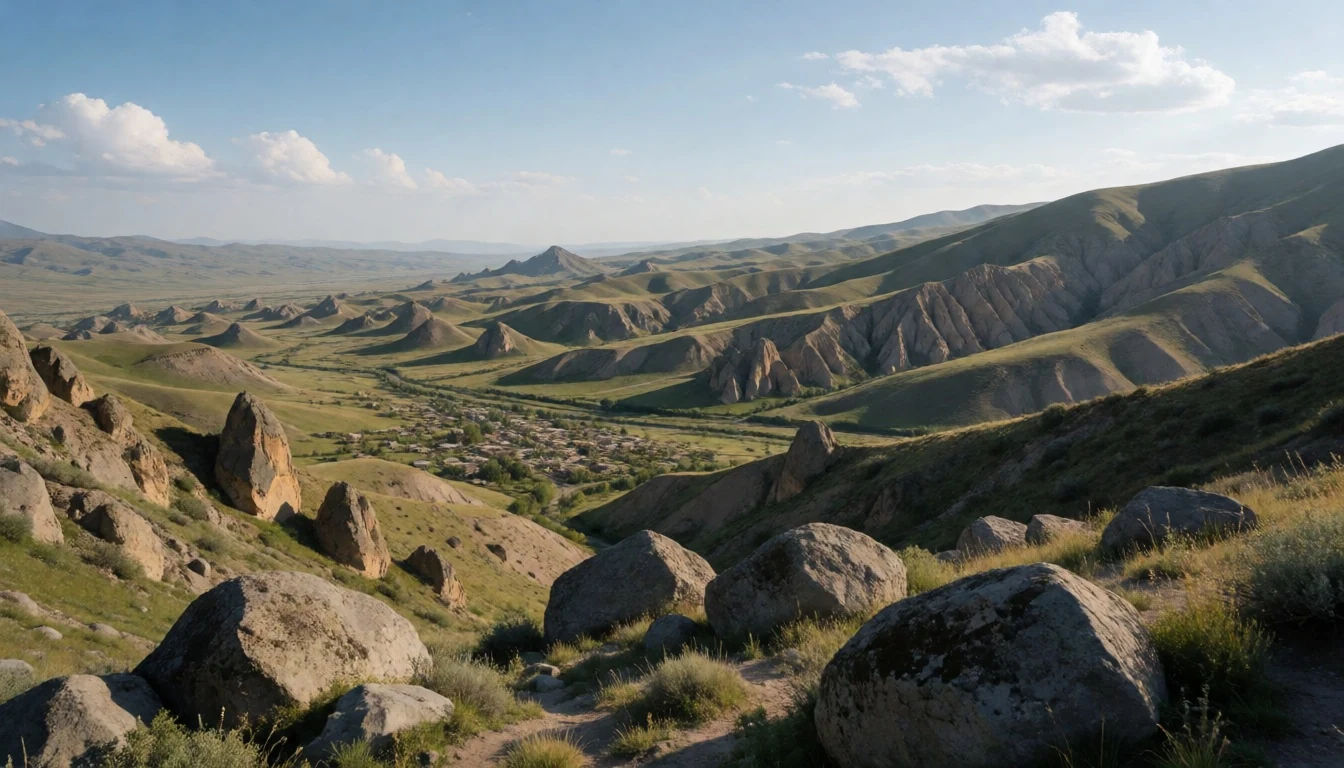
- Traditional Cliff Doorways — Central village paths
Examine the remarkable exterior architecture where wooden doors and glass windows are fitted directly into the uneven faces of the volcanic rock cones. This area highlights the contrast between raw geological formations and domestic habitation.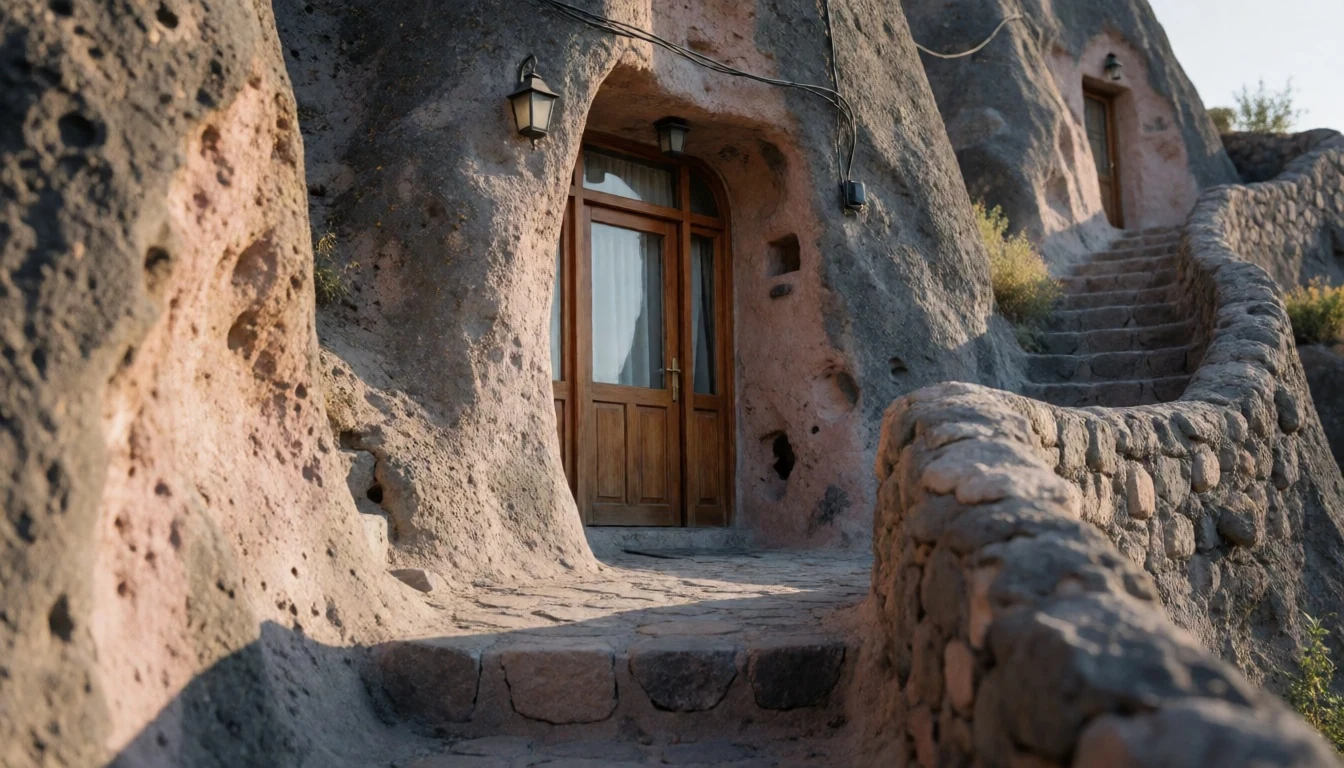
- The Valley Ravine Bridges — Central village ravines
Walk across the rustic footbridges suspended above the natural water channels that divide the village. These crossing points offer a unique perspective on how the community integrated its pathways and infrastructure into the eroded rock terrain.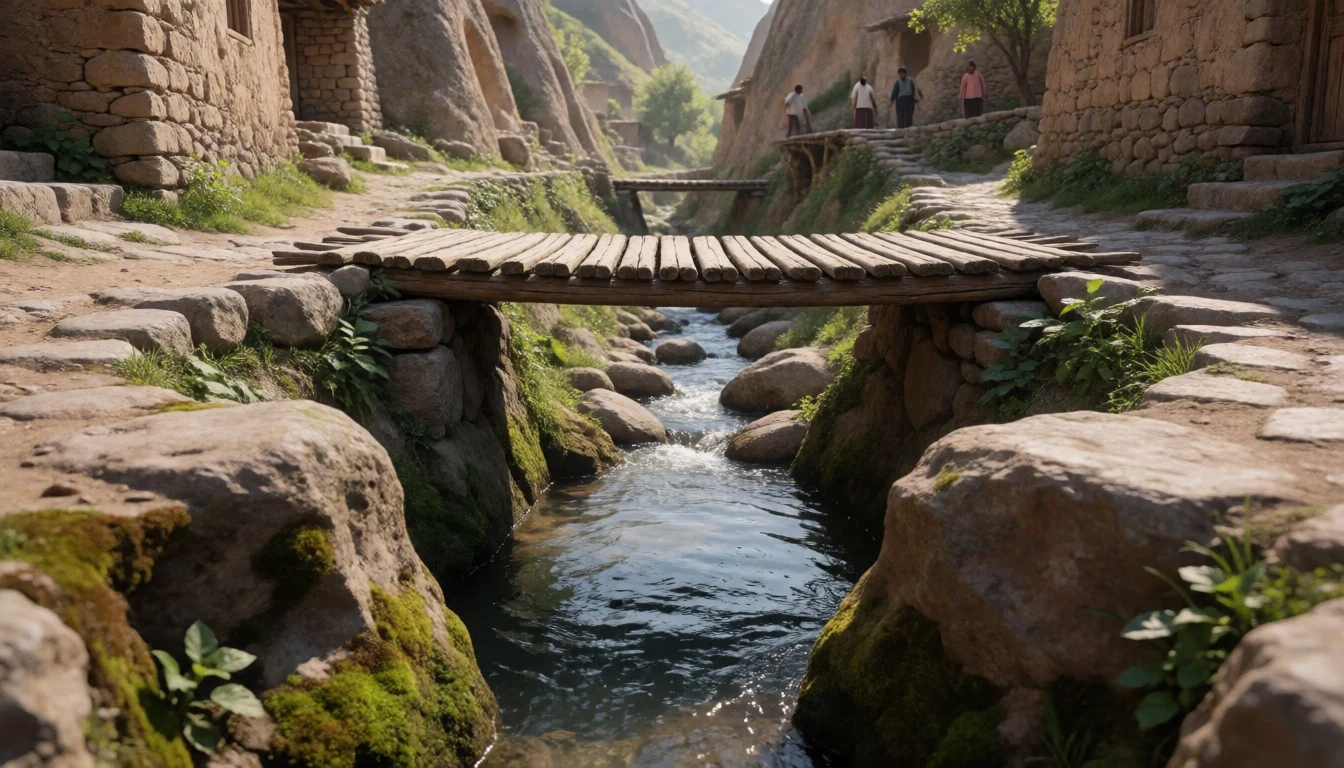
- Local Craft Stalls — Lower village entrance path
Browse the small outdoor stalls set up by residents along the main pathways, where local artisans sell handmade wool crafts, knitted garments, and regional mountain herbs gathered from the surrounding valleys.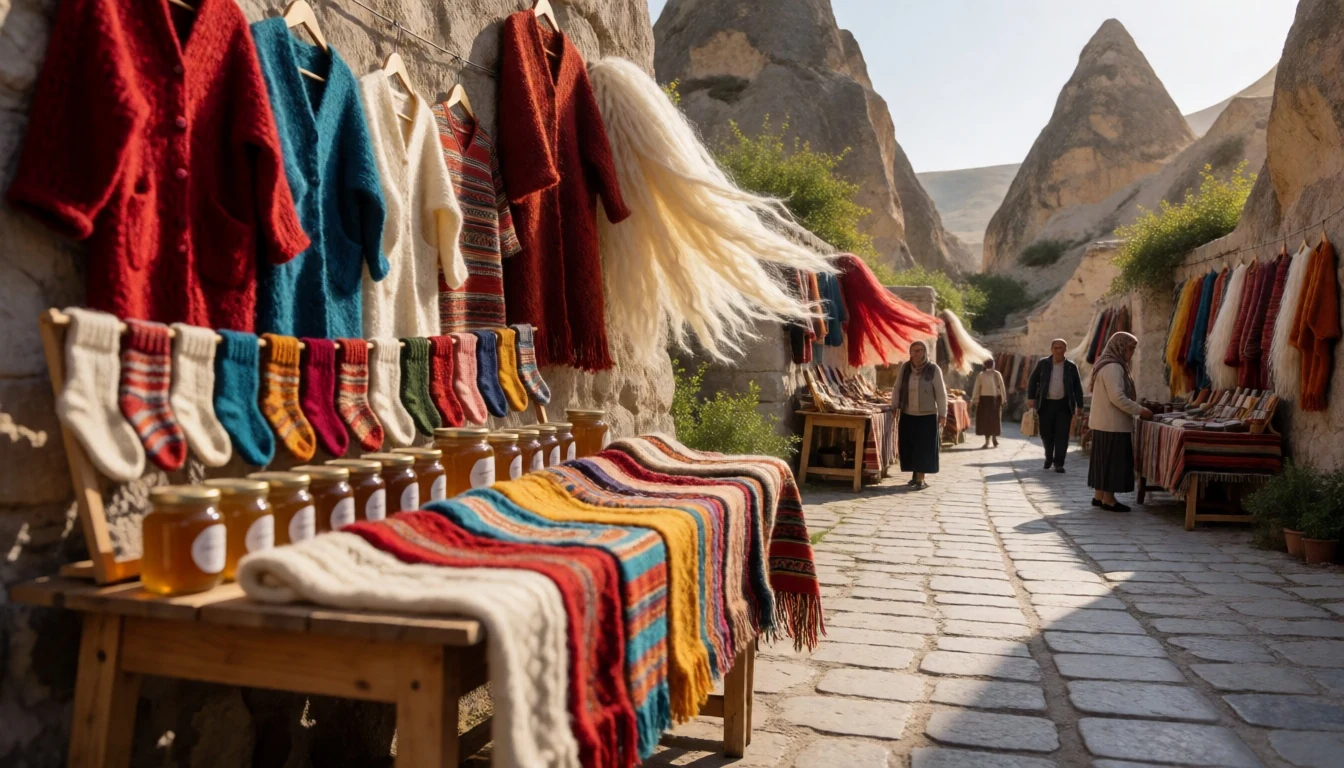
Culture
Life in Kandovan is deeply rooted in traditional Azerbaijani culture, shaped by the rhythms of rural mountain living and centuries of agricultural heritage. The community is predominantly Turkic-speaking, with Azerbaijani Turkish spoken widely alongside Persian, reflecting the rich linguistic tapestry of the East Azerbaijan province. Hospitality is a cornerstone of daily interaction here, and visitors are often greeted with warmth and curiosity by residents eager to share stories of their cliff homes. Traditional crafts, particularly hand-knotted wool carpets and knitted garments made from local fleece, remain an important part of village life and economic expression. While tourism brings many curious travellers to the narrow pathways, the village retains its distinct rural character and strong community bonds. Respect local privacy by asking for permission before photographing residents or peering into private residential cave entrances.
What to wear
Traditional dress in Kandovan reflects the practical needs of a high-altitude mountain climate, historically featuring heavy woollen garments, woven vests, and thick headscarves designed to ward off the biting cold of Sahand winters. Locally spun wool and sturdy textiles have long been favoured by villagers for their durability against rough stone surfaces and harsh weather. Today, residents generally wear standard modern Iranian clothing, with men in practical trousers and jackets and women wearing coats and headscarves in line with national norms, often layered with practical cardigans or fleece jackets for the cool mountain air. For visitors, dressing modestly is essential in accordance with Iranian customs; women should wear a loose-fitting tunic or coat reaching past the hips along with a headscarf, while men should wear long trousers. Because the village is built on steep, uneven volcanic slopes with unpaved stone pathways, sturdy walking shoes or boots with good grip are absolutely vital for exploring safely without slipping.
What to eat
- Mountain Honey — Local village stalls and shops
Savour the rich, floral honey harvested from beehives kept across the high-altitude meadows of Mount Sahand, widely available from local village stalls and small shops along the main paths.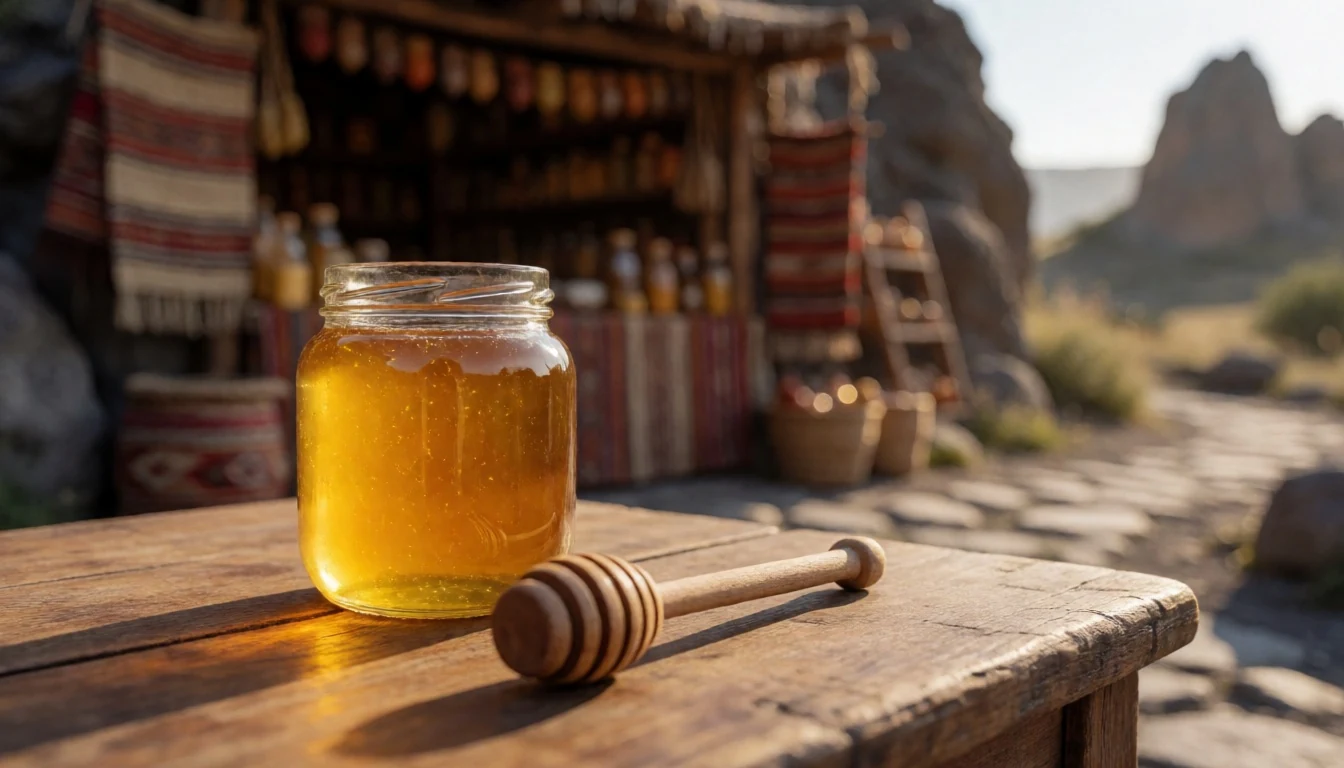
- Traditional Iranian Kebabs — Melal Restaurant
Enjoy tender, charcoal-grilled skewers of marinated lamb or chicken served alongside warm flatbread and grilled tomatoes at local dining spots like Melal Restaurant.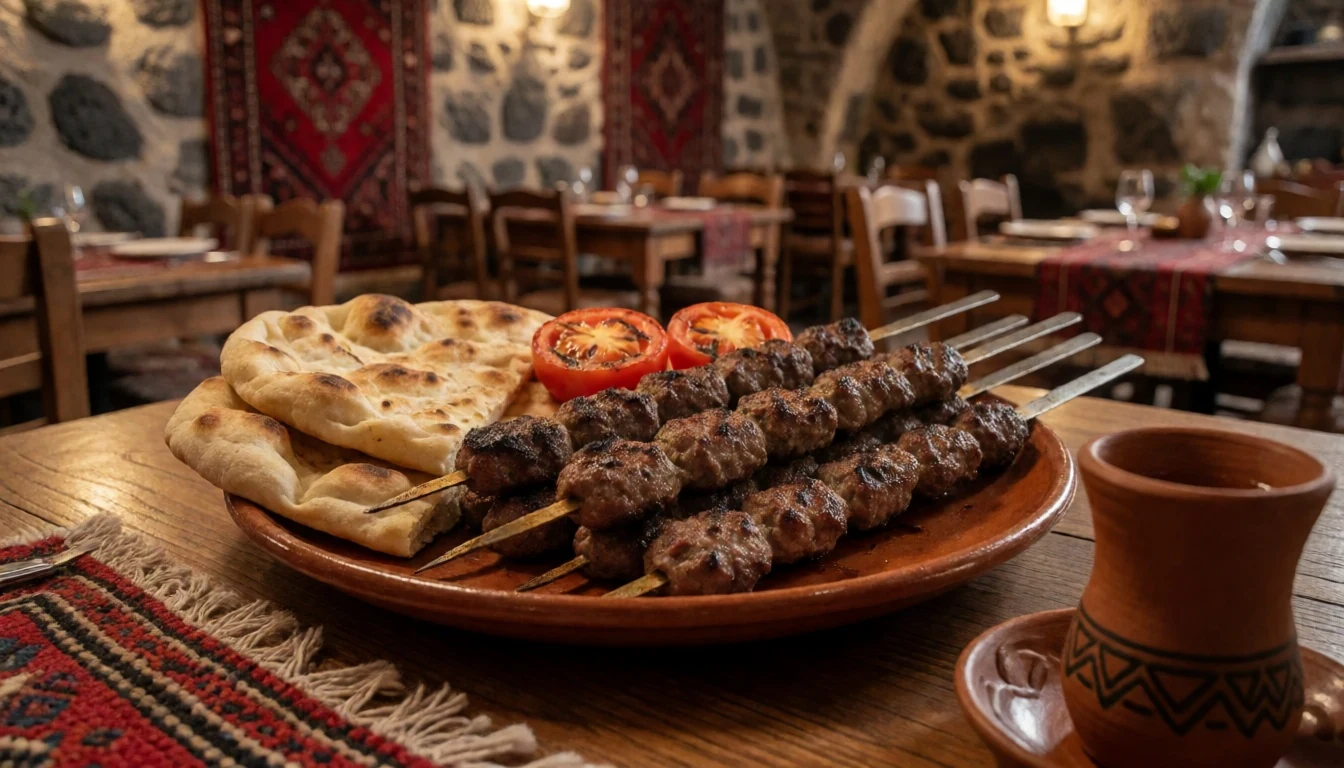
- Local Herb Stews — Village family-run eateries
Sample hearty, slow-cooked stews flavoured with wild mountain herbs, dried limes, and tender pieces of meat, traditionally prepared in homes and served in regional eateries. - Fresh Mountain Doogh — Village teahouses and shops
Refresh yourself with a glass of traditional chilled yoghurt drink lightly salted and mixed with mountain mint, perfect after a long walk up the village steps.
Plan it
Best time. May to September offers the most pleasant weather for exploring the village on foot, with warm days and cool evenings; winters are very cold with heavy snow.
How long. 1–2
Getting there. Fly into Tabriz, then take a taxi or drive by car south to Osku, continuing onwards for about 18 km along the paved road to Kandovan.
Budget. mid
Tips
- Wear sturdy walking shoes with strong grip for the steep, uneven volcanic stone paths
- Bring cash in Iranian Rials as card payment facilities are rarely available in the village
- Arrive early in the morning to experience the village before day-trippers arrive from Tabriz
- Carry a light jacket as mountain temperatures can drop quickly even during summer afternoons
Etiquette
- Always ask permission before photographing local residents or their private homes
- Observe modest dress codes by wearing long trousers and ensuring hair is covered with a scarf for women
- Remove your shoes if invited inside a private rock dwelling
Nearby
Sources
- Wikidata Q1818028 (CC0)
- Wikipedia (CC BY-SA 4.0)
- Wikivoyage (CC BY-SA 4.0)
- Photo 1 (CC BY-SA 4.0)
- Photo 2 (CC BY-SA 2.5)
- Photo 3 (CC BY 3.0)
- Photo 4 (CC BY 3.0)


