Tabriz
Tabriz, Iran
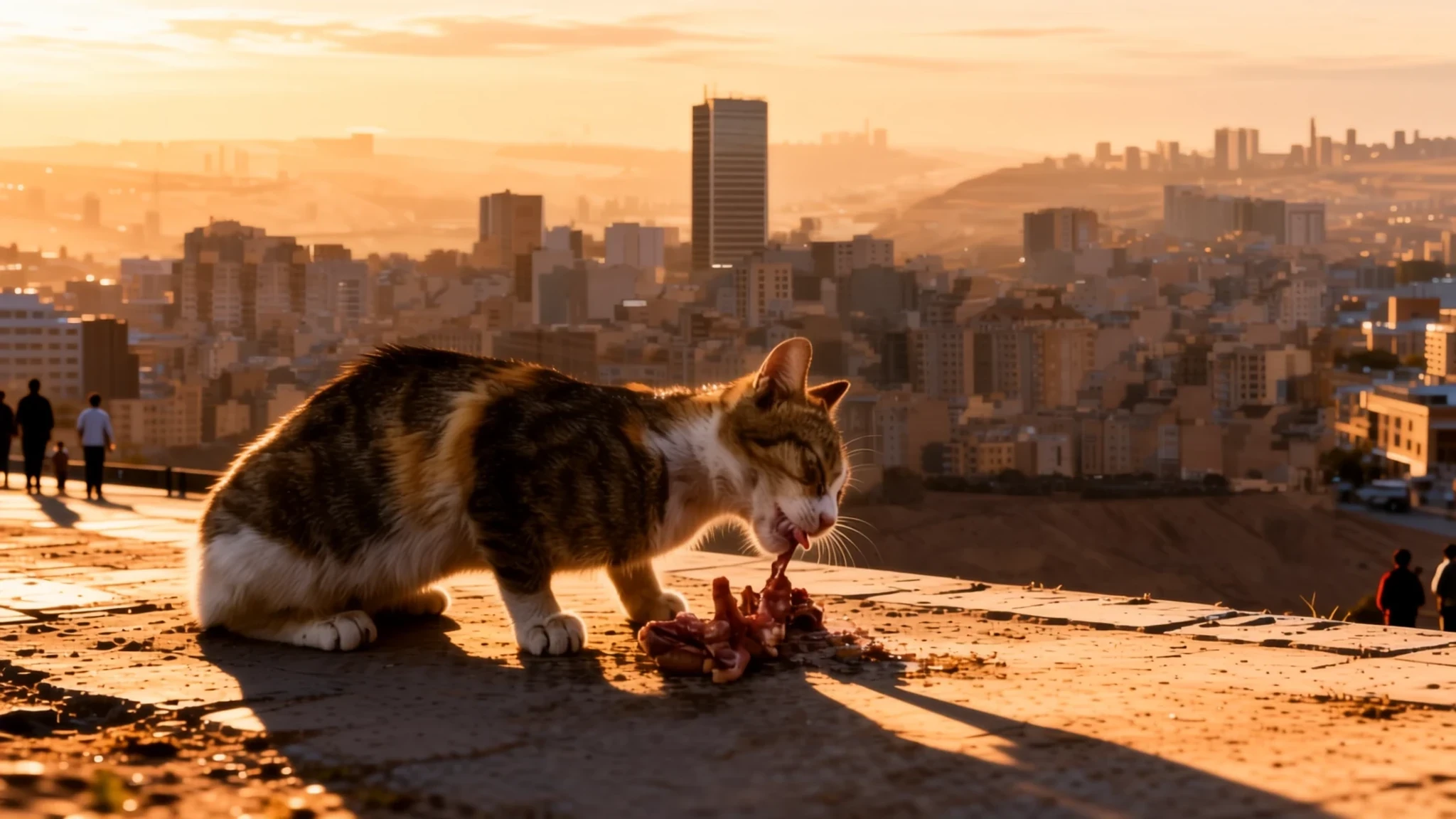
Tabriz rewards slow travel: a vast covered bazaar, a city of carpet weavers and volcanic mountains on the horizon.
The place
Tabriz lies in the Quru River valley in northwestern Iran, within the historic Azerbaijan region. Tabriz sits in a valley ringed by chains of volcanic cones from the Sahand and Eynali ranges. The valley widens into a plain that dips gently toward the east shore of Lake Urmia, roughly 60 km west. The city is the capital of East Azerbaijan Province and the largest economic hub in the northwest, home to roughly 1.56 million people. At about 1,340 metres above sea level it is cooler than the desert cities further south, yet summers are hot and dry, with July the peak, and winters bring snow and cold nights. The Armenian and Azerbaijani borders are around 130 km away, which gives the city a border-region character, with trade and traffic moving in several directions. Most residents speak Iranian Azerbaijani at home and Persian as a second language, so both languages are heard in shops and offices. Industry is heavy here, with cars, machine tools, refineries, petrochemicals, textiles and cement all important. Even so, the city is best known for its handicrafts, above all hand-woven carpets and jewellery. Old lanes, a sprawling bazaar and a few restored monuments sit beside modern apartment blocks, so the city feels like a working place rather than a staged one.
Its story
The early history of Tabriz is thinly documented, and much of what is known comes from later writers and from scattered inscriptions. The oldest physical trace so far is an Iron Age graveyard, excavated in recent decades on the northern side of the Blue Mosque. The city appears by an early name in an Assyrian inscription of 714 BC, where the Assyrian king Sargon II is recorded as using a form of the name Tauris. Some writers have placed the biblical Garden of Eden near Tabriz, an idea promoted by the Egyptologist David Rohl. The archaeologist Eric Cline judged the suggestion possible but no more likely than rival hypotheses, and it has not won wide acceptance among scholars. Rulers from the Atropates era onward chose the area as a seat of power. Over the centuries the city was damaged repeatedly by earthquakes and by invading armies. The present urban core is thought to date either to the early Sasanian period, in the 3rd or 4th century AD, or to the 7th century. Later the city passed under a series of dynasties, among them the Eldiguzids, the Ilkhanate, the Qara Qoyunlu, the Aq Qoyunlu and the Safavids. Its position on the western end of the Silk Road made it a commercial meeting point, and that role shaped the bazaar and the merchant houses that still stand. Earthquakes continued to reshape the city. The Blue Mosque survives mainly as its entrance after the damage of the late eighteenth century, and its reconstruction in the twentieth century shows how repeatedly the city has been rebuilt.
What to see
- Saat Tower — City centre
The Saat Tower, or clock tower, is the symbol most people associate with Tabriz. It once served as the main office of the city municipality, and it now houses a municipality museum. The displays include photographs and objects from the city's history, and the basement is the part to head for first. The tower stands in the centre, so it makes a practical starting point for walking to the bazaar.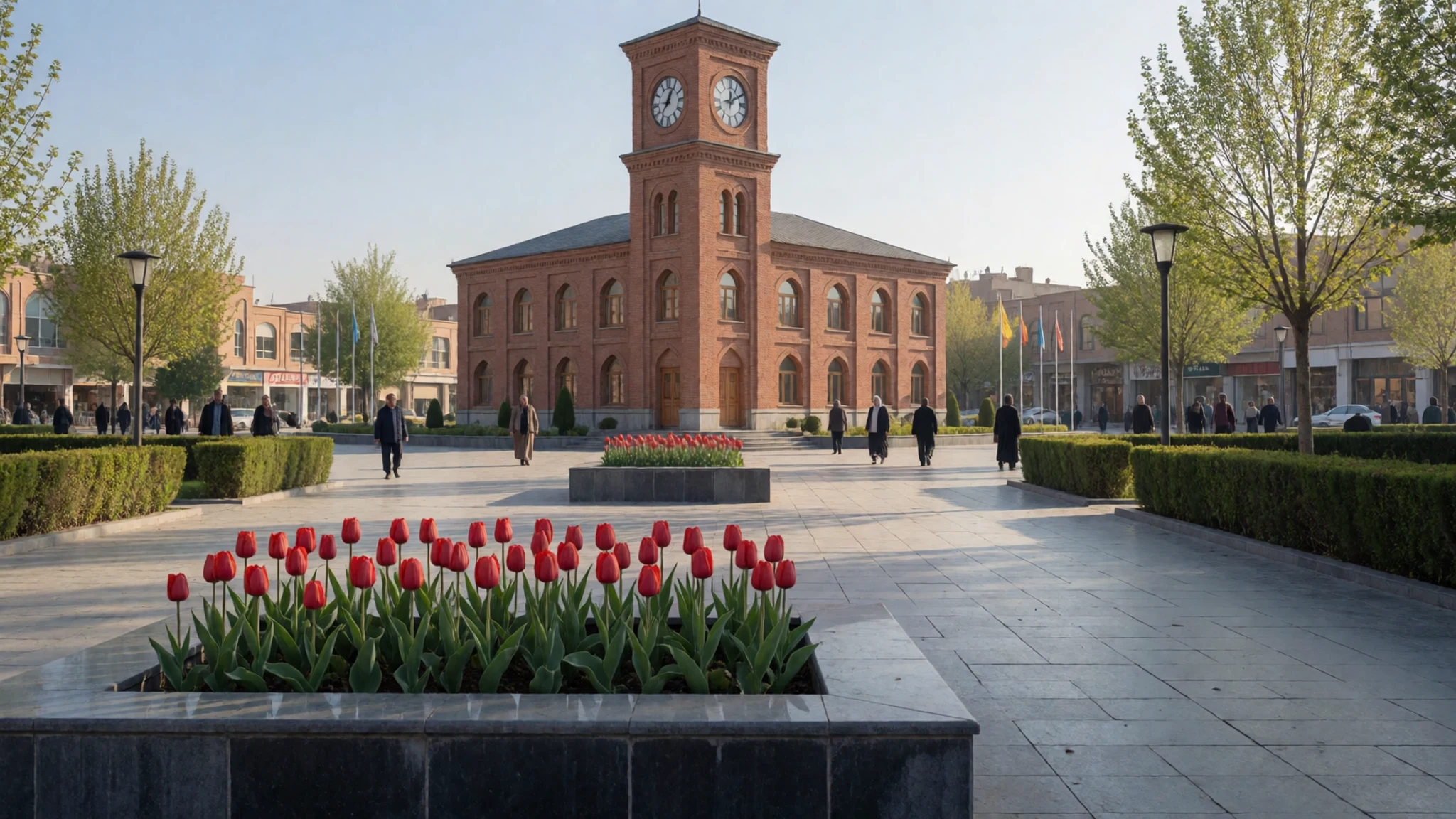
- Blue Mosque (Goy Machid) — North of the centre
The Blue Mosque was built in 1465 and was once admired for its blue tiles. An earthquake in 1778 severely damaged it, leaving only the entrance iwan standing. The Iranian Ministry of Culture rebuilt much of the structure in the 1970s. Visit it for the entrance and the surviving tilework, and dress modestly, since it remains an active place of worship.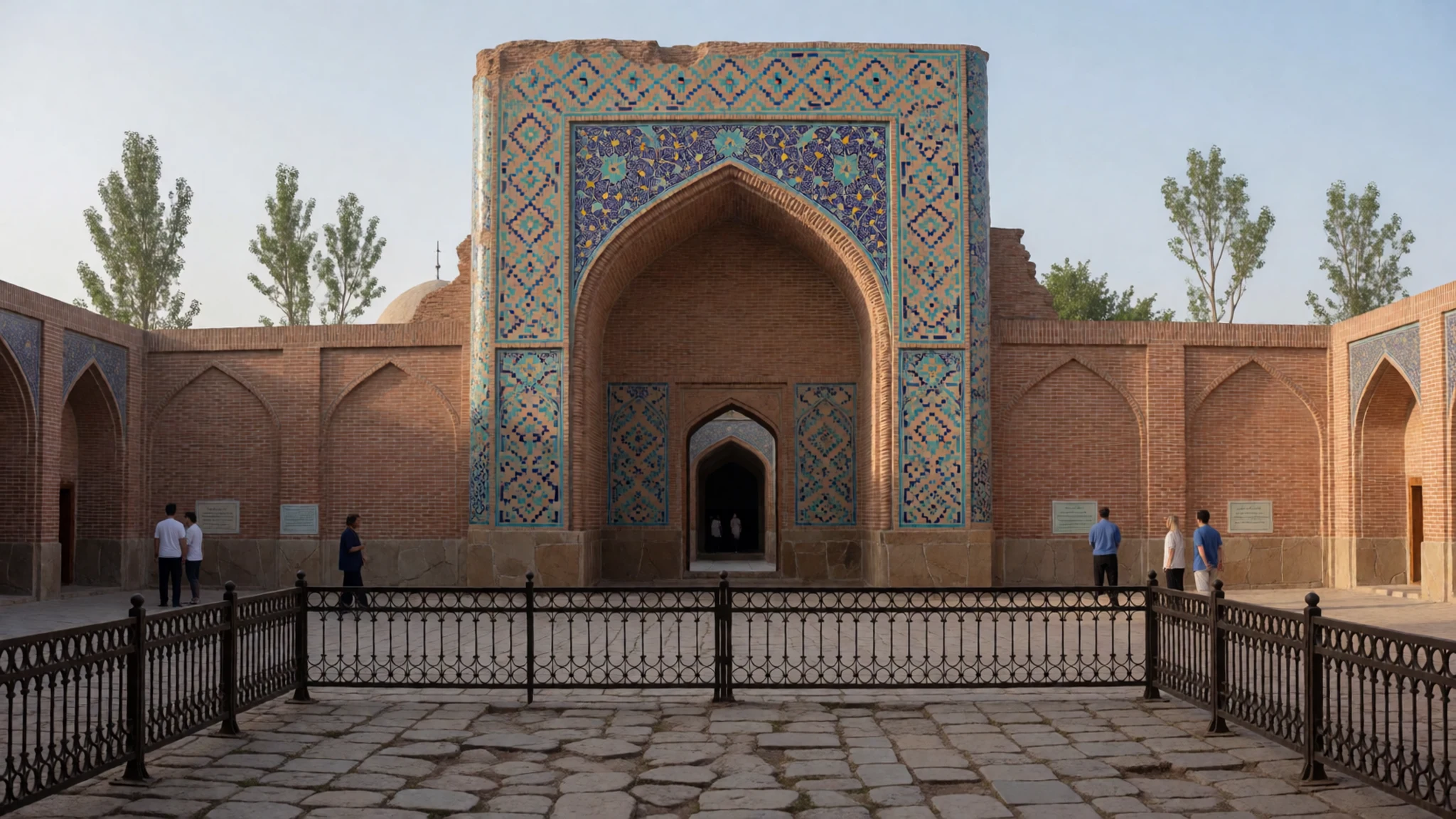
- Bazaar of Tabriz — Old centre
The bazaar is one of the oldest in the Middle East and is described in the listings as the largest covered bazaar in the world. It was inscribed as a UNESCO World Heritage Site in 2010. Its vaulted passages hold carpet dealers, jewellers, spice sellers and tailors, and the Mozaffariyeh section is especially photogenic. Go in the late morning when the shops are fully open, and expect a maze of lanes.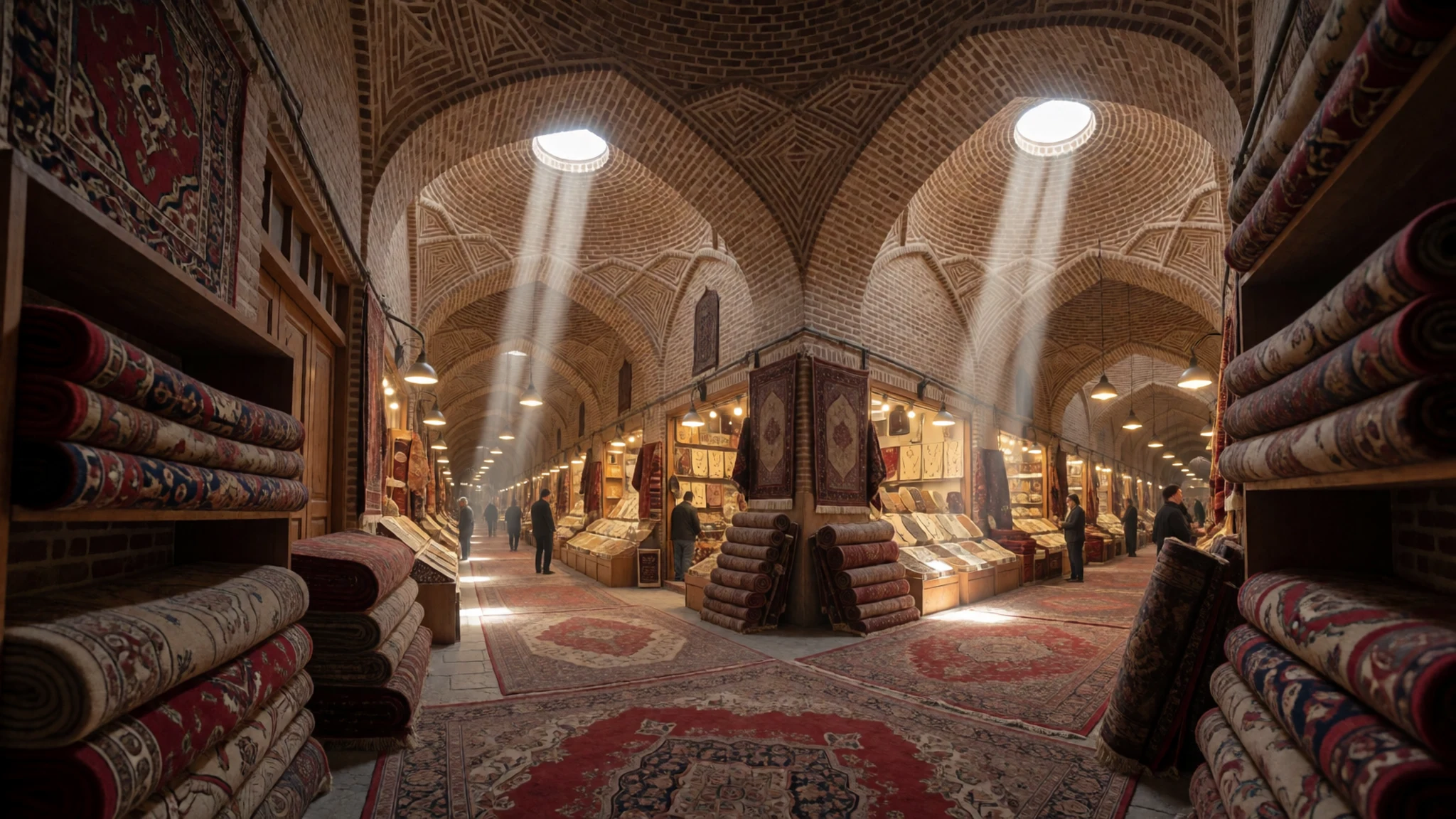
- Ark-e-Alishah (Ark Citadel) — Old centre
The Ark-e-Alishah is the surviving remnant of the city's citadel and city walls. The standing wall is about 28 m tall and gives a clear sense of the defensive scale the city once needed. The site is largely a ruin rather than a restored palace, so come for the walls and the views over the old quarter rather than for interiors.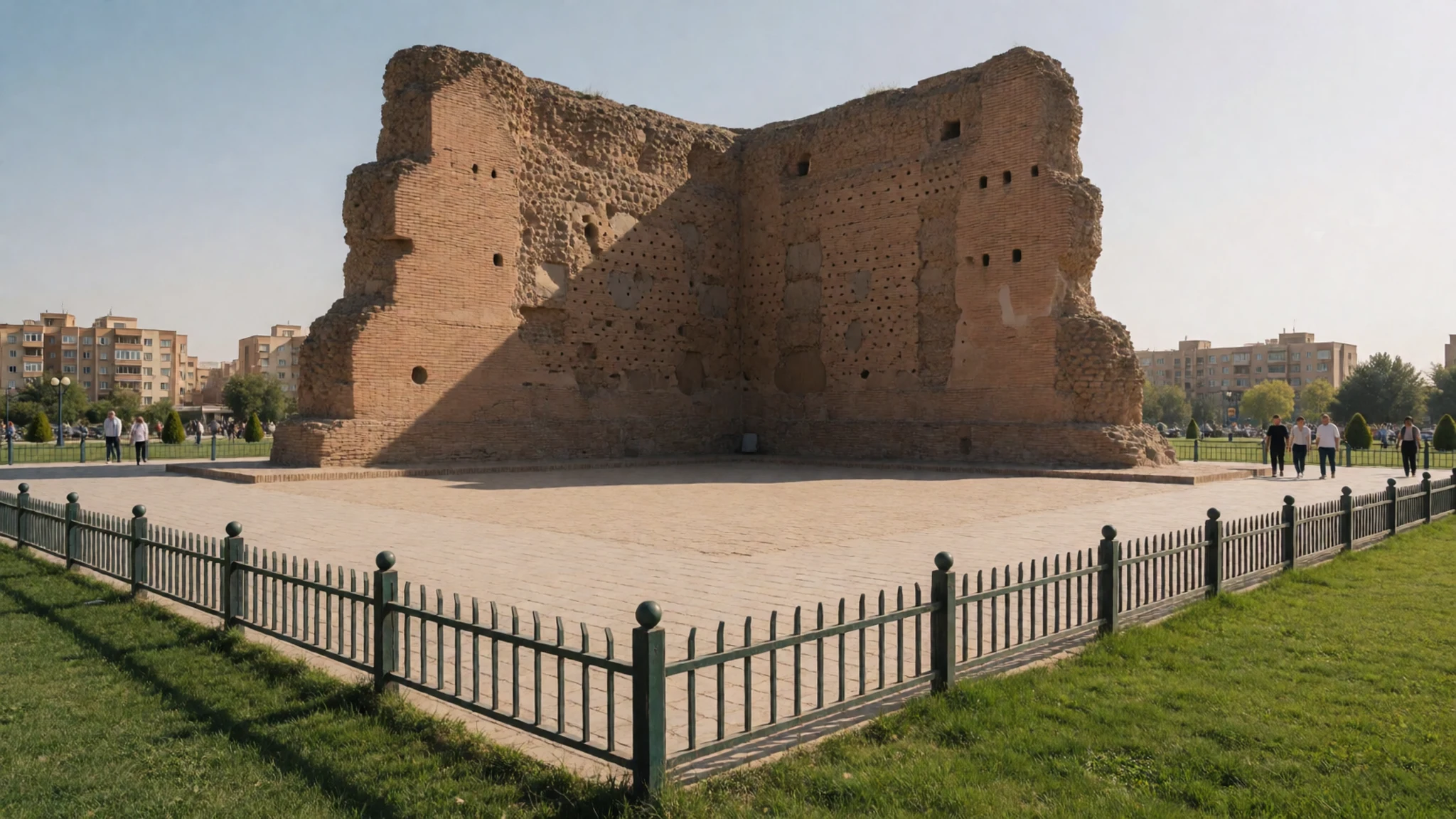
- El Goli (Shah Goli) — South of the centre
El Goli is a pool and small building set in a park on the southern edge of the city. It was once a summer palace for rulers of Tabriz and is now a suburban park with a square artificial pond. It is a relaxed place for an afternoon walk, and families gather here in the warmer months.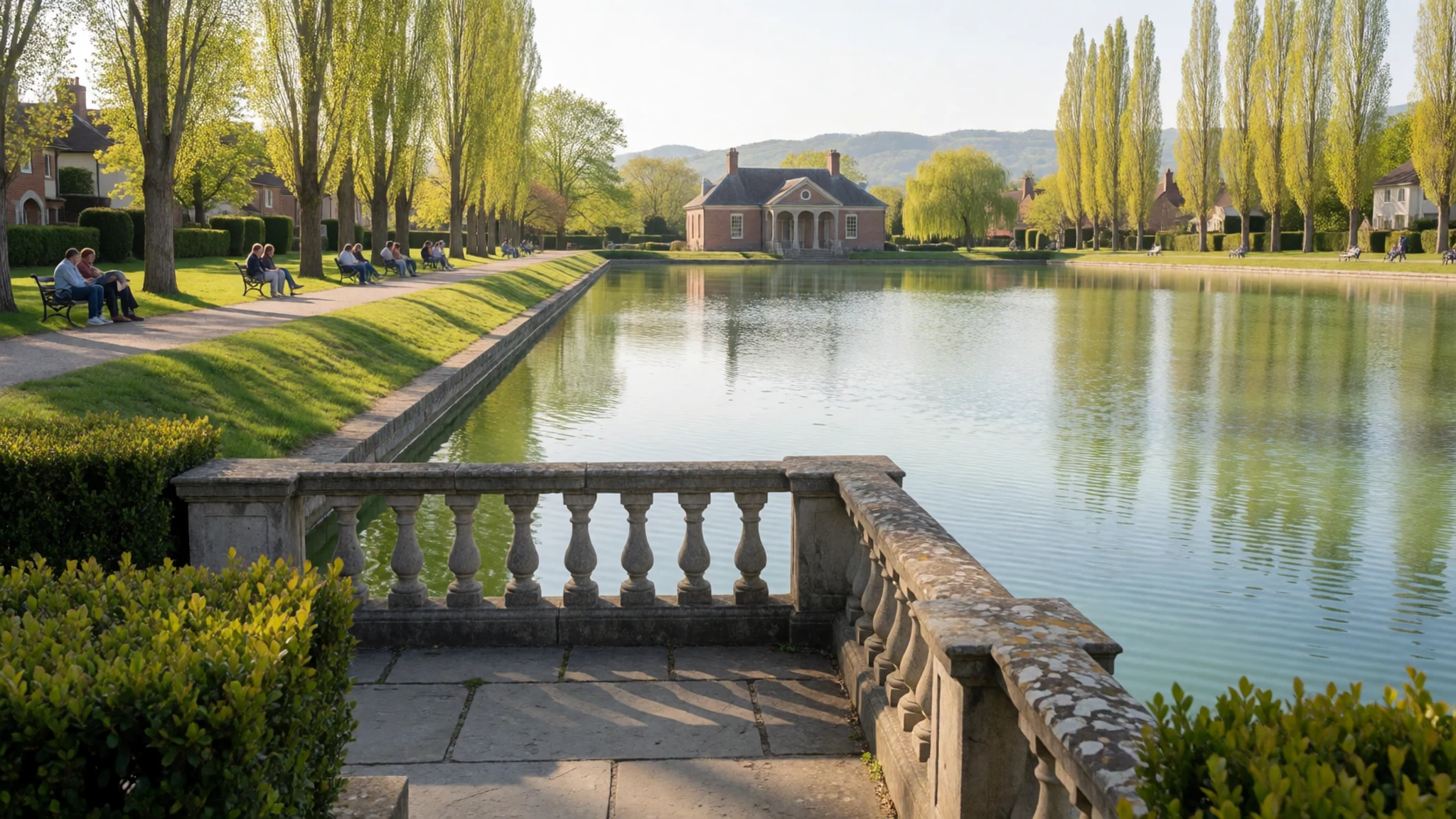
Culture
Tabriz has long been a hub of commerce, art and learning, shaped by its place at the western end of the Silk Road. Merchants, craftspeople and scholars passed through for centuries, and that exchange left a city comfortable with visitors from many places. Bilingualism is part of daily life, with Iranian Azerbaijani spoken at home and in the markets and Persian used widely in formal settings. Local pride often centres on the mountains that frame the city and on its poetry, and people are happy to talk about both if you show an interest. Hospitality is a strong value, so accepting tea or a snack in a shop is a common courtesy. Religious life runs alongside commercial life, and the call to prayer shapes the rhythm of the day. Respect is shown through modest dress, quiet conduct inside mosques, and courteous greetings in the bazaar. When you enter a mosque or shrine, remove your shoes at the door, cover your shoulders and knees, and ask before photographing anyone who is praying.
What to wear
Traditional dress in Tabriz follows the wider Azerbaijani and Persian pattern. Women have traditionally worn long, loose coats and headscarves, and older women may still wear a chador in some neighbourhoods. The region's textile heritage is closely tied to carpets, where hand-knotted wool and silk designs have been made for generations, and to fine fabrics woven for the merchant trade. Today most people in the city dress in ordinary modern clothing, with jeans, shirts and coats in winter, and young women often wear a loose headscarf pushed back on the head. Men wear trousers and shirts, and a jacket is common for work and for visits. A visitor should dress for a continental climate: layers for cool evenings and snow in winter, light fabrics in summer. Women should carry a headscarf for mosques and shrines, and both men and women should keep shoulders and knees covered in religious places. Long trousers or a knee-length skirt with a loose top suit the city well. Comfortable shoes with good grip matter more than fashion, because the old bazaar lanes are uneven and the walk to the citadel involves rough paving.
What to eat
- Kabab with rice — A chelowkebabi, the simple grill house in the city centre
Kabab and rice is the staple of Tabriz. Plain grilled meat, often lamb or beef, comes with saffron rice and grilled tomato. Order it in a modest chelowkebabi, the simple grill houses that serve little else. Expect limited choice in these places, but the quality of the grilling is usually the point.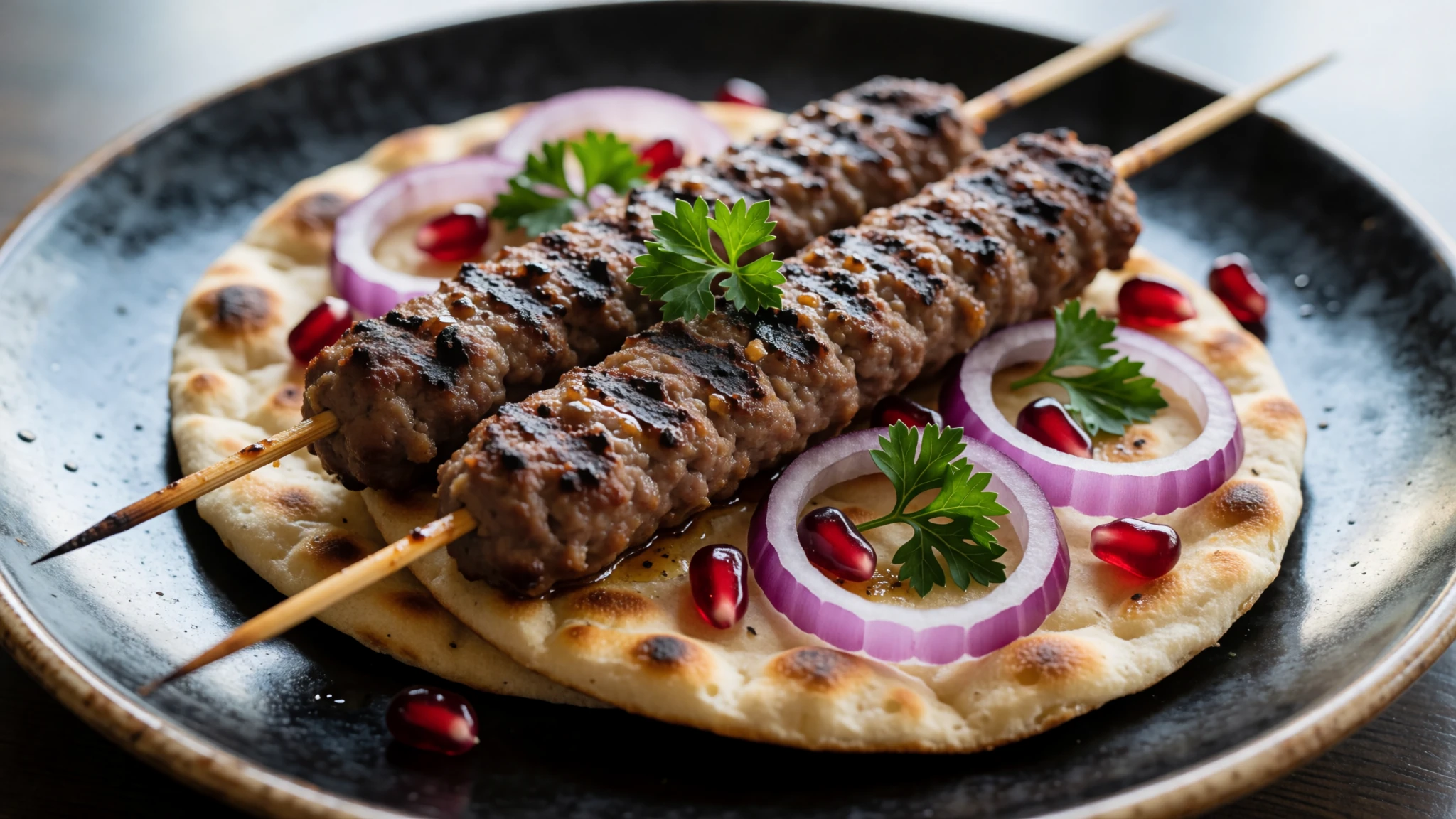
- Kufteh Tabrizi — Traditional restaurants near the bazaar
Kufteh Tabrizi is the local meatball, large and often served in a rich broth with herbs and split peas. It is a dish that rewards patience and a bowl of plain bread. Many restaurants serve it, and it is a good order for a slow lunch.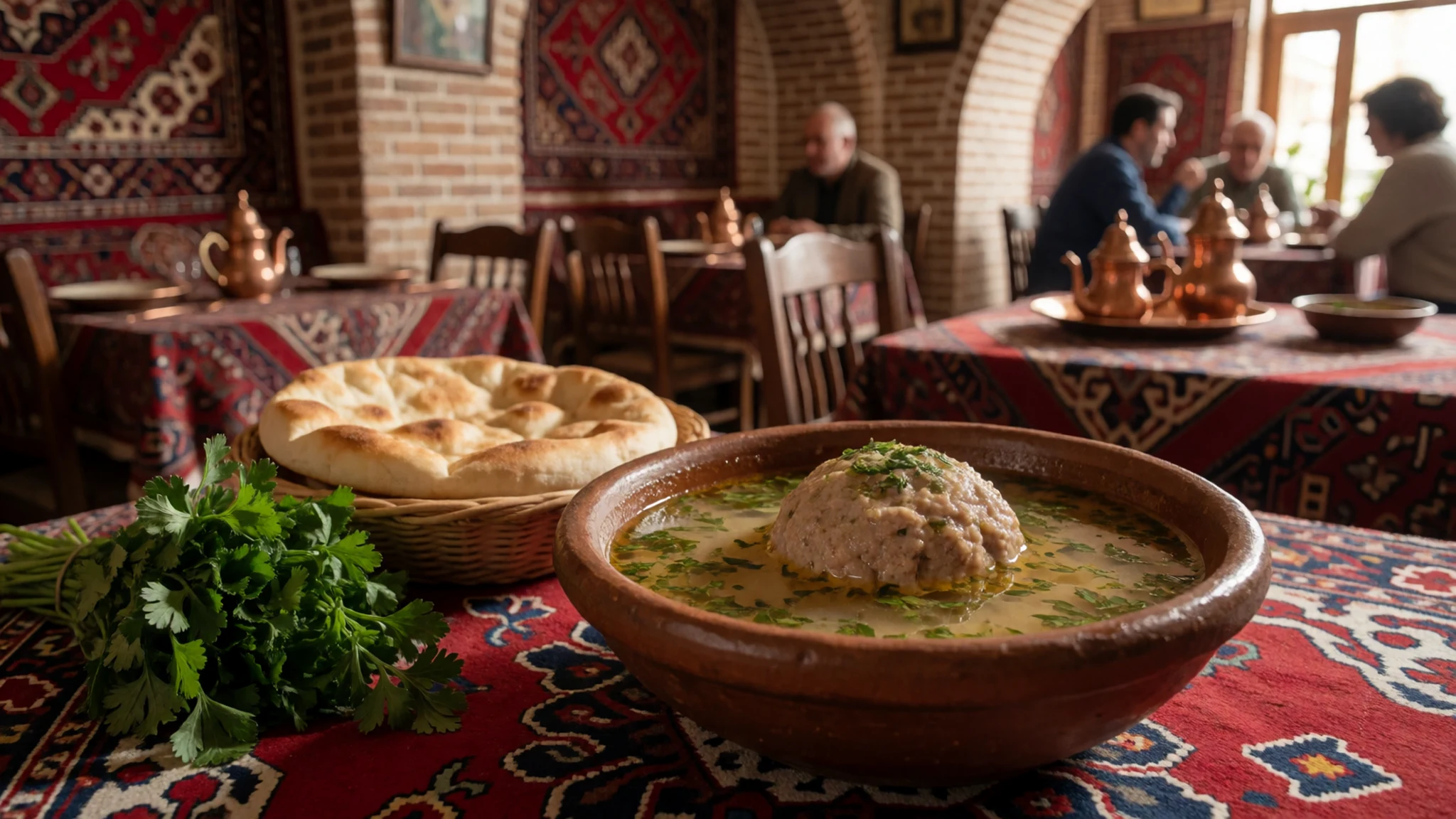
- Abgousht — A historic bath converted to a traditional restaurant in the city centre
Abgousht is a slow-cooked broth of lamb, chickpeas, beans and potato. It is eaten in two stages, with the broth first and the meat and vegetables mashed afterwards with flatbread. It is traditionally a warming winter dish, and it is worth ordering in the colder months.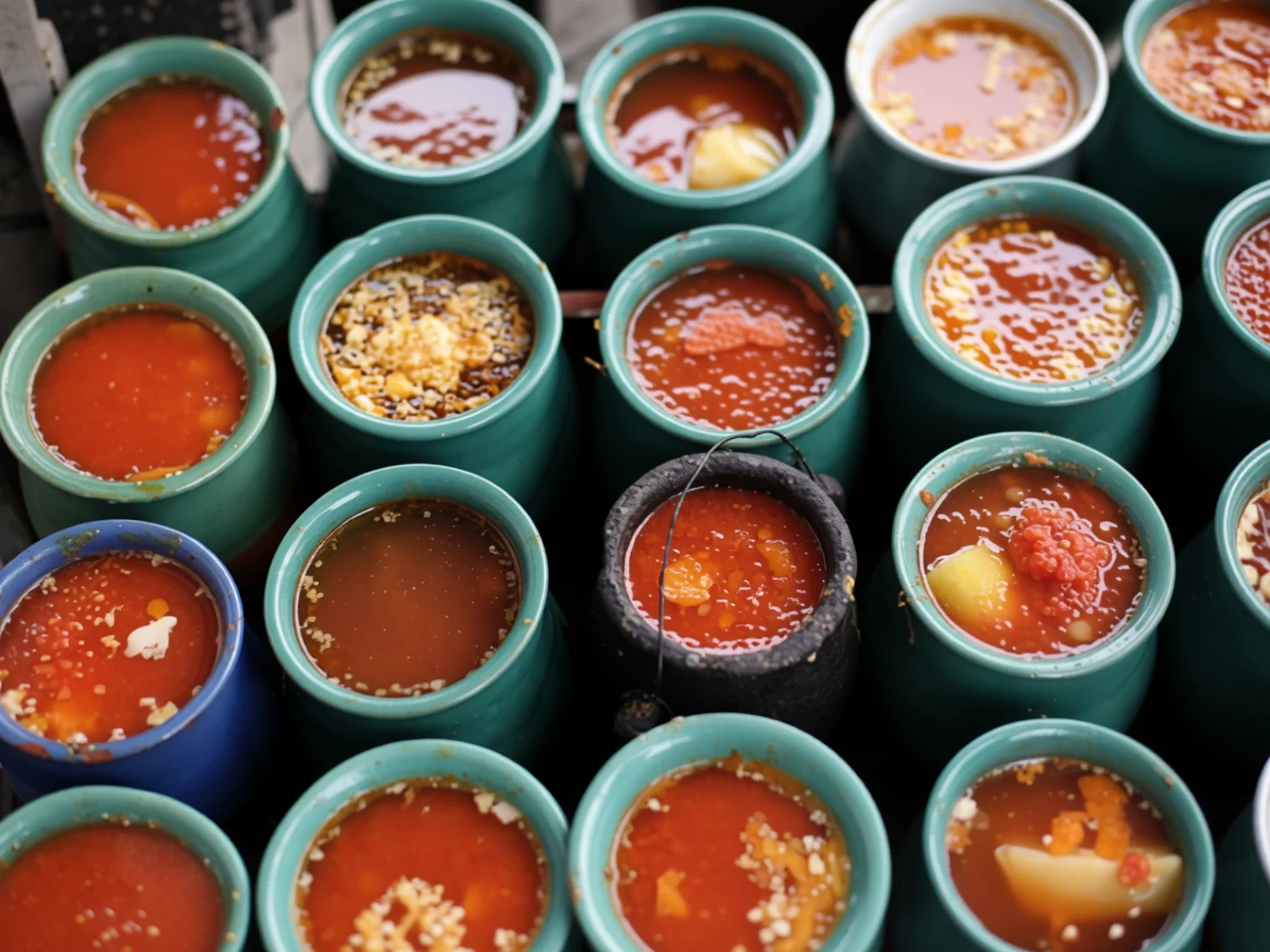
- Snacks from street vendors — The square at El Goli in late spring and summer
In late spring and summer, food vendors set up around the main square at El Goli. Expect simple grilled corn, dried fruit and tea, and the atmosphere is relaxed in the evening. Bring small notes for these stalls, since they rarely take cards.
Plan it
Best time. March–April, when the weather is mild and the parks are green, and October–November, when the autumn light is clear. Summers are hot and dry, with July the peak, and winters are cold with snow, so the shoulder months suit walking best.
How long. 2–3
Getting there. Fly into Tabriz airport from Tehran or Istanbul, then take airport bus 136 from Motahhari Street, which runs every 30–40 minutes, or a taxi. By rail, Tabriz is about 742 km from Tehran, and the highway connects the two cities too.
Budget. low
Tips
- Book domestic flights and rail seats early for weekends and holidays
- Visit the bazaar late morning and aim to leave before the afternoon rush
- Carry cash in small notes for street stalls and small shops
- Start walking outings in the early morning or late afternoon to avoid the heat of summer
- Bring a water bottle and layers, since the city is cold in winter and bright in summer
Etiquette
- Carry a headscarf for mosques and shrines, and remove shoes at the door
- Ask before photographing people, especially women and families
- Use your right hand for giving and receiving
Nearby
Sources
- Wikidata Q80053 (CC0)
- Wikipedia: Tabriz (CC BY-SA 4.0)
- Wikivoyage: Tabriz (CC BY-SA 4.0)
- Panoramic view (photos/01-panorama-of-tabriz.jpg) (Public domain)
- Tabriz Municipality Sa'at Tower (photos/02-tabriz-municipality-sa-at-tower.jpg) (CC BY 3.0)
- Tabriz Garusi House (photos/03-tabriz-garusi-house.jpg) (CC BY-SA 4.0)
- Arg Alishah (photos/04-arg-alishah.png) (CC BY-SA 4.0)
- Goymachid (photos/05-goymachid.jpg) (CC BY-SA 4.0)
- Mozaffariyeh, Grand Bazzar of Tabriz (photos/06-mozaffariyeh-grand-bazzar-of-tabriz-iran.jpg) (CC BY-SA 4.0)
- Tabriz, Iran 2013 (photos/07-tabriz-iran-2013-31-15002673356.jpg) (CC BY 2.5)
- 16th century map of Tabriz (photos/08-tabriz-16.png) (CC BY 3.0)


