Jungfrau
Jungfrau, Switzerland
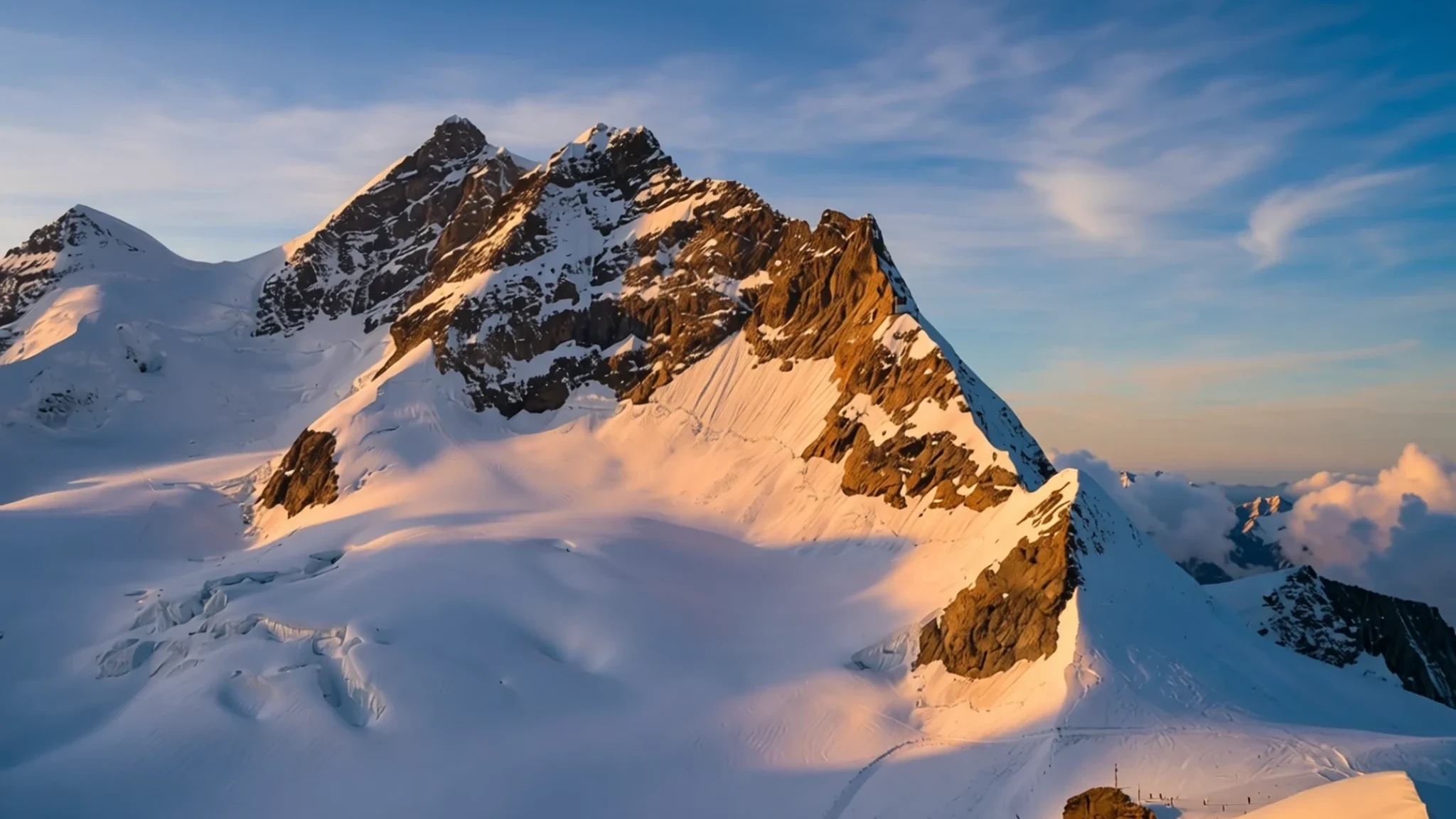
Rise above deep Alpine valleys on historic mountain railways to stand near towering glacial summits.
The place
Jungfrau stands as a towering presence within the Bernese Alps, forming an imposing wall of rock and ice that overlooks the Swiss landscape. Positioned between the canton of Bern and the canton of Valais, this massive peak dominates the horizon alongside neighbouring giants. The surrounding valley floor below features chalet-style buildings and wide thoroughfares that draw travellers from across the globe. Cascading streams tumble from hanging valleys down sheer cliffs, feeding the rivers that carve through the green meadows. On clear days, the white slopes contrast sharply against the deep blue sky, creating a stark and unforgettable Alpine panorama. The entire region functions as a major hub for outdoor exploration, connecting historic mountain railways with extensive networks of hiking trails that wind through high passes and glacial valleys. Visitors arriving in the area encounter a landscape shaped entirely by water, ice, and geological forces that continue to draw mountaineers and sightseers alike. Whether viewed from the valley floor or from high mountain stations, the peak remains an iconic symbol of the Swiss uplands, anchoring a terrain defined by dramatic vertical relief and deep seasonal shifts.
Its story
Jungfrau first yielded to human climbers when local ambition met the high glaciers of the Bernese Alps. Early attempts required grueling expeditions across treacherous ice fields and high passes before the summit was finally attained in the early nineteenth century by determined local hunters and scholars. For decades, reaching the highest points remained the exclusive domain of skilled mountaineers equipped with ropes and crampons. Everything changed when visionaries conceived an audacious engineering project to carve a railway tunnel straight through the rock of the Eiger and Mönch. Construction teams labored for years in harsh alpine conditions to lay tracks through the interior of the mountain, ultimately creating a subterranean route that delivered passengers right to the high saddle. This engineering feat transformed an inaccessible realm of ice into a destination reachable by train. The opening of the high-altitude station connected ordinary travellers directly to the glacial expanses of the south side, cementing the peak's status as a cornerstone of alpine tourism. Today, the historic rail line carries thousands of visitors daily through the heart of the stone, following the exact route charted by early twentieth-century builders who sought to tame the highest ridges.
What to see
- Trümmelbach Falls — Lower Lauterbrunnen Valley
Trümmelbach Falls consist of ten subterranean glacial waterfalls hidden inside the mountain. Visitors can ride an interior funicular or walk up to viewing galleries to watch torrents of meltwater roar through narrow rock gorges carved over centuries.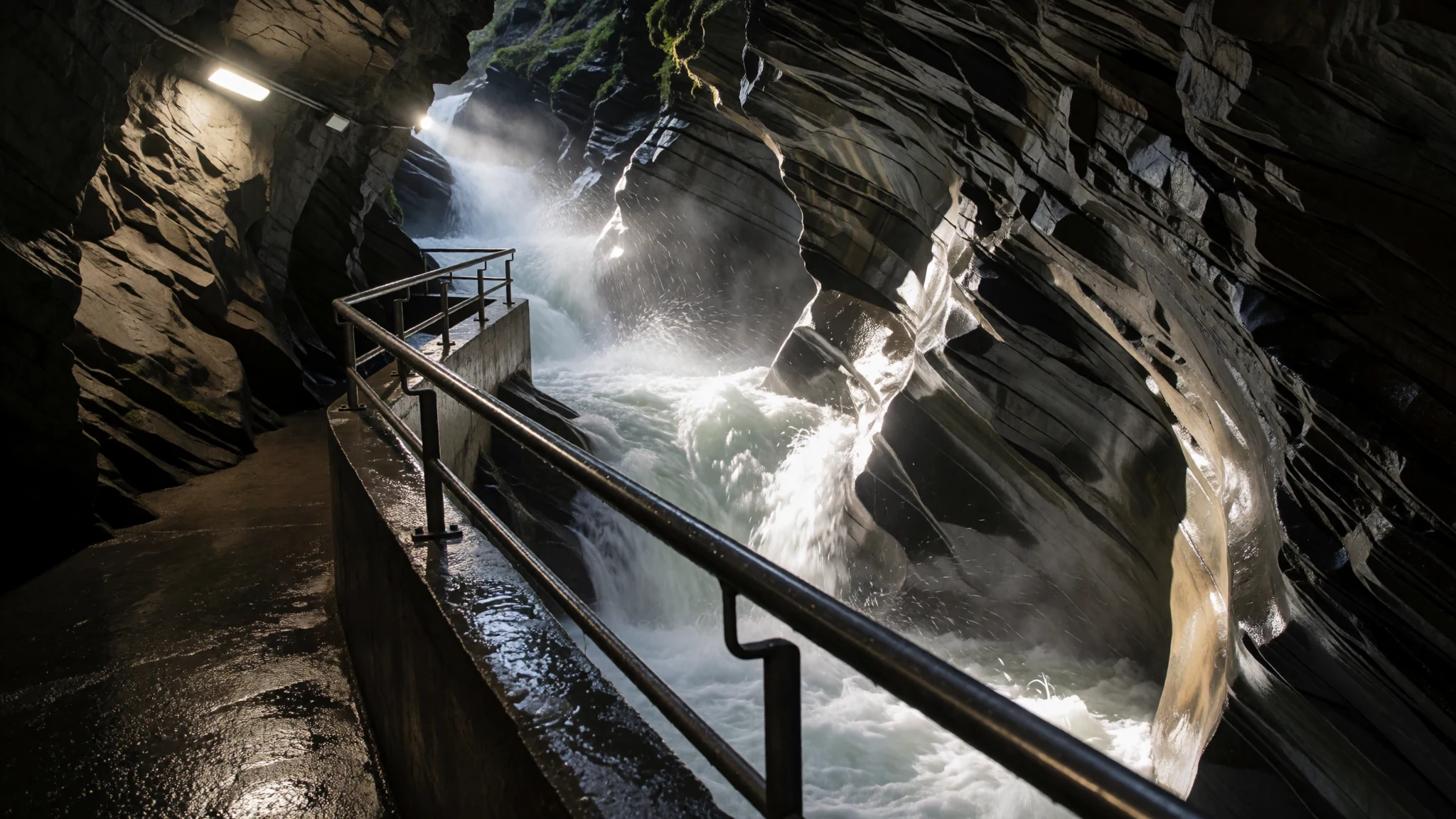
- Staubbach Falls — Lauterbrunnen Village Edge
Staubbach Falls drop in a single sheer ribbon from a high hanging valley directly into the main basin below. Travellers can follow a short path from the village floor to enter a rock tunnel and stand on a ledge directly behind the crashing water.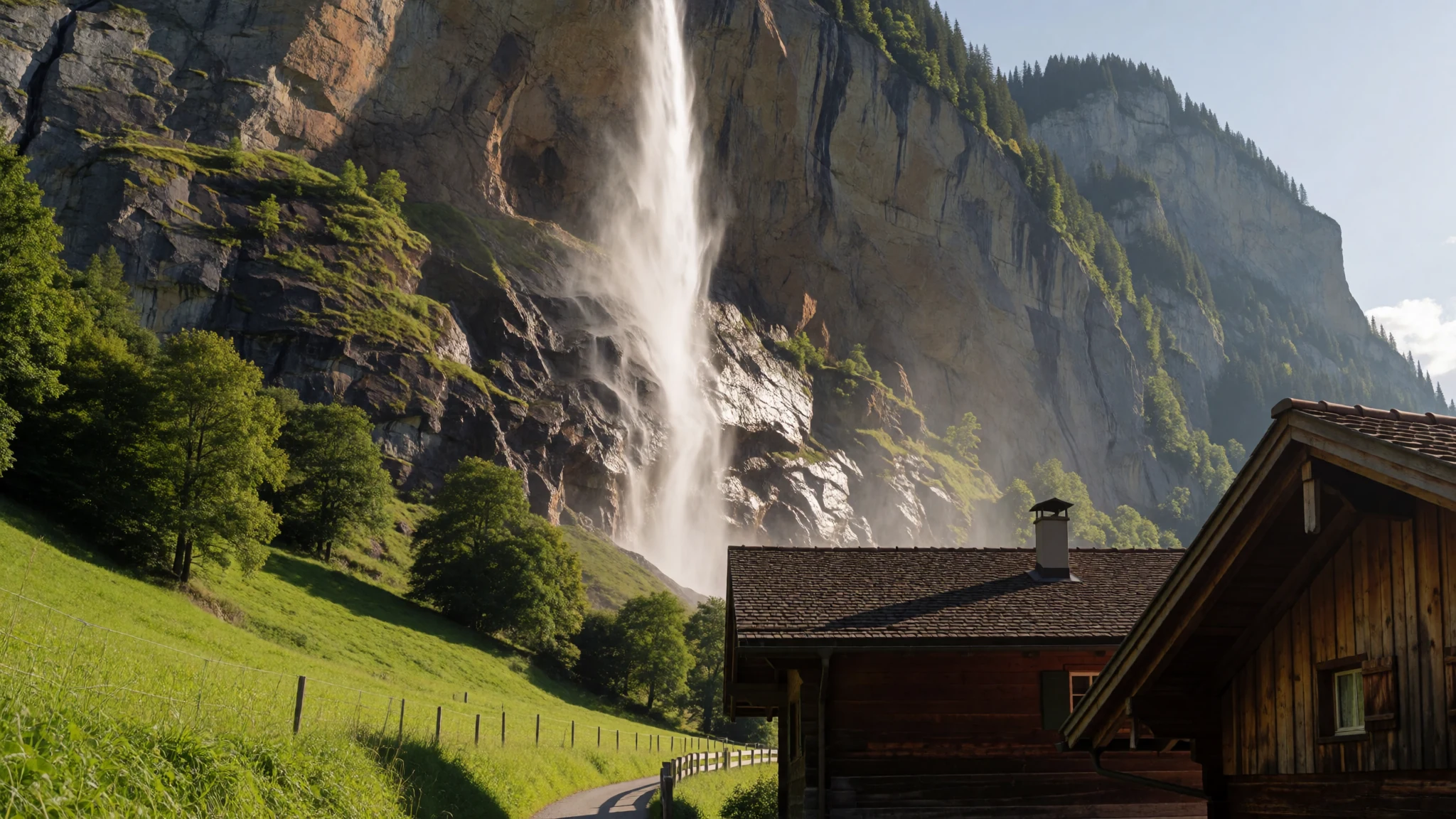
- Männlichen Ridge — Above the Valley
Männlichen Ridge offers expansive viewpoints across the entire valley toward the great wall of peaks. Cable cars transport visitors up the steep slopes from the valley floor, providing direct access to panoramic walking trails that stretch across the alpine meadows.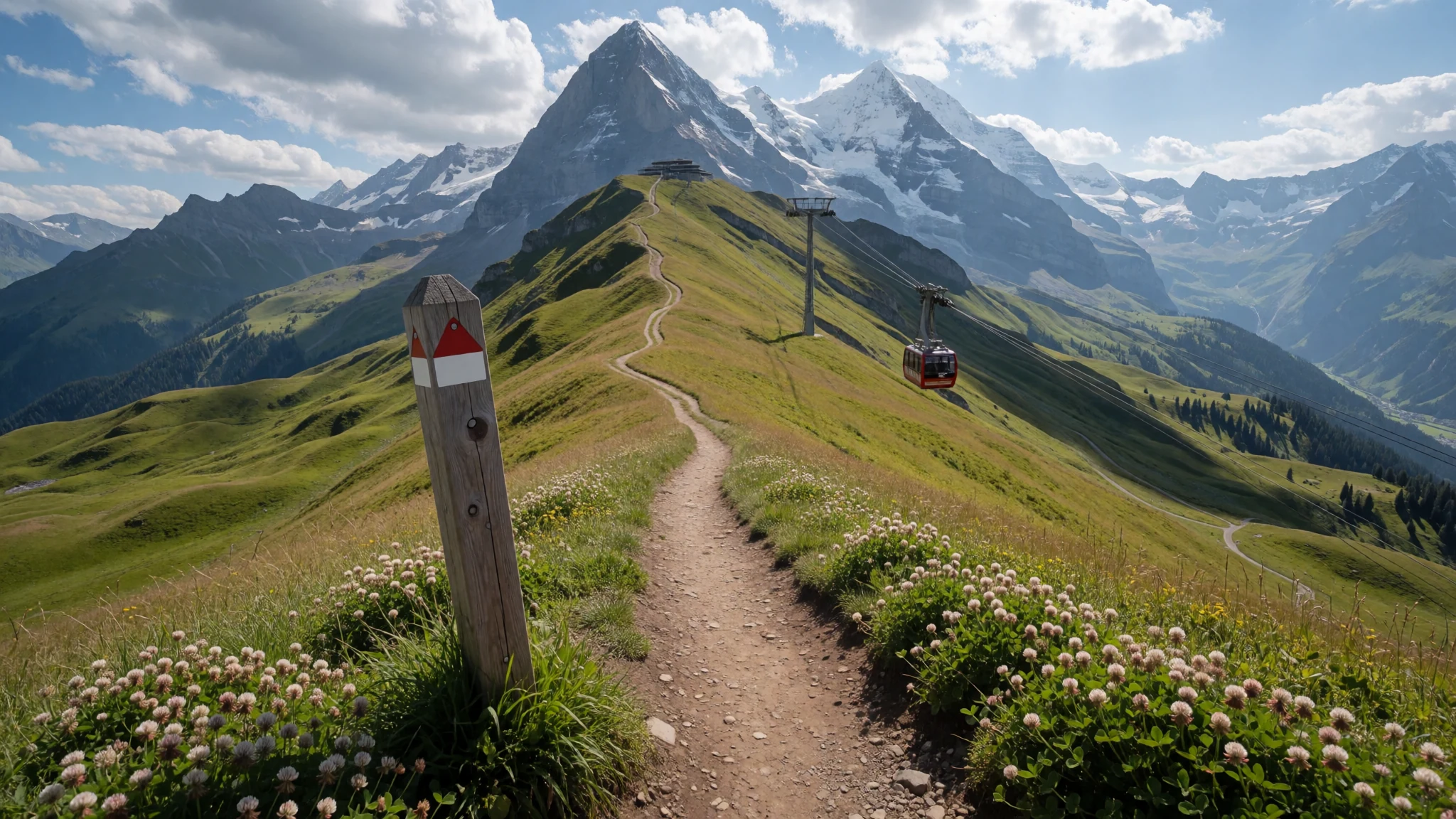
- Stechelberg — Southern Valley End
Stechelberg sits at the tranquil southern end of the valley where towering vertical walls close in around the river. This quiet area serves as the gateway for cable cars heading up toward remote cliff hamlets and provides peaceful walking routes away from the main crowds.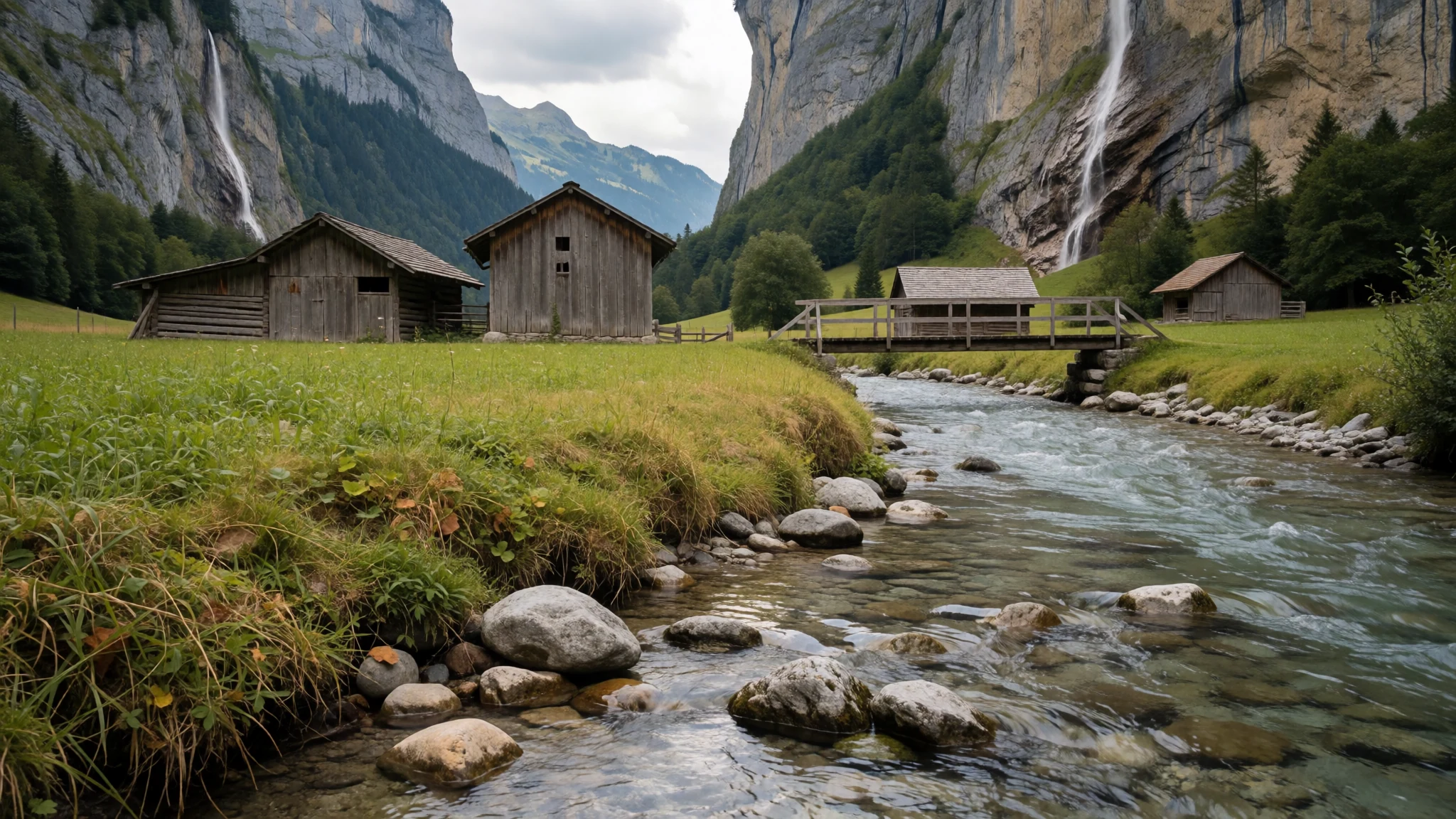
Culture
Jungfrau and its surrounding valleys are deeply rooted in Swiss-German alpine traditions, where farming communities have worked steep mountain pastures for generations. Traditional local life revolves around seasonal cattle migrations, cooperative dairy farming, and community festivals celebrating the return of herds from high pastures. Woodcarving and traditional textile crafts remain visible in village workshops, reflecting a long history of self-reliance in a demanding mountain environment. Despite the heavy influx of international visitors, local residents maintain a strong sense of regional identity, preserving regional dialects and alpine customs through local music and communal gatherings. Visitors often notice a quiet, orderly rhythm in the villages, where punctuality and respect for nature are paramount. When entering smaller alpine hamlets or local establishments, always greet shopkeepers and hosts with a polite local greeting before starting a conversation.
What to wear
Traditional dress in the Jungfrau region reflects practical alpine living, featuring heavy woollen jackets, embroidered vests, and sturdy leather shoes designed for rugged terrain. Historically, these garments were crafted from locally spun sheep's wool and flax to withstand cold mountain winds and wet weather, and they are still worn today during regional festivals, musical gatherings, and national holidays. In everyday modern life, locals and residents dress in practical, weather-appropriate outdoor clothing such as fleece jackets, jeans, and durable walking shoes suited for changeable weather. Visitors exploring the area should pack in layers, including a waterproof outer shell, windproof jackets, and broken-in hiking boots with reliable grip for gravel and rock paths. Even during summer months, high mountain excursions require warm garments, gloves, and sturdy footwear because temperatures at elevated stations can drop suddenly.
What to eat
- Swiss Cheese Fondue — Traditional alpine restaurants along the main street
Swiss cheese fondue is a rich, bubbling pot of melted local cheeses served with cubed crusty bread for dipping. It is commonly found in traditional alpine restaurants and village inns throughout the valley.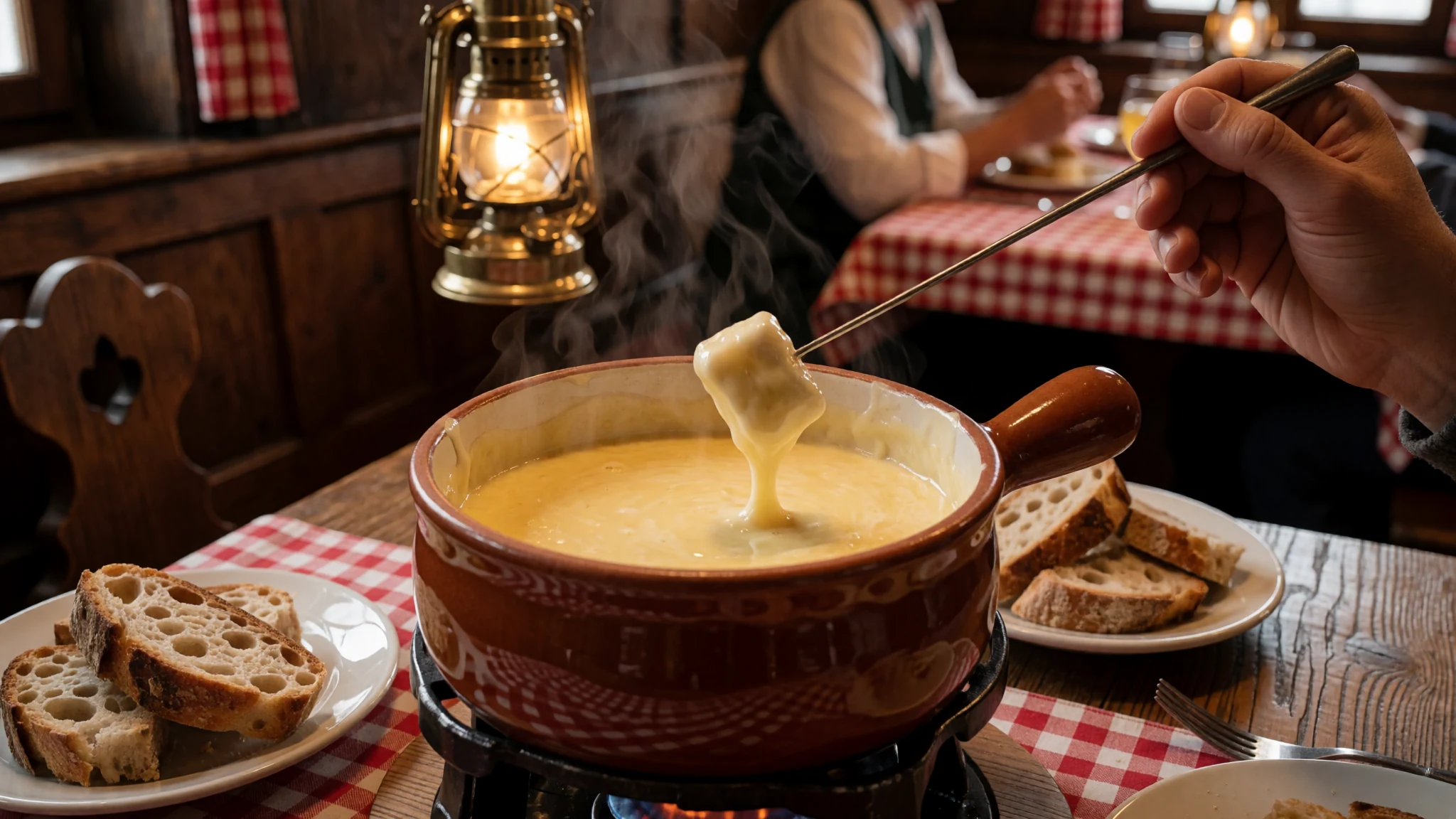
- Alpine Bakery Pastries — Stefan von Allmen Bakery on the main street
Alpine bakery pastries include fresh butter croissants, nut tarts, and traditional sweet breads baked daily. These can be picked up at local bakeries along the main village thoroughfare before setting out on morning hikes.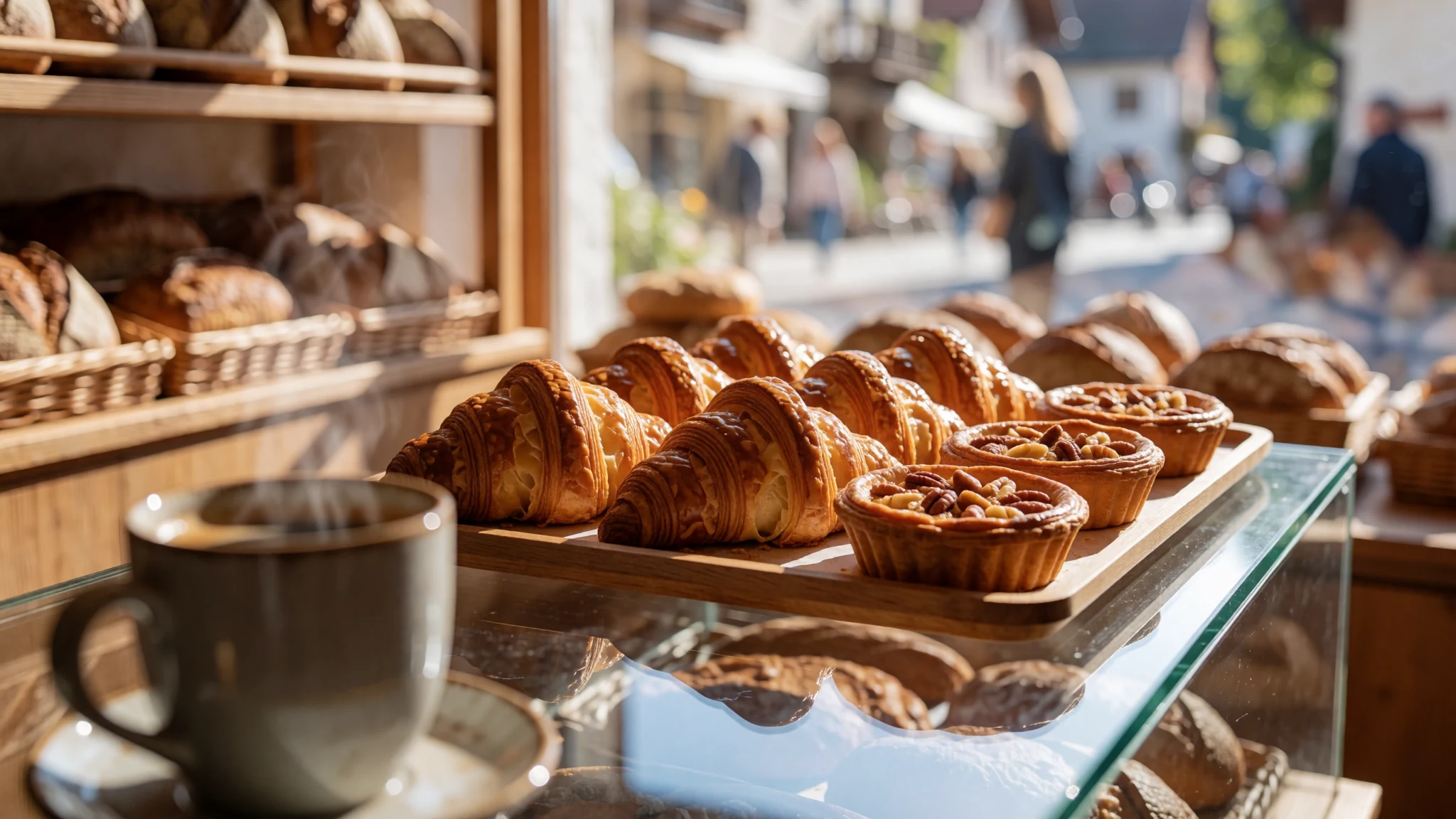
- Korean-Style Corn Dogs — Betty's Corn Dogs trailer at Auf der Fuhren
Korean-style corn dogs offer a crispy, modern snack option featuring various coatings and fillings on a stick. This popular street food item is served from a specialized food trailer located just off the main road. - Hearty Pub Fare — Hotel Horner village pub
Hearty pub fare features warming soups, sausages, and classic tavern plates designed to restore energy after a long day outdoors. This comforting food is served daily in the lively village pub situated near the southern end of the street.
Plan it
Best time. June to September offers the best conditions for hiking and accessible mountain railways, while winter months attract skiers to the higher slopes.
How long. 3–4
Getting there. Travel via Interlaken, change at Interlaken Ost for the Berner Oberland-Bahn train to Lauterbrunnen, then connect to local mountain railways or cable cars.
Budget. high
Tips
- Check weather forecasts before heading up to high viewpoints
- Book mountain railway tickets in advance during peak summer months
- Carry cash for small purchases at remote alpine stalls
- Start morning hikes early to avoid afternoon cloud cover
- Stay hydrated and take time to adjust to higher altitudes
Etiquette
- Greet locals and shopkeepers politely when entering village establishments
- Keep noise levels low on residential village streets
- Dispose of all litter properly to preserve the alpine environment
Nearby
Sources
- Wikidata Q15312 (CC0)
- Wikipedia (rev 1380903616) (CC BY-SA 4.0)
- Wikivoyage (rev 5341569) (CC BY-SA 4.0)