Jebel Akhdar
Jebel Akhdar, Oman
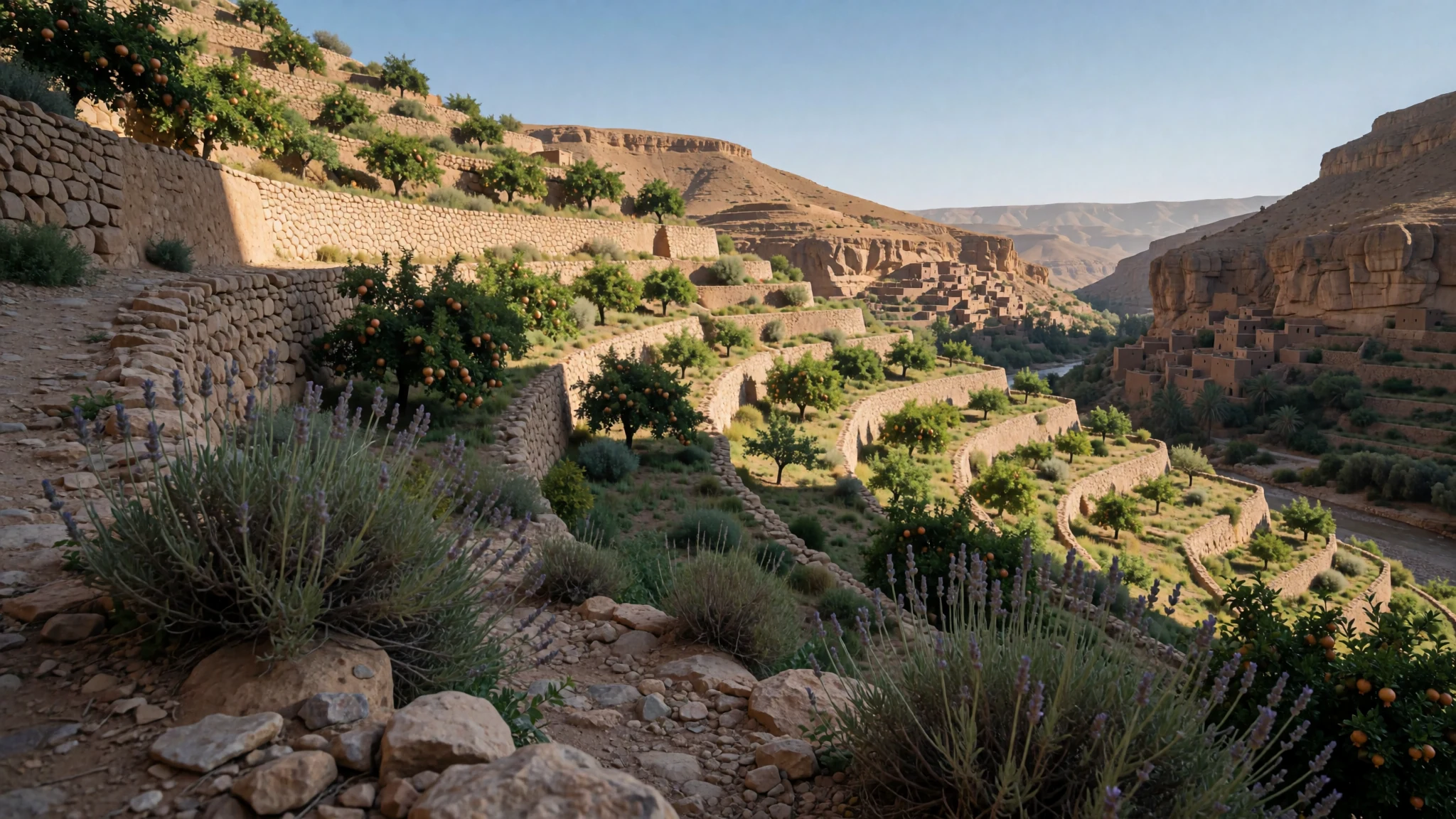
Go for a cool, green mountain that rises out of Oman's desert, with terraced orchards, old villages and walking routes above the clouds.
The place
Jebel Akhdar, the Green Mountain, is a limestone range in the central part of the Hajar Mountains, in Ad Dakhiliyah Governorate. It runs for roughly 80 km and is about 150 km from Muscat by road. Most of the Hajar is dry, but the higher ground collects enough rain, around 300 mm a year, to support shrubs, trees and farming, and that is where the name comes from. The range is cut by a network of wadis, the river valleys that run down to the lowlands, and the sides of these valleys have been shaped into terraces for centuries. Pomegranates, walnuts, apricots, black grapes and peaches grow on them, and the area is known for its rose water and for honey from bee-keeping. The highest point is Jebel Shams, at 3,018 m, which is also the highest peak in Oman. Its second, south summit is open to walkers on the W4 trail. Above the orchards lies the Saiq Plateau, at about 2,000 m, where villages sit on the edge of the cliffs. The road up is steep and winding, and the upper tracks need a four-wheel drive, so most visitors arrive by hired car or tour from Nizwa, which is about a 45-minute drive away. Expect cool evenings at height even when the lowlands are hot, and bring layers, because the weather can change quickly on the plateau.
Its story
The mountain's modern history is closely tied to the Jebel Akhdar War, fought between 1954 and 1959. Omani government forces, backed by British troops including the Special Air Service, faced rebels of the inland Imamate, who had support from Saudi Arabia. The fighting left the villages and terraces here marked by the conflict, and the old fortifications that remain testify to who controlled the high ground. One of these is Birkat al-Mawz, meaning Pool of the Plantains, a mud-brick stronghold on the inland side of the mountain. It stood at the mouth of a major pass and belonged to the Bani Riyam, the tribe that held the mountain heartland. For a long time it was in ruins, but it is now being restored. The tribe still lives on the mountain and in nearby settlements such as Nizwa, Izki and Ibra. Farming here depends on falaj irrigation channels, a system the local people developed over many generations to carry water to the terraces. Later, in August 2011, Sultan Qaboos declared the area a nature reserve to protect its fragile biodiversity, and a decree set up a sanctuary for its natural scenery. Since 2011 the mountain has also been the main climb of the Tour of Oman cycling race. Rock art found in the area has been dated to around 6,000 years ago, showing that people were using these hills long before the terraces. In 2025 UNESCO designated the mountain a biosphere reserve.
What to see
- Saiq Plateau — Saiq Plateau, above the Jebel Akhdar orchards
The high plateau at about 2,000 m is the main reason most people make the climb. Villages cling to the cliff edges, and the terraced orchards drop away below them. Walk between the farms in the early morning, when the light is soft and the air is cool, and ask before entering any private plot. Accommodation here is limited, so book ahead if you want to stay overnight.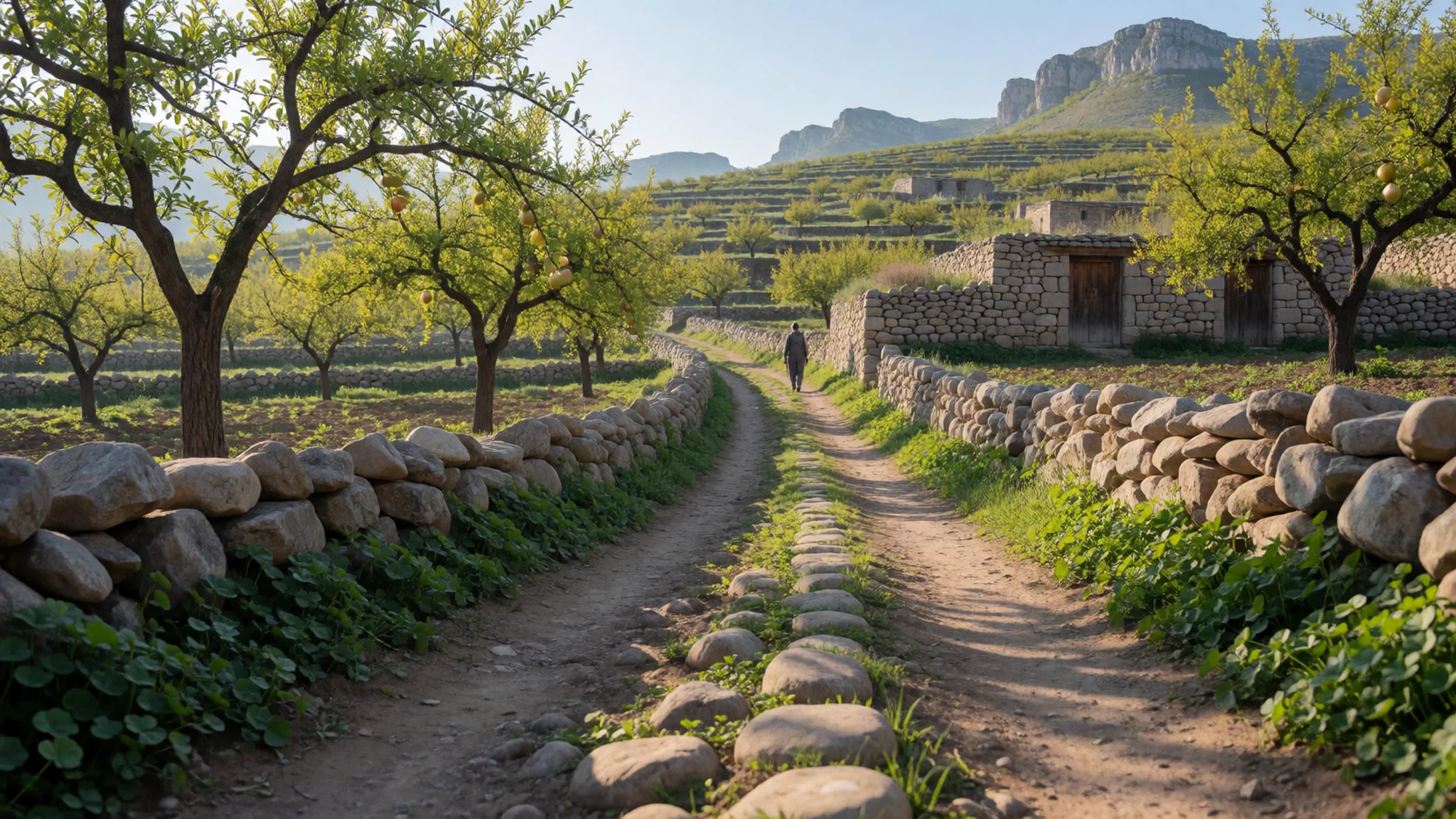
- Jebel Shams and the W4 trail — Jebel Shams, the high point of the range
Jebel Shams, at 3,018 m, is the highest point in Oman, and its south summit can be reached on foot by the W4 trail. The route is rocky and exposed, with steep sections and little shade, so set off early and carry more water than you think you need. The views over the Grand Canyon of Oman, which lies beneath the summit, are the reward on a clear day.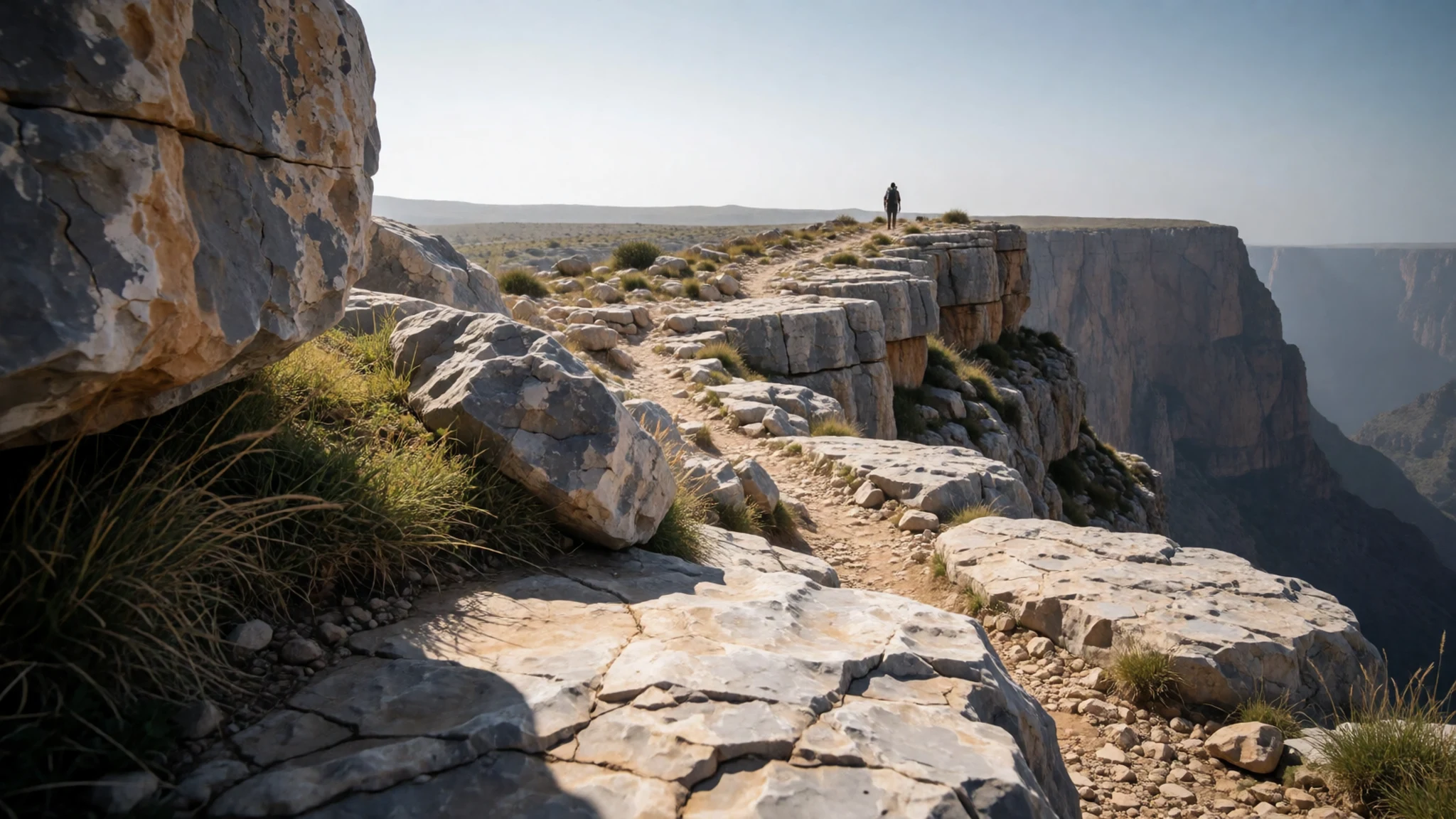
- Birkat al-Mawz — Inland side of the mountain, near the Pool of the Plantains
This mud-brick fortress guarded a major pass into the mountains and was held by the Bani Riyam. It fell into ruin for many years and is now being restored, including its painted ceilings. It sits on the inland side of the range and has a layout similar to the nearby Jabrin palace. Check locally whether the site is open before you set out, as access arrangements can change.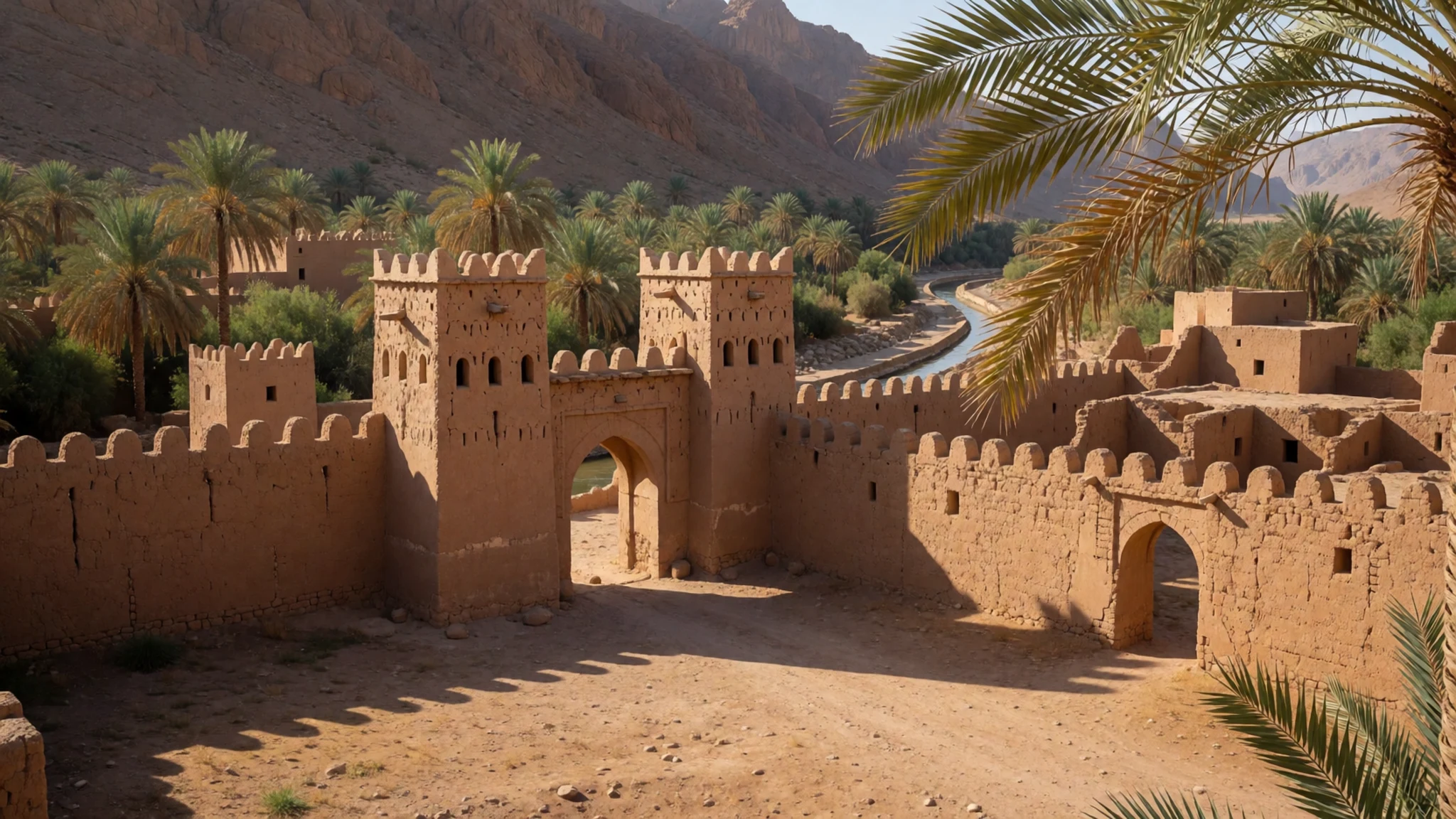
- Al Sogara village — Western face of the Jebel Akhdar range
Al Sogara is an ancient settlement hewn from the mountainside, with terraces and houses stepping down the slope. It shows the traditional way of life that the falaj channels and terraces made possible. Walk quietly through the lanes, keep to paths between homes, and buy local produce or honey directly from people who sell it at their doors if the opportunity arises.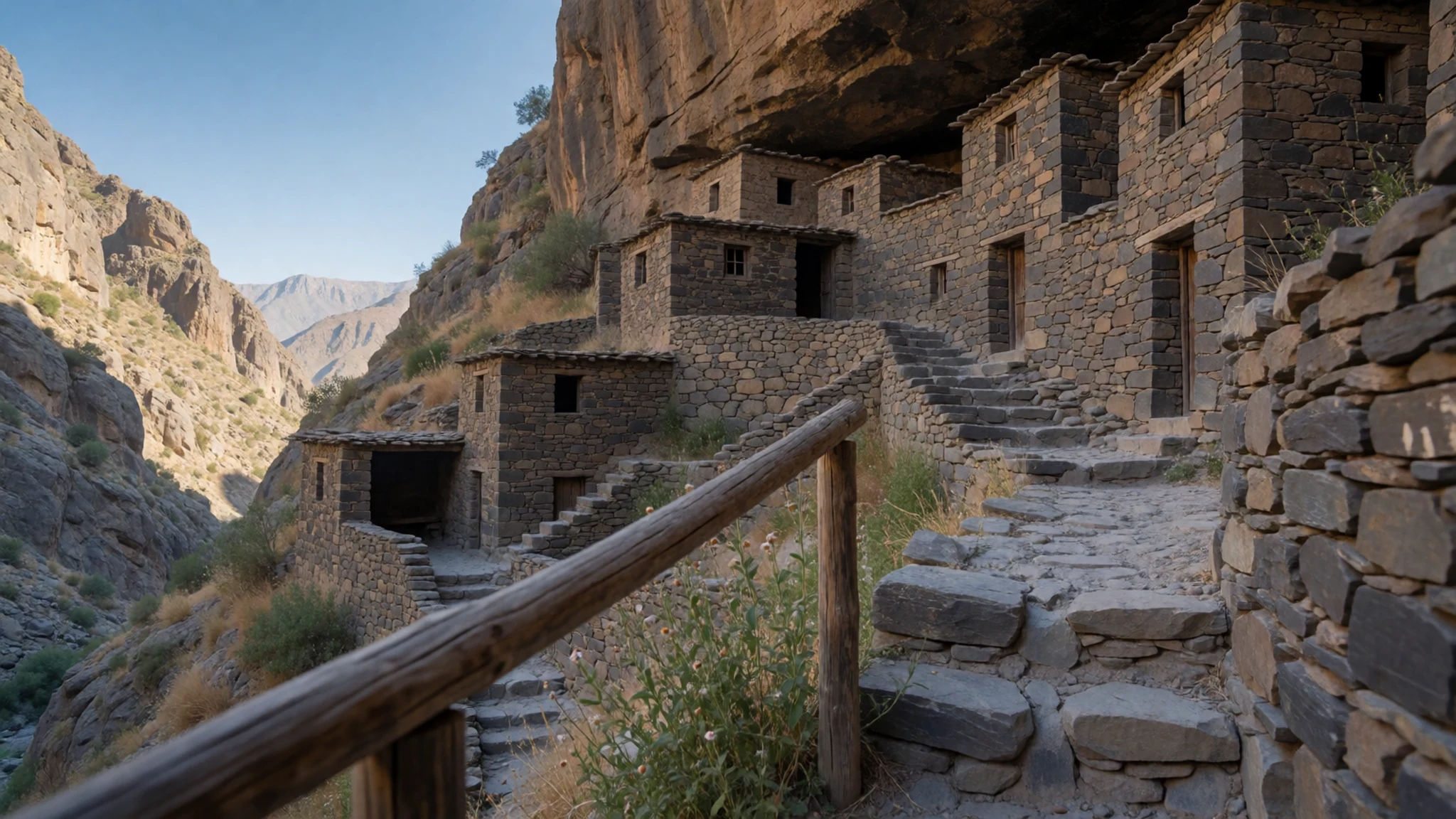
Culture
Life on Jebel Akhdar revolves around farming, irrigation and the families who have worked these terraces for generations. The falaj channels that bring water to the orchards are part of a shared system, and the terraces are working fields, not scenery. Many of the people who live here are members of the Bani Riyam tribe, and their villages are homes first. Mornings are when the farms and markets are busiest, and the late afternoon is quieter as the light fades. Hospitality matters: if someone offers you coffee or dates, accepting is a polite gesture, and it is customary to use your right hand when eating or accepting something. Greetings are important, so take the time to say hello properly before asking a question. Photographing people, especially women and children, needs permission, and you should not walk through family courtyards or enter private orchards without being invited. Keep your voice low when passing homes, and leave gates as you found them. Dress modestly in villages and carry a light layer for cool evenings, since local people are more conservative in dress than visitors on the trails. Please ask before photographing anyone in the village, and do not enter a private courtyard or orchard unless you have been invited.
What to wear
Traditional dress on Jebel Akhdar is much the same as in the rest of Oman. Men traditionally wear the dishdasha, a long, loose, ankle-length robe, usually in white or pale colours, often with a rounded embroidered cap called a kumma. Women typically wear long dresses and cover their hair, and many wear the abaya, a long outer robe, when going out. Cotton is the everyday fabric for these garments, while heavier wool and layered textiles suit the cooler mountain air in winter. Embroidery on collars and cuffs, and on women's head coverings, marks family and regional identity. In daily life today, you will see a mix of traditional and modern clothes. Younger men often wear the dishdasha for work and special occasions and jeans or shirts at other times, while many women combine an abaya or scarf with contemporary clothing. Visitors should dress modestly, especially in villages and near mosques: shoulders and knees covered, loose tops and trousers or long skirts, and a scarf to carry for head covering when visiting religious places. Good walking shoes with grip are essential for rocky, loose terrain on the trails, and a warm layer is useful on the plateau, where evenings can be cold even when the lowlands feel hot.
What to eat
- Pomegranates and pomegranate juice — Roadside stalls on the way up and the Nizwa market
Pomegranates are the signature crop of the terraces, and they are sold fresh and pressed into juice during the season. Buy them from roadside stalls near the orchards or at the market in Nizwa. Juice is simple and refreshing, a good antidote to a long hike in dry, bright weather.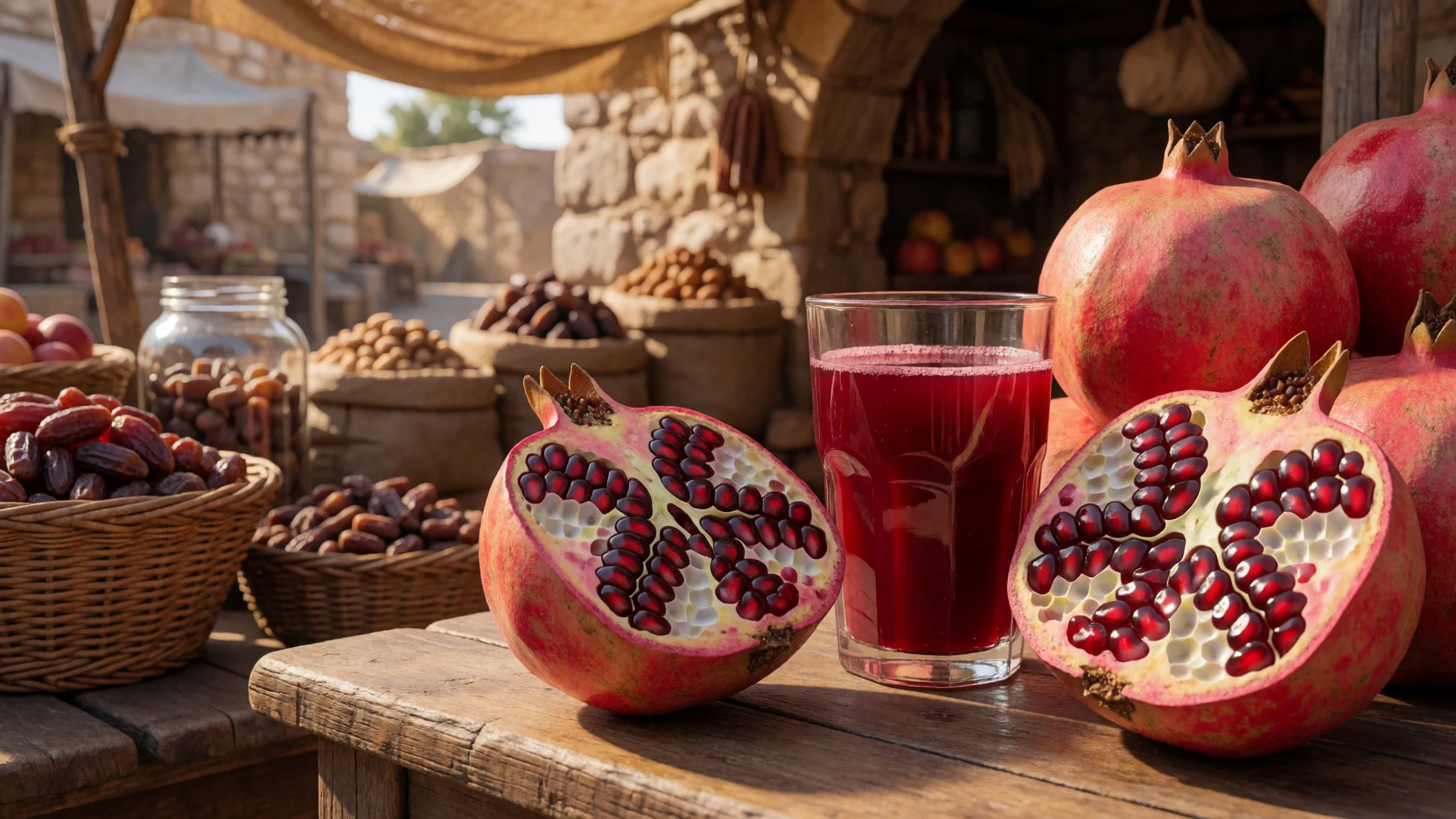
- Walnuts and apricots — Village shops and farm stalls on the plateau
Walnuts and apricots grow on the terraces alongside the pomegranates. They are often sold shelled or dried at small stalls and village shops. They make a light snack for the road and keep well in a daypack.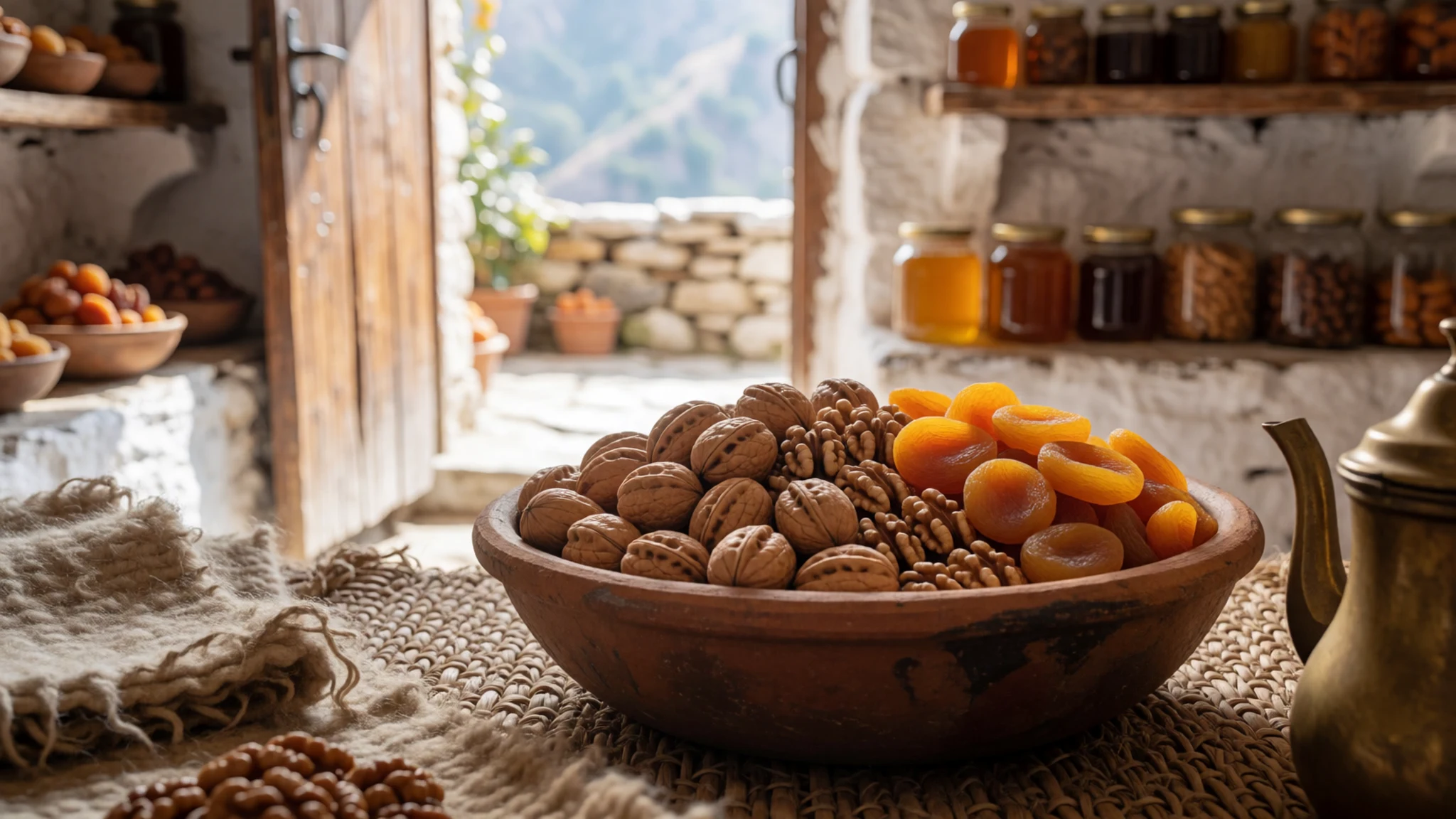
- Rose water and rose products — Shops and stalls around the villages of the Saiq area
The area is known for its roses, and rose water is produced locally. You will find rose water in small bottles and other rose-based products at shops and stalls. It is used in Omani hospitality and is a good souvenir, but check that the bottle is sealed before buying. - Omani coffee and dates — Village eateries, guesthouses and the Nizwa souq
Coffee flavoured with cardamom, served in small cups, is the traditional welcome in Omani homes and many eateries. Dates usually accompany it. Accept a small cup when offered, and remember that you do not have to finish it if you are not thirsty.
Plan it
Best time. October to November and March to April suit the mountain best. The days are warm but comfortable, and the evenings on the plateau are cool, which makes walking pleasant. Summer in the lowlands is very hot, and although the mountain is cooler, the heat carries up the slopes on some days. Winter nights on the plateau can be cold, so bring warm layers if you visit in those months.
How long. 2–3
Getting there. Fly into Muscat International Airport, then drive about 150 km to the mountain, going via Nizwa, which is about a 45-minute drive from the foothills. Hire a four-wheel drive or join a guided tour for the upper roads, as they are steep and rough in places.
Budget. mid
Tips
- Start early for the trails, both to beat the heat and to find the best light
- Carry plenty of water and sun protection, as the walking routes have little shade
- Book accommodation on the plateau ahead of time, since beds are limited
- Fill your fuel tank in Nizwa or another larger town before the climb
- Bring cash for small stalls and village shops, and check the official site for current access rules before you travel
Etiquette
- Ask before photographing people, particularly in villages
- Dress modestly in villages and near mosques
- Stay on paths and do not enter private orchards without permission
Nearby
Sources
- Wikidata Q285951 (CC0)
- Wikipedia, Jebel Akhdar (Oman) (rev 1369301801) (CC BY-SA 4.0)
- Terraces in Jebel Akhdar, Philipp Weigell (CC BY 3.0)
- A remote village in Oman, www.stuff.co.nz/travel/ (CC BY-SA 4.0)
- Banner Jebel Akhdar, Davide Mauro (CC BY-SA 4.0)
- Hiking on the Jebel Akhdar, Oman, Robert Haandrikman (CC BY 2.5)
- Beautiful view of Jabal Akhdar in Oman, Khoula Al Mandhari (CC BY-SA 4.0)
- Jabal Akhdar WikiPano NizwaNET, Rashid Al-Yahyai (CC BY-SA 2.5)
- Jabel Akhdar, Oman 2024 (1), Domenico Convertini (CC BY-SA 4.0)
- Jabel Akhdar, Oman 2024 (2), Domenico Convertini (CC BY-SA 4.0)
- Wikivoyage (CC BY-SA 4.0)


