Jakarta
Jakarta, Indonesia
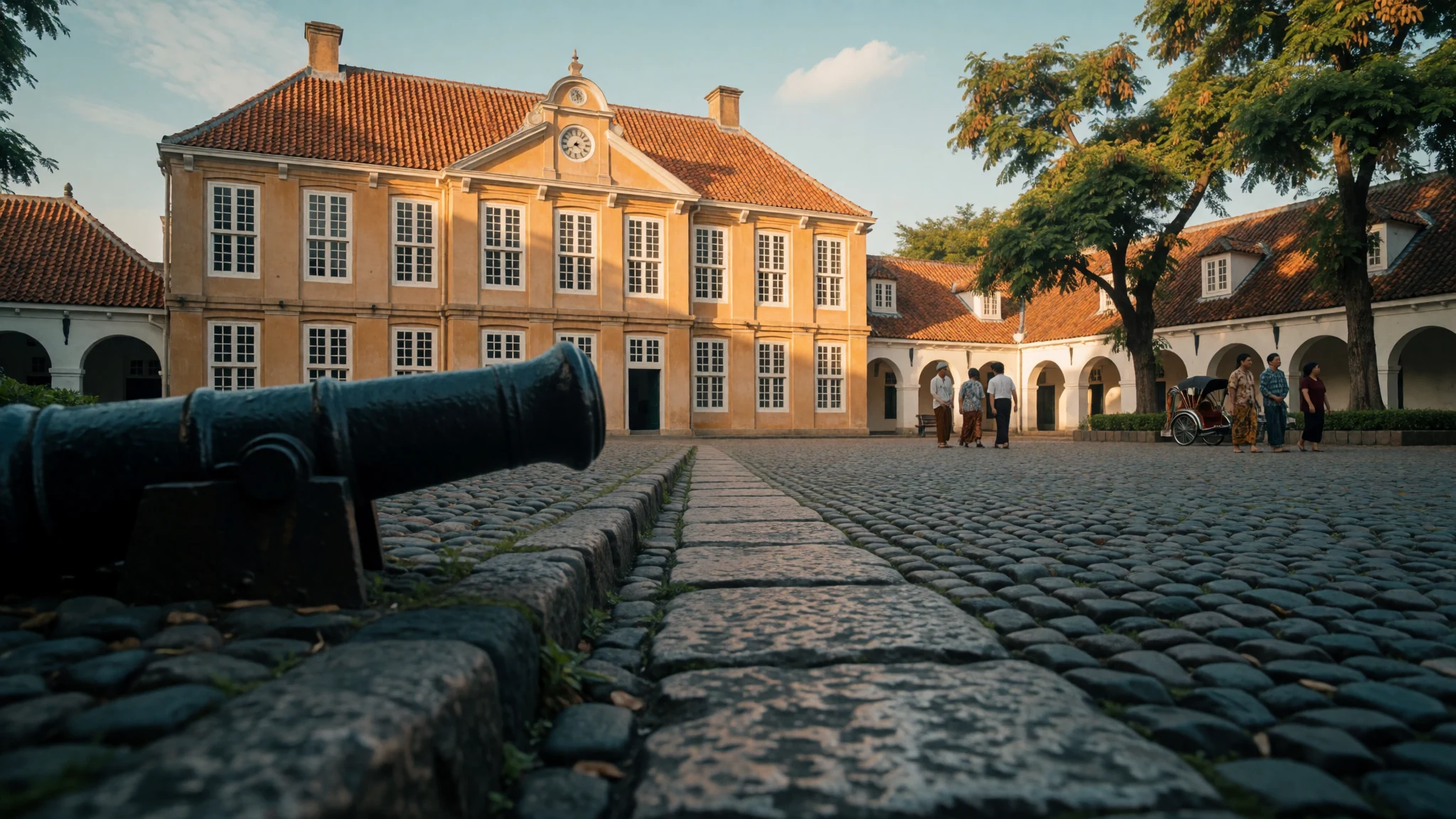
Jakarta is a hot, loud, generous capital where Dutch-era streets, glass towers and Betawi street food sit within a short ride of each other.
The place
Jakarta is the capital of Indonesia and its largest city, home to about 11 million registered residents. It has the status of a province in its own right, the Special Capital Region, and sits on the north-west coast of Java, facing the Java Sea. The official area is modest, about 664 square kilometres, but the built-up city spills far beyond that line into neighbouring West Java and Banten. Locals use the shorthand Jabodetabek for the whole sprawl. That sprawl is the first thing to grasp: Jakarta is less a single centre than a string of districts, each with its own character. Kota Tua, the old colonial quarter, lies in the north near the harbour. Around Jalan Thamrin and Jalan Sudirman, towards the middle of the city, glass towers, malls and flyovers set the pace of a modern capital. Between them lie kampung neighbourhoods of narrow lanes, small food stalls and mosques, where much of daily life still happens. Honest expectations help. Traffic is heavy at almost any hour, the air is hot and damp all year, pavements are patchy, and heavy rain in the wet season can flood streets. Yet the city rewards patience. The food is excellent, the museums are many, and the population is a mix of Betawi, Javanese, Chinese and many other communities who have arrived over the centuries. Most travellers give it a few days, either on the way to Bali or Borobudur or as a place worth knowing in its own right.
Its story
Jakarta's story begins before the name existed. Pottery makers of the Buni culture lived along the northern Java coast for several centuries around the start of the common era, and a stone inscription found at Tugu, near today's Tanjung Priok, shows that by the fifth century a ruler was having canals dug here. Later the area fell under the Sunda Kingdom, whose harbour at Kalapa, today's Sunda Kelapa, was a busy pepper port by the early sixteenth century. In 1527 Muslim forces took the port, renamed it Jayakarta and placed it under the Sultanate of Banten. In 1619 the Dutch East India Company, the VOC, seized the town and rebuilt it as Batavia, with walls, canals and a Dutch street plan. It became the company's main administrative base in Asia and a major trading harbour, a colonial city built for profit and control. During the Japanese occupation in the Second World War, Batavia was given the name Jakarta. On 17 August 1945 Sukarno, with Mohammad Hatta beside him, read out Indonesia's declaration of independence in the city. Years of revolution followed, and by 1950 Jakarta was the seat of the new republic. It has grown quickly ever since, drawing migrants from every island. Traces of each layer survive: a replica of a stone pillar marking an early treaty with the Portuguese, Dutch-era buildings in Kota Tua, and the monuments of the independence years.
What to see
- Kota Tua and Fatahillah Square — Kota Tua, North Jakarta
Kota Tua is Jakarta's old colonial quarter, and its heart is Fatahillah Square, where the former Dutch city hall now houses the Jakarta History Museum. A dedicated walking area keeps the old buildings together, so it suits an unhurried morning on foot. Go early, before the heat builds, and look for the Jagur cannon in the back yard.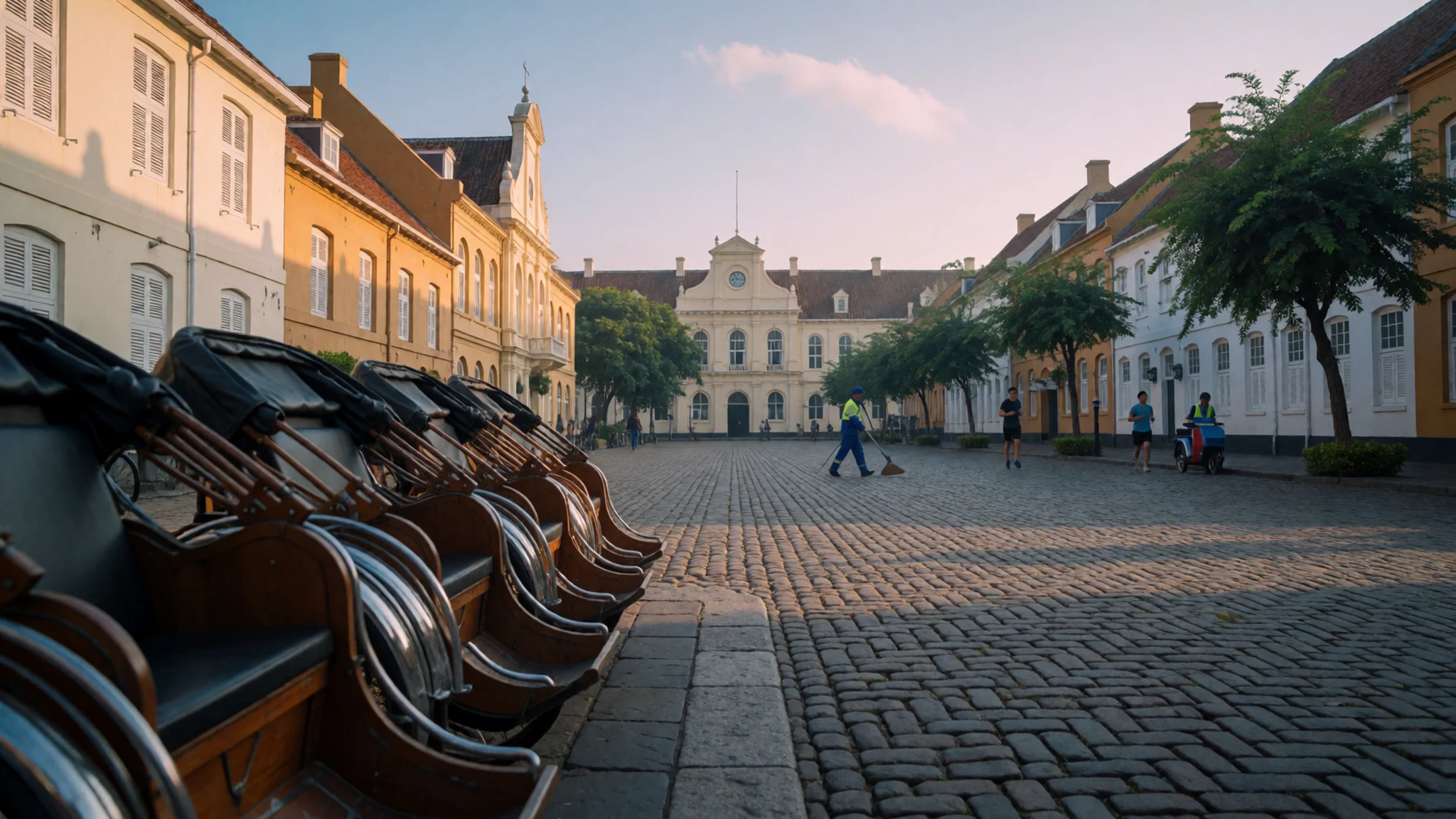
- Kota Tua museums — Kota Tua, North Jakarta
Around Fatahillah Square, several museums sit within walking distance. Bank Indonesia Museum covers money and the economy, Museum Wayang holds puppets from across Indonesia and beyond, and Museum Seni Rupa & Keramik shows paintings, sculpture and ceramics. Together they make an easy indoor day. Opening hours and entry fees change, so check each museum's official site.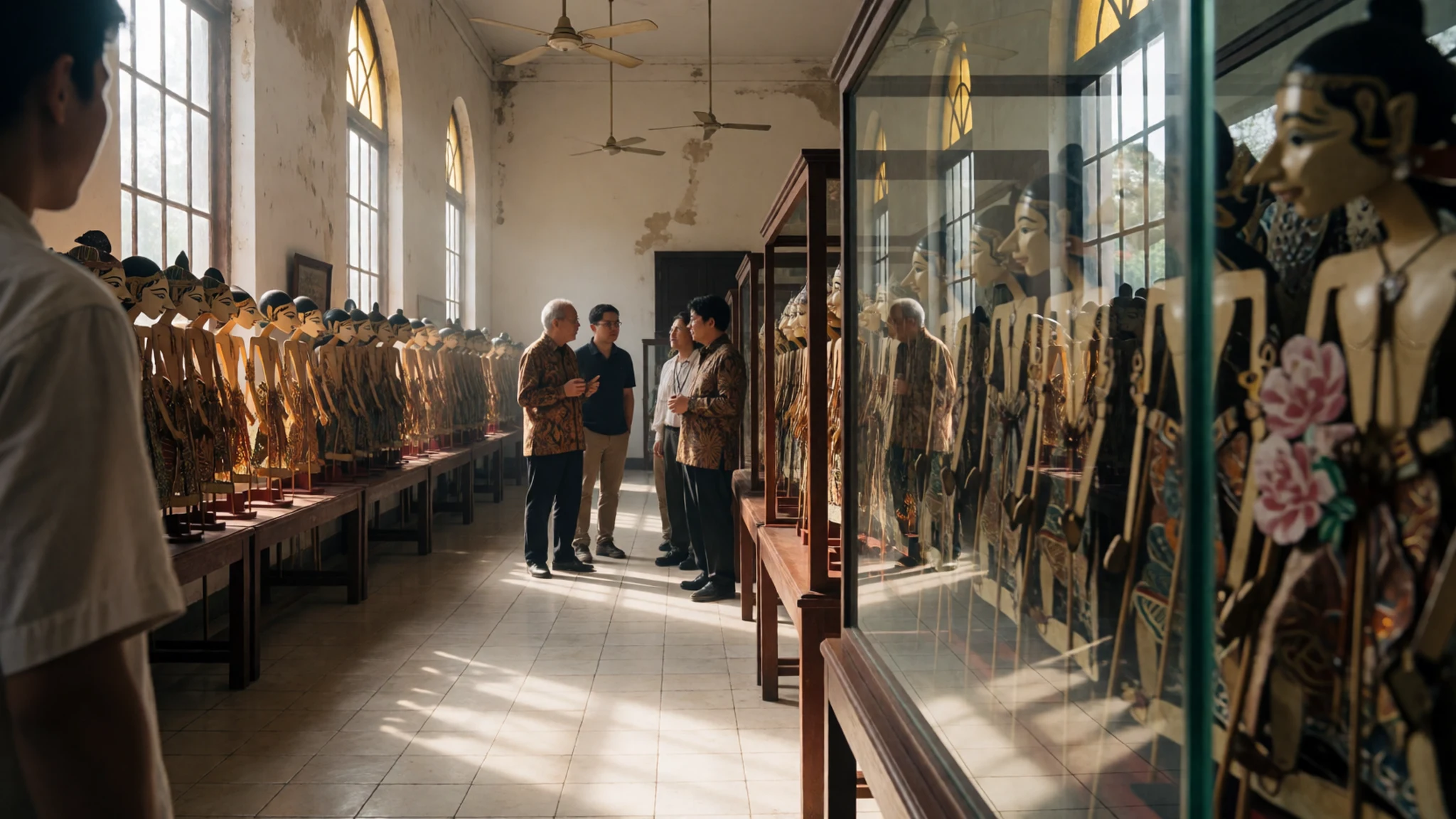
- Sunda Kelapa and Museum Bahari — Penjaringan, North Jakarta
Sunda Kelapa is the old harbour where Jakarta began as the port of the Sunda Kingdom. Close by, Museum Bahari tells the story of the city's and the country's seafaring past. The waterfront is working, rough at the edges and very hot, so it suits a short visit with a hat and water.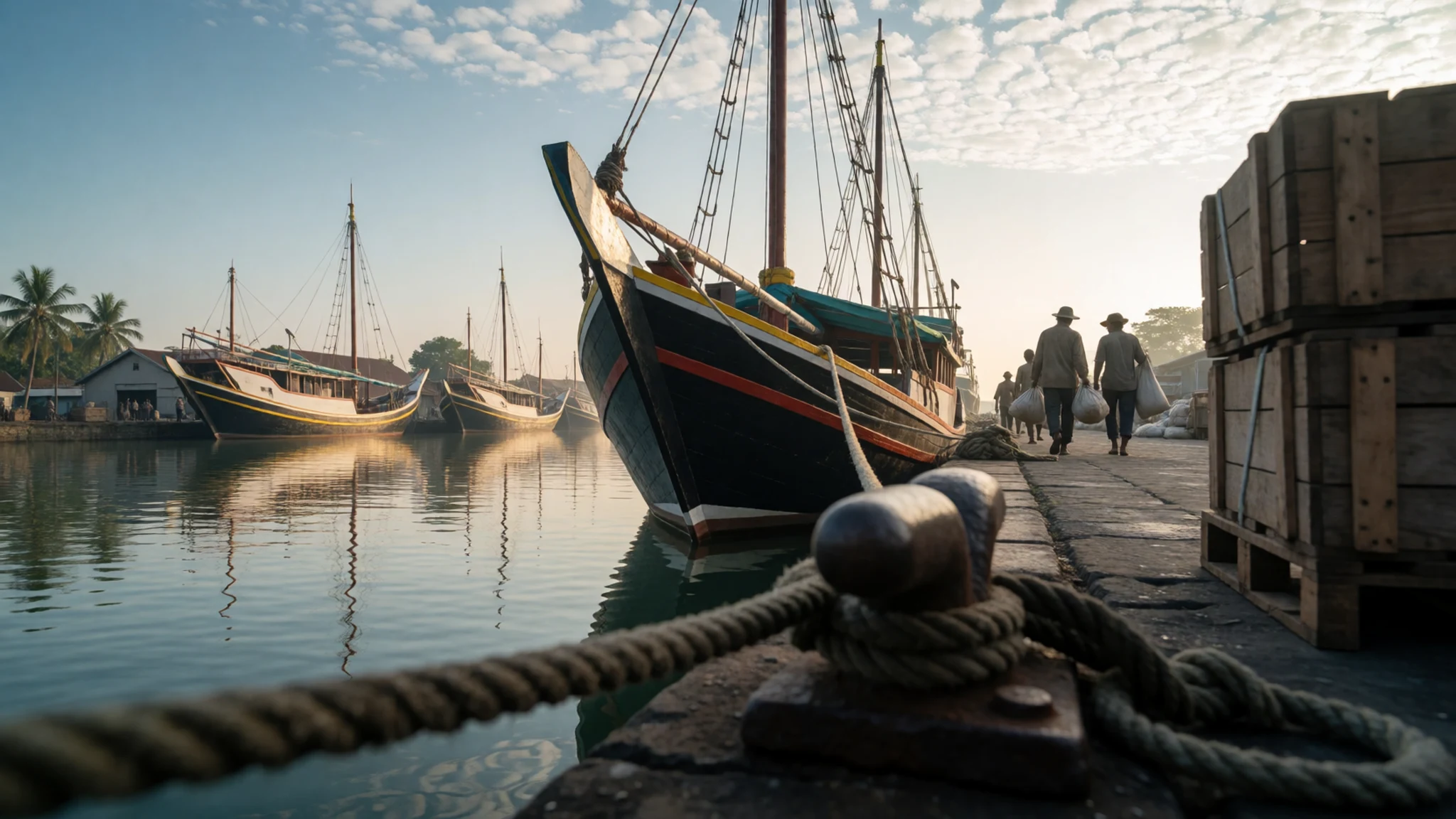
- Bundaran HI and Jalan Thamrin — Central Jakarta
Bundaran HI is the big roundabout by Hotel Indonesia, and it marks the start of the modern business avenues of Thamrin and Sudirman. Towers, malls and the Transjakarta bus corridor run along both. It is a good place to see how the capital looks today, ideally from a footbridge or bus stop.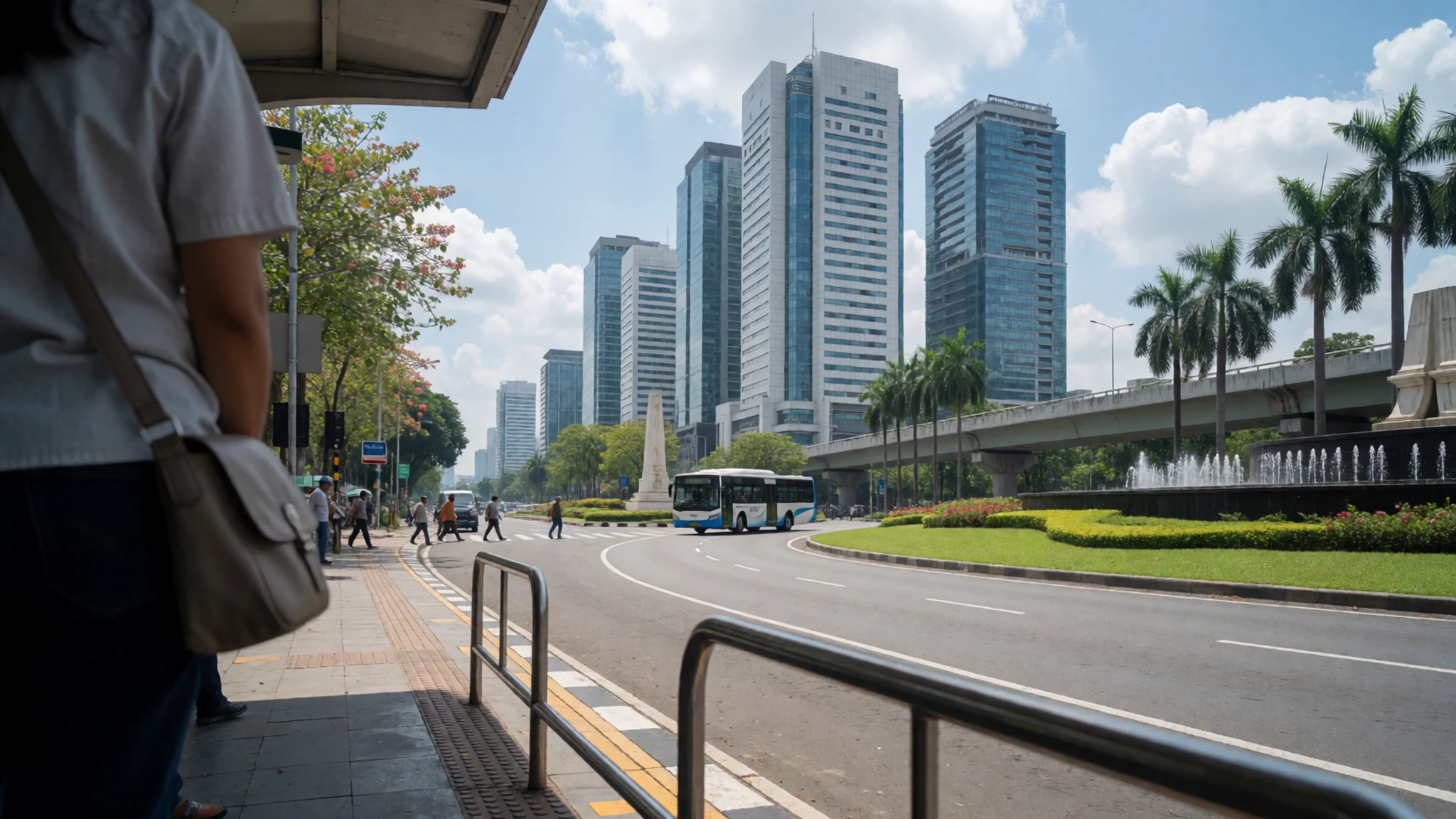
- Istana Negara — Central Jakarta
Istana Negara is a presidential palace in central Jakarta, set among lawns a short way from the main avenues. Most visitors admire it from the outside, since access to the grounds depends on official arrangements and security. Check the Jakarta government website before planning around a visit, and carry photo identification.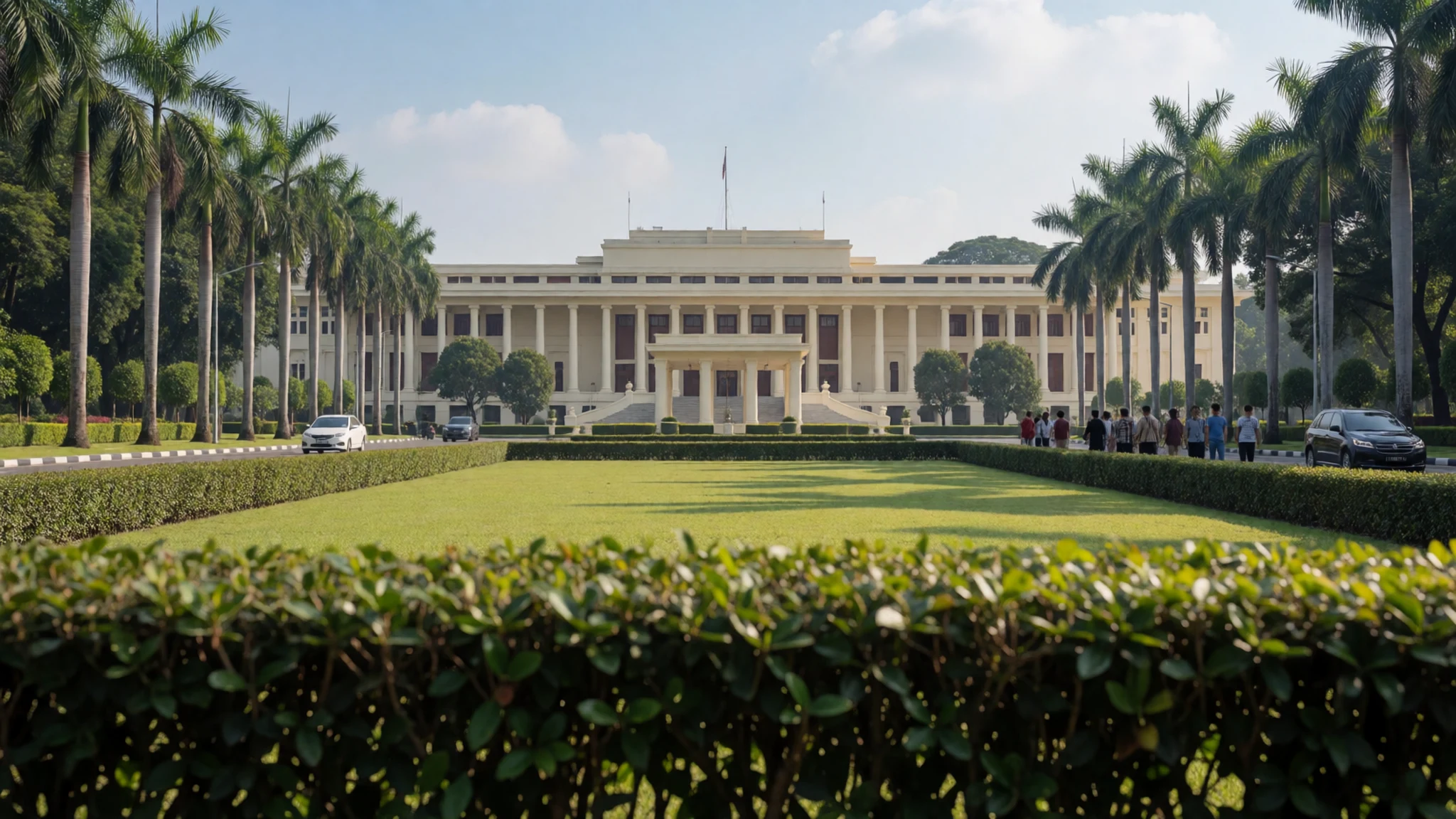
Culture
Jakarta's culture is shaped by long migration from across Indonesia, so the city feels like a meeting place of regions rather than a single tradition. The indigenous Betawi community supplies much of what is thought of as local heritage. Betawi performing arts include tanjidor, a brass and percussion ensemble with a street-parade feel, lenong, a lively form of folk theatre full of jokes and improvisation, and ondel-ondel, the towering puppet figures that are carried through the streets at celebrations. Lebaran Betawi is a public festival meant to introduce and keep alive Betawi customs, and it is a good time to catch music and food together. Condet in East Jakarta was named a Betawi heritage area in 1976, though the status was withdrawn in 1988, which says something about how fast the city changes. Daily life runs on a mix of faiths, with mosques, churches and temples all in use, and the call to prayer is part of the soundscape. Hospitality is warm, small talk is friendly, and people often ask where a visitor is from. Dress and manners lean polite and modest, especially outside the malls. Visitors should take off their shoes before entering a mosque or a private home, and use the right hand when giving, receiving or eating.
What to wear
In Jakarta, traditional dress draws on many regions, and batik is the textile that ties most of them together. Batik is cloth patterned by wax-resist dyeing, usually on cotton or silk, and its motifs vary by place and occasion. Women wear the kebaya, a fitted blouse, with a batik wrap skirt for weddings, official events and national days. Men wear long-sleeved batik shirts that count as formal wear. Betawi dress adds its own touches, such as embroidered kebaya styles and a black peci cap, and ondel-ondel figures show the bright costume colours at festivals. Day to day, most Jakartans dress for heat and for the office: lightweight shirts, trousers, long skirts, headscarves for many women, and a great deal of batik at work and at ceremonies. Young people in the malls follow regional streetwear trends, with sneakers and layers kept for air-conditioned interiors. Visitors should pack breathable cotton or linen, with shoulders and knees covered for mosques and for the quieter neighbourhoods. A light scarf is useful, and so is a thin jacket, because shopping centres and trains can be icy. Wear sandals or comfortable shoes that slip off easily and cope with wet pavements, and carry a compact umbrella, since rain can arrive suddenly.
What to eat
- Kerak telor — Street stalls and festival grounds, especially around Kota Tua
A Betawi street snack of glutinous rice and egg cooked into a crisp omelette, then topped with shredded coconut and dried shrimp. It is smoky, savoury and cooked to order, a good first taste of local food.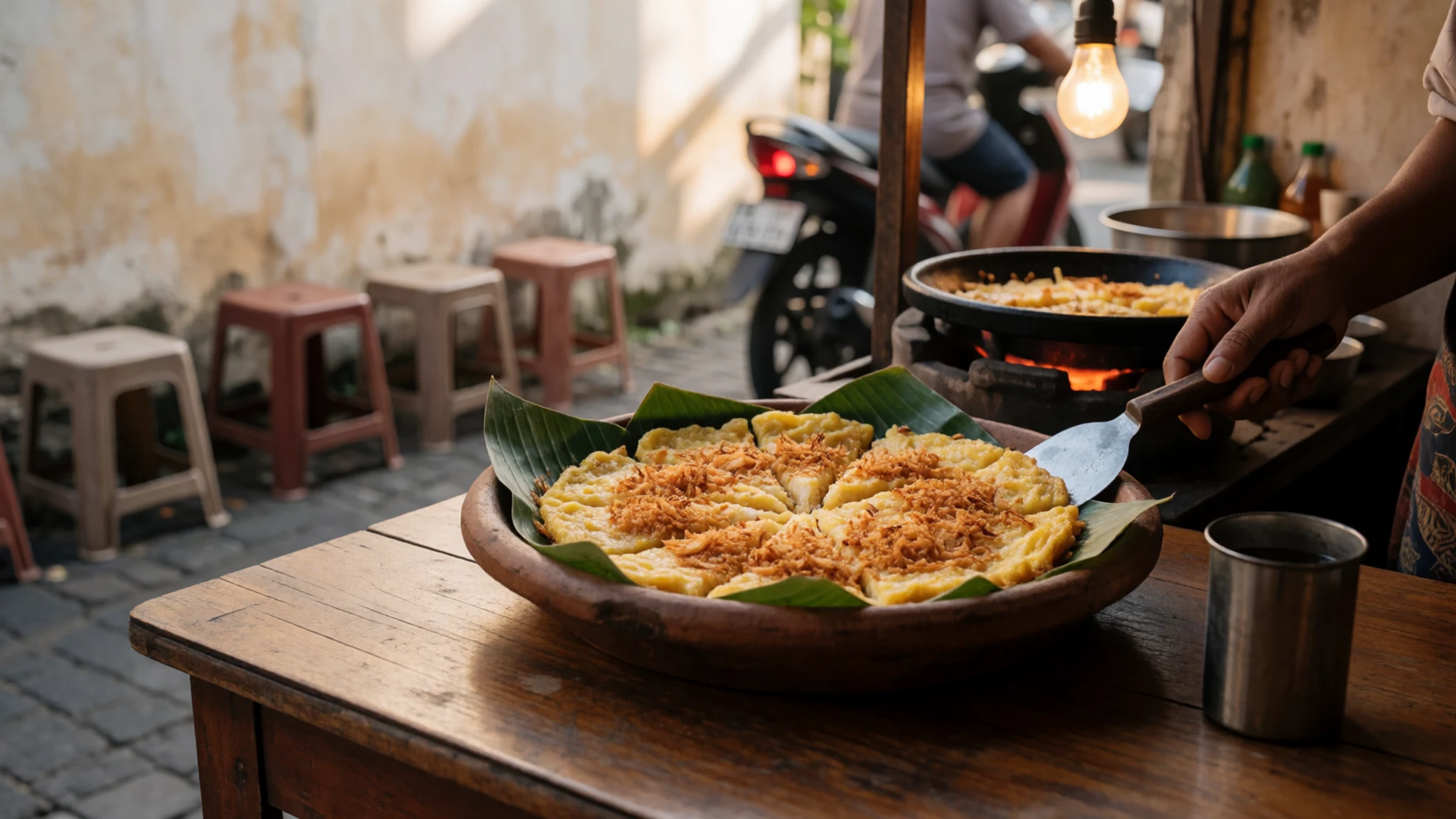
- Gado-gado — Warung and food courts across the city
Boiled vegetables with a thick peanut sauce, often with egg, tofu or rice cakes. It is filling, easy to find and a dependable choice for vegetarians. Ask for the chilli on the side.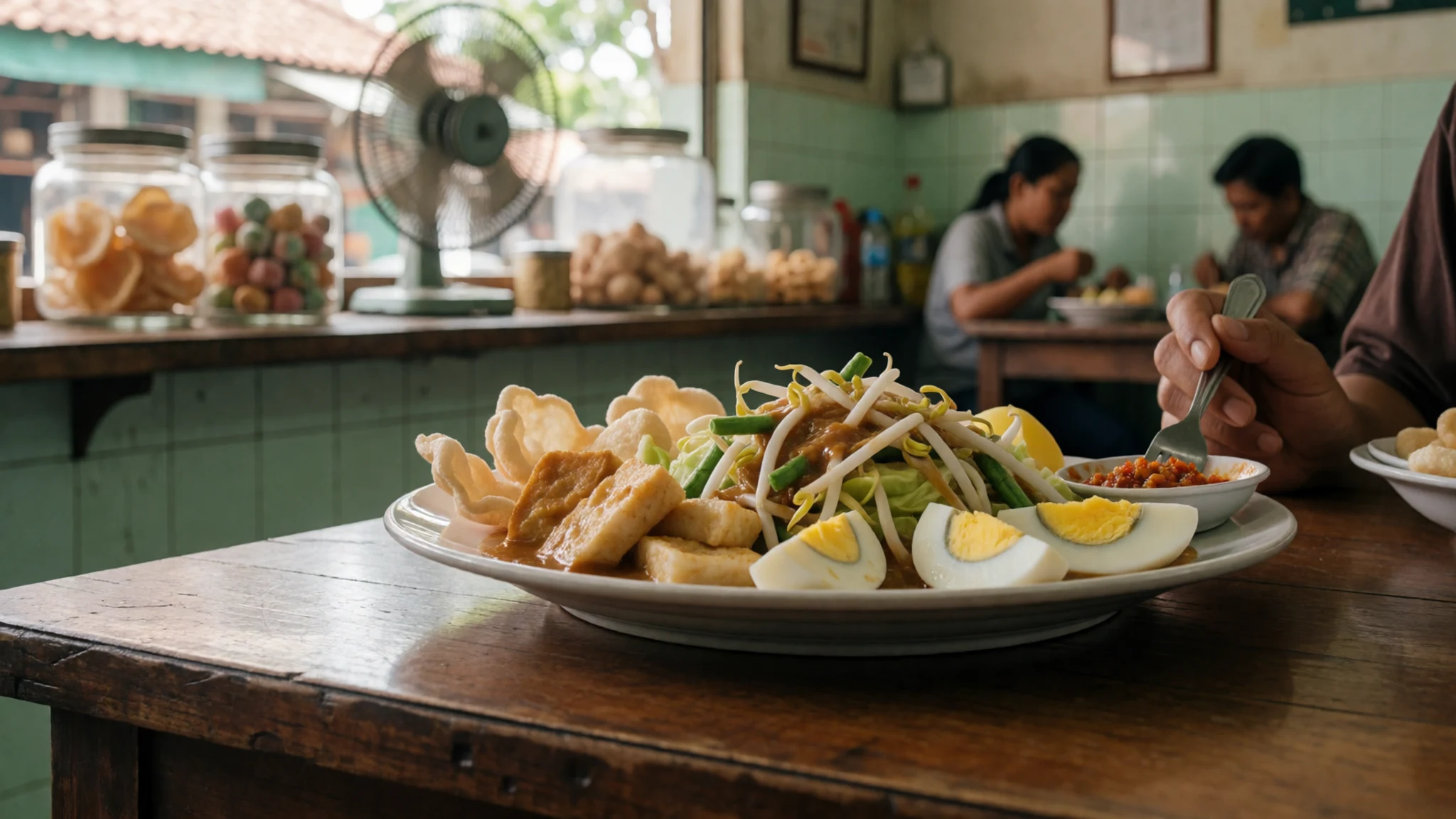
- Asinan Betawi — Street vendors and small shops in older neighbourhoods
Assorted pickled vegetables served with peanut sauce, sometimes with chilli and crackers on top. The sharp, sweet and nutty mix is refreshing in the heat, and a favourite afternoon snack. - Gabus pucung — Betawi eateries, especially in the south and east of the city
A dark Betawi soup of snakehead fish cooked with pucung, the black keluak nut. It is rich, earthy and quite different from the sweeter dishes of central Java. Rice on the side makes a full meal. - Bubur ase — Betawi food stalls and neighbourhood eateries
A cold porridge topped with beef in a sweet-savoury soup, a Betawi dish with a contrasting mix of textures. It is an unusual order for first-time visitors, and best eaten where locals queue.
Plan it
Best time. May to September is the drier part of the year and the easiest for walking and sightseeing. The wet season runs roughly from November to March, with heavy downpours and occasional flooding, and Jakarta is hot and humid at any time.
How long. 3–4
Getting there. Most flights land at Soekarno-Hatta International Airport in Tangerang, west of the city, with an airport rail link, DAMRI buses and a toll road into town. Halim Perdanakusuma Airport, in East Jakarta, is smaller and mostly handles domestic flights. Allow generous time for the last leg, especially at rush hour.
Budget. mid
Tips
- Plan around traffic: travel outside the morning and evening rush hours, or use Transjakarta buses and the commuter rail.
- Start Kota Tua early, before the midday heat and the weekend crowds.
- Carry some cash for small stalls and buses, though cards work in malls and larger restaurants.
- Drink bottled or filtered water and keep a small umbrella handy.
- Check the official site, jakarta.go.id, and each museum's own site for opening times and fees.
Etiquette
- Remove shoes before entering mosques and homes.
- Dress modestly outside beach and mall settings, with shoulders and knees covered at religious sites.
- Use the right hand to give, receive and eat.
Nearby
Sources
- Wikidata Q3630 (CC0)
- Wikipedia: Jakarta (rev 1384289390) (CC BY-SA 4.0)
- Wikivoyage: Jakarta (rev 5405624) (CC BY-SA 4.0)
- Bundaran Hotel Indonesia (2025), Medelam (CC BY 4.0)
- Buildings around Jalan Thamrin, Ya, saya inBaliTimur (CC BY-SA 2.0)
- Batavia City Hall (Jakarta History Museum), Chainwit. (CC BY 4.0)
- Istana Negara, BxHxTxCx (CC BY-SA 2.0)
- Replica of the Luso-Sundanese Padrão Monument, Rantemario (CC BY-SA 4.0)
- View of the Nieuwe Poort at Batavia, Anna Goelet (Public domain)
- Indonesia declaration of independence, Frans Mendur (Public domain)
- Rainy Jakarta, adnan ali (CC BY-SA 2.0)


