Hormuz Island
Hormuz Island, Iran
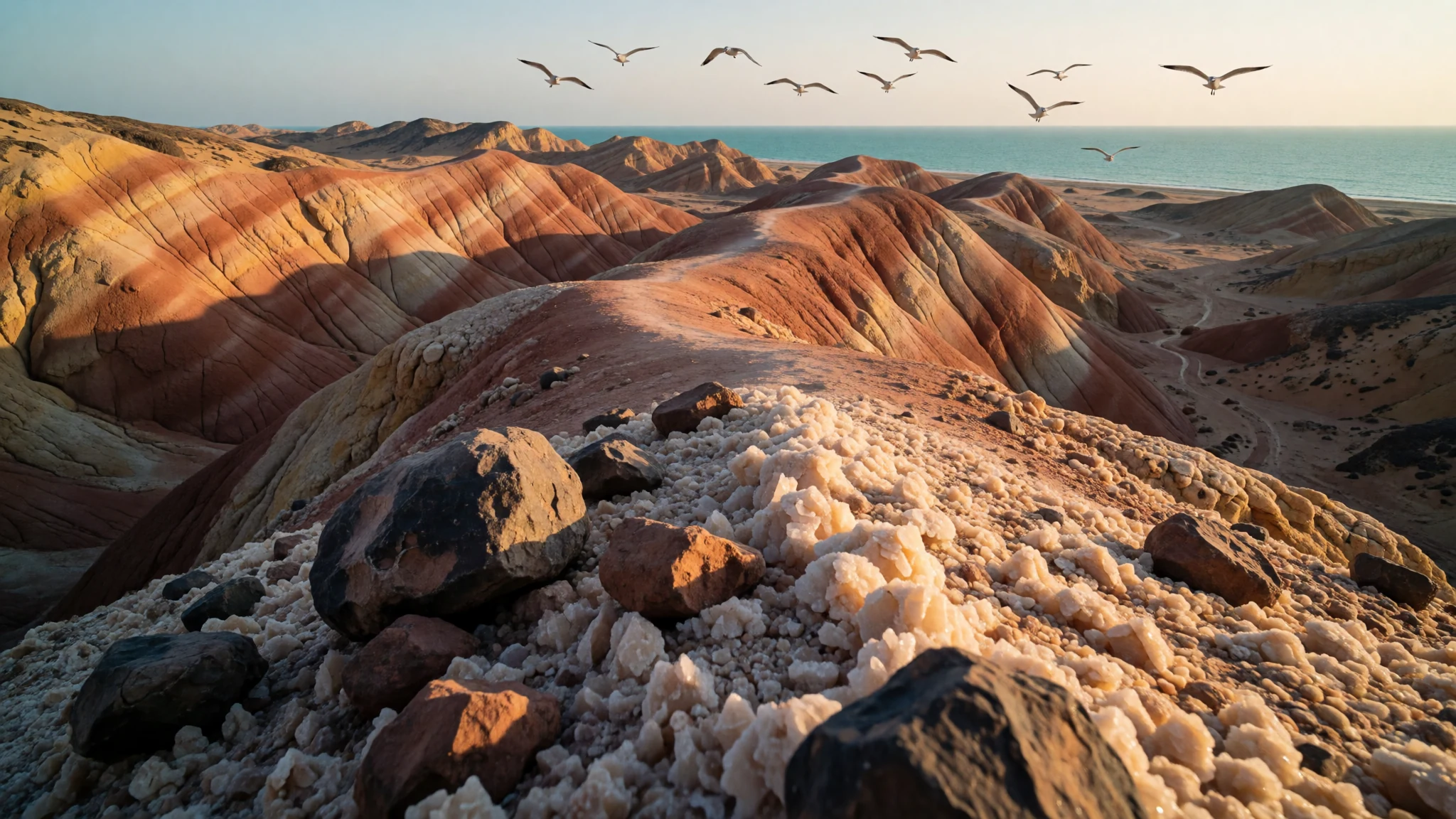
Step onto a geological masterpiece where brilliant mineral soils paint the mountains in striking shades of red, yellow, and deep purple.
The place
Hormuz Island sits strategically in the emerald waters of the Persian Gulf, just off the southern coast of Iran. Shaped by ancient tectonic forces, this compact landmass functions as a massive salt diapir. Over countless millennia, subterranean salt deposits have pushed upward through overlying strata, creating a dramatic topography of folded hills, narrow canyons, and dry salt caves. The island's most striking feature is its soil, particularly the brilliant red ochre known locally as golak. This iron-rich earth has stained the surrounding beaches and tidal streams, giving the shoreline an otherworldly palette that shifts dramatically under the harsh desert sun. Away from the colourful mineral hills, the island supports resilient ecosystems adapted to high salinity and arid conditions. Mangrove forests thrive within the saltwater tidal zones, their submerged roots providing a crucial sanctuary for migratory and resident bird species, including graceful terns and gulls. The human footprint remains light, concentrated primarily in the modest settlement at the northern tip. Most of the terrain is wild, rugged, and untamed, swept by sea breezes and exposed to intense heat for much of the year. Visiting requires an appreciation for remote landscapes where geological history is written directly onto the earth's surface in vivid, permanent pigments.
Its story
Long before modern travellers arrived to photograph its vibrant shores, Hormuz Island witnessed centuries of maritime trade, strategic conflict, and shifting empires. Archaeological traces found on the eastern shorelines reveal that human presence stretches back tens of thousands of years, with stone tools pointing to early Middle Paleolithic inhabitants. In classical antiquity, Greek sailors knew the island as Organa, while Islamic-era chronicles referred to it as Jarun. The pivotal chapter in its history began around the thirteenth century when the ruler of a powerful mainland principality relocated his court to the island to escape marauding Mongol and Turkish armies from the interior. This new settlement blossomed into a thriving emporium of Indian Ocean commerce, frequently visited by famous voyagers such as Ibn Battuta. Its prosperity caught the attention of European maritime powers, and in the early sixteenth century, Portuguese forces led by Afonso de Albuquerque seized control. They constructed a robust stone fortress to guard the vital sea lanes connecting the Persian Gulf to the wider ocean. The strategic outpost endured Ottoman sieges and missionary settlements before Persian forces under Shah Abbas I successfully recaptured the island in the seventeenth century. Rather than maintaining the remote fortress as a trading hub, the Shah shifted commercial operations to the nearby mainland, allowing Hormuz to slip into a quiet, peaceful slumber that lasted for generations.
What to see
- Fort of Our Lady of the Conception — Northern Coast
Perched on the northern shoreline, this sprawling historical red-stone fortress was constructed by Portuguese occupiers to command the narrow sea lane. Visitors can wander through weathered stone barracks, vaulted underground storage chambers, and ruined defensive bastions while looking out across the deep blue waters of the strait toward the mainland.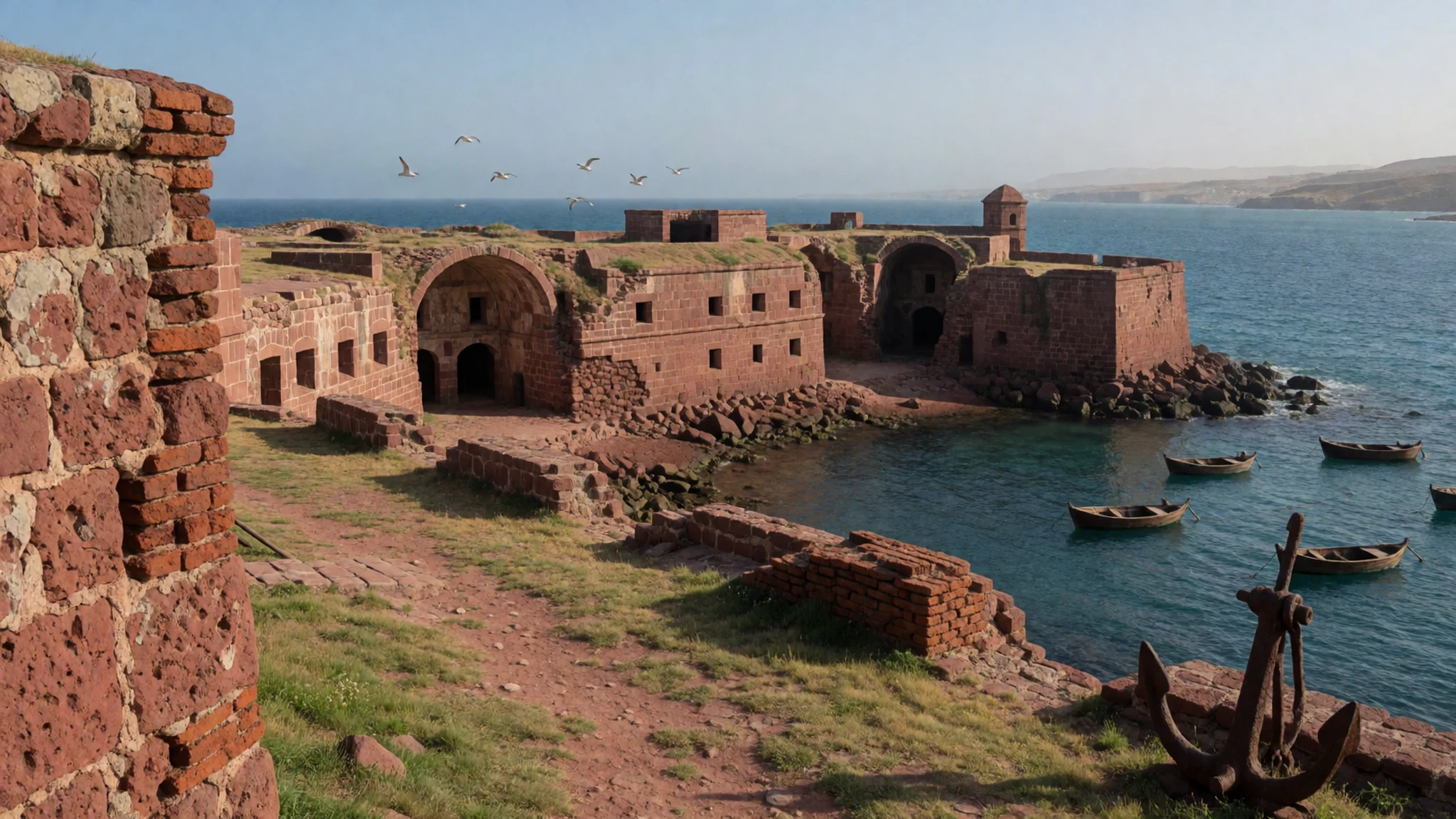
- Rainbow Valley and Mountains — Central Interior
This extraordinary geological formation displays undulating hills striped in vibrant bands of yellow, purple, black, and fiery red earth. The mineral-rich soils create a surreal landscape that shifts in colour depending on the angle of the desert sun, offering an unmatched visual spectacle for photographers and geology enthusiasts exploring the interior.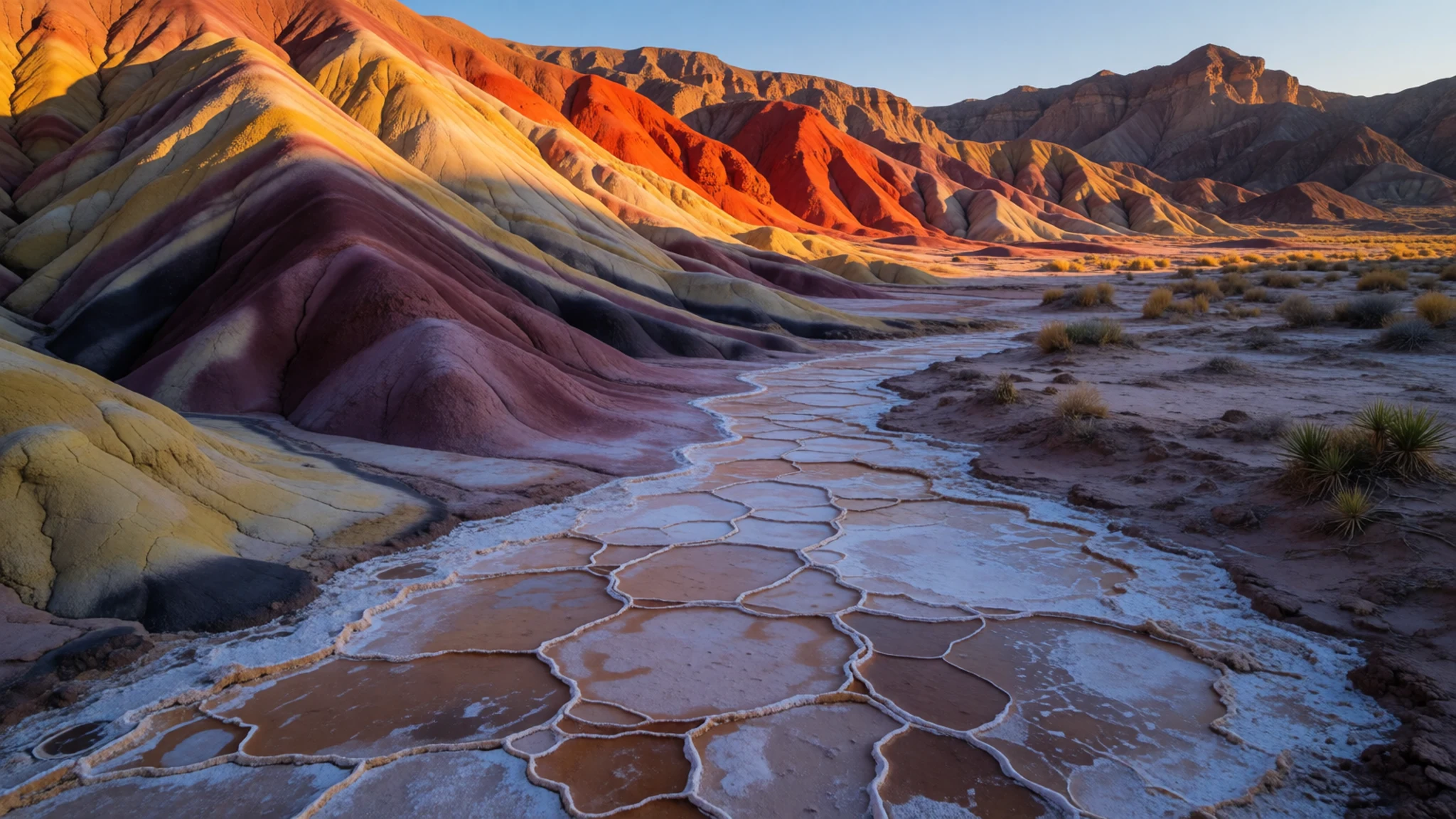
- The Museum and Gallery of Dr. Ahmad Nadalian — Hormuz Town
Situated within the main settlement, this intimate cultural hub showcases carved stones, environmental artworks, and traditional handicrafts created by a renowned Iranian artist. The gallery serves as a community focal point, celebrating the island's natural heritage and educating visitors about local conservation efforts and indigenous coastal craft traditions.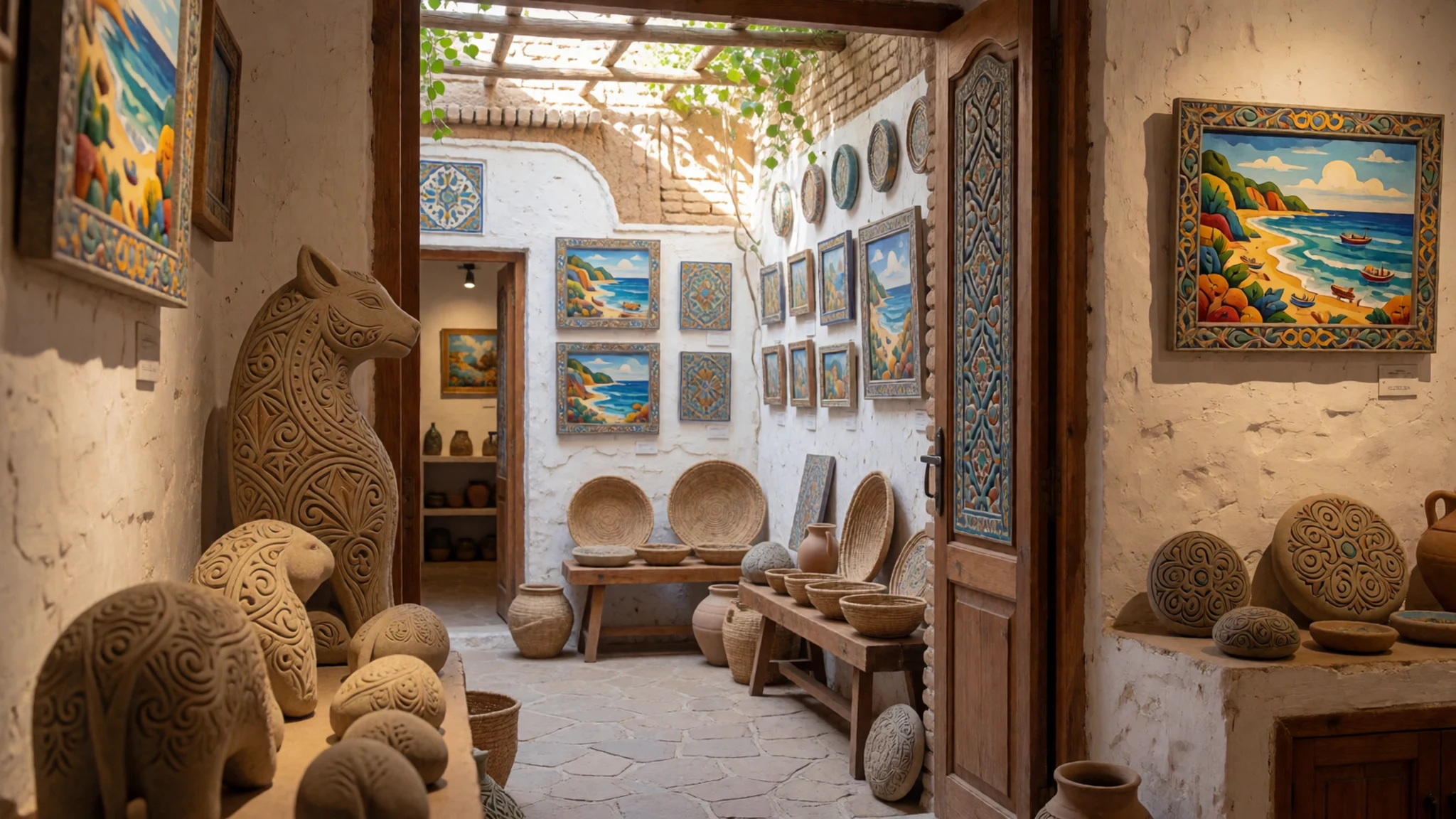
- Mangrove Forests of Hara — Coastal Wetland Areas
Flourishing within the saltwater tidal channels along the coast, these remarkable trees survive entirely on saline water and tidal inundation. Exploring the twisting waterways by local boat reveals dense thickets that act as critical nesting grounds for herons, egrets, and migrating sea birds sheltering in the shallow coastal wetlands.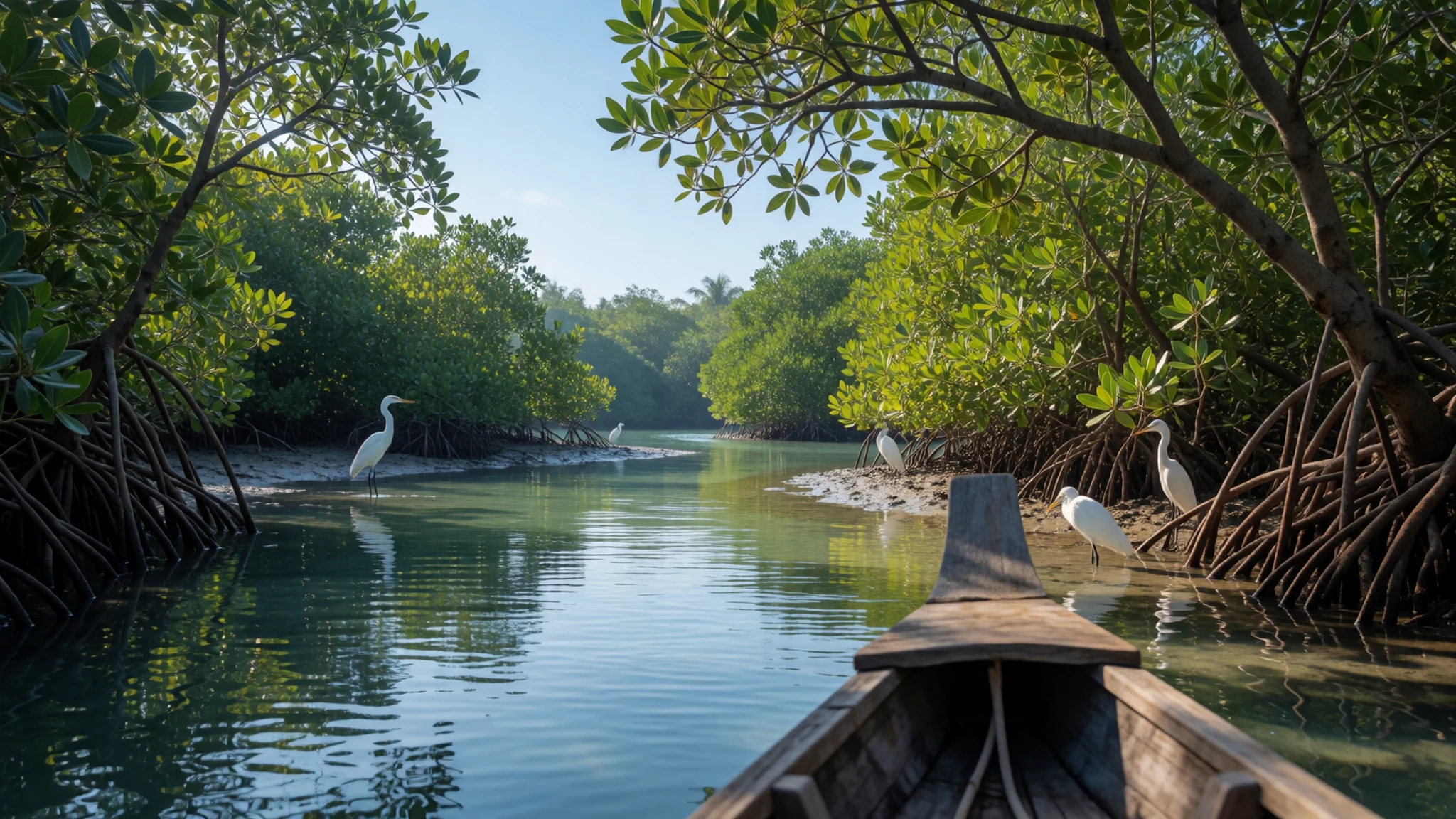
Culture
Daily life on Hormuz Island moves at a slow, unhurried pace, deeply tied to the rhythms of the sea and the harsh desert climate. The small permanent population maintains a traditional coastal culture shaped by generations of fishing, seafaring, and seasonal agriculture. Hospitality is deeply embedded in the local character, with residents welcoming curious travellers despite the linguistic and cultural differences. Artistic expression thrives here, inspired directly by the vivid mineral soils that coat the landscape; local artisans and visitors alike use coloured earths for temporary ground paintings and crafts. Visitors should approach the community with sensitivity, respecting traditional ways of life and the modesty norms expected across rural regions of the country. Always ask for permission before photographing local residents, particularly women and elders in public spaces.
What to wear
Traditional clothing on Hormuz Island reflects the practical demands of a hot southern coastal environment combined with regional Iranian customs. Historically, local women wore distinctive colourful garments, embroidered trousers, and traditional face coverings or masks that signalled tribal identity and protected against the harsh desert sun and sea spray. Men traditionally favoured loose cotton tunics and lightweight trousers suited for working on fishing boats under intense heat. Today, everyday wear blends casual modern clothing with regional standards of modesty; younger generations often wear practical t-shirts and trousers, while older residents maintain traditional styles. Visitors should dress conservatively to respect local sensitivities, opting for loose-fitting garments that cover shoulders and legs. Sturdy footwear is essential for exploring the rugged terrain, salt caves, and sharp rocky hillsides, while a wide-brimmed hat and sunglasses are indispensable for protection against the intense glare of the mineral-rich landscape.
What to eat
- Qaliyeh Mahi — Local village eateries
A fragrant, slow-simmered fish stew prepared with a rich paste of fresh herbs, tamarind, garlic, and fenugreek leaves. Found in local family-run eateries around the main village, it delivers a deeply savoury and tangy flavour profile.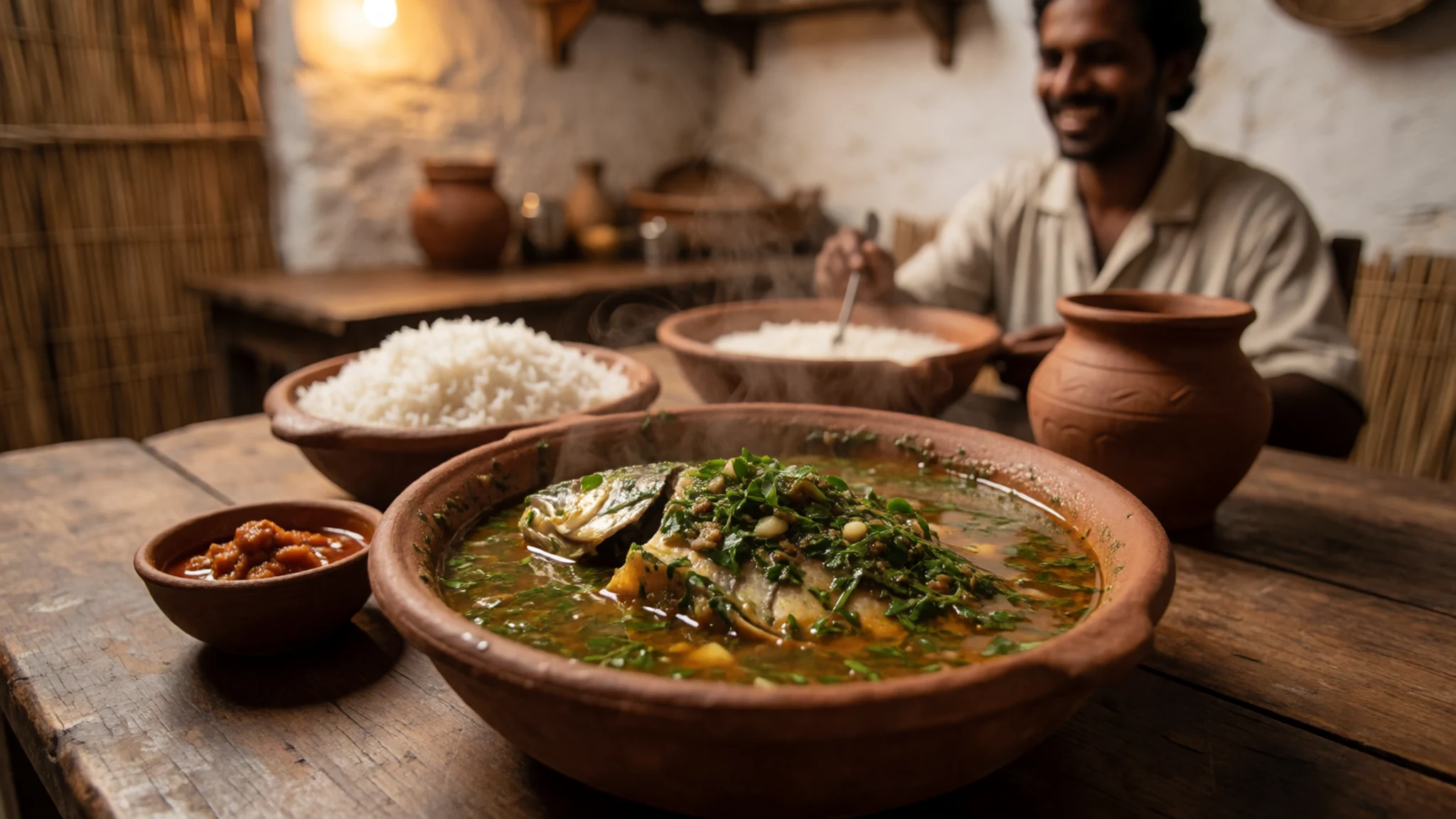
- Grilled Catch of the Day — Seaside stalls near the pier
Fresh fish pulled directly from the Persian Gulf, simply seasoned with local spices and char-grilled over open flames. Available at rustic seaside stalls near the landing pier, served alongside warm flatbread.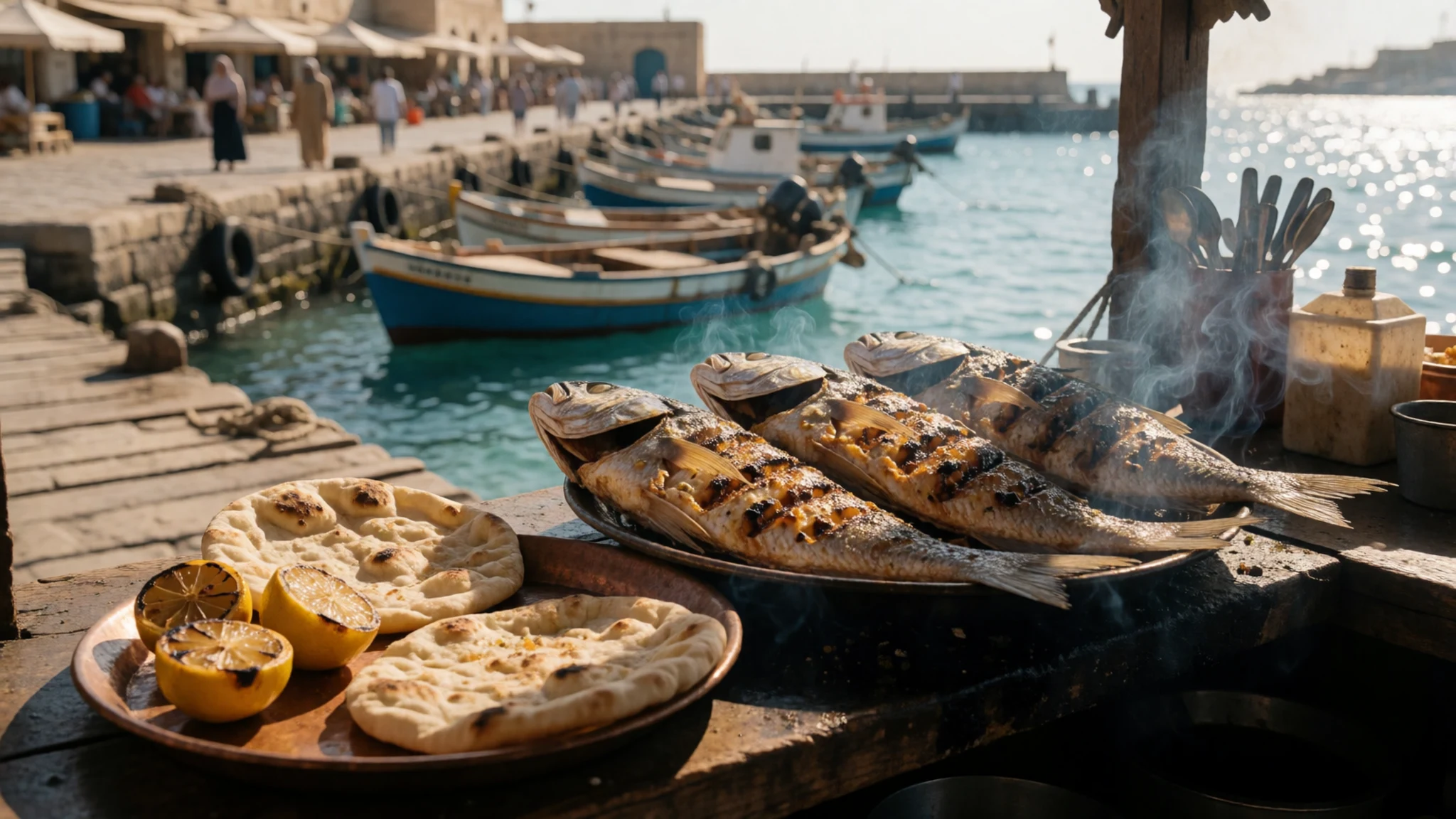
- Tomshi Bread — Neighbourhood bakeries in Hormuz town
A paper-thin, griddled flatbread brushed with a savoury brine and a fermented red soil paste, then folded over with egg and cheese. Eaten fresh from small neighbourhood bakeries across the town. - Local Seafood Rice — Village dining rooms
A fragrant rice dish cooked with prawns or local fish, heavily spiced with cumin, turmeric, and dried limes harvested in the region. Served in communal portions at simple village dining rooms.
Plan it
Best time. November to March offers pleasant, moderate weather; avoid the intense, blistering heat of the summer months.
How long. 2–3
Getting there. Take a ferry or speed boat from the mainland ports of Bandar Abbas or Qeshm Island directly to Hormuz Island.
Budget. low
Tips
- Hire a local three-wheeler tuk-tuk driver at the port for a comprehensive island tour
- Carry sufficient cash as card payment facilities are extremely limited on the island
- Bring plenty of drinking water before setting out to explore the interior valleys
- Wear old clothing or shoes that can withstand permanent staining from the red ochre soil
Etiquette
- Always ask permission before photographing local residents
- Dress modestly in loose clothing that covers shoulders and knees
- Respect local conservation rules by avoiding the commercial export of natural coloured soil
Nearby
Sources
- Wikidata Q695265 (CC0)
- Wikipedia (rev 1377383168) (CC BY-SA 4.0)
- Wikivoyage (rev 5027718) (CC BY-SA 4.0)