Harz National Park
Harz National Park, Germany
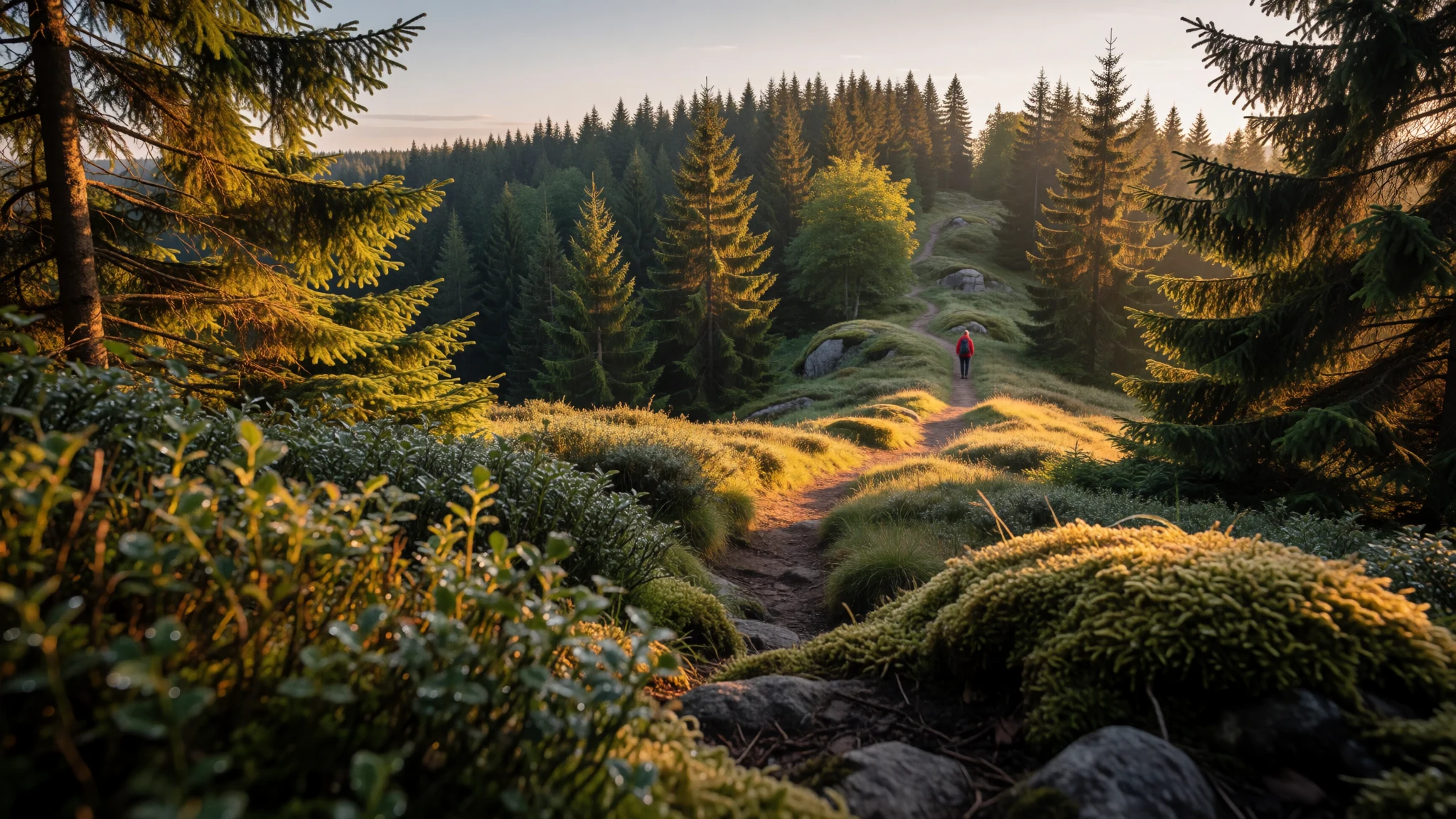
Harz National Park offers spruce and beech forest, granite and creeks, a returning lynx, and trails across an old border.
The place
Harz National Park covers western Harz country in Germany, on both sides of the line between Lower Saxony and Saxony-Anhalt. Southern approaches come through Herzberg and Bad Lauterberg; the northern slopes meet lower ground around Bad Harzburg and Ilsenburg, and Wernigerode sits on that same northern rim. Goslar, Göttingen and Harz districts each hold a piece of the protected land. Woodland dominates: spruce and beech, broken in places by bog, granite and small creeks. Europe's Natura 2000 listing also covers this ground, grouping it with other protected nature sites.
The woods are not one even plantation. In many stands the spruce has died on its feet, pale trunks left where bark beetles have passed, and those stems are kept as part of the forest rather than cleared away. Other patches still meet overhead, beech among the conifers, and water drops through tight valleys, the Ilsetal near Ilsenburg among them. Up on the plateau, Torfhaus is a small settlement exposed to the weather, while rocks such as the Scharfenstein break the canopy and look across the tops.
Wild animals that are uncommon in much of Germany use this cover. White-throated dippers work the streams, black storks and peregrine falcons hunt the valleys, and the European wildcat stays in the quieter growth. The Eurasian lynx, absent from the Harz for generations, has been released back and has raised young inside the park. The park in its current form dates from 2006, and it is still mostly trees, stone and water.
Its story
Harz National Park was assembled from reserves on either side of the old inner German border. The eastern reserve, in Saxony-Anhalt, was created in 1990 under the East German national-park programme, just before reunification. It took in a wide piece of the eastern Harz, from the Ecker Dam and Ilsenburg in the north down toward Schierke, and it included the Brocken. Wernigerode became the staff base, with Hubertus Hlawatsch as an early lead.
The border, more than any founder, explains the landscape. Security strips and closed zones put large parts of the mountains beyond ordinary reach. Before that closure tightened, a permit for the Brocken was not hard to arrange; once the peak was sealed, tourist trips stopped. Away from the fences themselves, plants and animals had a long period with very few people. Spruce then began to sicken, hit by bark beetles and fungal attack. In the hopeful season around reunification, that sickness was turned into a case for a national park: guard the woods instead of forcing them back into timber production.
Lower Saxony had formed its own Harz park before both sides were joined into today's Nationalpark Harz, a single reserve across both states. Andreas Pusch took charge of the joined park. Walkers can now cross ground that an earlier generation was barred from, and on both sides many beetle-killed spruce are left to fall and to feed the next stand. The story of Harz National Park is that closed frontier, the failing conifers, and the choice to let a wilder wood follow.
What to see
- Ilse Falls — Ilsetal, near Ilsenburg, Saxony-Anhalt
Ilse Falls drop through the Ilsetal in Harz National Park, near Ilsenburg in Saxony-Anhalt. The creek runs over rock beneath spruce and mixed wood, and the path stays with the water. It is a shorter outing than the plateau routes, and a clear way to see how streams cut the northern forest.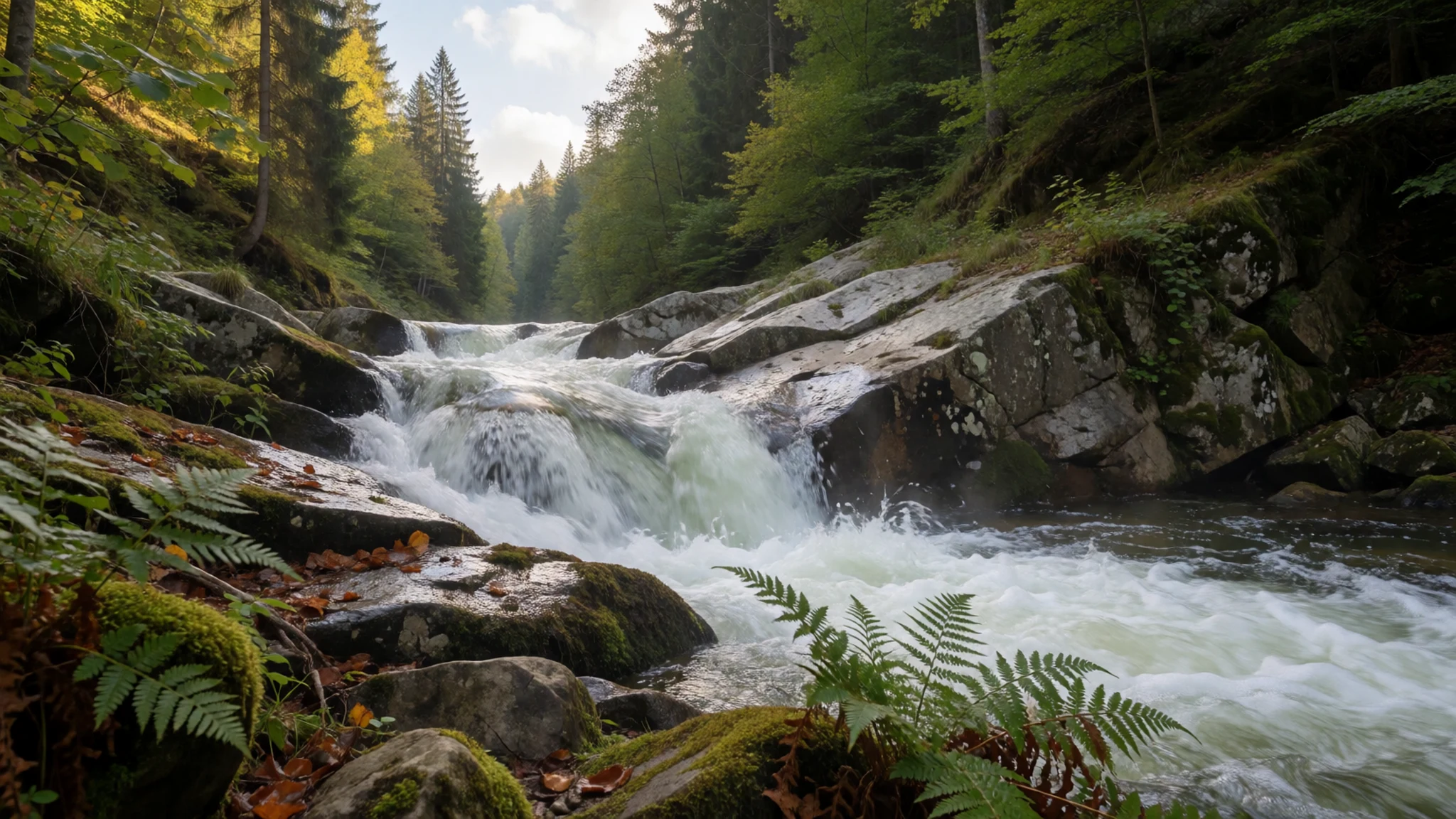
- Torfhaus — Torfhaus, Lower Saxony
Torfhaus is a small high settlement in Harz National Park, in Lower Saxony, and a usual start for walks on the open plateau. Houses and a few visitor buildings sit among spruce beside bog and high forest. From here the park reads as raised bog and woodland rather than a narrow gorge.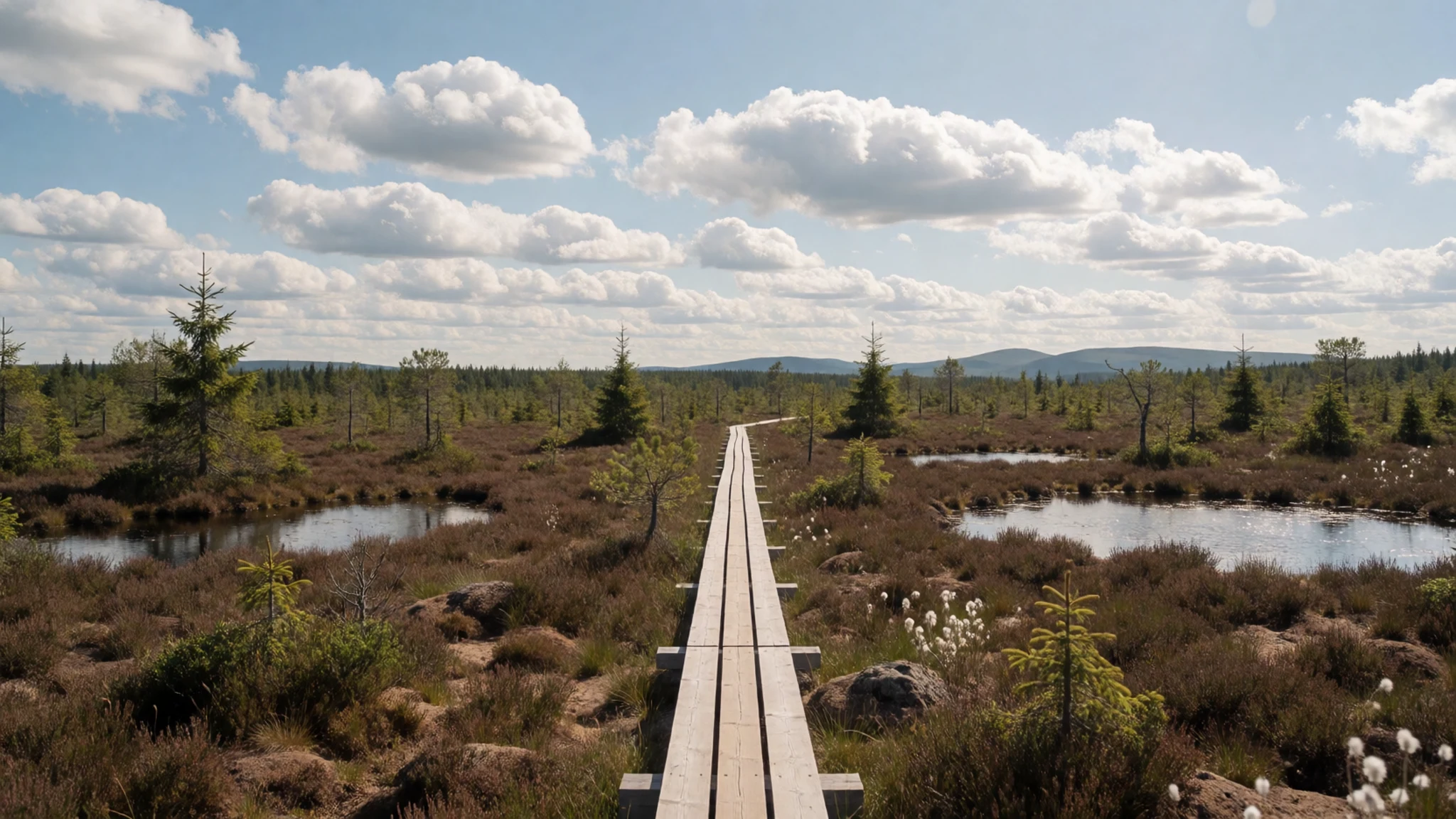
- Scharfenstein — western Harz
The Scharfenstein is a granite rock in Harz National Park that breaks through the spruce canopy. From the outcrop the woods run on, ridge after ridge, with few openings. It is the stony side of a park whose ground is mostly trees, with granite giving the forest a hard edge and a view.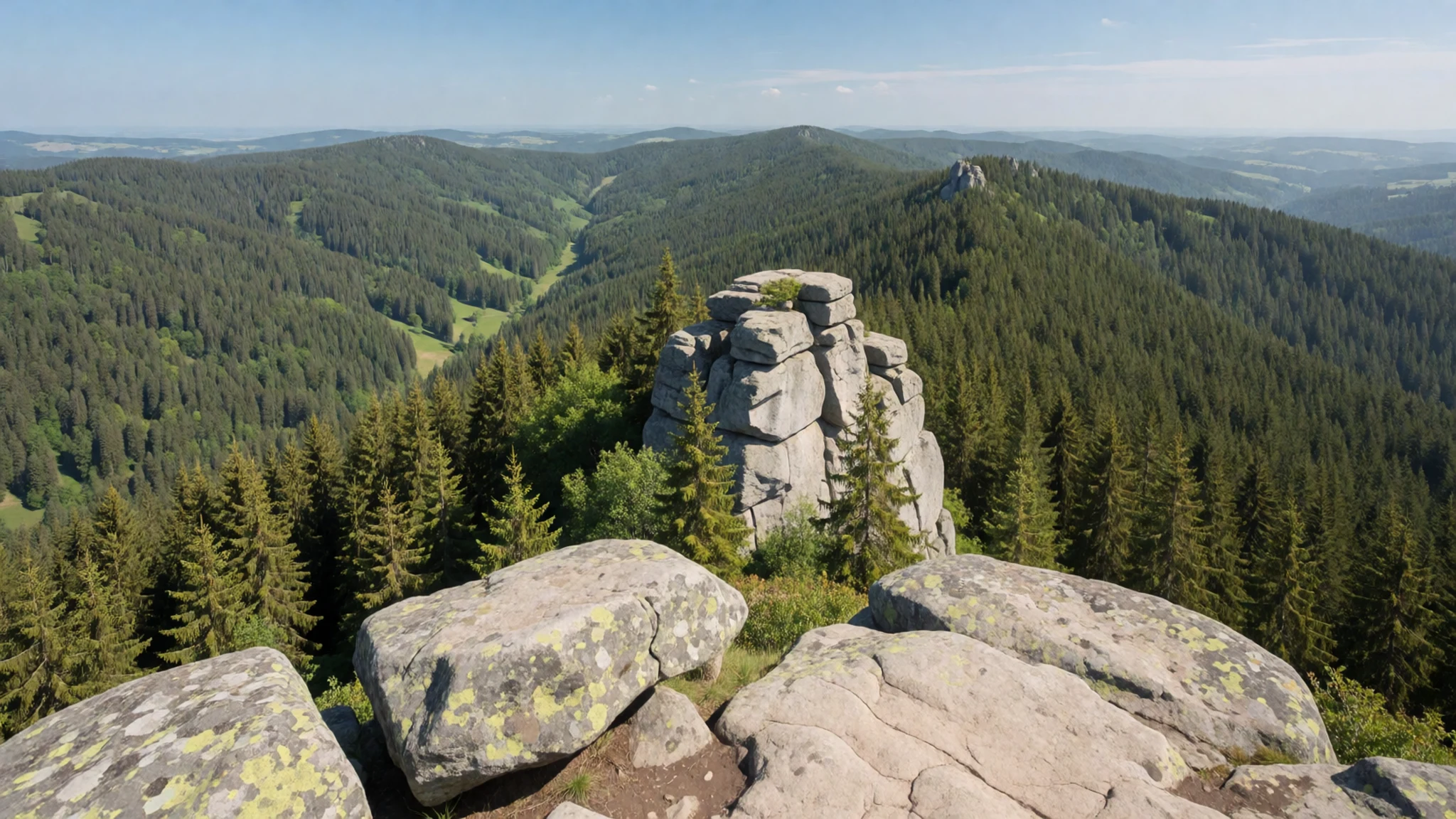
- Luchsstein — Harz National Park
The Luchsstein is a trailside stone in Harz National Park that recalls an 1818 lynx hunt at Lautenthal. The Eurasian lynx vanished from these mountains long ago; animals were later released, and wild cats have raised young in the park. Walkers rarely meet one. The stone marks that hunt, in which a male lynx was killed, and stands in forest the cats now use.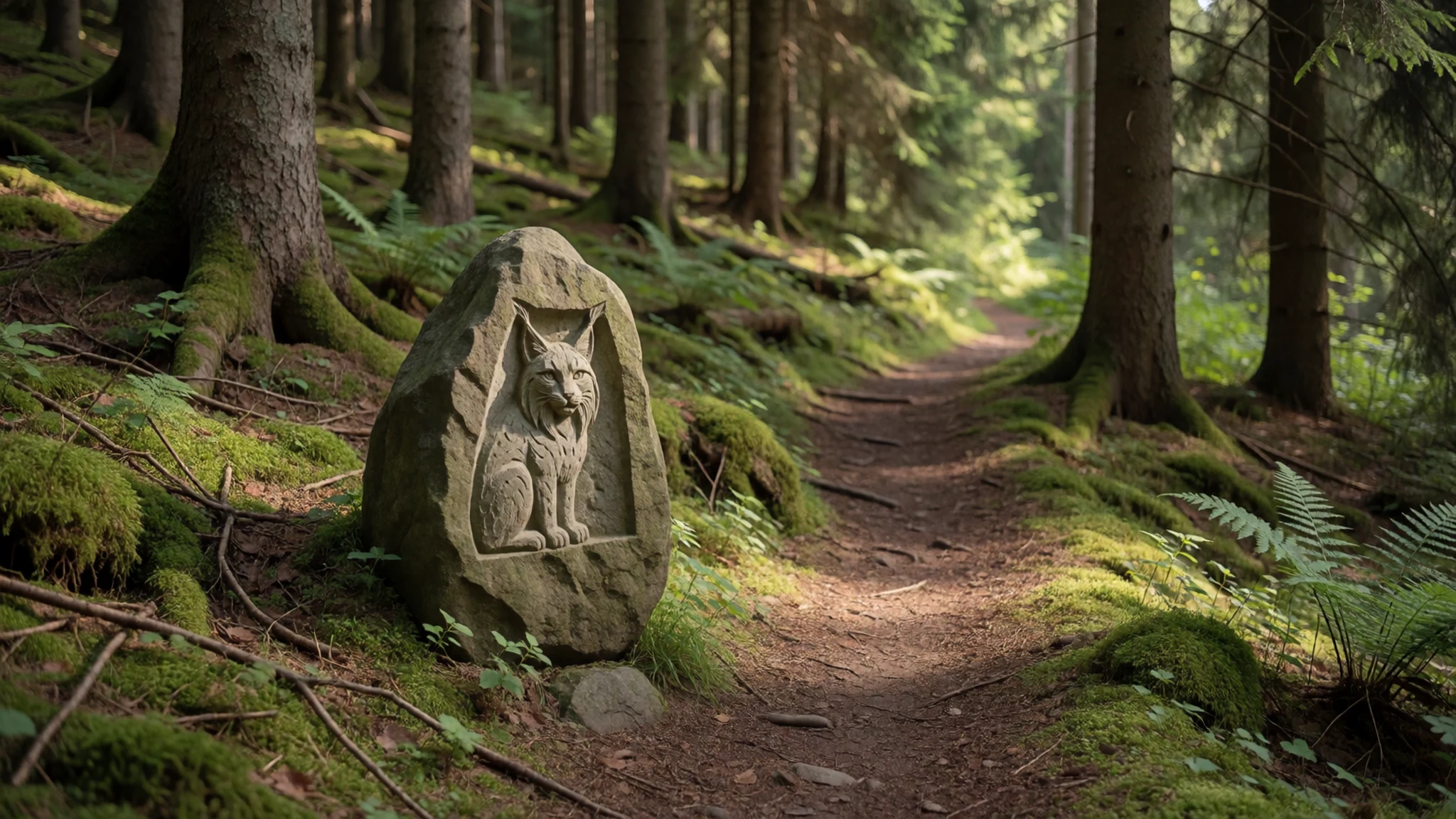
- Bark-beetle spruce — Wurmberg, north of Braunlage, and across the park
Standing dead spruce is a familiar sight in Harz National Park. Grey trunks show where bark beetles have killed the trees, including on the Wurmberg north of Braunlage, and much of that wood is left to fall. The look is stark. After years of beetle and fungal damage, the park lets old stands break down so that new growth can come through.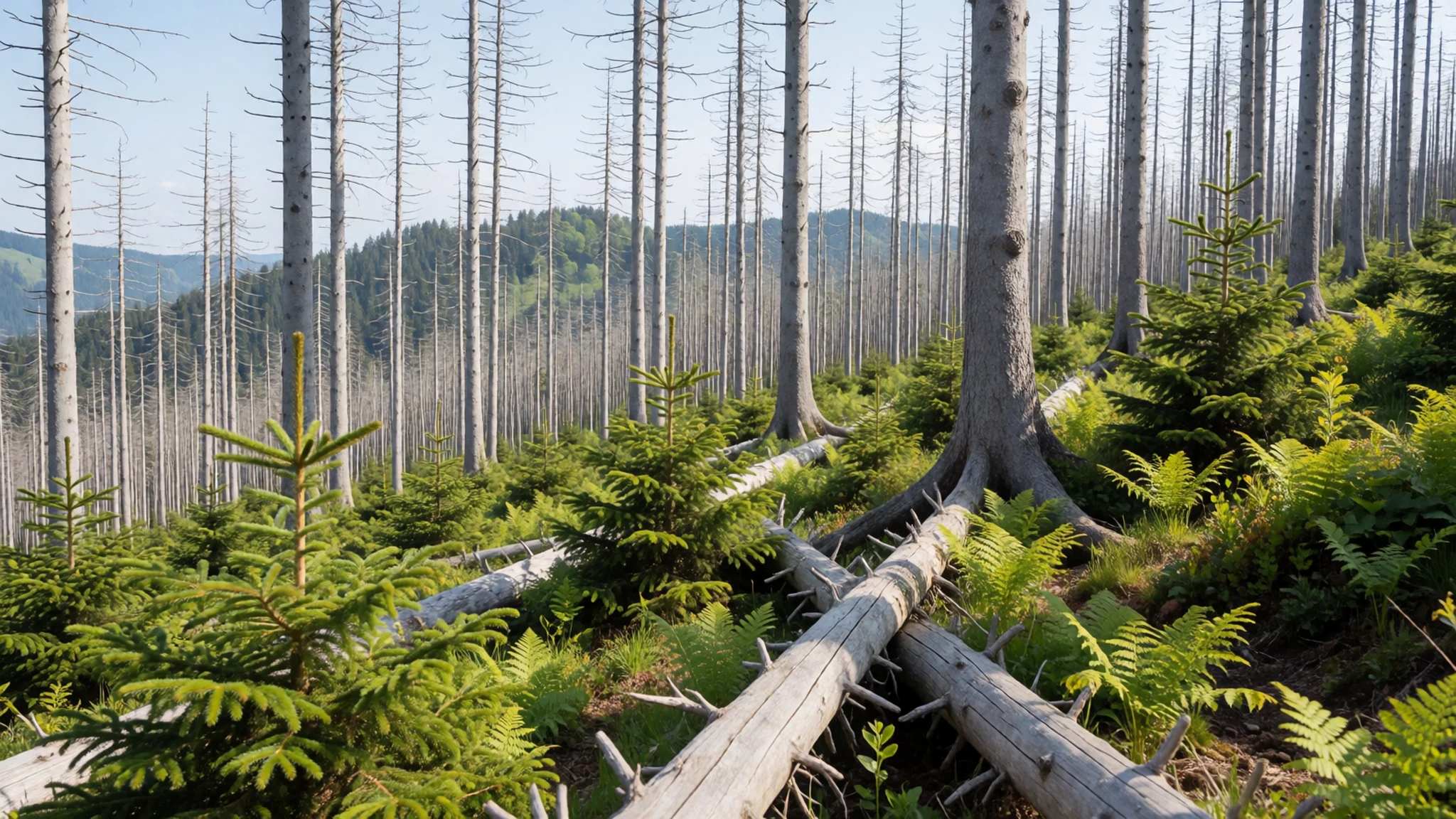
- Older woodland — Lower Saxony and Saxony-Anhalt sides of the park
Quieter corners of Harz National Park still hold older woodland, with beech and spruce closing over moss, rock and a narrow path. These stands sit near the dead spruce and show the forest the park means to keep. People walk them, sometimes with a dog, on both the Lower Saxony and the Saxony-Anhalt sides. Shade and rough ground are the reward.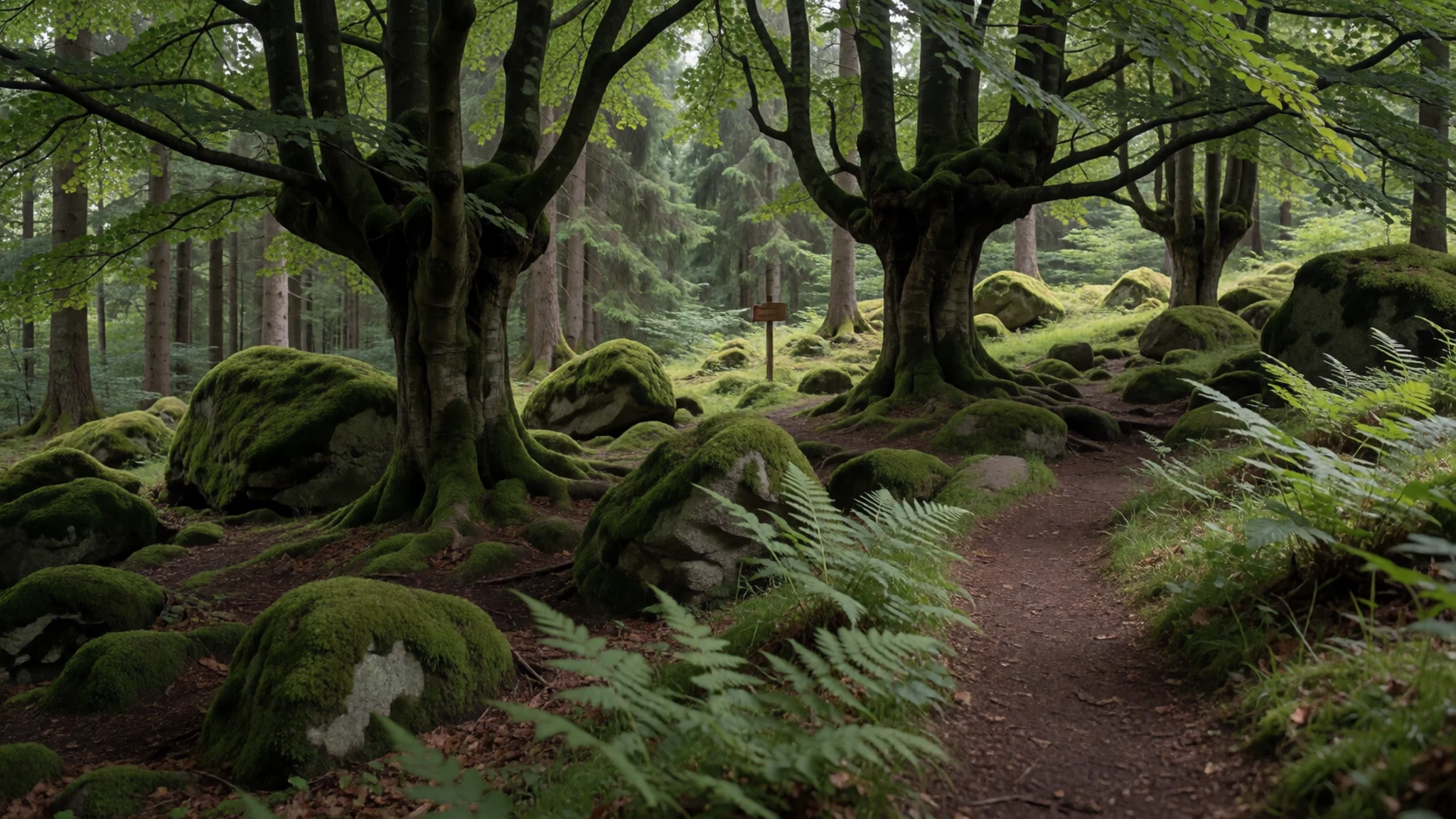
Culture
Harz National Park lies in a corner of Germany where mining, forestry and small mountain towns still shape the day. Goslar, just outside the trees on the northern side, is the cultural centre: a market square, half-timbered streets and a long record of imperial and mining life, within reach of the park. Villages such as Ilsenburg and Schierke grew as gates into the woods, and people still treat a walk as an ordinary weekend rather than a rare expedition. The Brocken, inside the old eastern park, carries the Walpurgis tradition, a spring night of witches' costume and bonfires that draws locals and visitors onto the mountain. For the rest of the year the culture inside the park is the culture of the path: waymarks, quiet manners, and a shared view that beetle-killed spruce should stay standing. The lynx's return is spoken of with pride, though the cat is seldom seen. In Harz National Park, stay on the marked paths and do not leave them to approach a lynx, a wildcat or a nesting bird.
What to wear
Harz National Park has no costume of its own, but the towns around it still know the older clothes of the Harz. Mining dress, the Bergmannstracht, is a familiar festival outfit: a dark coat or jacket, brass or gold-coloured buttons, and a miner's cap, worn at parades rather than on the trails. Women's Tracht has varied from village to village, often a full dark skirt, an apron, a white blouse and a shawl, cut in wool and linen for a cool mountain year. Those garments come out on festival days. At Walpurgis, capes, pointed hats and ragged skirts join them for the witches' night on the Brocken.
On an ordinary day the forest dress is practical. Residents and regular walkers wear softshell jackets, fleece, walking trousers and boots with a firm grip, plus a small pack. Bright colours help under spruce shade. Denim and city shoes are normal on Goslar's market square, and less help once the path turns to rock and mud.
A visitor should dress for wet stone and for air that is cooler on the plateau than in the valley towns. Waterproof boots already broken in, a rain jacket, and layers that can be added when the wind rises are the kit that matters. Ordinary clothes are enough in town. On the paths, open sandals are a poor choice, and a hat helps with sun and cold alike.
What to eat
- Harzer Käse — cheese counters and grocers in Goslar and the valley villages
Harzer Käse, the sour-milk cheese eaten around Harz National Park, is sold in small rounds with a sharp smell and a taste that strengthens as it ages. It is taken with bread and butter, sometimes with onion, as a plain plate.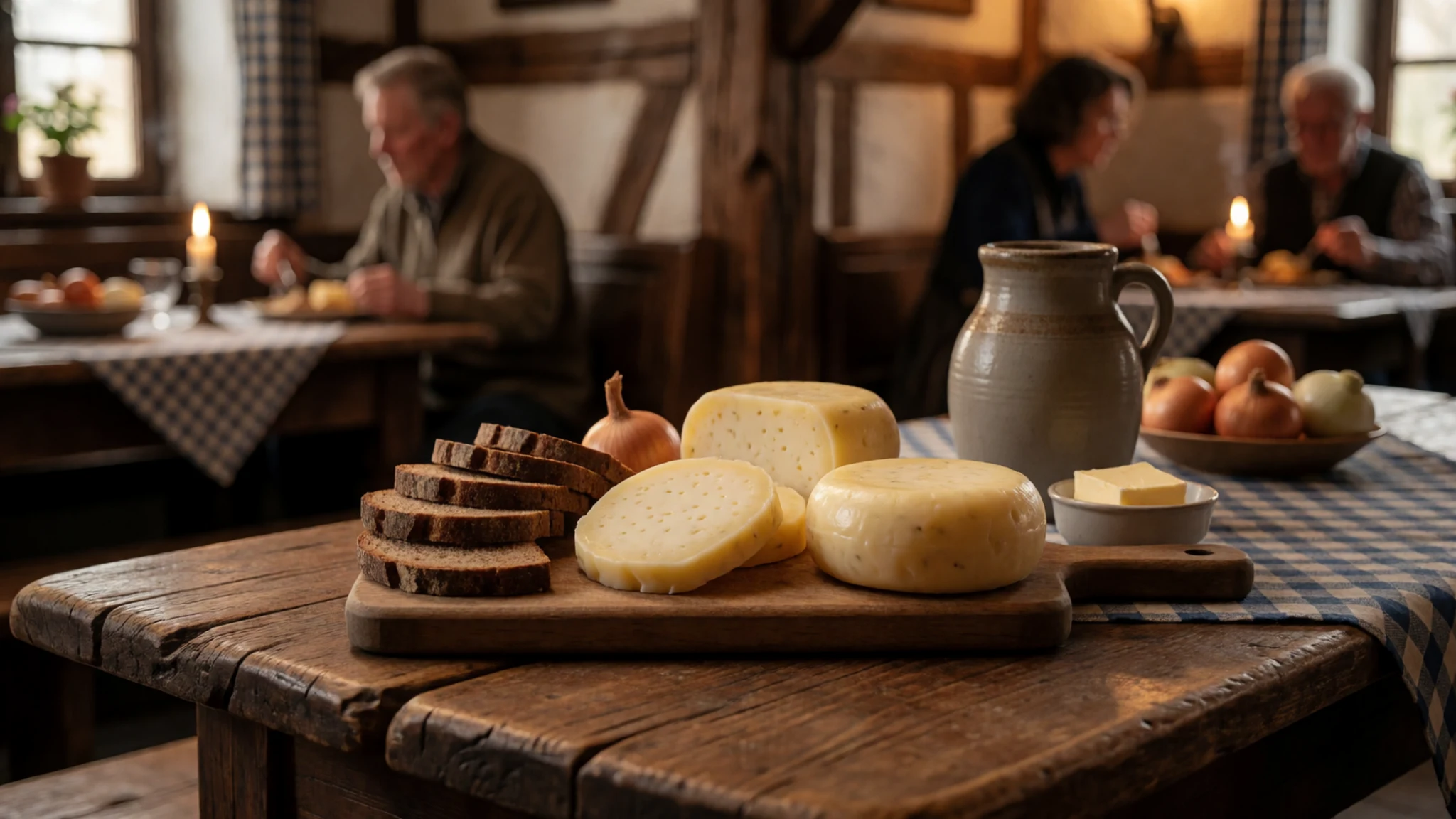
- Stream trout — simple inns in Ilsenburg, Goslar and the northern valleys
Trout from cold streams is a standard plate in the Harz, pan-fried or lightly floured, often with boiled potatoes and a green salad. Harz National Park's gateway towns, among them Ilsenburg and Goslar, serve it in simple inns rather than formal dining rooms.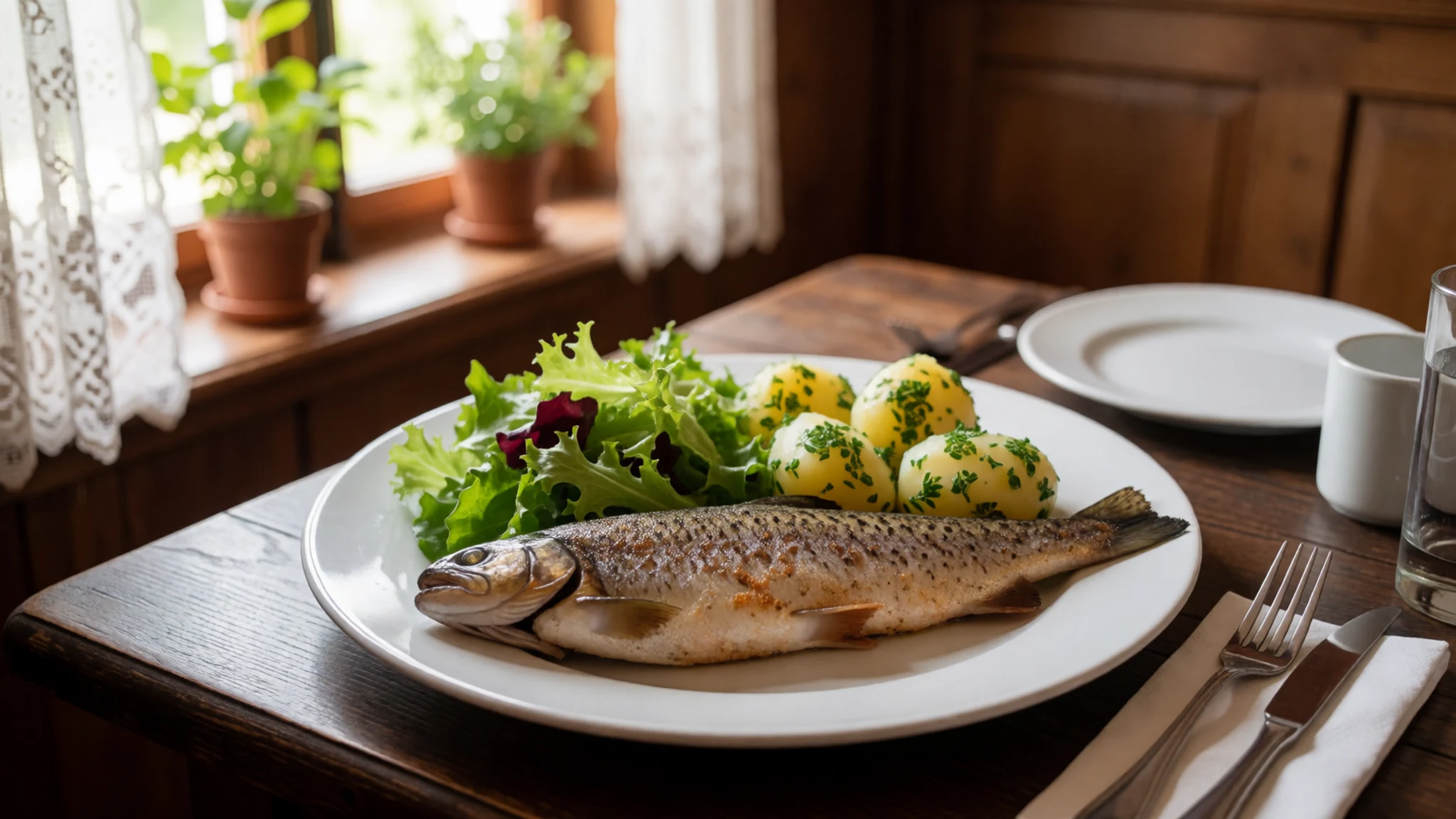
- Venison and wild boar — Gasthäuser in Goslar and the Harz valleys
Venison and wild boar turn up as roast or ragout, with red cabbage and potato dumplings, on menus around Harz National Park. Game is the meat these hills have long supplied. A Gasthaus in Goslar or a valley village is the usual place to eat it. - Bakery roll with sausage — bakeries on market streets in Goslar, Wernigerode and the valley villages
A bakery roll with sliced sausage or cheese is the food walkers actually carry into Harz National Park. Walkers pick it up at a bakery on a market street in Goslar, Wernigerode or a valley village, and eat it at the trailhead rather than deep in the woods. - Local beer — town pubs and brewery taps in Goslar and the Upper Harz
The Harz drinks its own beer, often a malty lager or a darker seasonal brew, in pubs that still feel like neighbourhood rooms. Goslar has long brewed beside the Gose, and a glass is the usual partner for cheese, trout or a simple sausage around Harz National Park.
Plan it
Best time. April and October are the most comfortable walking months in Harz National Park: cooler days, fresh leaves in spring and colour in the beech later on. July is the hottest and wettest month, and August is nearly as hot, so the easier paths fill up. Winter can bring snow on the plateau and shorten the daylight, so high routes depend on the weather and on whatever the official park site is currently advising.
How long. 3–4
Getting there. Hanover is the practical airport, with Leipzig/Halle and Frankfurt as other rail-linked options. Regional trains reach Goslar from Hanover, Brunswick, Göttingen, Halle and Magdeburg; Hanover, Halle and Göttingen also sit on the ICE network, and many journeys change at a town such as Hildesheim. By car, the motorway between Kassel and Hamburg runs along the western Harz, and the last leg is a local road into Goslar, Bad Harzburg, Ilsenburg or up to Torfhaus.
Budget. mid
Tips
- Set off on popular paths early in the day; high starts such as Torfhaus fill with cars on fine weekends.
- Pack a waterproof layer in every season; the plateau changes faster than the valley towns.
- Carry some cash for small inns and huts; cards are usual in Goslar and less certain in tiny villages.
- Read the official park site before leaving, in case storms or fallen trees have closed a route.
- Give the paths more time than the map distance suggests; mud, rock and deadwood slow the pace.
Etiquette
- Keep to marked trails so nesting birds, lynx and regrowing forest stay undisturbed.
- Hold dogs close; these woods are wildlife habitat.
- Do not pick plants, take deadwood or leave food for animals.
- Ask before photographing people in the villages.
Nearby
Sources
- Wikidata Q702540 (CC0)
- Wikipedia (rev 1370668931) (CC BY-SA 4.0)
- Wikivoyage (rev 5402951) (CC BY-SA 4.0)
- Photo photos/01-ilsenburg-ilsetal-ilsef-lle-2017-0143.jpg (CC BY-SA 4.0)
- Photo photos/02-torfhaus-im-harz-img-4575.jpg (CC BY 3.0)
- Photo photos/03-scharfenstein-2.jpg (CC BY-SA 2.0)
- Photo photos/04-luchsstein.jpg (CC BY-SA 2.0)
- Photo photos/05-baumleichen4.jpg (CC BY 3.0)
- Photo photos/06-braunlage-wurmberg-01.jpg (CC BY 3.0)
- Photo photos/07-rimg0832.jpg (CC BY-SA 2.0 de)
- Photo photos/08-20151011-hikingintheharz-dsc08631-ptrqs.jpg (CC BY-SA 4.0)


