Harlech Castle
Harlech Castle, United Kingdom
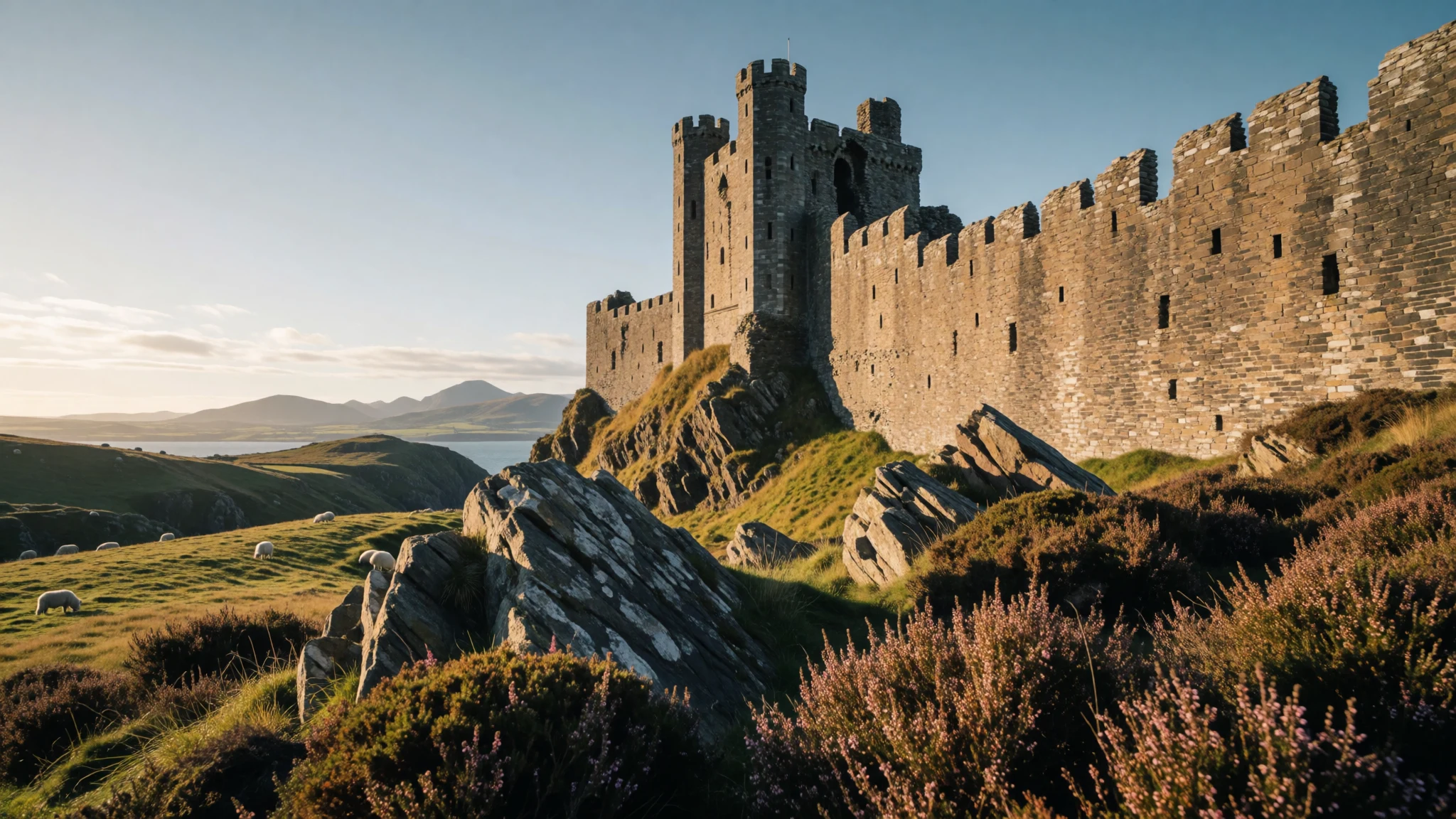
Harlech Castle is a dramatic medieval fortress perched on a rocky crag in Wales, offering immense historical depth and coastal views.
The place
Harlech Castle rises dramatically from a formidable rocky knoll in Harlech, Gwynedd, Wales, looking out toward the expanse of the Irish Sea. Constructed as part of a major fortification campaign during the late thirteenth century, the fortress commands attention with its imposing stone walls and concentric design, which made the most of the sheer natural precipice below. Visitors arriving in the settlement encounter a rugged landscape where the sea once washed directly against the foot of the cliff before receding over the centuries. Managed today by the Welsh historic environment service, the castle stands as a striking reminder of medieval engineering, drawing travellers who walk its stone pathways to look across the sweeping Cardigan Bay and the surrounding mountains of the region. The narrow lanes of the surrounding town wind past stone houses, local shops, and traditional eateries, creating a quiet atmosphere far removed from busier urban tourist tracks. Weather here is frequently shaped by Atlantic fronts, bringing brisk coastal winds and sudden showers that contrast with bright, clear spells in the warmer months. Walking around the site requires sturdy footwear, as the pathways include uneven medieval masonry, steep stone stairs, and sloping gravel surfaces that demand careful footing. The surrounding area also offers sandy expanses and mountain trails, making the location a compelling base for those interested in exploring both coastal geography and rugged upland terrain.
Its story
Harlech Castle has witnessed centuries of conflict, rebellion, and shifting political control across Wales and England. In local mythology, the site of Harlech Castle is linked to ancient tales of princesses and legendary figures, though historians trace its physical origins to the campaign launched by Edward I in the late thirteenth century. English forces pushed through the rugged terrain of North Wales, securing the headland and rapidly commencing construction under the direction of master builders and military engineers from Savoy. During the medieval period, the fortress faced severe tests during major uprisings, withstanding lengthy sieges before falling to Welsh leaders who used it as a primary military headquarters and residence. In later generations, the castle changed hands through prolonged conflicts, including the Wars of the Roses—an extended defence that inspired the famous traditional song commemorating the garrison—and the later conflicts of the English Civil War, where it earned the distinction of being the final fortification in the region to surrender to Parliamentary forces. Throughout these turbulent epochs, the thick stone walls absorbed cannon fire, endured blockades, and sheltered commanders through bitter winters. Today, these historical layers are preserved under heritage protection, allowing visitors to examine the architectural innovations of medieval military design and reflect upon the turbulent campaigns that shaped the political borders of the British Isles.
What to see
- Harlech Castle — Harlech town centre
Explore the massive twin-towered gatehouse and walk along the surviving stone curtain walls that once protected the English garrison. Signposts direct drivers to the car park at the base of the rock, from which visitors face a very steep climb up to the main entrance. - Ffordd Pen Llech — Harlech residential district
Walk down or up a remarkably steep residential lane that has gained international attention for its severe gradient. The street drops sharply toward the lower part of town, offering an unusual physical challenge for travellers exploring the local neighbourhood footpaths. - Harlech Beach — Coastal fringe
Descend from the clifftop to access miles of wide sandy shoreline stretching along the coast. The beach provides expansive views across the bay towards the mountain ranges, with designated zones for walkers and families seeking fresh sea air. - Y Lasynys Fawr — Outer Harlech
View the historic stone house associated with an eighteenth-century Welsh author and antiquarian. The building reflects traditional domestic architecture of the period, situated quietly just outside the main cluster of village houses.
Culture
Harlech reflects a distinct blend of Welsh heritage, community traditions, and rural coastal life where the Welsh language remains a natural part of daily conversation. Traditional music, local folklore, and poetry continue to influence cultural gatherings, local festivals, and seasonal events throughout the district. Visitors will find that many residents are bilingual, and greeting shopkeepers or locals with a polite Welsh phrase is always appreciated. The community maintains a relaxed, unhurried pace of life that respects both the surrounding agricultural lands and the historic significance of the monuments. When exploring local chapels, historic sites, or rural paths, visitors should maintain a respectful volume and be mindful of private property rights in residential areas. Always close gates behind you when walking through farmland or grazing pastures.
What to wear
In Harlech, traditional Welsh attire is preserved for special cultural festivals, national eisteddfodau, and historical pageants, featuring classic woollen shawls, tall black hats, and woven striped flannel skirts crafted from locally produced sheep's wool. For everyday wear, local residents and contemporary visitors dress in practical, weather-resistant clothing suited to the changeable coastal climate of North Wales. Because the town sits on an exposed headland exposed to brisk Irish Sea winds and frequent rain, everyday wardrobes prioritize layering, fleece jackets, waterproof outer shells, and durable trousers. Visitors walking around Harlech Castle, steep local lanes, and nearby coastal paths should wear sturdy walking shoes or hiking boots with good grip, as wet stone surfaces and steep gravel tracks can become slippery. Bringing a reliable windproof raincoat and comfortable layers ensures you remain warm while exploring the exposed fortifications and rugged hillside trails.
What to eat
- Traditional Fish and Chips — Road leading up to the castle from the lower town
Enjoy freshly fried fish in crisp batter served with thick-cut chips and salt and vinegar, found at the traditional chip shop located on the road leading up to the castle from the lower town. - Artisanal Welsh Ice Cream — Hufenfa'r Castell in Harlech
Sample rich, locally crafted dairy ice cream available in a variety of traditional and seasonal flavours, located at the popular village parlour near the historic fortress gates. - Loose-Leaf Tea and Specialty Coffee — Cemlyn Tea Shop in Harlech
Warm up with a selection of over thirty varieties of loose-leaf teas or Rainforest Alliance coffees served in a cosy, award-winning village tea room. - Tandoori Specialties — Harlech Tandoori
Taste spiced dishes marinated in yoghurt and cooked in traditional clay ovens, offering an alternative dining option featuring classic Indian flavours.
Plan it
Best time. May to September offers the most reliable daylight hours and milder weather for coastal walks and castle exploring, though autumn brings striking colours to the surrounding hills.
How long. 2
Getting there. Harlech station sits on the Cambrian Coast railway line operating between Machynlleth and Pwllheli; drivers arrive via the narrow and winding A496 road.
Budget. mid
Tips
- Wear sturdy walking shoes to tackle the steep climbs and uneven medieval stonework
- Check train timetables in advance as regional services can be infrequent
- Bring a waterproof jacket because coastal weather changes rapidly
- Carry some cash for small rural shops and local cafes
Etiquette
- Always close farm gates behind you when walking through grazing land
- Keep noise levels modest when visiting historic sites and rural chapels
- Respect private property and local residential spaces
Nearby
Sources
- Wikidata Q540964 (CC0)
- Wikipedia (rev 1382454890) (CC BY-SA 4.0)
- Wikivoyage (rev 5403705) (CC BY-SA 4.0)
- Photo photos/01-castell-a-morfa-harlech-gwynedd-mai-2024-parc-cenedlaethol-e.jpg (CC BY-SA 4.0)
- Photo photos/04-sdj-harlech-castle-gatehouse.jpg (CC BY 3.0)

