Hanover
Hanover, Germany
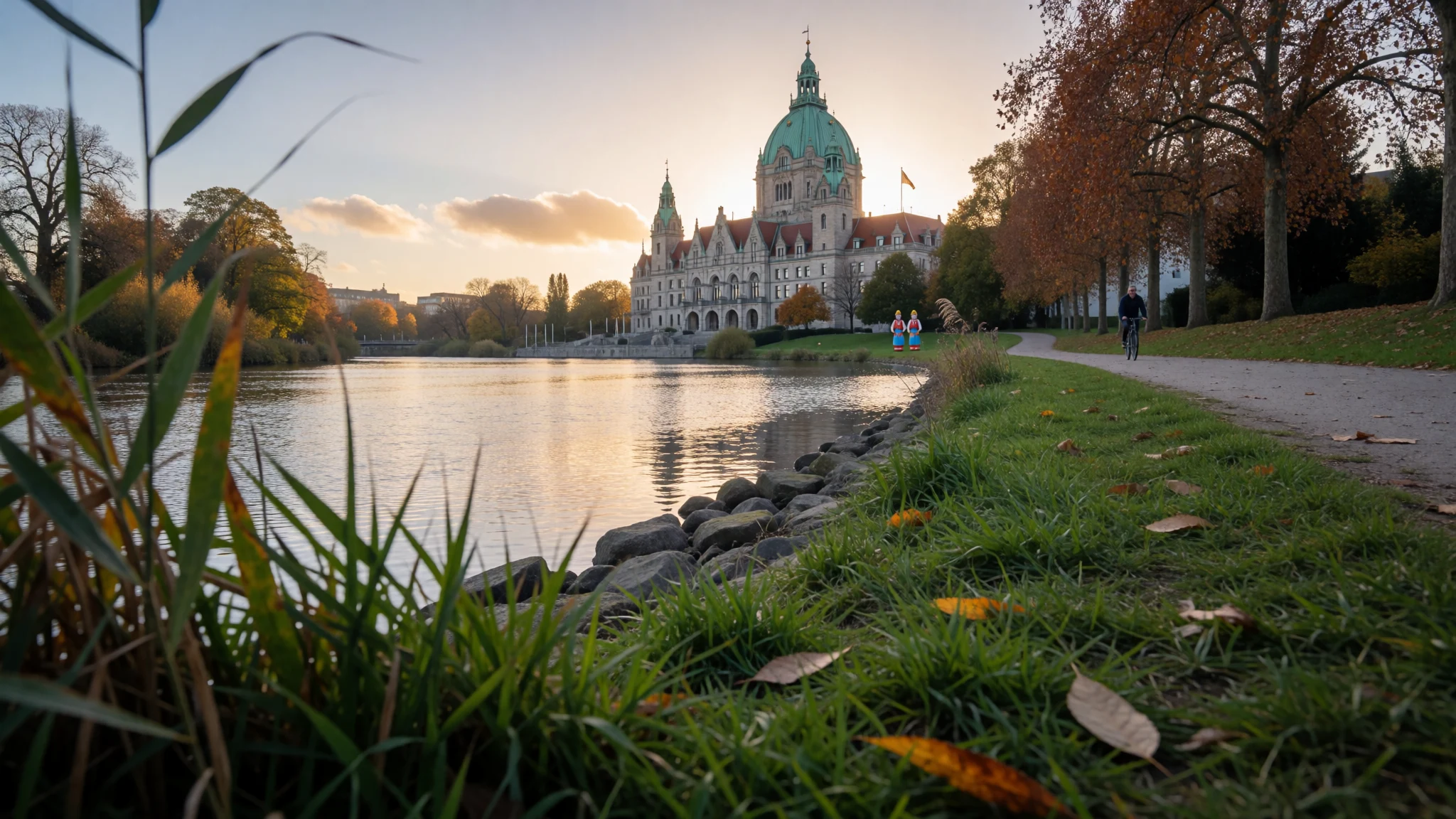
Hanover rewards a slow day or two of baroque gardens, a domed city hall, riverside sculpture and an easy, walkable centre.
The place
Hanover is the capital of Lower Saxony, a city of about 523,000 people standing roughly 55 metres above sea level on the flat southern edge of the North German Plain. The River Leine runs through the centre and is joined there by its tributary, the Ihme, so the mood is one of water meadows, riverbanks and tree-lined streets rather than hills. Suburbs such as Garbsen, Langenhagen and Laatzen merge into the wider urban area, and the surrounding region holds more than a million people, which explains the busy railway station and the steady flow of business travellers.
The centre is compact enough to cross on foot. Around the Marktkirche, the old town is a patchwork: a few half-timbered and brick survivors stand beside postwar buildings, because the city had to be rebuilt after wartime destruction. The Neues Rathaus, with its green copper dome, anchors one side of the centre, while the baroque gardens of Herrenhausen sit to the north-west and the Leine's sculpture-dotted banks lie in between.
Hanover is not a city of crowds. It is a working, administrative and university town, with trade fairs that can fill the beds and push prices up in some weeks. Visitors find it easy to navigate, with a good tram and rail network, plenty of green space, and a pace that suits a short stop between larger German cities. It is better as a calm, well-organised base than as a place for a dense checklist of monuments.
Its story
Hanover began as a modest settlement of ferrymen and fishermen on the east bank of the Leine. Its name may refer to a high river bank, though scholars do not agree. What turned the village into a town was geography. Roads were poor, the river was navigable this far upstream, and the site lay where east–west traffic between the Low Countries and Saxony or Thuringia had to pass. Town rights arrived in 1241, by which time the place had clearly outgrown its village origins. The river also gave it a water link to Bremen, a Hanseatic city, which kept trade moving.
A century later the main churches went up and a wall with three gates enclosed the town. Over the following centuries Hanover changed titles often: it was the seat of a small principality, then an electorate, then a kingdom, and later a Prussian province.
The episode British readers tend to know began in 1714, when the ruling house of Hanover took the British throne while keeping its German lands. The same dynasty then ruled both realms for more than a century, and that link still shapes the local historical museum, which gives those years special attention.
In 1946, after the Second World War, Hanover became capital of the newly formed state of Lower Saxony, a role it keeps today. Much of the old centre had to be rebuilt, which is why the city mixes surviving medieval and baroque pieces with postwar planning rather than offering one unbroken historic look.
What to see
- Herrenhausen Gardens — Herrenhausen, north-west of the centre
The baroque Great Garden at Herrenhausen was laid out in the seventeenth century on the model of Versailles. Clipped hedges, gravel paths, parterres and the tall central fountain reward a slow circuit. Allow half a day, and check the official site for opening times, tickets and fountain displays before going.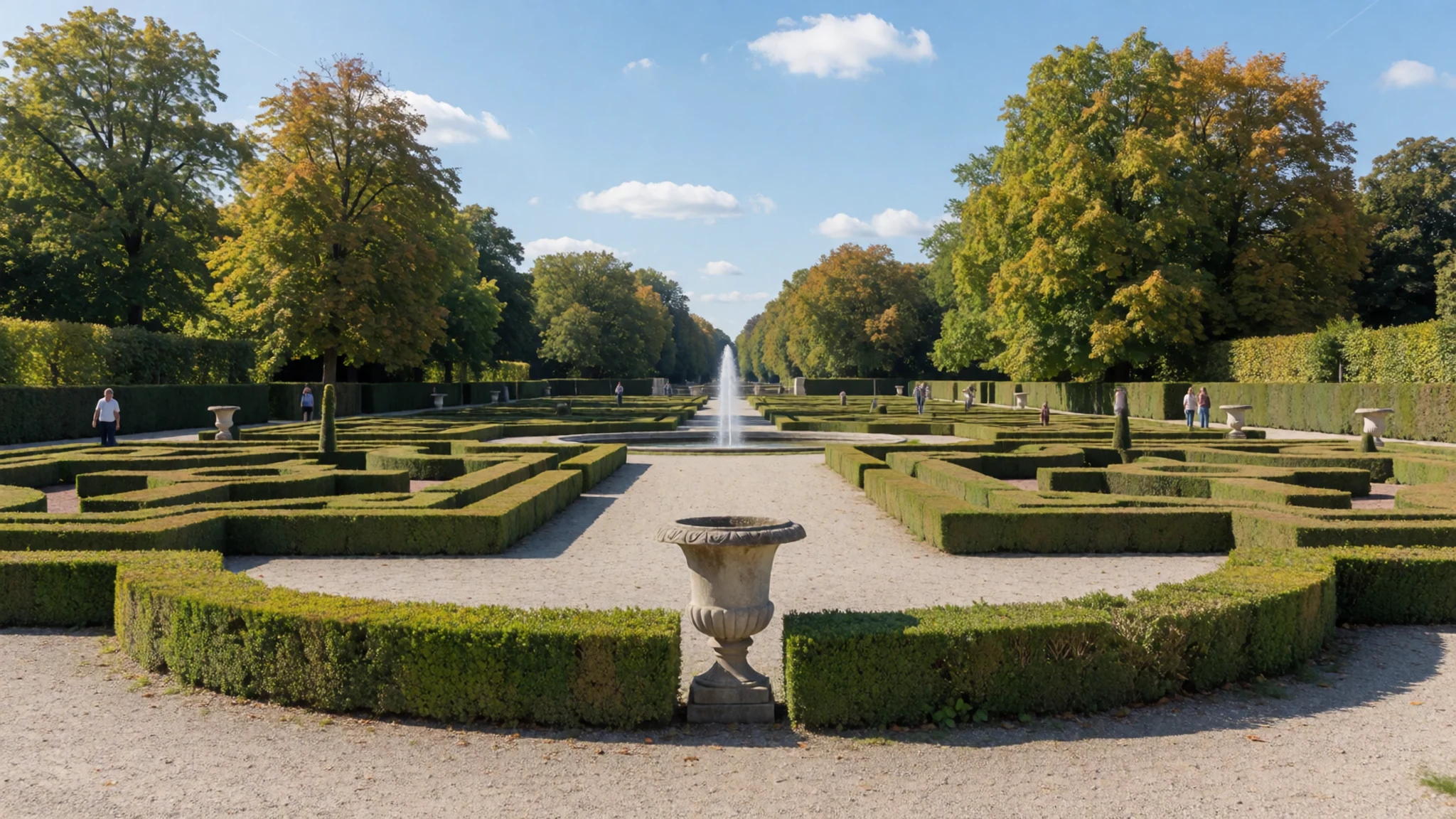
- Neues Rathaus (New City Hall) — Near the Maschpark, south of the centre
The New City Hall is the best place to understand Hanover's shape. Inside, scale models show the town at several points in history, including before and after wartime destruction. A sloping lift then climbs inside the dome for a wide view over the city. Check the official site for current hours and fees.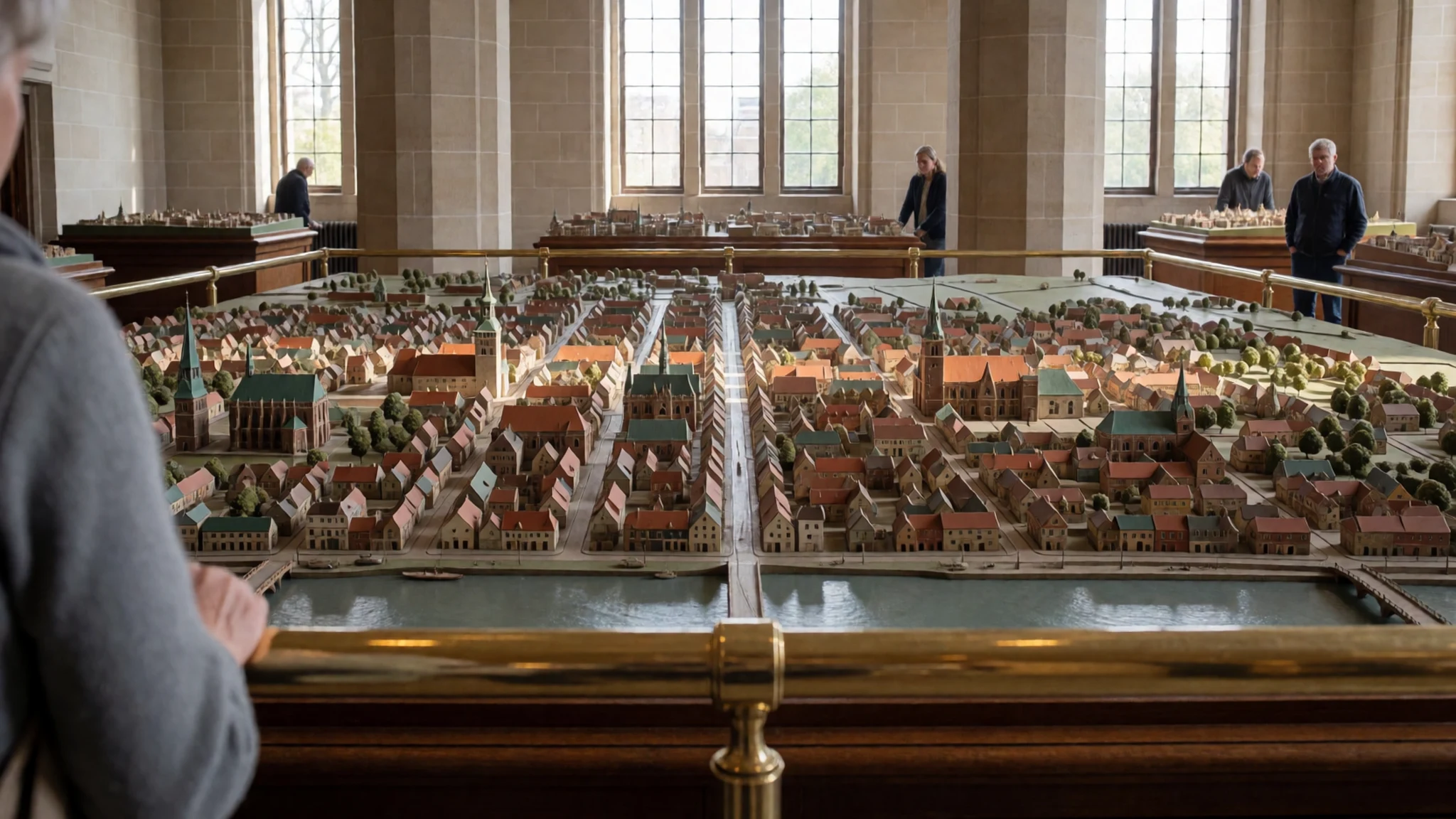
- Marktkirche St Georgii et Jacobi — Old town, Mitte
The Marktkirche is the main medieval church of the old town, built in brick in the Gothic style. Its tower rises over a square of rebuilt streets, and the church makes a natural starting point for a stroll through the old centre. Walk around the exterior and the nearby lanes first.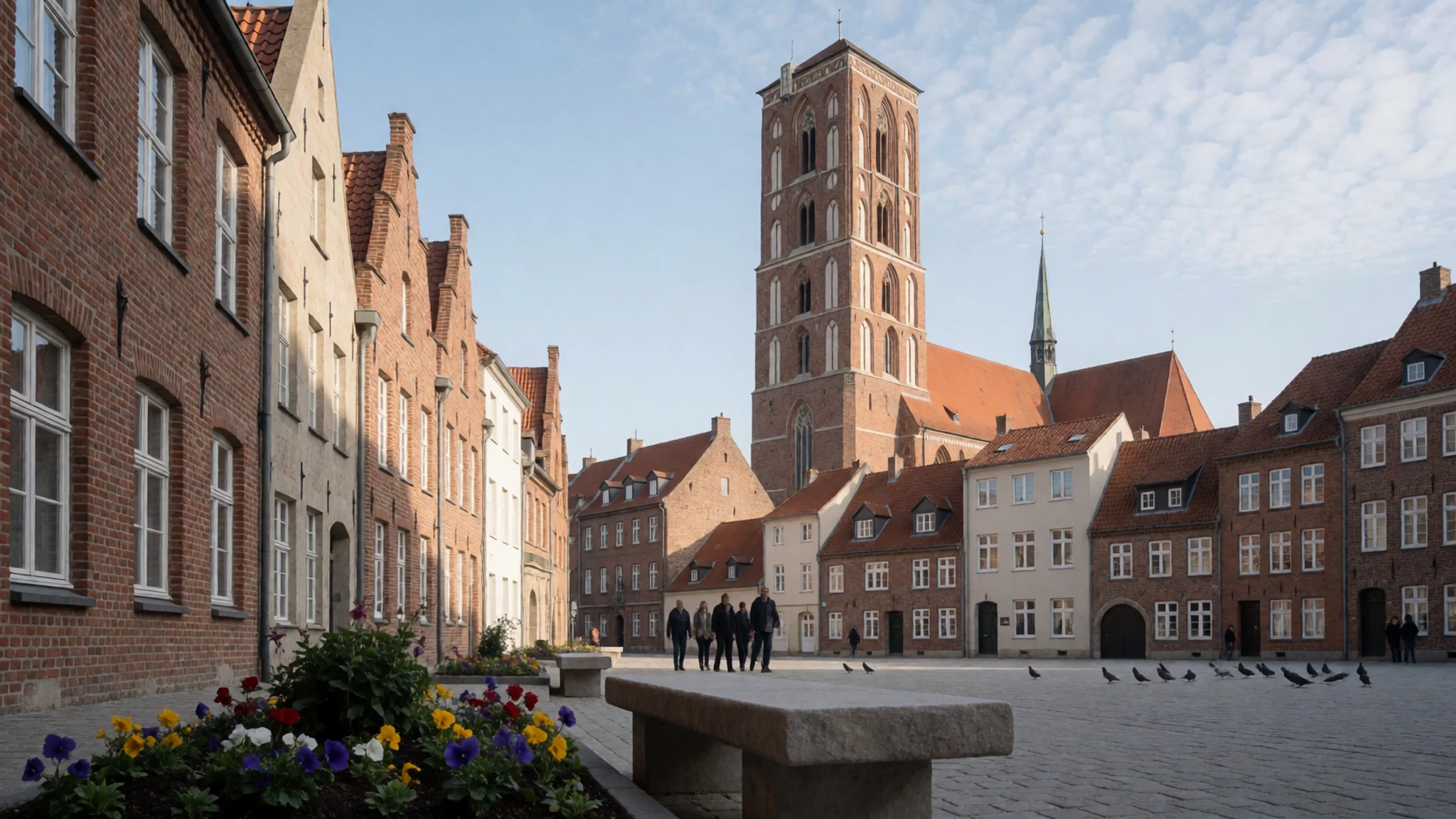
- The Nanas on the Leine — Leine riverbank, near the old town
Three oversized, brightly painted figures by Niki de Saint Phalle stand on the riverbank. They arrived in 1974 and mark the start of Hanover's Sculpture Mile, a walking route of public art. The spot is free to visit, best on a dry afternoon, and combines well with a riverside stroll.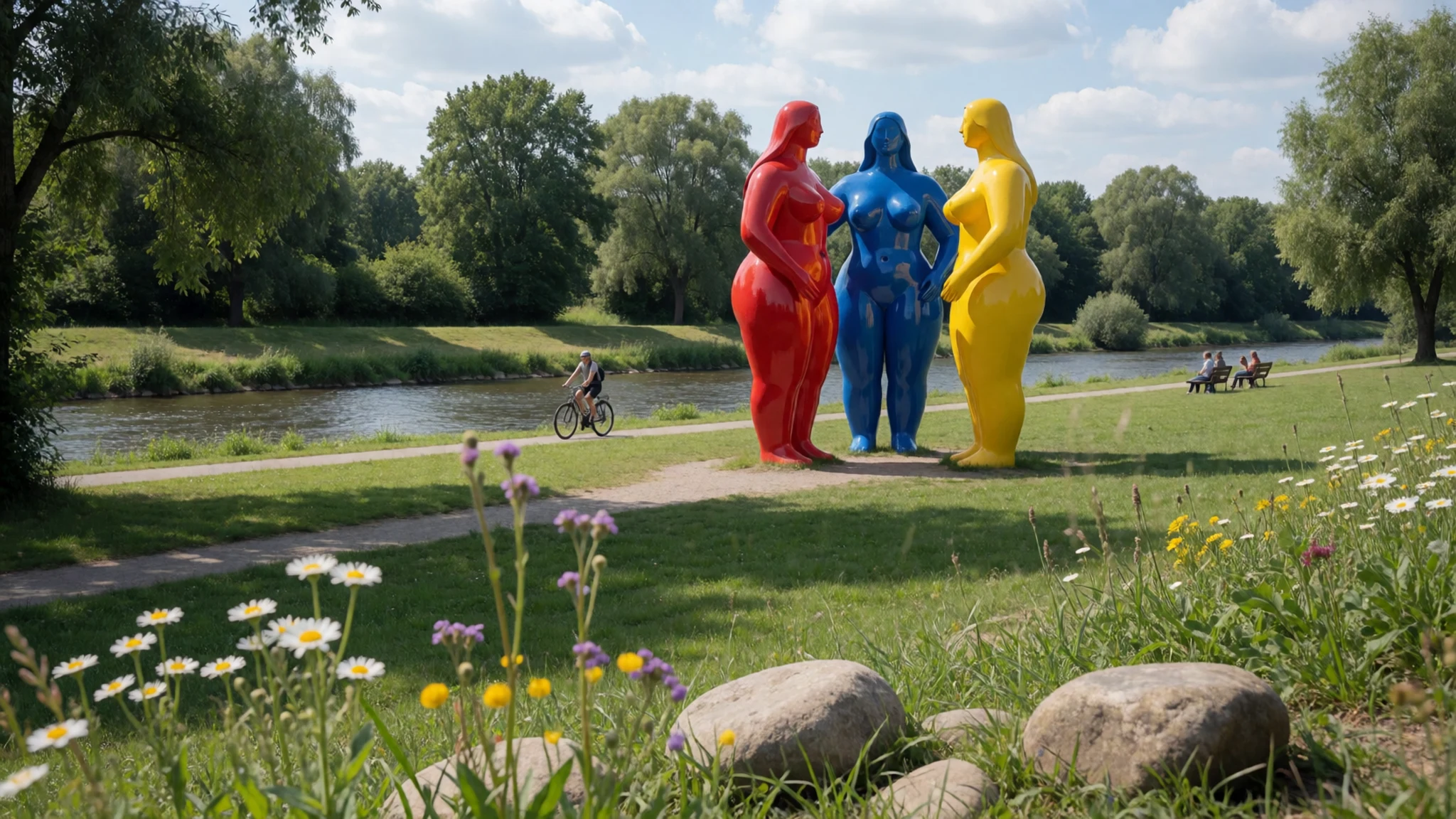
- Old Town Hall — Old town, Mitte
The old town hall is a brick-gabled building on the corner of Karmarschstrasse and Schmiedestrasse. It reflects the town's medieval trading past and is a pleasant, quick stop between the Marktkirche and the shopping streets. Look at the brickwork and the stepped gables, and check locally whether any rooms are open to visitors.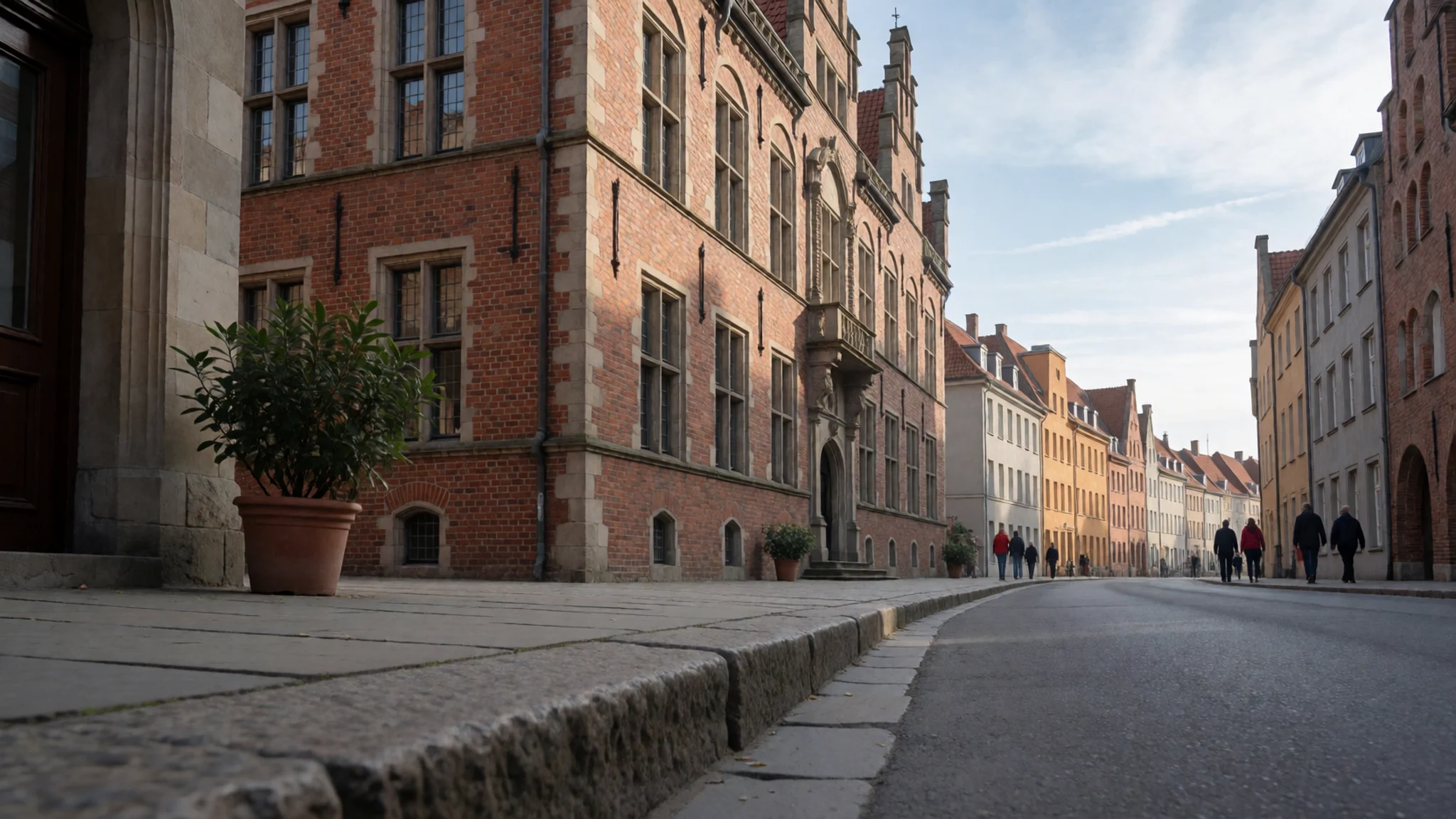
Culture
Hanover has a strongly Protestant heritage, and it is home to the headquarters of several Protestant bodies, including the Protestant Church in Germany and the World Communion of Reformed Churches. In everyday life, though, the city is largely secular: more than half of residents say they follow no religion or another faith, and Protestants and Catholics together make up the rest. The result is a civic culture that is calm, rule-minded and quietly proud of its institutions.
The museum scene reflects that. The Historisches Museum tells the city's story from the medieval settlement of Honovere to today, with particular attention to the years when Hanover's rulers also sat on the British throne. The Kestnergesellschaft, an art society with a very large membership, stages exhibitions that run from classical modernism to contemporary work. Public art is part of daily life too, from the Nanas on the riverbank to the sculptures of the Sculpture Mile.
The city is also a university and trade-fair town, which gives it an international, practical flavour. People tend to be polite but reserved with strangers, punctual, and direct in conversation. Service is professional rather than effusive, and quiet, orderly behaviour on trams and in public spaces is the norm.
When you enter a church such as the Marktkirche, keep your voice low, remove your hat, and do not photograph worshippers or walk around during a service.
What to wear
Hanover has no single city costume. The traditional dress of Lower Saxony belongs to the villages and small towns around it, where regional Tracht uses wool, linen and cotton, often in dark colours with embroidered bodices, aprons and bonnets for women, and waistcoats, jackets and hats for men. In Hanover itself such clothes mostly appear at marksmen's festivals, folk events and heritage displays rather than in daily life.
What people actually wear is practical and understated. Office workers favour smart-casual layers in navy, grey and black, students wear jeans, trainers and rain jackets, and brand-name outdoor wear is common on cooler days. Dressing up is reserved for the theatre, the opera and formal business occasions, and even then the look is neat rather than flashy.
Visitors should plan around the weather, which is changeable in northern Germany: a light waterproof is useful in every season, with a warmer coat, hat and scarf from late autumn to early spring. In summer, breathable cotton and a sun hat suit the open spaces of Herrenhausen. Comfortable, closed walking shoes matter more than anything else, since the old town has cobbled lanes and most sightseeing is on foot. No special modesty rules apply in the city, but cover shoulders and knees if you step inside a church, and keep beachwear for the lakeside or the pool.
What to eat
- Market-hall stalls — The Markthalle in the city centre
Hanover's covered market hall brings together many small food stalls, with dishes ranging from Spanish tapas to German raw minced pork on bread, known as Mett. It suits a lunch for a group who cannot agree on one cuisine, and it is lively at midday.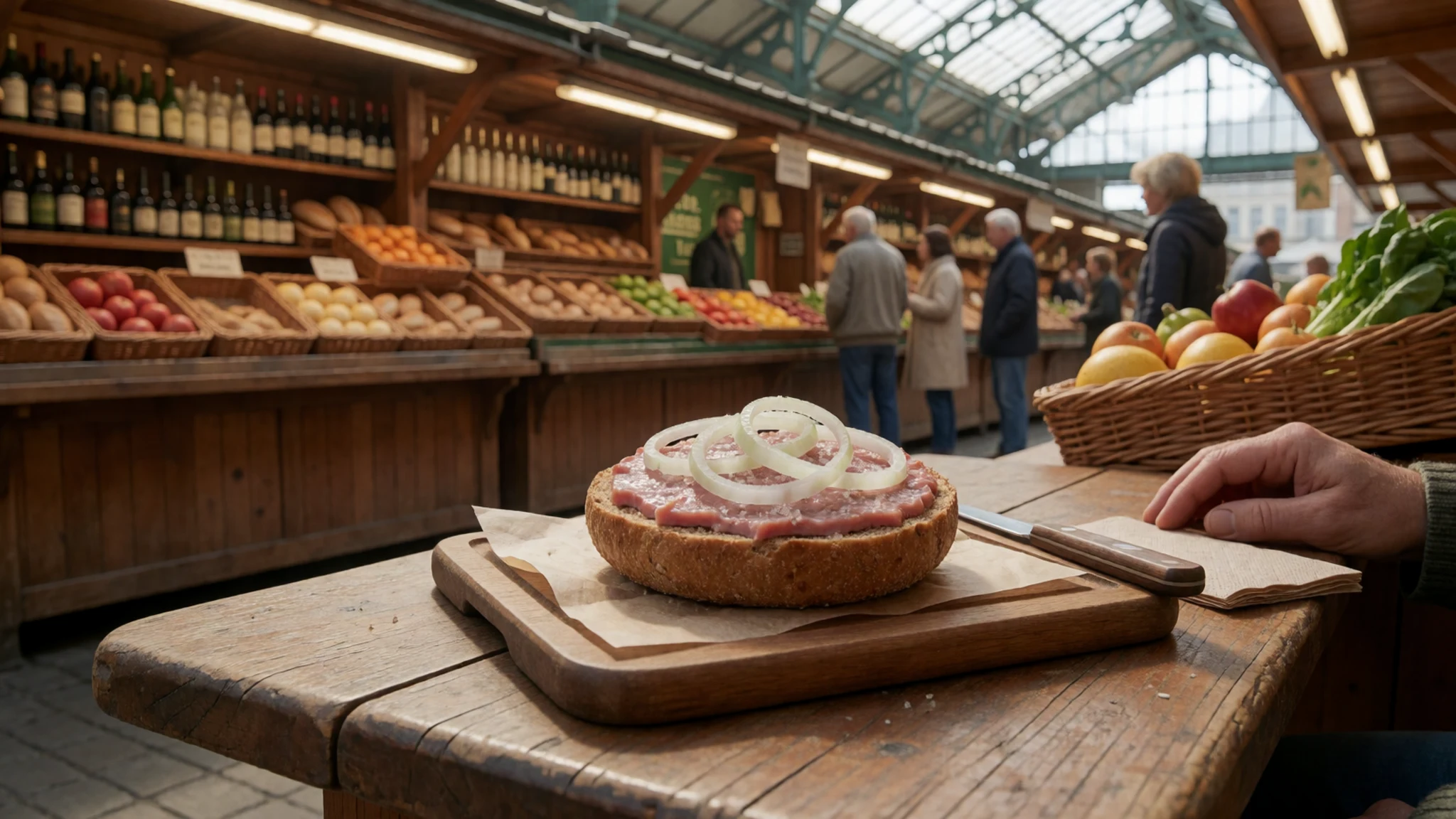
- Schnitzel — Traditional German restaurants around the old town
A breaded, pan-fried cutlet is the classic German restaurant main, usually served with fried potatoes or a salad. Traditional German restaurants in the centre often offer a wide menu, and many keep an English one on hand.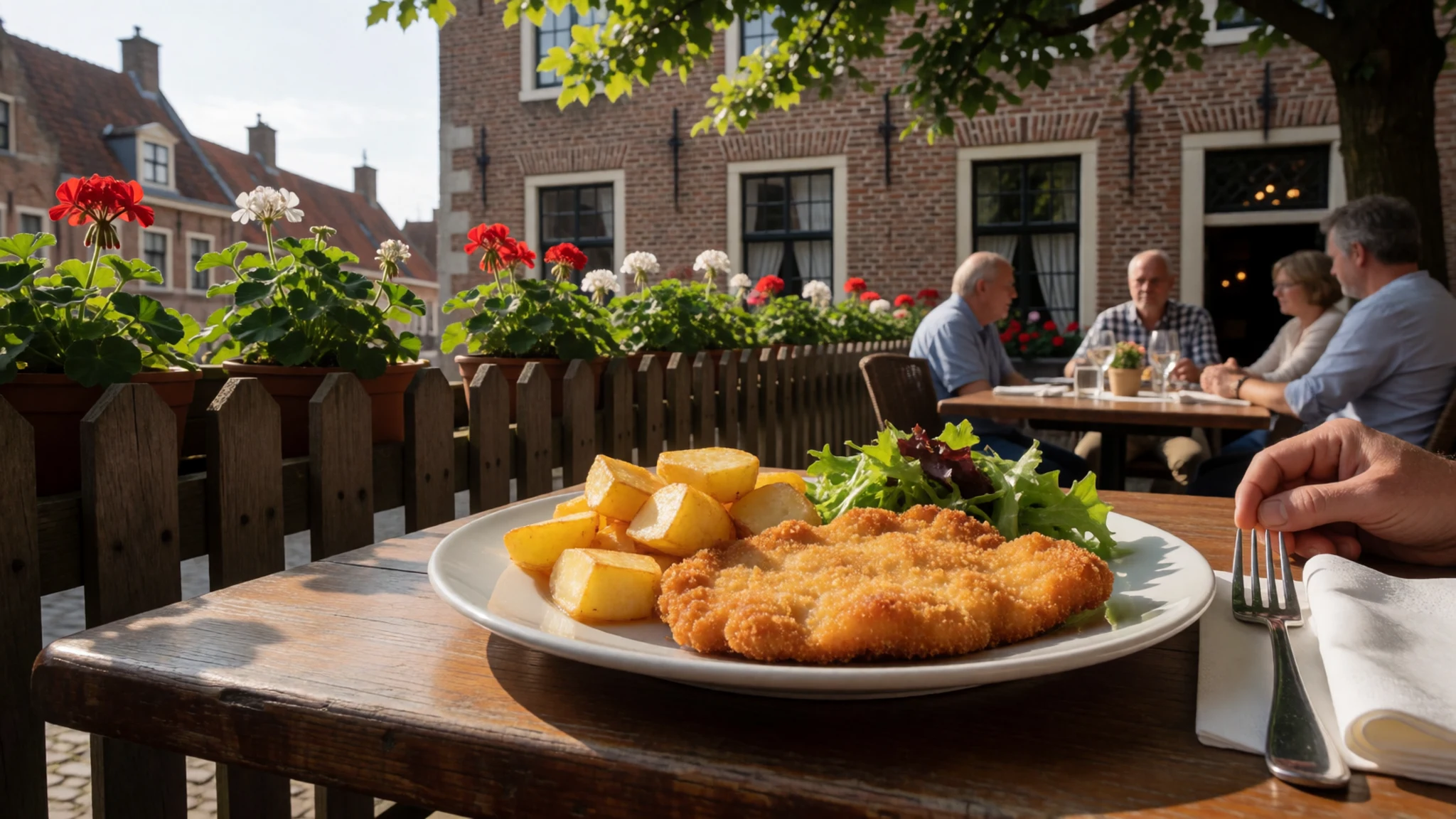
- Pommes (chips) with sauces — Chip shops and snack counters near the station and old town
Chip shops in the centre serve fries with a long list of sauces, from mayonnaise and ketchup to curry-style and garlic options. Gluten-free and vegan versions are widely available, making this an easy, cheap snack between sights. - Falafel — Small takeaway counters in the central streets
Fried chickpea falafel, served in flatbread or on a plate with salad and sauces, is a staple of the city's quick-eating scene. Look for places that fry to order, so the outside stays crisp. - Stuffed pizza — Family-run pizzerias in the neighbourhoods around the centre
Italian restaurants are a long-standing part of the city's eating scene. A local favourite style is a filled, lightly fried pizza, rich and juicy inside. It makes a satisfying dinner after a day of walking.
Plan it
Best time. April and October are the most comfortable months, with highs near 26 °C, while May, June and September run hot, around 31 °C. Summer can be warm, autumn stays warm into October, and winter is cold, damp and often grey, though the old town is pleasant for short visits year-round.
How long. 2
Getting there. Hanover Airport has an S-Bahn line (S5) to Hauptbahnhof, with trains twice an hour and a journey of around 18 minutes; the last train runs around midnight. Hanover is also on the main German rail network, with direct trains from major German cities and several services to the Netherlands, Switzerland and Austria.
Budget. mid
Tips
- Check trade-fair dates before booking, since beds fill up and prices rise during big events
- Buy rail and local transport tickets from official machines or the Deutsche Bahn app, and validate where needed
- Visit Herrenhausen on a dry morning, and check the official site for fountain and opening times
- Carry a card, but keep some cash for markets and small snack counters
- Pack a light waterproof in every season
Etiquette
- Queue calmly and keep to the right on escalators
- Keep voices low on trams and in churches
- Do not photograph worshippers or private individuals without asking
Nearby
Sources
- Wikidata Q1715 (CC0)
- Wikipedia: Hanover (rev 1384297947) (CC BY-SA 4.0)
- Wikivoyage: Hanover (rev 5403674) (CC BY-SA 4.0)
- Photo: Neues Rathaus Hannover 2013 (Thomas Wolf) (CC BY-SA 3.0 de)
- Photo: Hannover Blick Neues Rathaus 01 (H. Helmlechner) (CC BY-SA 4.0)
- Photo: Hannover old townhall Karmarschstrasse (ChristianSchd) (CC BY-SA 4.0)
- Photo: Marktkirche St Georgii et Jacobi (ChristianSchd) (CC BY-SA 4.0)
- Photo: Herrenhäuser Gärten 2 (Johannes D.) (CC BY-SA 1.0)
- Photo: Neues Rathaus Hannover abends (Thomas Wolf) (CC BY-SA 3.0 de)
- Photo: Universität Hannover Hauptgebäude (Andree Stephan) (CC BY 3.0)
- Photo: Leine at Hannover City (Carlito Scholz) (CC BY 3.0)


