Hanauma Bay
Hanauma Bay, United States
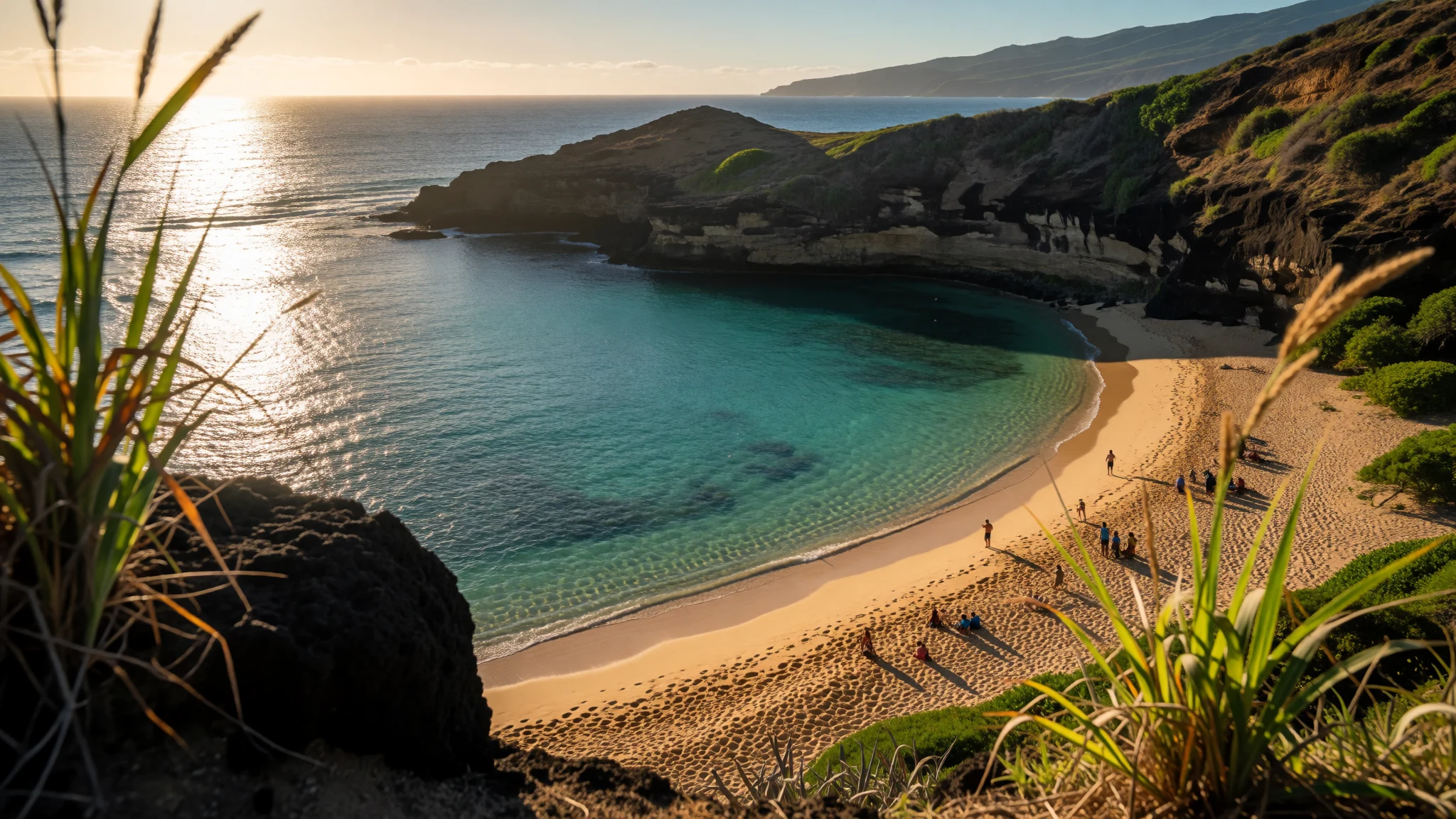
Hanauma Bay offers sheltered swimming within an ancient volcanic crater on Oahu's southeastern shore.
The place
Hanauma Bay sits tucked inside a sheltered volcanic amphitheatre on the southeast edge of Oahu, forming part of East Honolulu within the Hawaiian islands. Known widely for its emerald waters and sweeping crescent shore, the embayment developed inside a tuff ring shaped by geological forces over lengthy eras. Visitors arriving at Hanauma Bay encounter a dramatic coastal bowl where steep cliffs drop towards a sandy beach and a shallow shelf protected from the open ocean swells. Historically, the area attracted massive visitor numbers seeking pristine marine life and calm swimming conditions. Management measures now limit daily entries to protect the fragile coral communities and resident populations of reef fish that thrive in the shallows. Walking down the paved slope from the rim reveals panoramic vistas across the entire bay, framing the vivid contrast between dark volcanic rock, golden sand, and turquoise water.
Its story
Hanauma Bay was forged by fiery subterranean activity that built the island chain as the Pacific tectonic plate drifted slowly across a fixed mantle plume beneath the ocean floor. Eruptions from local volcanic vents built the distinctive ring structure that defines the coastline today. Over generations, the enclosed basin transformed into a calm aquatic haven protected from harsh surf by natural barrier formations. In later decades, human intervention altered the physical layout, including mid-century engineering work that used explosives to carve channels for utility cables through the living coral reef. As tourism surged across the islands, the bay experienced immense pressure from millions of annual arrivals, leading to severe ecological strain and declining marine health. Conservation policies eventually shifted the management strategy entirely towards preservation, implementing mandatory educational briefings, visitor caps, and strict environmental guidelines to allow the delicate underwater ecosystem to recover its natural balance.
What to see
- The Sandy Beach — Main Bay Shoreline
Hanauma Bay features a wide stretch of golden sand tucked right against the base of the steep volcanic crater slopes. Visitors gather here to towel off after swimming, relax under the shade of scattered palms, and look out across the calm, shallow waters cradled by the surrounding tuff ring formations. - The Visitor Education Centre — Upper Rim Area
Perched near the upper parking area overlooking the coast, Hanauma Bay maintains an informative centre where every arriving guest must watch an introductory film on marine conservation. Exhibits inside explain the geological origins of the local tuff ring and outline rules for protecting fragile coral habitats. - Koko Head Ridge — Eastern Ridge
Rising steeply immediately adjacent to the bay, Koko Head dominates the eastern skyline with its prominent ridge and old military tracks. Hiking up the long series of concrete steps provides sweeping vantage points looking down into the coastal depression and across the wider blue ocean channel. - The Tuff Ring Rim — Crater Rim Walkways
Walking along the elevated pathways circling the upper edges of Hanauma Bay delivers dramatic perspectives of the entire geological amphitheatre below. Photographers often pause here to capture the striking contrast between the dark volcanic ash walls and the bright turquoise water filling the ancient basin. - Diamond Head State Monument — South Oahu Coast
Located further west along the same southern coastline towards Honolulu, this iconic volcanic tuff cone stands as a familiar landmark of the region. Visitors can hike up steep interior pathways to reach the summit rim for expansive views stretching across the Pacific and surrounding urban shoreline. - The Marine Sanctuary Reef — Inner Bay Waters
Protected within the calm interior waters of Hanauma Bay, this thriving coral shelf serves as a sanctuary for hundreds of species of colourful reef fish. Snorkellers swimming in the shallow zones regularly encounter schooling surgeonfish, triggerfish, and green sea turtles feeding quietly on marine algae.
Culture
Hanauma Bay reflects the broader cultural blend found across the Hawaiian islands, where American administrative standards merge with deep-rooted Pacific traditions and strong Asian heritage influences. Residents maintain a warm, community-focused lifestyle rooted in aloha spirit, valuing mutual respect and environmental stewardship of the land and sea. Traditional customs emphasize reverence for sacred ancestral sites and natural landmarks across the region. When visiting residential properties or traditional spaces, local etiquette calls for removing footwear before entering doorways. Visitors should treat ancient temples and natural preserves with quiet reverence, acknowledging the deep spiritual connections that Indigenous communities maintain with these landscapes. Always respect local guidance and marine protection rules by keeping a safe distance from sea turtles and avoiding any physical contact with living coral formations.
What to wear
Hanauma Bay and the wider Hawaiian islands embrace a relaxed, tropical style suited to warm coastal climates and outdoor living. Traditional island garments include colourful aloha shirts and floral print dresses crafted from lightweight cotton fabrics, which remain popular for casual wear and festive gatherings. Everyday attire for residents and visitors alike typically consists of comfortable shorts, t-shirts, sandals, and swimwear paired with protective sun hats and sunglasses. When exploring beach areas and coastal paths, practical footwear such as reef shoes or sturdy sandals is essential for navigating rocky shorelines and hot sand. While beachwear is widely accepted along the coast, visitors heading into towns or dining establishments generally prefer putting on a light cover-up or casual shirt over swimwear as a sign of basic courtesy.
What to eat
- Plate Lunch — Island lunch wagons, malls and food courts
Hanauma Bay visitors can sample this quintessential island comfort meal at lunch wagons and casual food courts across Oahu, featuring portions of grilled meat or fish accompanied by two scoops of white rice and creamy macaroni salad. - Fresh Tropical Fruit — Island corner stores and roadside fruit stands
Corner stores and roadside stands throughout the neighbourhoods display sweet seasonal produce, including locally grown pineapple, ripe papayas, mangoes, and guavas harvested from nearby farms across the islands. - Island Seafood — Coastal seafood shacks and neighbourhood markets
Coastal eateries and casual markets serve exceptionally fresh catches from local waters, ranging from crispy whole fish to seasoned poke bowls prepared with raw tuna, sesame oil, and sweet onions. - Local Craft Beer — Island brewpubs and local pubs
Independent island brewpubs pour refreshing ales and lagers crafted with distinct regional ingredients, offering cold pints that pair perfectly with warm coastal weather after a long day of swimming. - Shave Ice — Beachfront snack shacks and town dessert stands
Classic island sweet shops serve finely shaved ice piled high into cones and generously drenched in bright fruit syrups, often topped with sweetened condensed milk or a scoop of rich vanilla ice cream.
Plan it
Best time. March to April and October to November offer pleasant warm temperatures and manageable visitor crowds, avoiding the peak summer rush.
How long. 2–3
Getting there. Fly into Honolulu International Airport on Oahu, then take a rental car or local bus service east towards Hawaii Kai and Hanauma Bay.
Budget. mid
Tips
- Book entry reservations online well in advance since daily visitor caps fill up quickly.
- Arrive early in the morning to secure parking and experience clearer water conditions.
- Pack reef-safe sunscreen to protect delicate coral ecosystems from chemical damage.
- Complete any required agricultural declaration forms online before arriving in the islands.
Etiquette
- Never touch, stand on, or kick the living coral reefs while swimming in the bay.
- Remove your shoes when entering local residential homes if invited inside.
Nearby
Sources
- Wikidata Q1574284 (CC0)
- Wikipedia (rev 1364112306) (CC BY-SA 4.0)
- Wikivoyage (rev 5383942) (CC BY-SA 4.0)