Hamburg
Hamburg, Germany
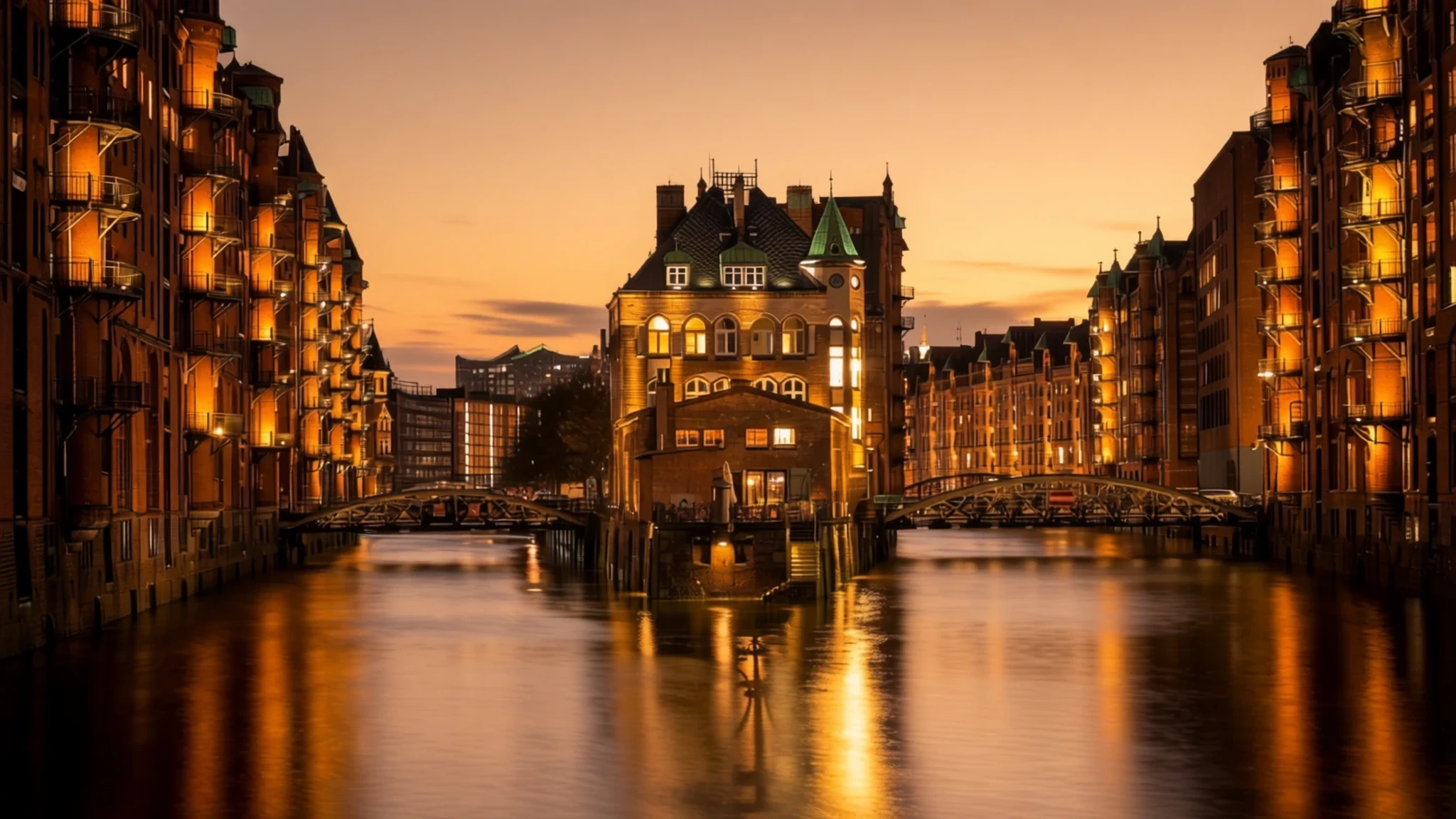
Hamburg combines a maritime trading heritage of brick warehouses and bustling docks with soaring modern architecture and leafy lakeside parks.
The place
Hamburg, officially recognised as the Free and Hanseatic City of Hamburg, stands proudly in the north of Germany as a major economic powerhouse and cultural destination. Positioned at the confluence of the Alster and Bille rivers where the long Elbe estuary begins its journey toward the North Sea, the urban landscape is defined by water. Countless canals, known locally as Fleete, intersect the municipality, spanned by more bridges than any other urban settlement in Europe. The city-state functions as a self-governing entity surrounded by the regional states of Schleswig-Holstein and Lower Saxony. Its geography has shaped its identity for centuries, turning a marshy terrain situated between elevated ground into one of the world's premier maritime logistics hubs. The Port of Hamburg serves as the primary gateway for international shipping, connecting central European markets with global trade routes. Residential neighbourhoods stretch outward from historic commercial cores, blending traditional northern German brick architecture with contemporary urban regeneration projects. Green parks, expansive artificial lakes right in the urban centre, and tree-lined avenues offer respite from bustling maritime activity. The local vernacular reflects historical Low Saxon roots, maintaining a distinct linguistic character that separates the region from southern counterparts. Visitors walking through the historic quarters encounter tangible evidence of past merchant wealth, municipal pride, and remarkable resilience following historical trials. Today, the municipal territory balances industrial scale with a high quality of life, drawing travellers interested in maritime history, musical theatre, and distinctive northern cuisine.
Its story
The history of Hamburg began as a defensive outpost established in a marshy region between rivers. Early chroniclers noted settlements in the vicinity during the second century, but the definitive foundation occurred when the Frankish Emperor ordered a permanent castle constructed to protect imperial borders against Slavic incursions. This fortification became known as Hammaburg, combining a defensive keep designation with an uncertain root term. Within decades, the settlement achieved ecclesiastical status when an early bishopric was established, bringing Christian missionaries to the northern European frontier. The early centuries proved tumultuous, marked by devastating raids from Viking fleets sailing up the Elbe, destructive conflicts involving neighbouring regional powers, and frequent fires that repeatedly reduced timber structures to ash. Despite these calamities, the merchant community persevered, leveraging strategic geography to secure trading privileges. Membership in the medieval Hanseatic League transformed the settlement into an autonomous trading republic governed by merchant patricians known as Hanseaten. This political independence continued through centuries of shifting European alliances. Major disasters repeatedly reshaped the urban fabric, including a catastrophic nineteenth-century conflagration that destroyed large swathes of the old town, subsequent wartime destruction, and severe North Sea flooding events. Each catastrophe prompted comprehensive rebuilding efforts, resulting in modern architectural innovations while preserving foundational historical identity as a free mercantile city-state.
What to see
- Elbphilharmonie — HafenCity
The Elbphilharmonie is a striking glass concert hall perched atop a historic red-brick warehouse at the edge of the river. Its undulating glass roof structure mimics waves and clouds, creating a brilliant focal point for modern HafenCity development. Visitors can ride the sweeping curved escalator up to the public plaza for panoramic views across the bustling harbour docks and historic industrial waterways.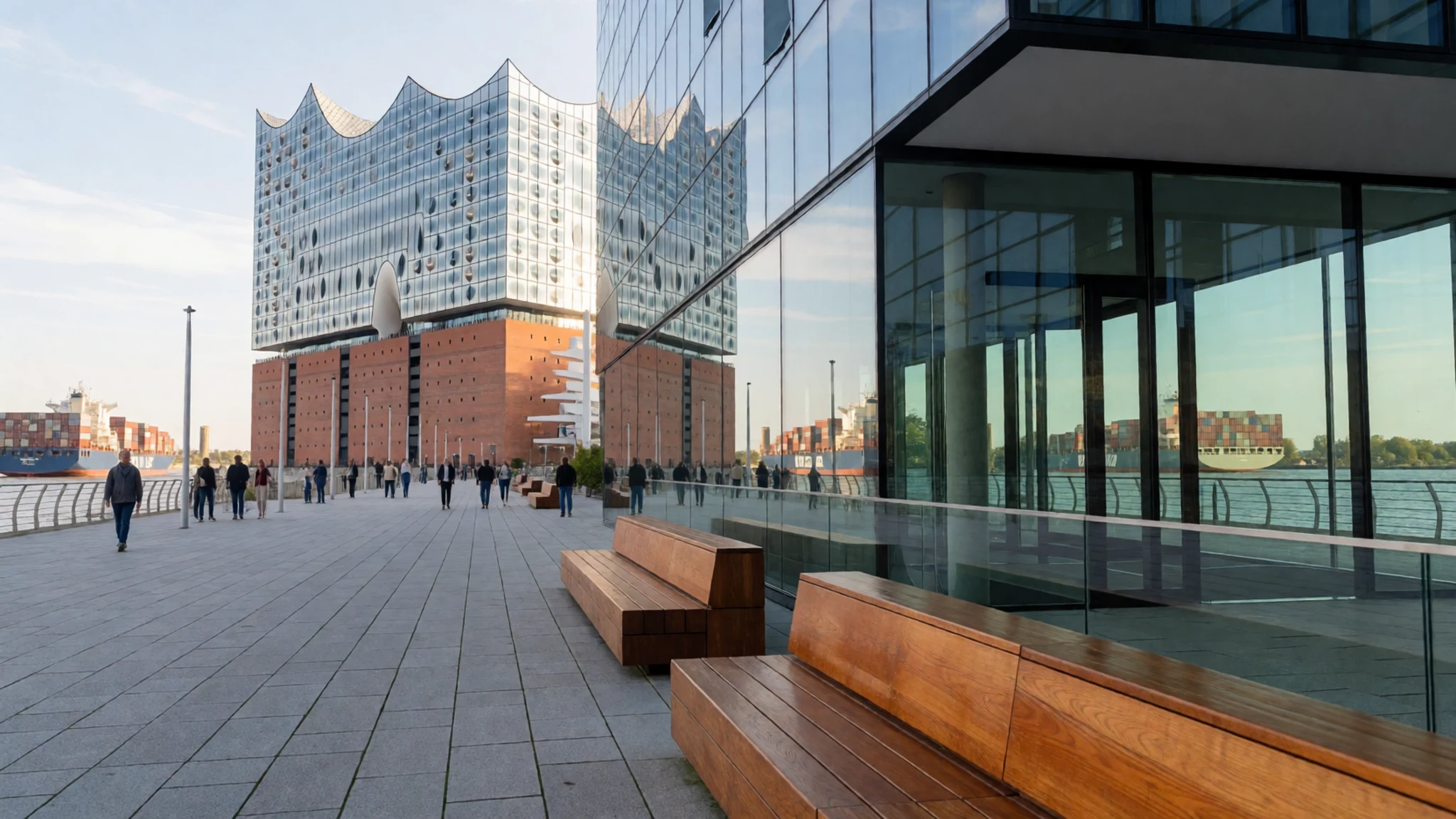
- Speicherstadt and Kontorhausviertel — Altstadt and HafenCity
The Speicherstadt and Kontorhausviertel form a vast historic district showcasing late nineteenth and early twentieth-century mercantile architecture. The warehouse complex features intricate neo-Gothic brick facades built over timber pile foundations within a network of tidal canals. Adjacent office districts display expressive clinker brick construction, highlighted by the ship-like contours of the famous Chilehaus building in the heart of the old commercial zone.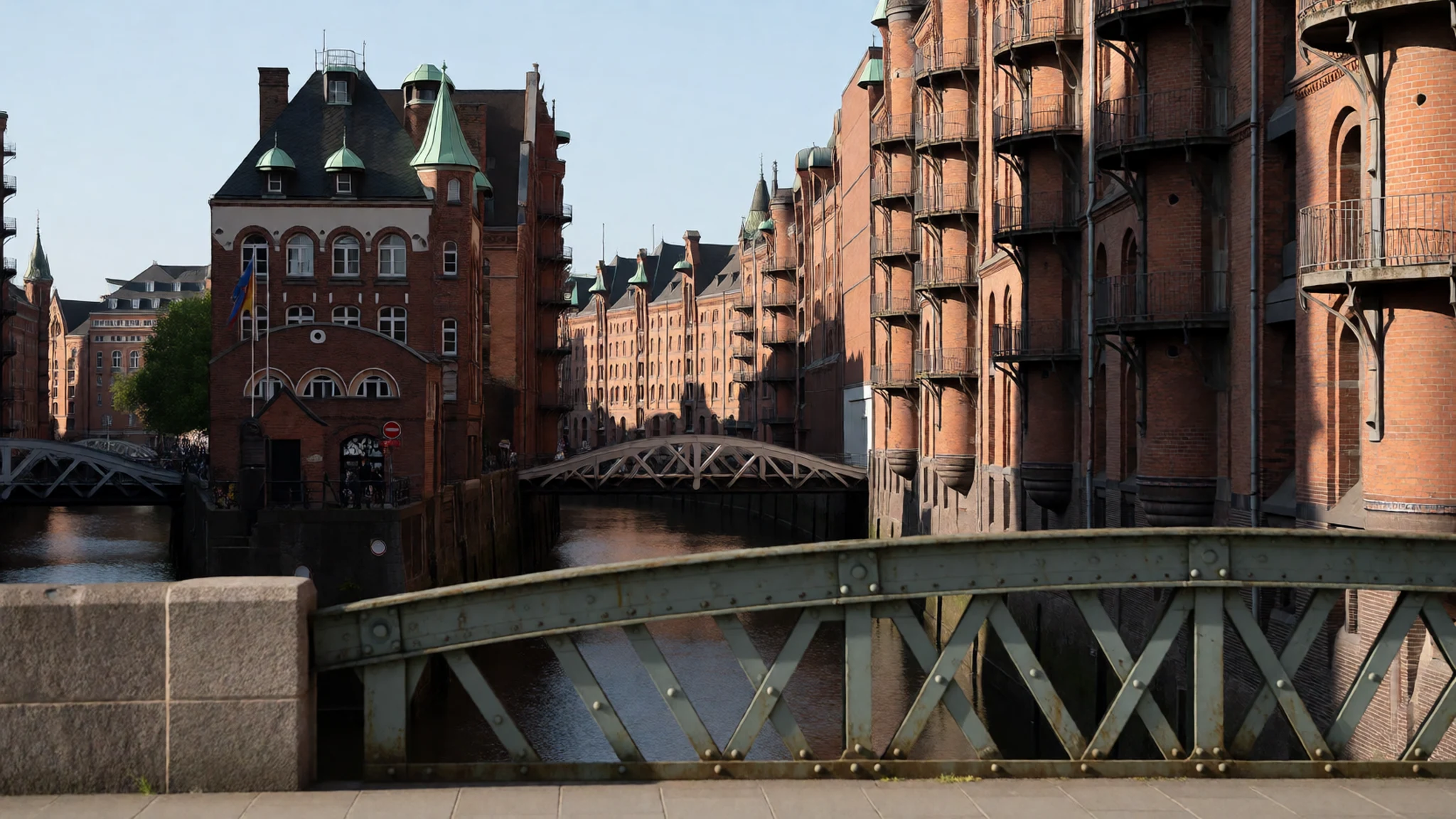
- St. Nikolai Memorial — Altstadt
The St. Nikolai Memorial preserves the dramatic ruins of a neo-Gothic church whose soaring spire dominates the urban skyline. Originally serving as a prominent parish church, the building suffered severe wartime destruction, leaving behind a haunting steeple and exterior walls that now function as an official memorial site. An elevator whisks visitors up the tower to an observation platform offering sweeping vistas across the sprawling downtown area.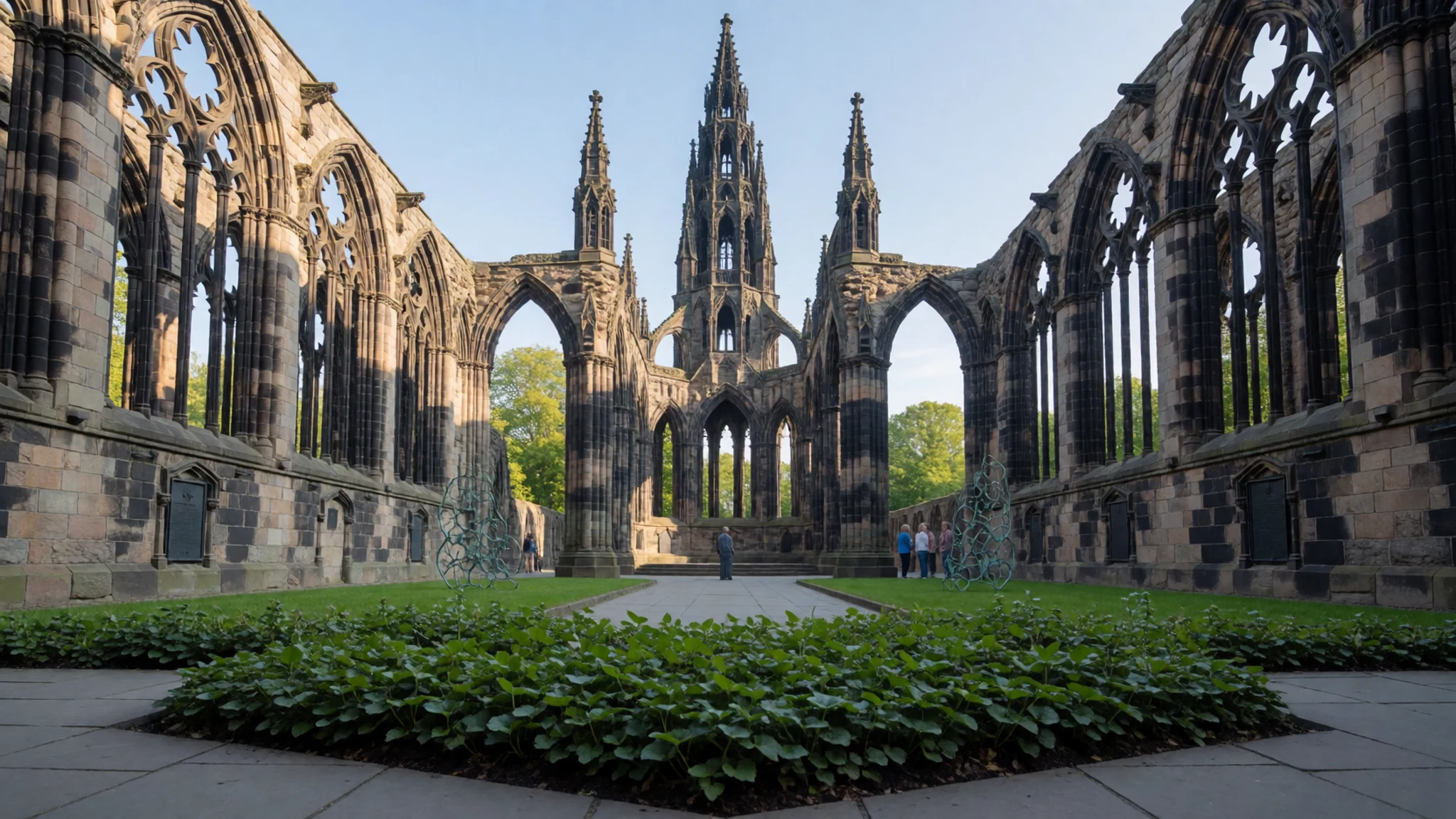
- Hamburg Rathaus — Altstadt
The Hamburg Rathaus serves as the grand municipal seat for the city-state government and parliament. Constructed in the late nineteenth century, the exuberant Neo-Renaissance sandstone facade features an ornate clock tower and statues representing former emperors. The interior boasts a magnificent pillared assembly hall, richly decorated state rooms, and an inner courtyard centered around a fountain dedicated to the goddess of health and maritime trade.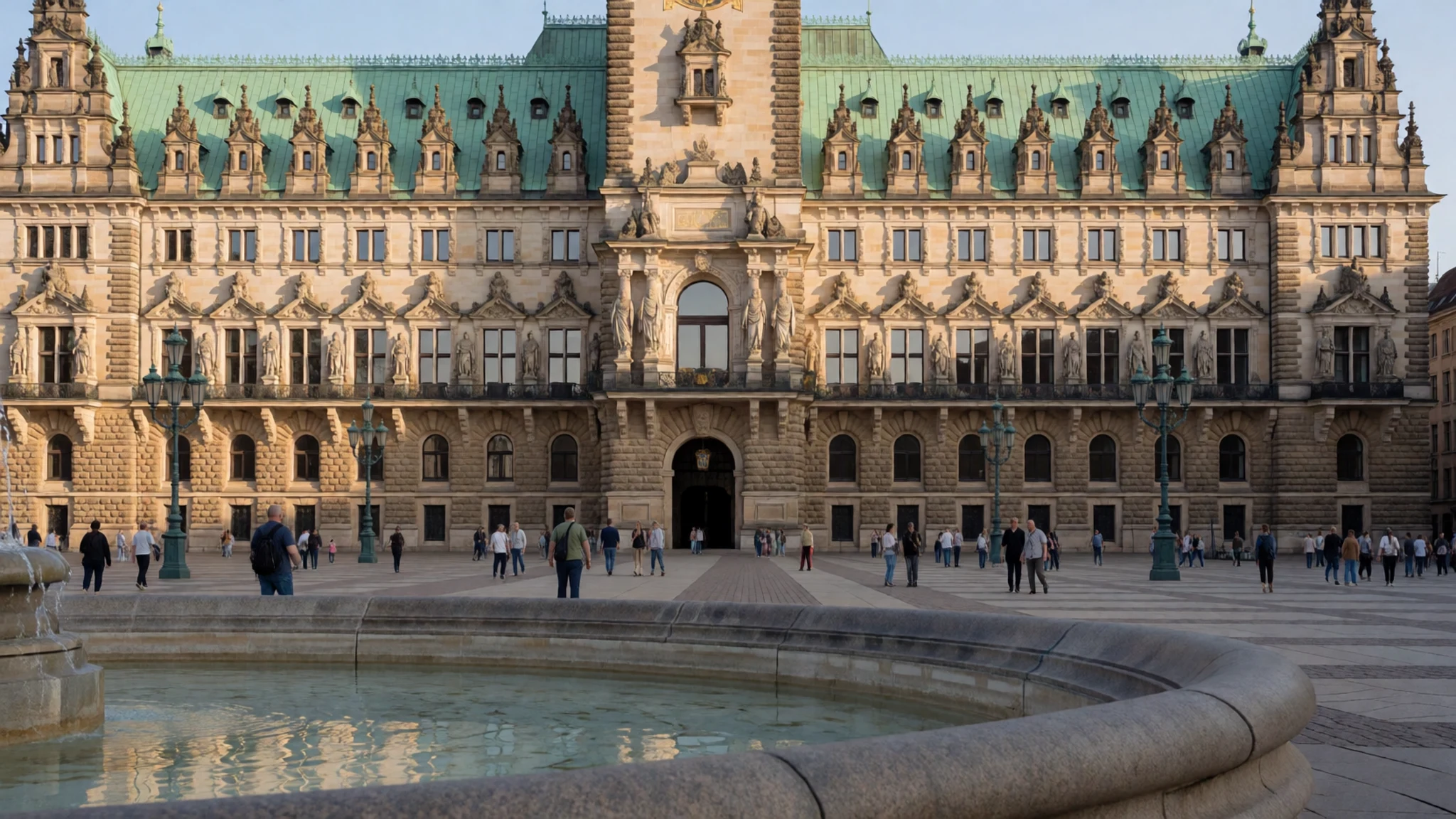
- Landungsbrücken — St. Pauli
The Landungsbrücken floating pontoon piers form the historic heart of the port passenger terminal infrastructure. Spanning a considerable length along the riverbank, these sturdy landing stages accommodate harbour ferries, museum ships, and sightseeing vessels. The bustling promenade is lined with snack kiosks selling traditional fish rolls, making it the ideal starting point for exploring the vast maritime docklands and historic storage basins.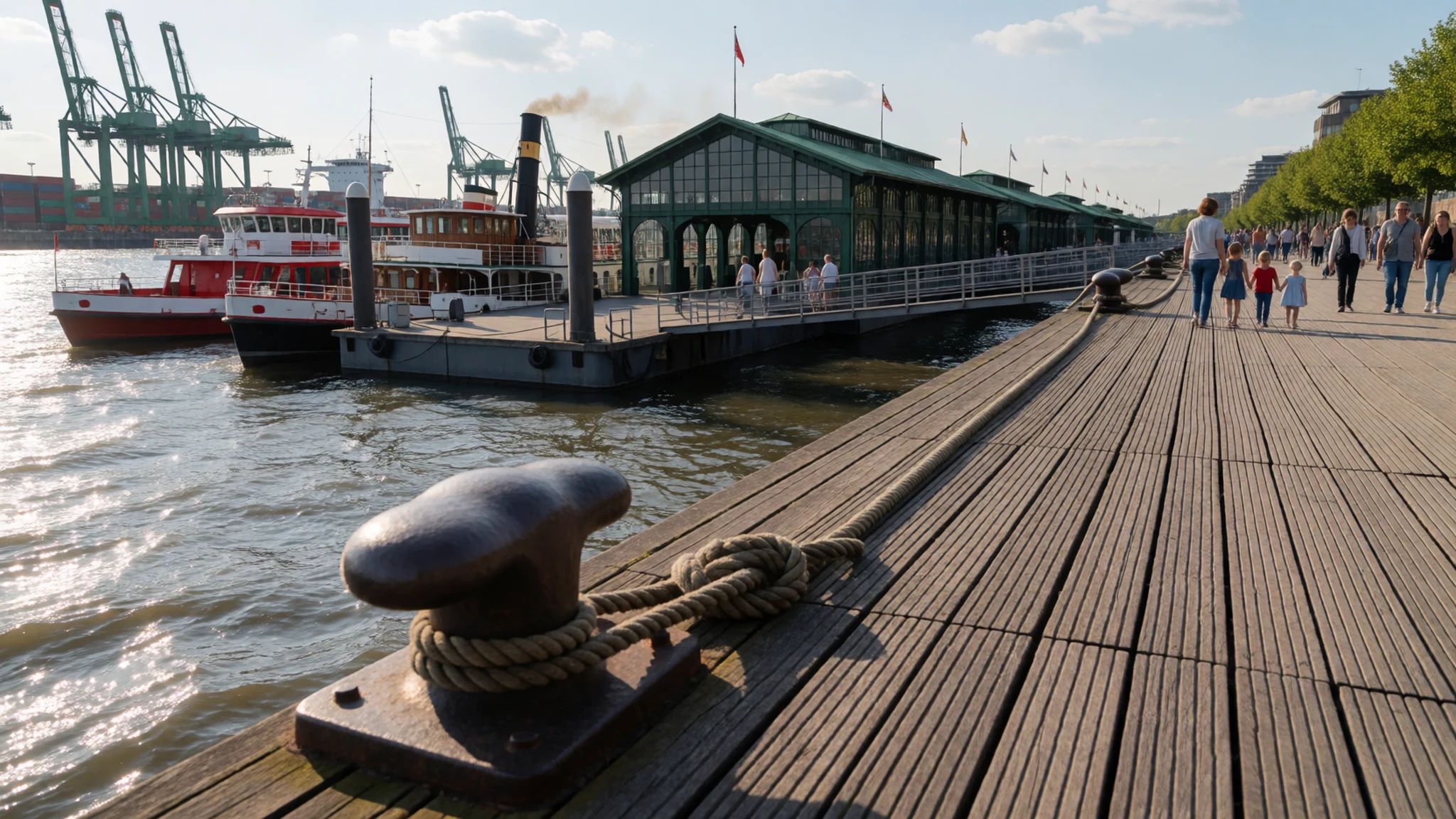
Culture
Cultural life in Hamburg has historically been shaped by its mercantile elite, maritime connections, and a long tradition of civic independence. The municipality supports a vibrant performing arts scene with numerous institutional theatres, independent stages, and major musical production houses operating across different districts. Music venues and live performance spaces sustain a reputation as a leading European destination for contemporary and classical sound. Literary history, publishing houses, and public art galleries further enrich the intellectual climate. Local residents, known locally as Hamburger, maintain a reputation for understated pragmatism, polite reserve, and cosmopolitan outlooks forged through centuries of international trade. Social interactions often combine northern German directness with courteous hospitality in neighbourhood pubs and cafés. Traditional festivals celebrate maritime heritage with historic ship parades and seasonal fairs drawing visitors from across the region. When attending classical concerts at modern waterfront venues or visiting traditional neighbourhood establishments, observe local quiet hours and maintain considerate conversational volumes in public spaces.
What to wear
Traditional dress in the region historically reflected practical maritime and farming requirements rather than elaborate ceremonial costumes, with durable woollen fabrics, sturdy linens, and practical leather elements worn by working populations and merchant burghers alike. Modern inhabitants dressing for daily urban life favour a practical, contemporary style that balances sophisticated business attire with casual coastal practicality. Due to changeable weather patterns influenced by proximity to the North Sea, layering is essential regardless of the season. Local professionals working in finance, media, and maritime commerce typically wear smart tailoring or neat business-casual garments, while students and creative workers prefer understated, comfortable clothing. Visitors should pack versatile, weather-resistant outer garments, including a reliable waterproof jacket and windbreaker, alongside comfortable walking shoes suitable for cobblestone streets, dockside boardwalks, and extensive indoor cultural facilities. Refrain from overly formal evening wear unless attending a gala performance at the philharmonic hall or an upscale theatrical premiere.
What to eat
- Beren, Bohnen un Speck — Traditional taverns throughout the historic districts
This traditional local dish combines green runner beans simmered with fresh pears and cured bacon, creating a savoury and subtly sweet combination that highlights regional agricultural harvests.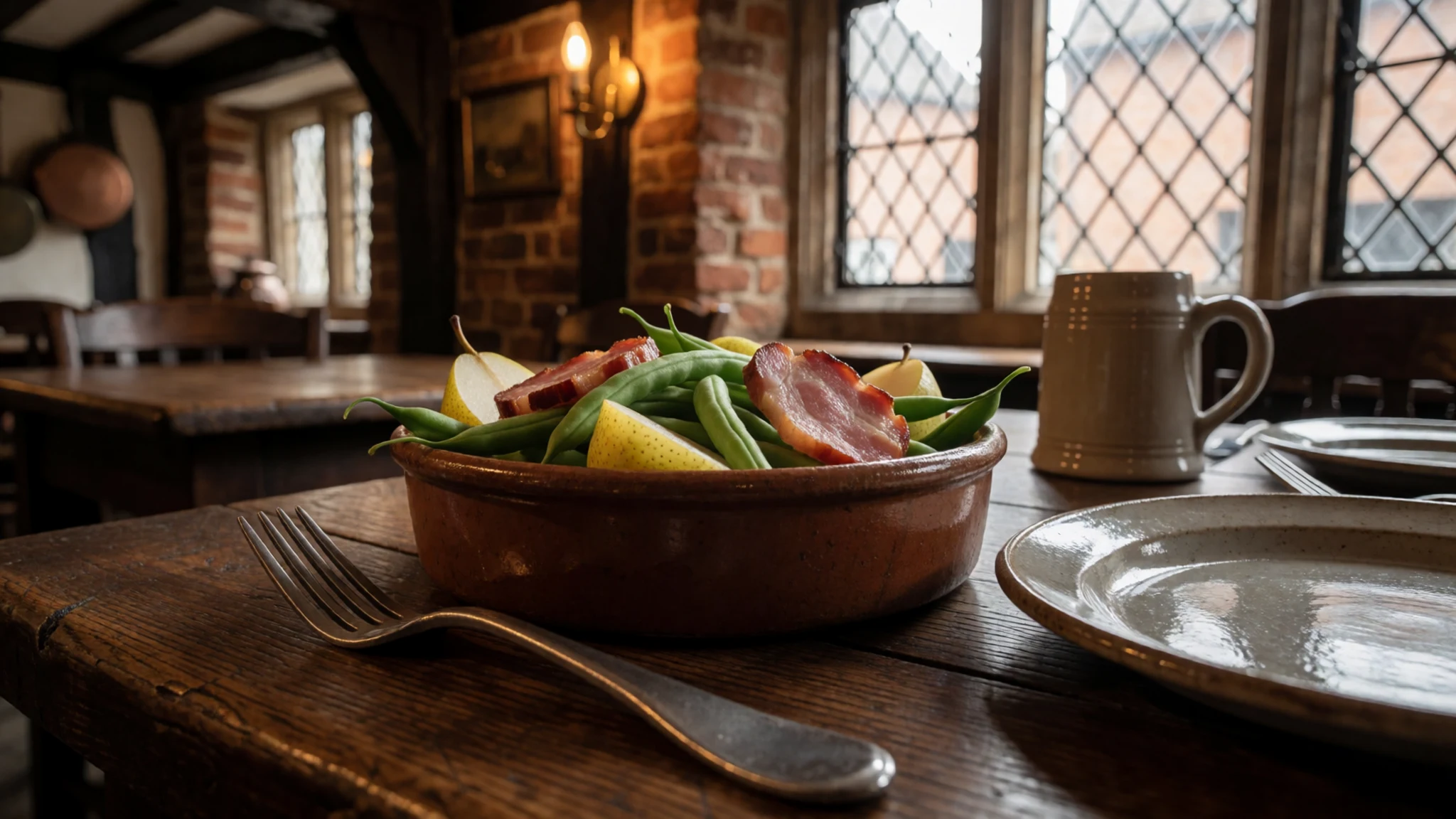
- Aalsuppe — Classic neighbourhood restaurants across the old town
Despite its misleading name translating literally as eel soup, this hearty regional broth traditionally incorporates a wide variety of vegetables, dried fruits, and mixed meats rather than relying solely on fish.
- Fischbrötchen — Landungsbrücken waterfront food stalls and fish markets
A quintessential northern German snack consisting of a crusty bread roll filled with pickled herring, fried fish, or North Sea prawns, enjoyed fresh from harbour kiosks. - Labskaus — Historic portside pubs and traditional maritime eateries
A historical maritime dish prepared from cured beef, potatoes, and onions mashed together, traditionally served with pickled beetroot, a rolled herring, and a fried egg. - Franzbrötchen — Local bakeries and neighbourhood cafés citywide
A beloved local pastry speciality made from sweet laminated dough layered generously with butter and cinnamon, offering a flaky and comforting treat for coffee breaks.
Plan it
Best time. May to September brings pleasant temperatures, long daylight hours, and outdoor festivals along the waterfront, though sudden showers can occur at any time.
How long. 3–4
Getting there. Fly into Hamburg Airport Helmut Schmidt, then take the direct S-Bahn line S1 from beneath the terminal building to the central Hauptbahnhof station in about 25 minutes.
Budget. mid
Tips
- Purchase a digital day pass via local transit apps for seamless travel across buses, harbour ferries, and S-Bahn trains
- Book tickets for popular architectural tours and concert hall viewpoints well in advance to secure preferred time slots
- Carry comfortable waterproof footwear because exploring the extensive docklands and historic districts involves considerable walking on uneven cobblestones
- Check local transport schedules carefully if taking the airport train, as some services split carriages at intermediate stations
Etiquette
- Observe quiet zones and maintain moderate conversational volumes when travelling on public transport or visiting residential neighbourhoods
- Always greet shopkeepers and service staff politely with a standard regional greeting when entering local businesses
Nearby
Sources
- Wikidata Q1055 (CC0)
- Wikipedia Hamburg (CC BY-SA 4.0)
- Wikivoyage Hamburg (CC BY-SA 4.0)
- Photo 01 (CC BY-SA 4.0)
- Photo 02 (Public domain)
- Photo 03 (CC BY-SA 4.0)
- Photo 04 (CC BY-SA 4.0)
- Photo 05 (CC BY-SA 4.0)
- Photo 06 (CC BY-SA 4.0)
- Photo 07 (CC BY-SA 4.0)
- Photo 08 (CC BY-SA 4.0)


