Gonbad-e Qabus
Gonbad-e Qabus, Iran
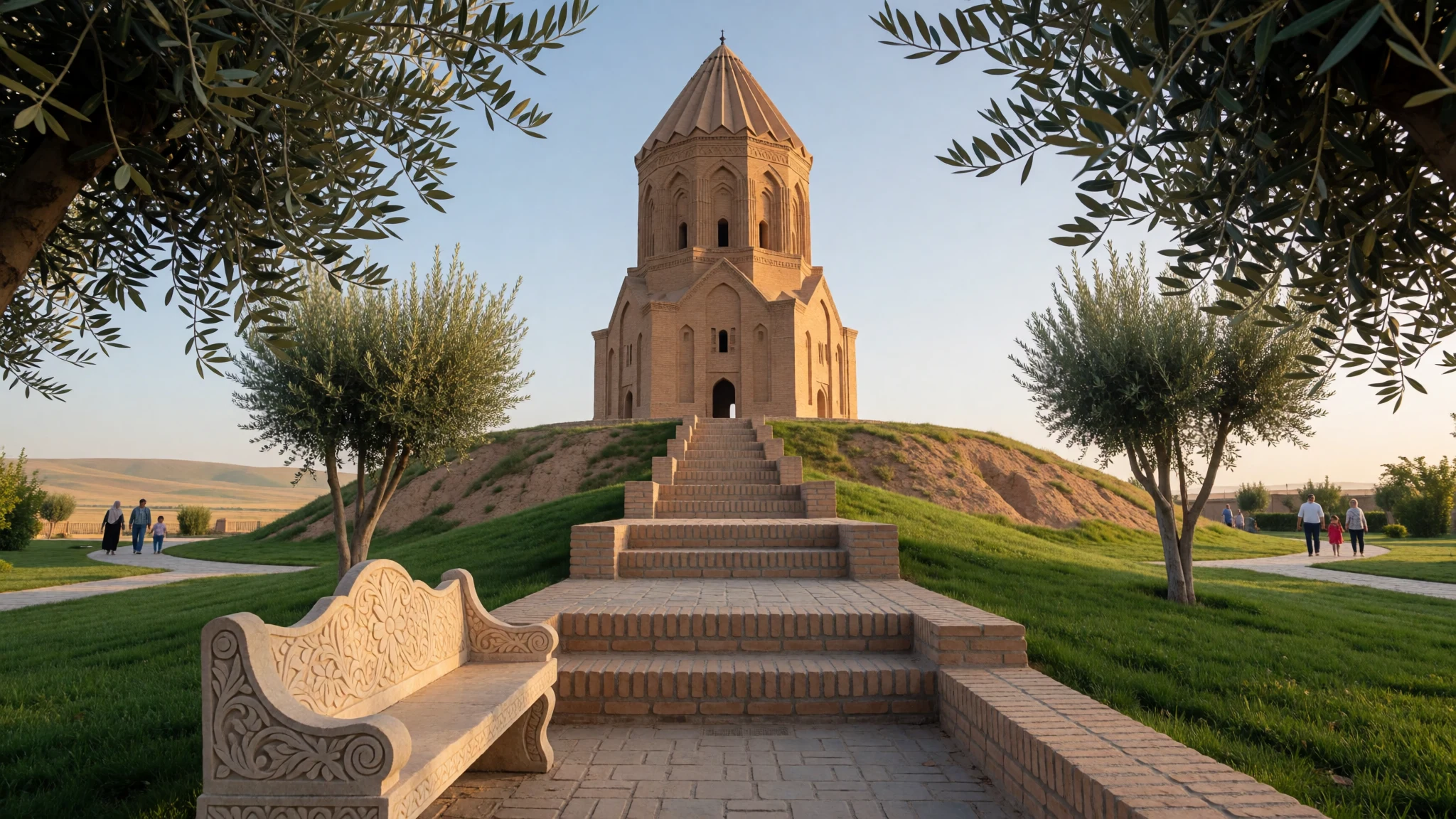
Gonbad-e Qabus is a striking cylindrical tomb tower—quiet from a distance, dramatic up close—and a UNESCO-listed piece of Iranian craft.
The place
Gonbad-e Qabus (برج گنبد قابوس) is a mausoleum tower in Gonbad-e Qabus, Iran, and a UNESCO World Heritage Site. The monument is closely tied to Ziyarid ruler Qabus, with the tower designed as his grave marker and built during his lifetime. Even if the building itself feels still, the story around it moves: this is a landmark that gave its name to the city, and it continues to anchor the local identity.
On the ground, the tower reads like a clean piece of geometry made from brick—cylindrical, tall, and remarkably clear in silhouette. From the approach road, the shape stands out against the landscape, so there’s a satisfying rhythm to the visit: first the tower as a distant reference point, then the slow realisation that the surface work and proportions reward getting nearer.
The “why” of the architecture is part of what makes Gonbad-e Qabus memorable. Commentators often frame it as a balanced design: a single function (a princely statement beyond death), translated into a form that’s both cylindrical and transformed into a more complex silhouette, executed with brick as the dominant material. It’s the kind of structure where you don’t need to rush to “do” anything—just walk the perimeter, pause, and watch how light picks out the curved surfaces.
Crowds are usually not the main issue here; the bigger variable is weather and planning. This is a place where good daylight and a sensible arrival time matter more than lining up with tour groups.
Its story
Gonbad-e Qabus sits in northern Iran’s architectural tradition of monumental tomb towers, but it feels personal rather than ceremonial. The tower is a grave marker for Ziyarid ruler Qabus, and it was built during his lifetime. That matters, because it changes the emotional tone: this wasn’t something designed as a distant afterthought—it was a decision made while the man was still present in the world.
The shape is part of the message. A cylindrical body turned into a more intricate profile suggests a tension between stability and aspiration—an object meant to endure, yet not look plain. Brick, too, isn’t treated as background. It’s the building’s main language, and the surface carries the sense of craftsmanship you only notice when you’re close enough to see how the material holds together.
There’s also a quiet historical “echo” to the location. The city that grew around the tower takes its name from the monument, so the structure didn’t just sit in a landscape—it redirected attention and memory. That’s why the experience feels less like passing through and more like arriving at a named point in time.
On the visitor side, Gonbad-e Qabus is refreshingly low-drama compared with Iran’s headline sights. Instead of juggling multiple ticketed venues, it’s one strong landmark. That makes it ideal for people who like to travel by pace: arrive early for steadier light, keep expectations grounded, and let the architecture do the talking.
What to see
- Gonbad-e Qabus Tower (برج گنبد قابوس) — Gonbad-e Qabus town
Start with the tower’s silhouette and then move closer to check the brickwork and the way the curved form reads from different angles. The experience is mostly visual and atmospheric—walk slowly and let the light shift the surface.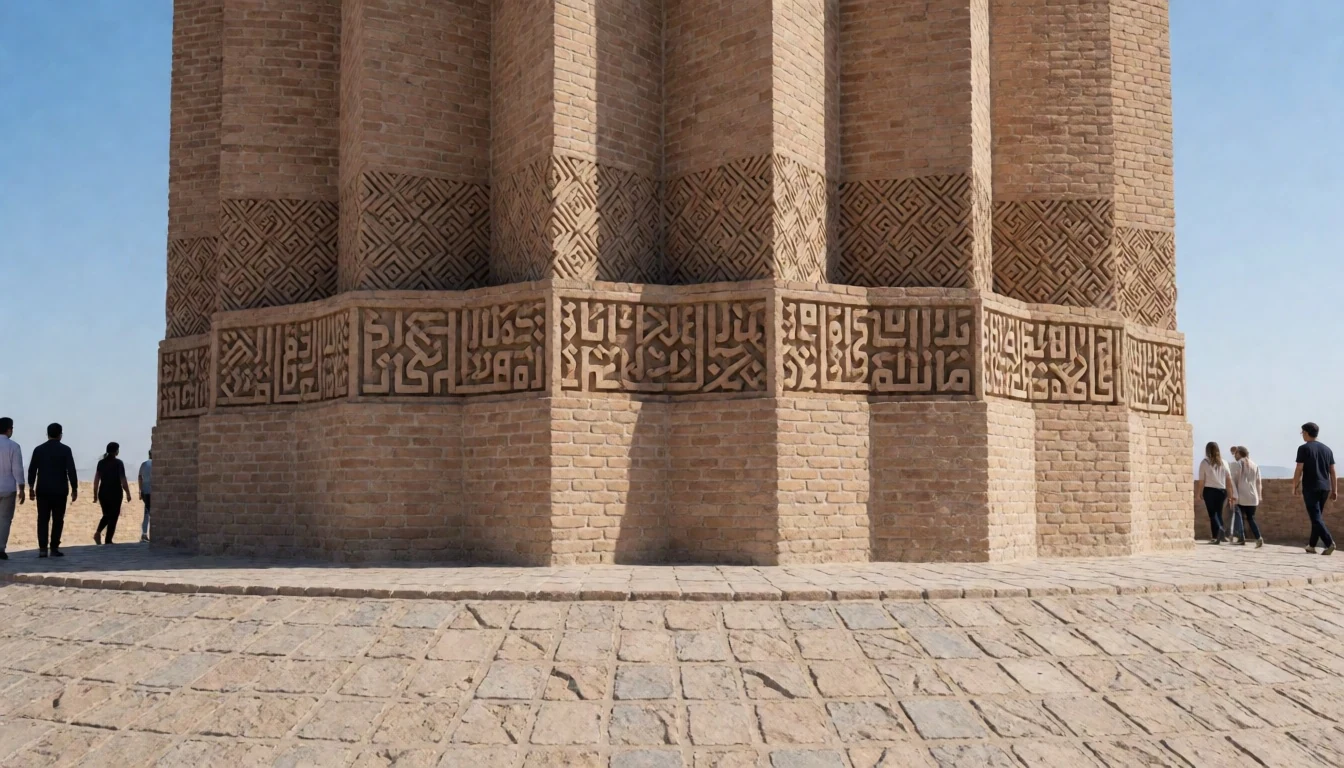
- Perimeter viewpoints — Around the mausoleum grounds
If the grounds allow access around the monument, use small changes in position for big differences in the tower’s profile. It’s a good spot for “arrive, pause, step aside” photography rather than long stays.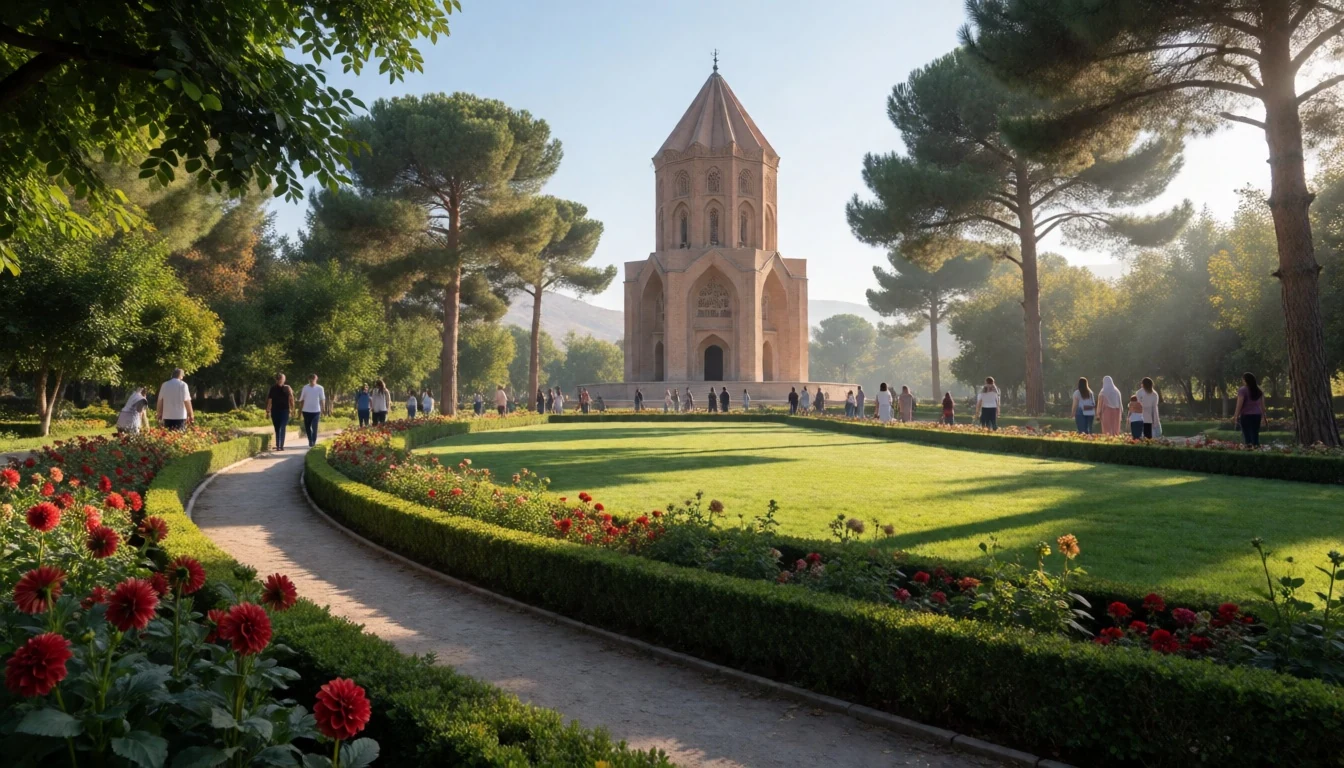
- Approach from the landscape — Road approaches into Gonbad-e Qabus
Approaching Gonbad-e Qabus from the road gives the clearest sense of how visible the tower is across the local area. Look for the moment when the monument stops being a shape and becomes an object with detail.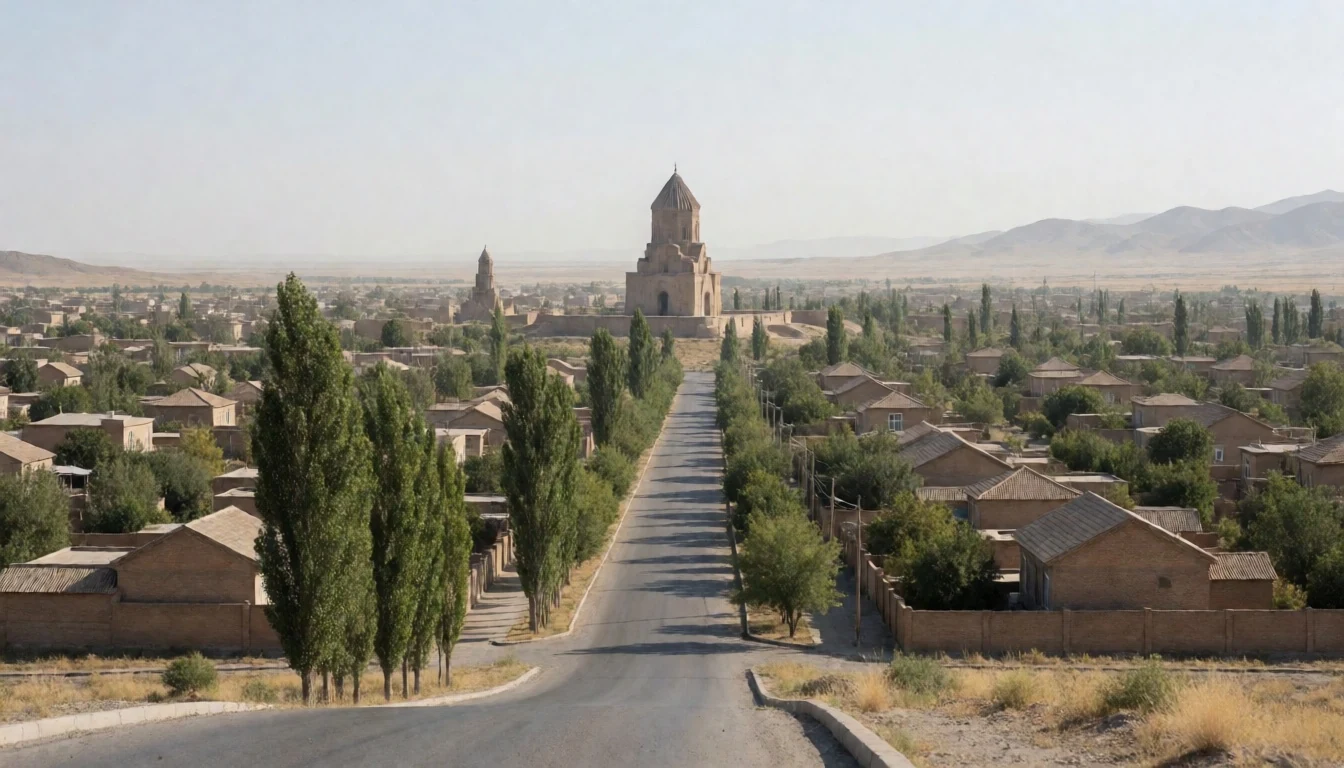
- Autumn light studies — Main viewing zones near the tower
In late October and November, the softer light can make brick textures feel warmer and more defined. Plan for slower viewing and take a few short breaks—this is a place where changing light is part of the attraction.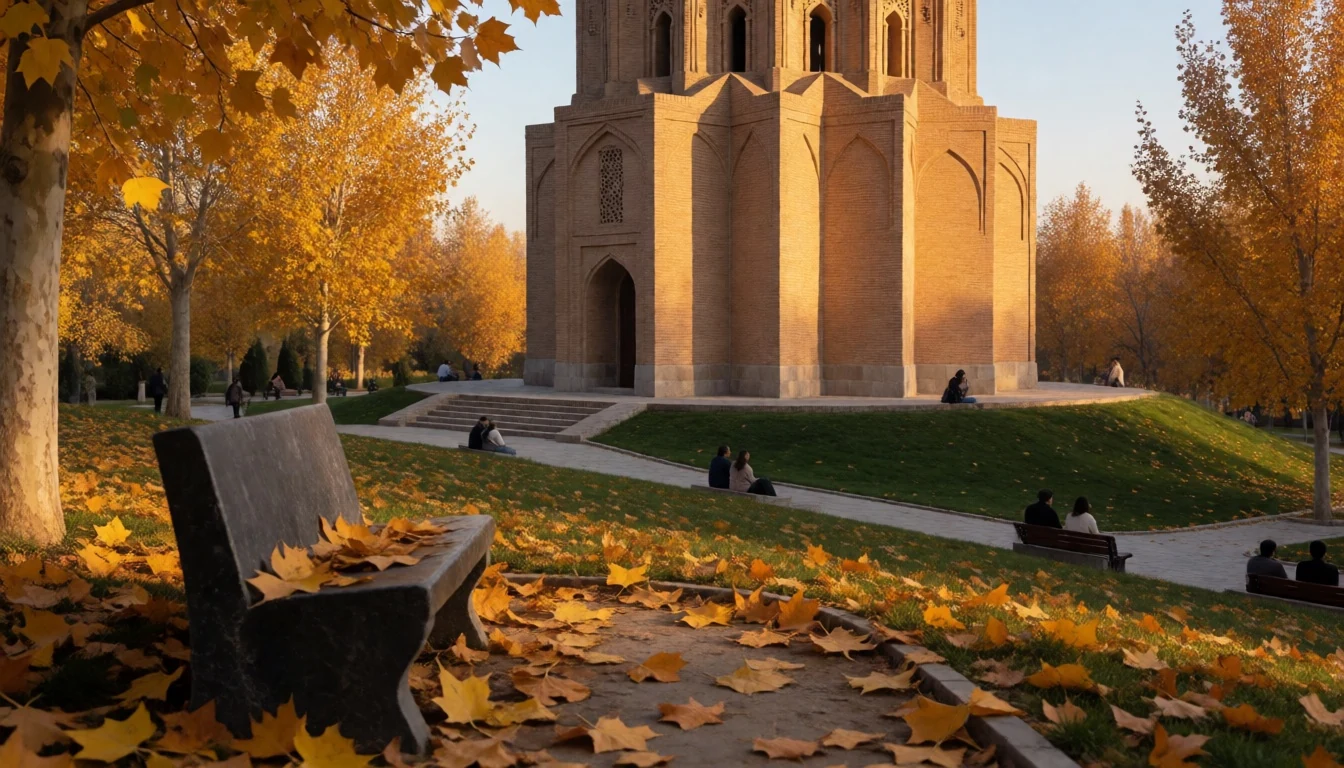
Culture
Iran has a strong tradition of hospitality, and that can shape how visits to heritage sites feel: introductions, short chats, and helpful guidance are common, especially when travellers look genuinely interested. At the same time, the country can be cautious about outsiders, so a relaxed but respectful attitude goes a long way.
Language and greeting customs are worth bearing in mind around monumental places where families and local visitors are present. People may use formal forms (such as addressing someone with Mr/Ms style terms) and may greet with a handshake or a hug depending on the situation. If you greet someone who is seated, it’s normal for the other person to stand, and visitors should mirror that level of respect.
Dress matters, because conservative expectations are part of public life. For women, the general norm in public is covering everything but the face, hands and feet. For men, regular modest clothing is safest in practice.
Finally, keep your behaviour calm. If someone offers hospitality or something to eat, refusing can come across as rude, so accept politely even if only a small portion is possible. Visitor etiquette: Dress modestly and keep greetings respectful, especially if you’re unsure about handshakes across men and women.
What to wear
Gonbad-e Qabus is an outdoor monument visit, but Iran’s everyday dress norms still apply because you’ll likely share space with local families and visitors. The most visible marker of Iran’s Islamic leanings is conservative public dress. For women, that usually means covering everything but the face, hands and feet when out in public; it’s not the place for short shorts or low necklines.
For men, normal Western-style clothing is generally fine as long as it stays modest (think long trousers rather than very short or tight styles). In practice, visitors will see a range of everyday outfits, but the safest approach is to dress slightly more covered than feels “just right” back home.
Textiles aren’t a single requirement here, but scarves and loose layers are practical for comfort and for keeping to norms. Given Gonbad-e Qabus is visited across several months, it helps to pack layers: mornings can feel cooler in shoulder seasons, while warmer days call for breathable fabrics.
What a visitor should wear: lightweight, modest layers; closed-toe shoes for uneven ground near heritage sites; and a scarf or equivalent to cover hair when needed. Visitor-friendly tip: if entering any area that feels like it has religious or ceremonial significance, keep clothing extra conservative and avoid flashy attention-grabbing outfits.
What to eat
- Rice dishes (polo-style) — City-centre eateries and local restaurants
Look for rice-based meals served with herbs and meats at everyday eateries. You’ll often find them as part of a larger spread rather than a quick snack—expect the meal to feel unhurried.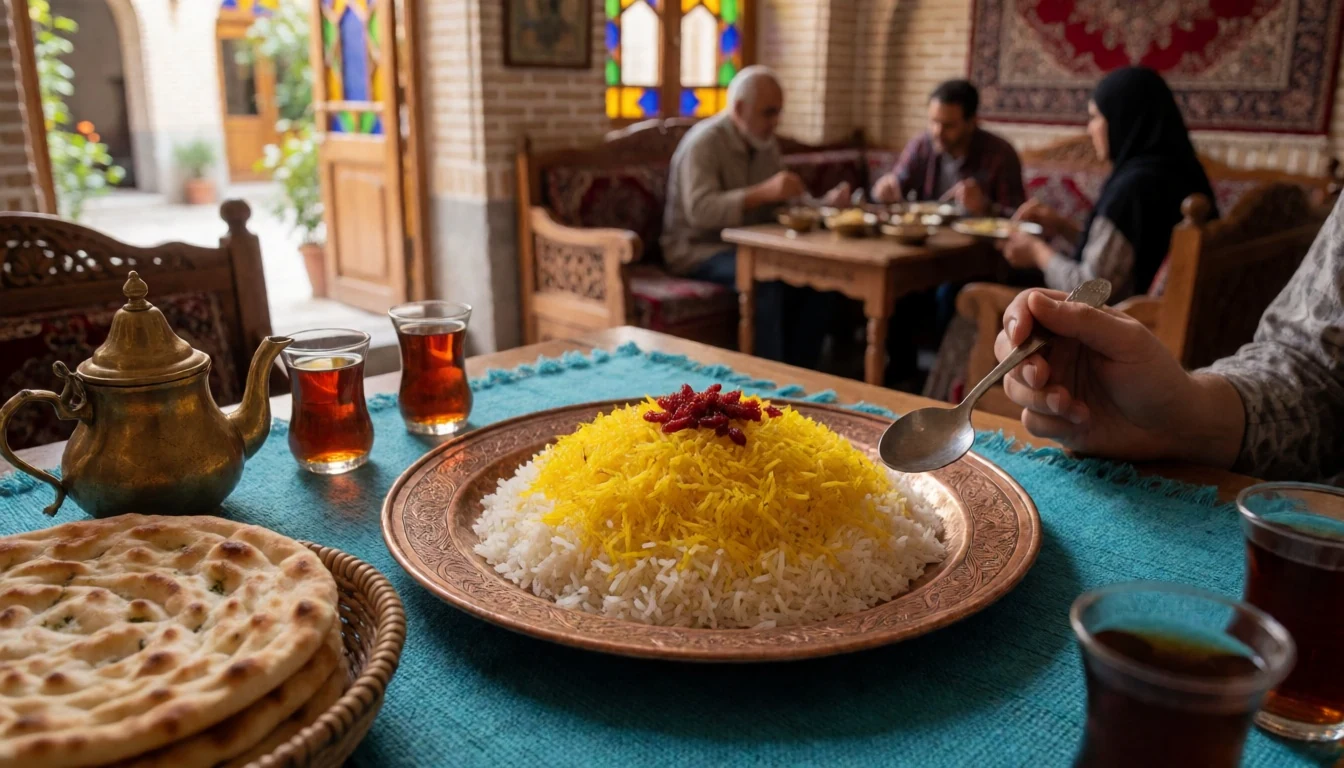
- Kebabs — Local restaurant menus and market-area food stalls
Kebabs are a common baseline across Iranian menus, and they show up often because they’re easy to serve and share. If dining out feels limited, kebabs may be the most reliable choice at many eateries.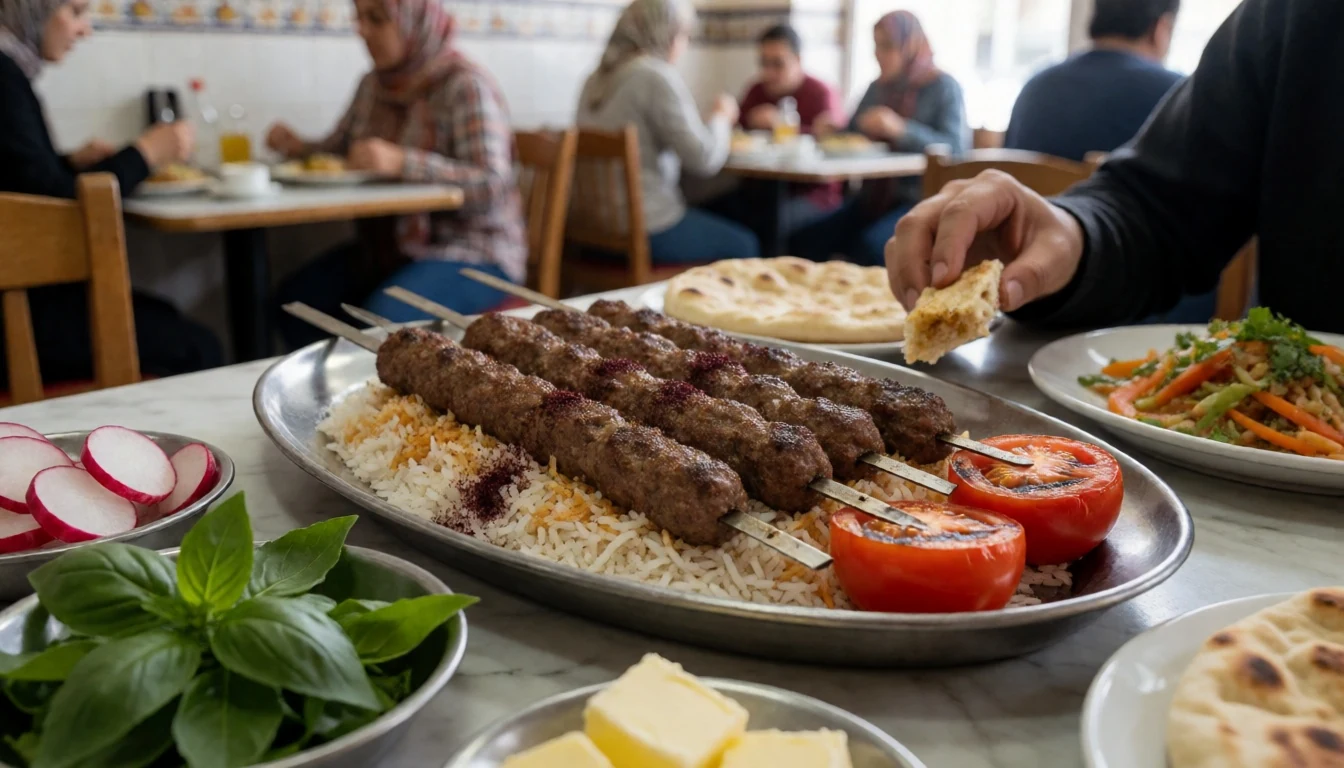
- Fresh herb-and-salad starters — Restaurant starters and home-style spreads
A meal may begin with a spread of fresh produce—herbs, salad-style sides, and crunchy accompaniments. Even when the main dish is simple, these starters make the meal feel complete. - Sweet pastries and desserts — Tea rooms and pastry counters
Meals are often accompanied by pastries, fruit, and sometimes nuts, especially as a slow, social affair. If offered something sweet, it’s usually better to accept than to decline. - Fruit and nuts as part of the spread — Hospitality at home and longer sit-down meals
It’s normal to see fruit and nuts woven into the rhythm of dining, not only as a standalone dessert. These are often part of longer meals where conversation matters as much as the food.
Plan it
Best time. March–April and October–November, when temperatures tend to be kinder for outdoor walking and viewing; June can be rainy, and August can be hot and humid.
How long. 2–3
Getting there. Plan the trip around reaching the nearest major gateway airport or rail hub in Iran, then take the final road leg to Gonbad-e Qabus (local transport varies—confirm routes close to departure).
Budget. mid
Tips
- Aim for earlier daylight for softer light on the tower’s brick surfaces and fewer uncomfortable weather hours.
- Build in buffer time for local travel connections on the final leg; services can be less frequent than in major capitals.
- Keep some cash to hand for small purchases and informal checkpoints, where card acceptance can be unpredictable.
- Carry water and a light layer; even in shoulder seasons, the air can feel changeable outdoors.
Etiquette
- Dress conservatively in public spaces and carry something to cover up as needed.
- When greeting people, follow local lead on whether handshakes across men and women are appropriate.
- If hospitality or food is offered, accept politely unless you’re able to explain a clear reason.
Nearby
Sources
- Wikidata Q606763 (CC0)
- Wikipedia (Gonbad-e Qabus (tower)) (CC BY-SA 4.0)
- Wikivoyage (Iran) (CC BY-SA 4.0)
- Photo: Gonbad-e Qabus Tower by Hadi Karimi (CC BY-SA 4.0)
