Fukuoka
Fukuoka, Japan
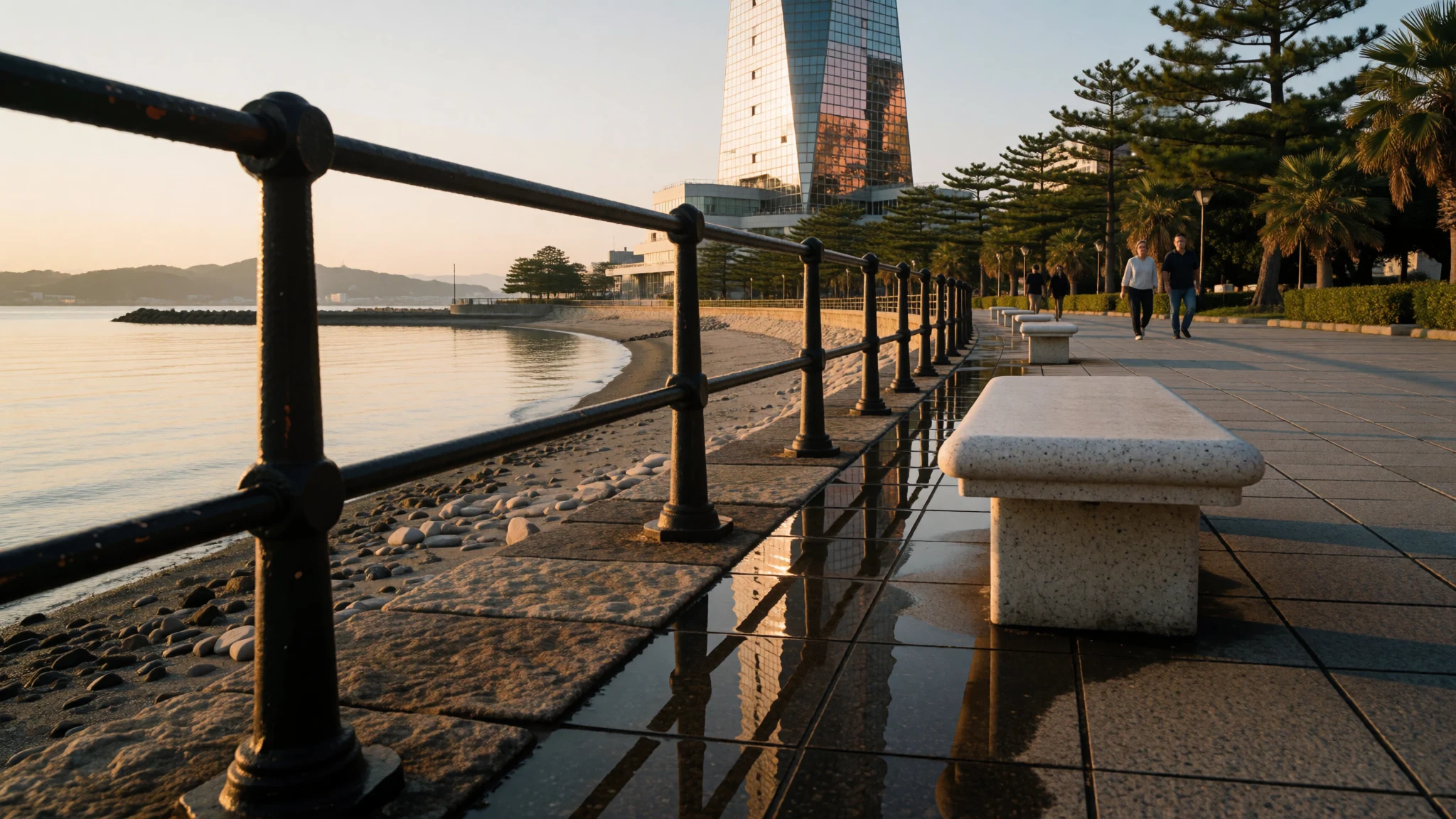
Fukuoka is a relaxed, compact Kyushu port city where temples, harbour views and late-night ramen stalls all sit within one easy subway ride.
The place
Fukuoka sits on the shore of Hakata Bay on the northern coast of Kyushu. It is the capital of its prefecture and home to about 1.6 million people. It is the nearest big Japanese city to the Asian mainland, and for centuries that position made it a front door for ships, traders, envoys and ideas arriving from Korea and China. The city stands only about 8 metres above sea level, on a flat coastal plain with hills behind it and a calm bay in front. Two older identities still sit under the one name. Hakata is the merchant and port quarter on the eastern side of the Naka river, and Fukuoka is the former castle town on the west. The main railway station keeps the older name, so timetables say Hakata, not Fukuoka. Distance from Kyoto, Osaka and Tokyo has given the city its own dialect and a relaxed, outward-looking character. Its scale surprises people who expect a provincial port. Fukuoka has overtaken Kyoto in population, and it has a skyline of glass towers at Momochi, a dense shopping district around Tenjin and a nightlife strip at Nakasu. Beaches, parks, shrines and a working harbour are all a short ride away on the subway. Flat, compact and easy to cross, it works well as a first stop in Kyushu or as a base for the island.
Its story
Fukuoka's story begins with the sea. In the Jomon period much of today's plain lay underwater, and early settlers lived along its edges. Later, Yayoi-period arrivals from the mainland brought rice cultivation, bronze and copper tools, and the moated villages whose remains survive at the Itazuke site. The bay faces the Sea of Japan and, beyond it, Korea and China, so contact came early. Chinese records mention exchanges with the Han dynasty as far back as 57 AD. Over the following centuries Hakata served as a harbour for envoys and merchants, and the region developed an independent streak, helped by its distance from the political centres of Kyoto, Osaka and later Edo. That openness also brought danger. Mongol fleets tried to land around the bay in the medieval period, and an illustrated scroll shows the samurai Takezaki Suenaga facing them. In the age of the shoguns, a castle town grew on the western bank of the river under a feudal lord, while Hakata across the water stayed a town of merchants and festival guilds. The two sides were joined under one municipal government in 1889, and the name Fukuoka was given to the whole. Hakata survives in the station, the port, the ramen and the festivals. In the decades since, the city has grown steadily into the largest on Kyushu.
What to see
- Kushida Shrine — Hakata old town, near Gion
Kushida Shrine is the neighbourhood shrine of old Hakata and the starting point of the Gion Yamakasa festival, when teams race heavy festival floats through the streets each July. Its origins reach back to the 8th century. Outside festival time it is quiet, a shaded precinct among office blocks and a good first stop.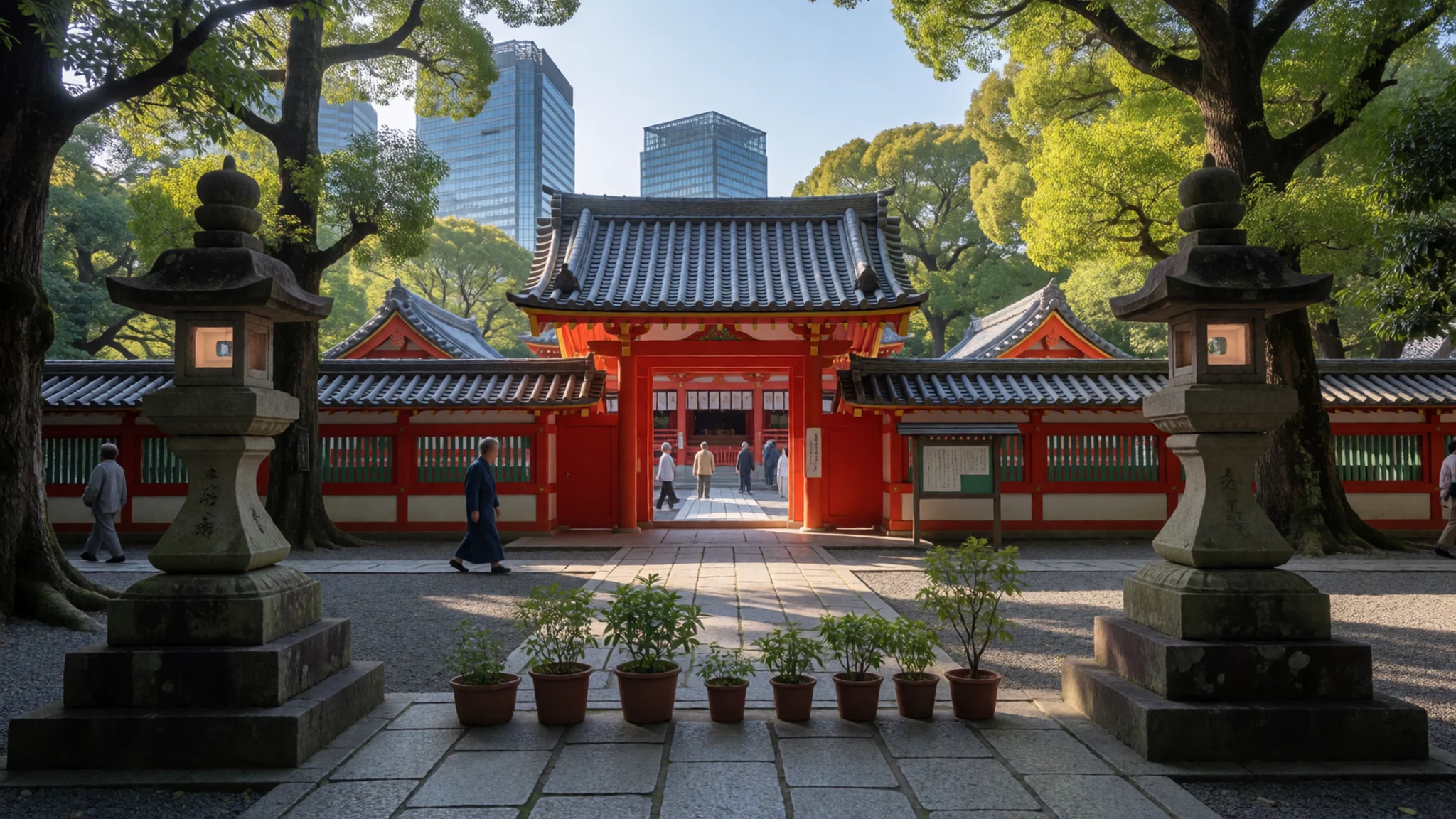
- Tōchō-ji — Gion district, Hakata
Tōchō-ji is a Buddhist temple in the Gion district, known for a seated wooden Buddha about 10.8 metres tall and a five-storey pagoda set against the low roofs of the old town. It combines easily on foot with neighbouring temples and shrines, and weekday mornings are usually calm.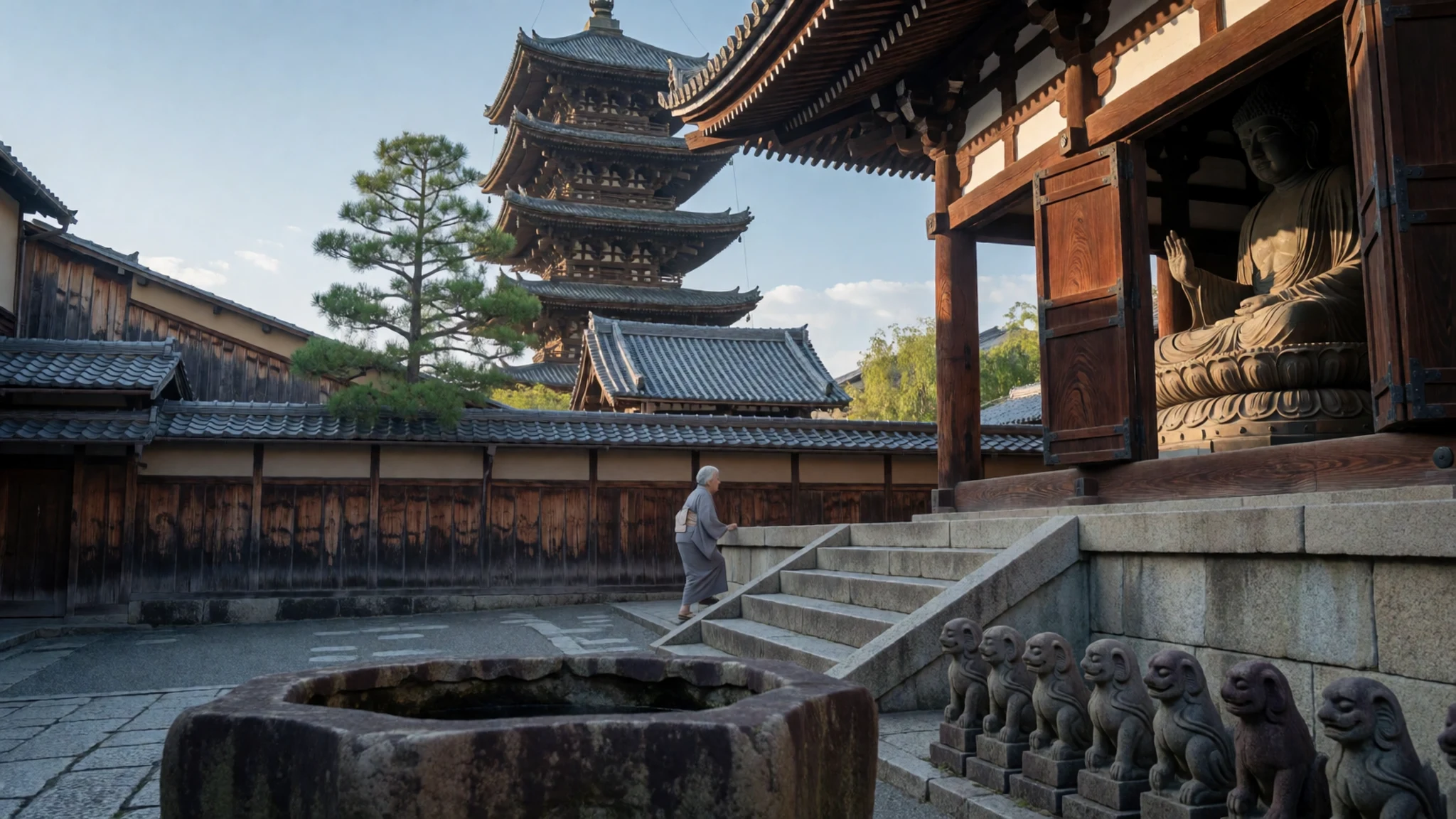
- Shōfuku-ji — Gion district, Hakata
Shōfuku-ji is described as Japan's first Zen temple, which gives a short walk real historical weight. The grounds are shaded and calm, a clear contrast with the shopping streets close by. Visitors come to wander the paths, notice the monastic layout and take a pause from the city.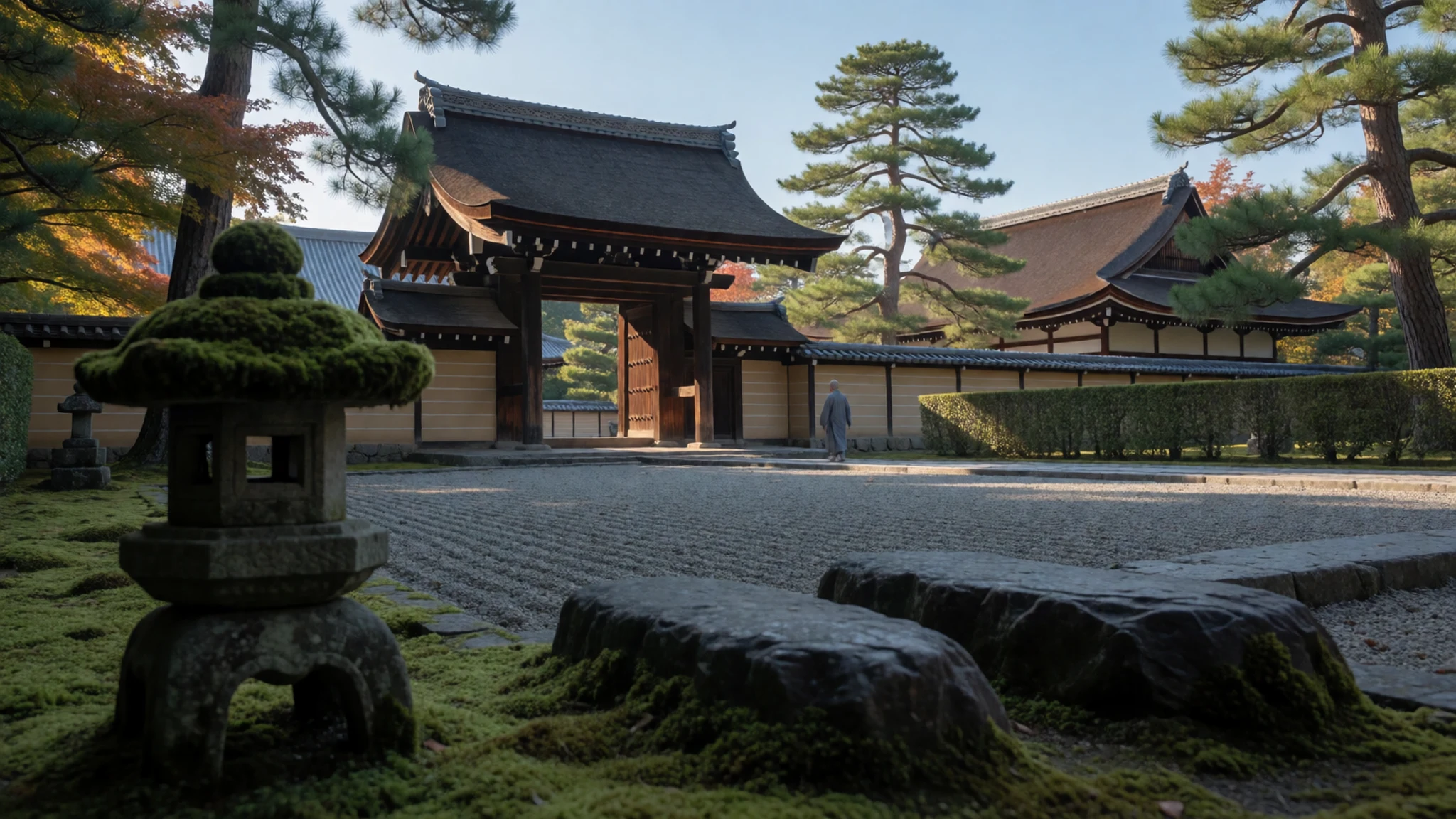
- ACROS rooftop garden — Tenjin Central Park
ACROS is a cultural building beside Tenjin Central Park, and its stepped roof is planted as a terraced garden that rises out of the park like a green hillside. Visitors can climb through the planting, and an observation deck gives a wide view over the city, a welcome pause in the middle of Tenjin's shopping crowds.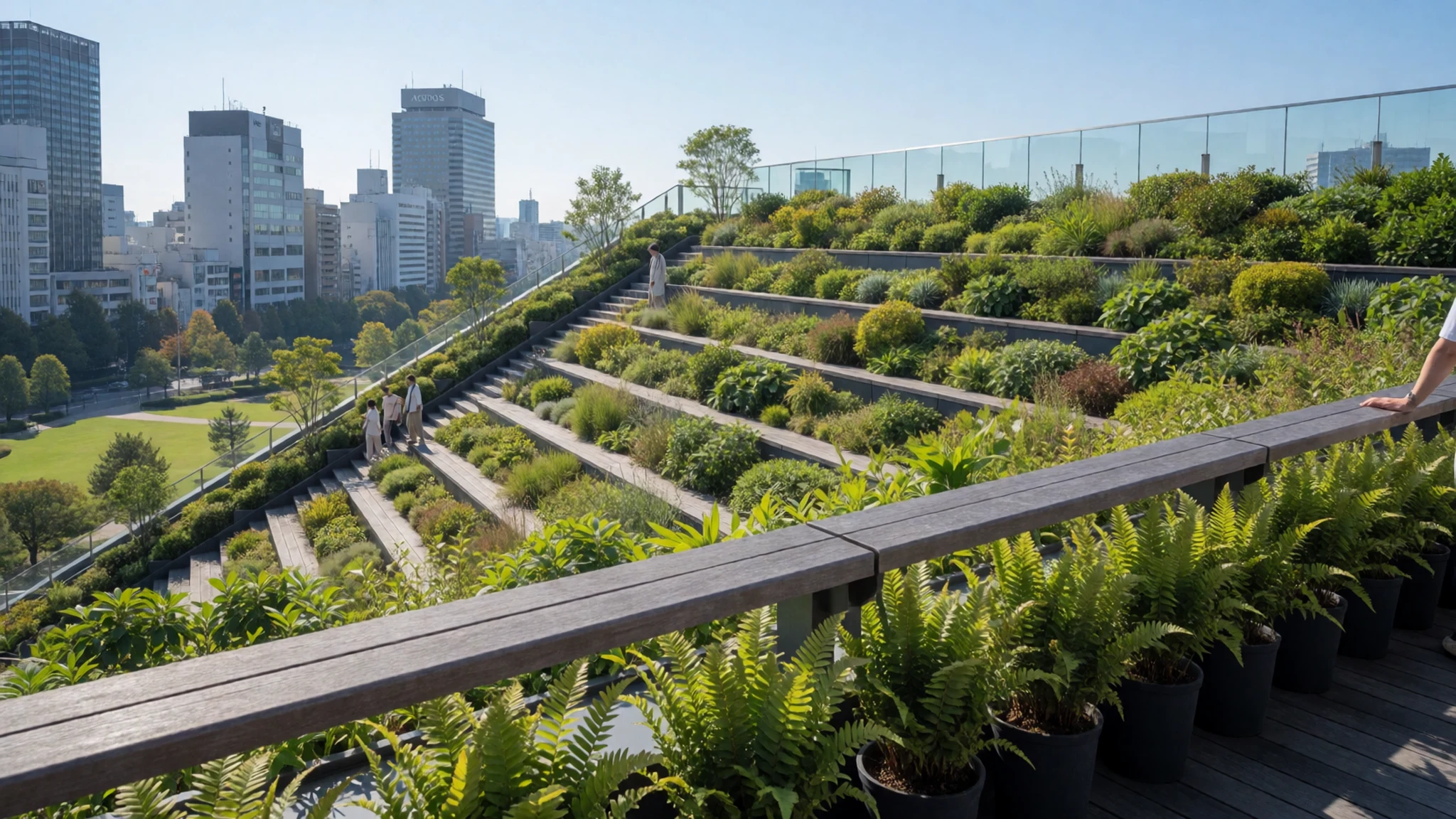
- Fukuoka Tower — Momochi seaside
Fukuoka Tower is a triangular mirrored tower on the Momochi waterfront. Its observation deck sits at 123 metres and looks over Hakata Bay, the port and the towers of Momochi. Late afternoon is a good time, when the light turns the glass gold. Check the official listing for opening details.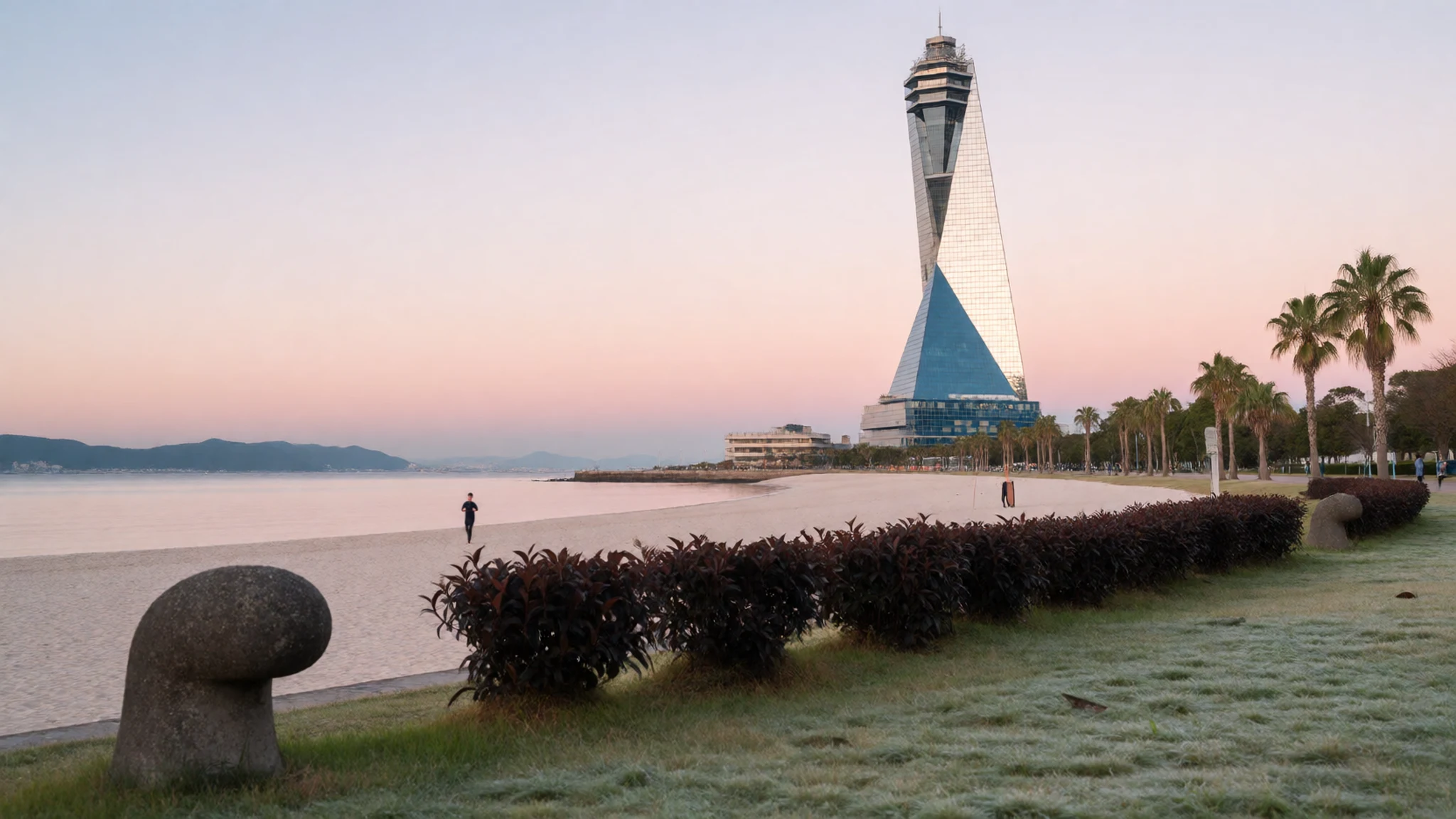
- Atago Shrine — Near Muromi subway station, west of the centre
Atago Shrine stands on a hilltop near Muromi subway station, west of the centre, and has a wide view over the city and the bay. It is much quieter than the central sights, so it suits an unhurried hour late in the day, after a short climb up from the street.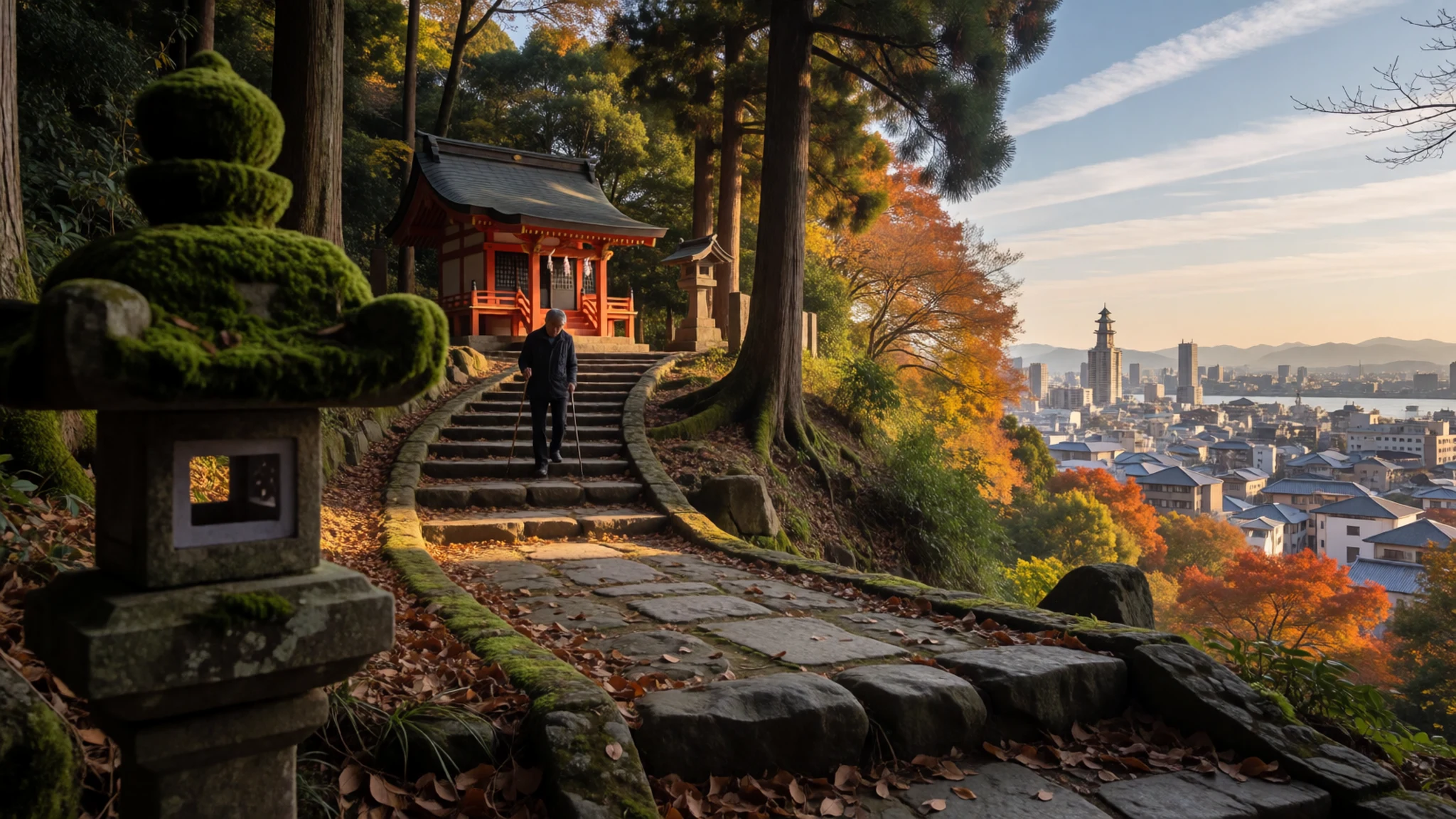
Culture
Fukuoka has a reputation for openness, shaped by centuries of trade and by being closer to Busan than to Tokyo. People here are proud of the Hakata dialect, the local festivals and the food, and are usually happy to talk about all three. Magazine surveys have praised the city for being friendly, safe and clean, with good transport and green spaces, and the impression holds up on foot. The calendar revolves around Hakata's festivals. In July, Gion Yamakasa sends teams in happi coats and loincloths racing floats through the streets in the early morning. Dontaku fills the streets with parades in spring, and the Hojoya fair at Hakozaki Shrine marks early autumn. The city is also a hub for modern culture, from the ACROS arts centre to small music venues and theatres. Its yatai street stalls are as much a social habit as a meal, with strangers sharing a counter and a conversation. Religion is a quiet, everyday presence: shrines and temples sit between office blocks, and office workers stop to bow on their way past. Seasons matter, with festival weeks bringing crowds and early starts that suit visitors who plan ahead. At shrines and temples, bow lightly at the gate, keep your voice low, and ask before photographing worshippers or festival teams.
What to wear
Fukuoka's best-known textile is Hakata-ori, a stiff, finely woven silk with raised stripes and geometric patterns, most famously used for kimono obi sashes. Its dense weave holds a crisp shape, which is why it also turns up in wallets, bags and ties. Traditional dress is worn mainly for festivals, weddings and tea ceremonies, and in summer light cotton yukata appear at fireworks and temple fairs. During Gion Yamakasa, team members wear short happi coats and a wrapped loincloth, a costume seen only at the event. Day to day, people in Fukuoka dress as in other Japanese cities: neat and casual, often stylish around Tenjin and Daimyo, where boutiques and department stores cluster, and in dark suits in the business districts. Visitors should plan for the weather first. Summers are hot and humid, so light cotton or linen and a hat work best. The rainy season in June calls for a compact umbrella, and winters are cool enough for a proper coat, though not a heavy parka. Shrines and temples have no strict dress code, but covered shoulders and knees show respect. Wear comfortable walking shoes that slip off easily, since temple halls, some restaurants and traditional inns ask for shoes to be removed at the door.
What to eat
- Hakata tonkotsu ramen — Nagahama ramen stalls and shops; late-night lanes off Oyafukodori
Hakata ramen has a milky pork-bone broth and thin, firm noodles. Diners often order a second helping of noodles once the first bowl is nearly empty. It defines eating in the city. Try it around Nagahama or in the late-night lanes near Oyafukodori.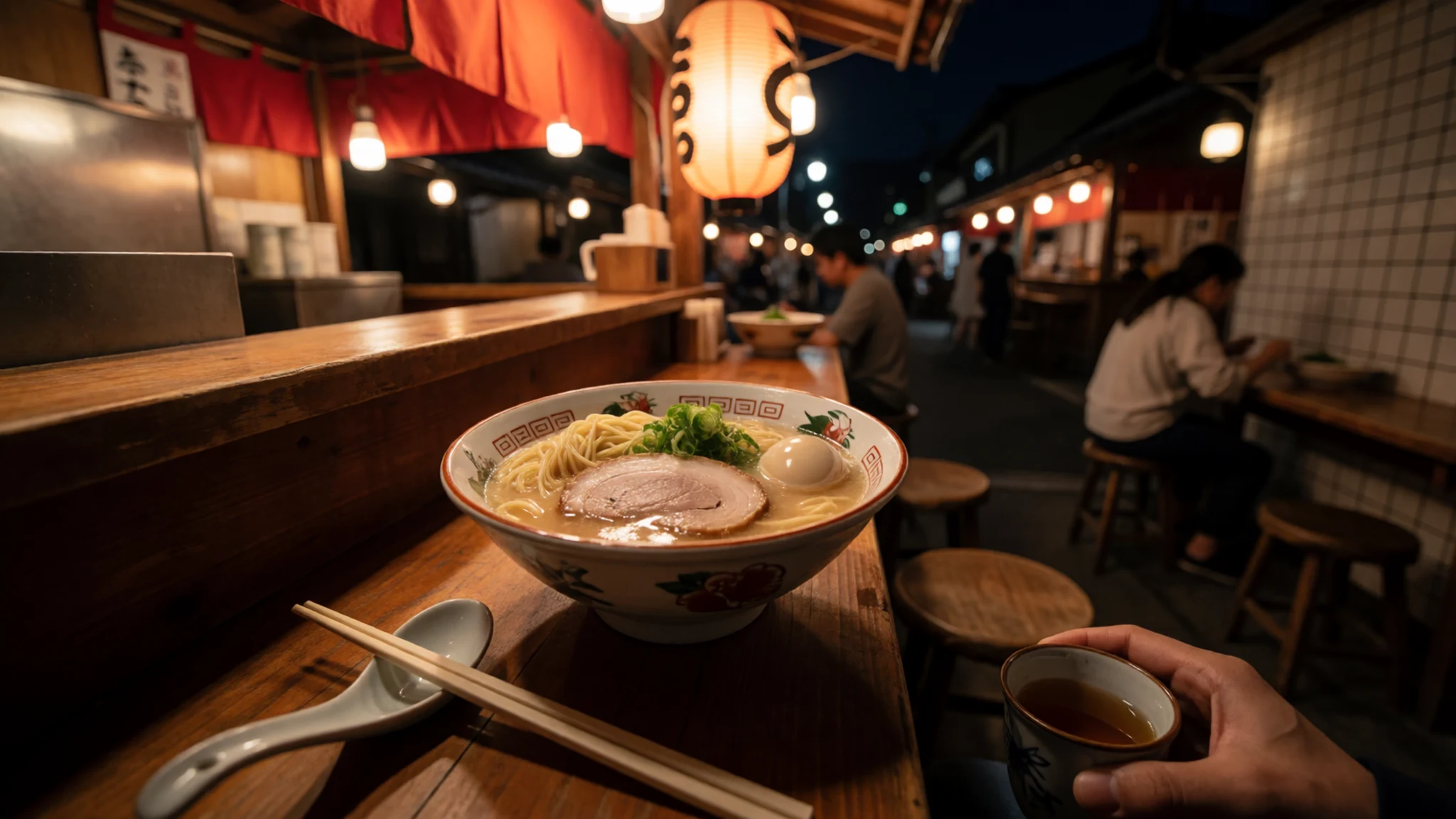
- Yatai stall food — Riverside yatai at Tenjin and Nakasu
Yatai are small open-air stalls that set up on the pavement each evening, serving ramen, grilled skewers and oden to a handful of customers on stools. The riverside lines at Tenjin and Nakasu are the usual places, and strangers often chat across the counter.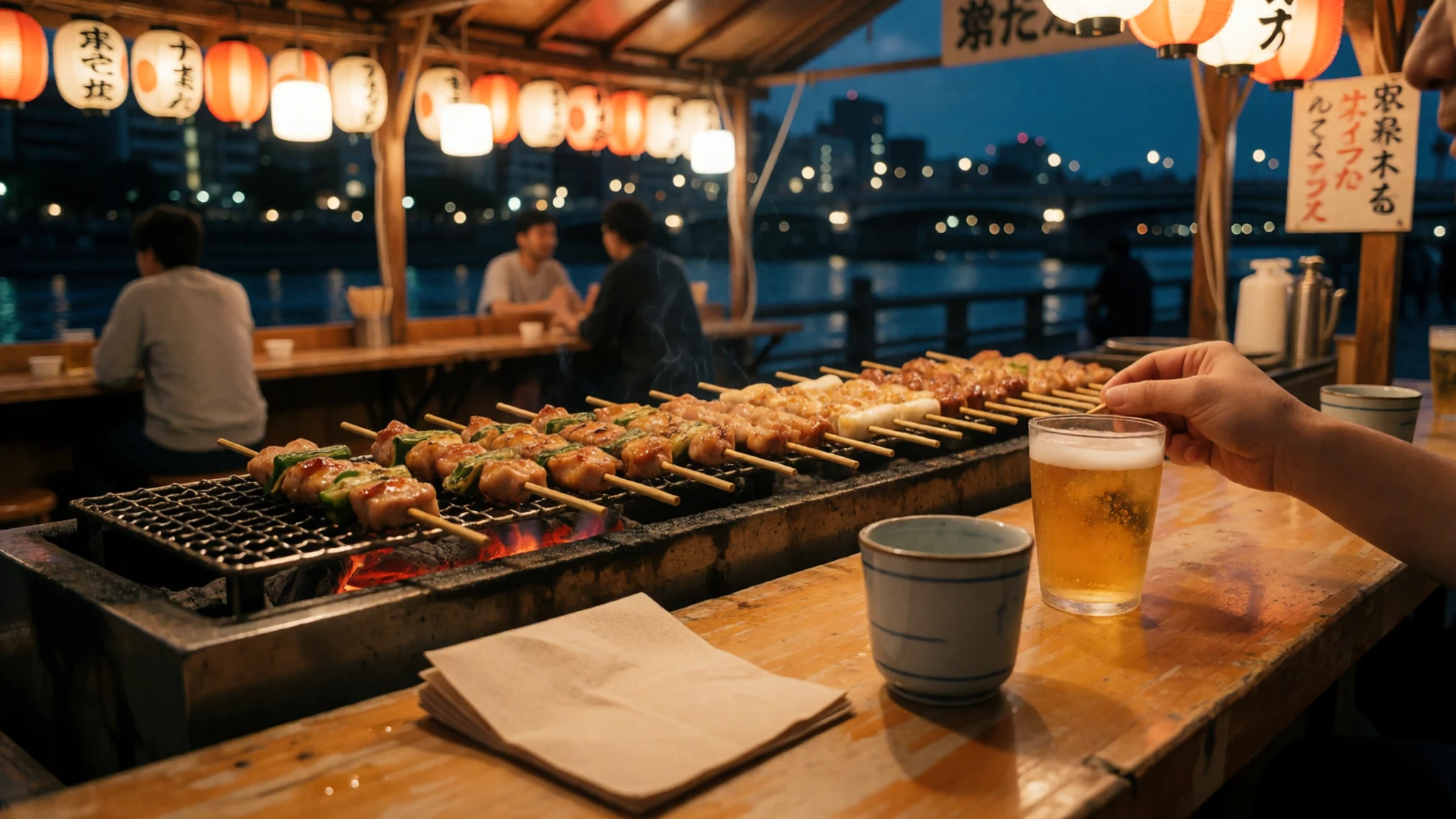
- Mentaiko — Food halls at Hakata Station and department stores
Mentaiko is pollock roe marinated with chilli, a Fukuoka speciality eaten with rice, stuffed in rice balls or folded into pasta and omelettes. Find it in the food halls of Hakata Station and department stores, and in specialist shops that sell neat gift packs. - Motsunabe — Izakaya (casual taverns) around Tenjin and Hakata Station
Motsunabe is a hotpot of beef or pork offal, cabbage and chives in a soy or miso broth with plenty of garlic and chilli, usually finished with noodles. Look for it at izakaya, the casual after-work taverns, around Tenjin and Hakata Station. - Mizutaki — Traditional restaurants in the old Hakata merchant quarter
Mizutaki is a gentle chicken hotpot simmered on the bone until the broth turns cloudy, eaten with ponzu citrus sauce and finished with rice or noodles. It is a Hakata home favourite, served in traditional restaurants and small family-run eateries across the city.
Plan it
Best time. March–April and October–November are mild and good for walking. Early July brings the Gion Yamakasa crowds, June is the rainy season, and August is hot and humid.
How long. 2–3
Getting there. Fukuoka Airport has domestic and international terminals, linked by a free shuttle bus, and the subway runs from the domestic terminal to Hakata Station in a few minutes. From Tokyo, flying takes about 2 hr and the Shinkansen about 5 hr. Search train routes as Hakata Station, not Fukuoka.
Budget. mid
Tips
- Book rooms early if visiting during Gion Yamakasa or Golden Week
- Carry some cash for yatai stalls and small shrines
- The central sights sit close together, so walk or use the subway rather than taxis
- Go to temples and hilltop viewpoints in the morning or late afternoon, outside the heat
- Check the official city site for events and opening details: https://www.city.fukuoka.lg.jp/
Etiquette
- Queue in lines at stations and stalls, and keep voices low on trains
- Remove shoes where you see a raised step or slippers waiting
- Do not tip at restaurants or stalls
Nearby
Sources
- Wikidata Q26600 (CC0)
- Wikipedia: Fukuoka (rev 1384533783) (CC BY-SA 4.0)
- Wikivoyage: Fukuoka (rev 5425307) (CC BY-SA 4.0)
- Photo: 福岡タワーより望む博多港方面 (そらみみ) (CC BY-SA 4.0)
- Photo: Fukuoka Skyline of Seaside Momochi (Nryate) (CC BY-SA 4.0)
- Photo: Fukuoka Castle (Suicasmo) (CC BY-SA 4.0)
- Photo: 東長寺の五重塔 (そらみみ) (CC BY-SA 4.0)
- Photo: 福岡県福岡市東区の筥崎宮境内 (ぱちょぴ) (CC BY 3.0)
- Photo: マリンワールド海の中道 (そらみみ) (CC BY-SA 4.0)
- Photo: Kakiyama, Hakata Gion Yamakasa (Pontafon) (CC BY-SA 2.5)
- Photo: Samurai Takezaki Suenaga detail, Mōko Shūrai Ekotoba (Tosa Nagataka) (Public domain)


