French Riviera
French Riviera, France
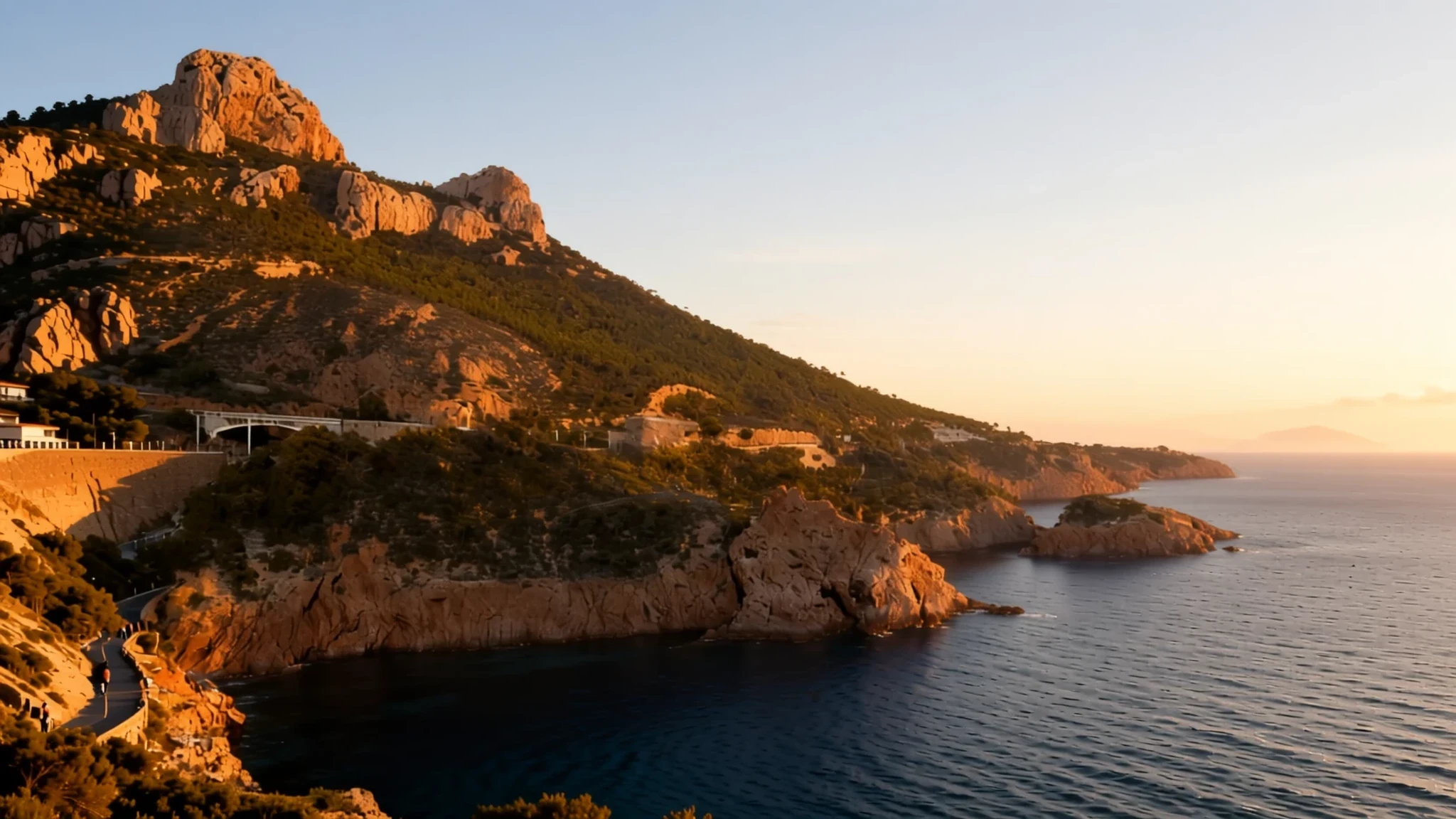
Discover a legendary Mediterranean coastline where dramatic cliffs meet azure waters, historic resort towns, and timeless artistic inspiration.
The place
The French Riviera, known locally as the Côte d'Azur, spans the southeastern corner of France along the Mediterranean Sea. Stretching from the rugged red rocks of the Massif de l'Esterel in the west to Menton right at the border with Italy, this storied shoreline sits entirely within the Provence-Alpes-Côte d'Azur area. Sucked into this glittering coastal realm is the Principality of Monaco, an independent enclave bordered on three land sides by France and open to the sea on the south. Key resorts dotted along the maritime route include Cap-d'Ail, Beaulieu-sur-Mer, Saint-Jean-Cap-Ferrat, Villefranche-sur-Mer, Antibes, Juan-les-Pins, Cannes, and Théoule-sur-Mer.
The term Riviera originates from old Ligurian territory in Italy, while Côte d'Azur was coined as a poetic description for the coastline of Nice after its mid-nineteenth century annexation, inspired by winter skies that matched the color of the sea. Weather here can be dramatic; when northern winds like the Mistral or the Tramontane sweep across Provence, the local sea temperatures can drop noticeably, though this cooling effect is felt less frequently along the eastern stretches toward the Italian frontier. As one of the earliest modern holiday regions, it evolved from an eighteenth-century winter health retreat for British visitors into a glamorous nineteenth-century magnet for crowned heads, literary figures, and modern artists drawn by the extraordinary light and gentle climate.
Its story
Human habitation along this Mediterranean shore stretches back deep into prehistory. Early stone implements left between one million and one million and fifty thousand years ago have been recovered from the Grotte du Vallonnet near Roquebrune-Cap-Martin, alongside animal remains from ancient bovines and rhinoceroses. Near the port of Nice, excavations at Terra Amata uncovered hearths dating back hundreds of thousands of years, marking some of the earliest controlled fire sites found across Europe. Bronze Age dolmens pepper the landscape around Draguignan, while high in the mountains near Mount Bégo, the Vallée des Merveilles features tens of thousands of ancient carvings pecked into rock surfaces at high altitude, serving as an open-air sanctuary around two thousand BC.
Maritime trade flourished when Greek sailors from Phocaea established trading ports at Olbia, Antipolis, and Nikaia during the seventh century BC, competing directly with Etruscan and Phoenician merchants. Roman conquest followed, marked decisively by the Emperor Augustus, who erected a grand monument at La Turbie to symbolise regional pacification. Roman administration left amphitheatres, public baths, and civic walls at sites such as Cimiez above Nice and throughout Fréjus. By the mid-third century AD, Germanic migrations began to challenge Roman authority as Christianity took deep root across the territory, laying the foundations for the medieval towns, coastal watchtowers, and religious communities that would later shape the sun-drenched landscape.
What to see
- Promenade des Anglais — Nice seafront
Sweeping along the sea front in Nice, this iconic palm-lined avenue invites long strolls right beside the pebble beaches and the sparkling blue bay. It traces the curves of the coastline where travellers have gathered for generations to enjoy the sea air, watch the changing light on the water, and observe daily life unfold against a backdrop of grand architecture.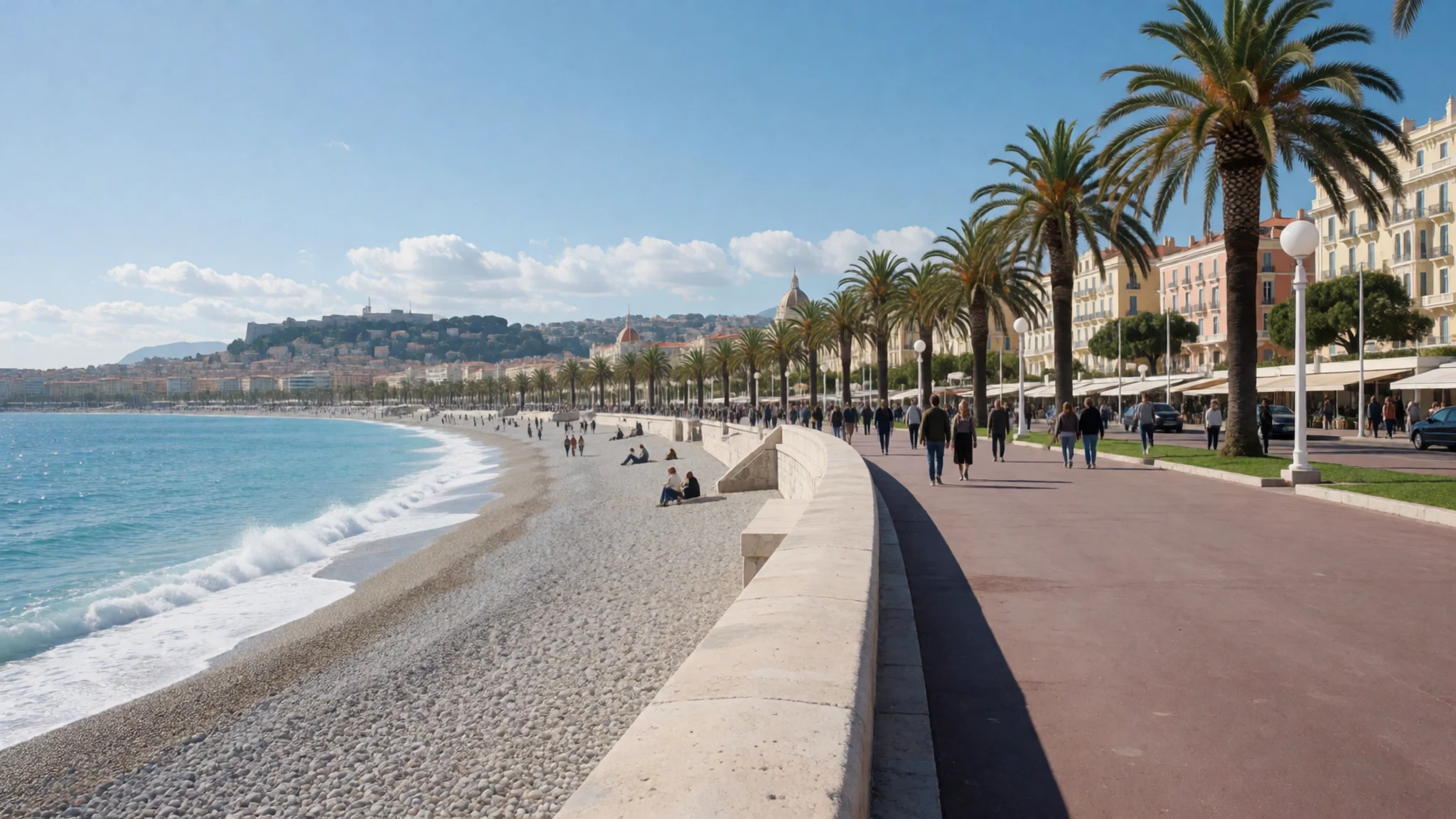
- Village of Èze — High corniche between Nice and Monaco
Perched high on a rocky pinnacle overlooking the Mediterranean, this medieval village clings to the cliffside like an eagle's nest. Narrow, winding cobblestone lanes weave past stone houses, art galleries, and botanical gardens, offering sweeping views out over the deep blue gulfs and distant peninsulas of the coast.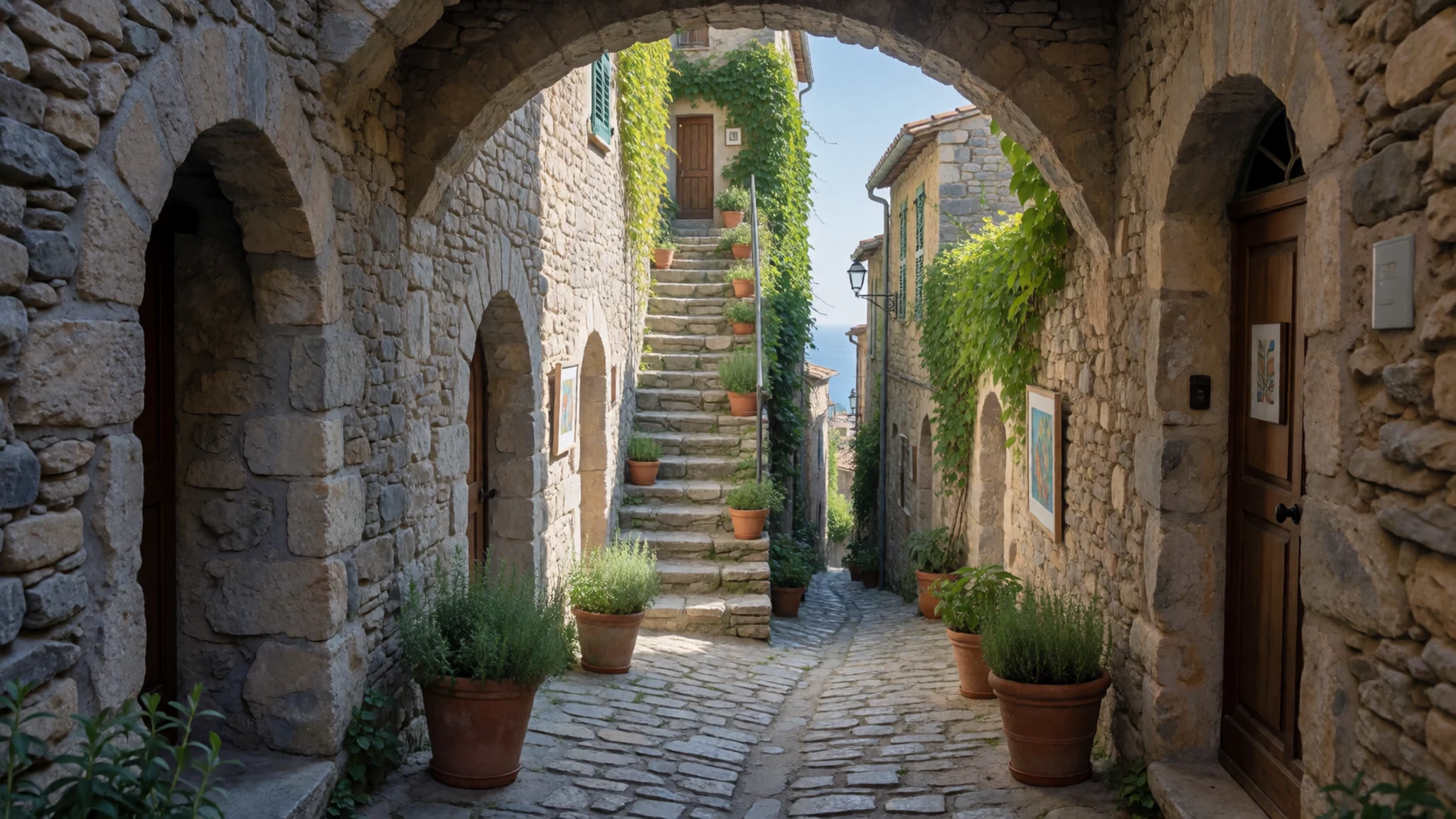
- Port Hercules — Monaco
Set against the dramatic backdrop of the principality, this deep-water harbour accommodates an impressive assembly of luxury yachts and sailing vessels. Visitors can walk the wide quays to admire the maritime engineering, watch international maritime events, and enjoy the lively atmosphere of the surrounding cafes and terraces.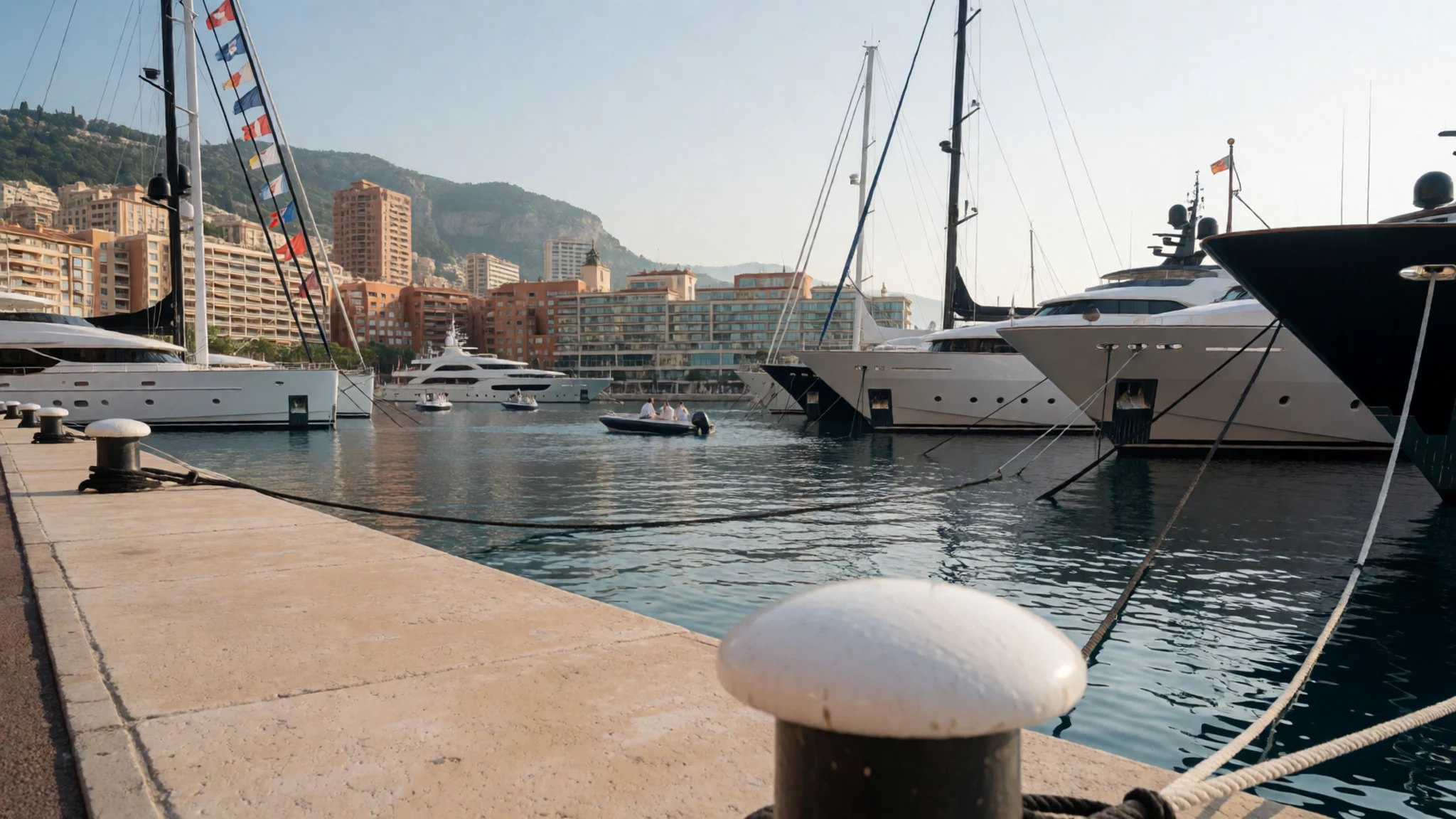
- Saint-Tropez Harbour — Saint-Tropez
Famed for its storied maritime heritage and artistic legacy, this coastal port balances old-world charm with international prestige. Traditional fishing boats moor alongside sleek modern yachts while painters set up easels along the quays, capturing the golden sunlight reflecting off pastel-coloured buildings and shimmering waters.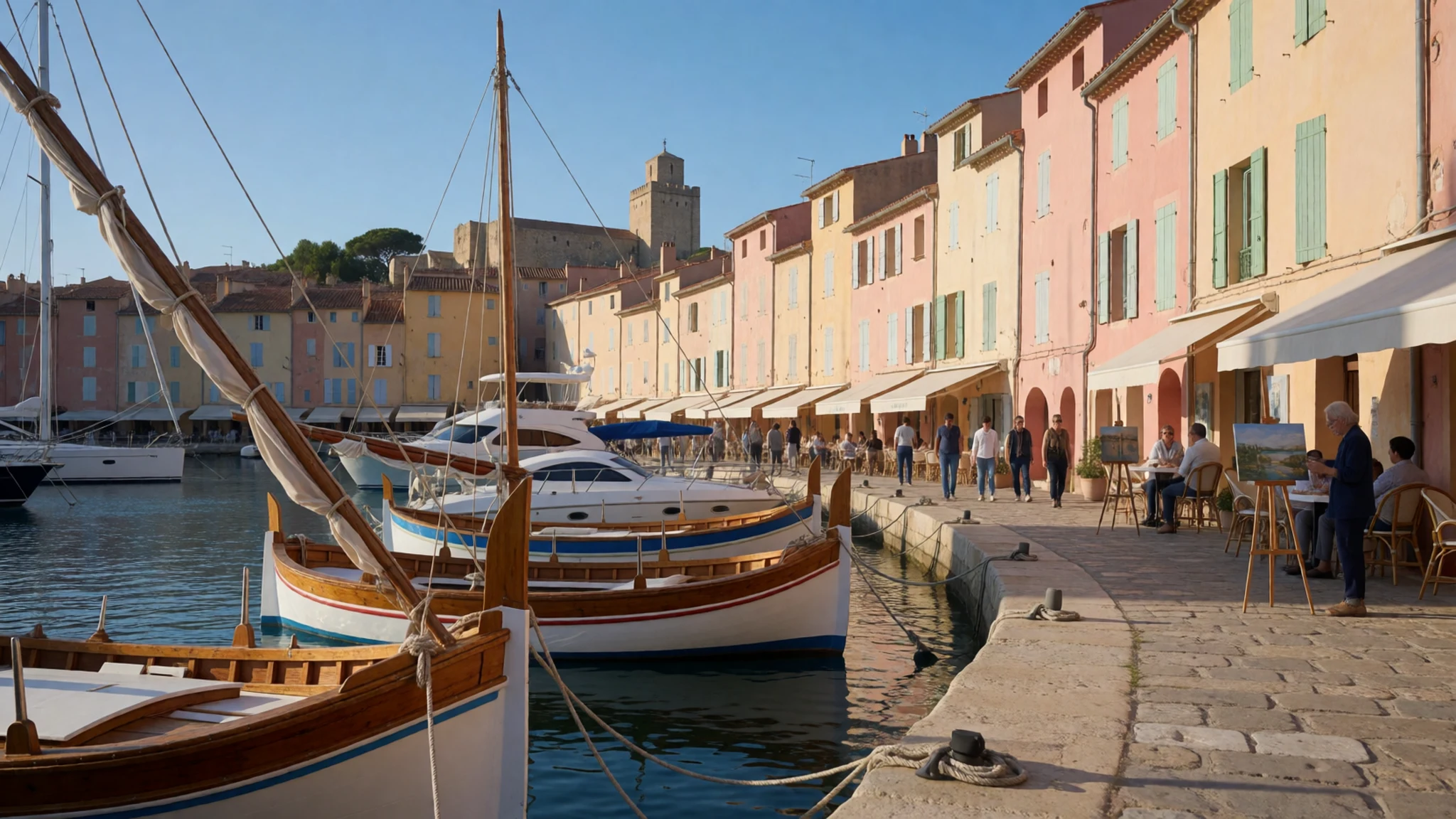
- Massif de l'Esterel — Western coast near Saint-Raphaël
This dramatic mountain range plunges directly into the sea, forming rugged red volcanic cliffs and hidden coves known as calanques. Winding coastal roads and forest trails offer striking contrasts between the crimson rock formations, dark green pine trees, and the brilliant turquoise expanse of the Mediterranean.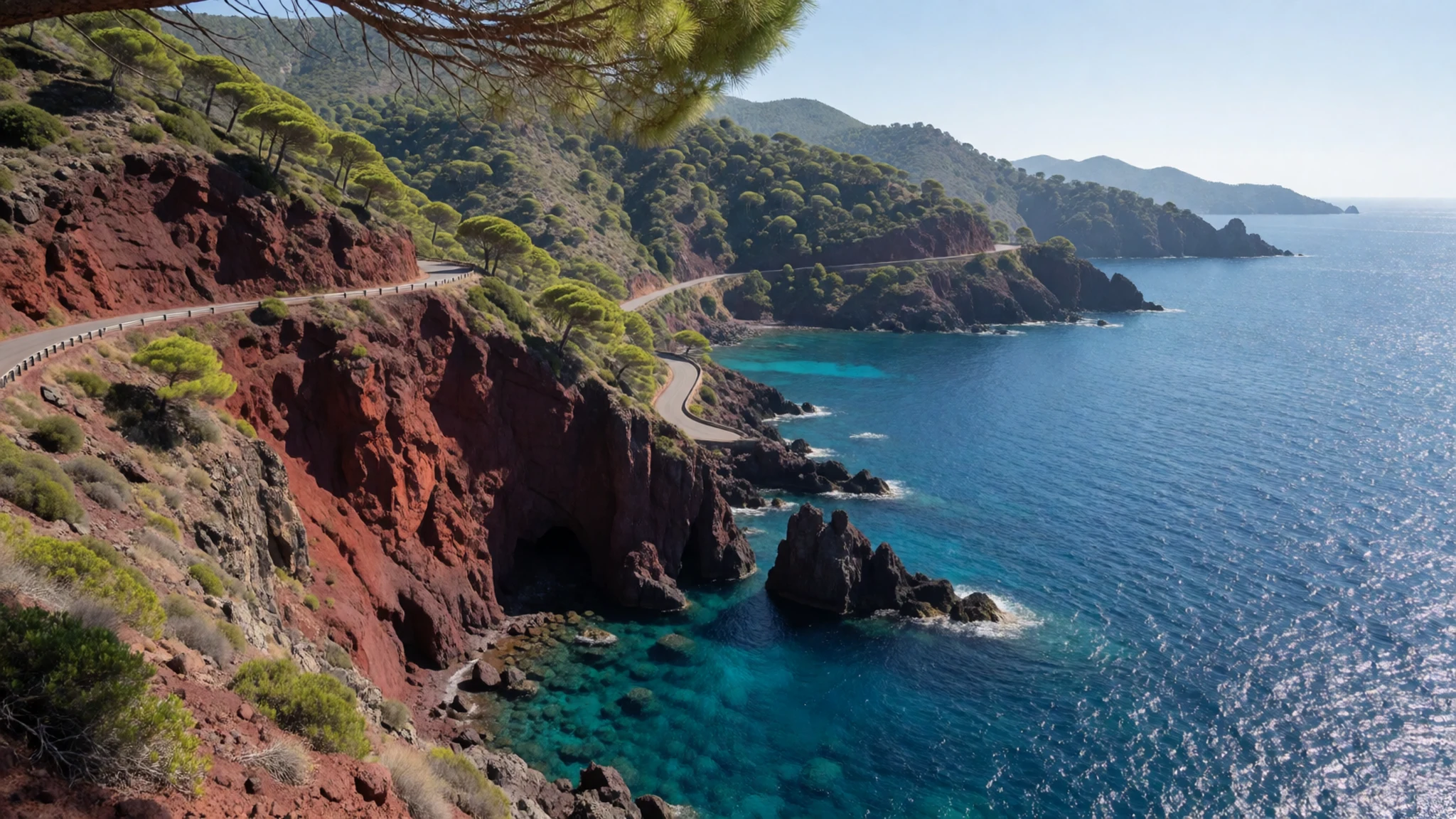
Culture
The cultural fabric of the French Riviera is a distinct blend of Provençal tradition and Mediterranean flair, shaped by centuries of maritime trade, artistic migration, and aristocratic patronage. Local life moves at a relaxed pace centred around outdoor terraces, weekly village markets, and seaside promenades. While French is the primary language, traces of the historical Provençal tongue linger in local place names and regional culinary terms. Traditional celebrations often revolve around seasonal harvests, maritime festivals, and international art exhibitions that honour the generations of painters and writers who found inspiration here. When entering local churches or historic religious monuments, dress modestly with shoulders and knees covered, and always greet shopkeepers with a polite bonjour upon entering.
What to wear
Traditional attire along the coast historically reflected practical maritime and agricultural labour, featuring lightweight cottons, wide-brimmed straw hats for sun protection, and sturdy espadrilles suited to rocky paths. Over the nineteenth and twentieth centuries, the region transformed the global fashion landscape, helping pioneer resort wear, casual stripes, and lightweight linen tailoring that suited the warm climate. Today, locals and visitors alike favour an effortless, elegant style: tailored trousers, breathable shirts, sunglasses, and comfortable footwear suitable for walking along cobbled streets and quaysides. When visiting upscale dining venues or casinos, smart-casual or formal attire is expected, while beachwear should remain strictly confined to the sand and immediate shoreline.
What to eat
- Bouillabaisse — Traditional coastal seafood restaurants
A celebrated traditional fish stew originating from coastal ports, prepared with a variety of catch from the Mediterranean sea cooked alongside tomatoes, garlic, herbs, and saffron, typically served with toasted bread and rouille sauce.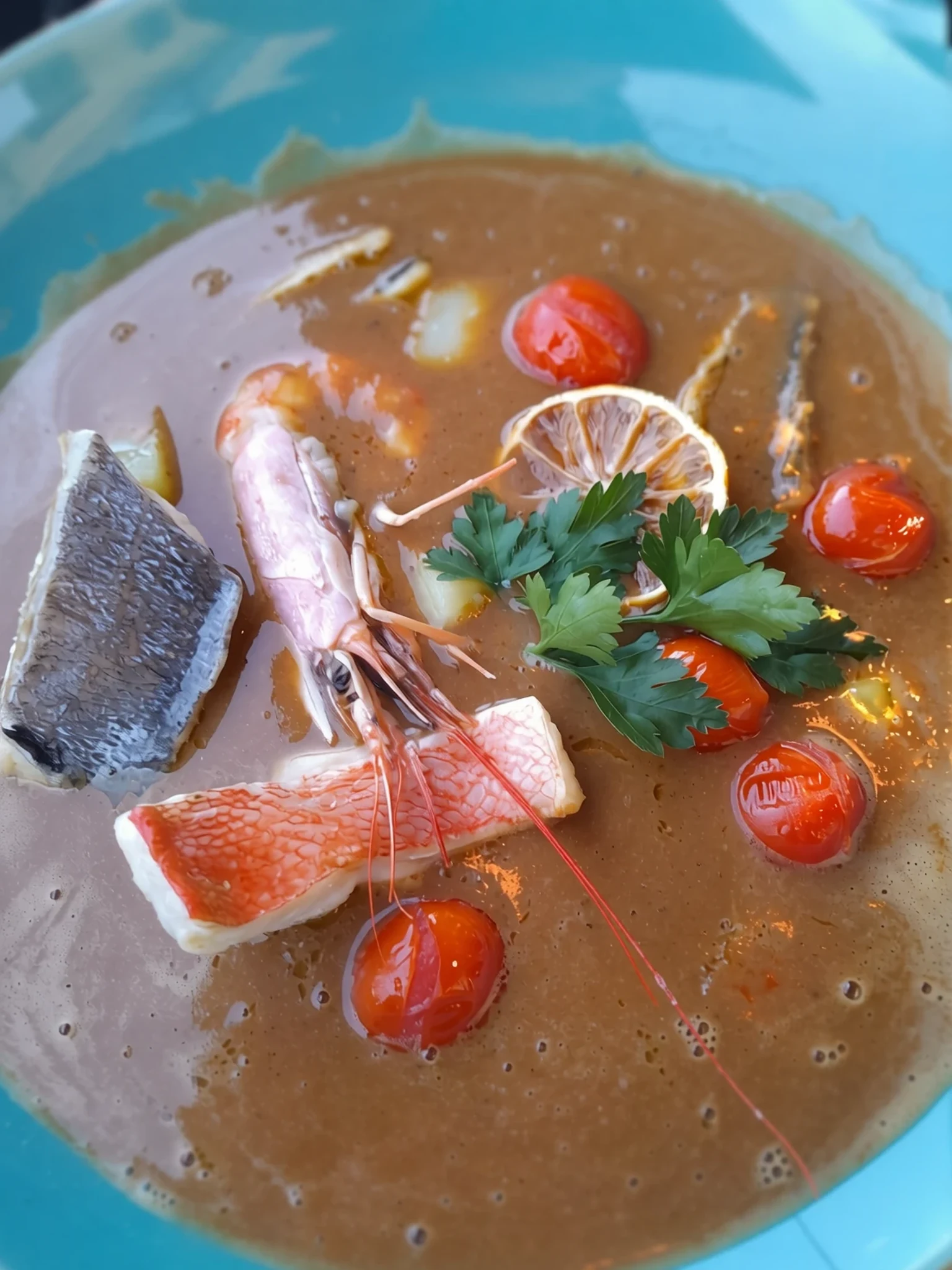
- Salade Niçoise — Cafés and brasseries across the region
A refreshing local arrangement combining crisp salad greens with tomatoes, hard-boiled eggs, olives, anchovies or tuna, and local olive oil, capturing the bright flavours of the Mediterranean garden.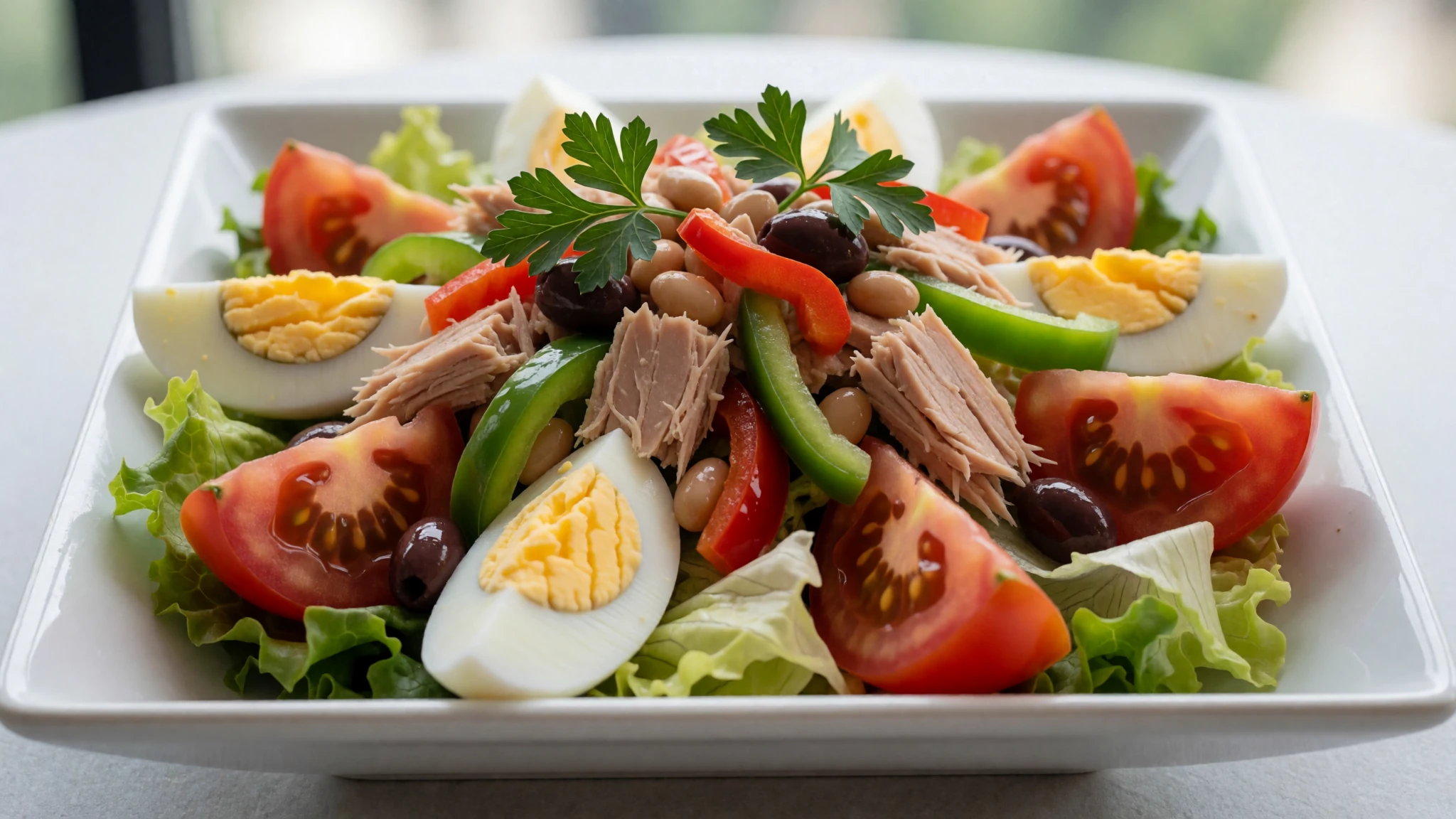
- Socca — Traditional market stalls and street food counters
A warm, thin chickpea flour pancake baked in a large round copper pan inside a very hot oven until crisp at the edges and tender in the centre, dusted generously with black pepper.
- Provençal Cheese — Local morning markets and cheese shops
Artisanal goat and sheep cheeses crafted in the rugged mountainous back country, ranging from fresh rounds to aged varieties infused with local herbs, found in neighborhood supermarkets and farm stalls. - Thin-Crust Pizza — Pizzerias and neighbourhood eateries
An Italian-influenced local staple featuring a delicate, crispy base topped with rich tomato sauce, olives, and optional spicy olive-oil dressing known as sauce pimente.
Plan it
Best time. May to June and September offer warm sunshine, comfortable swimming temperatures, and manageable crowds away from the peak summer rush, while October turns noticeably wetter.
How long. 4–5
Getting there. Fly into Nice Côte d'Azur Airport, one of France's busiest hubs, or arrive by train via the high-speed rail lines connecting Paris to Marseille before continuing along the coast.
Budget. high
Tips
- Book train tickets and accommodation well in advance during the peak summer season
- Use local regional trains to travel between coastal towns and avoid heavy coastal traffic
- Keep a watchful eye on personal belongings in crowded stations and busy tourist areas
- Carry some cash for small purchases at traditional morning markets and village bakeries
- Drink plenty of water and wear sun protection during hot summer afternoons
Etiquette
- Always greet shopkeepers and staff with a polite bonjour when entering a business
- Dress modestly with covered shoulders and knees when visiting churches and sacred sites
- Refrain from speaking loudly in quiet residential areas and historic village streets
Nearby
Sources
- Wikidata Q182822 (CC0)
- Wikipedia (rev 1381849459) (CC BY-SA 4.0)
- Wikivoyage (rev 5100754) (CC BY-SA 4.0)
- Photo 01-agay-vu-du-dramont.jpg (CC BY 3.0)
- Photo 02-ze-und-cap-ferrat-grande-corniche.jpg (CC BY-SA 2.0)
- Photo 03-promenade-des-anglais-panoramio-4.jpg (CC BY 3.0)
- Photo 04-83990-saint-tropez-france-panoramio-3.jpg (CC BY 3.0)
- Photo 05-real-monte-carlo-casino.jpg (CC BY 2.5)
- Photo 06-port-hercules-monaco.jpg (CC BY-SA 4.0)
- Photo 07-coted-azur-beaulieu-france.jpg (CC BY 3.0)
- Photo 08-calanque-du-petit-canereit-massif-de-l-esterel.jpg (CC BY-SA 1.0)


