Èze
Èze, France
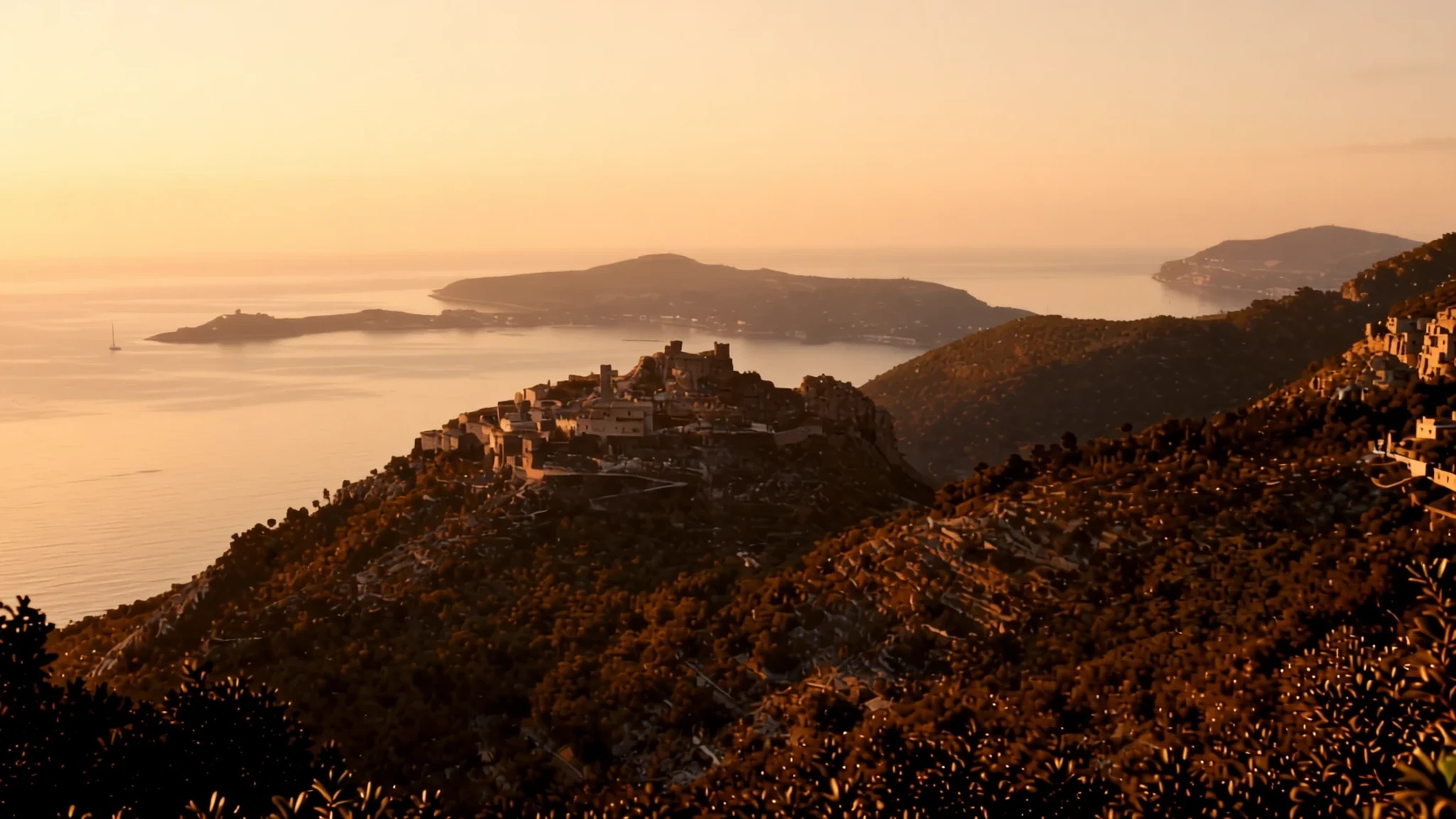
Visit Èze to walk through medieval stone alleys perched high above the azure Mediterranean, where ancient history meets dramatic coastal panoramas.
The place
Èze is a remarkable coastal commune situated in the Alpes-Maritimes department within the Provence-Alpes-Côte d'Azur region of southeastern France. Spanning a significant vertical drop between the sparkling waters of the Mediterranean and a towering rocky outcrop, the settlement is divided into distinct zones. At sea level lies Èze-sur-Mer, offering a coastal atmosphere, while the dramatic medieval village, Èze-Village, sits far above on a rugged promontory. Connecting these tiers is Saint-Laurent-d'Èze, winding up the steep hillsides alongside historic mountain roads.
The geography of the local area is defined by three main elevated roadways running parallel to the coastline: the low coastal road known as the Basse Corniche, the middle road called the Moyenne Corniche passing near the upper village, and the high ridge route of the Grande Corniche. The community maintains a small permanent population known locally as Ezasques, though visitors vastly outnumber residents during the peak travel seasons. The upper village is celebrated for its preservation, featuring dense clusters of stone dwellings, vaulted passageways, and steep pedestrian staircases that demand steady walking shoes from anyone wishing to explore its historic heart.
From its high vantage point, the commune commands sweeping views across the coastline towards neighbouring Monaco and the wider French Riviera. The natural environment transitions sharply from maritime pines and coastal scrub at the shoreline to hardy succulents and exotic plantings thriving in the rocky microclimate near the summit. Despite its compact footprint, the terrain creates distinct micro-environments, where the coastal air feels warm and humid while the upper village experiences brisk breezes rolling down from the surrounding mountain ridges.
Its story
Human settlement around Èze began centuries before the common era, with early communities establishing themselves near nearby Mount Bastide around the third century BC. Ancient maritime records refer to the sheltered coastal bay by early Latin and Greek names, while archaeological discoveries, such as ancient Greek silver bowls unearthed locally and now housed in London museums, point to early Mediterranean trade links. Roman occupation followed, leaving structural traces in the wider territory before the region fell under the control of Moorish rulers for several decades until local forces regained dominance.
By the late medieval period, the strategic defensive advantages of the high rock transformed the location into a formidable stronghold. Jurisdiction passed to the House of Savoy, who reinforced the fortifications to protect the borders against external rivalries. The community endured significant conflicts over subsequent generations, including joint military assaults by French and Ottoman forces in the sixteenth century. Later, during regional conflicts under French royal authority, the ancient castle and defensive perimeter walls were dismantled to prevent future rebellions.
The political identity of the area shifted definitively when local residents voted unanimously to join France. Throughout these political changes, the village retained its character as a fortified rocky settlement, often described by travellers as an eagle's nest due to its dizzying altitude above the sea. Ancient religious sites, including chapels bearing medieval architectural details and old garrison buildings, still mark the winding paths, reflecting centuries of maritime trade, religious devotion, and defensive engineering on the Mediterranean fringe.
What to see
- Medieval Village — Èze-Village
The historic pedestrian village features a labyrinth of narrow, stone-paved streets, vaulted archways, and restored stone houses clinging directly to the sheer rock face, offering an authentic glimpse into medieval Provençal defensive architecture.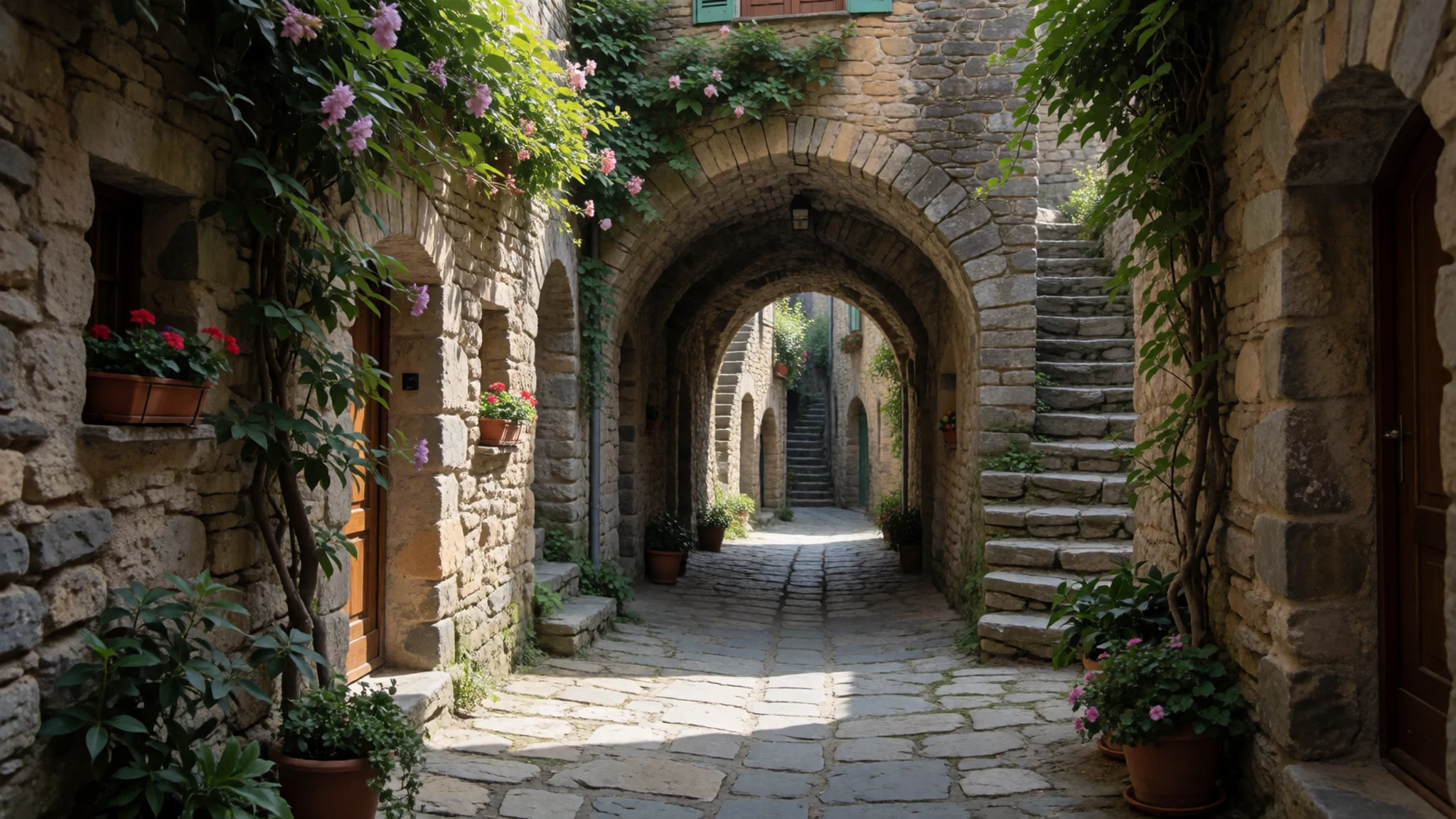
- Jardin Exotique — Summit of Èze-Village
Established upon the ruins of the historic hilltop castle, this botanical terraced garden showcases a vast collection of resilient cacti, succulents, and Mediterranean flora alongside unobstructed panoramic views stretching across the entire coastline.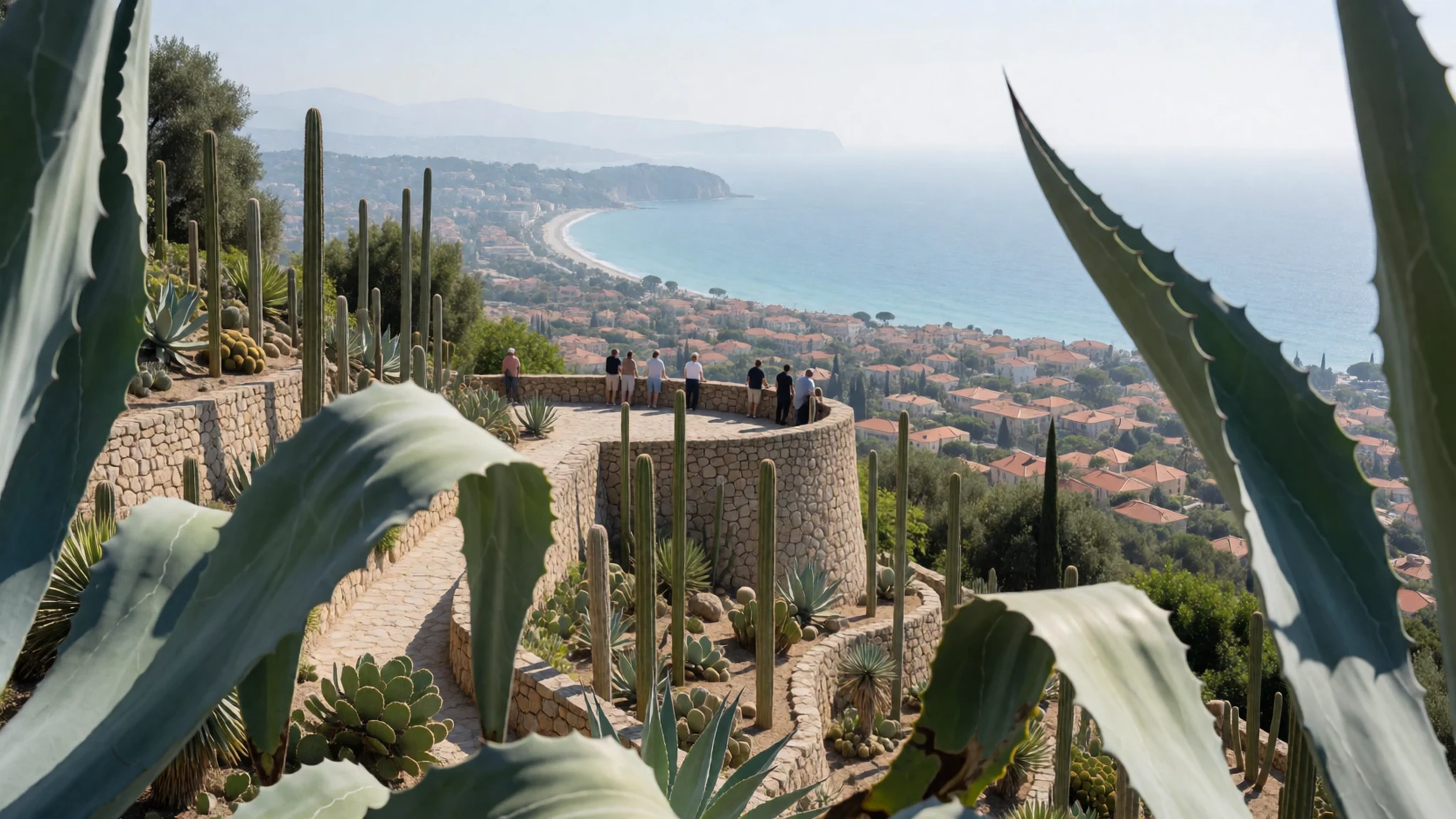
- Notre Dame de l'Assomption — Village Centre
Built during the eighteenth century, this prominent yellow baroque church features a striking neoclassical clock tower that serves as a primary visual landmark visible from miles away across the surrounding mountain slopes.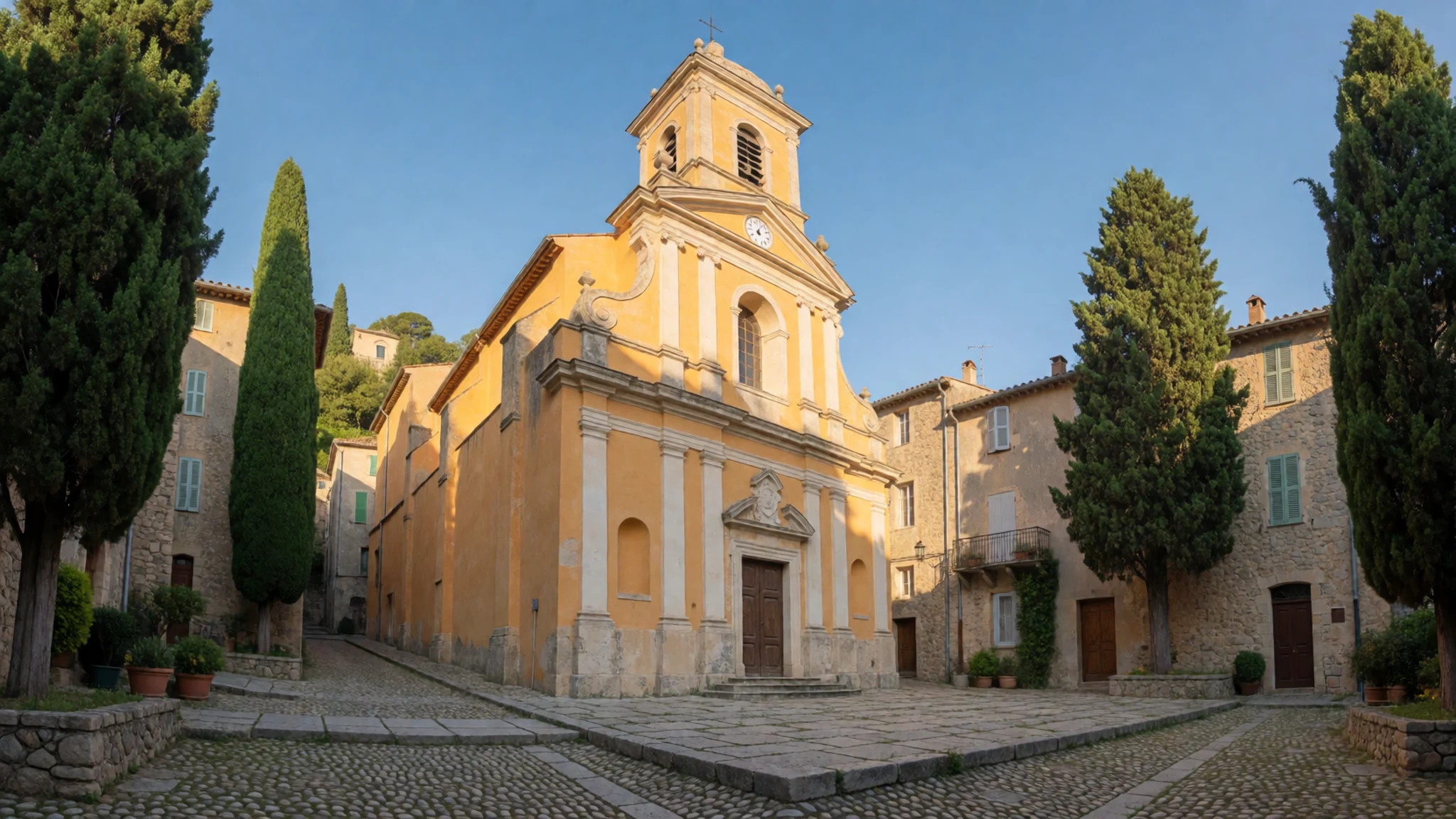
- Chapelle de la Sainte Croix — Historic Village
Constructed in the early fourteenth century, this building stands as the oldest standing structure in the settlement, historically serving meetings of local penitents who provided charitable aid during times of plague.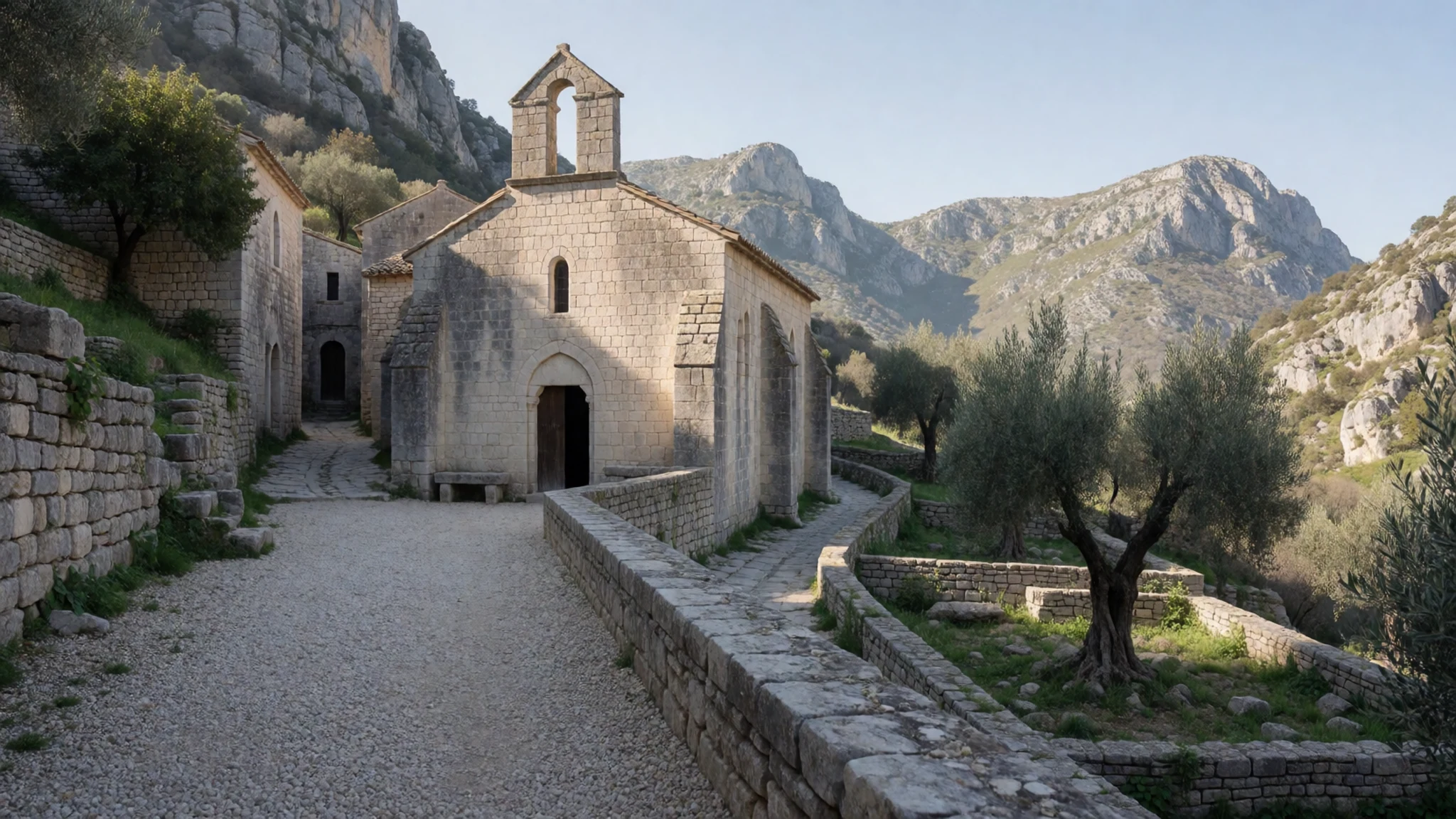
- Historic Perfumeries — Village Approaches
Renowned fragrance houses such as Fragonard and Galimard operate production facilities and visitor workshops near the village, offering guided tours that demonstrate traditional extraction methods and the creation of fine scents.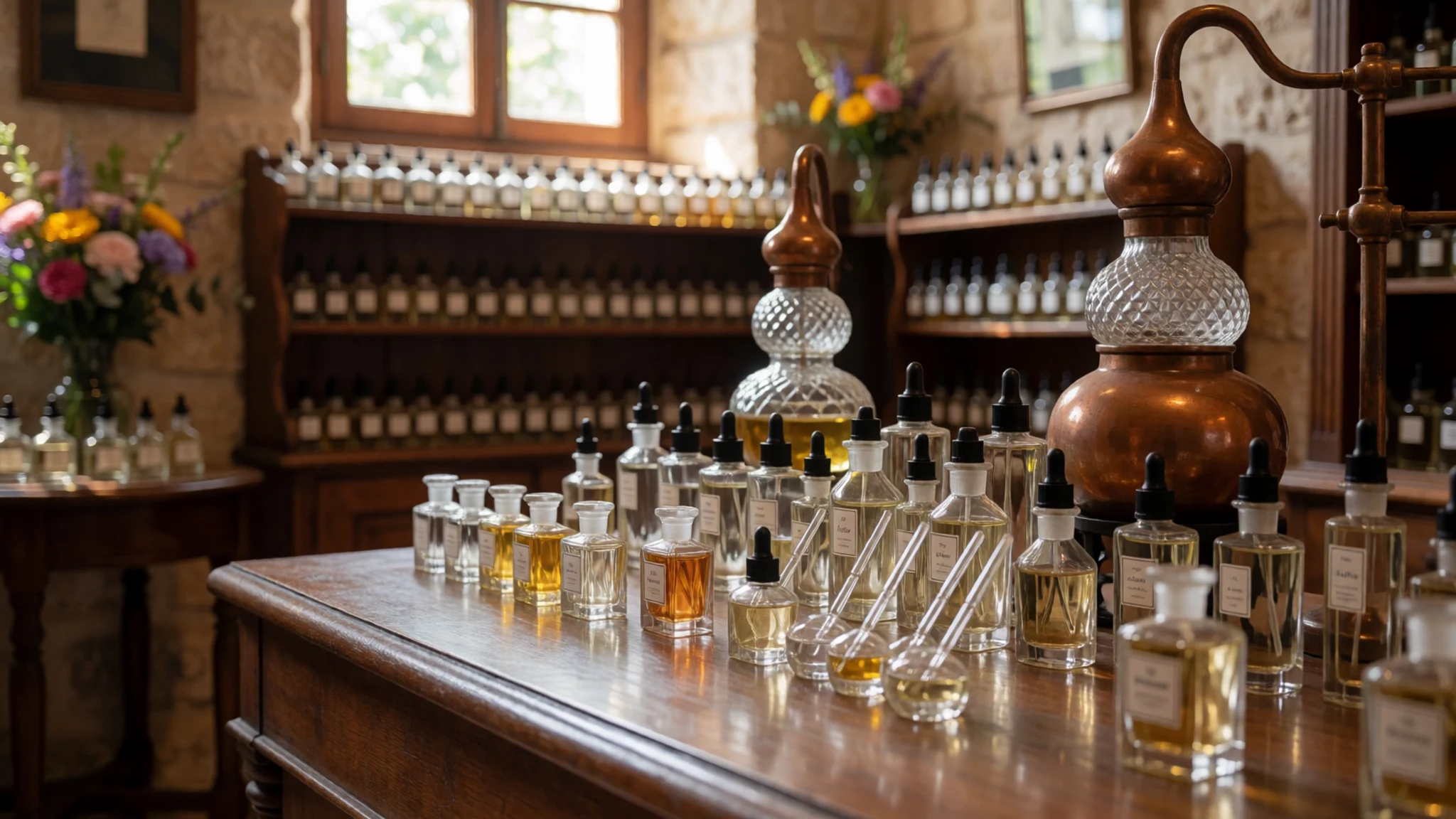
Culture
The cultural identity of Èze blends traditional Provençal rural heritage with the cosmopolitan influences of the broader French Riviera. Historically tied to agricultural terraces, olive cultivation, and coastal fishing, the local community has adapted over generations to welcome international travellers while maintaining strong regional traditions. Local artisans, ceramicists, and perfumers keep historic craftsmanship alive in the stone workshops tucked away along the pedestrian pathways of the upper village.
Language and daily customs reflect southeastern France, where standard French is universal, accompanied by older Provençal phrases and a relaxed coastal rhythm of life. Social gatherings often centre around local cafés, family-run eateries, and community festivals celebrating seasonal harvests. Visitors will notice an appreciation for quiet exploration, particularly during the early morning hours before day-trippers arrive from larger regional hubs.
Respect local residential spaces and private doorways when taking photographs in the narrow medieval alleyways.
What to wear
Traditional attire in Èze historically reflected practical Mediterranean working life, featuring durable cotton and linen garments suited to agricultural labour on steep terraced hillsides and coastal fishing under strong sun. While historical folk costumes are reserved for special regional festivals and heritage events, contemporary residents and workers embrace a smart-casual Mediterranean wardrobe that balances comfort with understated elegance.
For daily wear today, locals favour lightweight natural fabrics such as breathable linen shirts, cotton trousers, and tailored summer dresses designed to cope with regional summer warmth. Visitors should pack sensible footwear with sturdy grip soles; the steep cobblestone lanes, uneven stone staircases, and rocky inclines make high heels or smooth-soled shoes entirely impractical. Sun protection including hats and sunglasses is essential during daytime walks, while a light sweater or windbreaker is recommended for breezy evenings spent high above the sea.
What to eat
- Socca — Local markets and coastal eateries
A traditional chickpea flour pancake baked in a copper pan until crisp on the edges and soft inside, seasoned generously with freshly cracked black pepper.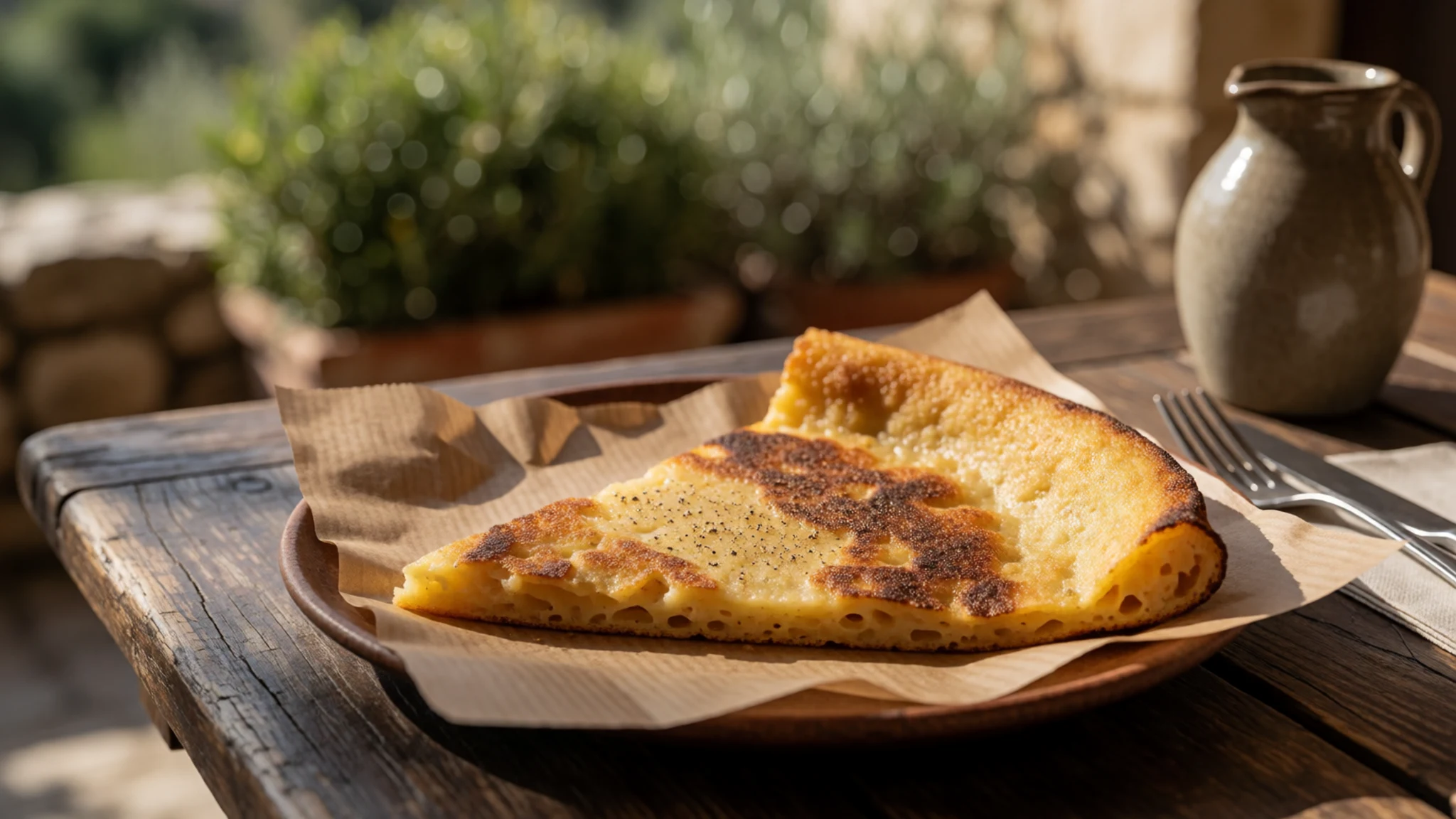
- Provençal Tapenade — Village food shops and artisanal delis
A savoury paste made from finely minced black or green olives, capers, anchovies, and olive oil, served traditionally with crisp artisanal bread.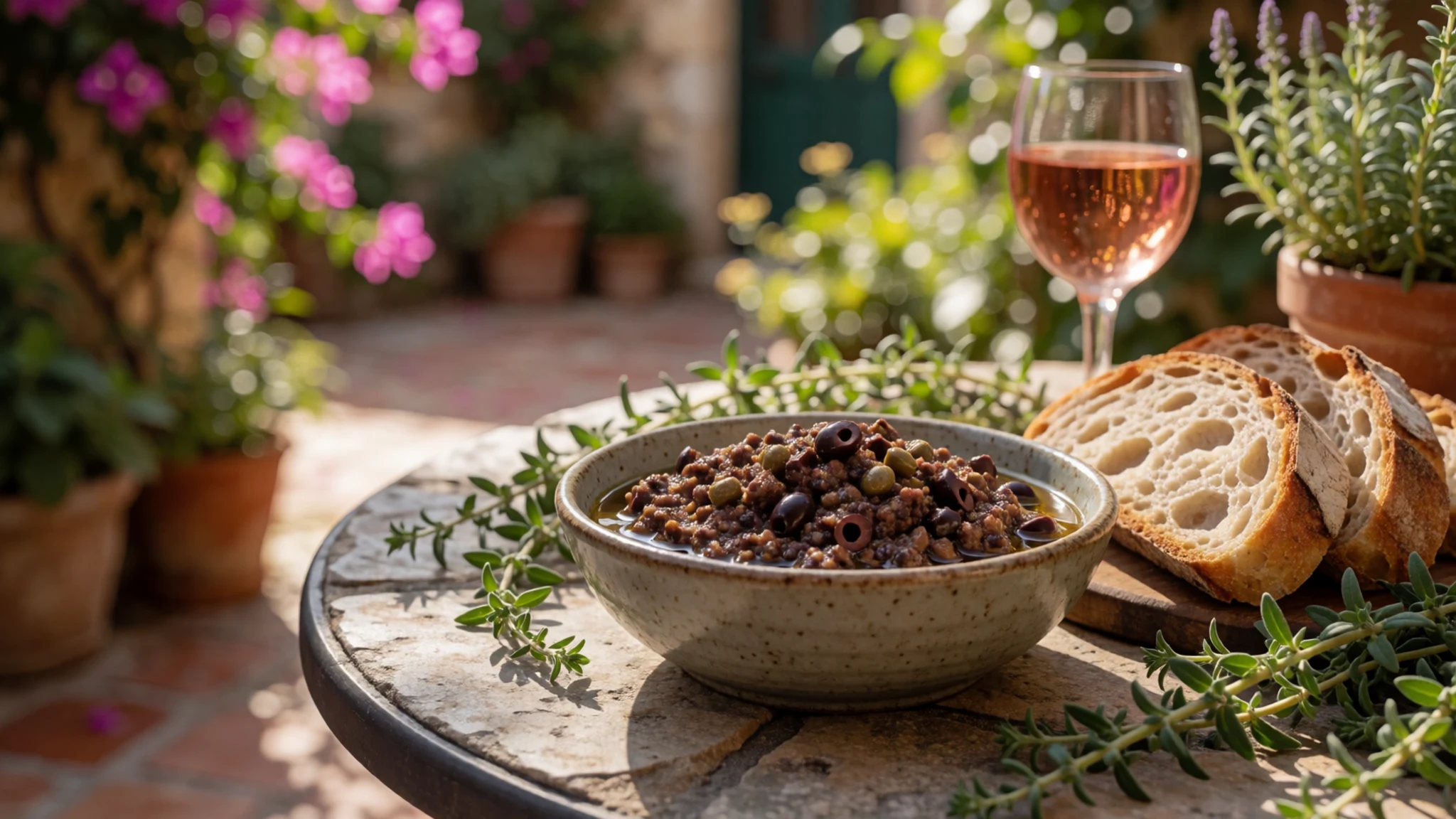
- Salade Niçoise — Terrace restaurants across the commune
A classic regional composition featuring fresh tomatoes, hard-boiled eggs, Niçoise olives, anchovies or tuna, and olive oil without cooked vegetables. - Pissaladière — Local bakeries and pastry shops
A thick bread crust topped with a caramelised onion puree, black olives, and anchovies, offering a savoury and sweet flavour profile. - Citrus Tart — Village patisseries
A bright pastry featuring locally grown citrus fruits from the surrounding coastal orchards, balanced with a buttery shortcrust pastry shell.
Plan it
Best time. May to June and September to October offer pleasant temperatures and manageable visitor crowds, avoiding the intense summer heat.
How long. 1–2
Getting there. Fly into Nice Côte d'Azur Airport, then take local bus services or regional trains to Èze-sur-Mer before connecting upward by bus.
Budget. high
Tips
- Arrive early in the morning to explore the medieval village before tour groups fill the narrow lanes
- Wear sturdy walking shoes with reliable grip for steep cobblestone paths
- Carry bottled water when climbing between the coastal road and the upper village
- Use local bus services rather than driving to avoid difficult mountain parking
Etiquette
- Keep noise levels moderate in residential stone alleyways
- Ask permission before photographing local artisans working in private shops
Nearby
Sources
- Wikidata Q242617 (CC0)
- Wikipedia (CC BY-SA 4.0)
- Wikivoyage (CC BY-SA 4.0)