Erzurum
Erzurum, Turkey
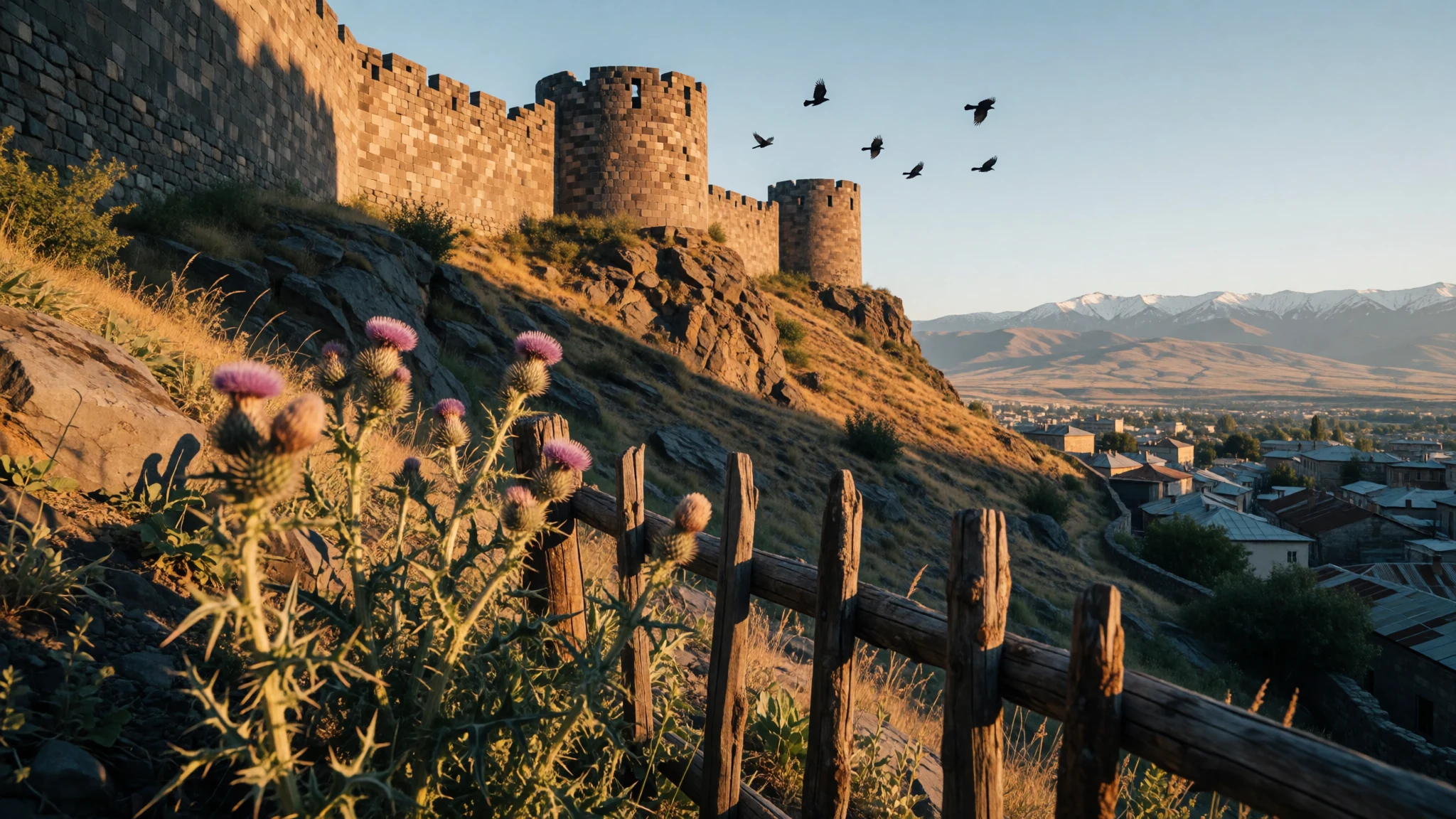
Erzurum delivers high-altitude Anatolian history, grand Seljuk architecture, and hearty regional dining in an imposing mountain setting.
The place
Erzurum is situated in eastern Turkey as the principal city of its province, occupying a commanding position high above sea level. This elevated location shapes its character, leaving the municipality subject to harsh winters while anchoring a key transit route through the mountains between Anatolia and the Caucasus. Over the centuries, successive empires shaped the urban landscape into a strategic frontier post filled with stone fortifications and religious colleges. Today, the municipality functions as a regional capital where historic gates and medieval minarets stand alongside modern civic developments. Visitors stepping into the streets encounter an atmosphere defined by crisp mountain air, tea houses serving traditional infusions, and sturdy stone masonry that has endured centuries of geopolitical shift. The urban layout reflects its military and trading heritage, with old thoroughfares leading toward fortified heights and central squares. While winters bring severe cold and deep snow that attract winter sports enthusiasts to nearby slopes, the warmer months reveal a quiet dignity in the stone facades and public plazas. The double-headed eagle serves as the municipal coat-of-arms, echoing ancient Anatolian motifs that trace back to the Bronze Age. Travellers exploring the city find a destination largely untouched by mass tourism, offering an authentic glimpse into Turkey's eastern highlands where traditional customs remain deeply rooted in daily life and local hospitality.
Its story
Erzurum has long served as a vital geopolitical gateway, with empires contending for its control since antiquity. In its earliest recorded eras, the surrounding terrain fell under ancient regional influences before the settlement established itself as Karin under Armenian administration. Following a territorial partition, the Roman Empire fortified the strategic location and renamed it after an emperor, transforming the settlement into a primary military stronghold along its eastern frontier. This defensive posture drew repeated conflicts between Byzantine and Persian forces, each ruler reinforcing the stone ramparts against rival armies. In subsequent centuries, the Umayyad expansion brought new governance, making the settlement a base for regional campaigns. A pivotal shift occurred when Seljuk forces captured the location, absorbing displaced populations from neighbouring districts and cementing the name by which the city is known today. Ottoman conquest in the sixteenth century established the municipality as their main eastern military base, though the ensuing centuries witnessed multiple occupations as imperial borders contracted. Through every transition, the urban fabric absorbed architectural influences from diverse rulers who left behind soaring madrasas, sturdy citadels, and expansive places of worship. This layered past remains visible in every carved portal and weathered stone tower across the municipal area, documenting a turbulent history forged at the intersection of powerful civilisations.
What to see
- Erzurum Citadel — Citadel hill, central Erzurum
Erzurum Citadel crowns the rocky hill at the heart of the settlement, offering sweeping views over the surrounding rooftops and distant peaks. Originally established during the Byzantine era, the fortifications were extensively rebuilt by Seljuk master builders during the twelfth century to guard the mountain pass.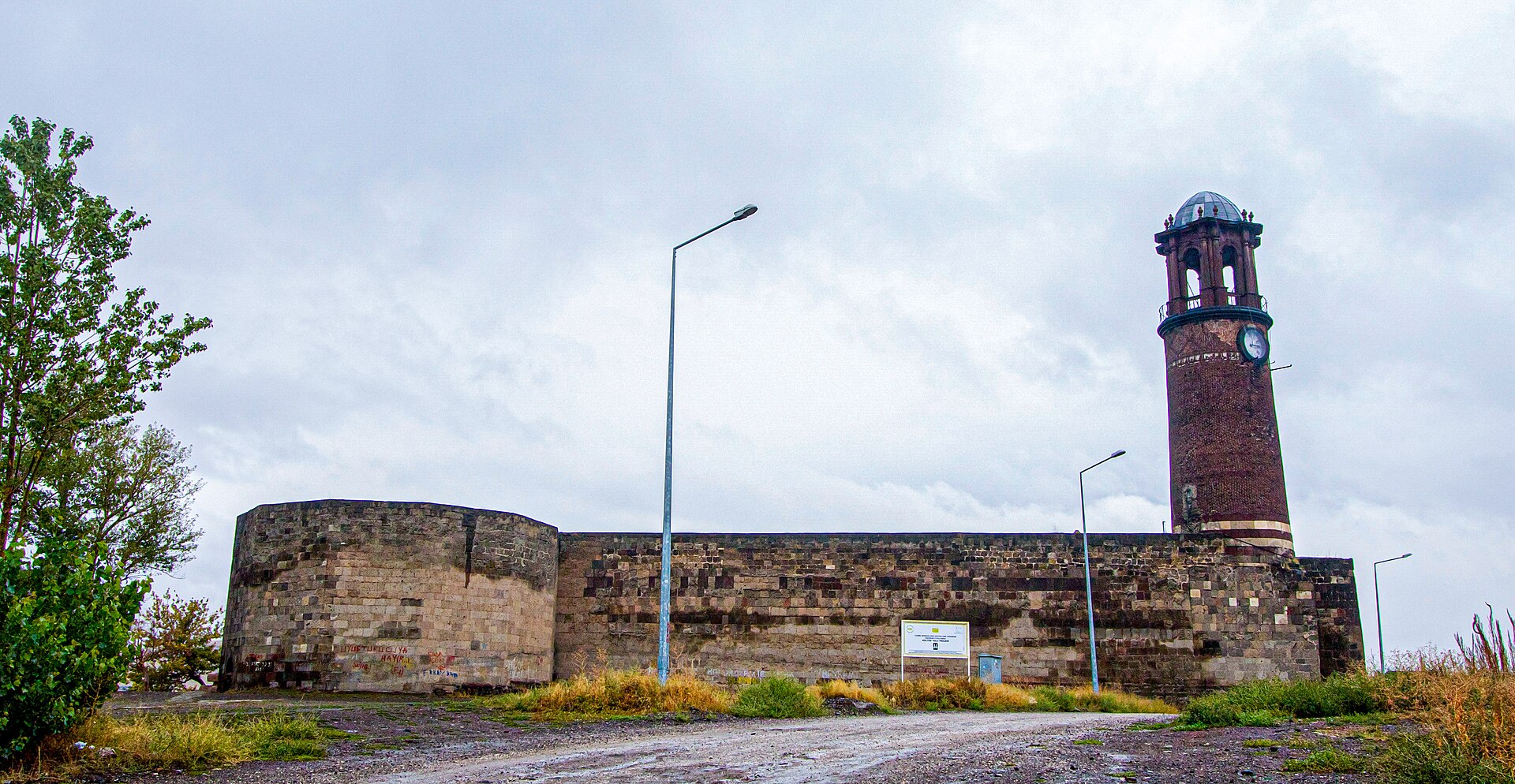
- Twin Minaret Madrasa — Cumhuriyet Avenue district
Twin Minaret Madrasa stands as a defining architectural symbol of Erzurum, constructed as a theological school featuring a monumental carved stone portal. Two fluted brick minarets crown the facade, framing intricate reliefs of twin dragons and floral motifs that showcase medieval Anatolian craftsmanship at its finest.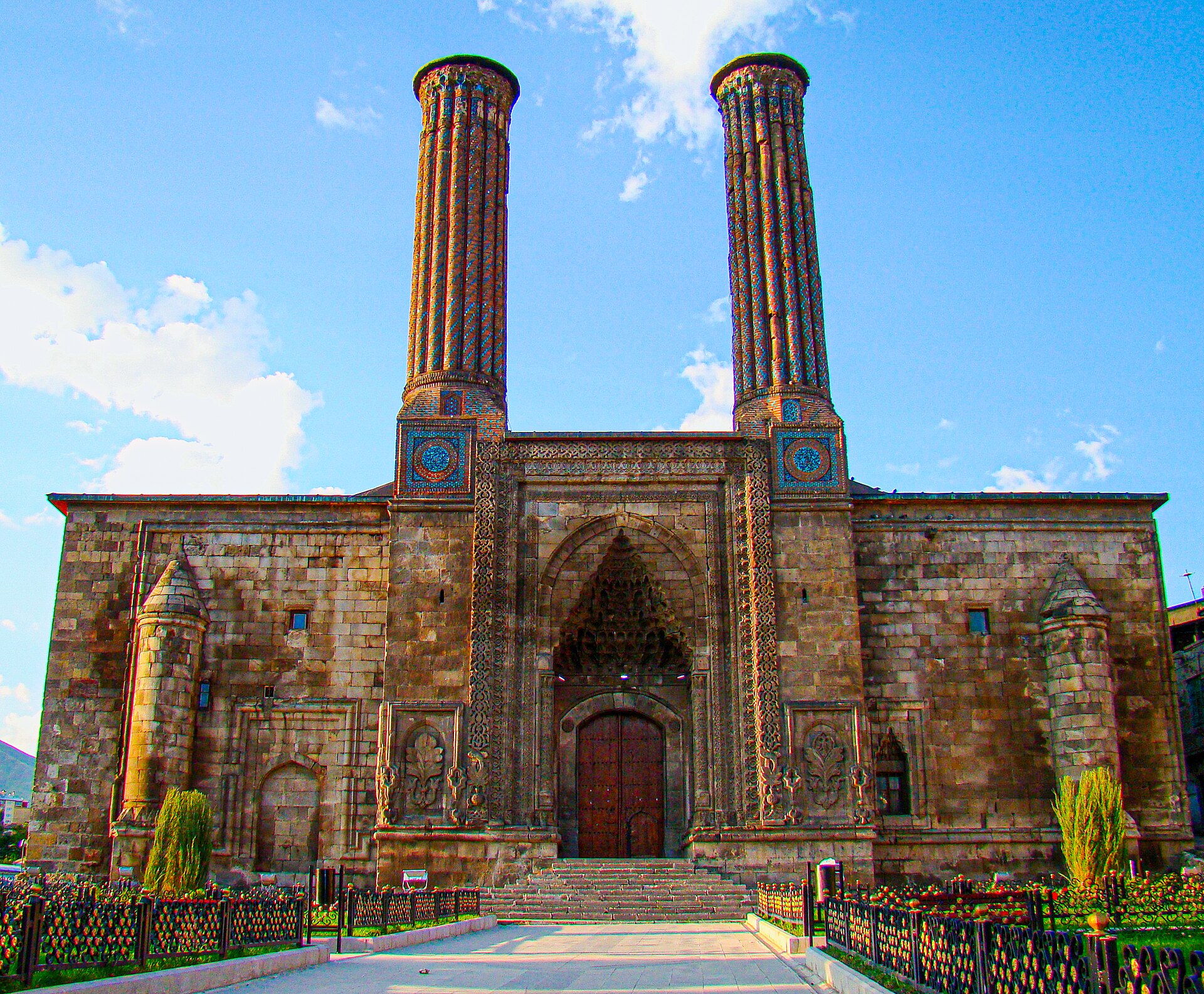
- Yakutiye Madrasa — Central Cumhuriyet Avenue
Yakutiye Madrasa was erected during the fourteenth century, presenting striking geometric stonework and a soaring portal decorated with traditional motifs. The historic complex now functions as an engaging ethnography museum, displaying regional artifacts, traditional crafts, and historical household items within vaulted stone chambers.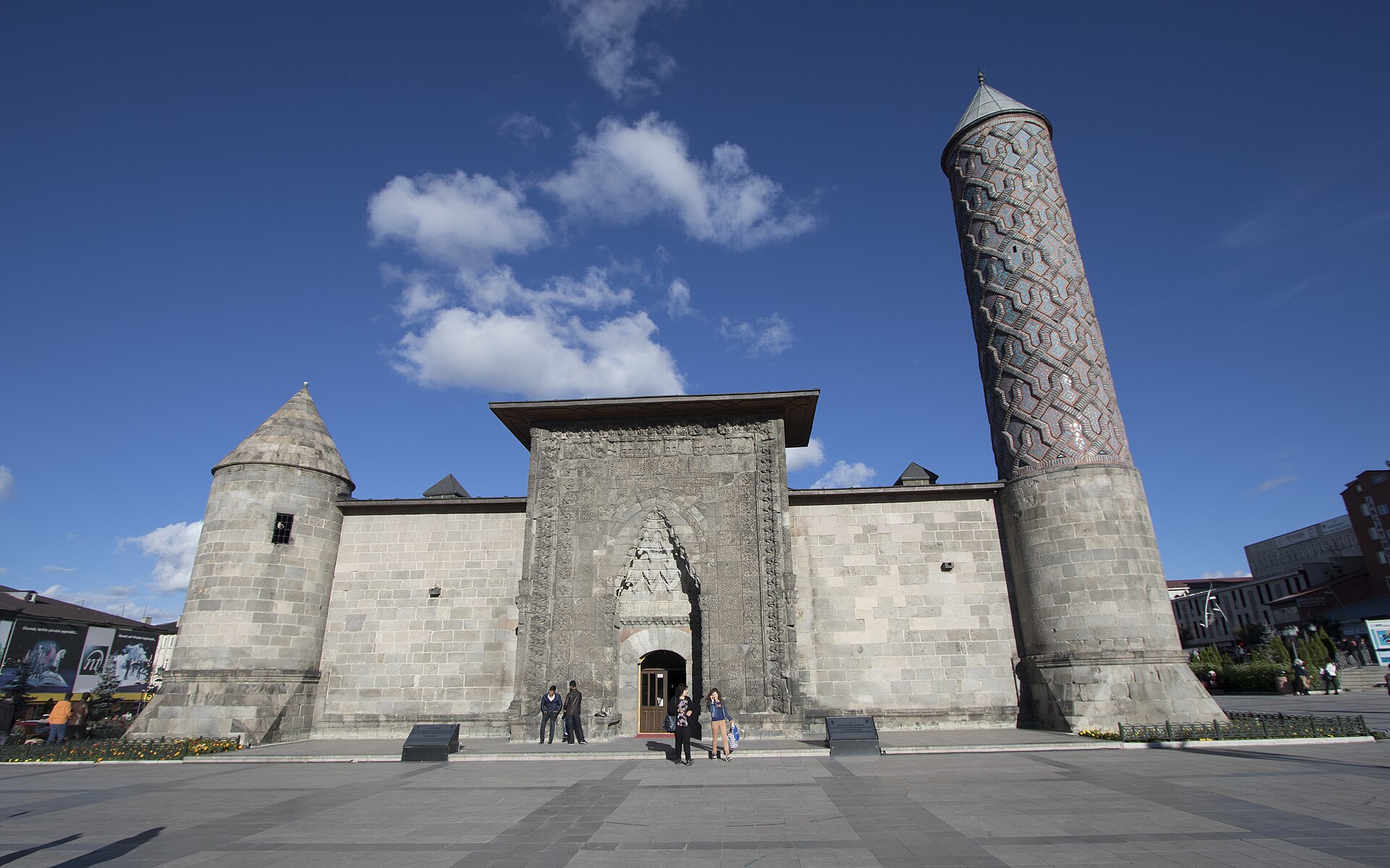
- Grand Mosque — Old town quarter near the citadel
Grand Mosque provides an expansive prayer hall capable of accommodating thousands of worshippers beneath its sturdy timber and stone roof structures. Built during the twelfth century by a local emir, the interior prioritises spacious stone piers and austere whitewashed walls over ornate decoration. - Atatürk House — Historic residential quarter
Atatürk House occupies a nineteenth-century merchant residence that once served as a diplomatic consulate and later as a gubernatorial seat. The building preserves period furnishings and historical displays commemorating the crucial weeks spent here during the foundation of the modern republic.
Culture
Erzurum nurtures a distinctive regional identity shaped by its highland isolation, fierce winters, and diverse ethnic heritage. Hospitality is expressed through unhurried social gatherings in traditional tea houses, where locals partake in custom rituals such as dissolving hard sugar cubes held directly between the teeth while sipping black tea. The local culinary tradition relies heavily on robust meat dishes, hearty soups, and layered pastries designed to provide warmth against the mountain chill. Social etiquette here remains respectful of traditional values, reflecting conservative Anatolian norms where modesty in public behavior is appreciated. Visitors will find that everyday interactions are met with quiet courtesy, and taking time to converse with shopkeepers or accept an offered beverage is considered a standard courtesy. When entering mosques or traditional indoor spaces, always remove your footwear and ensure your shoulders and knees are appropriately covered.
What to wear
Erzurum fashion and dress reflect a practical adaptation to harsh mountain weather combined with conservative regional traditions. Traditional attire historically featured heavy woollen waistcoats, layered caftans, sturdy felt headwear, and hand-knitted stockings designed to withstand sub-zero temperatures. Modern residents dress in practical, warm European-style clothing, with heavy winter coats, insulated boots, and wool scarves dominating the wardrobes for a significant portion of the year. Visitors should prioritize functional, layered clothing suited to the high altitude and fluctuating mountain temperatures. Modest attire is expected throughout the city; women and men alike should wear clothing that covers the shoulders and knees, particularly when visiting historic mosques, madrasas, and residential neighbourhoods. Sturdy walking shoes are essential for navigating uneven cobblestone streets and ancient citadel paths.
What to eat
- Cağ Kebap — Specialist grill houses near the railway station and main avenues
Cağ Kebap features tender lamb marinated in spices and skewered on a horizontal spit, then roasted over a wood fire before being sliced and served on flatbread. - Kadayıf Dolması — Traditional sweet shops along Cumhuriyet Avenue
Kadayıf Dolması is a rich local dessert made by wrapping shredded pastry dough around crushed walnuts, dipping the rolls in beaten egg, frying them until golden, and soaking them in syrup. - Su Böreği — Local bakeries and breakfast cafes across the city centre
Su Böreği consists of boiled sheets of dough layered with cheese and butter, then baked until the pastry achieves a tender, moist interior with a crisp golden crust. - Ayran Aşı — Traditional restaurants serving regional Anatolian cuisine
Ayran Aşı is a traditional warm or cold highland soup prepared with yoghurt, wheat, and wild mountain herbs, offering a nourishing and refreshing start to a meal. - Chechil Cheese — Central food markets and dairy shops
Chechil Cheese is a salted string cheese with a fibrous texture, often coloured blue or aged in brine, commonly enjoyed during breakfast or as an accompaniment to local meals.
Plan it
Best time. June to September offers warm, dry days ideal for exploring the historic sites and mountain surroundings, while winter months bring severe frost and snow suitable for ski enthusiasts.
How long. 2–3
Getting there. Arrive via Erzurum airport or take the historic Doğu Express train from Ankara, which traverses scenic mountain routes before arriving at the city railway station.
Budget. mid
Tips
- Pack warm layers even in summer, as mountain temperatures drop sharply after sunset.
- Carry cash for small shops, tea houses, and historical site admission tickets.
- Check opening hours for museums in advance, as some smaller sites have limited staffing.
Etiquette
- Cover your head, shoulders, and knees when visiting mosques and religious monuments.
- Ask permission before photographing local residents in traditional quarters.
Nearby
Sources
- Wikidata Q122803 (CC0)
- Wikipedia (Erzurum) (CC BY-SA 4.0)
- Wikivoyage (Erzurum) (CC BY-SA 4.0)