Elephant Falls
Elephant Falls, India
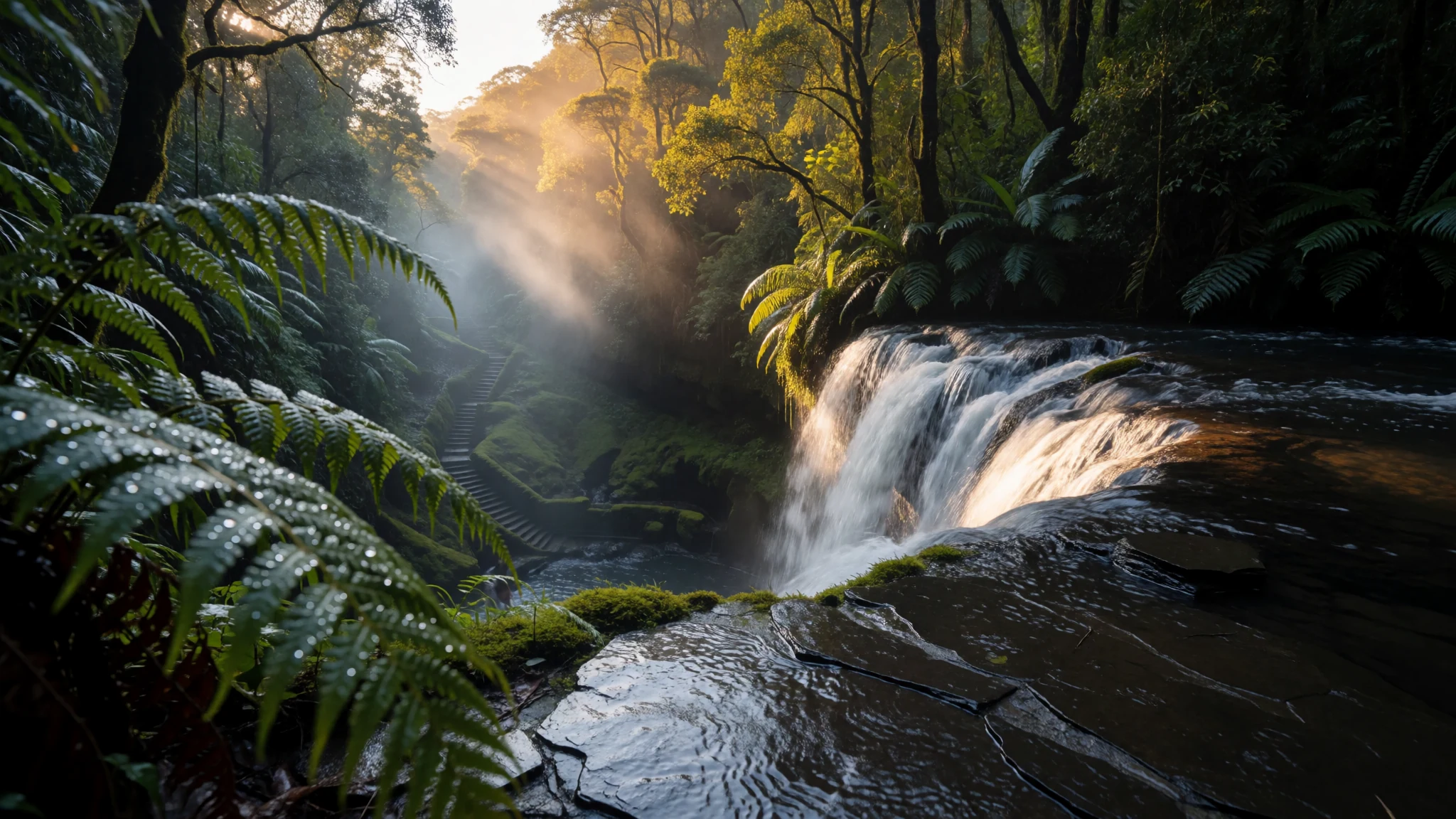
Visit Elephant Falls to experience a stunning multi-tiered mountain stream carving through lush, fern-draped dells in the verdant highlands of Meghalaya.
The place
Elephant Falls is situated in Shillong, Meghalaya, India, where a mountain stream descends through a succession of distinct falls framed by fern-covered rocks. The landscape here is characterised by deep dells and abundant greenery that thrives in the high-rainfall environment of the region. The waterfall is structured into two individual tiers, each offering a completely different atmosphere to visitors who walk down the stone pathways and viewing platforms constructed alongside the stream.
The first fall is exceptionally broad and largely screened by surrounding woodland, making it feel secluded and hidden from the immediate approaches. The second fall transitions into a much quieter, more subdued character, appearing quite gentle and understated during the drier winter months when the water volume recedes. Finally, the third tier emerges dramatically as the tallest and most visually striking drop of the sequence. Here, crystal-clear water plunges over jagged, irregular rock formations of diverse shapes into a pool below, surrounded by dense vegetation that clings to the steep valley walls. The sound of rushing water echoes through the dells, accompanied by the cool mist rising from the cascading current.
Visitors navigating the site will find stone steps leading down past each level, allowing for close inspection of the cascading water and the surrounding flora. While the infrastructure makes the site easily accessible from the city outskirts, the natural beauty of the rock faces, the rich fern cover, and the cascading streams retain an untamed charm that reflects the wider topography of the Khasi hills.
Its story
The traditional Khasi name for the cascading waters is Ka Kshaid Lai Pateng Khohsiew, which translates directly into English as the three-step waterfall. This indigenous designation remains in common use among the local Khasi community, who have inhabited these hills for generations and maintain a deep cultural connection to the natural landscape.
The modern designation of Elephant Falls came into use during the British colonial era. According to local historical accounts and a commemorative signboard placed near the site, British officers observed a massive boulder resting near the waterfall that bore a distinct resemblance to an elephant. Consequently, the foreign name supplanted the original Khasi moniker in official records and among visiting travellers.
However, the namesake geological feature did not survive permanently. In the year 1897, a major regional earthquake struck the area, causing significant tremors that destroyed the elephant-shaped rock entirely. Despite the loss of the physical landmark that inspired the English name, the moniker persisted through decades of tourism development and remains the primary title used by international visitors today, even as local people preserve the traditional three-step name in daily conversation.
What to see
- The First Fall — Upper terrace
The initial tier of the cascade is broad and largely concealed by dense overhead trees. Water spills outward in a classic horsetail pattern over mossy ledges, creating a secluded curtain effect before the stream moves onward to the subsequent drops down the valley.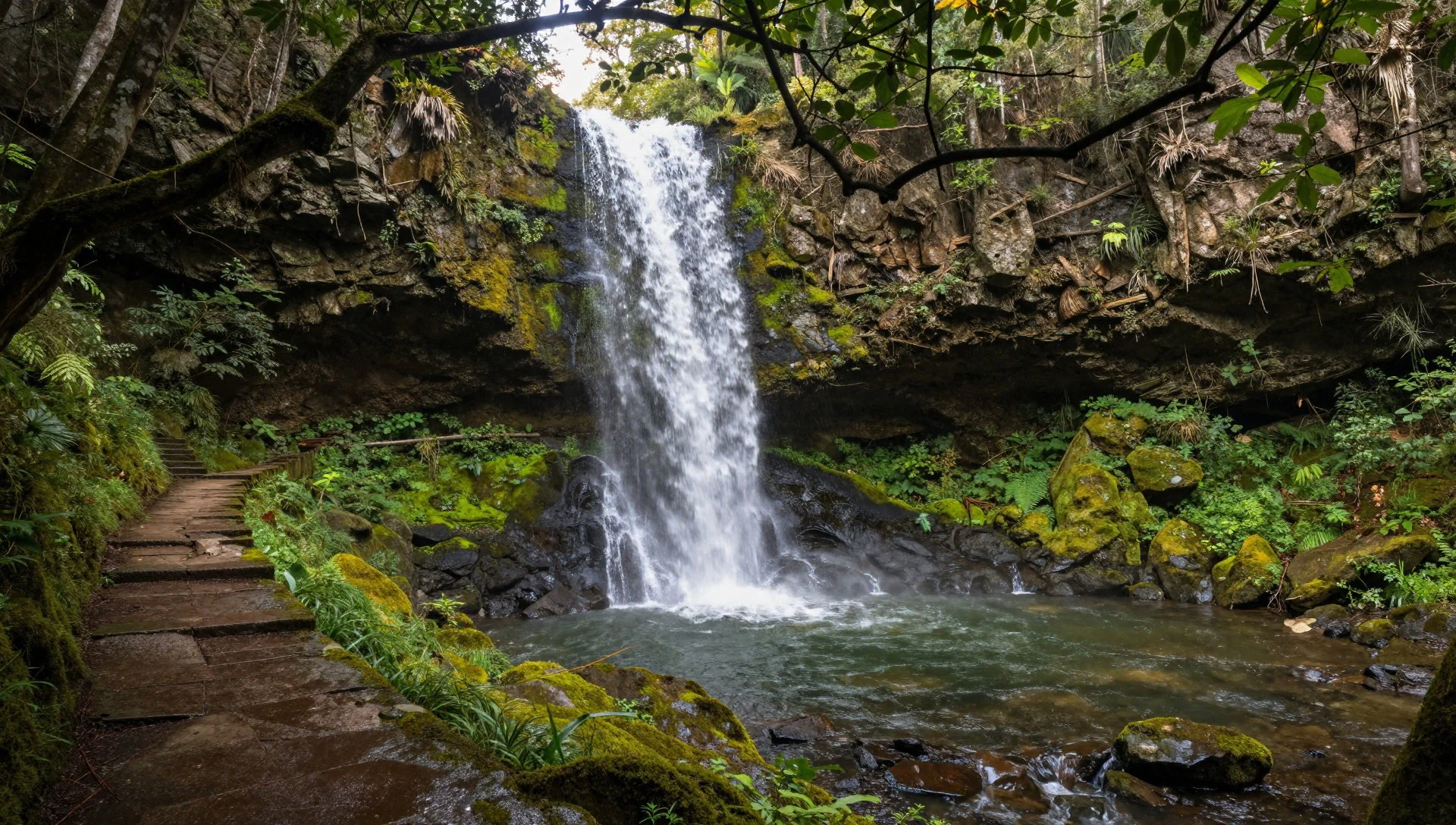
- The Second Fall — Middle terrace
Positioned midway down the gorge, this tier presents a much calmer profile. During drier months, the reduced water flow makes this section appear subdued and domestic, allowing visitors to observe the smooth rock surfaces and surrounding ferns in quiet detail.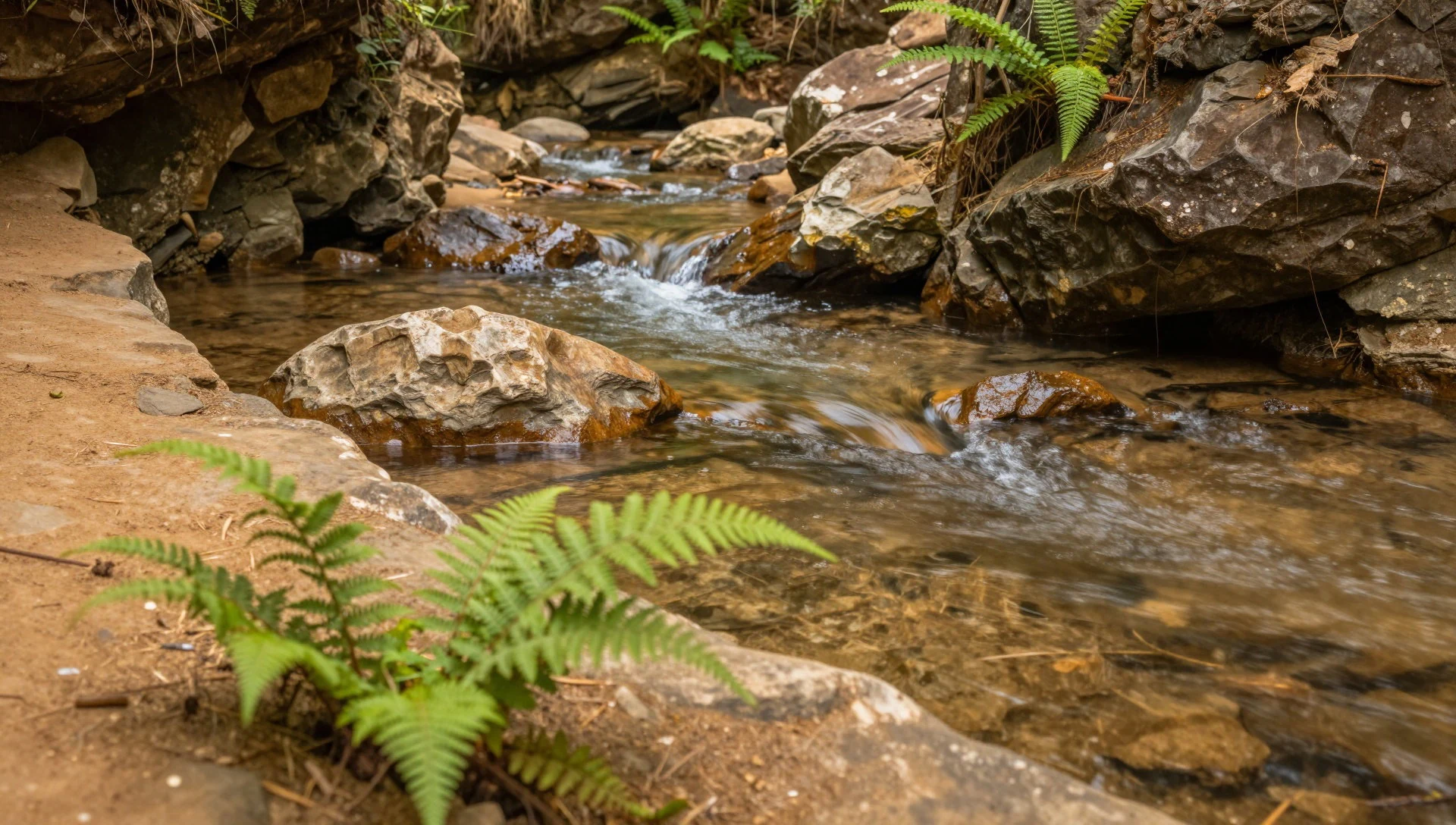
- The Third Fall — Lower gorge
The final and tallest drop bursts into view suddenly, offering the most dramatic spectacle at the complex. Crystal-clear mountain water rushes furiously over sharp, jagged rocks of myriad shapes, plunging into a lively pool flanked by lush greenery.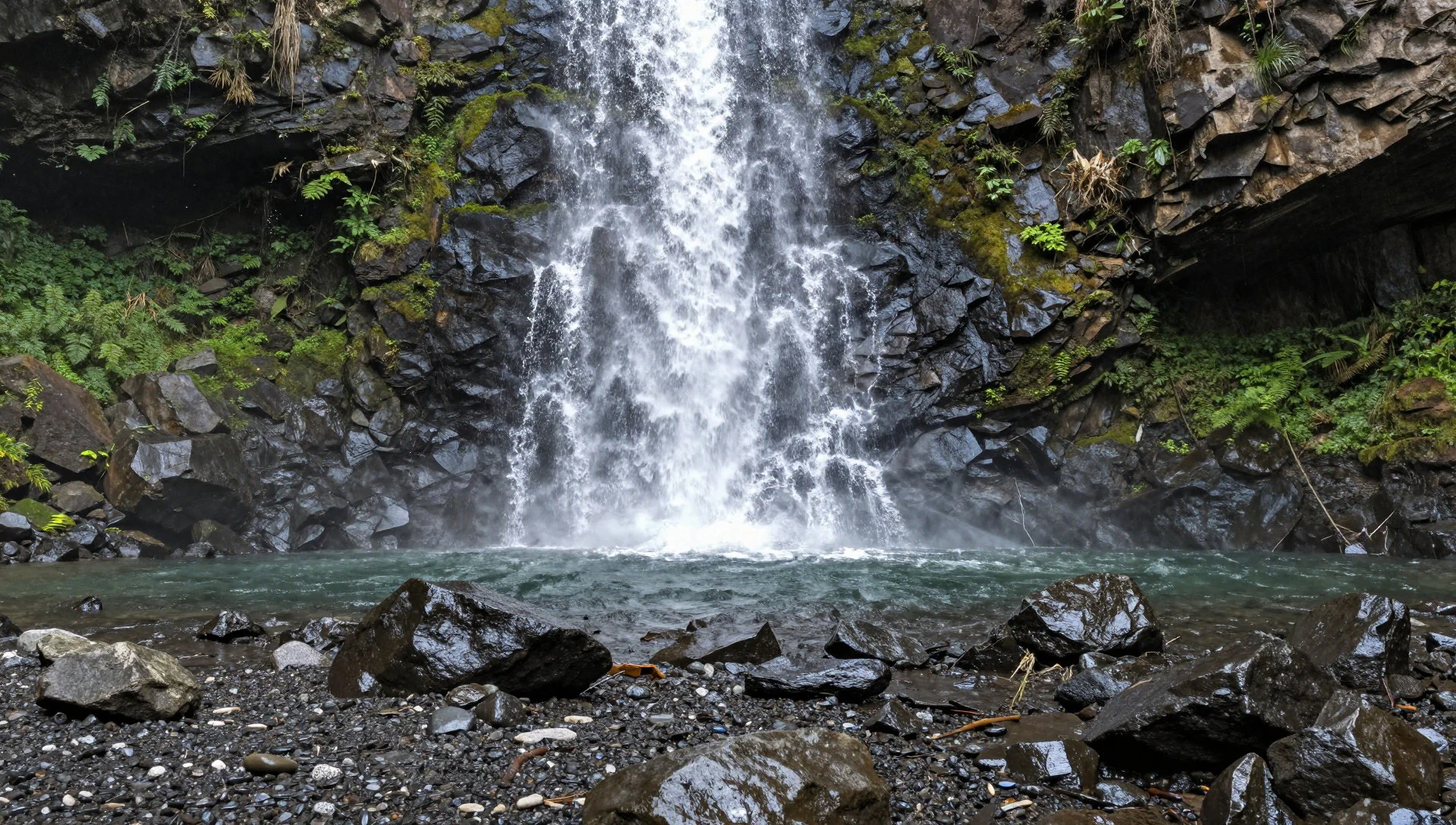
- The Fern Dells — Surrounding valley slopes
The steep rock walls flanking the entire waterfall sequence are heavily blanketed in native ferns and thick moss. These shaded microclimates support a diverse array of high-altitude flora that thrives on the constant moisture and cool mist generated by the stream.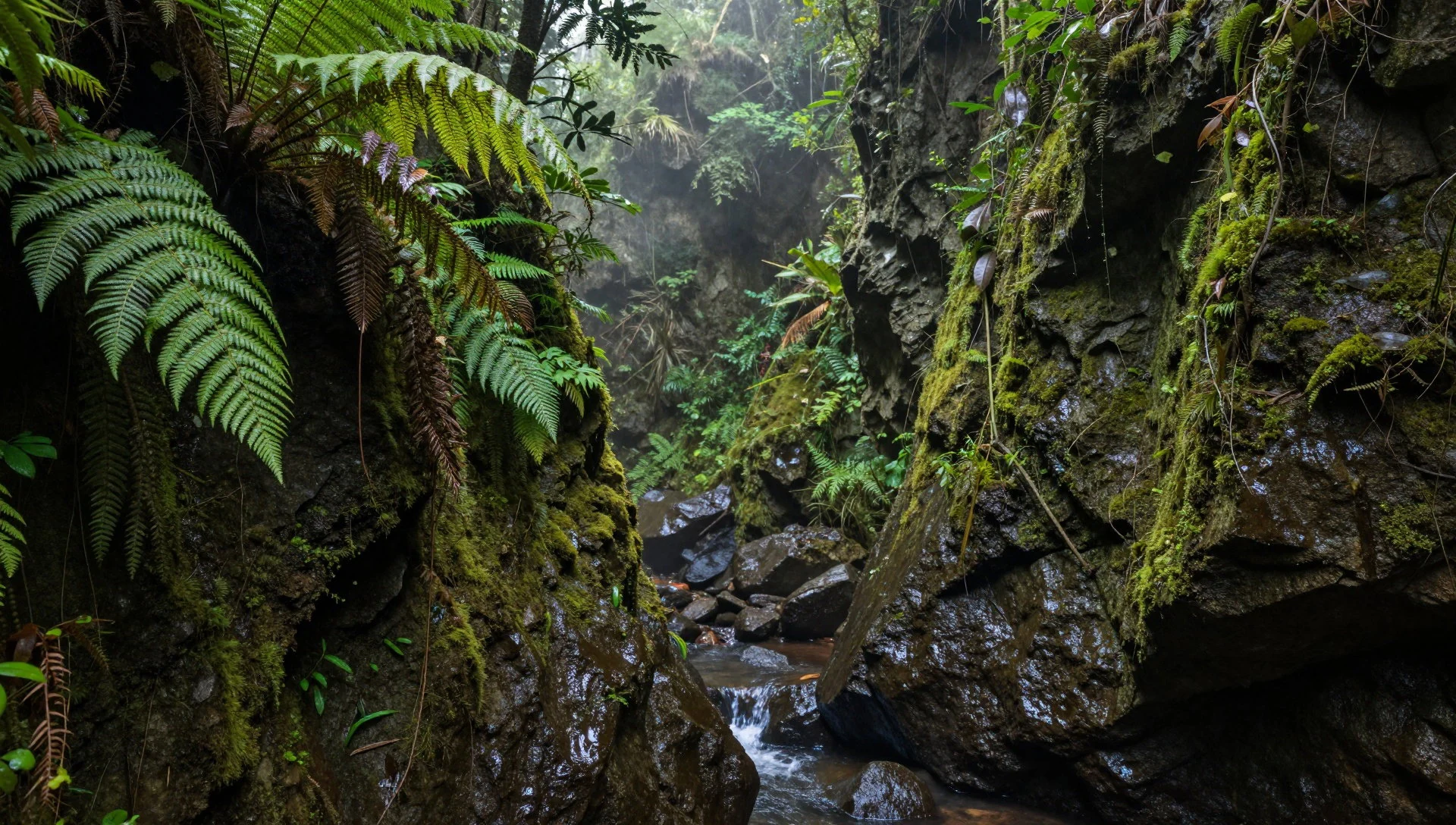
Culture
The cultural fabric surrounding Elephant Falls is deeply rooted in the traditions of the indigenous Khasi people, who form the predominant ethnic community of Meghalaya. Khasi society is historically matrilineal, with lineage, property inheritance, and family names traced down through the maternal line. Traditional community life places a strong emphasis on stewardship of the natural environment, viewing hills, forests, streams, and sacred groves as living entities intertwined with ancestral spirits and local folklore. Visitors exploring the local markets and surrounding villages will encounter a society that preserves ancient dialect forms alongside contemporary practices, maintaining vibrant traditional music, dance, and weaving customs that reflect the misty, highland geography of the state. When visiting local markets or community spaces near the falls, always ask for permission before photographing local residents and traditional artisans.
What to wear
Traditional attire among the Khasi people reflects both the cool highland climate and practical considerations for outdoor work in forested terrain. The signature traditional garment for women is the jymphong or the dhara, often crafted from rich local textiles and paired with finely woven shawls designed to ward off the mountain chill. Men traditionally wear a jymphong accompanied by a wrap or trousers, sometimes paired with a traditional headgear fashioned from cane or bamboo for protection against sudden downpours. In contemporary daily life across Shillong, residents predominantly wear modern casual clothing, including jeans, jackets, and sweaters, particularly given the brisk temperatures experienced for much of the year. For travellers visiting Elephant Falls, practical clothing is essential. You should wear sturdy, gripped walking shoes or boots because the stone steps and pathways near the cascades become slick and damp from continuous mist and rain. Layered clothing such as a light windbreaker or waterproof jacket is strongly recommended to handle sudden weather shifts, alongside modest attire that respects local sensibilities when interacting with residents in nearby settlements.
What to eat
- Jadoh — Traditional eateries and local food stalls across Shillong
A fragrant, deeply spiced rice dish cooked with pork stock and indigenous herbs, often garnished with fried onions and local spices. It is a staple comfort food across the Khasi hills.
- Pukhlein — Local roadside stalls and neighbourhood bakeries
A sweet, deep-fried snack made from rice flour and jaggery, yielding a crispy outer crust and a soft interior. It is commonly prepared during local festivities and sold in small markets.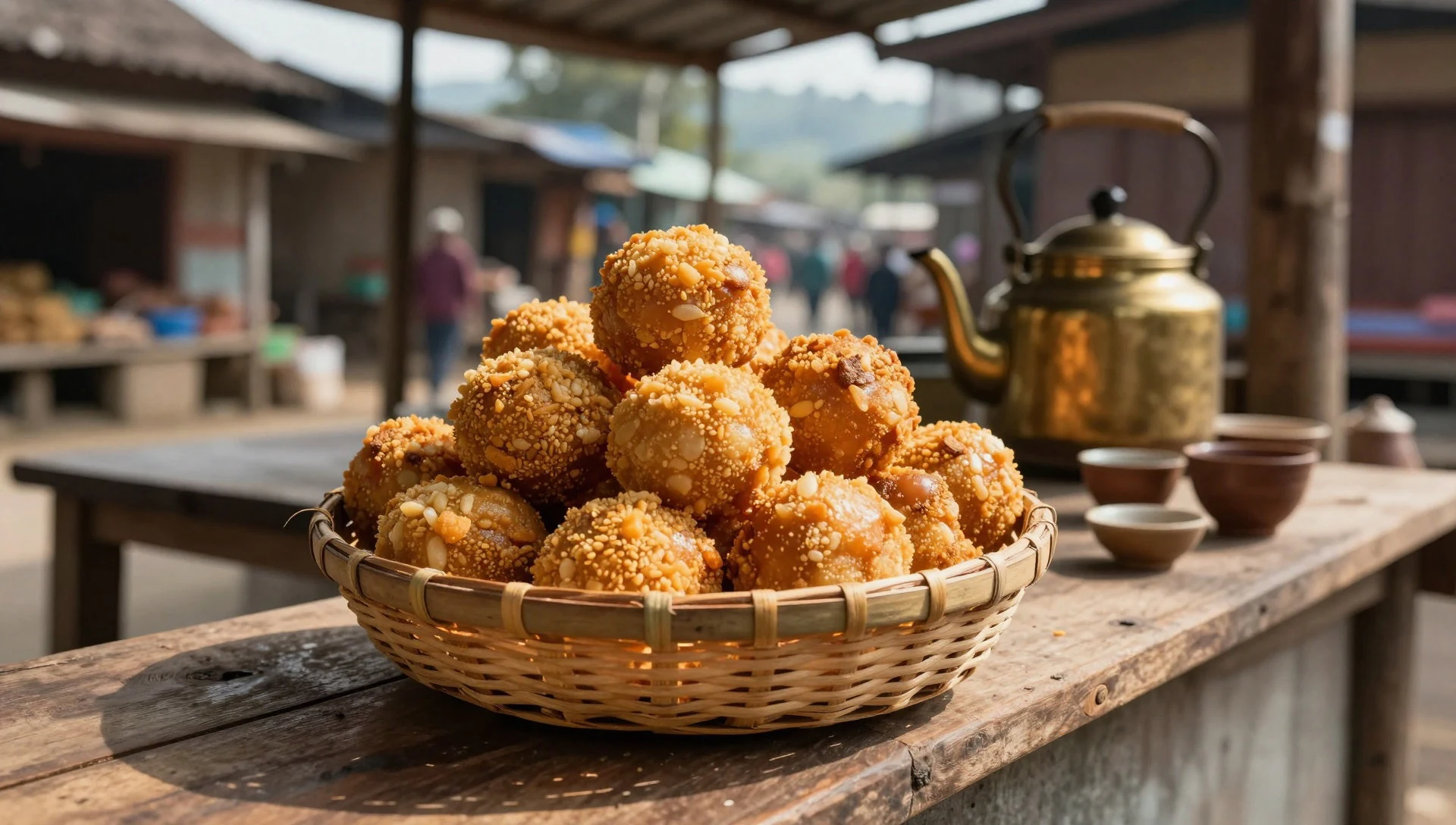
- Dohneiiong — Khasi diners and family-run restaurants in the city
A rich pork curry prepared using ground black sesame seeds, which impart a distinct nutty flavour and a deep dark colour to the gravy. It is typically served alongside steaming rice. - Pu Tharo — Morning street food vendors and traditional food markets
Steamed rice cakes wrapped and cooked inside leaves, offering a subtle sweetness and a delicate texture. They are typically enjoyed warm alongside spiced tea during the morning hours.
Plan it
Best time. March to May offers pleasant spring weather with comfortable temperatures; October to November provides clear skies and lush post-monsoon greenery before the chilly winter sets in.
How long. 1–2
Getting there. Fly into Shillong Airport or travel by road from Guwahati railway station or airport (roughly a three-hour drive), followed by a short local taxi or bus ride to the waterfall gates.
Budget. low
Tips
- Arrive early in the morning to enjoy the walking trails and viewing platforms before tour groups arrive.
- Wear sturdy walking shoes with good grip, as the stone steps near the cascades are frequently wet and slippery.
- Carry a light waterproof jacket or umbrella, as mountain weather can shift rapidly with unexpected showers.
- Bring cash in small denominations for entrance fees, local snacks, and handicraft stalls near the parking area.
Etiquette
- Ask permission before taking photographs of local residents and stall owners.
- Keep the pathways clean by carrying your litter away with you rather than dropping waste near the stream.
Nearby
Sources
- Wikidata Q85758968 (CC0)
- Wikipedia (rev 1362220337) (CC BY-SA 4.0)
- Photo photos/01-elephant-falls-meghalaya.jpg (CC BY-SA 4.0)
- Photo photos/02-elephant-falls-dos-and-don-ts-for-visitors.jpg (CC BY-SA 4.0)
- Photo photos/03-elephant-falls-at-shillong.jpg (CC BY-SA 4.0)
- Photo photos/04-1st-fall-of-the-elephant-falls-shillong.jpg (CC BY 3.0)
- Photo photos/05-beautiful-elephant-falls-3rd-step-falls.jpg (CC BY-SA 4.0)
- Photo photos/06-elephant-fall-no-1.jpg (CC BY-SA 4.0)
- Photo photos/07-elephant-fall-of-shillong.jpg (CC BY 3.0)
- Photo photos/08-elephant-fall-shillong.jpg (CC BY-SA 4.0)
- Wikivoyage (CC BY-SA 4.0)


