Sikkim
Sikkim, India
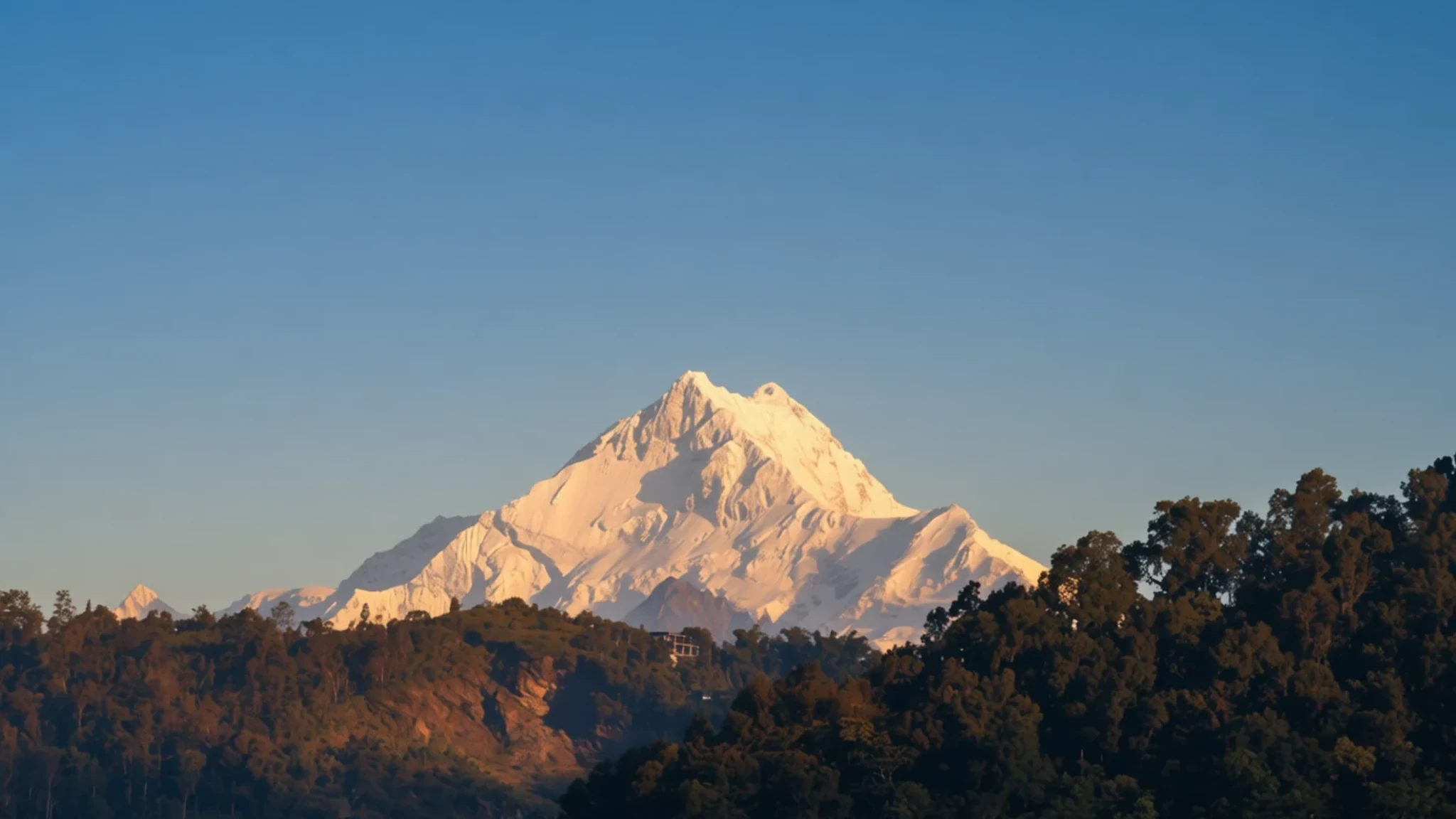
Sikkim packs Himalayan peaks, Buddhist monasteries and tea gardens into a small state, best seen in spring or autumn.
The place
Sikkim is a small state in northeast India, bordered by Bhutan to the east, Tibet to the north, Nepal to the west and West Bengal to the south. Among Indian states, only West Bengal touches it, which gives Sikkim the feel of a place reached through a single doorway. Gangtok, the capital and largest town, sits on a steep ridge, so most travel here means climbing and dropping through valleys rather than crossing open country. Roughly a third of the land lies within Khangchendzonga National Park, a World Heritage Site, and the scenery changes from subtropical forest near the lowlands to alpine meadows and bare high ground in the north. That range of altitude explains the wildlife, the crops and the mix of communities. Kangchenjunga, the highest peak in India, rises on the border with Nepal and can be seen from viewpoints around Gangtok on a clear morning. Tea estates and terraced paddy fill the middle hills. Roads are narrow and slow, and monsoon landslides can close them for stretches, so spare time matters. The population is only about 660,000, and even busy weekends in Gangtok rarely feel crowded. Sikkim is calmer than most Himalayan destinations, and that quiet is its main draw.
Its story
The Lepchas are generally considered the earliest settlers, while Limbu and Magar communities also lived in the state's hard-to-reach hill country. Tradition places the Buddhist teacher Padmasambhava, known locally as Guru Rinpoche, in the region during the eighth century. He is said to have blessed the ground, brought Buddhism and foretold that a line of kings would one day rule here.
The monarchy began with a figure of legend. Khye Bumsa, a prince of Tibetan descent, is said to have received a revelation that sent him south to look for better prospects. A later descendant, Phuntsog Namgyal, was crowned as the first chogyal, meaning priest-king, at Yuksom in the 1600s, with three lamas performing the ceremony. His son Tensung Namgyal then shifted the royal seat to Rabdentse, a hilltop stronghold close to present-day Pelling, where the court could watch the approaches from the valleys below. Around the start of the eighteenth century, Bhutanese forces invaded, helped by a half-sibling of the ruler who had been passed over for the throne.
Later centuries brought princely status under British India, a protectorate relationship after independence, and growing unrest against the monarchy. For anyone walking through Sikkim now, the monasteries are the most visible record of this past, and many were founded in the same centuries these events describe.
What to see
- Dubdi Monastery — Yuksom, West Sikkim
Dubdi Monastery stands on a hill above Yuksom, the town where the first chogyal was consecrated. It was the first monastery founded after that ceremony, and it can only be reached on foot, by a steep trek that ends in a demanding climb. Go early, carry water and allow more time than the map suggests.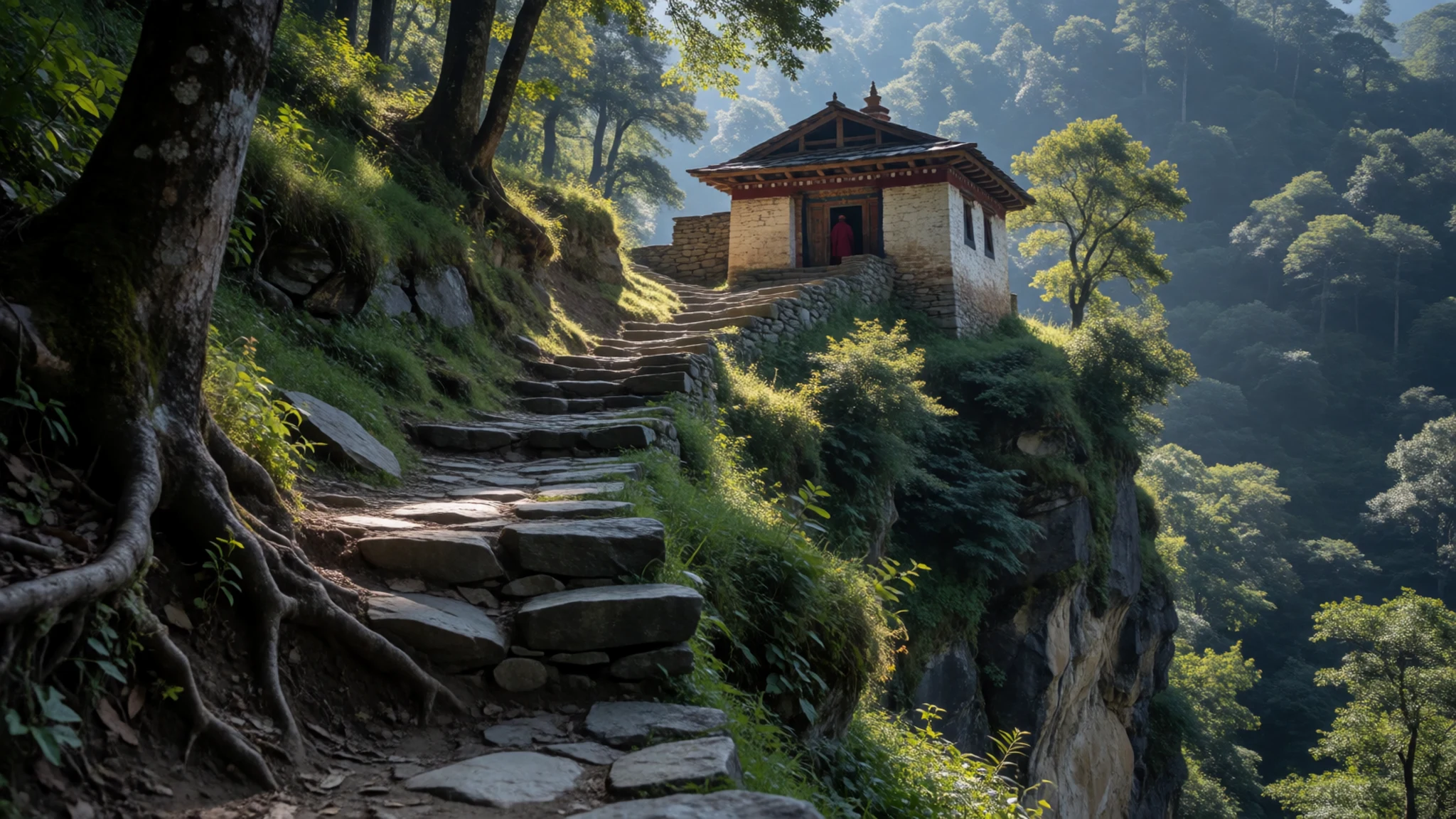
- Enchey Monastery — Gangtok area
Enchey Monastery sits on a ridge near Gangtok and has the feel of an old hilltop house of prayer. It is best known for the Cham, a masked dance performed in January, when dancers in brocade turn the courtyard into a stage. Check the dates with the monastery before you travel, because festival timing can shift.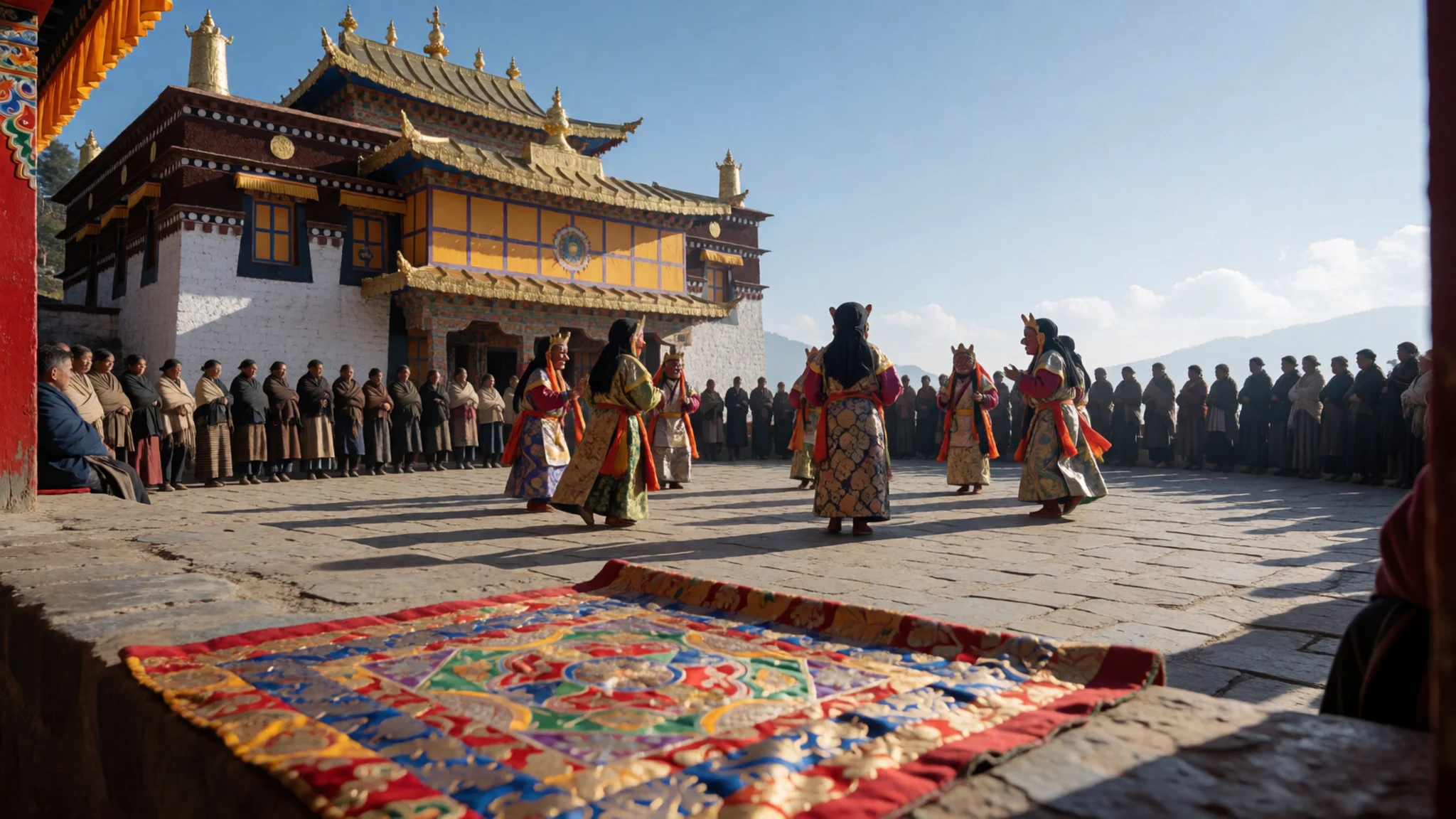
- Dodrul Chorten — Gangtok
Dodrul Chorten is a large white stupa in Gangtok, ringed by prayer wheels and built in the mid-twentieth century. Its inner shrine holds a full set of sacred texts and a mandala, which is why it draws pilgrims as well as visitors. Walk clockwise around the stupa and spin the wheels in the same direction.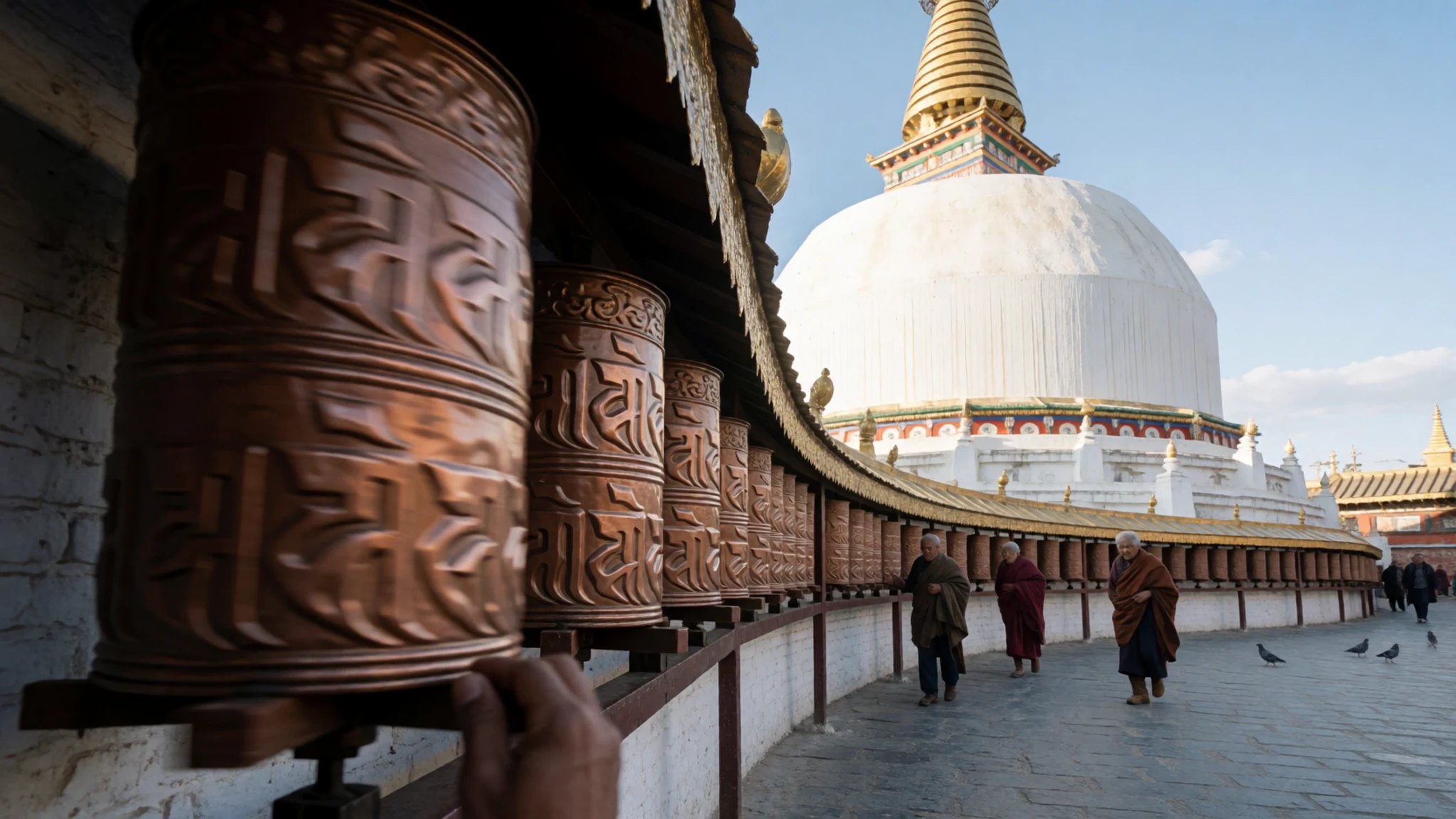
- Karma Kagyu Monastery — Sikkim; confirm the location locally before visiting
Karma Kagyu Monastery is known for its old wall murals, which are the main reason most visitors come. Painted surfaces of this age are fragile, so photograph only where signs allow and keep your voice low inside the prayer hall. Mornings are usually quieter than late afternoon, when groups arrive.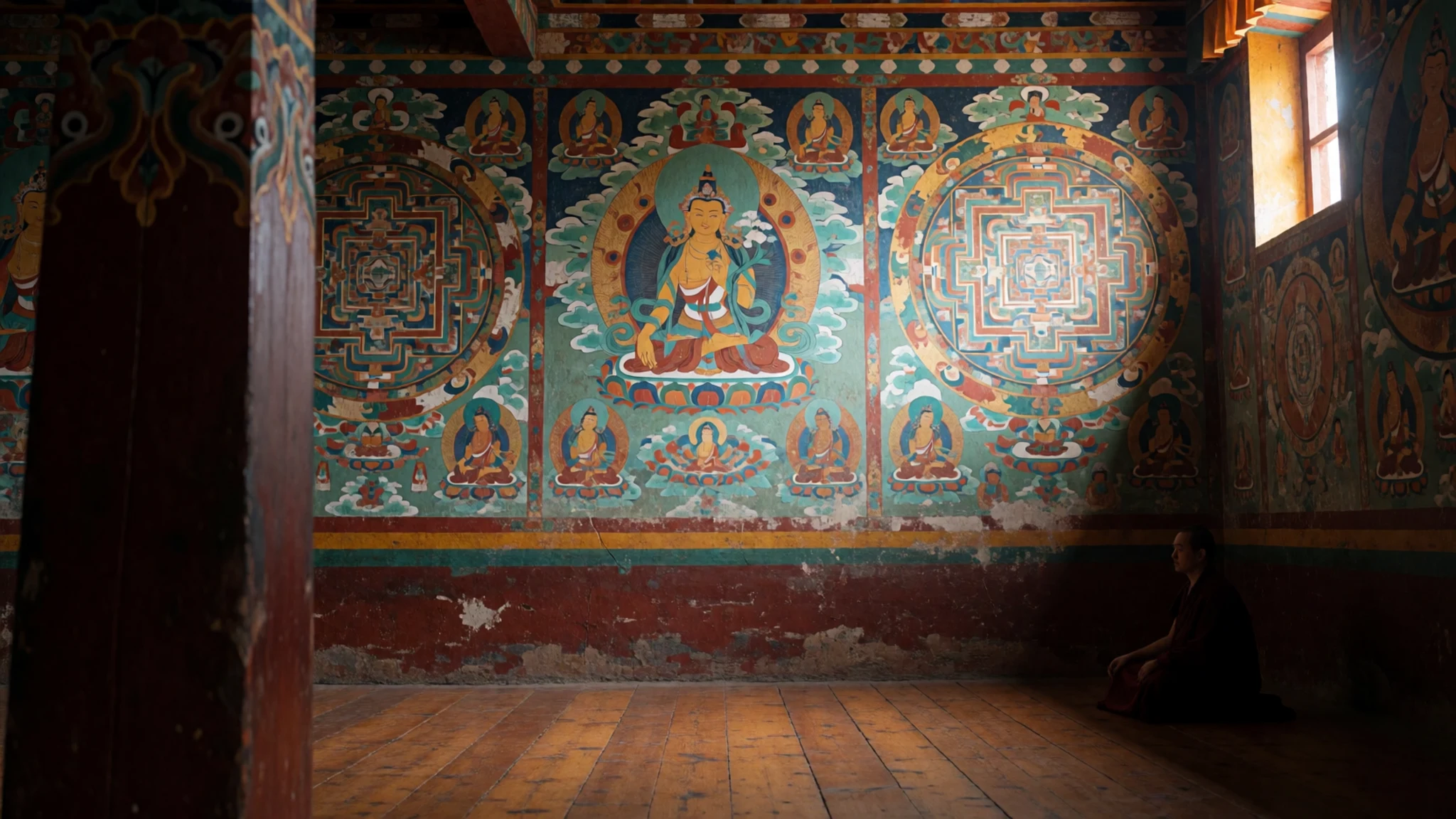
- Labrang Monastery — Sikkim; confirm the location locally before visiting
Labrang Monastery belongs to the Nyingma tradition and dates from the late nineteenth century, which makes it one of the more recent foundations on this list. Its interior is modest and intimate rather than grand. Ask before entering inner rooms, and dress modestly as you would for any active place of worship.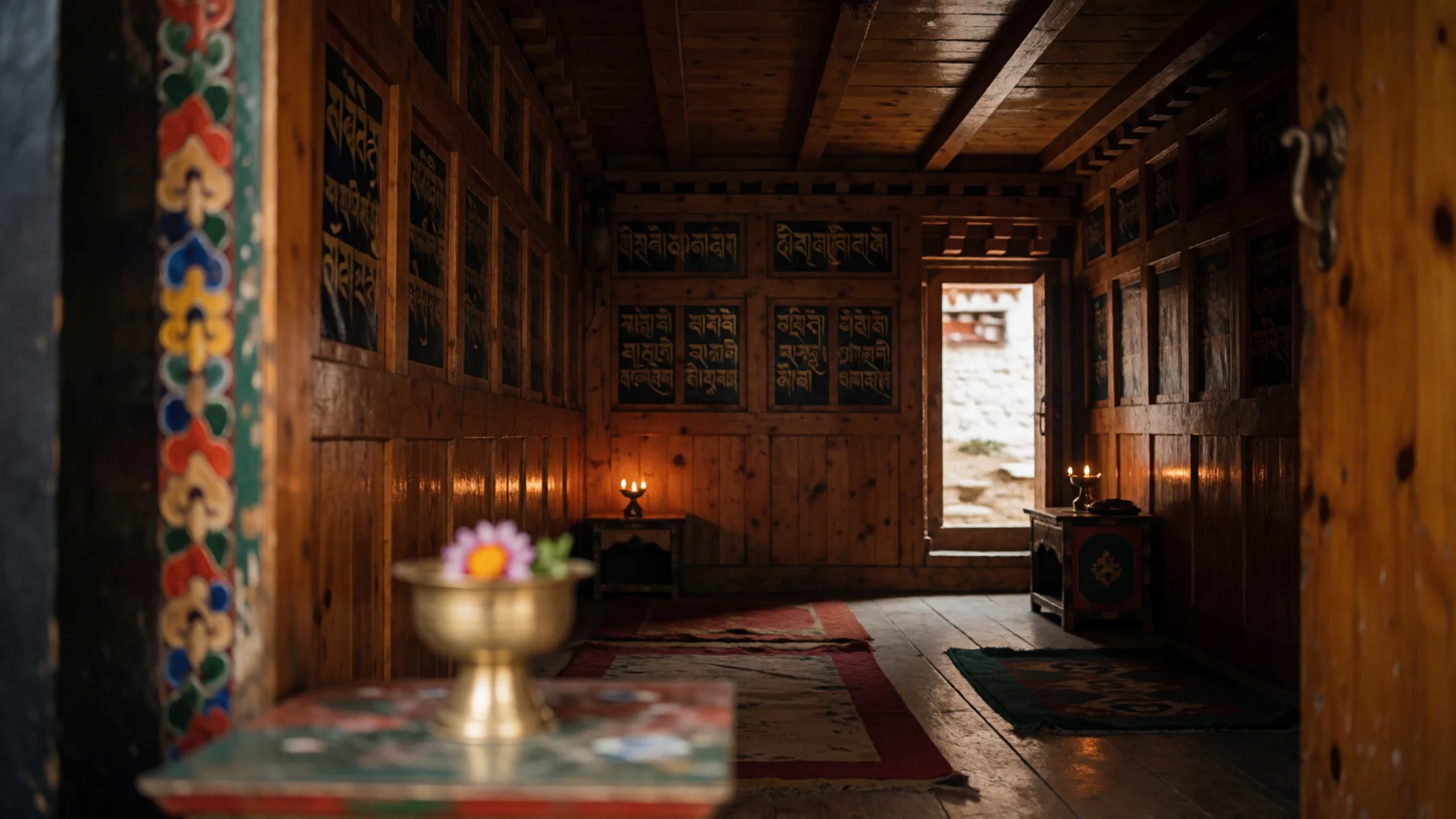
Culture
Sikkim is a place where Hindu and Buddhist observance sit side by side. The Gorkhali majority celebrates the major Hindu festivals, including Tihar and Dashain, while Buddhist calendars bring Losar, the Tibetan New Year, when most offices and schools close for several days. Traditional local festivals such as Maghe Sankranti, Bhumchu and Saga Dawa are popular too, so the calendar shapes when a visit feels most lively.
Sikkimese Muslims mark Eid ul-Fitr and Muharram, and Christmas has been promoted in Gangtok to draw visitors during the quieter months. Lepcha music and Nepali rock sit alongside Western rock and Indian pop on local radio and in cafés. Conversation tends to be unhurried, and many people are happy to talk about their villages if you ask politely.
Monasteries are working religious sites rather than museums. Take off your shoes at every monastery door, and walk clockwise around chortens and prayer wheels.
What to wear
Traditional dress in Sikkim varies by community. Many Bhutia families wear long wrap-style robes that close at the side and are belted at the waist, with women's versions reaching the ankle and men's falling to the knee. The cloth is often wool or silk, and the brocade belts and decorative panels signal family and status. Lepcha and Limbu communities have their own woven designs and jewellery, which appear most often at festivals and weddings.
In daily life, most people wear jeans, jackets, kurta-pyjamas or saris, and schoolchildren and office workers dress in Western or Indian clothes. The traditional robes come out for monasteries, festivals and family occasions.
For a visitor, layers matter most. Gangtok can feel cool even in summer, and it gets much colder at higher altitudes, so pack a warm fleece and a waterproof. Good closed shoes with grip are essential for steep and sometimes muddy paths. Dress modestly at monasteries by covering shoulders and knees, and carry a scarf that can double as a cover-up for temples and village visits.
What to eat
- Momo — Momo stalls on busy market streets in Gangtok and local eateries
Steamed dumplings filled with minced meat or vegetables, the staple of everyday Sikkimese eating. Vegetarians can easily find veg momos. Eat them hot, with the tomato-chilli dipping sauce served alongside. Find them at momo stalls on any busy market street in Gangtok and at local eateries.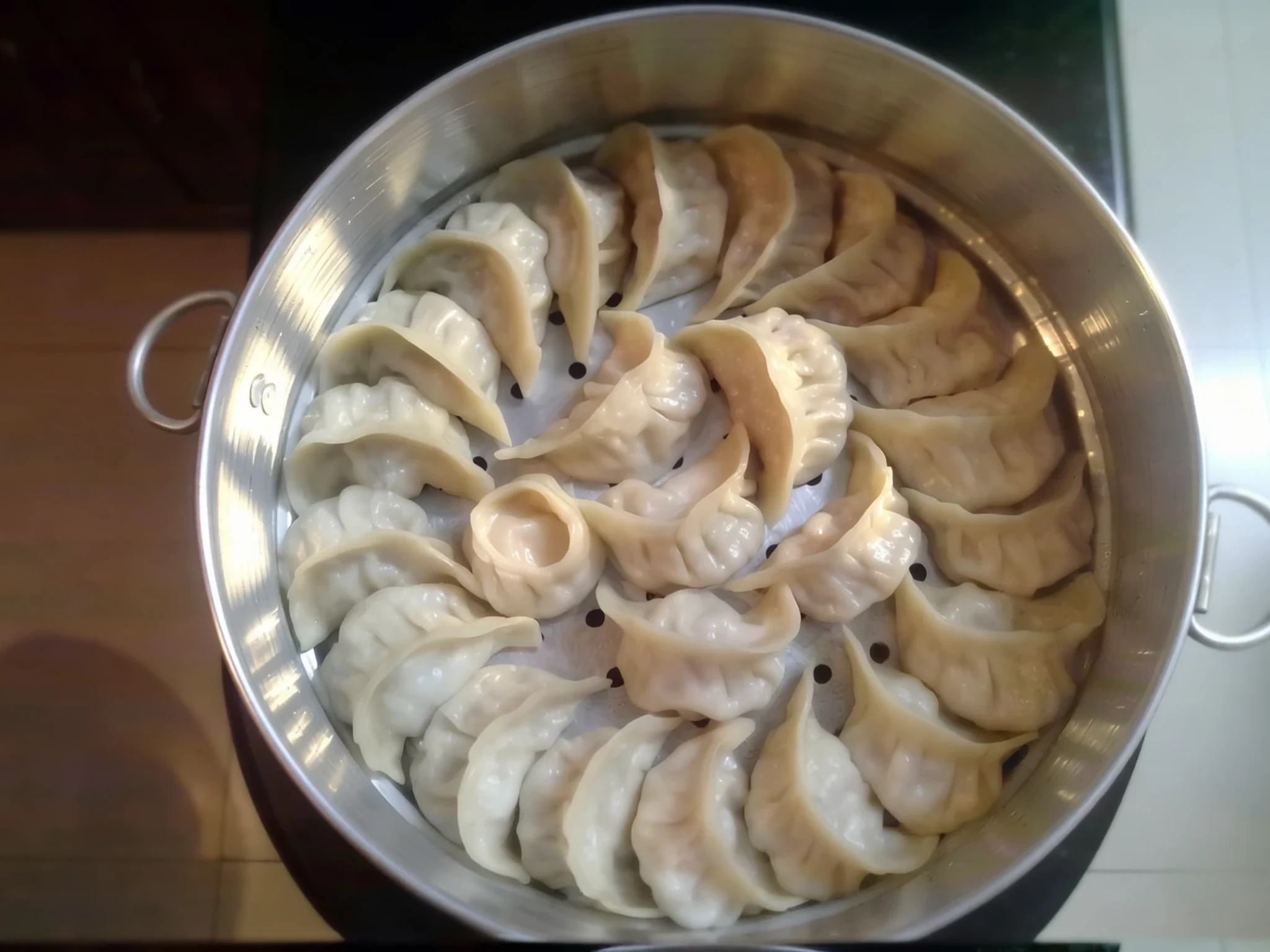
- Thukpa — Roadside eateries along the highways out of Gangtok
A noodle soup with vegetables or meat, served hot in a deep bowl and a good choice on a cold afternoon. Vegetarian versions are common. Look for it at roadside eateries along the highways out of Gangtok, where a bowl is usually ready quickly.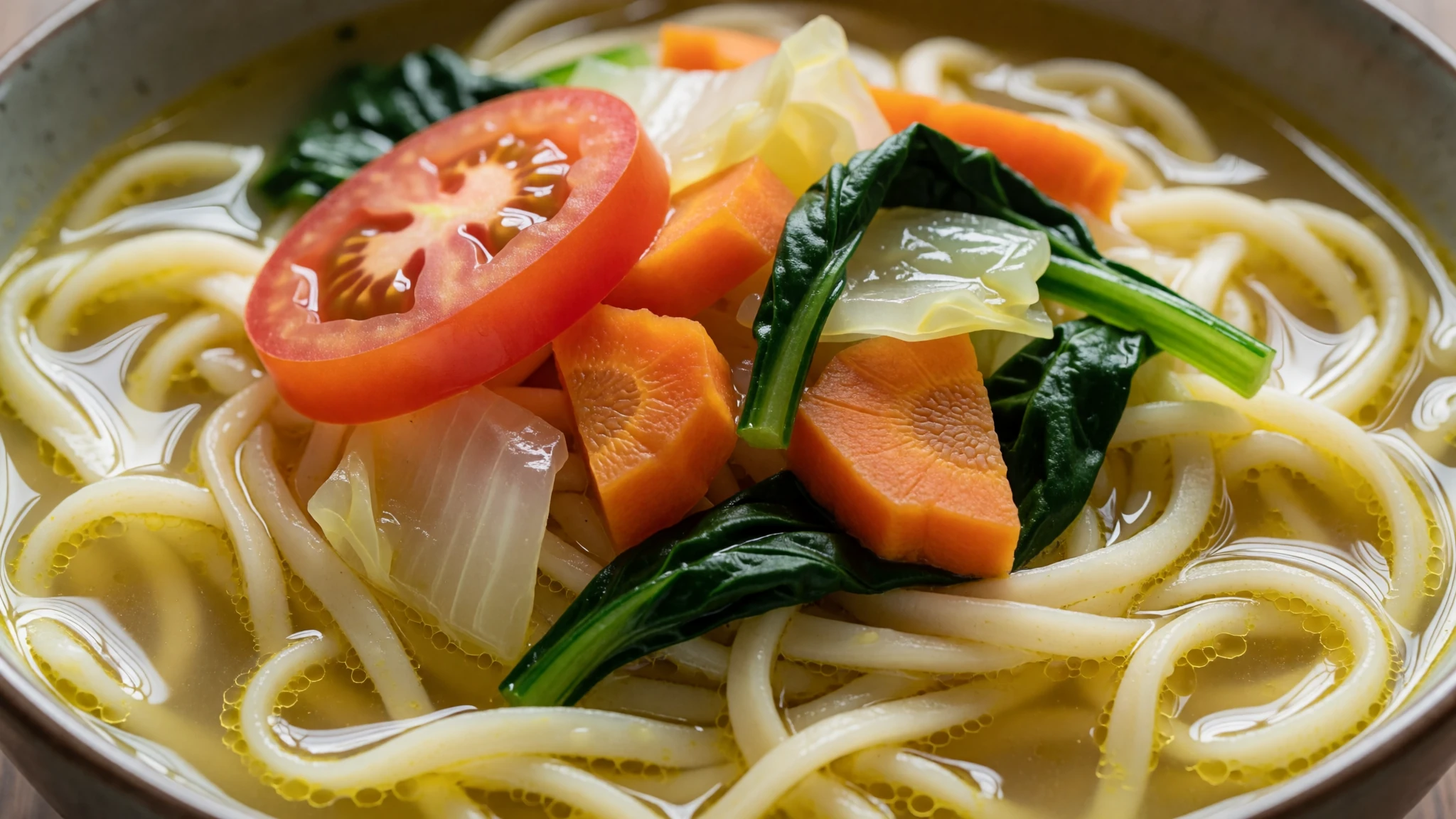
- Phagshapa — Home-style eateries in towns and villages
Strips of pork fat cooked slowly with radish and chilli, usually eaten with rice. It is a meat-eater's dish and tastes richer than it sounds. Order it at a home-style eatery rather than a tourist café, and ask staff whether it is on the day's menu. - Chhang and tongba — Community eateries and local homes, especially in rural areas
Millet beer, called chhang, thumba, tongba or chee depending on the village, comes in a bamboo vessel with a wooden straw, and you top it up with hot water as you drink. The taste is mild and slightly sour. Try it at a local home or community eatery rather than a bar. - HIT beer — Eateries and village shops across the state, easiest in Gangtok
A locally brewed beer that is a favourite across the state, and the default bottled choice at many eateries and village shops. The brewery is linked to a well-known Bollywood actor, which gives it a certain local fame. Drink it cold, and check local rules before buying alcohol to take away.
Plan it
Best time. March and April bring the best chance of clear skies and flowering rhododendrons. October and November are dry after the monsoon and give the sharpest mountain views. June to September is the monsoon, when landslides close roads, and winter is cold at altitude.
How long. 3–5
Getting there. Pakyong Airport, about 30 km from Gangtok, is the nearest airport, and Siliguri and New Jalpaiguri are the main rail gateways. The last leg is by shared taxi or state bus over steep, winding roads to Gangtok.
Budget. mid
Tips
- Arrange your Inner Line Permit early; foreigners receive it at the state border or from the Sikkim Tourism Centre in Siliguri.
- Start viewpoint visits before dawn, because cloud often builds by mid-morning.
- Carry cash for small eateries and monastery donations, since card payment is patchy outside Gangtok.
- Allow extra time on the road in the monsoon, when landslides and single-lane diversions are common.
- Drink plenty of water on your first days, and take the northern altitudes slowly.
Etiquette
- Remove your shoes at monastery doors and inside prayer halls.
- Walk clockwise around chortens, mani walls and prayer wheels.
- Ask before photographing people, especially at festivals and in villages.
- Dress modestly at monasteries, covering shoulders and knees.
Nearby
Sources
- Wikidata Q1505 (CC0)
- Wikipedia: Sikkim (rev 1381932445) (CC BY-SA 4.0)
- Wikivoyage: Sikkim (rev 5347403) (CC BY-SA 4.0)
- Photo: Statue of Guru Padmasambhava (Subhrajyoti07) (CC BY-SA 4.0)
- Photo: Kanchenjunga range from Hanuman Tok (Dinesh Valke; UnpetitproleX) (CC BY-SA 2.0)
- Photo: Gurudongmar Lake (Yoghya; UnpetitproleX) (CC BY-SA 4.0)
- Photo: Buddha statue at Buddha Park, Ravangla (Joydeep) (CC BY-SA 4.0)
- Photo: Cherry Resort, Temi Tea Garden (Subhrajyoti07) (CC BY-SA 4.0)
- Photo: Gnathang Krishna Mandir (Arup1981) (CC BY-SA 4.0)
- Photo: Chardham at Namchi (Ankit Darsi) (CC BY-SA 4.0)
- Photo: Rumtek Monastery (Bernard Gagnon) (CC BY-SA 4.0)


