Kaziranga National Park
Kaziranga National Park, India
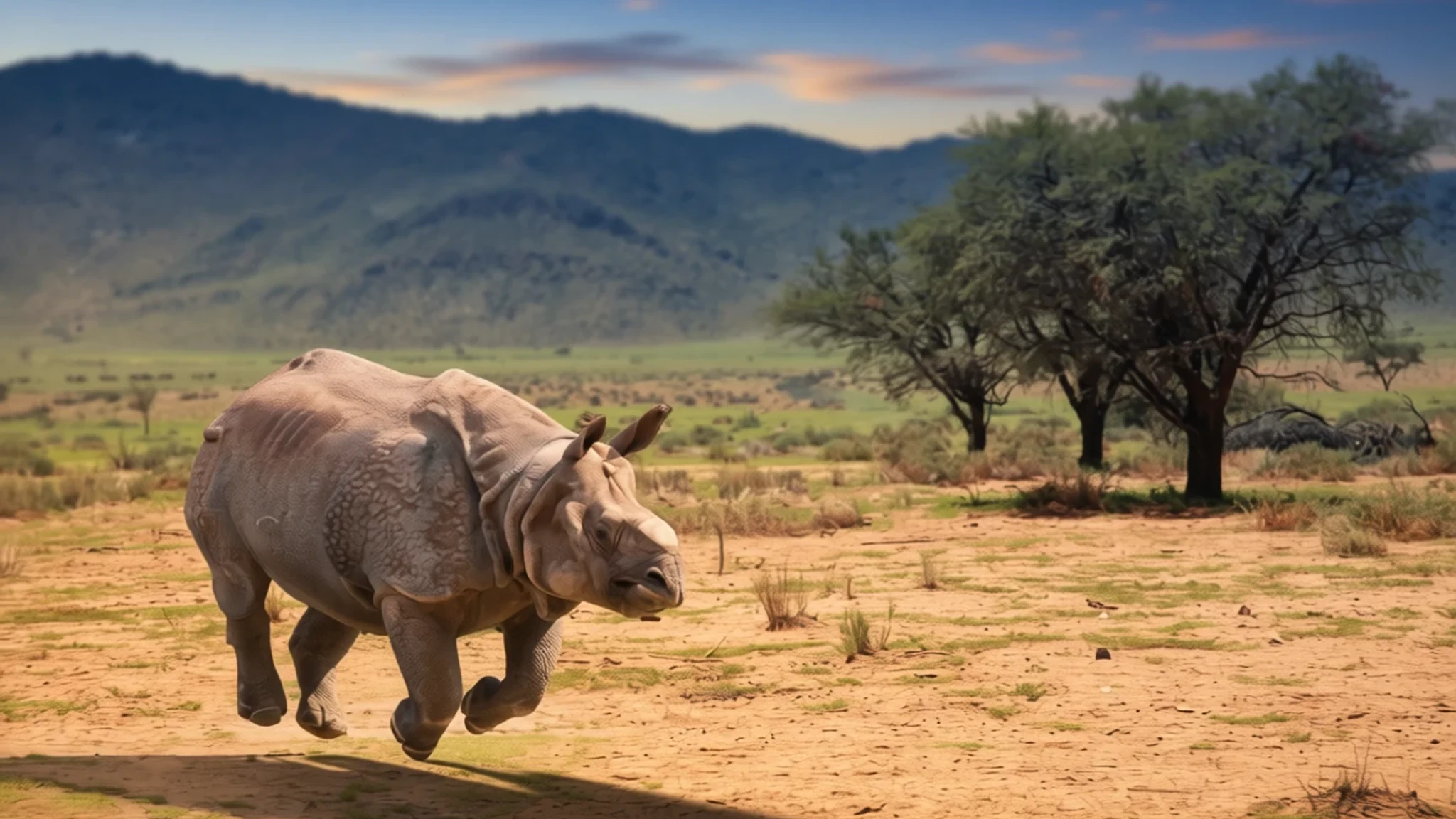
Kaziranga's grasslands hold one-horned rhinos, wild elephants and swamp deer, best seen from an elephant's back or a jeep in the cooler months.
The place
Kaziranga National Park lies in the Indian state of Assam, in the north-east of the country, on the edge of the Brahmaputra River. The park spreads across several districts and runs about 40 km from east to west and 13 km from north to south. Its core covers 378 km², though erosion has taken some land in recent years, and a separately designated extension has been added to give animals more room and a safe route towards the Karbi Anglong hills.
The park is a patchwork rather than a single habitat. Dense tropical moist broadleaf forest gives way to tall grassland and marshy ground, and the lowlands are dotted with shallow lakes known as beels. That mix suits a surprising range of animals. Among its residents are the Indian rhinoceros, elephants of the Asian continent, water buffalo living in the wild, marsh-dwelling deer, the tiger, and the fishing cat. Its open grassland makes it one of the finer places in the region for watching large mammals.
Birdlife is just as rich. The park is recognised as an Important Bird Area, and storks and fish eagles are regular sights from the track. It was declared a Tiger Reserve in 2006, so the wider landscape is managed with big cats in mind as well as the rhinos that made the park famous.
For most visitors the experience is shaped by the grass itself. It grows too tall to see over from the ground, so the two standard ways of looking for animals are from the back of an elephant or from an open jeep.
Its story
Kaziranga's protected status goes back to the early twentieth century. In 1904 Mary Curzon, Baroness Curzon of Kedleston, travelled to the area hoping to see the one-horned rhinoceros for which it was known, and she came away without one. Her disappointment is often told as the start of official concern, and the Kaziranga Proposed Reserve Forest was formally created on 1 June 1905, covering 232 km².
The name has changed over time. The Kaziranga Game Sanctuary became the Kaziranga Wildlife Sanctuary in 1950, dropping the word game to shed its link with hunting. A century after its founding, the park marked its centenary in 2005.
Floods are the park's recurring threat. The Brahmaputra overflows into the grassland, pushing animals onto higher ground and sometimes onto roads, and floodwater can take a heavy toll. In 2024 several rhinos and hundreds of deer were drowned as the water rose, a reminder that the landscape depends on the river as much as it is endangered by it.
The park has also been spared some of the violence that affected the wider state. The separatist movement led by the United Liberation Front of Asom damaged the regional economy, but Kaziranga was largely left alone, and there are reports from the 1980s of rebels guarding wildlife and turning on poachers.
What to see
- Elephant ride at dawn — Inside the park, grassland tracks
At Kaziranga, the early elephant ride is the classic way to get close to the one-horned rhinoceros. Rides leave in the early morning and last about an hour. Because the grass is taller than a person, sitting high lets visitors see over it. The animals are used to people, so the elephants can get surprisingly near. Expect a bumpy, dusty start to the day.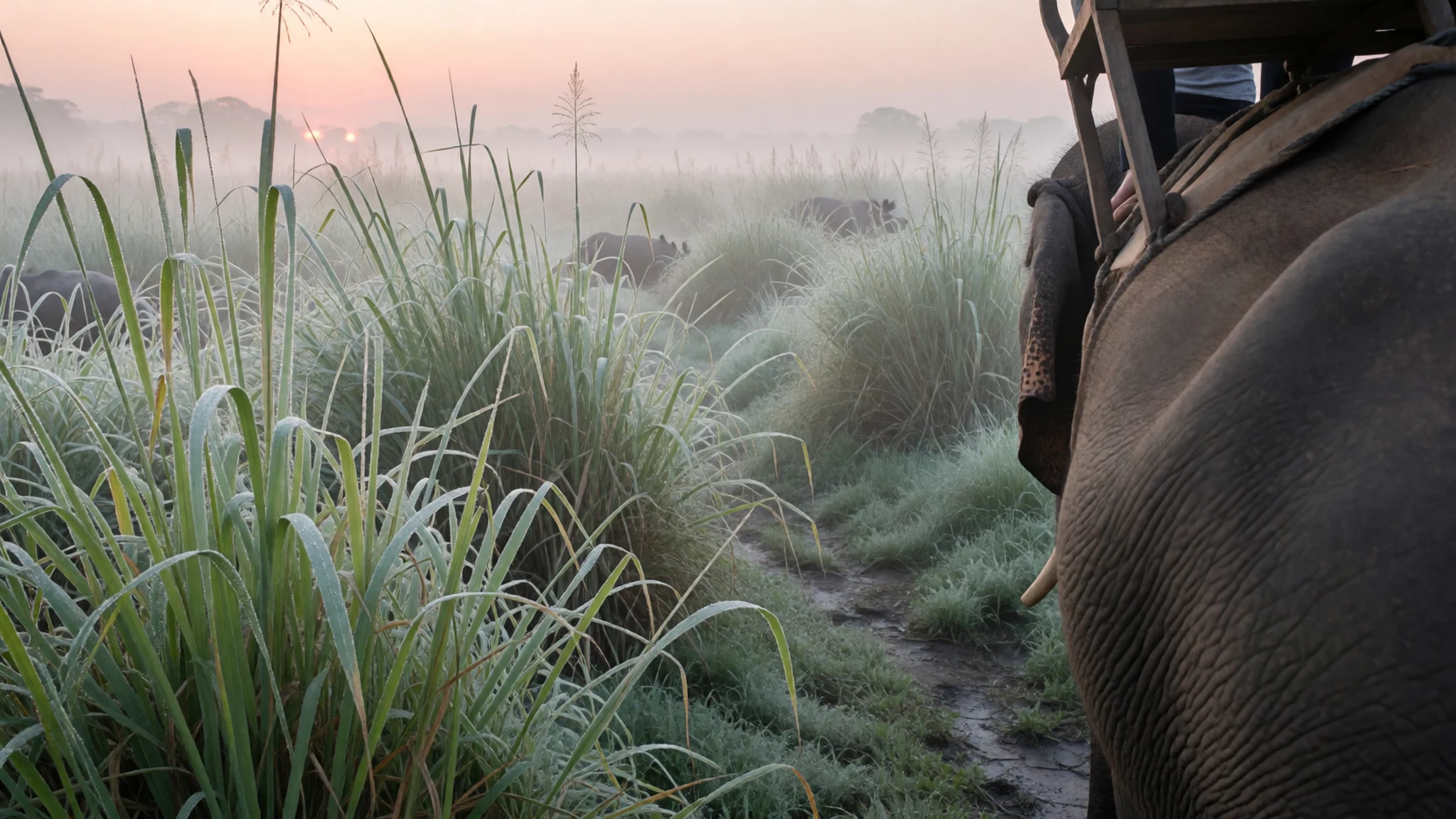
- Jeep safari — Park tracks across the open grassland
At Kaziranga, a jeep or terrain-vehicle safari covers far more ground than an elephant can. It is the best way to spot storks, fish eagles and swamp deer across the open country. Drivers know the tracks and the places where animals gather. Binoculars matter here, because much of the wildlife is some distance away.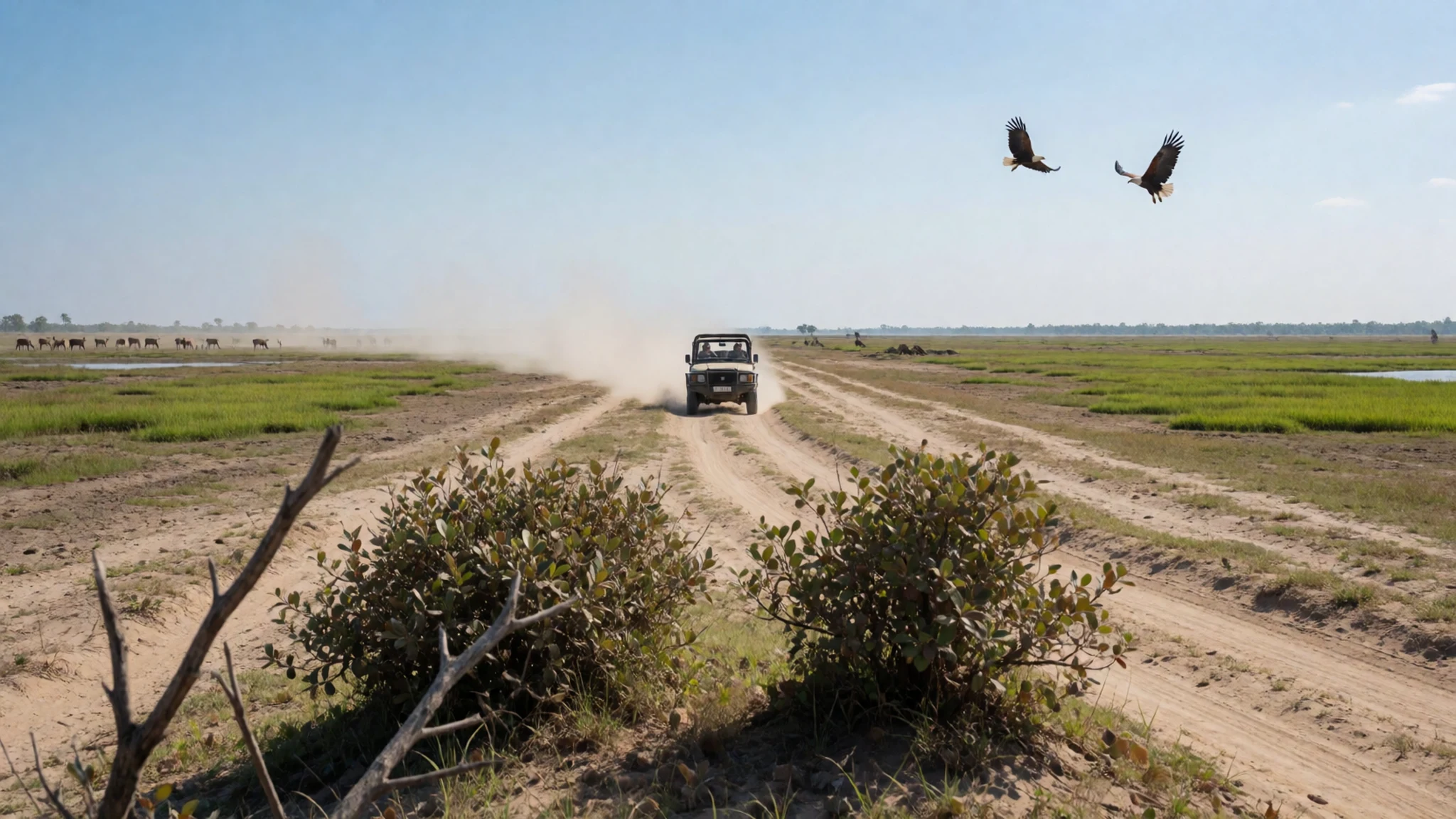
- Indian rhinoceros — Grassland and marsh edges
At Kaziranga, the Indian rhinoceros is the animal the park is best known for. Adults carry a single horn, and the species was dwindling before the reserve was set up. Rhinos spend much of the day grazing and wallowing, so the best chance of a sighting is early in the day or from an elephant's back. In floods they move onto higher ground, which can bring them close to roads.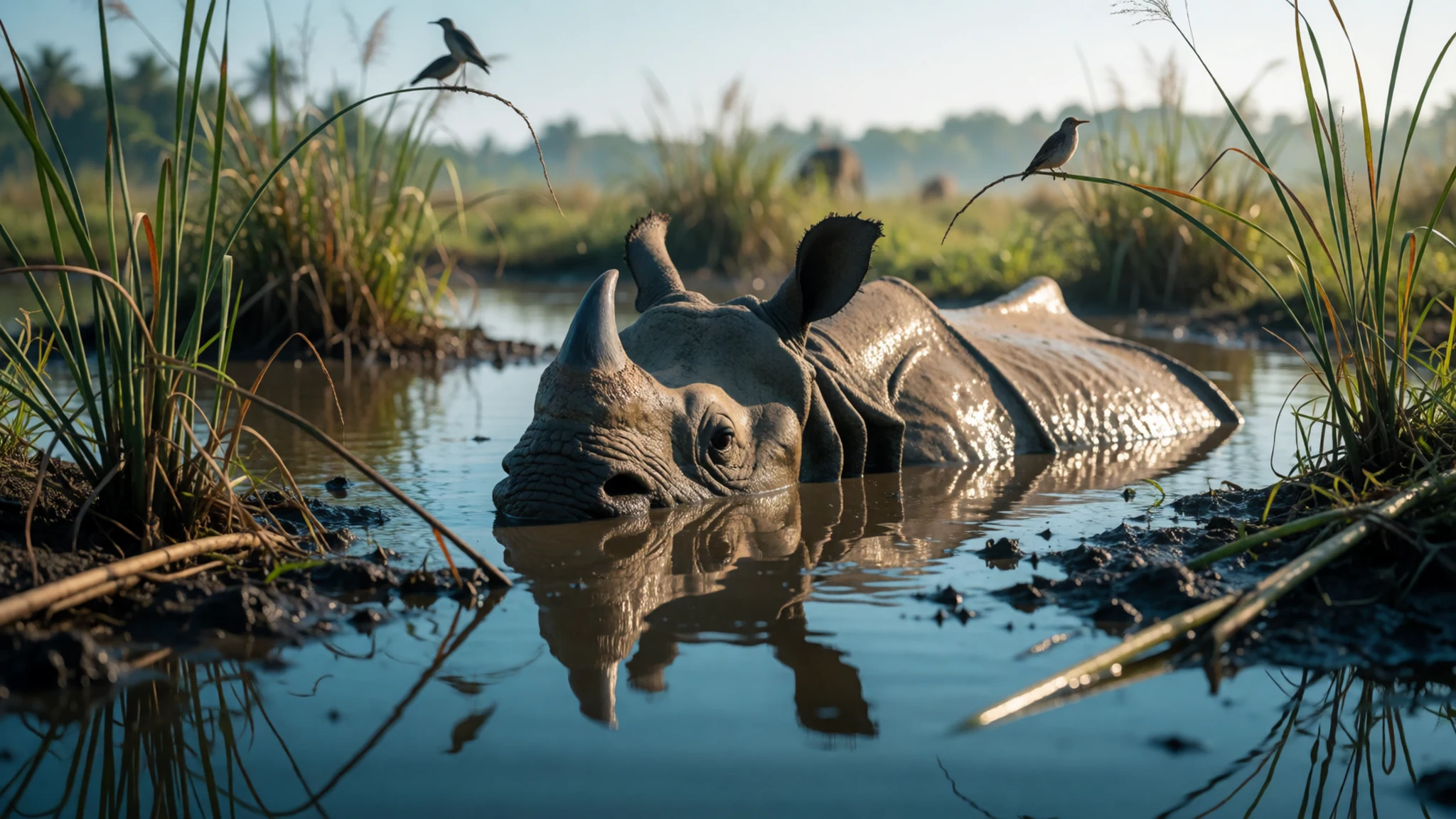
- Swamp deer (barasingha) — Open marsh and grassland
At Kaziranga, the swamp deer, known locally as barasingha, is one of the species visitors are most likely to see from a jeep. Herds gather in the open marsh and grassland, and the antlers of the stags are a striking sight. They often graze alongside other animals. When the rivers rise, the deer crowd onto whatever higher ground is left.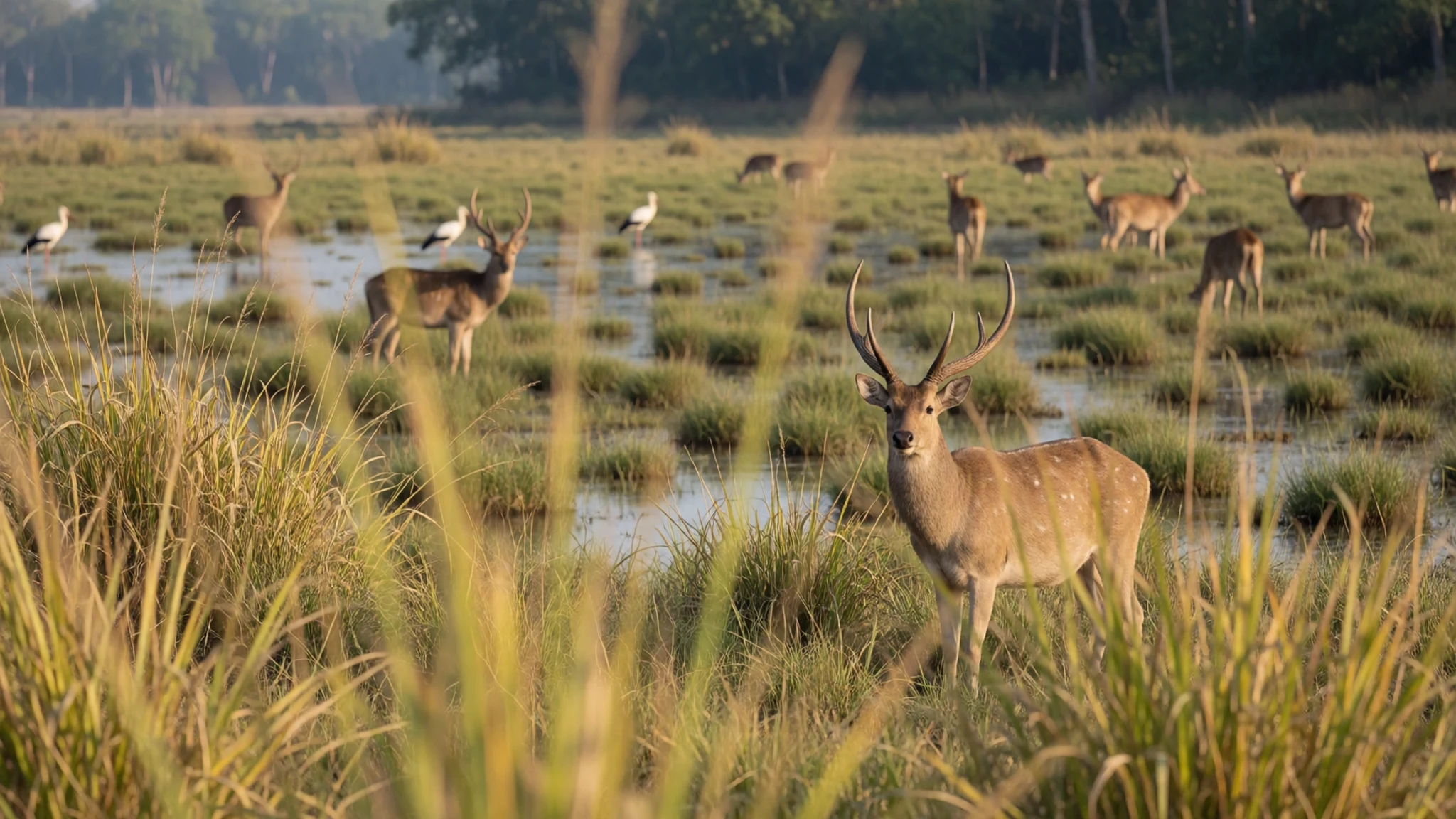
- Watchtowers over the grass — Watchtowers across the park
At Kaziranga, the watchtowers rise above the grass and give a wider view than the tracks allow. From the top, visitors can see lone trees, marsh and the hills beyond the park edge. It is a quiet way to spend an hour between safaris, and a good place to watch for birds as well as large animals.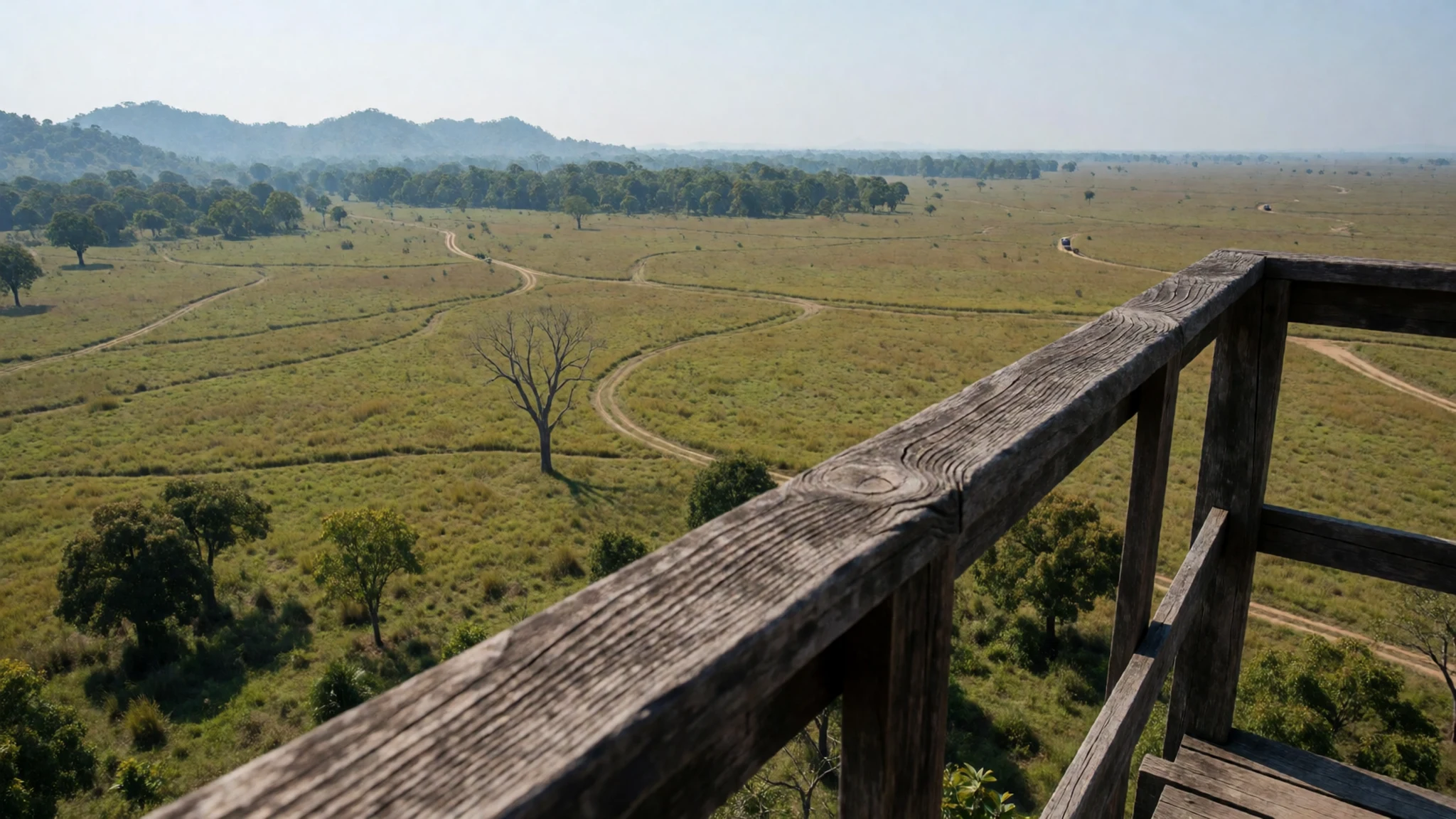
Culture
Kaziranga is a working wildlife reserve rather than a tourist attraction with a fence around it, and that shapes daily life here. Forest staff, local guides and the drivers who run the jeep safaris are part of a long effort to protect the animals. Safaris are arranged through the Kaziranga Development and Jeep Safari Association, whose office at Kohora handles bookings directly, so there is no need for middlemen.
The communities around the park are predominantly Assamese, and hospitality here is warm and unhurried. Lodge staff and roadside eateries tend to be friendly, and a cup of tea is often the first thing offered. Many local people depend on the park economically, through tourism and seasonal work, so visitors who respect the rules help keep that livelihood steady.
Remember that walking in the park is prohibited, so stay in the vehicle or on the elephant during the drive, keep your voice low near the animals, and never step off the track.
What to wear
Kaziranga sits in Assam, where traditional dress is distinctly Assamese. For women the mekhela chador, a two-piece garment of woven cotton or silk, is the classic form, and it is often worn for festivals and formal occasions. The gamosa, a hand-woven cloth with red borders, appears at ceremonies and as a gift. Weaving remains a household craft in many villages, and the patterns carry local meaning.
Day to day, people around Kohora and Golaghat wear a mix of everyday clothes, from jeans and shirts to kurtas and salwar kameez, with the traditional dress reserved for festivals, weddings and church or community events. Men often wear a shirt and trousers, and a gamosa over the shoulder on special days.
Visitors should dress for heat and rain. Light cotton or quick-dry clothing works well, with long sleeves and trousers for early-morning rides, when grass and mosquitoes are both a nuisance. Choose closed, comfortable shoes for uneven ground, and pack a hat, sunscreen and a light waterproof for the monsoon months. Earth tones suit the grassland and keep the mood low-key on the tracks.
What to eat
- Masor tenga — Rice-plate eateries near the highway at Kohora
A sour fish curry, usually made with a little tomato and a citrus note, and eaten with plain rice. It is the classic Assamese plate and the most reliable thing to order at Kohora's rice-plate eateries near the highway.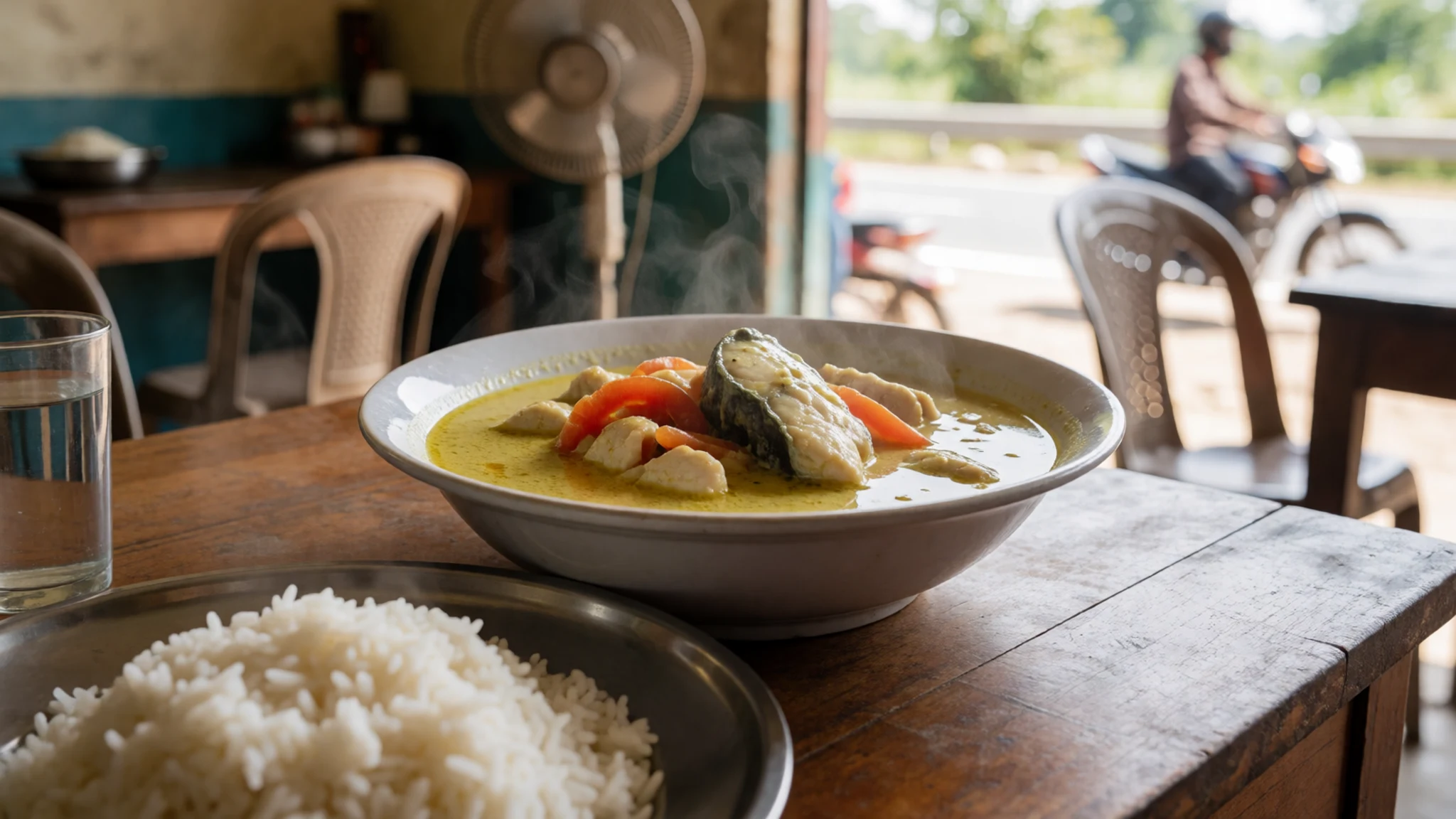
- Khar — Home-style meals in the tourist lodges
A light dish cooked with an alkaline element traditionally made from burnt banana peel, often with vegetables or pulses. It is quite distinctive, and home-style cooking of this kind is most often found in lodge kitchens.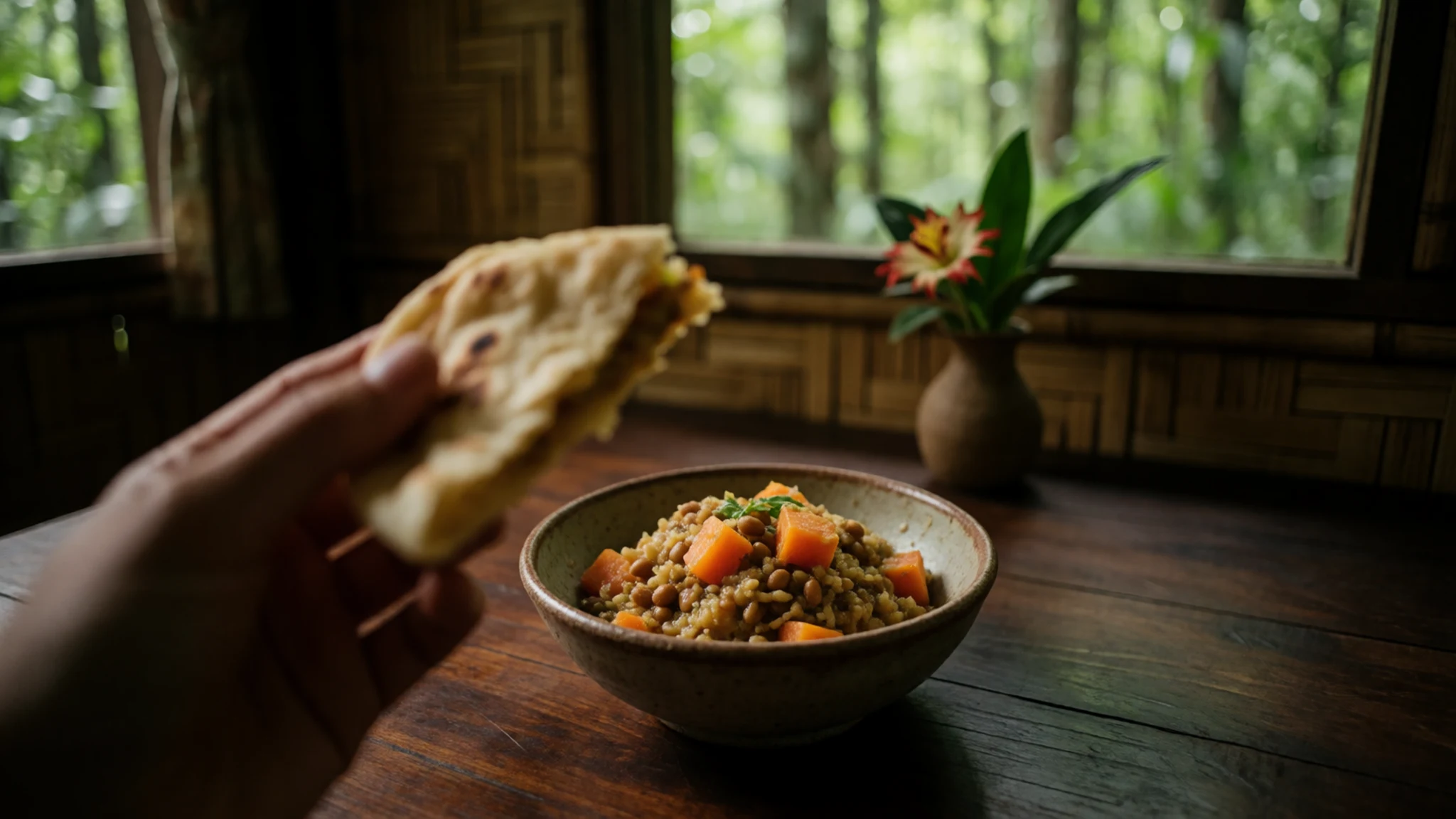
- Pitika — Thali-style plates at roadside eateries in Kohora
Mashed vegetables or boiled potato mixed with mustard oil, chilli and onion, served alongside rice. It is a simple side dish, and it is typically served as part of a thali-style plate at the eateries by the road. - Duck curry — Lodge dining rooms and the eateries by the highway
Duck is a favourite in Assamese cooking, usually slow-cooked with spices and sometimes with pumpkin or green vegetables. It is a richer option than fish and is worth asking for where the kitchen offers it.
Plan it
Best time. November to February, when the days are dry and cooler and mosquitoes are less active. Malaria is present in the region, and most local cases occur in summer, when the park is closed, so winter is the sensible time to visit.
How long. 2–3
Getting there. Fly into Guwahati or Jorhat, then travel by road to Kohora, which sits on the Guwahati–Jorhat route opposite the main entrance. Buses pass frequently, so you can wait at Kohora for one heading your way.
Budget. mid
Tips
- Book elephant rides and jeep safaris at the Kohora office of the Kaziranga Development and Jeep Safari Association, not through agents
- Start early: elephant rides run in the early morning and last about an hour
- Bring good binoculars, which matter on both elephant and jeep tours
- Check the official site, kaziranga100.com, before you travel for current access rules
- Carry water and do not count on much food inside the park; lodges serve meals but options are few
- Do not expect chilled drinks, since power cuts are common in the area
- Plan around vehicle and elephant tours, because hiking in the park is not allowed
Etiquette
- Stay in the vehicle or on the elephant during the drive and follow your guide's instructions
- Keep voices low and avoid sudden movements near rhinos and deer
- Do not step off the track, and do not try to approach animals on foot
Nearby
Sources
- Wikidata Q192764 (CC0)
- Wikipedia: Kaziranga National Park (rev 1376696660) (CC BY-SA 4.0)
- Wikivoyage: Kaziranga National Park (rev 5406890) (CC BY-SA 4.0)
- Indian Rhinoceros Rhinoceros unicornis by Dr. Raju Kasambe (Wikimedia Commons) (CC BY-SA 4.0)
- Beauty of Kaziranga National Park (Wikimedia Commons) (CC BY-SA 4.0)
- Sambar Deer during Flood at Kaziranga National Park (Wikimedia Commons) (CC BY-SA 4.0)
- Assam 042 (Wikimedia Commons) (CC BY 3.0)
- Assam 028 yfb edit (Wikimedia Commons) (CC BY 3.0)
- Tree solitary (Wikimedia Commons) (CC BY 3.0)
- Swamp Deer IMG 4768 02 (Wikimedia Commons) (CC BY-SA 4.0)
- Rhiono and elephant (Wikimedia Commons) (CC BY-SA 4.0)


