Dunedin
Dunedin, New Zealand

Dunedin pairs magnificent Edwardian architecture and rich literary heritage with dramatic volcanic topography on the southeastern coast of New Zealand.
The place
Dunedin occupies a dramatic coastal amphitheatre on the central-eastern shores of Otago, surrounding the deep indentation of Otago Harbour. The entire harbour basin and the steep green hills that ring the settlement are the eroded remnants of an ancient volcano, creating a topography that spills from narrow coastal flats into branching residential valleys and across the narrow neck of the Otago Peninsula. Founded in the mid-nineteenth century by Scottish settlers, the urban area borrows its name from the Gaelic term for Edinburgh, and that heritage remains carved deeply into the bluestone and dark basalt of its civic buildings. As the principal urban centre of the Otago region, Dunedin balances its Victorian stone facades with a youthful energy driven by its university community, public galleries, and independent cafes. The climate here is cool and temperate, shaped by maritime winds blowing in from the Pacific Ocean, which can bring brisk changes in weather across a single afternoon. Beyond the central core, the landscape gives way to wild windswept beaches, rocky headlands, and sheltered bays where native wildlife thrives undisturbed. The city centre itself is anchored by an octagonal public square from which main thoroughfares radiate outward, cutting through a dense urban fabric where historic facades stand shoulder to shoulder with contemporary shops, galleries, and bakeries. It is a place that feels simultaneously anchored in its pioneering past and forward-looking in its cultural ambitions.
Its story
Long before European ships dropped anchor in the harbour, the region sustained generations of Māori communities who drew rich sustenance from the sheltered coastal waters and surrounding forests. Archaeological investigations trace initial human arrival back to the fourteenth century, when early groups established permanent coastal campsites and harvested moa across the southeastern shoreline. As these early populations evolved into distinct classical iwi, communities fortified prominent headlands with defensive earthworks and stone ramparts known as pā. Prominent strongholds rose along the ridges and peninsulas, commanding sweeping views over the marine approaches and river mouths. Traditions passed down through generations record the sequential arrival of early tribal groups, culminating in the mid-seventeenth century migration and settlement of Kāi Tahu across the wider Otago territory. European presence began to take root in the early decades of the nineteenth century when sealers, whalers, and traders established shore stations along the coastline. What began as a fragile period of cross-cultural trade and shared settlement was severely disrupted by the introduction of European illnesses, which dramatically reduced the indigenous population. A structured European settlement plan was formally initiated in the late eighteen-forties, bringing Scottish immigrants who laid out the street grids, established churches, and built civic institutions that transformed the volcanic slopes into a bustling antipodean city. The legacy of these overlapping histories remains visible in both the archaeological sites guarding the headlands and the enduring cultural presence of Kāi Tahu.
What to see
- Baldwin Street — North East Valley
Located in the North East Valley suburb, this residential thoroughfare is recognised globally by Guinness World Records as the steepest street in the world, featuring a striking centreline gradient that challenges walkers and motorists alike as it climbs sharply away from the valley floor.
- Dunedin Railway Station — Central Dunedin
Often described as the outstanding monument of Edwardian architecture in the country, this flamboyant structure was designed by railway architect George Troup and showcases ornate decorative stonework, striking ceramic tile mosaics, and distinctive dark basalt paired with white limestone highlights.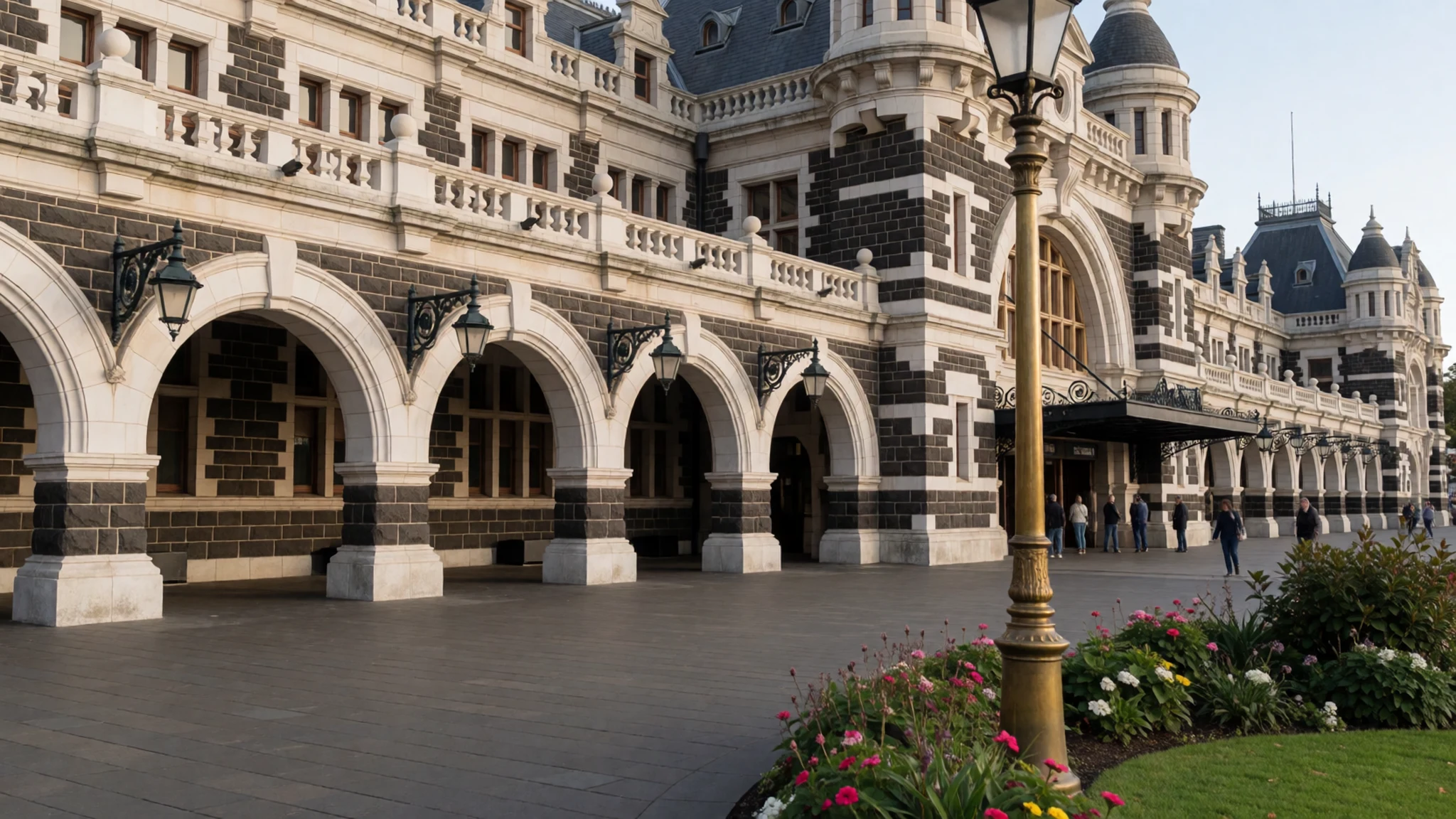
- Dunedin Prison — Central Dunedin
Completed near the end of the nineteenth century, this imposing former correctional facility features secure cell blocks designed to house both male and female inmates before operations were eventually consolidated elsewhere in the region, leaving behind a fascinating atmospheric footprint of penal history.
- Law Courts — Central Dunedin
Positioned close to the central civic square, these judicial chambers were designed by John Campbell and stand as one of the finest surviving examples of Gothic civic architecture in New Zealand, distinguished by pointed arches, battlements, and meticulous stonemasonry.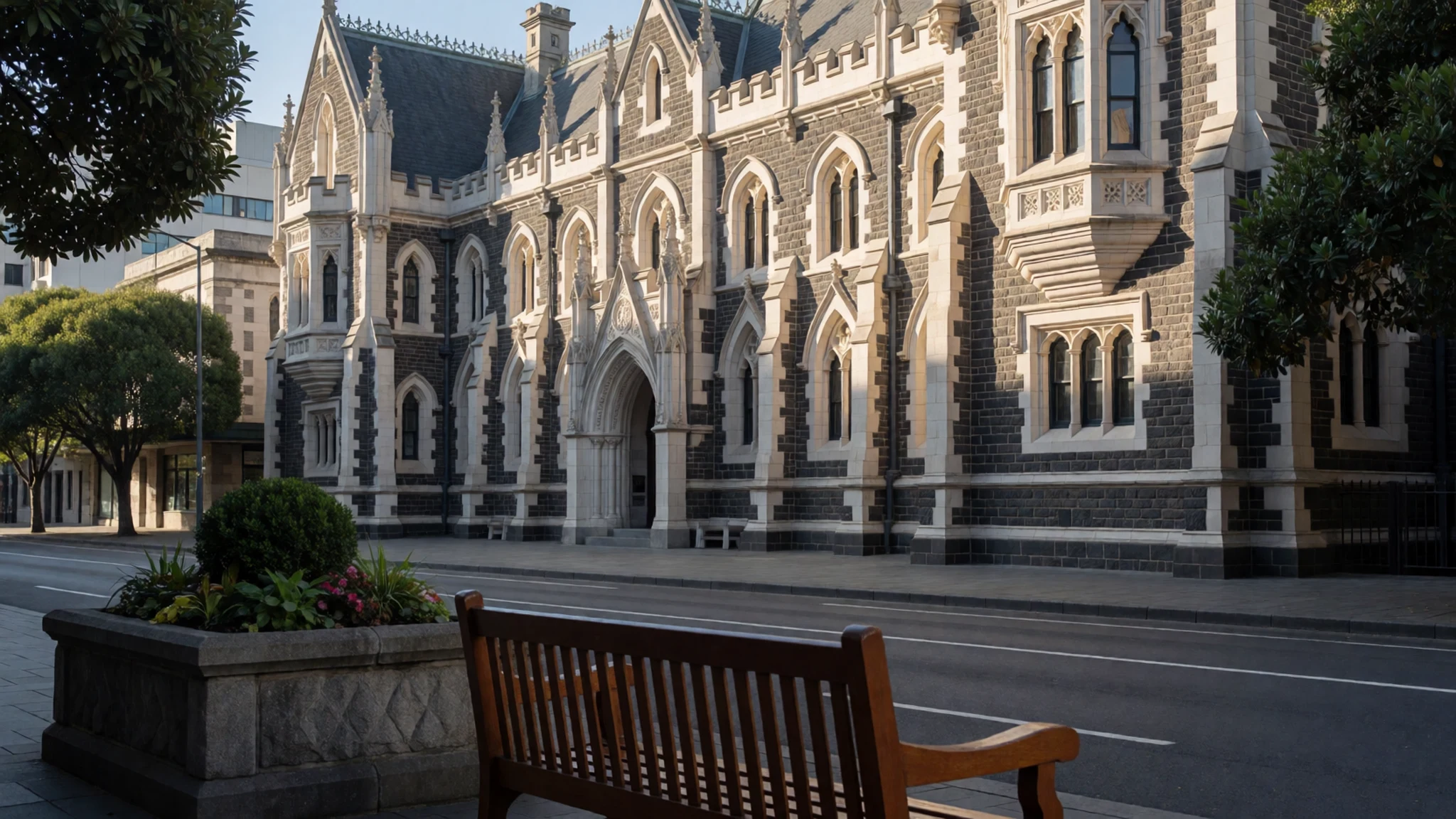
- Otago Museum — North Dunedin
A premier cultural institution holding extensive collections that span natural science, world cultures, and the rich heritage of the southern Pacific, offering visitors deep insight into regional biodiversity, geological formations, and indigenous Māori history through immersive galleries and changing national exhibitions.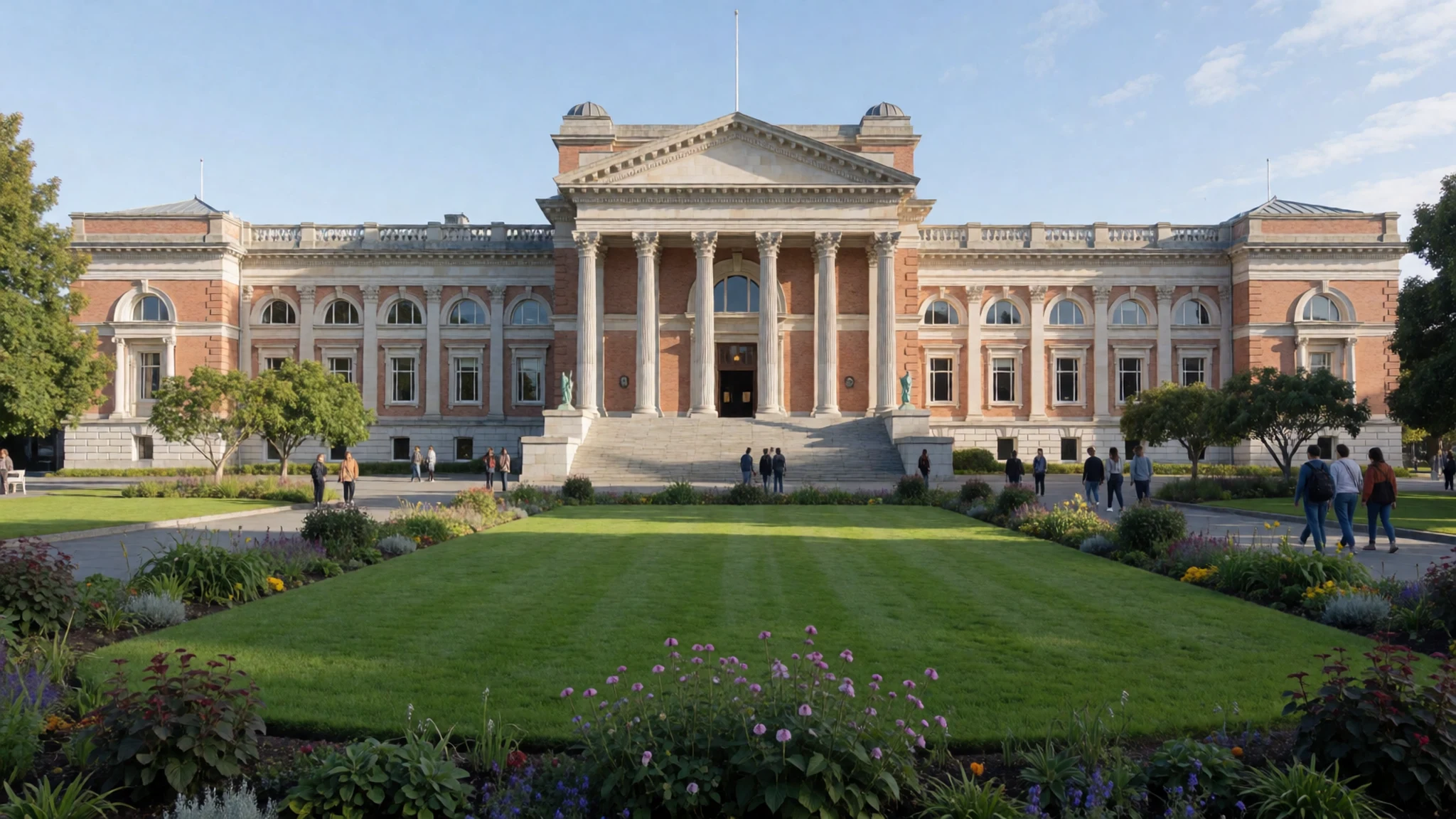
- Knox Church — Central Dunedin
An architectural landmark featuring soaring gothic spires and exceptional stone detailing, this historic Presbyterian church has served as a spiritual and community focal point since the pioneer era, standing as a testament to the ambitions of the early Scottish congregation.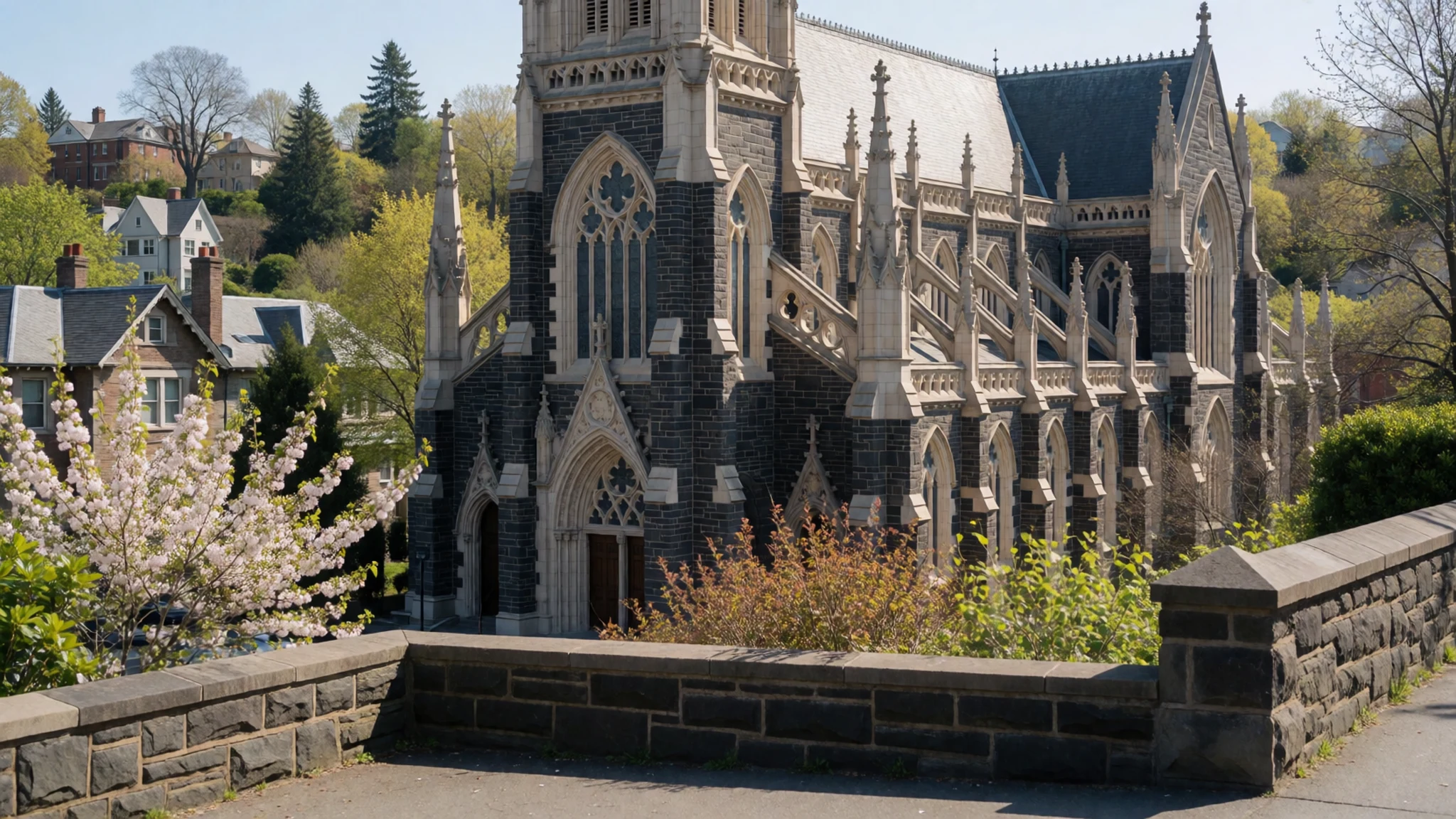
Culture
Dunedin wears its intellectual and creative credentials with quiet pride, marked by its designation as a UNESCO Creative City of Literature. This status places the settlement in international company alongside global capitals of letters, reflecting a deep-rooted tradition of poetry, prose, and academic publishing nurtured by local institutions, libraries, and independent literary societies. The presence of a major tertiary student population infuses the local calendar with independent music festivals, experimental art exhibitions, and a thriving cafe culture where writers, artists, and academics gather to discuss ideas. Community life is grounded in outdoor recreation, with locals regularly heading out to the wild beaches of the Otago Peninsula to surf, watch yellow-eyed penguins, or walk the rugged headlands regardless of the brisk southerly weather. Traditional customs blend European heritage with bicultural values, respecting the foundational history of Kāi Tahu and honouring indigenous protocol at public gatherings and civic events. Visitors should always remove outdoor footwear when entering marae meeting houses and respect local requests regarding photography in sacred spaces.
What to wear
The everyday wardrobe in Dunedin is heavily influenced by the shifting southern climate and the youthful, creative energy of a university town. While traditional formal attire echoes British and Scottish tailoring from earlier eras, modern street style leans toward practical, layered dressing designed to withstand sudden drops in temperature and coastal sea breezes. Locals embrace independent op-shops, vintage boutiques, and contemporary New Zealand designer wear that favours durable natural fibres, woollen knitwear, and sturdy waterproof outerwear. For visitors exploring the city's steep hills, historic stone interiors, and wild coastal paths, comfortable walking shoes with reliable grip are essential. Layering is key throughout the year, as bright morning sunshine can quickly give way to chilly winds blowing off the Pacific. Modest, casual attire is suitable for all public venues, dining establishments, and cultural sites across the urban area, though bringing a windproof jacket and a warm scarf is recommended regardless of the season.
What to eat
- Classic Fish and Chips — Central Dunedin
A legendary local takeaway serving traditional battered catch of the day wrapped in paper, paired with thick-cut hot chips. Best enjoyed straight from the counter at traditional neighbourhood fry shops around the central commercial streets.
- Artesian Espresso and Cabinet Bakes — George Street
Rich artisan coffee paired with fresh daily cabinet baking, including savoury tarts, seasonal quiches, and sweet slices. Found along George Street's vibrant cafe strip among independent roasters and morning meeting spots.
- Gourmet Doner Kebabs — Central Dunedin
Succulent spiced meat shaved straight from the rotisserie, wrapped in flatbread with fresh crisp salad and house-made sauces. Highly popular among local office workers and students for a filling midday meal. - Otago Stone-Baked Pizzas — The Savoy complex
Italian-style thin-crust pizzas loaded with regional cheeses, fresh herbs, and local produce, baked in blistering wood-fired ovens. Served in historic heritage dining rooms right near the heart of the city. - South Island Cheese Scones — City centre cafes
Warm, oversized savoury scones packed with sharp aged cheddar and butter, baked fresh every morning. A beloved staple of local coffee culture, found in nearly every independent cafe counter across the city.
Plan it
Best time. December to March brings the warmest summer weather, longer daylight hours, and comfortable conditions for coastal walks, though crisp autumn days between March and May offer stunning foliage.
How long. 2–3
Getting there. Fly domestically into Dunedin Airport from Auckland, Wellington, or Christchurch, then catch a shuttle or taxi for the twenty-minute drive into the city centre.
Budget. mid
Tips
- Pack a windproof jacket and layers, as southern weather can change rapidly across a single day
- Wear sturdy walking shoes with good tread to tackle the steep residential hills and stairs
- Carry a mix of card and cash for smaller markets and rural excursions beyond the urban centre
- Book accommodation well in advance if visiting during major university graduation ceremonies or summer festivals
Etiquette
- Remove your shoes when entering traditional Māori meeting houses or residential homes
- Always ask permission before photographing local residents or participants at cultural ceremonies
Nearby
Sources
- Wikidata Q133073 (CC0)
- Wikipedia (rev 1377129025) (CC-BY-SA 4.0)
- Wikivoyage (rev 5401350) (CC-BY-SA 4.0)