Dettifoss
Dettifoss, Iceland
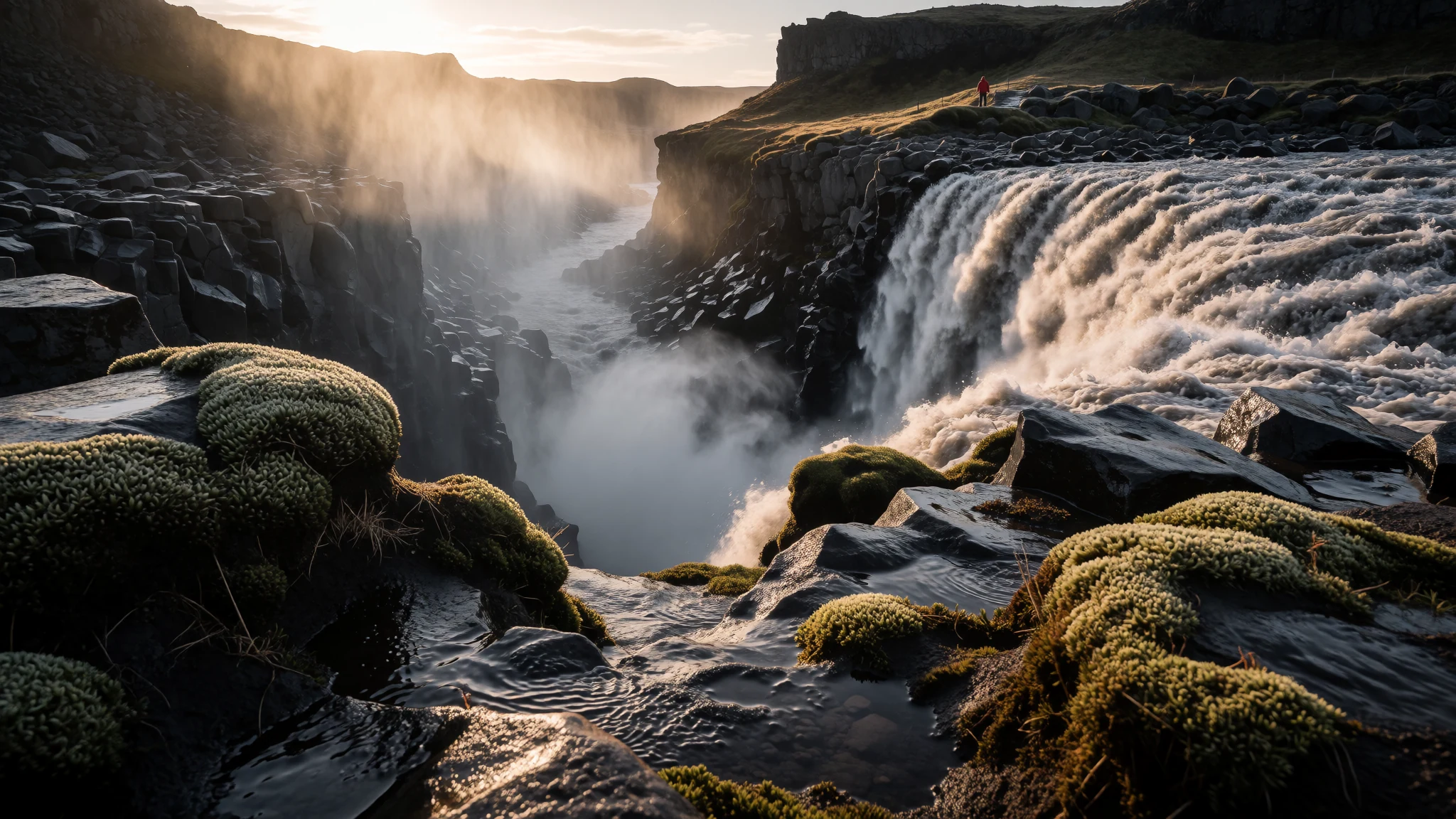
Visit Dettifoss to stand before Europe's most thunderous cataract, where glacial meltwater roars across volcanic canyons in the northern wilderness.
The place
Dettifoss sits inside Vatnajökull National Park in Northeast Iceland, carrying glacial runoff through the rugged Jökulsárgljúfur canyon. Fed by the Jökulsá á Fjöllum river originating from the Vatnajökull glacier, the waterway bears heavy sediment load that stains the cascading water a distinctive greyish white. The sheer volume and force create a perpetual mist that rises from the abyss, dampening nearby basalt rock faces and coating the surrounding terrain in fine moisture.
The environment around the cataract is stark and untamed. The wider region in Northeast Iceland experiences intense seasonal shifts in daylight, swinging from endless summer daylight hours where the sun barely dips below the horizon to long, dark winter stretches illuminated by the aurora borealis. Visitors navigating the area must contend with unpredictable weather and raw, exposed terrain carved entirely by ancient volcanic activity and glacial floods. Access roads traverse barren highlands, linking travellers to one of the most remote and elemental landscapes on the island.
Summer brings easier driving conditions and more visitors, while winter transforms the gorge into a frozen amphitheatre of ice sculptures and blue-hued icicles. The roar of the water can be heard from miles away, shaking the ground beneath travellers' boots long before the torrent comes into full view. It is an unapologetically raw landscape where nature operates on a scale that makes human presence feel wonderfully small and fleeting.
Its story
Dettifoss draws its name from old Icelandic roots, combining the verb 'detta', meaning to fall or collapse, with 'foss', the word for waterfall. For centuries, this northern wilderness remained largely untouched by all save hardy local farmers and fishermen navigating the harsh interior of Northeast Iceland. The river Jökulsárgljúfur, which feeds the cataract, has shaped local mythology and geography alike, carving deep basalt canyons that folklore once attributed to the movements of giant trolls and subterranean spirits.
Human history around Dettifoss is deeply tied to the unforgiving nature of glacial flooding known locally as jökulhlaup. Sudden volcanic eruptions beneath the ice sheet upstream would send walls of water tearing down the valley, reshaping the gorge overnight and rendering travel across the region perilous. Despite these hazards, early settlers explored the river basins in search of grazing land and seasonal fishing spots, leaving behind place names that record the drama of survival in the high latitudes.
In modern times, Dettifoss transitioned from a remote natural wonder known only to locals into a cornerstone of Icelandic conservation and tourism. The establishment of Vatnajökull National Park brought protected status to the entire watershed, balancing public access with the preservation of fragile geothermal and glacial ecosystems. Today, travellers arriving at the canyon follow in the footsteps of nineteenth-century explorers and mapmakers who first documented the scale of the northern falls for international audiences.
What to see
- Gullfoss Waterfall — Southwest Iceland
Gullfoss is one of the country's most iconic cascades, plunging in two distinct stages into a steep crevice. The site offers striking views of glacial water turning a dramatic golden hue in the sunlight, drawing travellers from across the capital region to witness its powerful dual drop.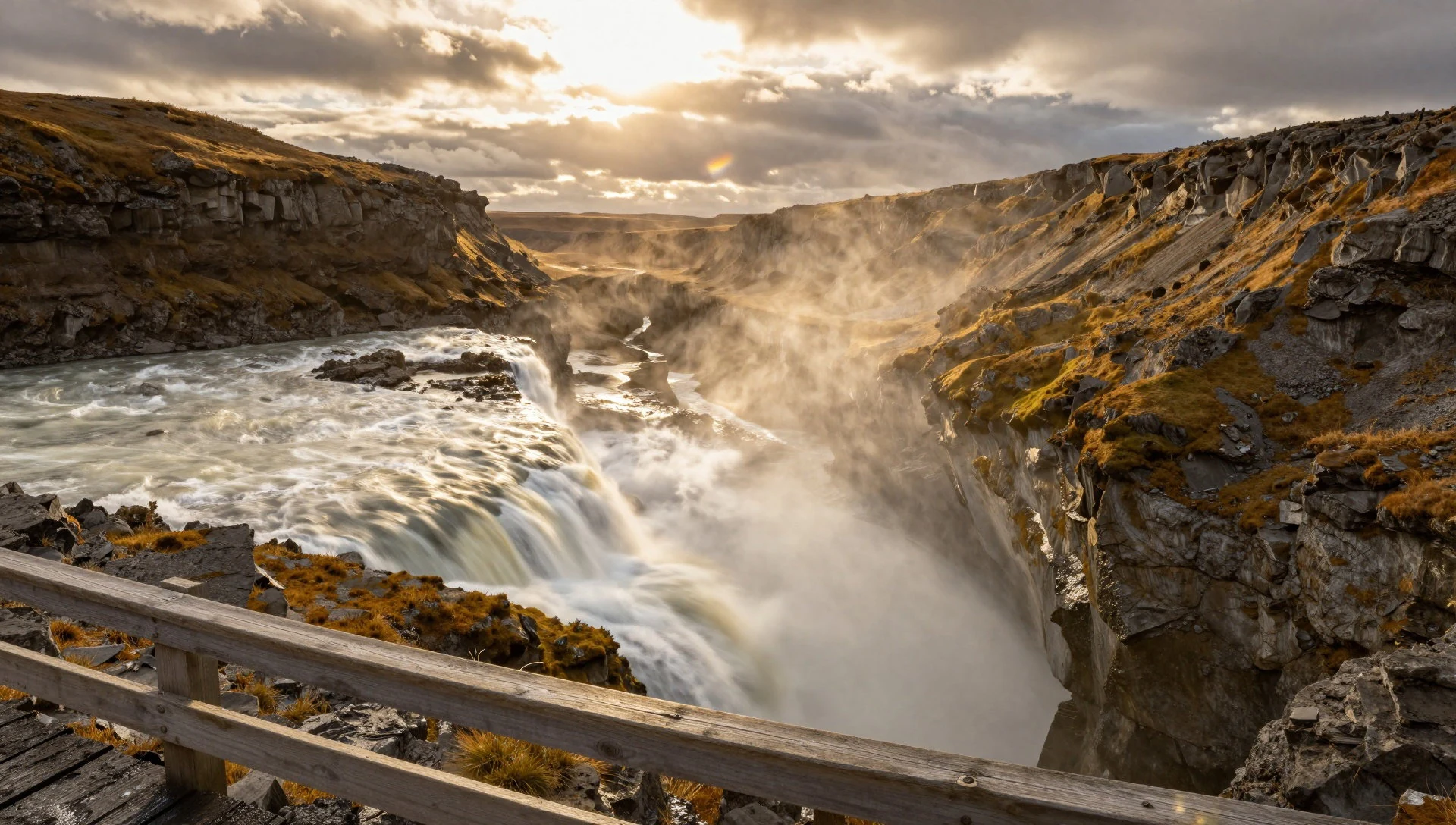
- Geysir Geothermal Area — Haukadalur valley
Geysir is the historic geothermal field that gave its name to thermal spouts worldwide. Visitors can watch the reliable neighbour Strokkur shoot boiling water high into the air every few minutes, surrounded by bubbling mud pools and steaming mineral vents across the valley floor.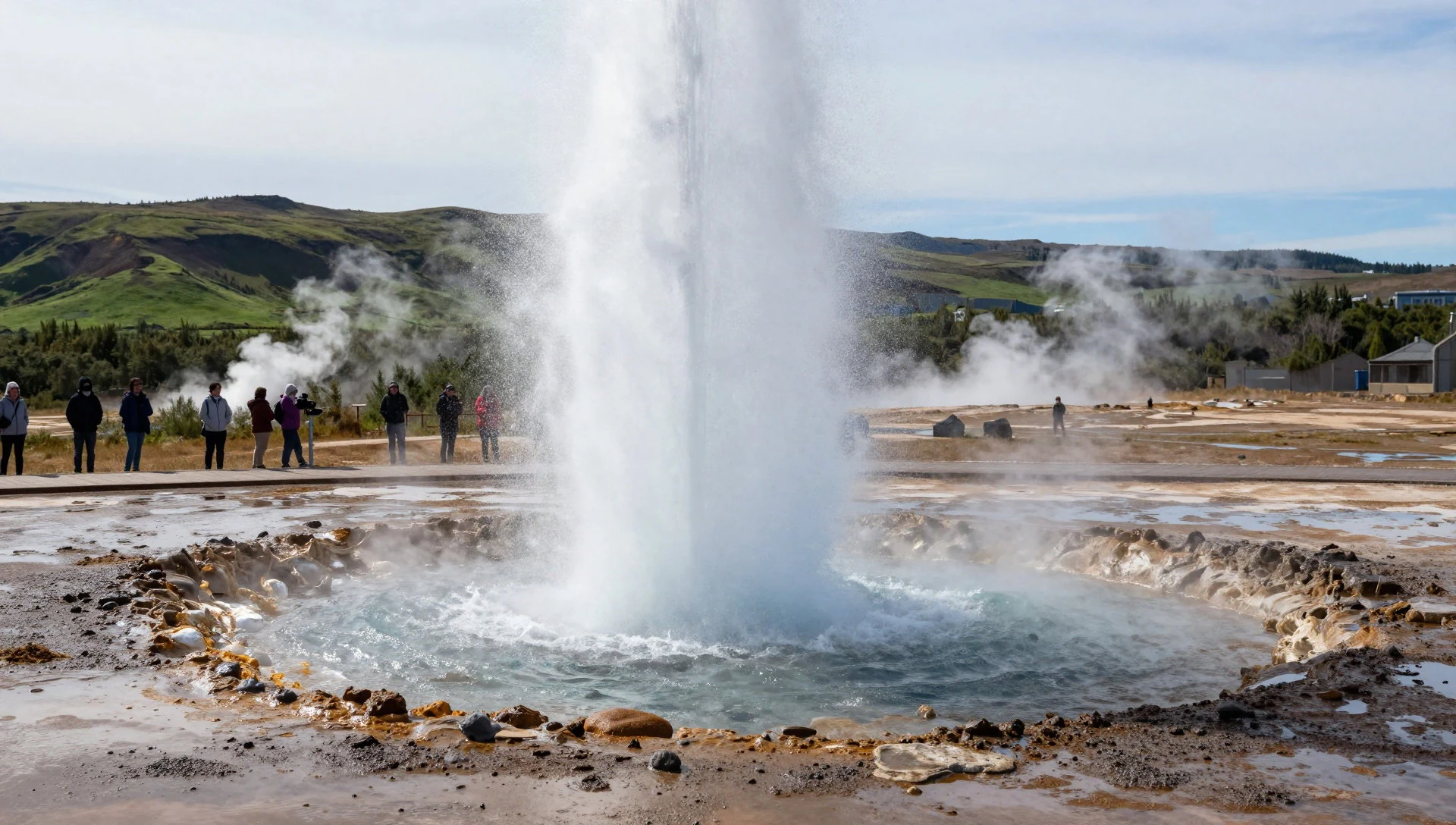
- Þingvellir National Park — Southwestern Iceland
Þingvellir protects a dramatic landscape of water-cut lava fields where the North American and Eurasian tectonic plates drift apart. Historically significant, it served as the open-air meeting place for the nation's early parliament established in ancient times.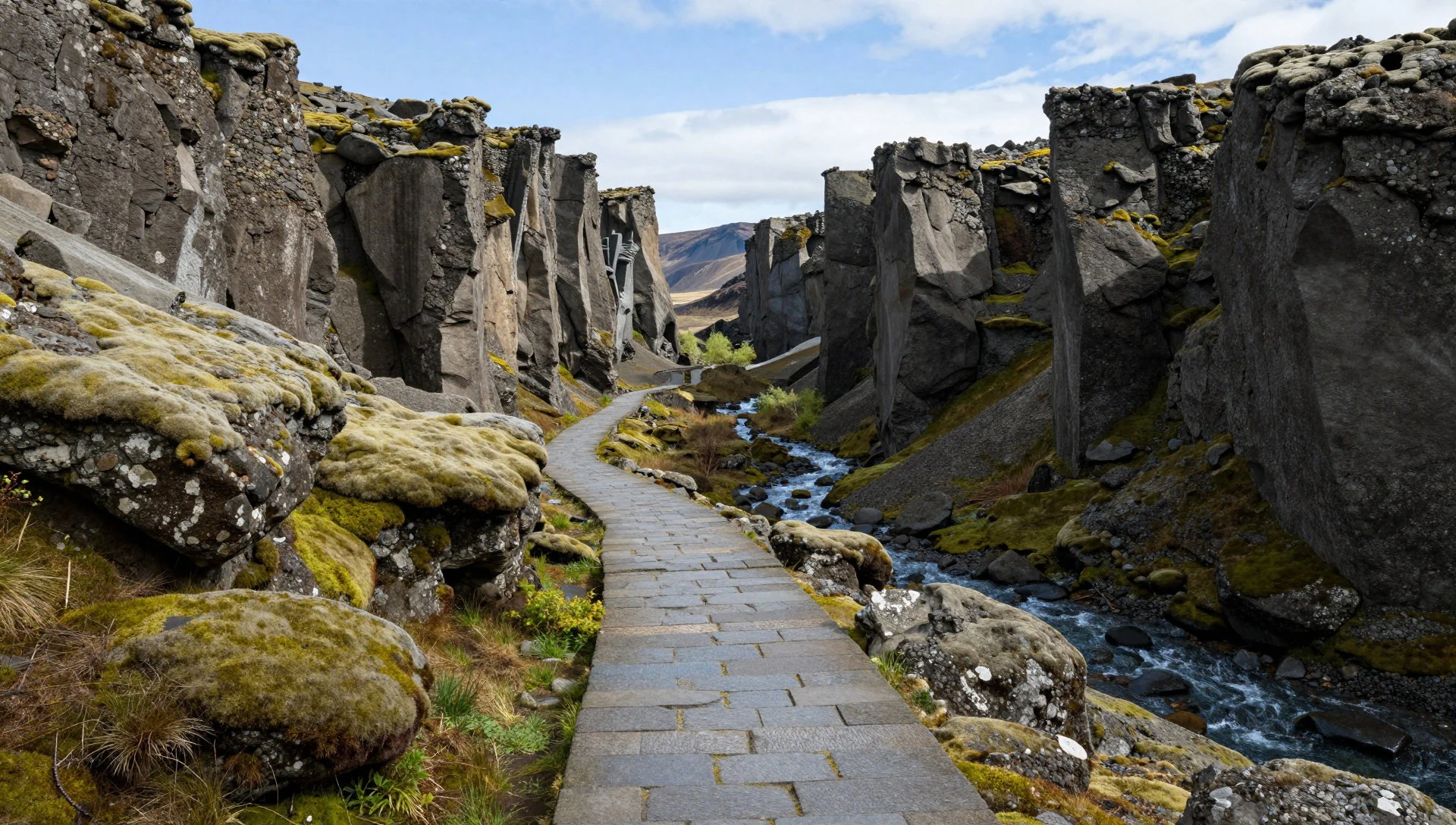
- Vatnajökull Glacier — Southeast Iceland
Vatnajökull dominates the southeast region as the largest ice cap in Europe, covering vast subterranean mountain ranges and active volcanoes. Its retreating tongues feed numerous glacial rivers, lagoons, and dramatic ice caves that shift continuously with the changing seasons.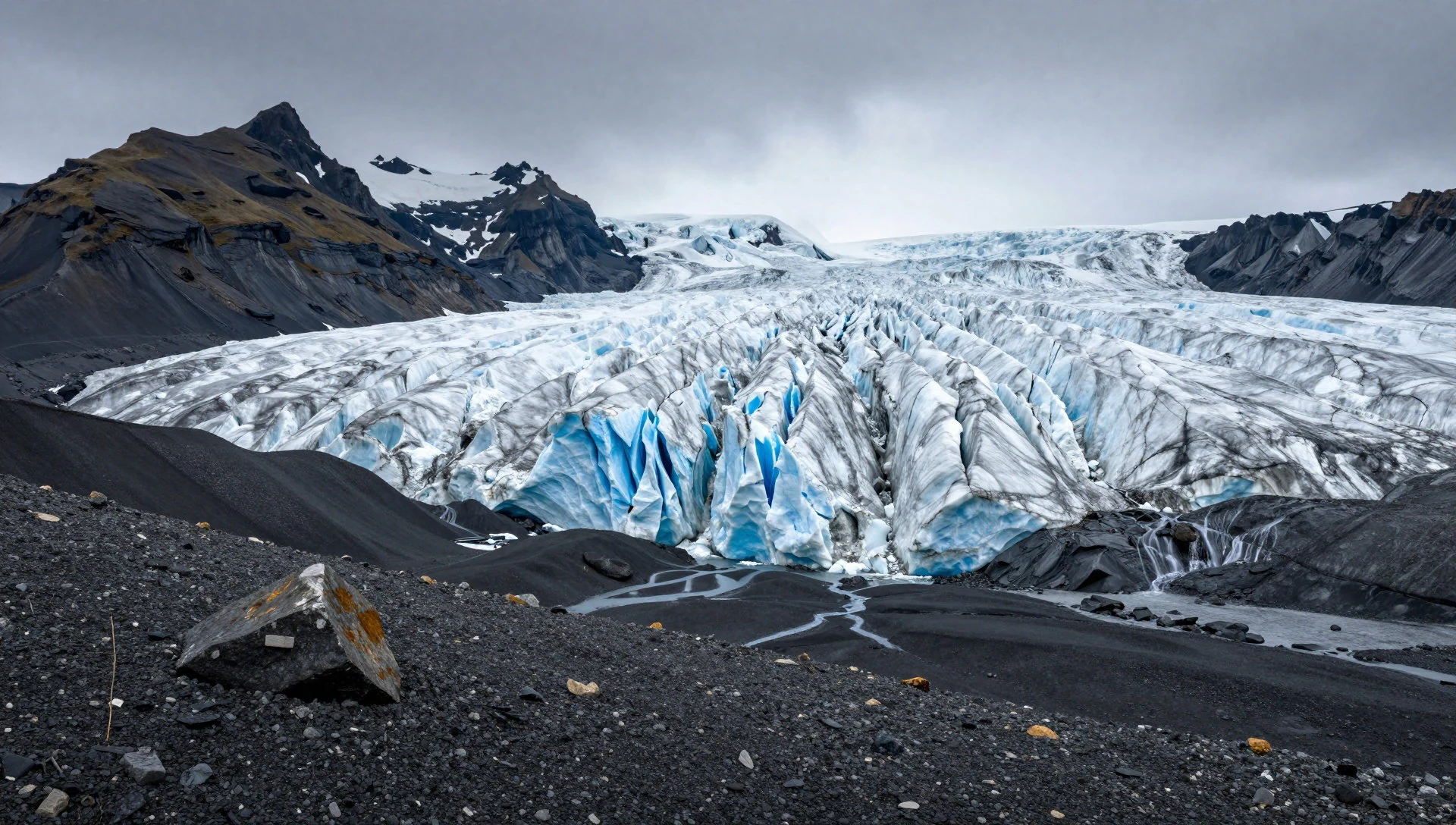
- Jökulsárlón Glacier Lagoon — Southeast Iceland
Jökulsárlón is a deep glacial lake filled with towering icebergs that calve off the retreating edge of Breiðamerkurjökull glacier. The floating ice slowly drifts out to the Atlantic Ocean, where waves polish the fragments against black volcanic sand shores.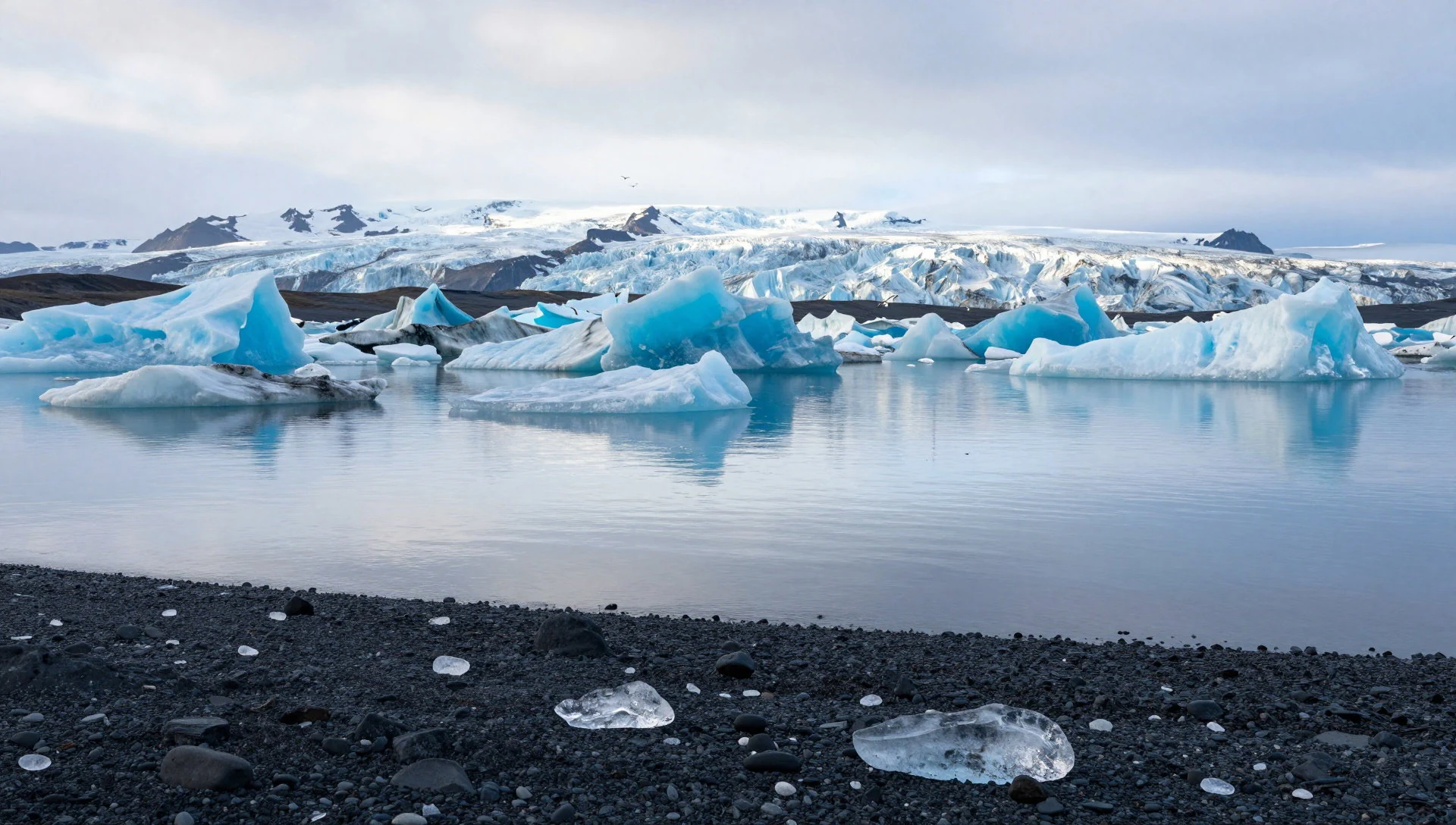
Culture
Dettifoss and the surrounding communities reflect a society built on egalitarian principles, where everyone from service staff to professionals is treated as an equal. Icelanders possess a strong sense of community and an almost obsessive fascination with genealogy, maintaining comprehensive online databases to chart family history across generations. When conversing with visitors at local guesthouses near Dettifoss, locals often inquire about impressions of the country with genuine curiosity, valuing straightforward politeness over excessive flattery. Traditional Icelandic horses should always be referred to by their proper name rather than as ponies, reflecting deep local pride in the distinct heritage of these hardy animals. Because the population outside major towns is small, news travels fast through local networks, and visitors quickly learn that small-town hospitality runs deep across the region. Always stay behind safety barriers and follow designated walking paths around fragile natural wonders like Dettifoss.
What to wear
Traditional Icelandic dress and textile heritage are rooted in the practical demands of a cold island climate, featuring heavy wool garments crafted from resilient local sheep fleece. The national costume for formal occasions includes dark pleated skirts and intricately embroidered bodice elements for women, alongside tailored wool trousers and jackets for men. Today, everyday wear around Dettifoss and urban centres alike is casual, functional, and heavily influenced by outdoor performance brands designed to withstand wind and rain. For a trip to Dettifoss, visitors must prioritise weather-resistant layers over fashion trends, packing waterproof shell jackets, windproof trousers, thermal base layers, and sturdy, broken-in hiking boots with good ankle support. Denim and cotton garments retain moisture and should be avoided on exposed trails near the waterfall, where relentless mist can soak unprotected clothing within minutes. Bringing woollen hats, waterproof gloves, and a reliable backpack ensures comfort while exploring the rugged northern terrain.
What to eat
- Harðfiskur — Any local supermarket or petrol station convenience store across the country
Harðfiskur is traditional dried fish, usually cod or haddock, beaten tender and eaten as a protein-rich snack slathered with fresh butter or coleslaw.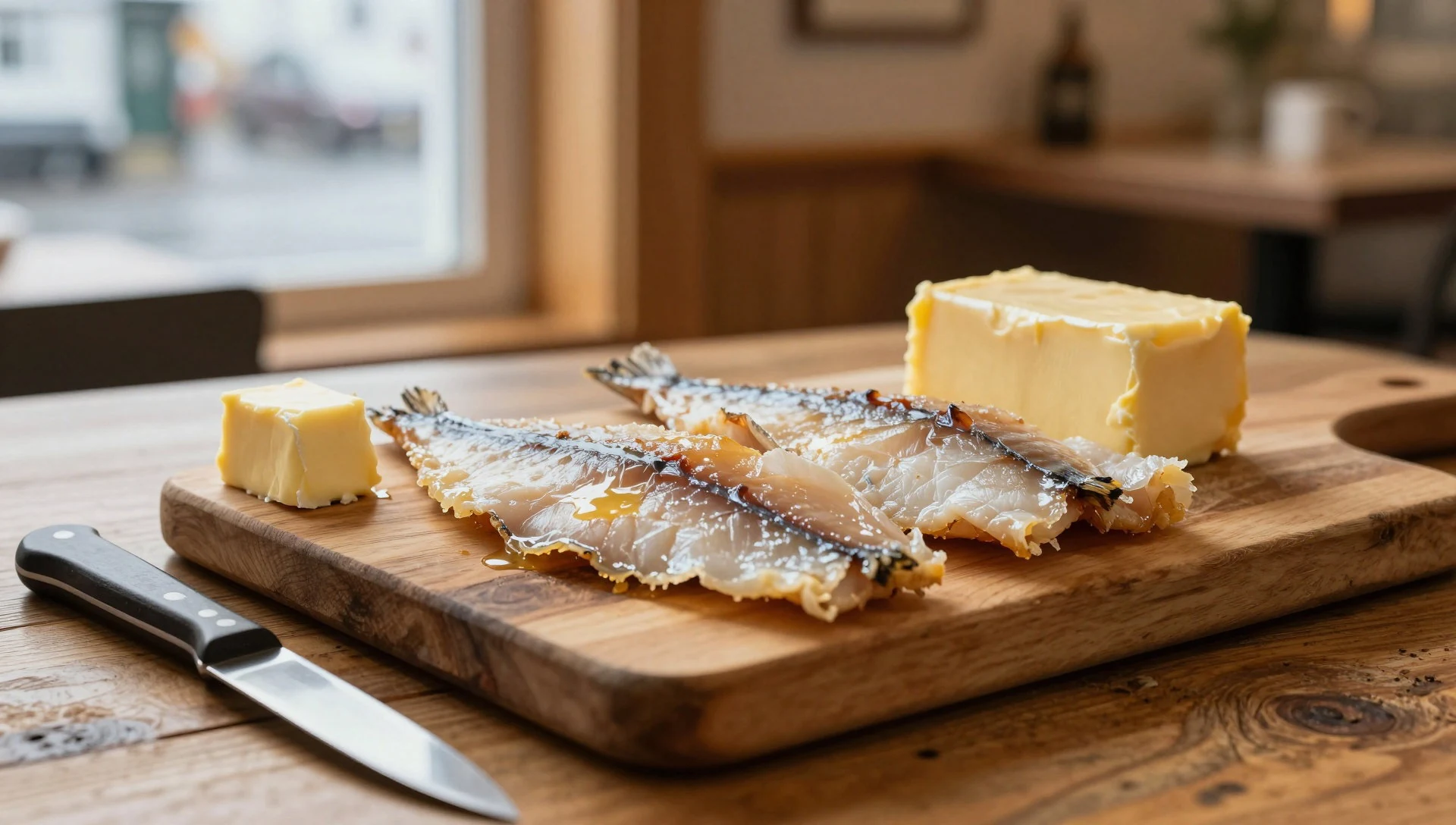
- Skyr — Refrigerated aisles in every grocery shop and dairy counter nationwide
Skyr is a traditional yoghurt-like cultured dairy cheese available in both flavoured and unflavoured varieties, enjoyed daily by locals.
- Icelandic Lamb — Traditional eateries and country hotel restaurants throughout rural regions
Icelandic lamb is renowned for its tender texture and distinctive gamey flavour, developed from grazing freely on wild mountain herbs and grasses during the short summer. - New Nordic Cuisine — Fine dining establishments and contemporary bistros in Reykjavík
New Nordic cuisine highlights hyper-local foraged ingredients, fresh seafood, and modern culinary techniques applied to heritage recipes in upscale dining establishments.
Plan it
Best time. Summer (June to August) offers accessible gravel roads and endless daylight, though late spring or early autumn can provide quieter visits with dramatic lighting.
How long. 2–3
Getting there. Fly into Keflavík International Airport, rent a sturdy 4WD vehicle, and drive north via Route 1 towards the Jökulsárgljúfur sector of the national park.
Budget. high
Tips
- Rent a 4WD vehicle, as access roads to the eastern and western viewing areas of Dettifoss are unpaved and rough.
- Check weather and road condition alerts daily before setting out into the northern highlands.
- Wear waterproof trousers and jackets to stay dry from the heavy mist generated by the waterfall.
- Keep your mobile phone switched on for emergency SMS alerts issued by local authorities.
Etiquette
- Never refer to the Icelandic horse as a pony.
- Treat service personnel and locals as equals in accordance with egalitarian social norms.
Nearby
Sources
- Wikidata Q210280 (CC0)
- Wikipedia (CC BY-SA 4.0)
- Wikivoyage (CC BY-SA 4.0)