Daegu
Daegu, South Korea
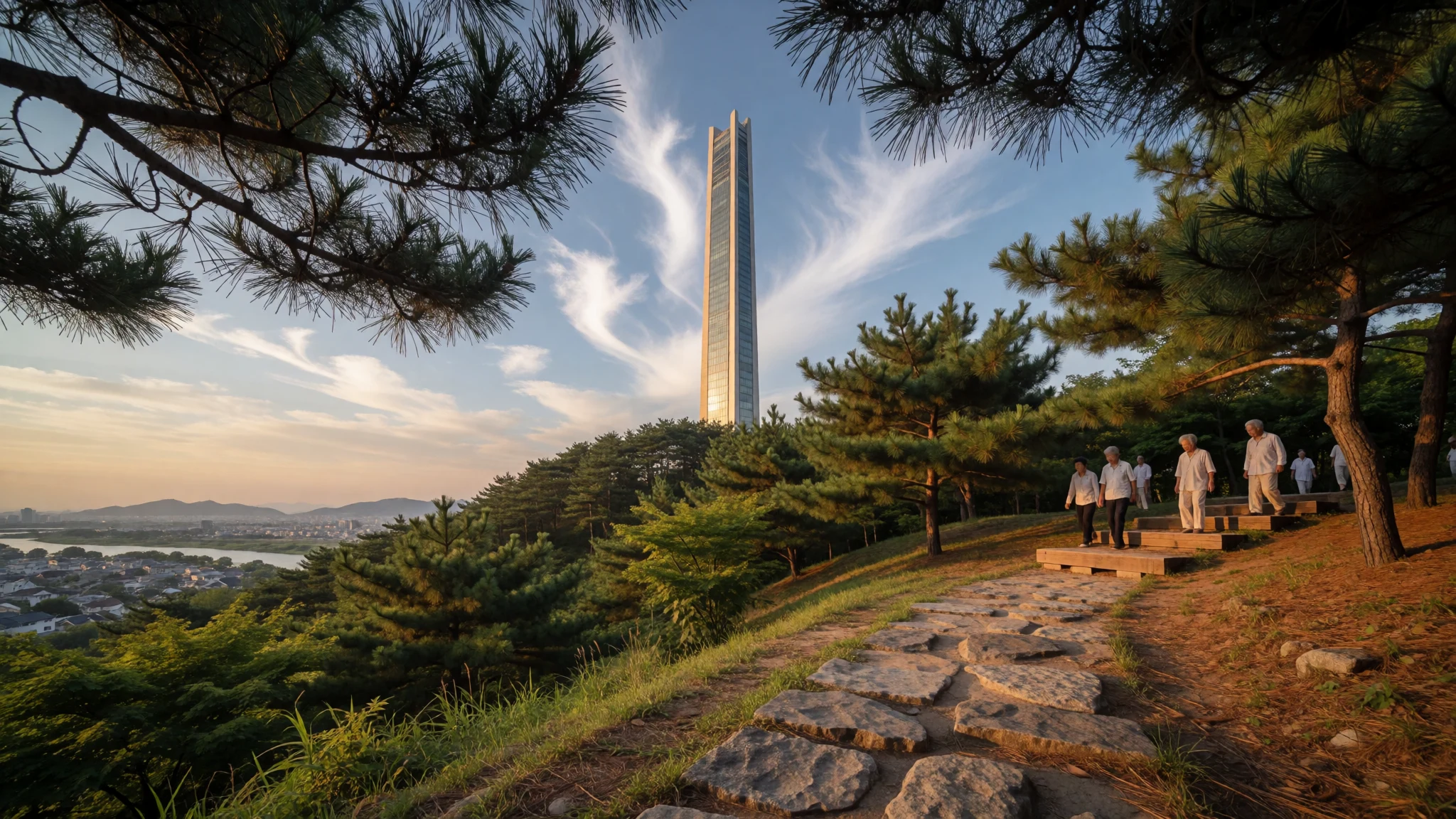
Daegu offers an inland Korean city's markets, mountain temples and grilled-meat suppers without Seoul's crowds, though summers run properly hot.
The place
Daegu is a metropolitan city in south-eastern South Korea, home to about 2.4 million people and set in a wide basin well away from the sea. Rivers cross the lowland, including the Geumho, which feeds the Nakdong, and hills close the city in on every side. That bowl shape explains much of the character: summers are sticky and hot, while spring and autumn are far kinder. Under the Joseon dynasty it served as the capital of Gyeongsang Province, and today it anchors the Yeongnam region. Locals often speak of Daegu and the surrounding North Gyeongsang Province as a single unit, Daegu-Gyeongbuk. Two nicknames sum up its working past. Textile City recalls the mills that once powered its economy, and Apple City comes from orchards that thrive in the humid subtropical climate. The centre is a mix of department stores, covered markets and older lanes, with a modern metro running beneath and above ground. Green space comes in big parks such as Duryu and Dalseong, and the Sincheon stream runs through town. Daegu has a reputation as a conservative place, and it feels slower and more local than Seoul or Busan. Foreign visitors are fewer, so some menus and signs are in Korean only and a translation app earns its keep. Many travellers use the city as a base for the mountain temples on its fringe, but a day or two in town itself pays off in markets, murals and food.
Its story
Daegu's story starts long before the modern city. Excavations across the wider area have turned up settlements and burials from the Mumun pottery period, including pit-houses, farm fields and large numbers of dolmens, the stone burial chambers typical of early Korea. Some of the oldest Mumun finds in the Gyeongsang region came from within today's city limits, which shows how long people have farmed this basin. Later written records describe a walled chiefdom called Dalgubeol, one of the small polities of the early southern peninsula. It was folded into the kingdom of Silla by the fifth century at the latest, and traces of its earthen wall can still be seen in Dalseong Park. When Silla later unified the peninsula, a king considered shifting his capital from Gyeongju to Daegu, but the plan never came to anything. The city's importance grew regardless. Under the Joseon dynasty, Daegu served as the administrative seat for Gyeongsang Province, one of the eight historic regions, acting as a focal point for local commerce and governance. In the decades after the mid-twentieth century it turned into an industrial engine for Korea, with textiles at the heart of it. Many of those factories have since closed or moved, and the city has turned toward fashion, medicine, fairs and festivals. Old and new sit side by side: dolmen finds and walls from the distant past, then mills, markets and apartment towers.
What to see
- Duryu Park — Western Daegu
Duryu Park wraps around two hills, Duryusan and Geumbongsan, on the western side of Daegu. Locals come for shaded walks, picnics and evening exercise, and the slopes give changing views over the city. The culture and arts centre sits on the Geumbongsan side. Go in the cool of the morning, or at dusk in summer, when the basin heat fades.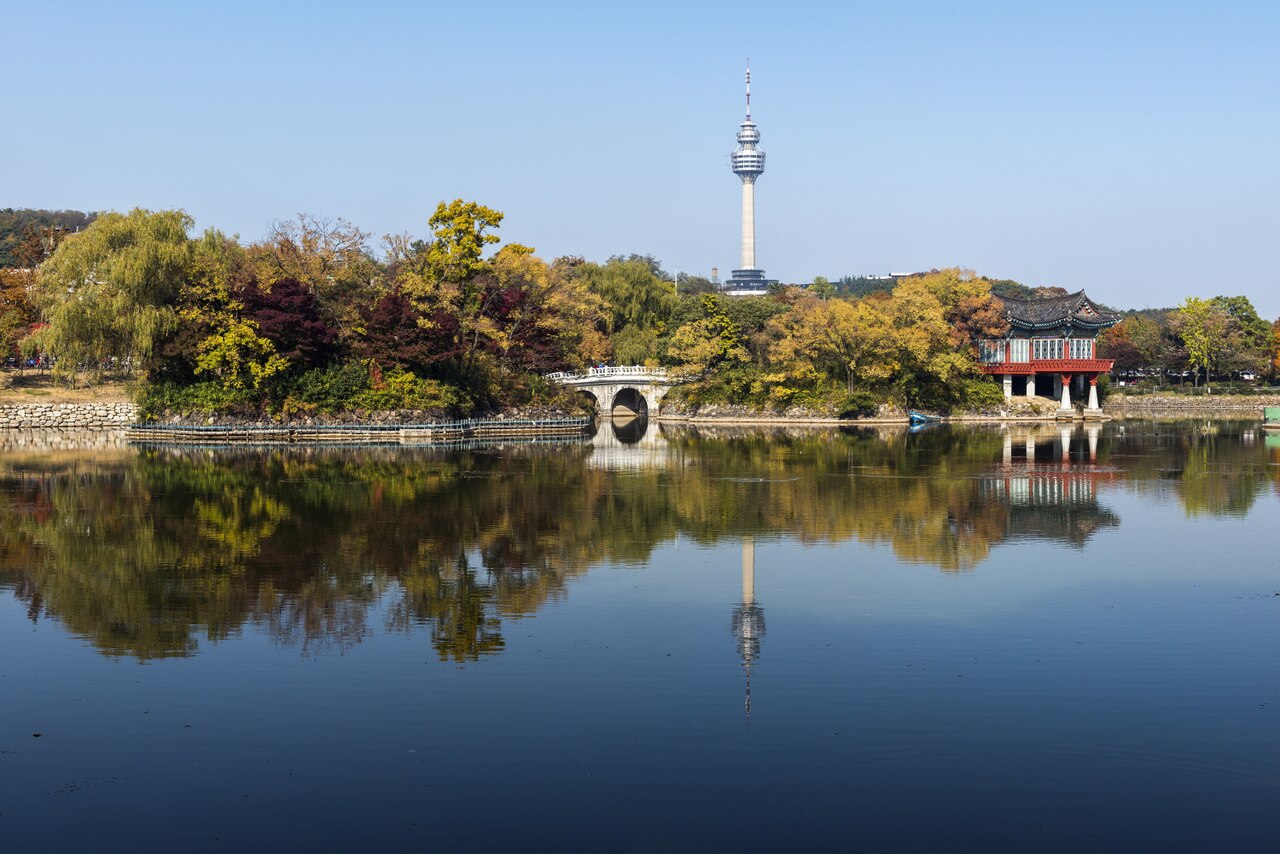
- E-World and its tower — Western Daegu
E-World is a European-styled amusement park on Duryusan, built around a tall observation tower that dominates the western skyline. Besides the rides, it has a small zoo and an ice rink, so it suits families more than temple seekers. Expect queues at weekends and school holidays, and check the official site before travelling for opening details. - The Arc — Nakdong River, west of the city
The Arc is a large weir on the Nakdong River west of the city, and its curving design makes it a popular riverside viewing spot. Reed beds line the water, and sunset is the reason most people come. Public transport is thinner out here, so plan the journey in advance and carry water, since shade is scarce. - Kim Gwangseok-gil Street — Near Bangcheon Market
Kim Gwangseok-gil is a short lane of murals near Bangcheon Market, honouring the late singer-songwriter Kim Gwangseok, who lived here. Paintings and small tributes cover the walls, and the whole street takes under an hour to stroll. Pair it with a snack at the market nearby, and keep voices low, because people still live along the lane. - Dalseong Park — Central-western Daegu
Dalseong Park holds the remains of the earthen walls of Dalgubeol, the ancient walled settlement from which the city grew. It is a low-key green space with paths and old trees rather than a headline attraction, and it suits a quiet hour between market visits. Interpretive signs are mostly in Korean, so read up beforehand. - Gatbawi, Palgongsan — Palgongsan, Gyeongsan (outside the city)
Gatbawi is a stone Buddha wearing a flat stone hat, on the Gwanbong ridge of the Palgongsan mountains. Pilgrims climb to ask for a single wish. Strictly it lies just over the boundary in Gyeongsan, so allow half a day, sturdy shoes and patience on the final steps, which can be crowded at weekends.
Culture
Daegu is widely regarded as one of Korea's more conservative cities, and its rhythms are shaped by older traditions. Buddhism has deep roots here, and temples still stand in the mountains around the edge of town. Confucianism is also strong, and a large Confucian academy is based in the city, so respect for elders and formal manners are part of daily life. Christian churches are everywhere too, and their neon crosses glow above the rooftops at night. The best-known pilgrimage is to Gatbawi, the stone Buddha in the Palgongsan hills, where people from all over the country come to ask for one wish to be granted. Other mountain temples, including Donghwasa, Pagyesa and Buinsa, are quieter and hold regular services. Daily life moves around markets, family meals and seasonal festivals, and the city enjoys a lantern celebration that fills streets and parks with colour. Locals are generally helpful to visitors, although English is less widely spoken than in Seoul, so a few Korean greetings go a long way. Bowing slightly when greeting, and using both hands to give or receive something, is appreciated. At Daegu's temples, take off your shoes before entering any hall, dress modestly, stay quiet during services and ask before photographing worshippers.
What to wear
In Daegu, as elsewhere in Korea, traditional dress means hanbok: a short jacket (jeogori) over a wrapped skirt (chima) for women, and a jacket with loose trousers (baji) for men. Fabrics include silk for formal wear, plus ramie and hemp for hot summers and cotton for everyday use. Hanbok is now worn mainly at weddings, the Lunar New Year and Chuseok, and by visitors in rented sets at heritage sites. Daegu's textile history means fabric and fashion still carry some local pride, even though many mills have gone. Day to day, people dress smartly and neatly. Office wear is tidy, younger residents follow current Korean street fashion, and hiking clothing is extremely common, especially at weekends, when the mountain trails fill up. For visitors, the key is the climate. Summers are hot and humid, so pack light, breathable layers, a hat and sun protection, and expect to change shirts. Spring and autumn call for a light jacket, and winter needs proper warm layers. At temples, cover shoulders and knees and carry socks, since shoes come off. Comfortable, grippy footwear matters for Palgongsan and park hills, while smart trainers or flat shoes suit city streets. Modesty is less strict than at many religious sites elsewhere, but quiet, neat dress fits the city's conservative mood.
What to eat
- Makchang — Grill eateries in the central and eastern districts
Makchang is grilled pork intestine, chewy outside and rich within, and a Daegu favourite. It is cooked at the table over charcoal or gas and dipped in sesame-and-chilli sauces. Look for grill eateries in the eastern and central districts, busiest on weekday evenings with groups of friends. - Stir-fried octopus (nakji bokkeum) — Local restaurants around the old city centre
Daegu's version of stir-fried octopus is fiery, glossy with chilli and garlic, and usually served with rice or soft tofu stew to calm the heat. Order mild if unsure, and ask for extra water. It is a staple at long-established local restaurants downtown. - Corn bread (oksusu-ppang) — Traditional bakeries near the downtown shopping streets
Corn bread is a dense, lightly sweet loaf with a golden crumb that Daegu bakers treat as a local signature. Locals buy it warm as a snack or a gift. Look for old-fashioned bakeries near the downtown shopping streets, and expect a queue at busy times. - Napjak-mandu — Seomun Market and market-side snack stalls
Napjak-mandu are flat, pan-fried dumplings stuffed with vegetables and glass noodles, usually served with a sweet-sour chilli sauce. They make a cheap, filling snack and suit vegetarians who check the filling first. Seomun Market stalls and market-side snack counters are the classic places to try them. - Soft tofu stew (sundubu-jjigae) — Neighbourhood stew restaurants across the city
Sundubu-jjigae is a bubbling pot of silky tofu in a spicy broth, often with seafood, brought to the table still boiling. Rice and small side dishes come with it. It is an easy, warming meal in winter and a good test of your chilli tolerance.
Plan it
Best time. April–May and October–November, when days are warm and dry enough for parks, markets and mountain walks. Summer is hot and humid because of the basin, and winter is cold, so plan indoor stops in both seasons.
How long. 2–3
Getting there. Daegu International Airport is small and on the east side, with domestic flights and a few routes to China and Japan; city buses and taxis run to Dongdaegu Station. The city has two main train stations, Dongdaegu and Daegu, and high-speed trains from Seoul and Busan arrive at Dongdaegu. Use the metro for the last leg into the centre.
Budget. mid
Tips
- Visit parks, hill trails and Gatbawi in the morning before the heat builds, especially in summer
- Carry a little cash for market stalls and small eateries, and keep a card for larger shops
- Download a translation app and a Korean map app, as English signage is patchy outside the centre
- Check opening details for E-World and temple halls on the official site, https://www.daegu.go.kr, before you travel
- Carry water and sun protection for walks on exposed riverside paths and hills
Etiquette
- Remove shoes where you see a raised floor or shoe racks, particularly in temples and some restaurants
- Keep voices low and dress modestly in temple grounds, and ask before photographing worshippers
- Use both hands when passing or receiving money, cards or food
Nearby
Sources
- Wikidata Q20927 (CC0)
- Wikipedia — Daegu (CC BY-SA 4.0)
- Wikivoyage — Daegu (CC BY-SA 4.0)
- Daegu Bank Park interior — Haena96 (CC0 1.0)
- 대구 두류공원 — 대구광역시 (CC BY 4.0)
- 대구광역시 신천 — Xxpooun (CC BY-SA 4.0)
- Daegu Lantern Festival — Daegucity.kr (CC BY-SA 4.0)
- Daegu City Hall — Visviva (Public domain)
- City and country, Daegu — Thorfinn Stainforth (CC BY 3.0)
- Suseong District, Gosan Area — Dittwjfsdgkvkdjg (CC BY 3.0)
- Daegu Metro Line 3 — Minseong Kim (CC BY-SA 4.0)


