Da Nang
Da Nang, Vietnam
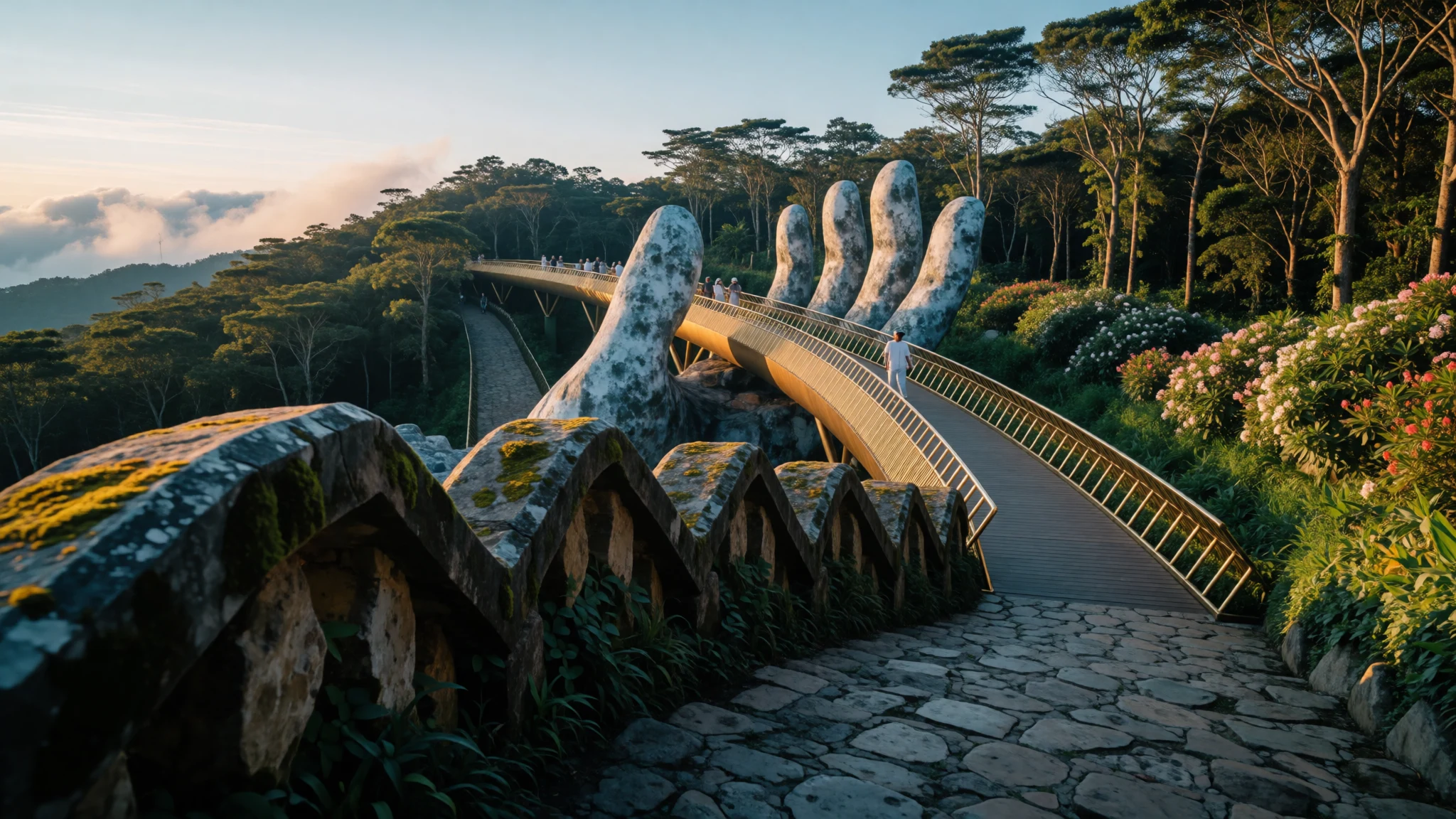
Da Nang puts a wide city beach, a river of lit bridges, marble hills and Hoi An's old lanes within an easy ride of each other.
The place
Da Nang sits on the central Vietnamese coast, where mountains close in from the west and the South China Sea opens out to the east. The Han River cuts through the middle of the city, and much of what visitors do happens within sight of that water: bridges lit after dark, a riverside promenade, and long city beaches with apartment towers behind them. About 2.8 million people live here, and the city is run directly by the national government rather than through a province. That status reflects its working role. Da Nang has a port, sits on National Route 1 and the North–South Railway, and has hosted a major regional summit. It is a transport hub first and a resort second, which is why the airport, the station and the seafront are all close to one another. To the north, the Hải Vân Pass divides Da Nang from Huế, and the road over that ridge marks a real change in scenery and weather. Inland are forested ranges, and just south is the old trading town of Hoi An. Da Nang works well as a base: sea at the door, hills within reach, and food that is bolder and spicier than in the south. The city stands only 19 m above sea level, so the thing to plan around is heat and sun, not altitude.
Its story
Da Nang's deepest layer belongs to the Cham, whose kingdom controlled much of the central Vietnamese coast and left sanctuaries, towers and carvings in the hills and valleys around today's city. Singhapura, the Cham 'City of the Lion', is identified with an archaeological site at Trà Kiệu, and the valley of Mỹ Sơn lies in the same region. Indrapura, further inland, served for a time as the Cham capital. The Cham were hemmed in. The Khmer Empire pressed from the west, and Đại Việt, based far to the north, grew stronger. Champa tried to push north in turn, and an unsuccessful attack on Đại Việt, followed by the detention of envoys sent by the Đại Việt emperor Lê Hoàn, shows how tense the frontier became. Later, the river-mouth settlement here was a small place known as Cửa Hàn, meaning the mouth of the Hàn. Under French colonial rule it became Tourane, and its harbour made it a gateway to the centre of the country. After that era it grew as a port and rail junction. Within living memory it was part of Quảng Nam province before being made a centrally governed city, and a recent reorganisation folded Quảng Nam back in. The old Cham heartland and the modern city now share one administration, which suits a place that feels new on the surface and rests on very old ground.
What to see
- Dragon Bridge — Han River, city centre
Dragon Bridge is a modern crossing shaped like a dragon, its body arching over the Han River. It is lit in changing colours at night, and on weekend evenings the head is set up to breathe fire and water. Check the official city site for the current schedule, and arrive early, as the embankment fills up.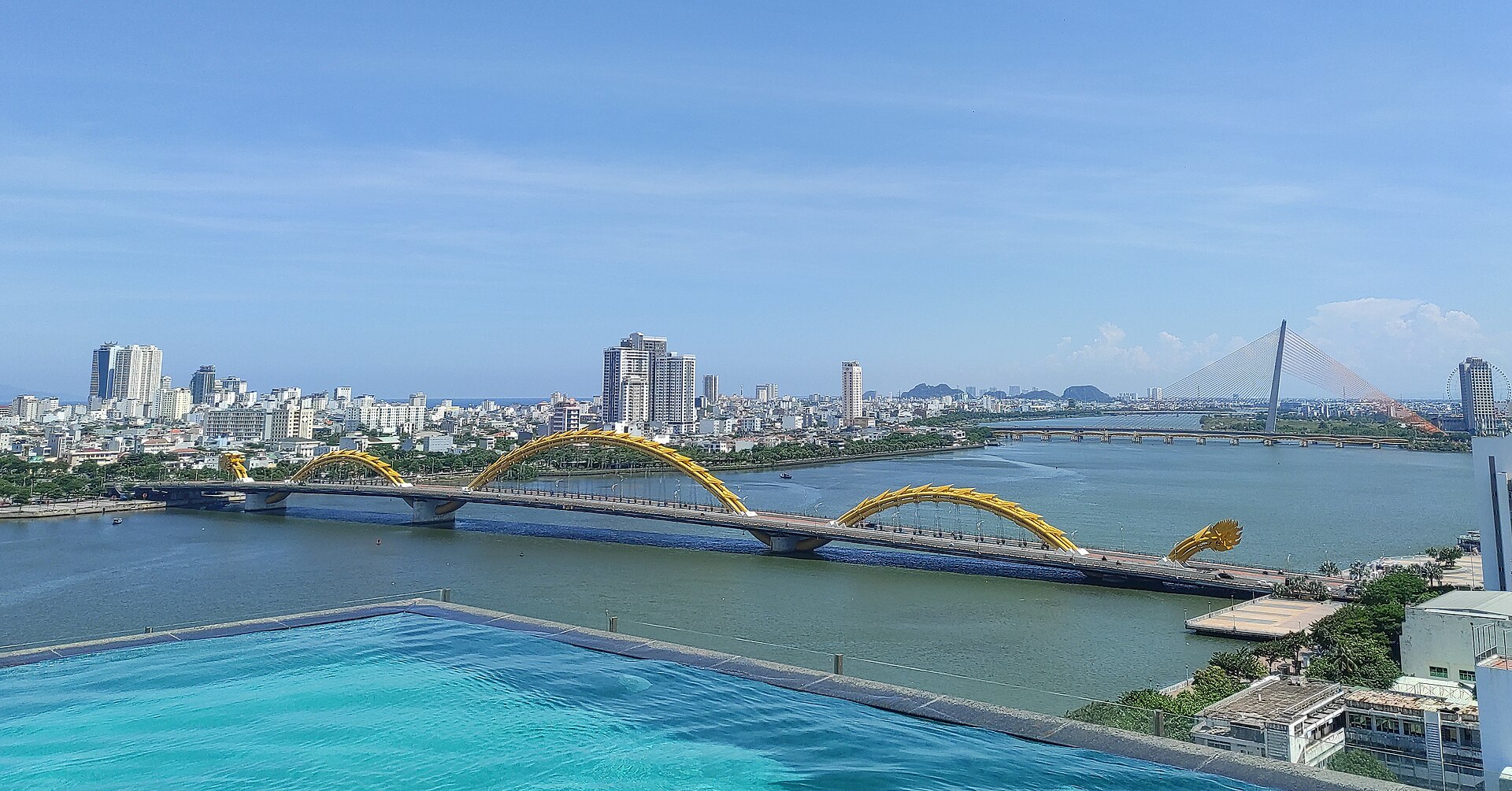
- Han River Promenade — Western bank of the Han River
The riverside walk is where Da Nang takes its evening air. Locals jog, cycle and sit on the steps, and the view takes in the bridges and the towers on the far bank. The river has long inspired local songs. It is flat, free and best after the heat has eased.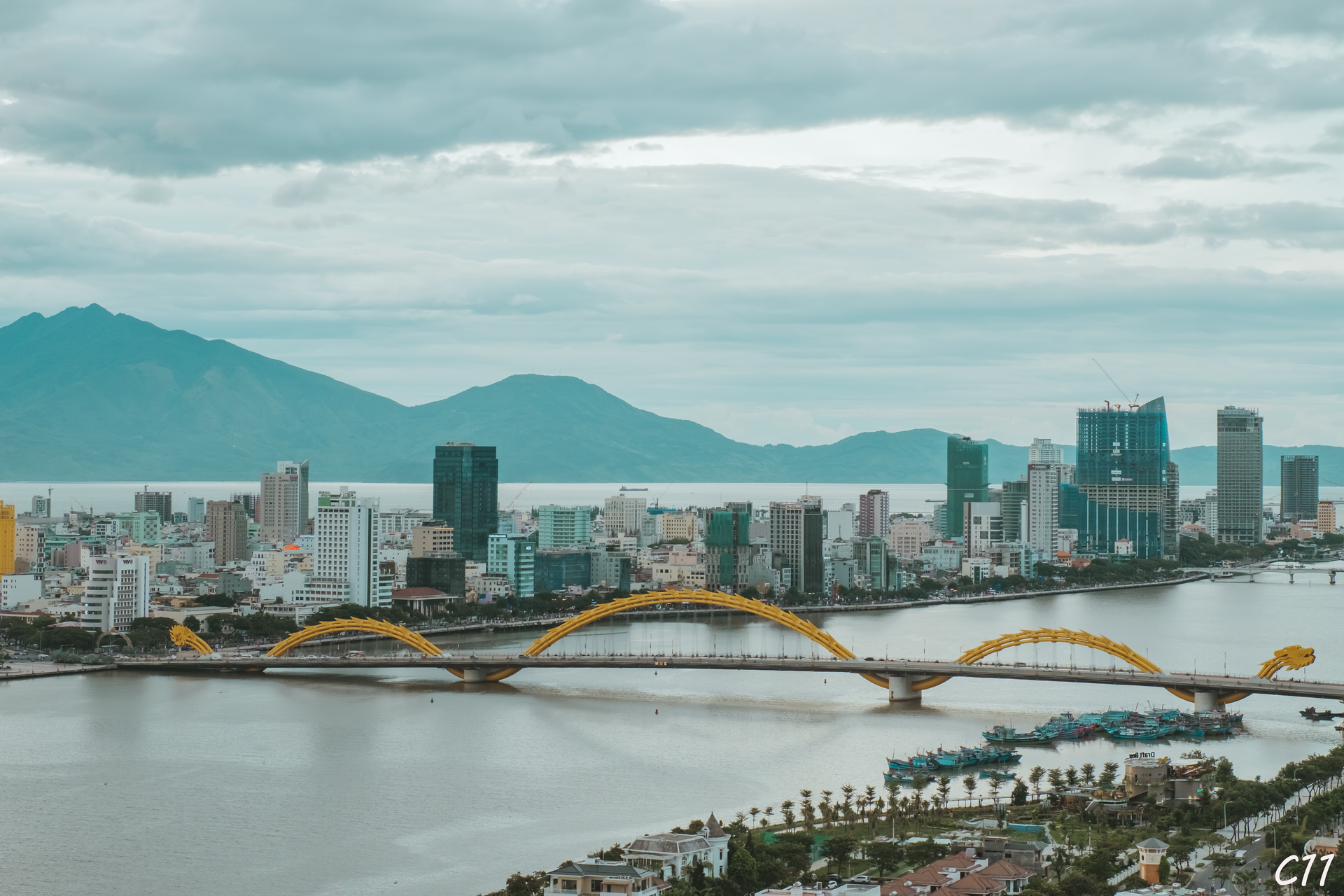
- Marble Mountains — South of the city, towards Hoi An
The Marble Mountains are a cluster of five limestone and marble hills named for the elements: metal, wood, water, fire and earth. Caves hold Buddhist shrines, and stairways climb to viewpoints. Surfaces are slippery and steps are many, so wear grip-soled shoes, and go early before the sun gets fierce.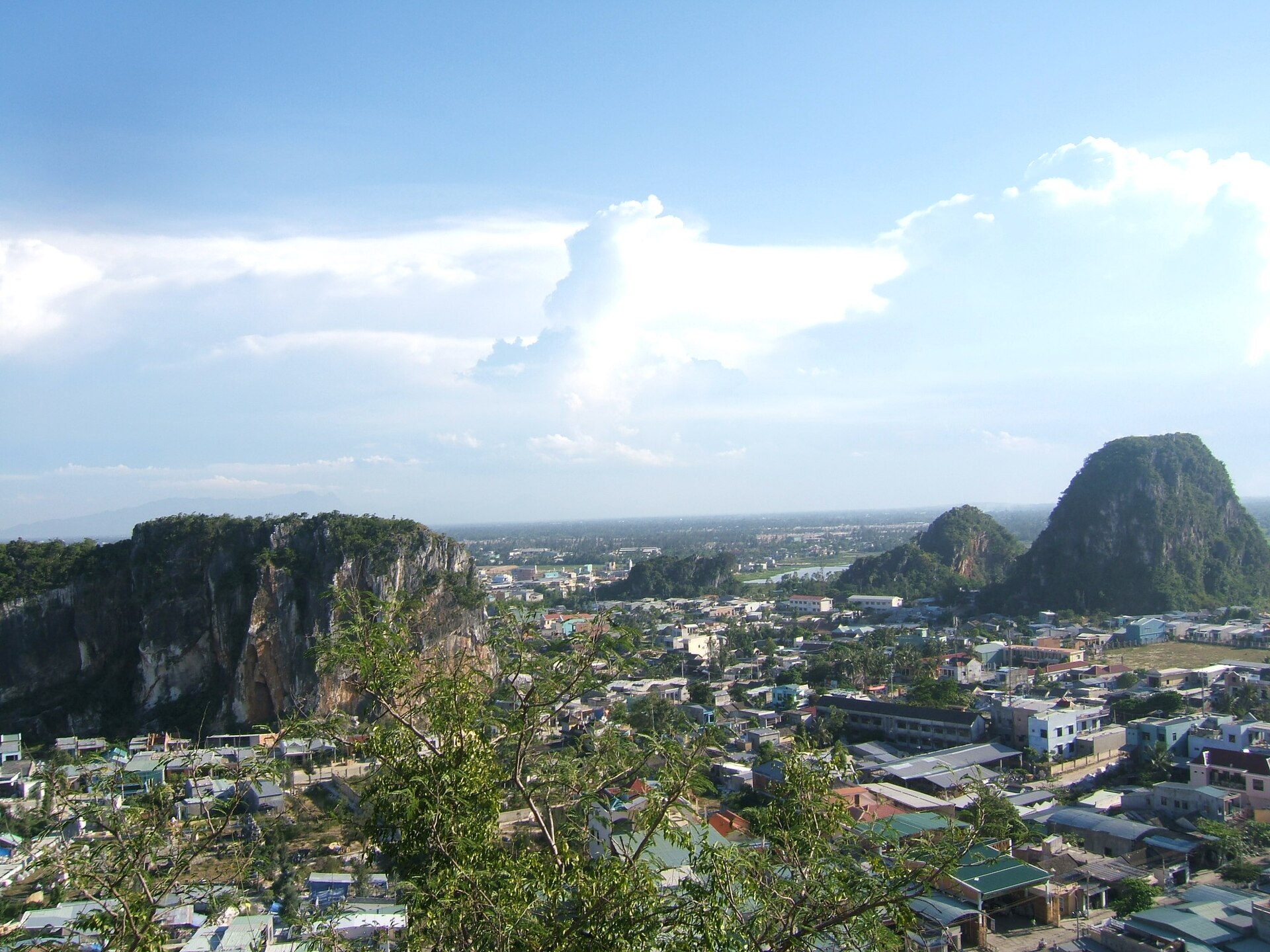
- Linh Ung Temple — Sơn Trà Peninsula, north-east of the centre
Linh Ung Temple sits on the Sơn Trà mountain headland. A tall white statue of Guanyin, the Goddess of Mercy, stands facing the ocean and can be seen from My Khe Beach. The grounds are calm and the sea air is welcome. This is a working place of worship, so dress with respect.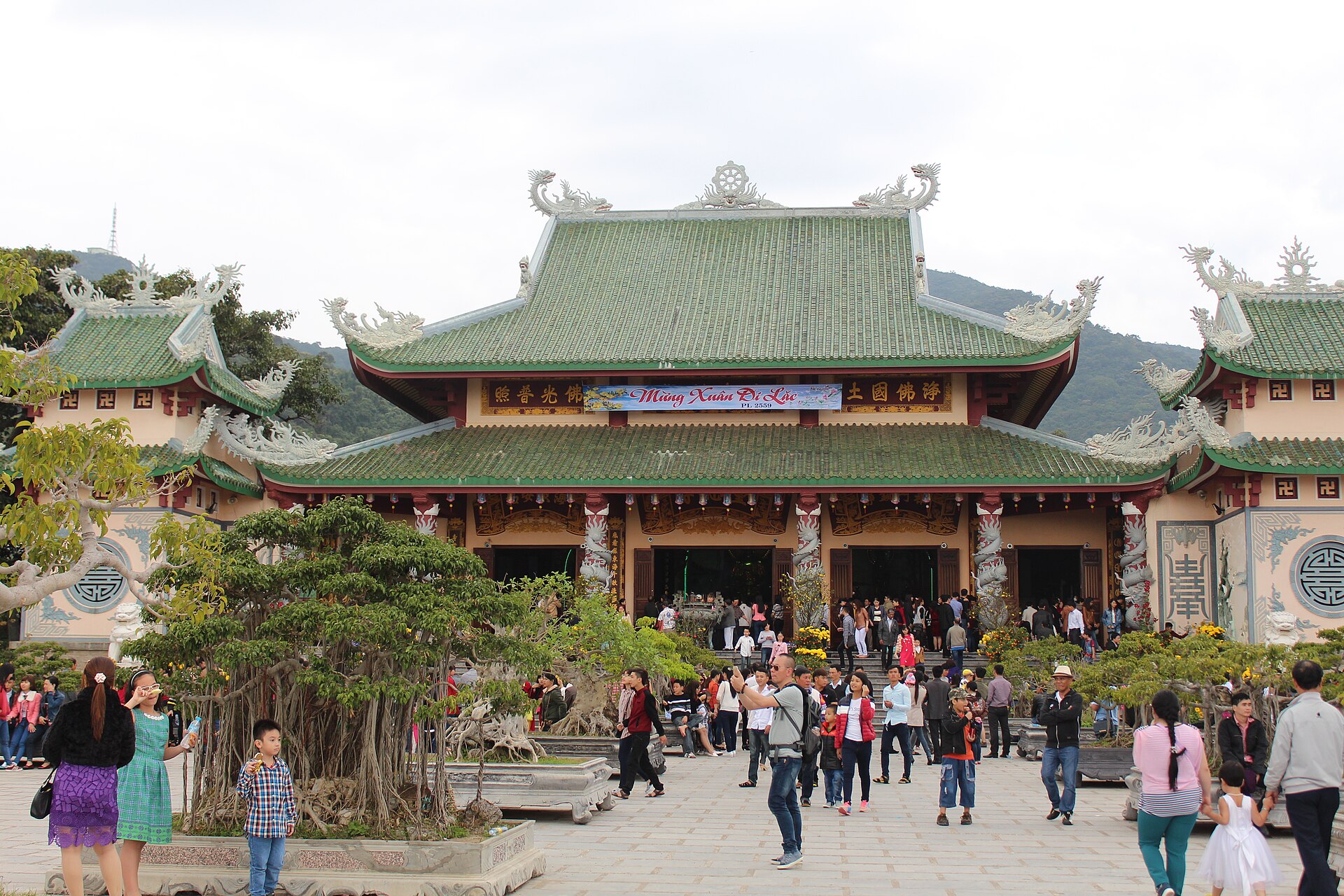
- Golden Bridge — Ba Na Hills, west of the city
The Golden Bridge is a pedestrian walkway held up by two huge stone-like hands, built as a viewpoint in the hills. It is a striking photograph and very busy at midday. Go as early as the cable car allows, and expect a resort atmosphere rather than a quiet walk.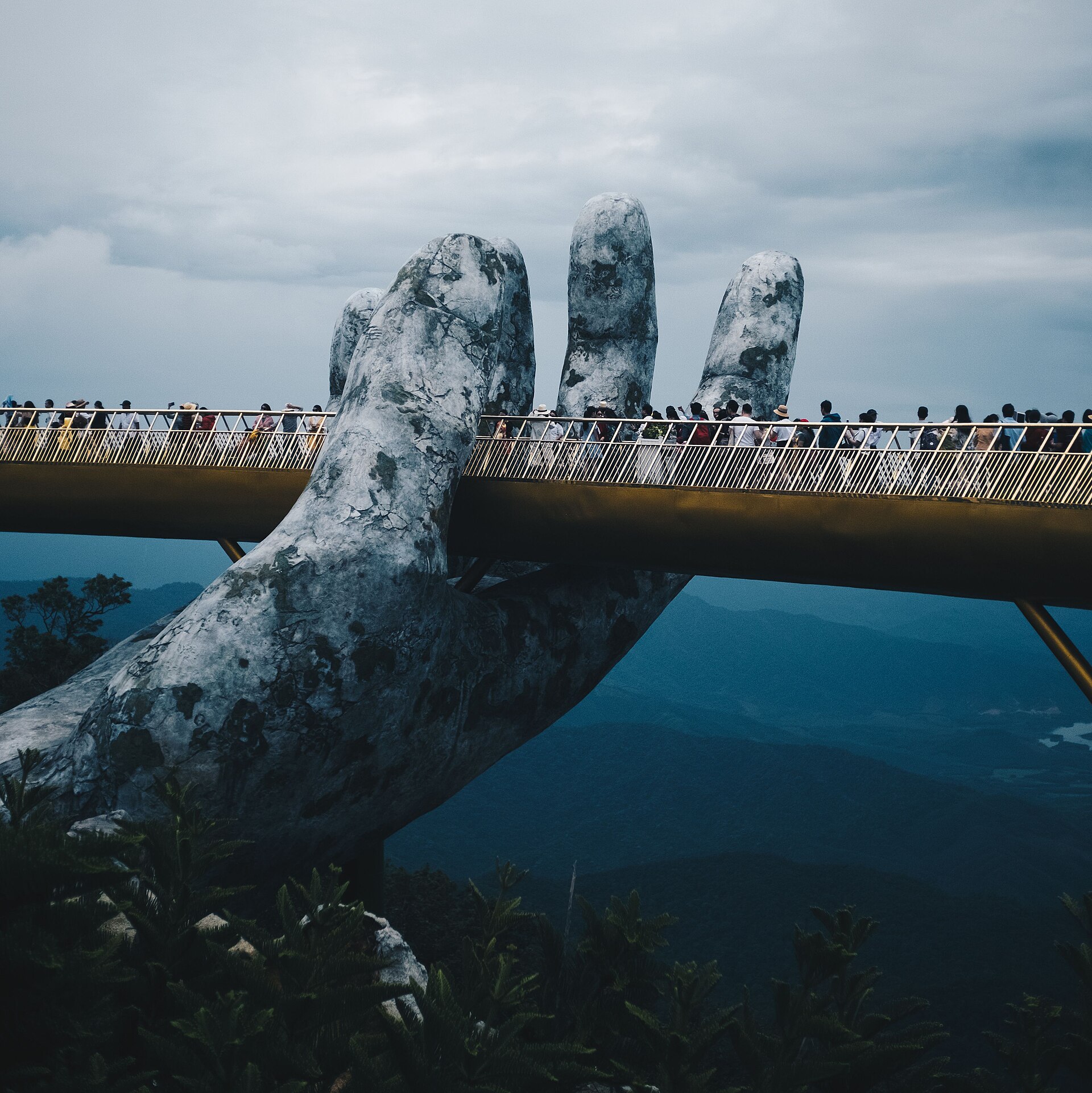
- Ba Na Hill Station — Truong Son Mountains, west of the city
Ba Na began as a French hill retreat with villas, restaurants and clubs, valued for cooler air above the coastal heat. Today it is a large visitor complex reached by cable car. Cloud often rolls in, so check the weather before the trip, and bring a light layer.
Culture
Da Nang's culture is that of central Vietnam, a region where food, family and ritual are bound together. Cooking here is bolder and spicier than in the south and less subtle than in the north, and meals are social: noodles at a pavement stool in the morning, shared plates in the evening. Buddhism is visible across the city, from small neighbourhood pagodas to the large temple on the Sơn Trà headland. Many households keep an ancestor altar, with incense, fruit and flowers offered on particular days of the lunar month. Tết, the lunar new year, is the main family holiday, when many businesses close for several days and workers travel home. The Cham past is a quieter presence, in the museum collections and in the carved brick sanctuaries inland, a reminder that this coast had a distinct civilisation before it became part of Vietnam. Evenings are lively. People gather along the Han River and the beach, and families bring children out late. Daily life is polite and fairly informal, and a smile and a few words of Vietnamese go a long way, whether greeting a stallholder or thanking a driver. Bargaining is normal at markets, but it should stay good-humoured. At pagodas and temples in and around Da Nang, cover your shoulders and knees, take off your hat, and keep your voice low, and ask before photographing monks or people at prayer.
What to wear
In Da Nang, the traditional dress is the áo dài, a long fitted tunic split at the sides and worn over loose trousers. It is cut from silk or silk-blend fabric, and women wear it at Tết, at weddings, and in many schools as a uniform. The conical palm-leaf hat, the nón lá, is still seen with it. Central Vietnam has a long silk and weaving tradition, and fabrics from the region are sold in Hoi An and in city markets. Everyday clothing is practical and modern. Locals wear light cotton shirts, shorts or long skirts, and many ride motorbikes in long sleeves, gloves and face masks to keep the sun and dust off. Beachwear is for the beach, and people usually change before heading to a restaurant or shop. Visitors should pack for heat and humidity: breathable cotton or linen, a wide-brimmed hat, sunscreen and sunglasses. A light rain jacket is worth carrying in the wetter months. For pagodas, temples and the Marble Mountains shrines, bring a top that covers the shoulders and trousers or a skirt below the knee. Footwear should be sandals with grip or trainers, since stone steps get wet and slippery and shoes come off at temple doors. Tailors in Hoi An can make clothes to measure, but allow a couple of days for fittings.
What to eat
- Mì Quảng — Neighbourhood noodle shops and morning street stalls across the city
Mì Quảng is the signature dish of the Quảng Nam–Đà Nẵng region. Broad rice noodles come with shrimp or pork, a boiled egg, peanuts and fresh herbs, with only a little rich broth poured over. It is eaten more like a dry noodle dish than a soup. - Bánh tráng cuốn thịt heo — Family-run eateries, especially in the older streets near the Han River
Thin rice paper is wrapped around boiled pork, fresh herbs, green mango and other vegetables, then dipped in a local sauce. It is a staple of Da Nang's street food, light enough for the heat and made to be assembled at the table. - Bê thui Cầu Mống — Specialist eateries serving the dish, linked to Cầu Mống village
Bê thui is slow-roasted veal with a golden skin, a dish that comes from Cầu Mống village in Điện Bàn district. It is sliced thin and eaten with herbs and a dipping sauce. It suits a group meal rather than a quick snack. - Bánh mì — Sandwich carts and bakery counters around the centre
The Vietnamese baguette sandwich is filled here with pâté, pork, herbs and chilli sauce. Some carts are well known in the city, and a long queue at lunchtime is a good sign. A thin baguette called bánh mì que, filled with pâté, is a cheaper, smaller snack. - Cơm gà — Plain local eateries with chicken on display near the river
Cơm gà is chicken rice, served either with roast chicken or with thinly shredded steamed chicken over rice cooked in the broth. Locals eat it as an everyday lunch, and it is a good mild option when the spicier central dishes feel like too much.
Plan it
Best time. February to May is usually the best window, with warm, mostly dry weather and good beach days. June to August is hot and sunny. From around September to December the rains and the typhoon season can bring heavy downpours, rough seas and flooding, so check forecasts before you book.
How long. 2–4
Getting there. Da Nang International Airport is close to the city centre, with taxis, Grab and city buses to the river and My Khe Beach. Da Nang is also on the North–South Railway, and sleeper and regular buses run from many Vietnamese cities. Hoi An is under an hour away by road, by shuttle bus or taxi.
Budget. mid
Tips
- Book the cable car at Ba Na and visit early, as crowds build from late morning
- Carry some cash for markets and small eateries, and use a metered taxi or Grab
- Drink bottled or filtered water and carry sun protection through the middle of the day
- Check the official city site (http://www.danang.gov.vn/) for events and the weekend Dragon Bridge show
- Travel by taxi or with a driver rather than renting a motorbike, since traffic is busy and unpredictable
Etiquette
- Dress modestly and remove shoes where indicated at pagodas and temples
- Ask before photographing monks, worshippers or people at home
- Keep bargaining polite and stop once a price is agreed
Nearby
Sources
- Wikidata Q25282 (CC0)
- Wikipedia: Da Nang (rev 1384642780) (CC BY-SA 4.0)
- Wikivoyage: Da Nang (rev 5413233) (CC BY-SA 4.0)
- Photo: Cầu Rồng - Đà Nẵng nhìn từ trên cao (Cuong Tran) (CC BY-SA 4.0)
- Photo: Dragon Bridge, Da Nang during day (Somerset999) (CC BY-SA 4.0)
- Photo: Highrises at My Khe Beach, Da Nang (Jpatokal) (CC BY-SA 4.0)
- Photo: Cầu Vàng (Golden Bridge) in July 2018 (Trung Le) (CC BY 2.5)
- Photo: Ngu hanh son toan canh (Viethavvh) (Public domain)
- Photo: Linh Ung Pagoda, Da Nang (Armando Nguyen) (CC BY 2.5)
- Photo: Hoi An (rhjpage) (CC BY 2.5)
- Photo: Fujian Assembly Hall, Hoi An (Chainwit.) (CC BY 4.0)


