Cambridge
Cambridge, United Kingdom
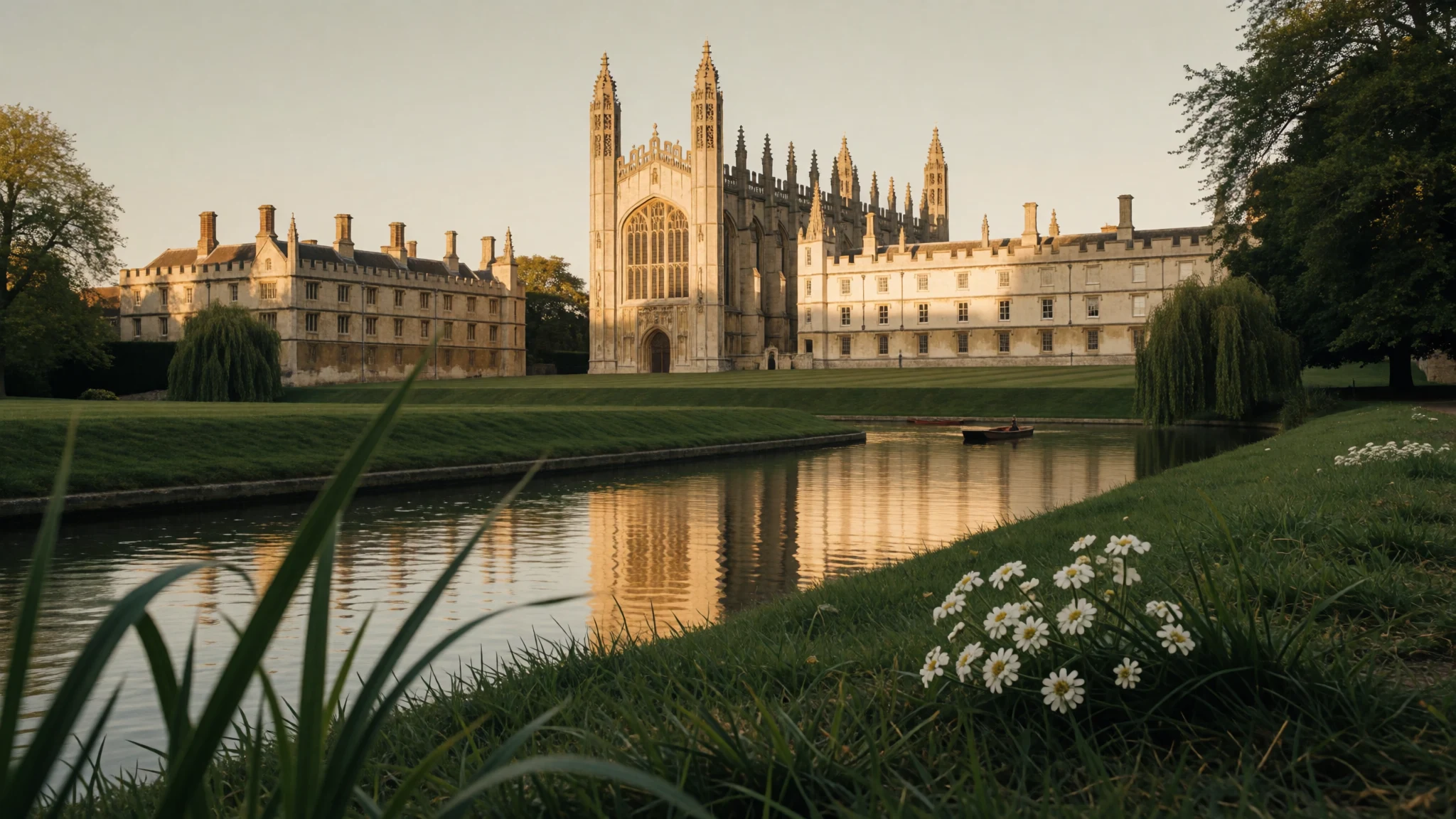
Cambridge is a low college city on the River Cam, where chapel stone, courtyards and punts shape an easy day's walking.
The place
Cambridge serves as Cambridgeshire's county town, a low city spread along the River Cam in the east of England. The population on the official record is 145,700, and the land sits only 6 metres above sea level, so the streets feel flat and the river is never far from the middle of town. This is a college town in the literal sense: courts, chapels and libraries of the University of Cambridge are threaded through ordinary streets rather than gathered on a separate campus. King's College Chapel, the Cavendish Laboratory and the University Library give that academic city much of its bulk, while two other shapes break the roofline: the spire of Our Lady and the English Martyrs, and the chimney at Addenbrooke's Hospital.
The Cam is the second axis. College gardens run down to the water, and in the warmer months flat punts are poled along those reaches, the view of King's among them. Inland, narrow lanes pass bookshops, cafés and gatehouses. Trinity Street aims the eye at the tower of St John's. St Mary the Great, the main parish church, holds the centre in stone. At the older end of the college run, Peterhouse keeps a small chapel of its own.
Cambridge works as a county town and a visitor city at the same time. Shops, buses and council business share the pavements with graduation crowds and tour groups. Practical civic information sits on the city website. The sights are working colleges, so the university and the town share the same few streets.
Its story
Cambridge was farmed and settled long before any college existed. On the ground now occupied by Fitzwilliam College, archaeologists uncovered a prehistoric farmstead, and Castle Hill, on the northwest side of the centre, holds an Iron Age settlement from a period when life in southeastern Britain was shifting under Belgic influence.
Roman power arrived as a fort. Duroliponte stood on that same hill, over an older local settlement. Modern roads still pick out the footprint. Mount Pleasant continues across Huntingdon Road and on to Clare Street. Magrath Avenue marks another side. A further side passes Chesterton Lane, then Kettle's Yard, and turns at Honey Hill. The garrison phase was brief. The site was opened to town life, and the river crossing grew into a trading place that mattered in the Roman period and again when Viking influence reached the region.
Charters in the medieval centuries confirmed the town. Recognition as a city, in the formal modern sense, came much later, after the street plan and the crossing were long established. The change that still defines Cambridge was the arrival of scholars in a town that already had markets and a castle mound. Colleges took over or grew beside older religious houses. St John's occupies the site of a medieval hospital and was refounded as a college. The university grew through the market town, so the castle hill, the river crossing and the college gates still share one short walk.
What to see
- King's College Chapel — King's Parade, by the river lawns
King's College Chapel is the tall chapel that rises over central Cambridge, on King's Parade with the river lawns behind it. The west front is the view from the far bank, a long pale wall of glass and stone. The choir has carried the chapel's reputation well beyond the city, and sung services still shape how the building is used through the university year.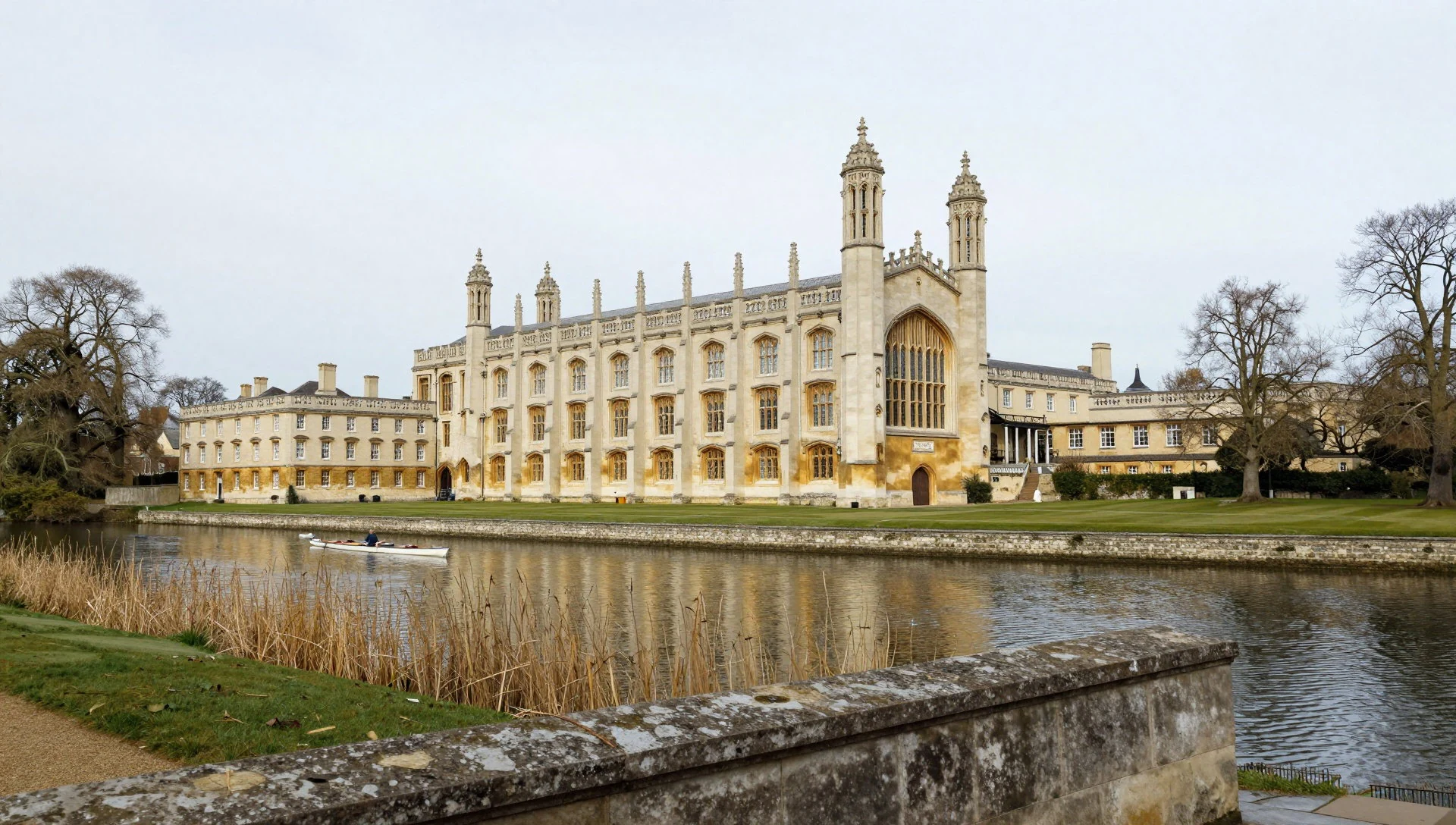
- Queens' College — both banks of the Cam
Queens' College in Cambridge occupies both banks of the Cam, the halves linked by the Mathematical Bridge. Margaret of Anjou began the college and Elizabeth Woodville continued it, which is why the name is plural. From the river the bridge is the clear landmark; inside, the courts are still a lived-in college, open to visitors on a pattern the college itself publishes.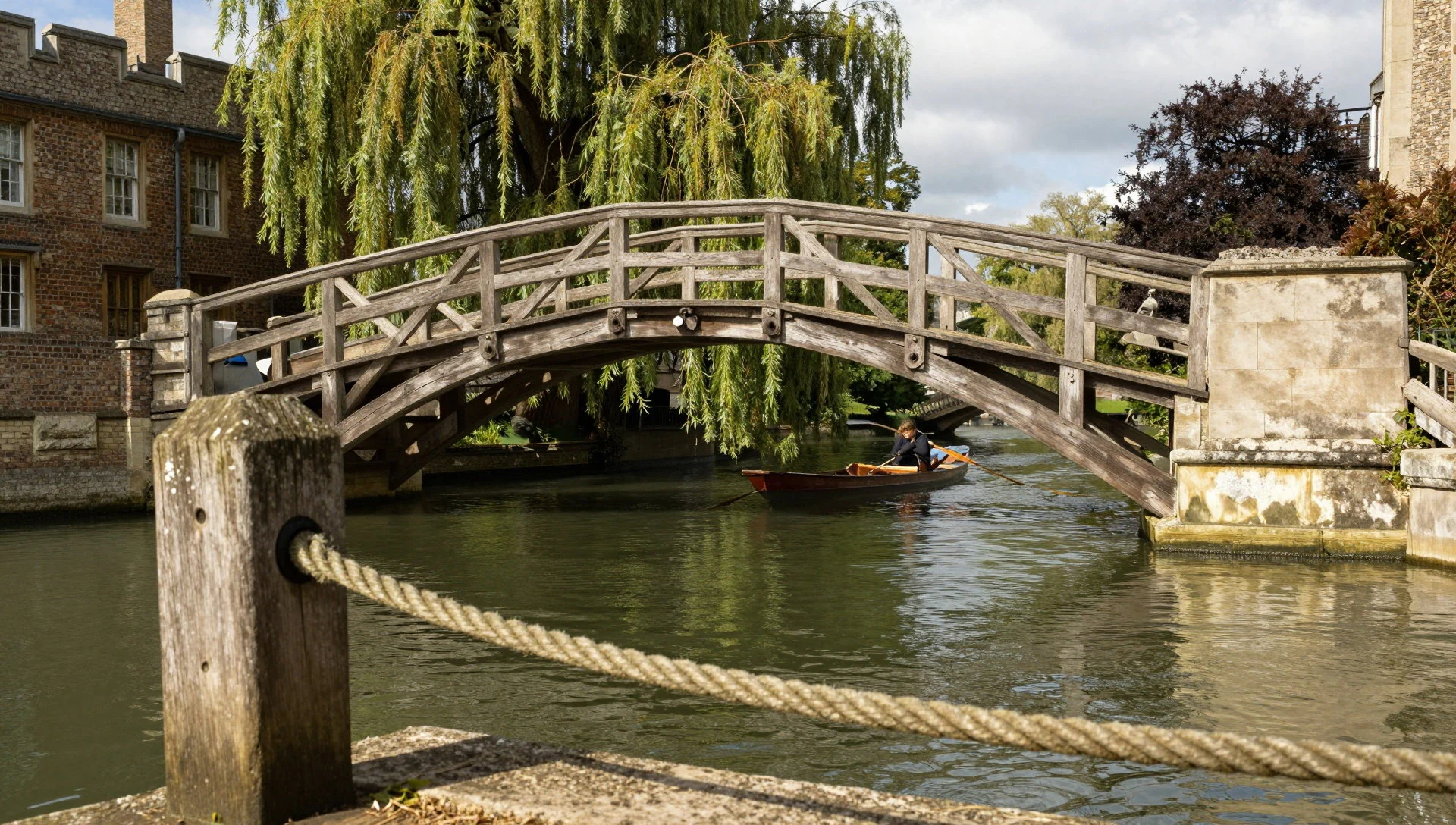
- Trinity College — Trinity Street
Trinity College in Cambridge is built around a broad court, with a library by Sir Christopher Wren facing the river side of the grounds. That library keeps medieval bibles and other early books, and admits visitors only in short daytime windows during full term. On Trinity Street the college front is a stretch of stone that runs on towards St John's. Opening times move with the academic term.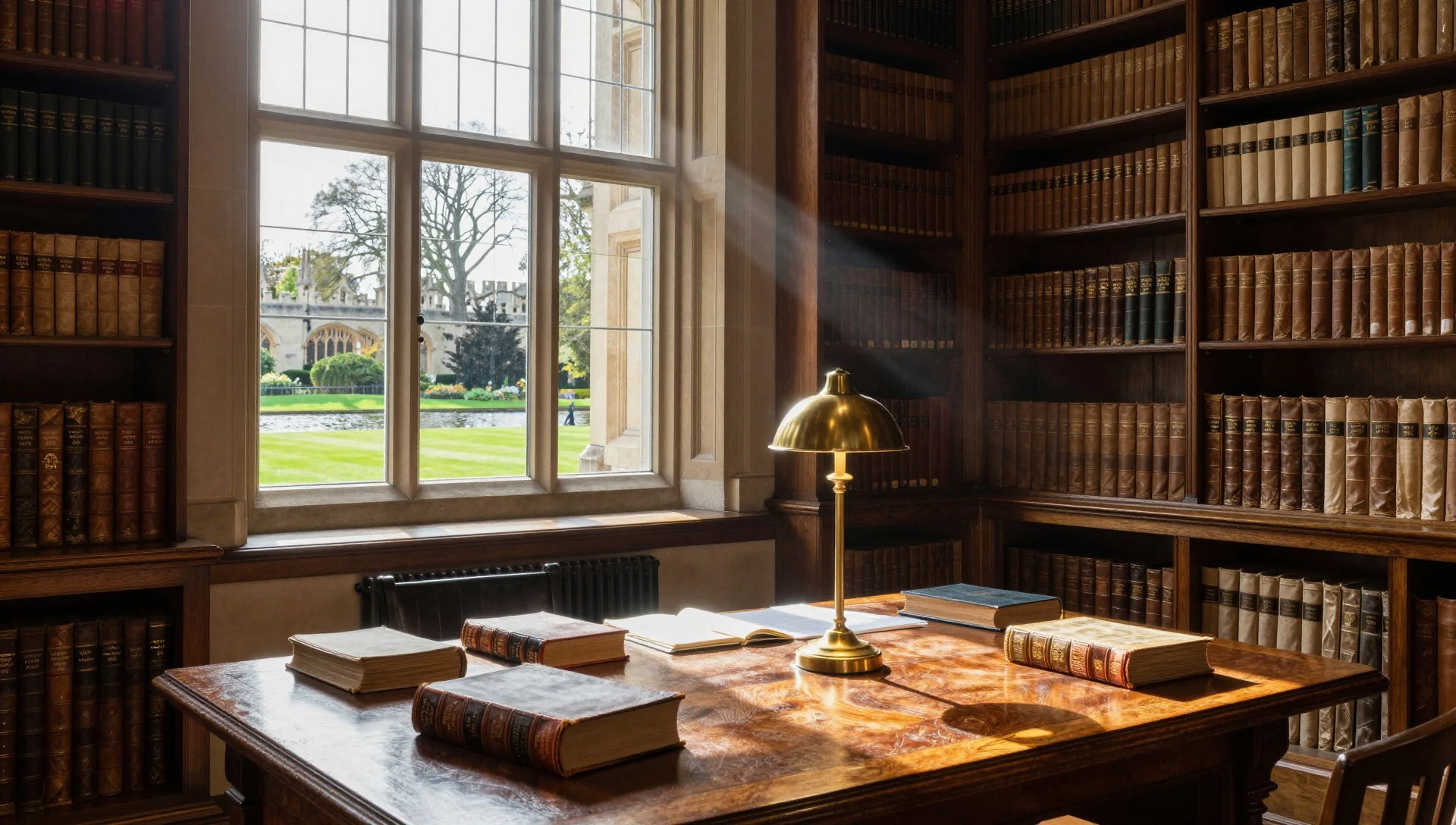
- St John's College — north end of Trinity Street
St John's College stands in Cambridge on the site of an earlier hospital and was refounded as a college. Within the grounds is the School of Pythagoras, described as the oldest academic building in the city. The college tower closes the northward view along Trinity Street. Students live here through the year, and visitors are expected to keep to the routes and hours the porters post at the gate.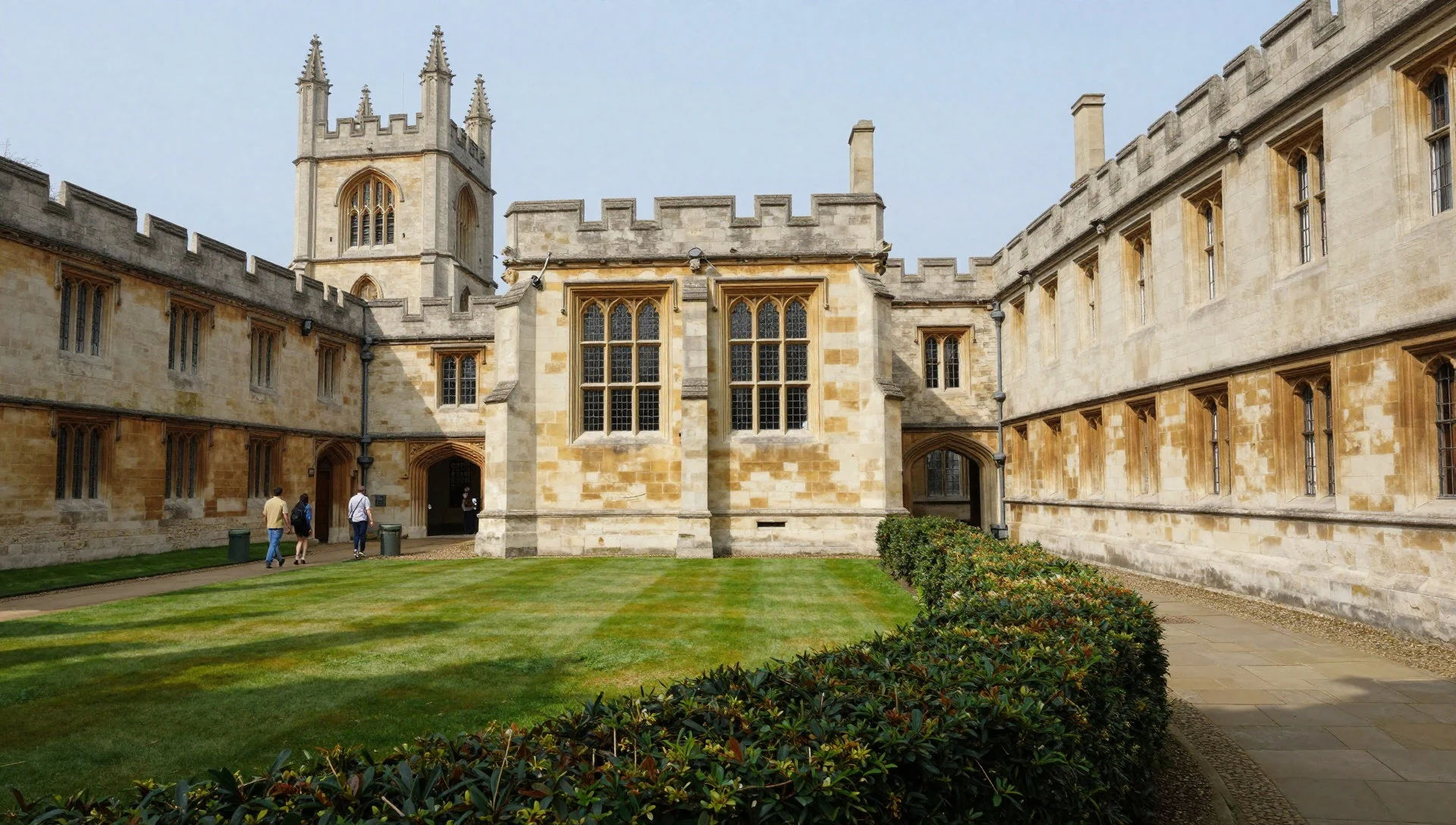
- Jesus College — east of the central streets
Jesus College sits just east of Cambridge's central streets, with grounds more open than the tight courts along Trinity Street. Sculptures are placed through the gardens rather than gathered in a single gallery. It is a calmer college to visit when the gates on King's Parade are crowded. Entry still follows the days the college itself posts.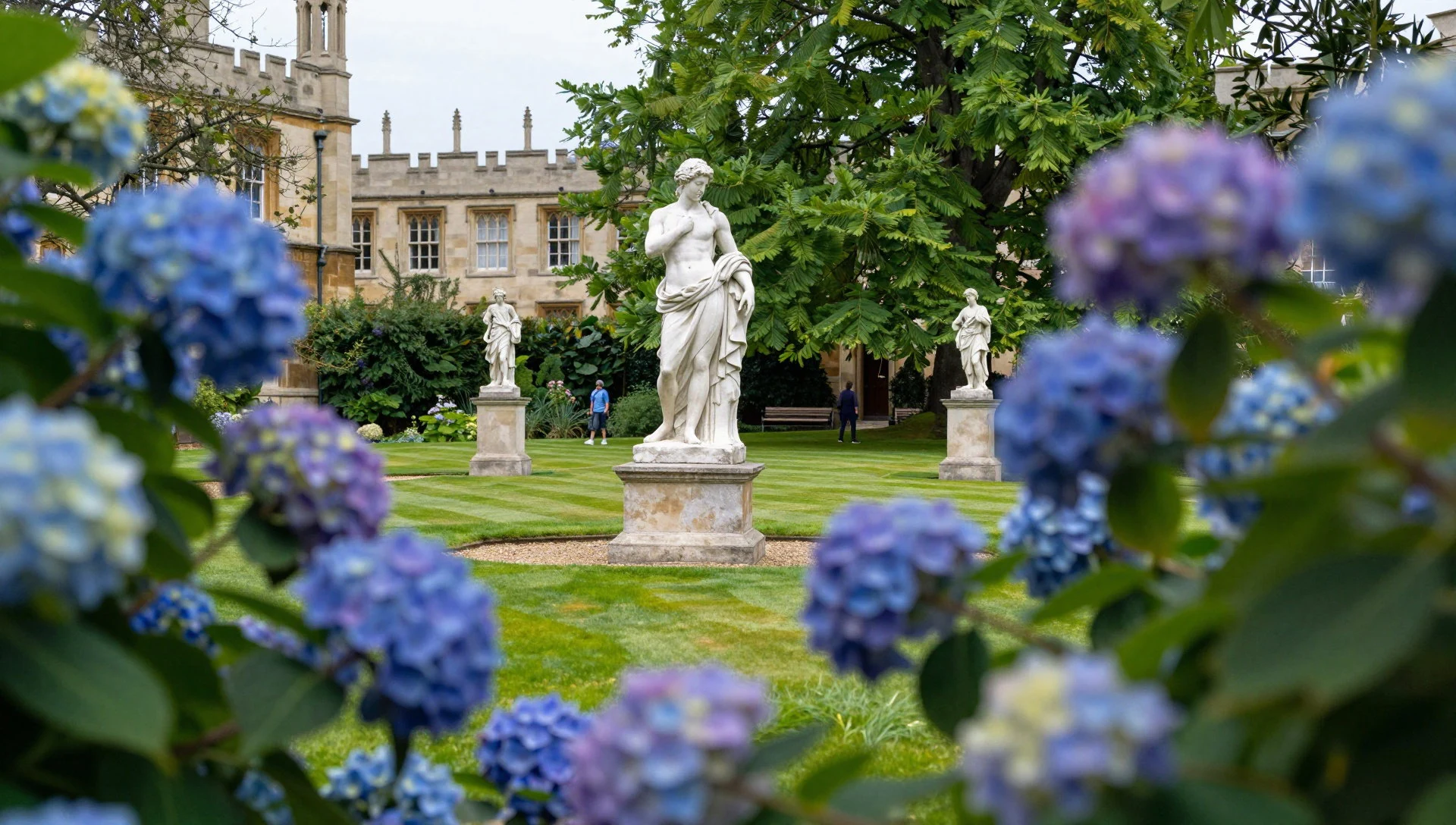
- Pembroke College — southern side of the centre
Pembroke College in Cambridge was founded by Marie de St Paul, Countess of Pembroke. The college is known for its gardens, which give the southern side of the centre a greener pause. There is no single set-piece gate in the manner of King's; the pleasure is the planted courts themselves. The college decides when the public may come in.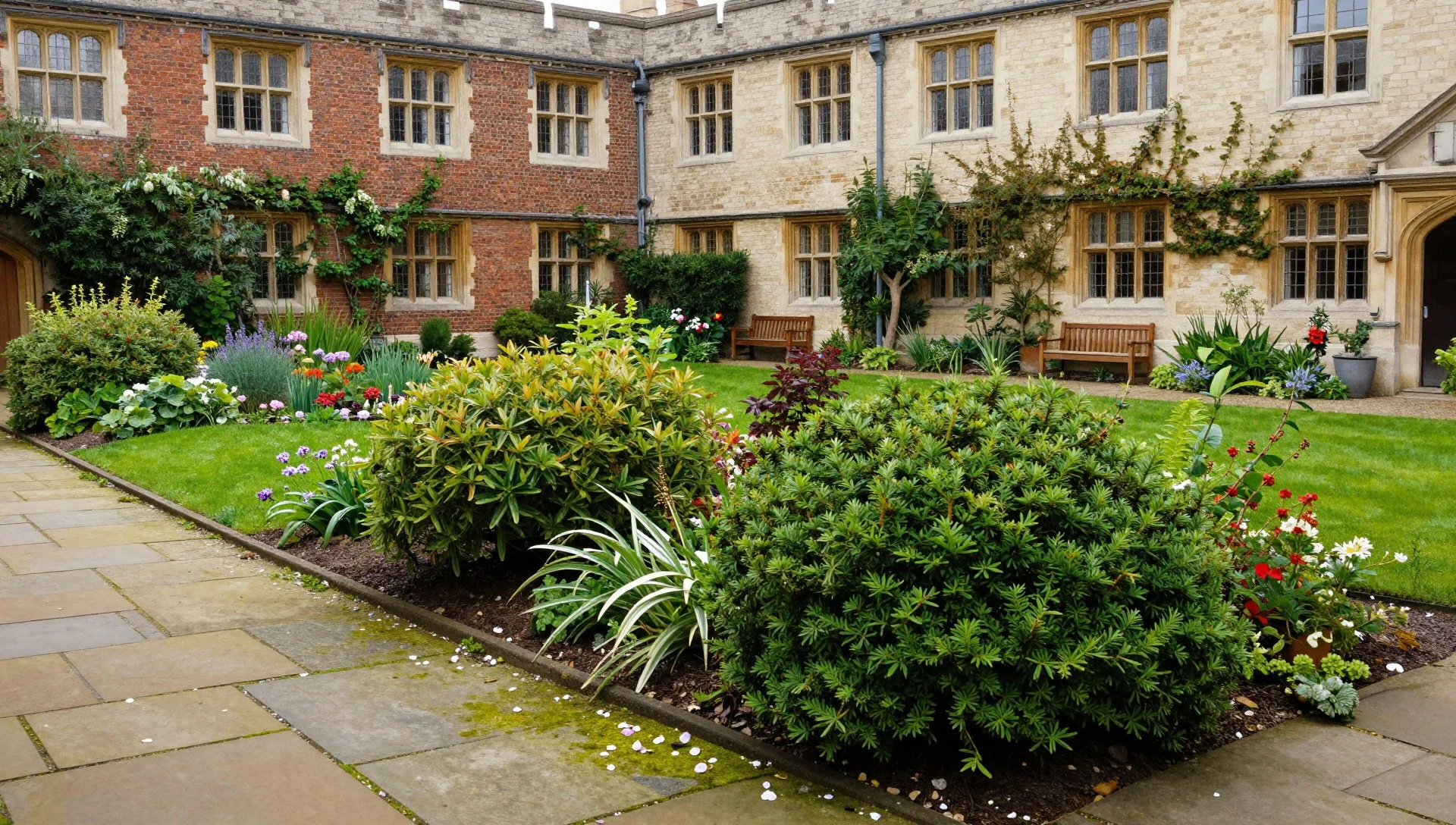
Culture
Cambridge treats theatre as part of ordinary city life, not as a festival that descends once a year. The Arts Theatre stands in the middle of the city and mixes shows on tour with pieces by companies based in Cambridge. Audiences there are as often local as they are visiting. The Corn Exchange is the room Cambridge uses when a show needs scale. It occupies the old corn hall, which for decades also hosted tea gatherings, car shows and sport before the council made it a permanent house for music, dance and plays. Also in the city is the small auditorium inside Cambridge Junction at Cambridge Leisure Park, used for plays, dance, concerts and stand-up.
College chapels add a different kind of performance. Choirs sing to a liturgical calendar, and a visitor who wanders in mid-rehearsal is in someone else's workplace. The city's culture is this overlap: a market town's stages on one side, and a university's music and debate on the other. On college ground, keep to the paths, stay quiet in chapels, and ask before you photograph people.
What to wear
Cambridge has no single folk costume still worn in the street. Its traditional dress is academic: black gowns, hoods and college scarves in wool or synthetic blends, brought out for matriculation, formal hall, graduations and chapel ceremonies rather than for lectures. Each college's scarf carries its own colours, and the gown marks a role, student, graduate or officiant, inside a world that still dresses up for ritual even when the rest of the day is ordinary.
Day to day, Cambridge wears what a damp, cycle-heavy English city wears. Students cross town in jeans, knitwear, waterproofs and trainers, often with a backpack and a bike lock. Office staff and shop workers dress for a normal British high street. Gowns appear in bursts, around college gates at dinner time, then disappear again.
A visitor should dress for walking and for weather that changes. Comfortable, low shoes beat anything with a smooth sole on stone courts and damp paths by the river. Layers and a light waterproof matter for much of the year; a warmer coat in winter. In chapels, covered shoulders and the ability to take a hat off are the sensible baseline. There is no need to buy a college scarf; it is a souvenir, not a requirement.
What to eat
- Jacket potato — midday cafés in the centre
The jacket potato is Cambridge's ordinary hot lunch, popular with students at midday cafés in the centre. Counters bake them and serve them beside sandwiches, so one stop covers a quick meal between colleges. Queues peak once lectures empty.
- Soup, salad and a hot plate — cafés beside churches and along the central lanes
Soup, salad and a hot plate are the other half of Cambridge café cooking, and vegetarian choices sit on the board as a normal option. Cafés in the centre, including those tucked beside churches and along the lanes, serve this lunch well into the afternoon.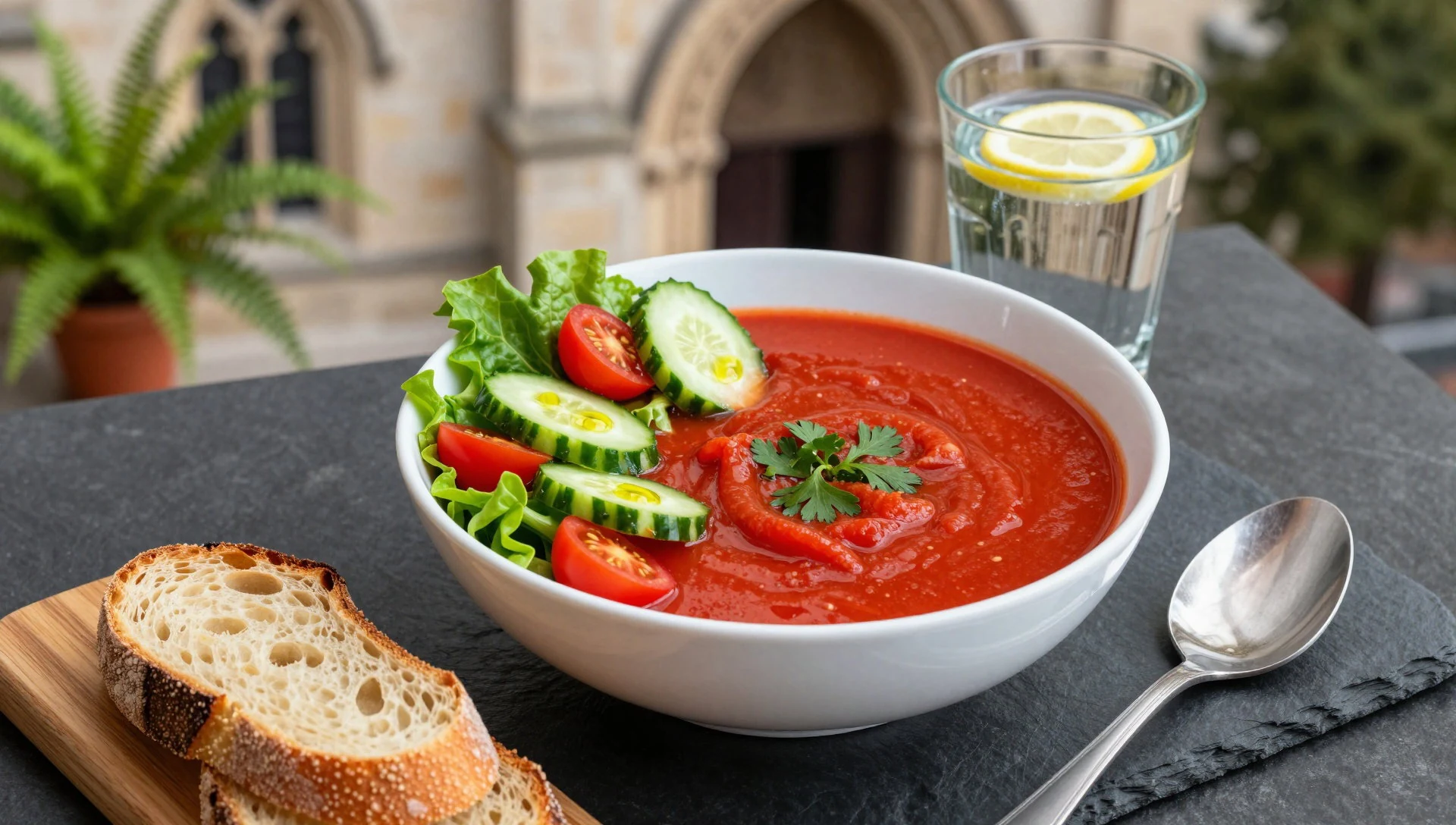
- Espresso and cappuccino — Italian-style coffee bars near the college streets
Espresso and cappuccino are Cambridge's short pause. Italian-style coffee bars in the centre pull proper shots rather than filter coffee, and they sit near the college streets, handy between visits. They are stops, not long lunches. - British savoury plate with real ale — chop-houses and pubs in the centre
A British savoury plate with real ale is the sit-down meal in Cambridge, served in chop-house and pub dining rooms around the centre. Ale is taken seriously and kept properly. The meal suits an unhurried lunch or an early dinner; the kitchen sets the day's menu. - Dumplings — dumpling bars on the eastern side of the centre
Dumplings offer a non-British counter-meal in Cambridge, served at dumpling bars on the eastern side of the centre. They suit the moment when a café sandwich is not enough and a full British sitting is too much. The rooms are informal, with students and nearby residents sharing tables.
Plan it
Best time. July is the hottest month and October the wettest, while September is the most comfortable for walking the colleges and the river in Cambridge. Summer brings more tour groups, while a winter visit leans on chapels, libraries and other indoor rooms. In every season the college gates follow the university term, so full term and the long vacation feel like different visits.
How long. 2–3
Getting there. Cambridge lies north of London, with two railway routes to the capital and further trains across the east of England and the Midlands. Major roads, including the motorway south towards London, tie the city into the rest of the country. London Stansted is the airport to use; National Rail trains reach Cambridge from there, among them CrossCountry services towards Birmingham New Street and Greater Anglia services towards Norwich, and National Express coaches run the same journey. From the railway station the centre is a walk.
Budget. mid
Tips
- Start with King's College Chapel early in the day, before coach parties gather on King's Parade.
- Read each college's own notice for opening days; they follow the university term, not one city-wide timetable.
- Walk rather than drive; courts are not shortcuts, and the city centre is flat.
- Come by train from London or from Stansted, then continue on foot from the station.
- Check civic information on the city website before travelling: https://www.cambridge.gov.uk/
Etiquette
- Stay off college lawns unless a sign clearly allows visitors onto the grass.
- Keep voices low and phones silent in chapels, above all during services and choir rehearsals.
- Ask before photographing students, porters or ceremonies.
Nearby
Sources
- Wikidata Q350 (CC0)
- Wikipedia (rev 1380952852) (CC BY-SA 4.0)
- Wikivoyage (rev 5396635) (CC BY-SA 4.0)
- Photo photos/01-kingscollegechapelwest.jpg (CC BY-SA 2.0)
- Photo photos/02-cambridge-kings-college-vue-des-backs.jpg (CC BY-SA 4.0)
- Photo photos/03-punts-river-cam-geograph-org-uk-5936313.jpg (CC BY-SA 2.0)
- Photo photos/04-church-of-st-mary-the-great-geograph-org-uk-5897670.jpg (CC BY-SA 2.0)
- Photo photos/05-trinity-street-cambridge-geograph-7688455.jpg (CC BY-SA 2.0)
- Photo photos/06-flag-of-the-city-of-cambridge.png (CC BY-SA 4.0)
- Photo photos/07-trinity-street-cambridge.jpg (Public domain)
- Photo photos/08-peterhouse-chapel.jpg (CC BY-SA 2.0)


