Cà Mau
Cà Mau, Vietnam
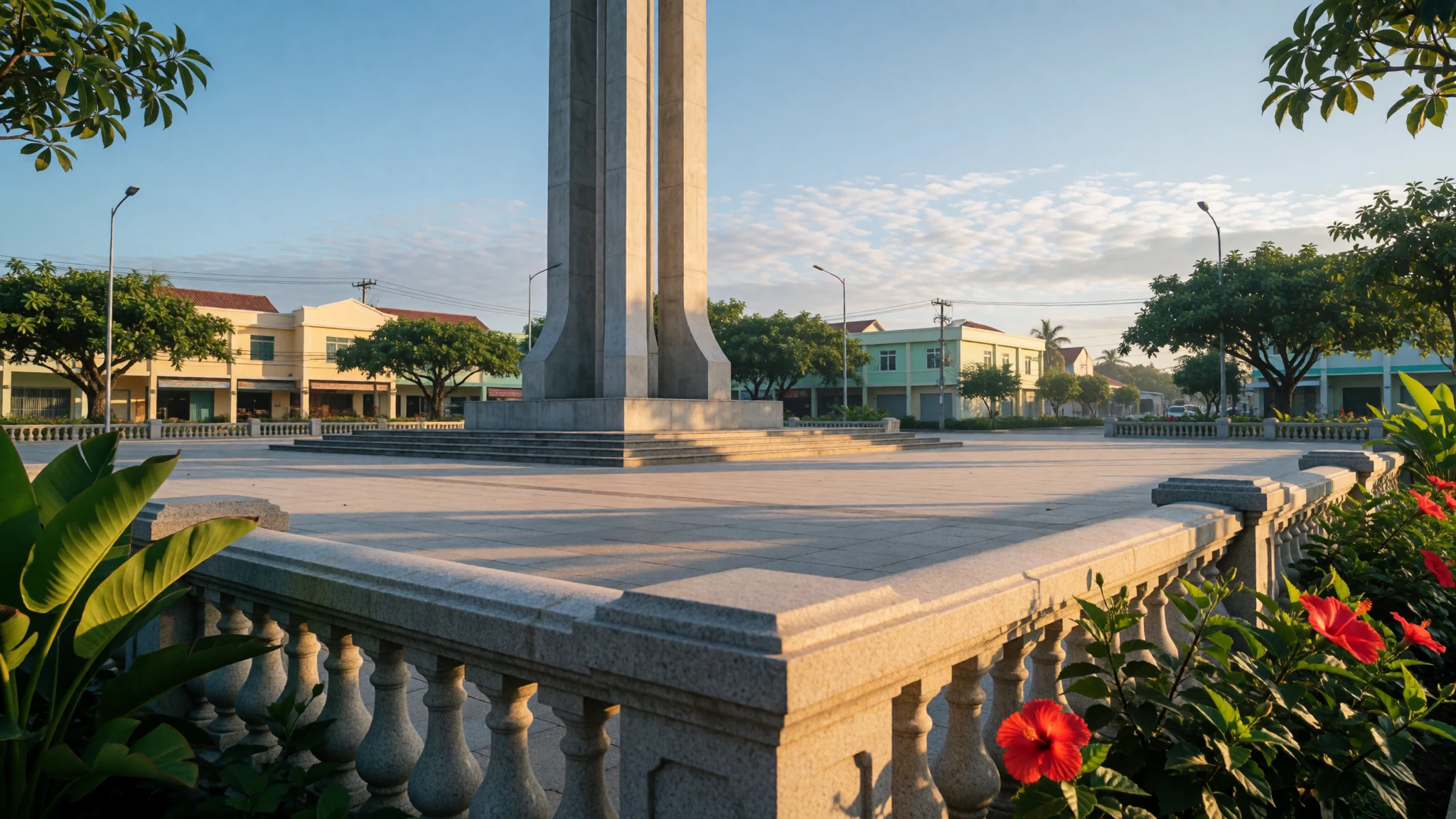
Journey to Cà Mau for an authentic Mekong Delta experience among winding waterways, rich wetlands, and the southernmost mainland of Vietnam.
The place
Cà Mau is situated in the southernmost part of Vietnam's mainland territory as a provincial city within the Mekong Delta region. Defined fundamentally by its intricate network of transport canals, the settlement relies heavily on boats and barges to move heavy goods, market produce, and travellers through its watery arteries. Visitors arriving in Cà Mau find a landscape where urban structures meet extensive wetlands, creating a distinct watery rhythm quite apart from the northern highlands or the central coast. The residential makeup is predominantly ethnic Vietnamese, alongside established communities of Khmer Krom and Hoa households who contribute to the cultural texture of the local neighbourhoods. Reaching the city involves a journey along National Road 1A from Ho Chi Minh City, or touching down directly at the local airport. Life here moves to the rhythm of the tides and the regional agricultural and fishing output. As an old provincial capital, Cà Mau functions as a working gateway rather than a polished tourist resort, inviting travellers who appreciate unpretentious southern Vietnamese daily routines. The climate brings distinct seasonal shifts that dictate when agricultural markets thrive and when the surrounding swampland swells with seasonal rainfall. Navigating the town means crossing numerous bridges, walking along concrete river embankments, and observing how modern southern commerce adapts to a landscape carved by water. It is a destination that rewards slow observation, offering an unfiltered look at delta life where every neighborhood maintains a direct connection to the surrounding aquatic ecosystem.
Its story
Cà Mau carries a layered history that reflects centuries of territorial shifts, frontier migration, and fierce regional conflicts in southern Vietnam. During the first millennium, the land encompassing present-day Cà Mau formed part of the Kingdom of Funan, which stretched across parts of modern Laos, Cambodia, eastern Thailand, and southern Vietnam. Sovereignty later shifted through the Kingdom of Chenla and the powerful Khmer Empire. In the mid-eighteenth century, the territory known in the Khmer language as 'the black land' was ceded by the Khmer monarch to the Nguyễn lords of Đàng Trong, opening the door for early waves of Vietnamese settlers to farm and build homesteads among the marshes. Under French colonial administration, the settlement remained a modest provincial market town. Decades later, during the Vietnam War, the difficult terrain surrounding Cà Mau served as a heavily contested stronghold and revolutionary base area for the Việt Cộng guerrilla forces opposing the United States military and the South Vietnamese government. Following reunification, Cà Mau became the administrative seat of the broader Minh Hải province before establishing its own distinct provincial boundaries. Subsequent government decrees gradually elevated the urban status of Cà Mau from a rural borough to a designated second-class urban area, reflecting its growing economic weight in the southern extremity of the country.
What to see
- Lâm Viên Park — Cà Mau city centre
Lâm Viên Park is a peaceful green sanctuary located right within Cà Mau, featuring shaded walkways, tranquil ornamental ponds, neatly manicured gardens, and a dedicated birdwatching area where numerous local bird species nest and gather in the afternoon shade. It offers visitors a relaxed introduction to the local flora. - U Minh National Park — U Minh district
U Minh National Park protects an extensive protected wetland ecosystem located about twenty kilometres from the city. Accessible via paved roads lined with banana trees, the reserve preserves native peat swamp forests, mangroves, and diverse wildlife including large wading birds and reptiles found throughout the southern delta. - Cà Mau Embankment — Central waterfront
The Cà Mau Embankment lines the primary urban waterways, offering a wide concrete promenade where residents gather in the evening to catch the river breeze. Walking along the embankment reveals a constant stream of passing cargo barges, fishing vessels, and small motorboats navigating the bustling canals. - Phan Ngọc Hiển Street — Downtown Cà Mau
Phan Ngọc Hiển Street serves as one of the primary commercial arteries running through downtown Cà Mau. Lined with local cafes, bustling noodle eateries, and neighbourhood shops, it provides an ideal vantage point for observing everyday urban commerce, motorbike traffic, and friendly street-level interactions in the city. - Cape Cà Mau National Park — Dat Mui peninsula
Cape Cà Mau National Park sits at the southernmost tip of the Vietnamese mainland, roughly ninety kilometres south of the city. Accessible by boat or rugged overland tracks, it protects fragile coastal mangrove ecosystems at the very edge of the Indochinese peninsula where land meets the open sea.
Culture
Cultural life in Cà Mau is deeply rooted in the agricultural and aquatic traditions of the Mekong Delta, shaped by the historical coexistence of ethnic Vietnamese, Khmer Krom, and Hoa communities. Social interactions are remarkably warm, unhurried, and tied closely to neighbourhood coffee shops where locals gather at dawn to discuss river trade and community news. Traditional spiritual life blends Mahayana Buddhism, local ancestor veneration, and folk beliefs, with neighbourhood pagodas serving as both places of worship and community gathering spaces. Festivals and daily customs reflect a pragmatic respect for the waterways that sustain the region's prominent fishing and shrimp-farming industries. Visitors will find that hospitality is offered freely, often accompanied by local tea or fresh tropical fruit. When visiting local pagodas or community shrines in Cà Mau, always dress modestly with covered shoulders and knees, and remove your footwear before entering prayer halls.
What to wear
Traditional attire in Cà Mau historically reflects the practical needs of delta life, favouring lightweight, breathable fabrics suited to tropical heat and humid marshlands. The iconic Vietnamese nón lá (leaf conical hat) remains ubiquitous across the city and surrounding waterways, worn daily by farmers, boat operators, and market vendors to fend off both intense sunshine and sudden tropical downpours. Historically, rural workers wore durable pyjama-style cotton garments known as bà ba, dyed in dark, earthy tones to withstand muddy field labour. Today, urban residents in Cà Mau wear contemporary casual clothing, including t-shirts, lightweight trousers, and sensible footwear, mirroring trends across southern Vietnam. Visitors should pack loose, breathable cotton or linen clothing to stay comfortable in the tropical heat and high humidity, along with a lightweight waterproof jacket or compact umbrella for sudden rain showers. When exploring local markets, simple modest attire is standard, while visits to places of worship call for clothing that covers both shoulders and knees.
What to eat
- Cà Mau River Shrimp — Local seafood eateries along the city embankment
As Vietnam's premier exporter of crustaceans, Cà Mau serves exceptionally fresh river shrimp and prawns, typically prepared simply by steaming with lemongrass or grilling over charcoal to highlight their natural sweetness. - Freshwater Turtle Specialties — Speciality dining rooms across downtown Cà Mau
Turtle meat is a traditional regional delicacy in Cà Mau, often simmered slowly in aromatic herbal broths, braised with ginger and lemongrass, or prepared in rich, savoury stews served with rice. - Phở Xưa Noodle Soup — Phan Ngọc Hiển Street
A comforting bowl of traditional Vietnamese noodle soup featuring aromatic herb-infused broth, tender slices of beef or chicken, and rice noodles, served fresh at popular neighbourhood noodle shops. - Cà Mau Morning Coffee — Quán cafe Linh Cà Mau on Châu Văn Đặng Street
Strong, dark-roasted Vietnamese coffee served either hot or over ice with sweetened condensed milk, enjoyed slowly as part of the daily morning social ritual at local roadside cafes.
Plan it
Best time. January to March offers the most comfortable weather with lower rainfall during the dry season, whereas the wet season runs from April to December with peak rainfall in August.
How long. 2–3
Getting there. Arrive by sleeper bus from Ho Chi Minh City via National Road 1A, or take a domestic flight directly to Cà Mau Airport.
Budget. low
Tips
- Book sleeper bus tickets a few days before departure during peak travel periods
- Carry cash in Vietnamese đồng for small markets, local eateries, and boat hires
- Start excursions early in the morning to avoid midday tropical heat and heavy afternoon downpours
- Wear lightweight, quick-drying clothing and sturdy footwear suitable for humid wetland environments
Etiquette
- Remove your shoes when entering temples, pagodas, and traditional homes
- Dress modestly with covered shoulders and knees when visiting religious sites
Nearby
Sources
- Wikidata Q25262 (CC0)
- Wikipedia (rev 1380341691) (CC-BY-SA 4.0)
- Wikivoyage (rev 5310171) (CC-BY-SA 4.0)
- Photo 01-c-mau-city-center.jpg (CC BY 3.0)
- Photo 02-embankment-b-k-c-mau-vietnam.jpg (CC BY 3.0)
- Photo 04-camaucitycentral.jpg (Public domain)
- Photo 05-camaucity-from-air2.jpg (Public domain)


