Bundi
Bundi, India
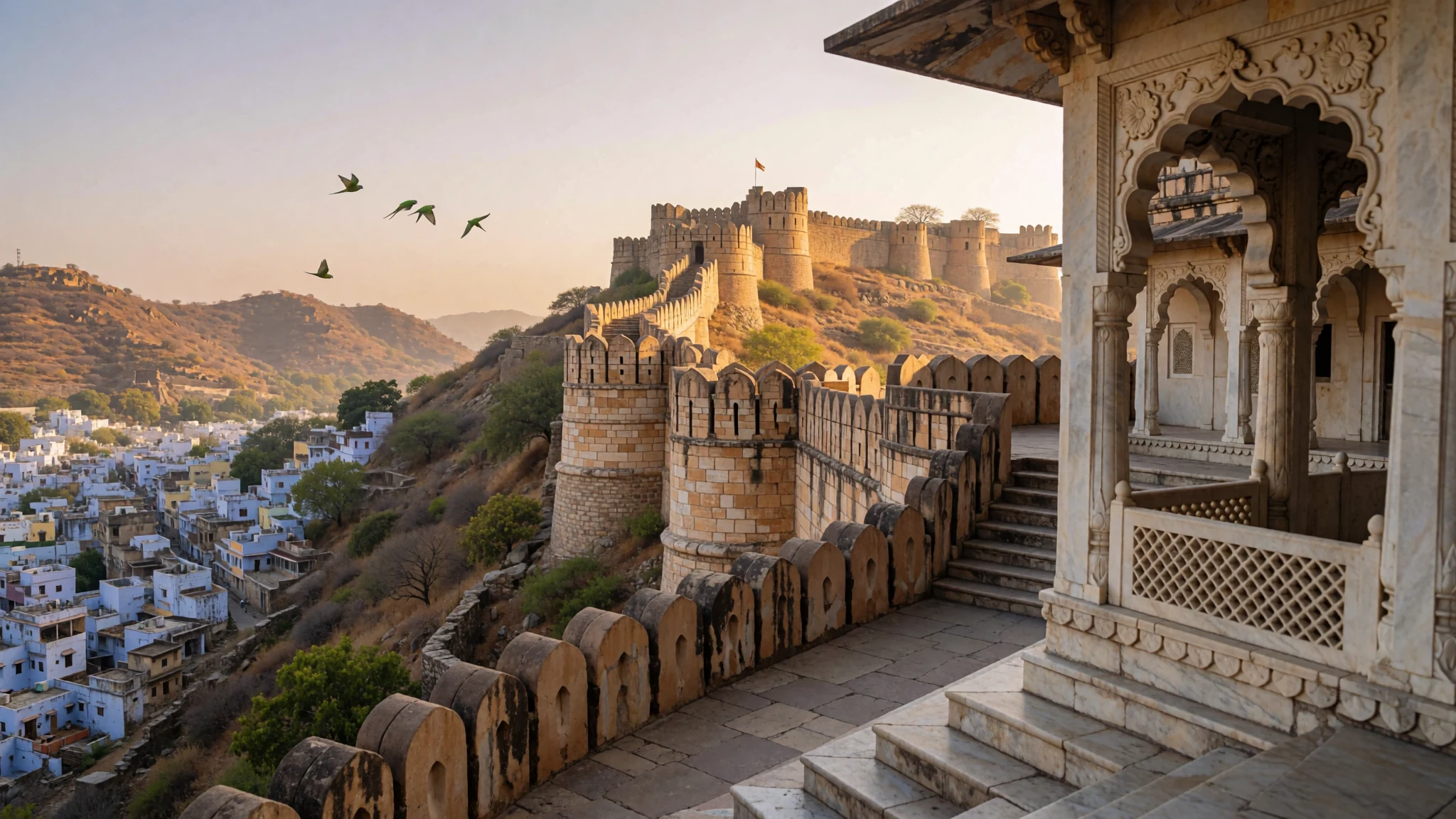
Bundi offers an unhurried glimpse of old Rajasthan, defined by ornate step wells, narrow blue lanes, and a magnificent hillside palace.
The place
Bundi sits in the Hadoti region of northwest India, tucked against rugged hills that shelter a maze of winding alleys and pale blue houses. Home to a population of approximately 103,000 residents, the city feels remarkably intimate compared to the busier tourist hubs of Rajasthan. Life here unfolds around crumbling gateways, bustling markets, and ancient water reservoirs that catch the fierce sunlight. Guesthouses cluster beneath the massive shadow of the citadel, drawing travellers who come to wander the quieter bazaars and admire the fading murals. While street vendors and eager touts can occasionally crowd the thoroughfares, the town quickly opens up into a warm, hospitable rhythm once you step away from the main tourist paths. Writers, artists, and independent travellers have long gravitated to its unpolished charm, finding inspiration in the shadowed courtyards and the panoramic views from the ridge above the town.
Its story
The history of Bundi reaches deep into antiquity, with Stone Age artifacts uncovered in the surrounding landscape. In 1241, Chauhan nobles seized the territory from local Meena and Bhil tribes, establishing Bundi as the capital of their medieval kingdom, Hadoti. Centuries of shifting power shaped the settlement's stone ramparts and alliances. Following a strategic treaty with the Mughal Empire in 1568 under Rao Surjan Singh, the rulers of Bundi maintained a significant degree of regional autonomy. Later, in 1818, an alliance with the British East India Company helped counter Maratha expansion, allowing Bundi to preserve its identity as a princely state through the colonial era until it formally joined the Dominion of India in 1949. Beyond its political annals, the surrounding terrain holds deep scientific significance; the Great Boundary Fault at nearby Satur is a recognised geological monument that preserves vital clues to the Earth's tectonic history.
What to see
- Taragarh Fort — Hilltop above the old city
Perched high above the city, this 15th-century fortress commands sweeping views of the surrounding hills and rooftops. It features intricate stone structures and historic wall paintings that reflect the architectural ambition of its builders.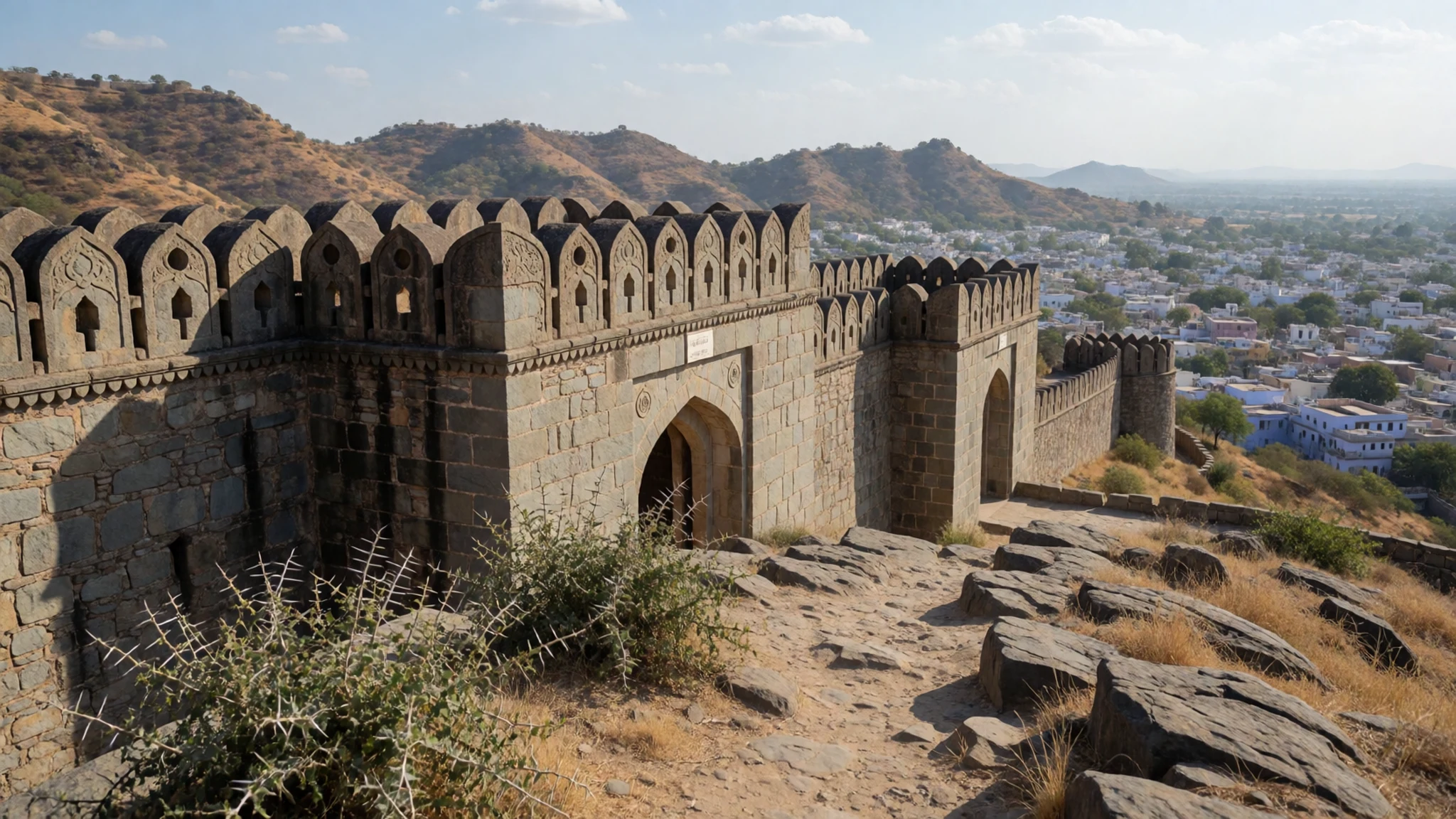
- Garh Palace and Chitrashala — Below Taragarh Fort
This sprawling palace complex demands a steep climb up through gates designed to deter charging elephants. Inside, the Chitrashala courtyard houses some of India's finest miniature wall paintings, depicting vibrant court scenes, battles, and mythological creatures.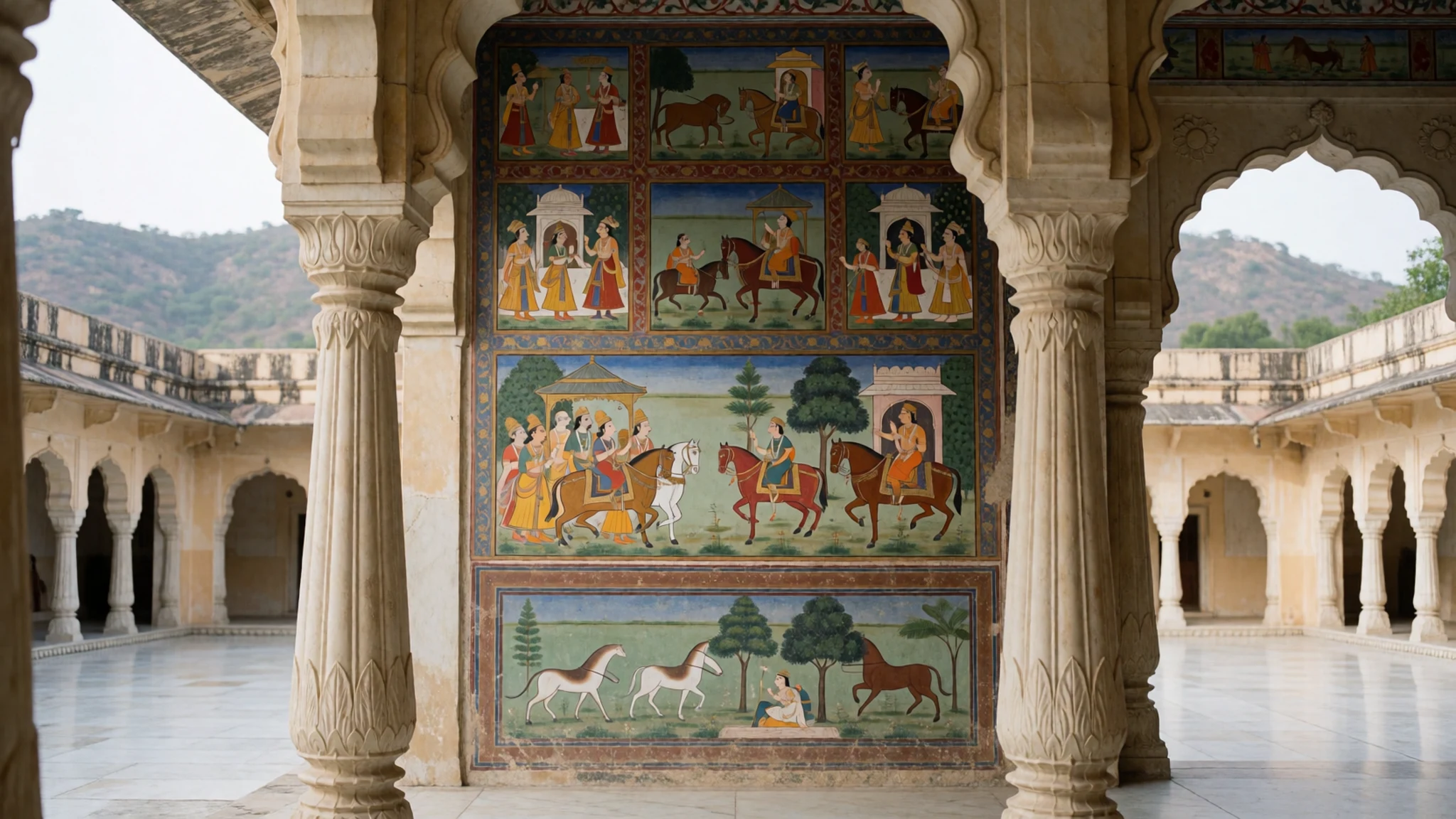
- Rani Ki Ji Baori — Central Bundi
Built in 1699 by a local queen, this historic step well plunges 46 metres into the earth. It features intricately carved pillars and hundreds of symmetrical steps leading down to where water once gathered in the deep subterranean chamber.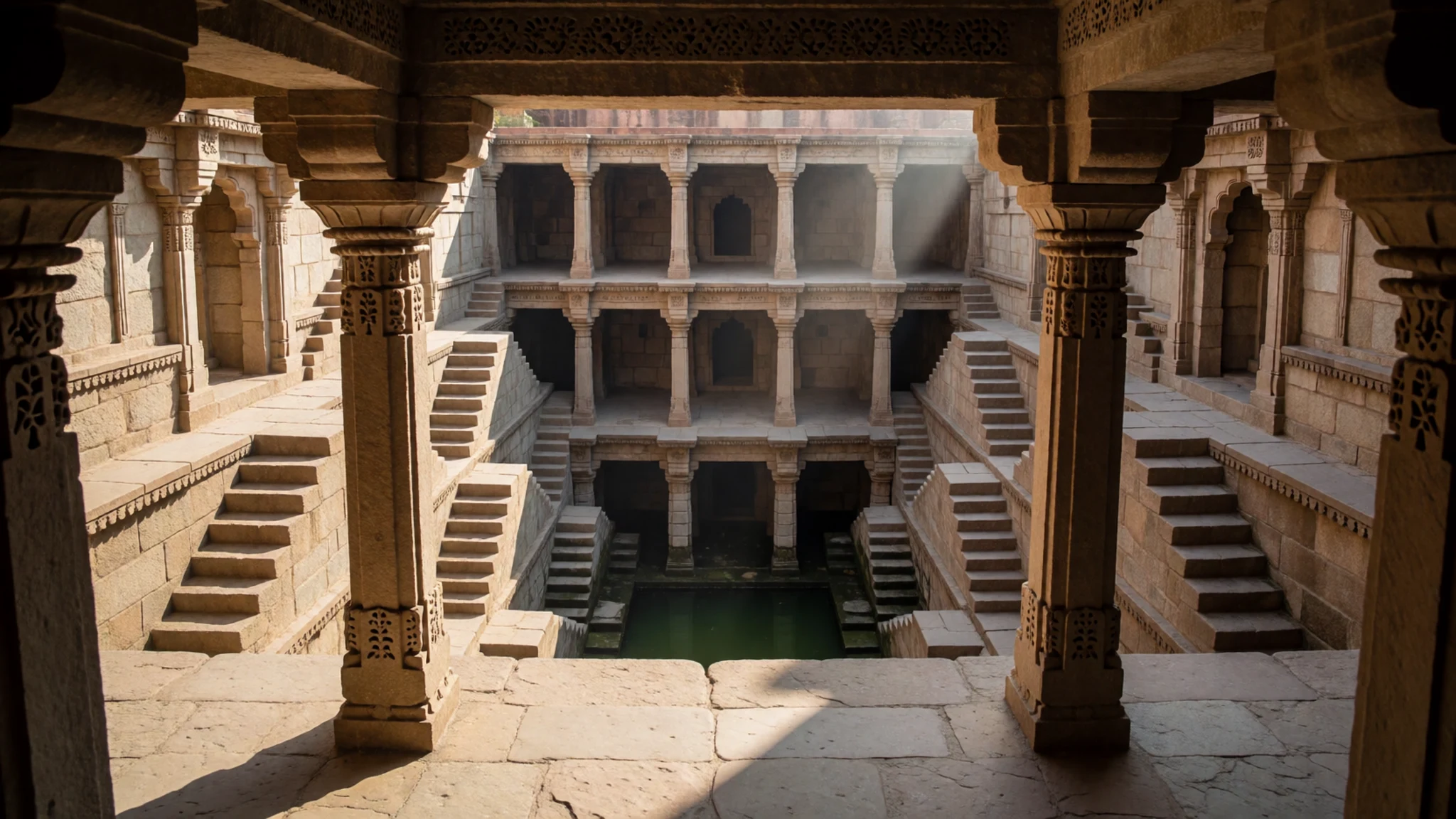
- Nawal Sagar Lake — Near the old town centre
A large, square artificial lake that reflects the sky and surrounding temples. A shrine dedicated to the Vedic water god Varuna rises half-submerged from the centre of the water, creating a striking focal point for the neighbourhood.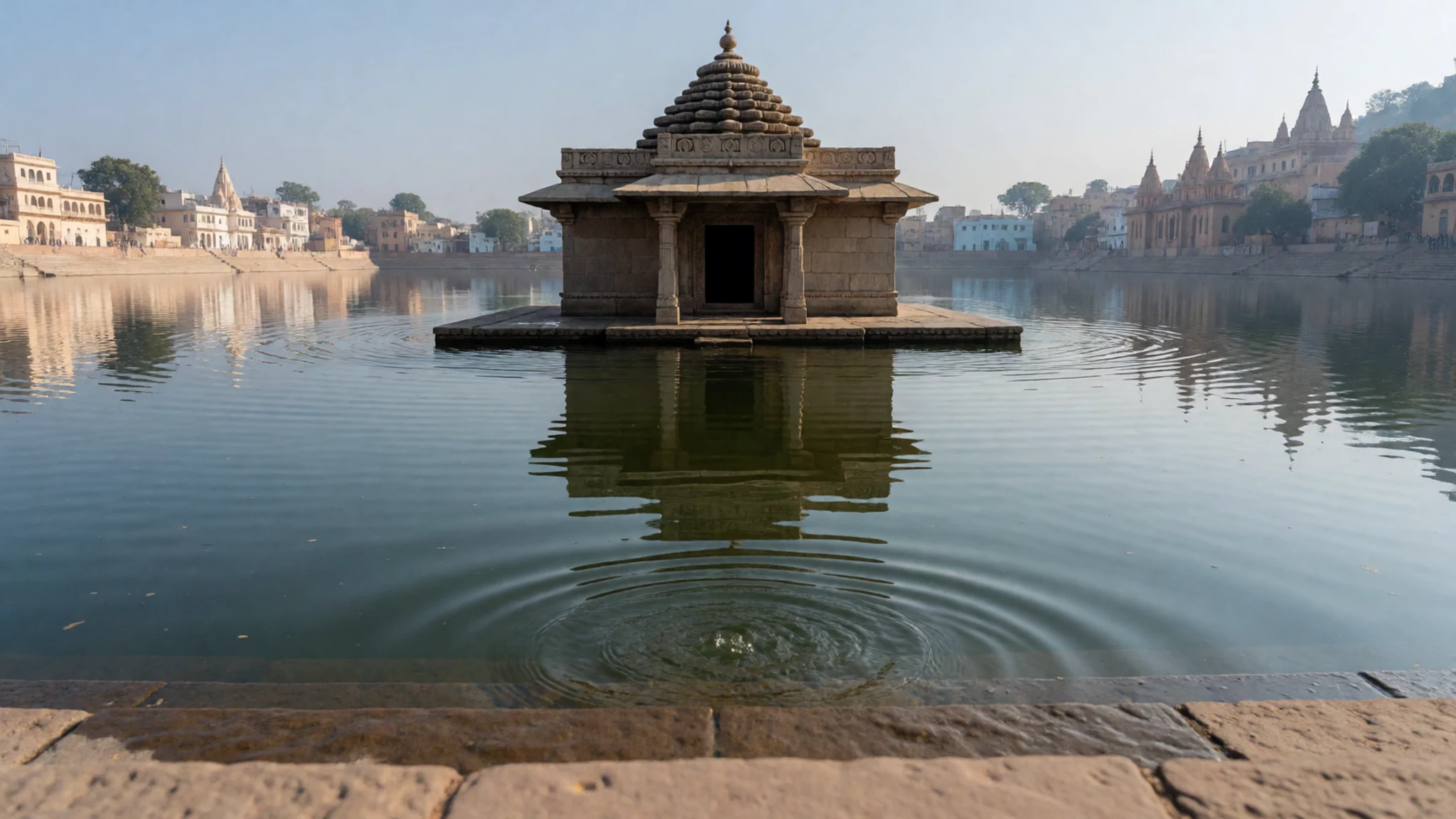
- Chaurasi Khambon ki Chhatri — Southern edge of Bundi
Constructed in the late 17th century as a royal memorial, this striking pavilion is supported by eighty-four intricately carved stone pillars. It stands in a quiet garden setting, showcasing the classical stonemasonry of the era.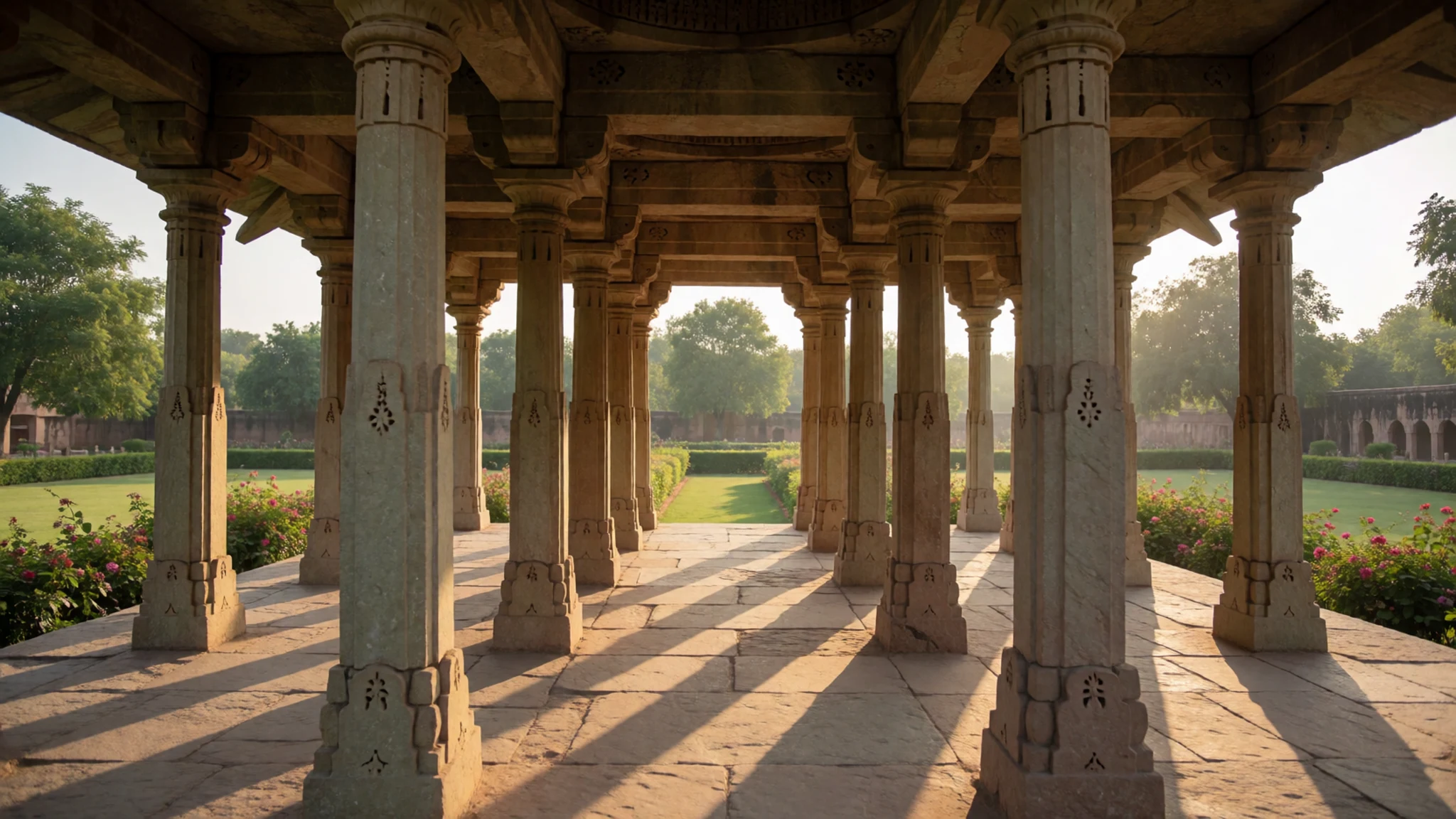
Culture
Bundi's cultural identity is deeply rooted in literature and miniature art. During the Mughal era, traditional Rajput poetry blended with imperial artistic currents, giving rise to the distinctive Bundi School of miniature painting. These delicate works, characterised by rich colours and depictions of court life and nature, adorned palace walls and inspired generations of creators, including contemporary artists and designers who gather for annual cultural events. The city also hosts the annual Bundi Utsav during the Hindu month of Kartik, celebrating local heritage with folk music, traditional Rajasthani sports, and craft fairs. Visitors should dress modestly, covering shoulders and knees when exploring local neighbourhoods and religious shrines.
What to wear
Traditional dress across Bundi reflects the vibrant colours and practical demands of rural Rajasthan. Local men often wear traditional dhotis or trousers paired with colourful turbans that signal community and regional identity, while women wear flowing ghagra cholis and bright odhnis block-printed with traditional motifs. Modern daily wear in the town's markets leans towards casual shirts and trousers for men, and comfortable salwar kameez or sarees for women. Visitors should pack lightweight, breathable cotton clothing to cope with the warm climate, ensuring items cover shoulders and knees out of respect for local customs. Sturdy footwear is essential for navigating the steep, uneven stone pathways leading up to the fort and step wells.
What to eat
- Haveli Braj Bhushanjee — Near the palace gates in the old town
Dine in a traditionally decorated darikhana dining hall within a heritage building, where you can sample authentic local vegetarian Rajasthani dishes prepared in a historic atmosphere.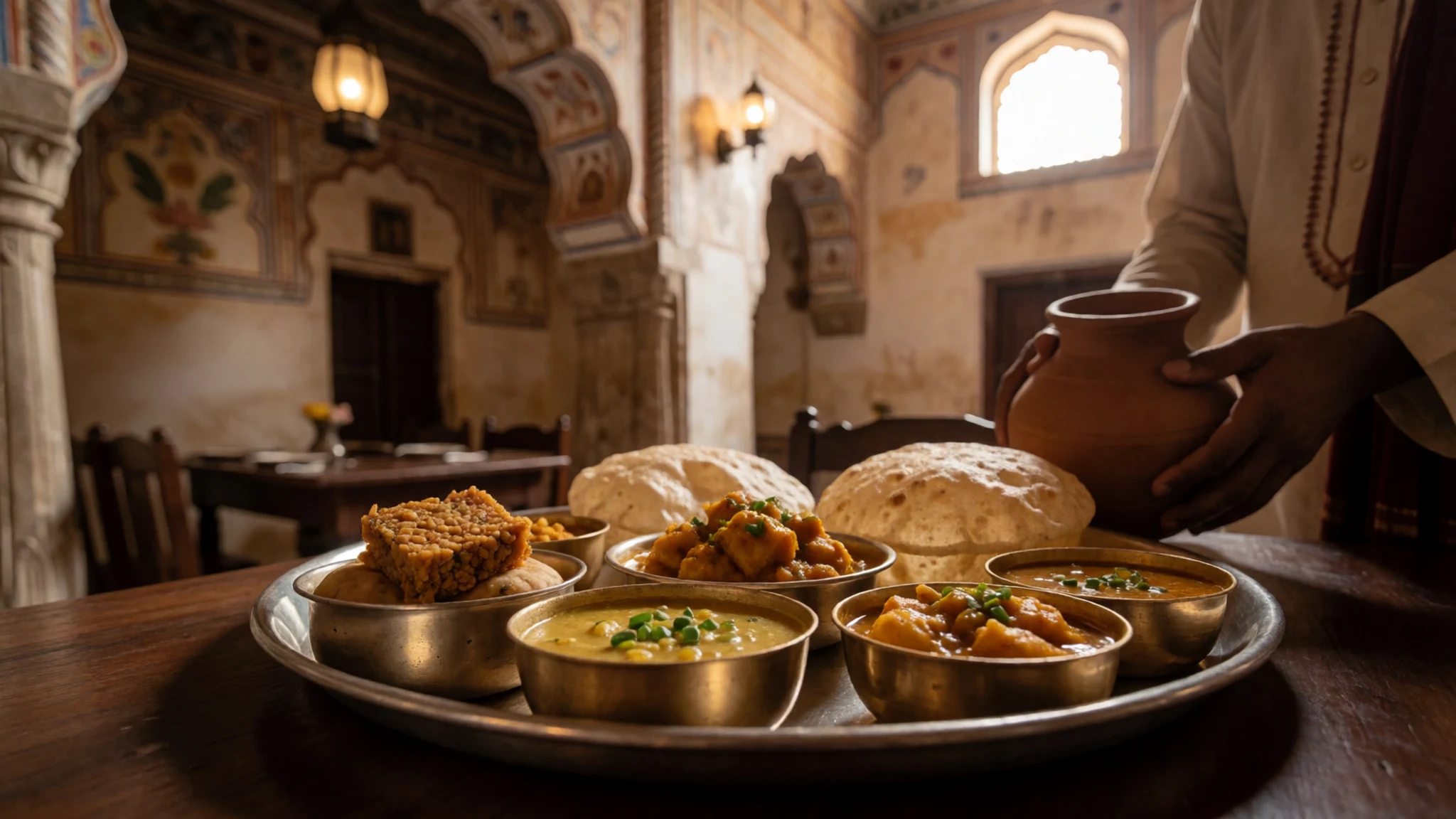
- Lakha — Near the guesthouse alleys below the fort
A tiny, intimate eatery where guests sit on floor cushions while the owner prepares fresh, home-style meals made to order.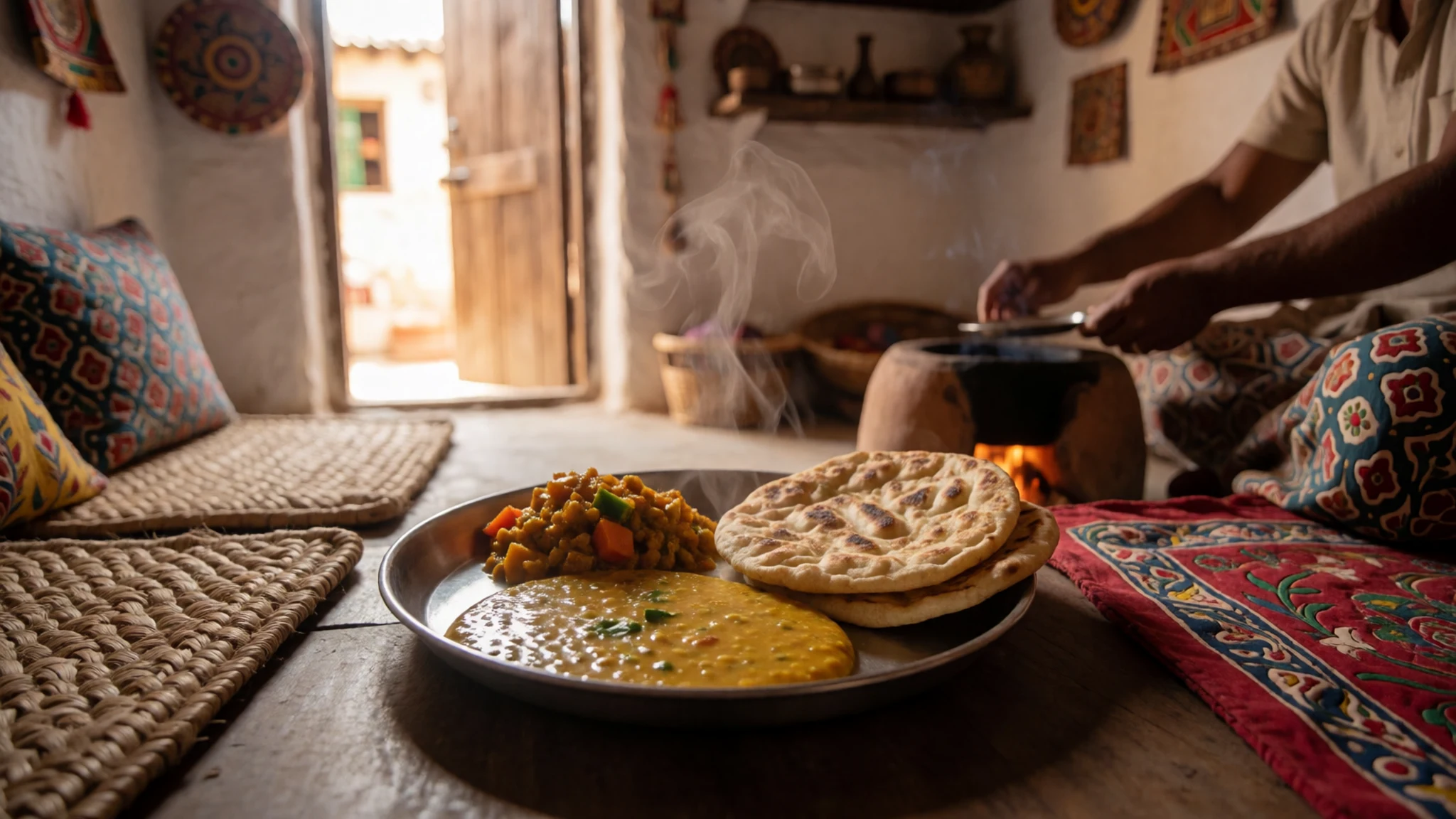
- Sathi Lassi — Bazaar street stalls near the market
Famous locally for serving exceptionally thick, creamy traditional lassis topped with a rich layer of cream, perfect for cooling down on a warm afternoon. - Street Samosas — Azar Park market area
Crispy, spiced potato-filled pastries fried fresh at roadside stalls throughout the town, offering a quick and traditional local snack.
Plan it
Best time. October to March offers pleasant daytime temperatures and cooler evenings, making it ideal for exploring the historic sites on foot.
How long. 2–3
Getting there. Fly into Jaipur or Udaipur, then continue by train or road. Direct trains connect Bundi to Delhi, Kota, and Udaipur.
Budget. low
Tips
- Start your climb to Taragarh Fort early in the morning before the afternoon heat sets in
- Carry cash for small temple entries, local markets, and family-run eateries
- Ignore street hustlers offering unsolicited guide services to avoid inflated commissions
- Drink bottled water and check that street food stalls are freshly prepared
Etiquette
- Dress modestly with shoulders and knees covered when visiting temples and old neighbourhoods
- Remove your shoes before entering homes, temples, and sacred spaces
Nearby
Sources
- Wikidata Q862612 (CC0)
- Wikipedia (rev 1375321042) (CC BY-SA 4.0)
- Wikivoyage (rev 5290788) (CC BY-SA 4.0)