Bieszczady National Park
Bieszczady National Park, Poland
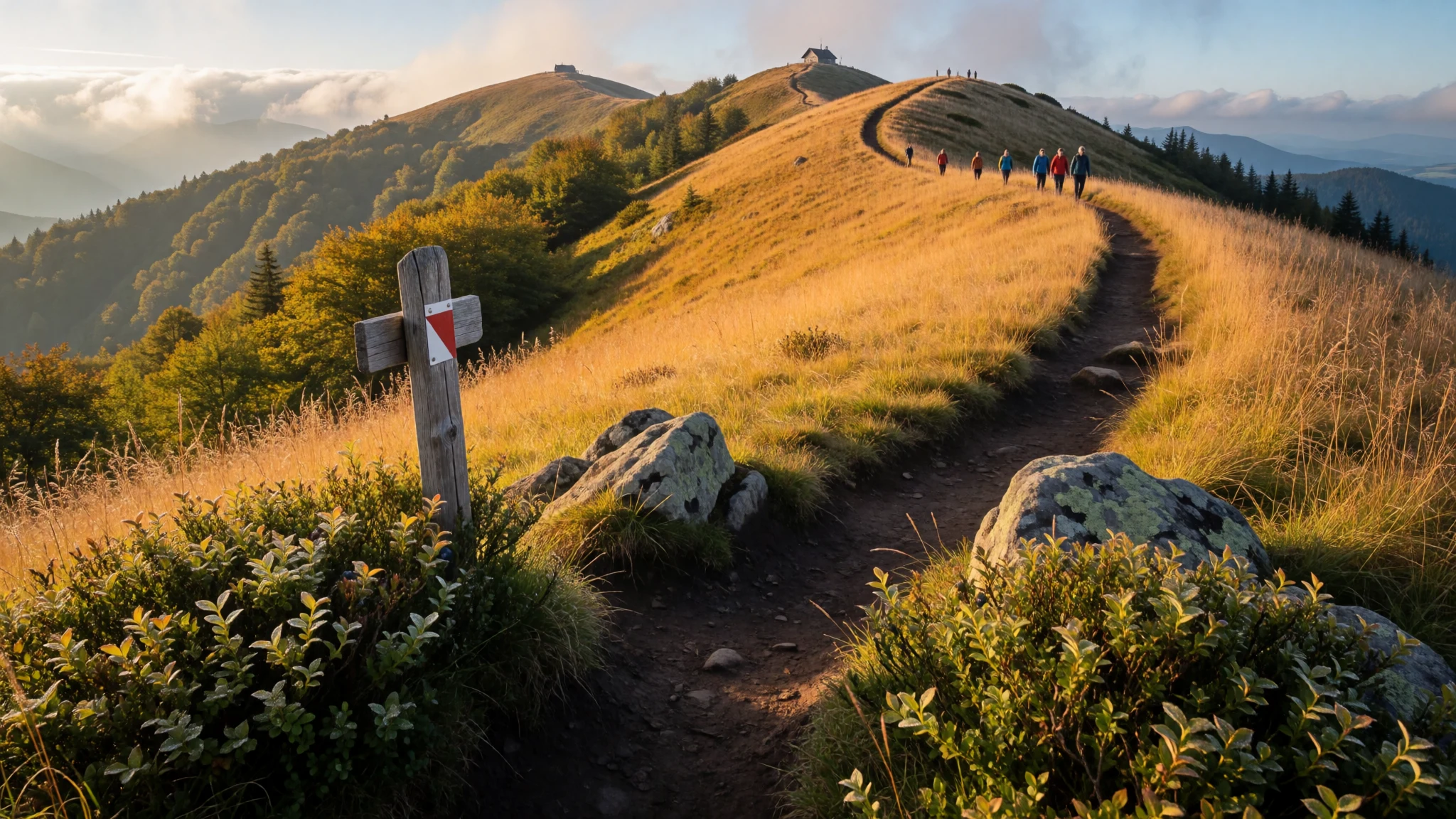
Bieszczady National Park is a remote network of forest trails and ridgelines where the best moments often happen between viewpoints.
The place
Bieszczady National Park (Bieszczadzki Park Narodowy) sits in Poland’s far south-east, tucked into the Subcarpathian region and meeting Slovakia to the south and Ukraine to the east. It’s one of those places where “journey” genuinely outweighs “destination”: the roads are winding, the villages are scattered, and the landscapes keep changing as you climb from river valleys into open Połonina ridges.
The park is mountainous and hilly, but it isn’t alpine. Forests do most of the work—about four-fifths of the area is woodland—so the mood is often green, shaded, and quiet, even when the sky is bright. On clear days you get broad views across valleys; when clouds roll in, the trail becomes a steady walk through mist and trees.
There’s also history underfoot. Ruined village sites and memorial places are part of the park’s character, and some paths feel less like “scenic tourism” and more like cultural landscape. Birdsong and hoofprints can share the same loop as you pass conservation areas.
Crowd levels are usually manageable compared with the famous hiking hubs of Europe, though the most popular ridges can feel busier at peak daytime hours. Weather is the real variable: plan for cool mornings, shifting cloud, and wet stretches on trail edges.
Official starting points, signage, and trail markers help, but the park rewards self-reliance—bring sensible layers, enough water, and time for detours.
Its story
Bieszczady National Park has a “made by humans, then rewilded by time” feel. The park was established in 1973, and its borders were adjusted later, bringing in former villages and expanding what visitors can now explore. That administrative timeline matters because it explains why you’ll find both natural forest and traces of earlier settlement.
Before the park existed, the Bieszczady region was remote and less intensively settled for long stretches. Small pastoral and logging communities gradually took shape, but the area didn’t become heavily urbanised—partly because it stayed difficult to reach and partly because livelihoods were closely tied to the mountains.
The 20th century added disruption that still shows up in the landscape. The region saw partisan conflict during the Second World War, and in the years that followed, local residents were expelled and many villages were depopulated. In today’s hikes, that history can be felt in the sudden shift from “wild” to “site”: stone remains, cemetery grounds, and quiet memorial spaces make the terrain feel layered rather than purely recreational.
The park’s story isn’t only about loss, though. Creating a protected area helped preserve forest and mountain habitats, and over time it attracted attention from conservation initiatives. UNESCO recognition came later as part of the wider Carpathian beech-forest story, linking Bieszczady to a broader ecological network.
In practice, history in Bieszczady isn’t something you read once and forget—it’s something you encounter slowly, kilometre by kilometre.
What to see
- Połonina Wetlińska — Połonina Wetlińska ridge area
Połonina Wetlińska is the big magnet in the park: a broad pasture-style ridge with valley views and a mountain shelter in the middle. It’s a great place for a sunrise walk when the forest opens and the air feels lighter.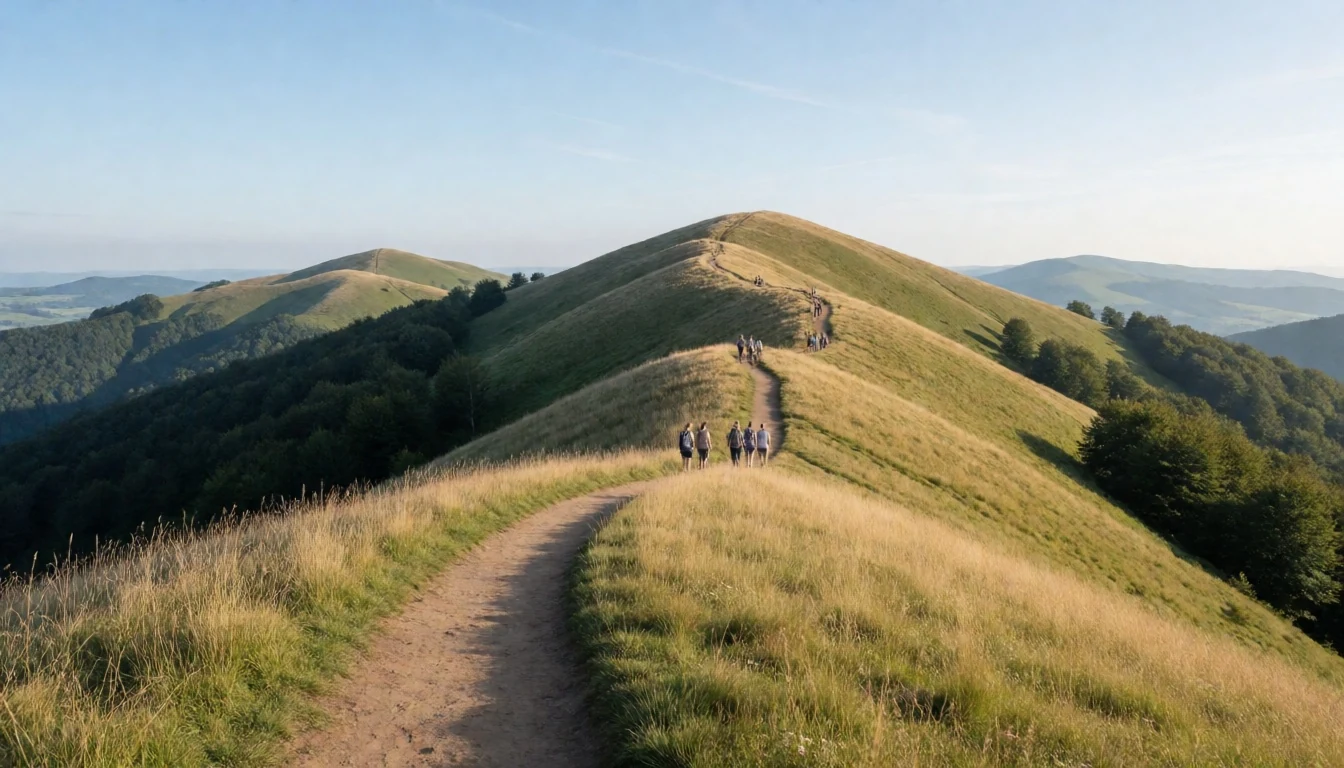
- Połonina Caryńska — Połonina Caryńska ridge area
Połonina Caryńska sits to the east and tends to feel less crowded than Wetlińska. The ridgeline still delivers those classic wide mountain views, but with a slightly calmer pace, especially once you’re walking away from the main access points.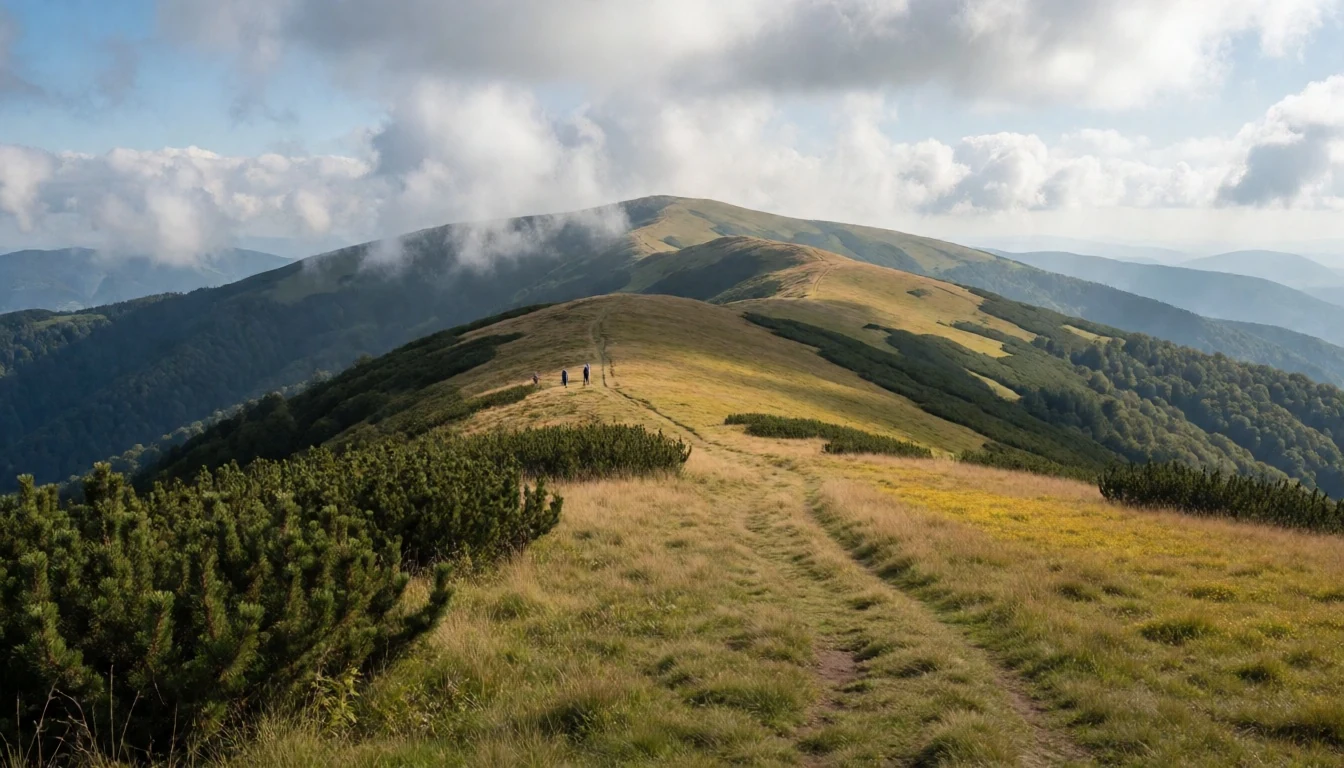
- Tarnica — Tarnica hiking area
Tarnica is the park’s highest peak and a key hiking goal for many visitors. It’s not just about altitude for the sake of it—the summit viewpoint anchors the whole day’s effort, and the route is a good taste of Bieszczady’s ridge-and-forest rhythm.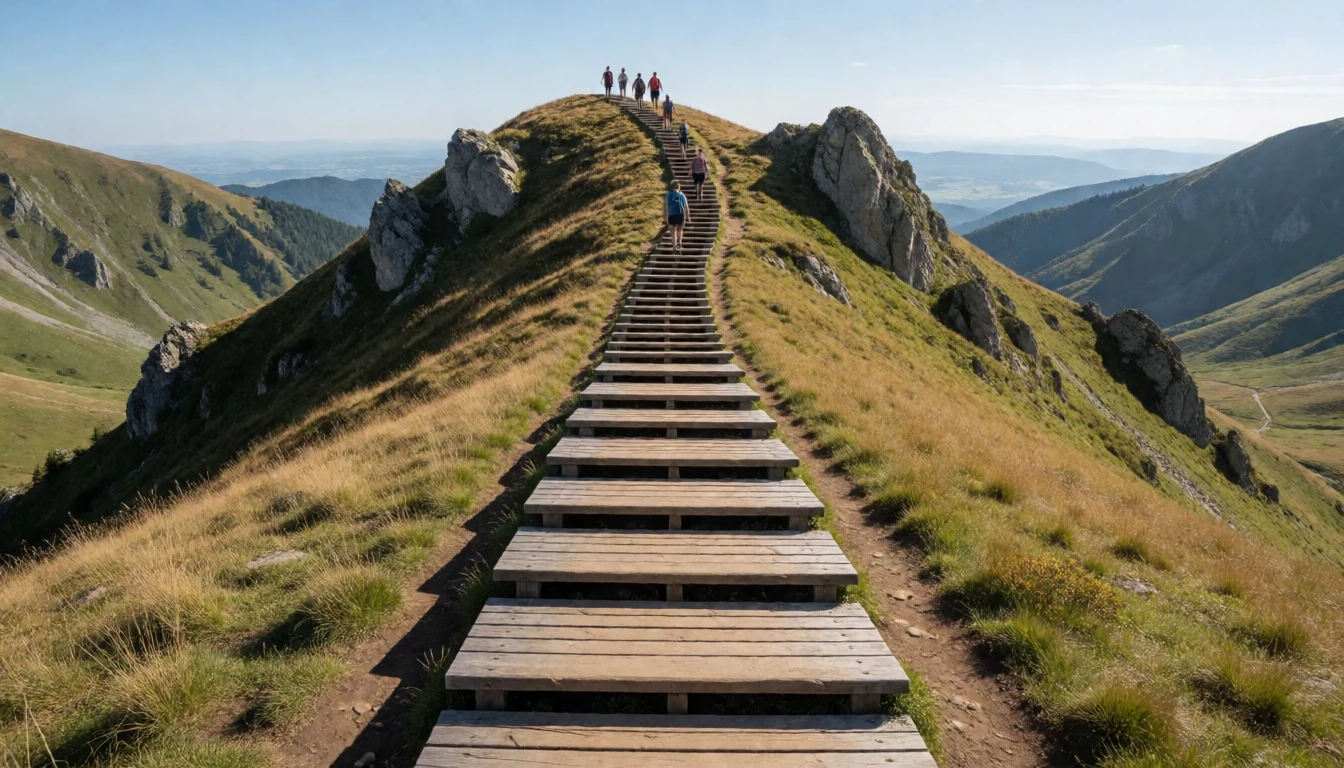
- Beniowa church and cemetery — Beniowa village remains area
Beniowa church and cemetery are the remains of a former Ukrainian village, linked to the upheavals of the Second World War and the years after. Visiting this spot offers a quieter, more reflective stop between longer walks.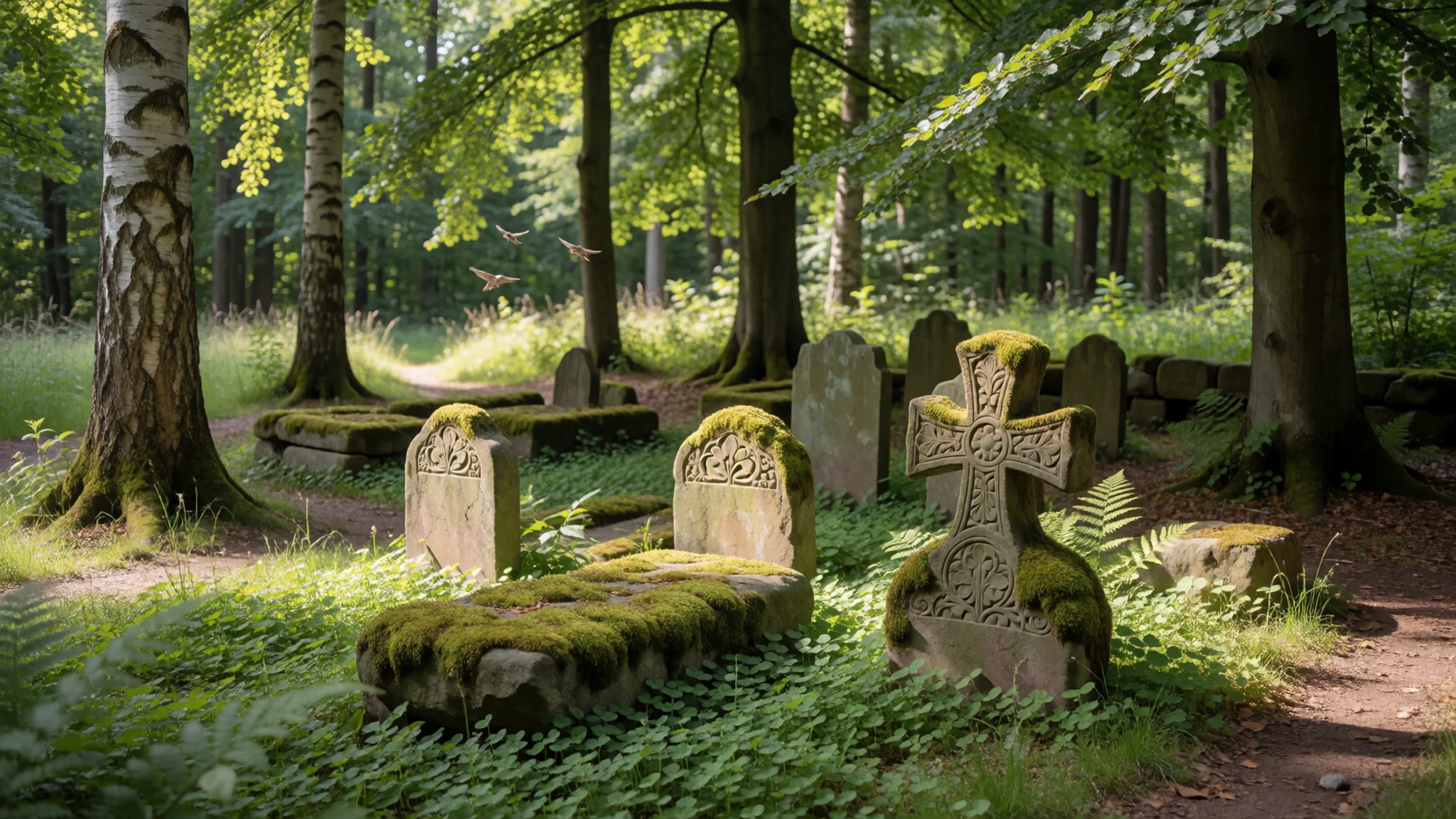
- Zagroda Pokazowa Żubrów — Zagroda Pokazowa Żubrów area
Zagroda Pokazowa Żubrów is a place where you can see European bison. It’s a practical add-on when planning route days—something a bit different from the usual ridgeline views, and ideal for families or shorter half-days.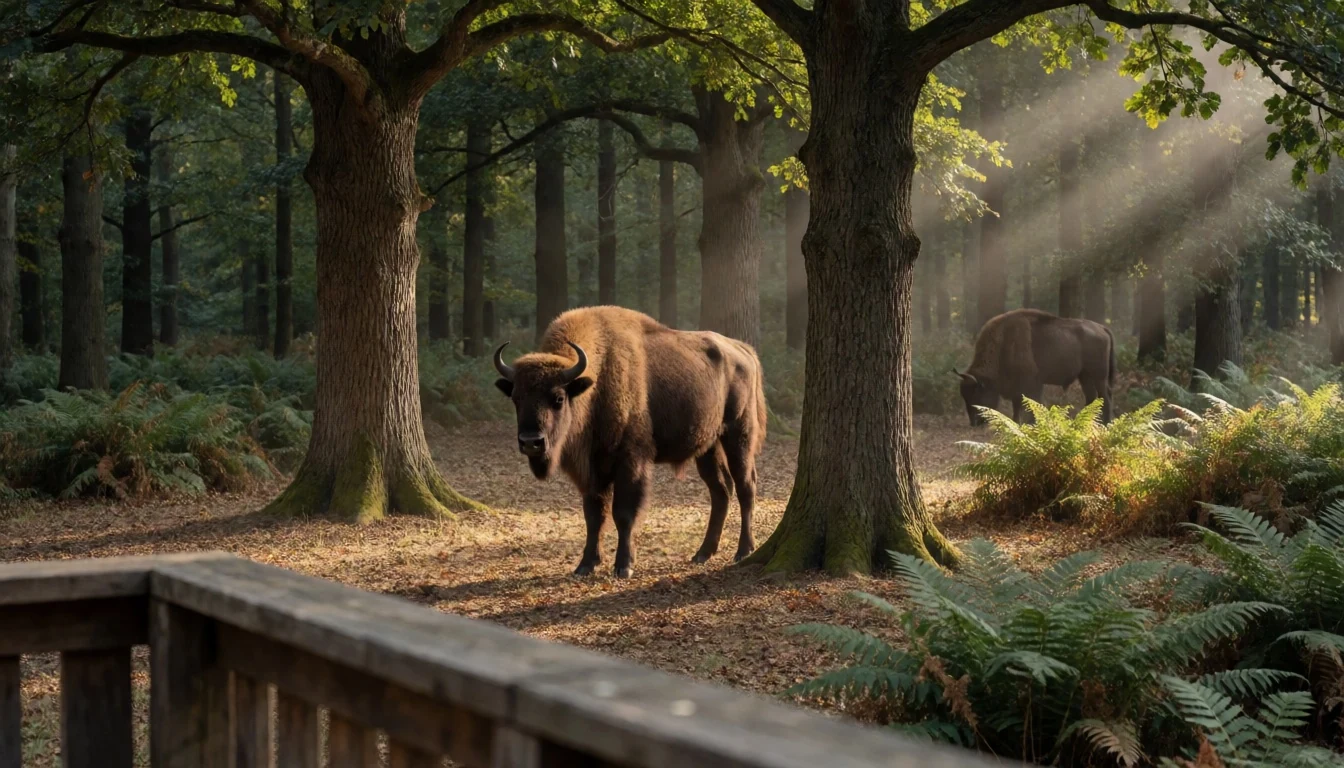
Culture
Bieszczady National Park’s culture is tied to how people lived in remote mountain valleys—and how those lives were reshaped by war, depopulation, and later protection of the land. You’ll notice this in the way trails intersect with village remnants and cemetery grounds, where the park’s natural quiet meets human memory.
The park also has a living “mountain work” side. Conservation and farming activities—like pony-related initiatives—sit alongside wild forest, so the countryside doesn’t feel like a museum. In summer, ridges can feel like grazing landscapes with a modern visitor layer: hikers, families, and the occasional guided activity.
Because Bieszczady is a border region, practicalities matter. Check arrival and departure times early, and expect that formalities can happen unexpectedly. Even on days that look simple on paper, transport can be less predictable once you’re in the hills.
Visitor etiquette in Bieszczady is straightforward: stay on marked paths to protect ground vegetation, keep noise low around memorial sites, and be respectful when photographing people who might be part of local or conservation routines. And when in doubt on trail access, follow the signage—no detours just for views.
Please keep to marked trails and respect memorial sites by staying quiet and not walking through cemetery areas.
What to wear
In Bieszczady National Park, dressing is mostly about weather and terrain, not fashion. The landscape mixes forest shade with exposed ridgelines, so conditions can shift quickly even within one hike.
Traditional clothing isn’t a daily requirement for most visitors today, but the region’s mountain culture still shows up through patterns and wool traditions in local crafts. When locals dress up for events, you’ll often see embroidered, wool-heavy pieces that suit cooler evenings and outdoor work. For textiles, wool is the star—practical for warmth and damp conditions.
What people actually wear now is what you’d expect for Central European hiking: layered fleeces or warm tops, waterproof outer shells, sturdy hiking trousers, and comfortable shoes or boots with grip. On popular Połonina walks, a hat and warm layer help for wind on the open grasslands.
For visitors: bring a waterproof jacket, water-resistant hiking footwear, and layers that work for cool mornings and changeable afternoons. If a day includes memorial grounds or village sites, modest, non-flashy clothing keeps things respectful. In muddy stretches after rain, thicker socks and extra blister prevention are worth it.
Sun protection matters too—open ridges can be bright even when temperatures feel mild. Pack light but don’t underdress for wet, windy moments.
What to eat
- Chatka Puchatka (mountain shelter stop) — Near the main trails on Połonina Wetlińska
Chatka Puchatka is a well-known mountain shelter stop on Połonina Wetlińska. Even if it’s just for a warm drink or a quick bite, it’s the kind of pause that keeps a long ridge day enjoyable.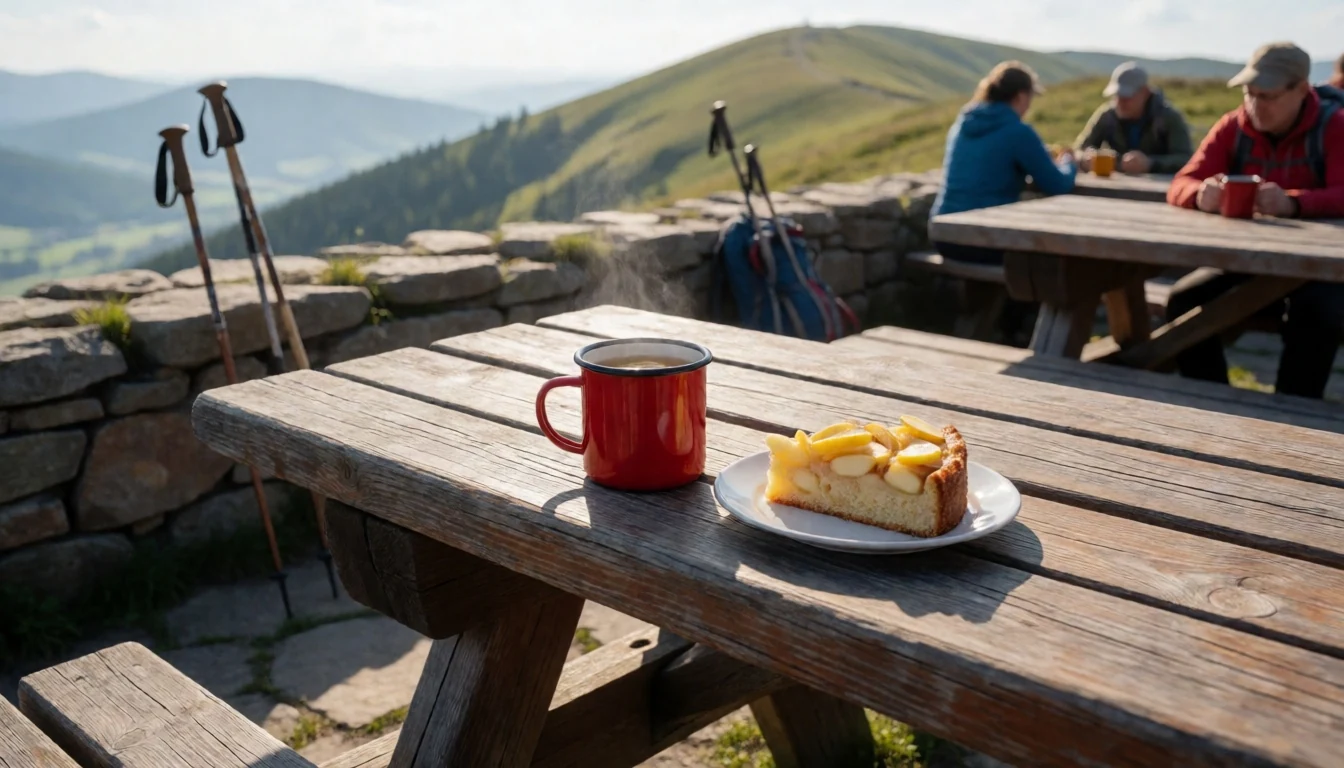
- Mountain shelter-style simple meals — Along the main hiking routes and shelters
On ridge and trail routes, expect straightforward mountain shelter food: filling, practical portions designed for hikers rather than a long sit-down meal. It’s best planned as “fuel” for the next stretch.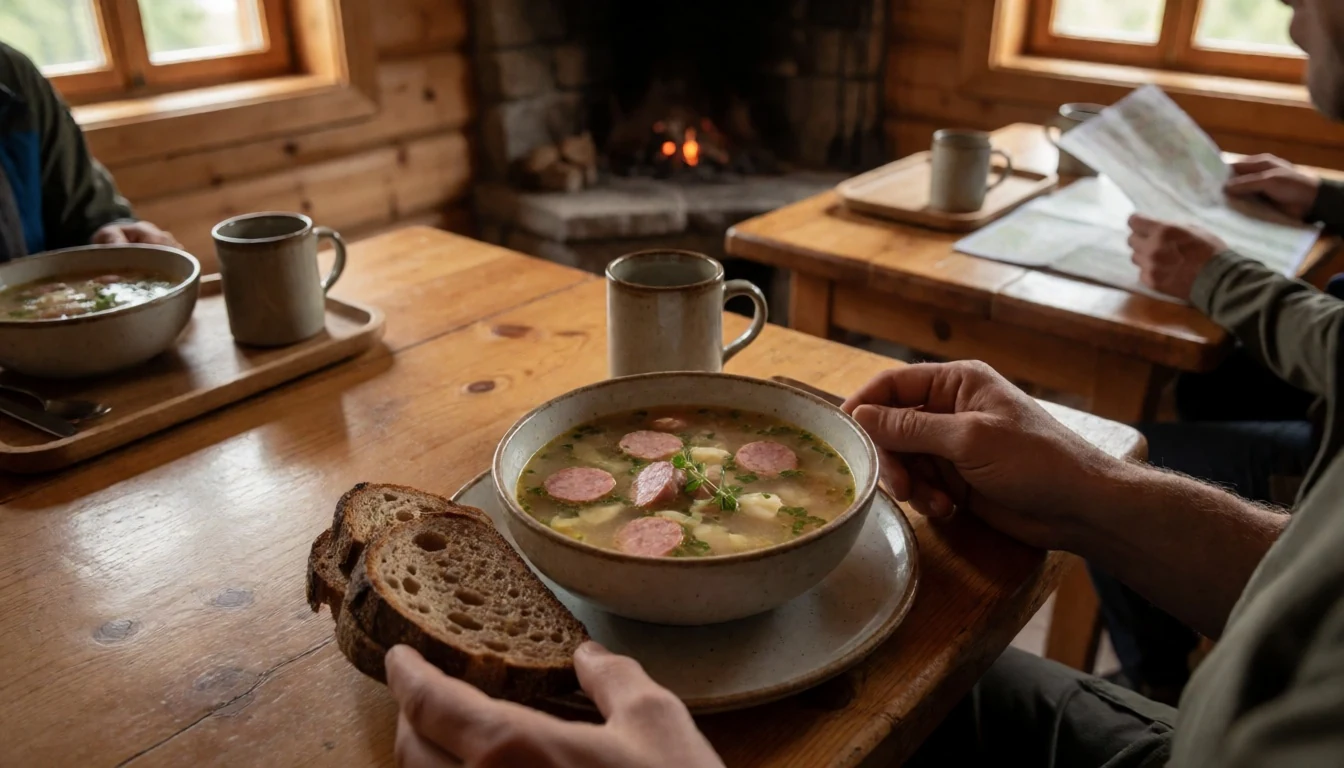
- Local bakery snacks — In nearby towns used as trailhead bases
In towns around the park, small bakeries and everyday food shops are handy for grabbing portable snacks before heading out. Think bread-based snacks and sweet treats that travel well in a daypack. - Hearty Polish-style comfort plates — Restaurants in nearby towns such as Sanok or Ustrzyki Dolne
Outside the park, you’ll often find the classic comfort-food style that suits cold weather: filling plates that make sense after a wet hike. Choose places that focus on local, seasonal cooking. - Warm drinks after hiking — Cafés and small eateries in gateway towns
After time on the ridges, a hot drink can be the easiest “recovery meal”. Look for cafés or small eateries in gateway towns and plan your stop before evening transport gets tricky.
Plan it
Best time. March–April for mild spring hikes and brighter days; late October–November for cooler air and clearer views. The park can be wet, and ridges can feel windy—pack for changeable weather.
How long. 3–4
Getting there. Fly into a major Polish hub such as Kraków or another large city, then travel by road to the Subcarpathian area. The park is commonly reached via towns like Sanok or Ustrzyki Dolne, with onward local buses or road access to trailheads.
Budget. mid
Tips
- Start hikes early to make the most of softer morning light and quieter trail stretches.
- Use towns like Sanok or Ustrzyki Dolne as base points, then plan short local hops to trail access.
- If travelling by car, fuel up before entering the park area—services are limited once you’re in.
- Carry water and a light waterproof layer; fog and drizzle can show up even when the morning looks clear.
- Build in a buffer for transport: in the mountains, “arrive on time” is not always reliable.
Etiquette
- Stay on marked trails to protect the park’s vegetation.
- Keep noise low around cemetery and memorial areas.
- Photograph wildlife carefully and don’t block paths or approach animals too closely.
Nearby
Sources
- Wikidata Q613888 (CC0)
- Wikipedia: Bieszczady National Park (CC BY-SA 4.0)
- Wikivoyage: Bieszczady National Park (CC BY-SA 4.0)