Warsaw
Warsaw, Poland
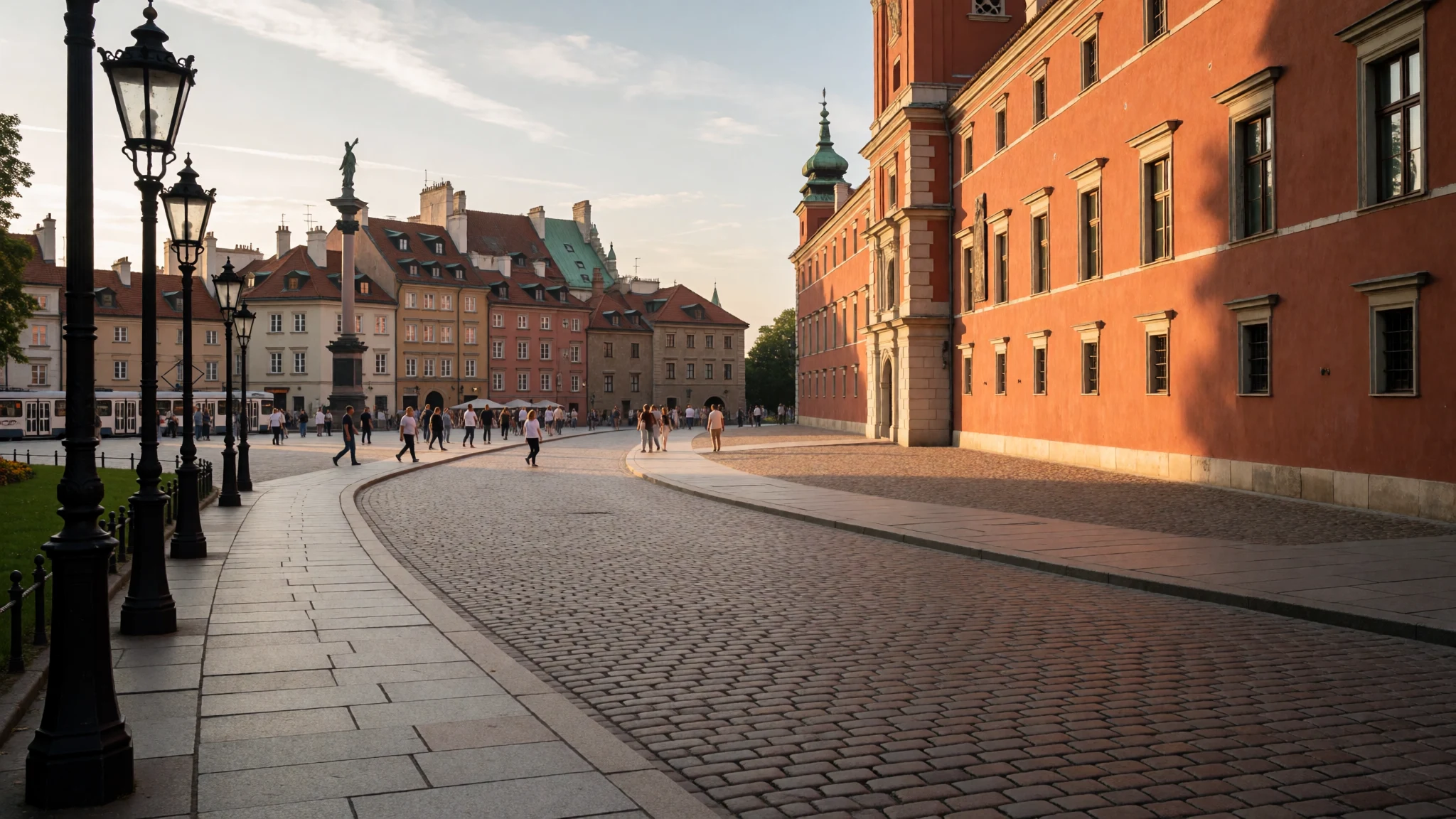
Warsaw is Poland's capital on the Vistula, a rebuilt Old Town beside a modern city of music, memory and long boulevards.
The place
Warsaw is the capital and largest city of Poland, set on the River Vistula in the east central part of the country at about 118 metres above sea level. Around 1.9 million people live in the city itself. The city is both a seat of government and a working metropolis: ministries, courts and embassies sit among office towers, tram lines and wide avenues that run down towards the river.
The historic core is small and walkable. Castle Square opens onto the Royal Castle, and the Old Town market square is lined with narrow townhouses painted in cream, ochre and brick red. Much of that streetscape was raised again after the Second World War, so the lanes feel old in plan and colour even where the walls are younger than they look. Beyond the ramparts the city changes character quickly. Śródmieście, the central district, mixes tenements from the nineteenth century, interwar blocks such as the former Prudential building, and later towers. Independence Avenue, Aleja Niepodległości, is one of the long avenues running north and south that show this layered city from above: trees, tram tracks and roofs rather than a single skyline.
Warsaw also carries the names of Frédéric Chopin, Maria Skłodowska-Curie, Władysław Szpilman and Pola Negri, and concert halls sit a short walk from the market square. People commute, queue for trams and drink coffee while tour groups pass. The Vistula forms the eastern edge of that everyday map: bridges cross a broad channel, and the banks are for walking rather than for a dense historic quay. In winter the wind off the water is sharp; in summer the paths fill. The city does not pretend to be only its Old Town.
Its story
Warsaw began as a modest settlement on the Vistula, not as a capital already formed. Fortified places stood earlier at Bródno and at Jazdów. Raids emptied Jazdów, and a fresh strongpoint was laid out over a fishing hamlet called Warszowa. Around 1300 Bolesław II of Masovia, prince of Płock, is credited with founding the town that became the modern city, and a record of a castellany appears in 1313. By 1390 the cathedral of St John stood complete, and from 1413 the dukes treated Warsaw as the Masovian capital. Craft and trade kept the place going. At that time the town held about 4,500 people.
Through the fifteenth century people settled beyond the north wall. That newer precinct, New Town, ran its own council under a separate charter, and the earlier streets acquired the name Old Town, with a council of their own. The decisive rise came later. In 1596 the court left Kraków for Warsaw under Sigismund III, and the town had to house a kingdom's politics: assemblies, nobles and the trades that fed them. By the eighteenth century more people lived in Warsaw than in Gdańsk. Until 1795 it was the Commonwealth's capital; afterwards Napoleon made it the seat of the Duchy of Warsaw.
That long arc, from a Masovian ducal town to a partitioned capital and a Napoleonic duchy, is why the Old Town's plan still matters. Those streets are the footprint of a city that changed rulers often and kept its lines. What stands there now was rebuilt after wartime destruction, on the same plots, which is why a walk through the Old Town is a lesson in continuity as much as in architecture.
What to see
- Castle Square — Old Town
Castle Square is Warsaw's hinge between the Royal Castle and the streets of the Old Town. The open plaza gathers visitors at the castle front, with pastel townhouses closing the sides and the column of Sigismund rising near the centre. From here the rebuilt lanes drop towards the river escarpment, and the square works as a meeting point before a walk into the market or down to the Vistula bridges.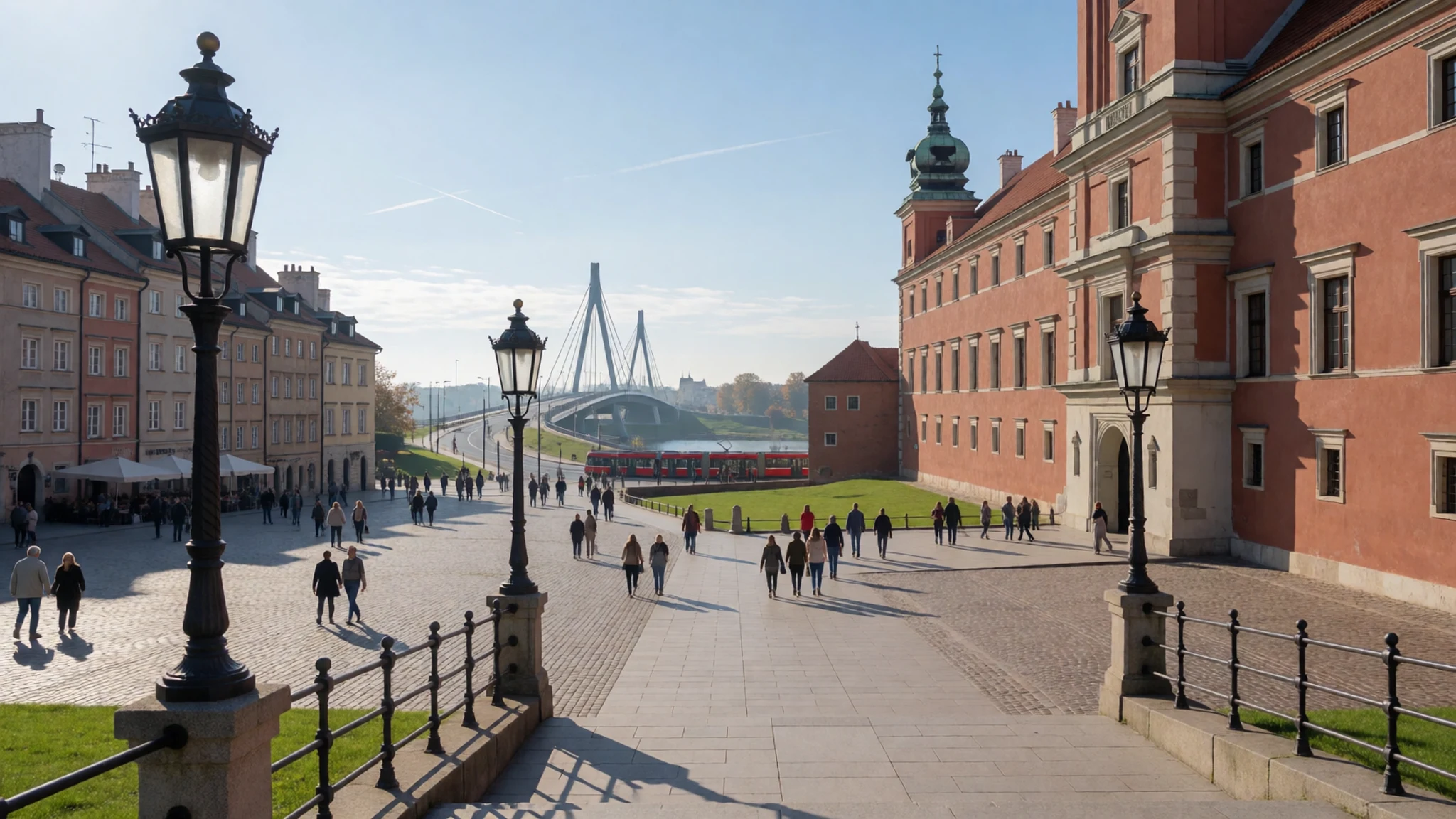
- Old Town Market Square — Old Town
The Old Town Market Square, Rynek Starego Miasta, is the room the rebuilt centre was planned around. Townhouses numbered along the Kołłątaj side show the painted gables and tall windows that give the square its colour, and cafes occupy the ground floors. The space is closed to traffic, so the noise is voices, chairs and street musicians rather than engines. Winter evenings are quiet; summer afternoons are not.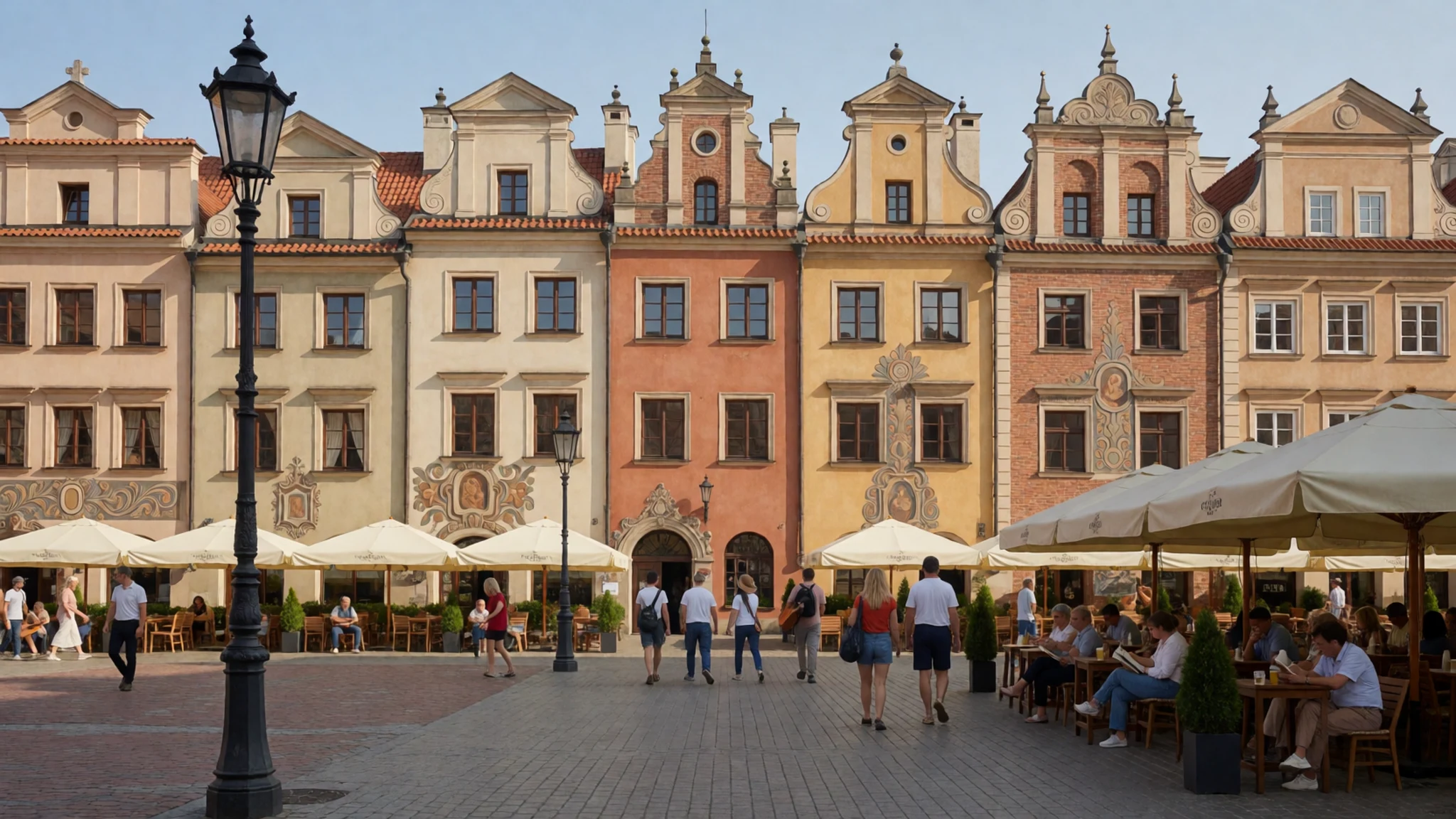
- Sigismund's Column — Castle Square
Sigismund's Column, Kolumna Zygmunta III Wazy, stands on Castle Square in honour of the king who brought the court here. The monument is a slim shaft with the royal figure above the plaza, a marker people use when giving directions in the Old Town. Raised in the seventeenth century and set up again after the war, it belongs to both the royal city and the rebuilt one.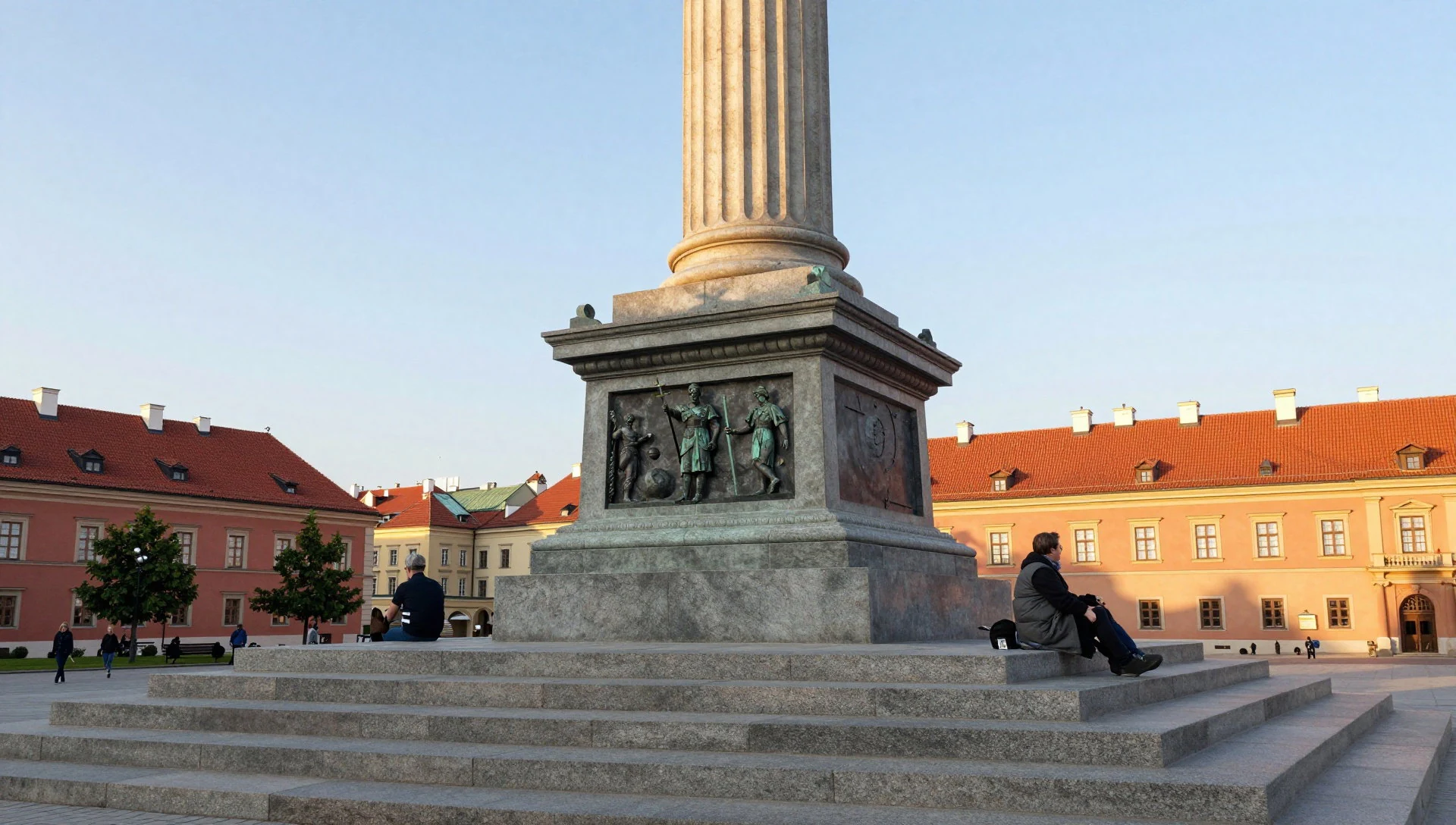
- Holy Cross Basilica — Krakowskie Przedmieście, Śródmieście
The Holy Cross Basilica, Bazylika Świętego Krzyża, faces Krakowskie Przedmieście, the street that runs south from the Old Town into Śródmieście. A columned front and a broad flight of steps address the traffic, and the church sits among university buildings on the ridge above the Vistula. It is a working parish, with services, as well as a stop on the walk between Castle Square and the newer centre.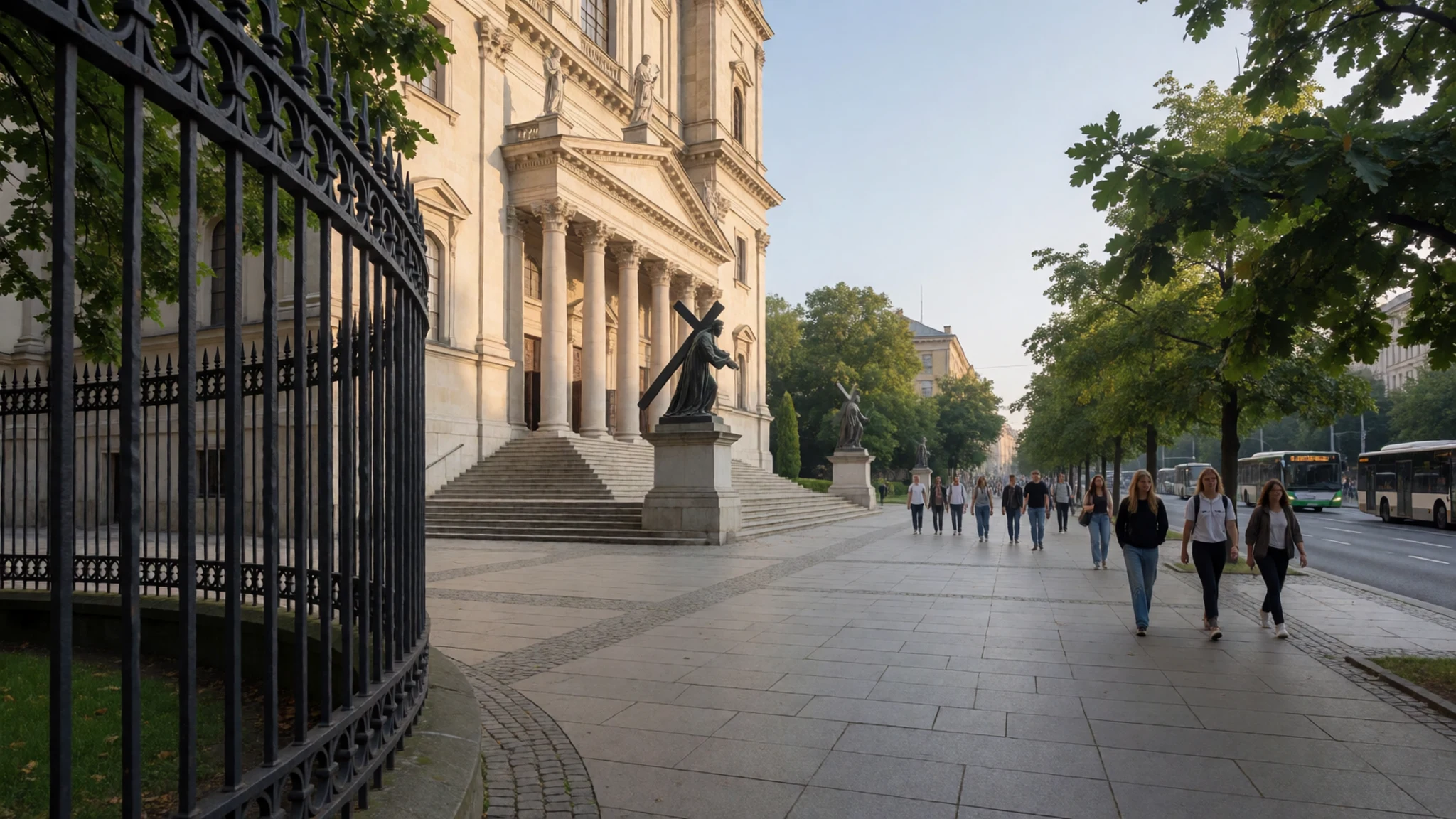
- Former Prudential building — Plac Powstańców Warszawy
The former Prudential building rises beside Plac Powstańców Warszawy, a short walk south of the historic ridge. Its stepped tower is an interwar silhouette, steel and stone rather than the painted plaster of the Old Town, and it shows the commercial city that grew before wartime destruction. The square at its foot is ordinary and useful: offices, traffic and a view back at the tower from pavement level.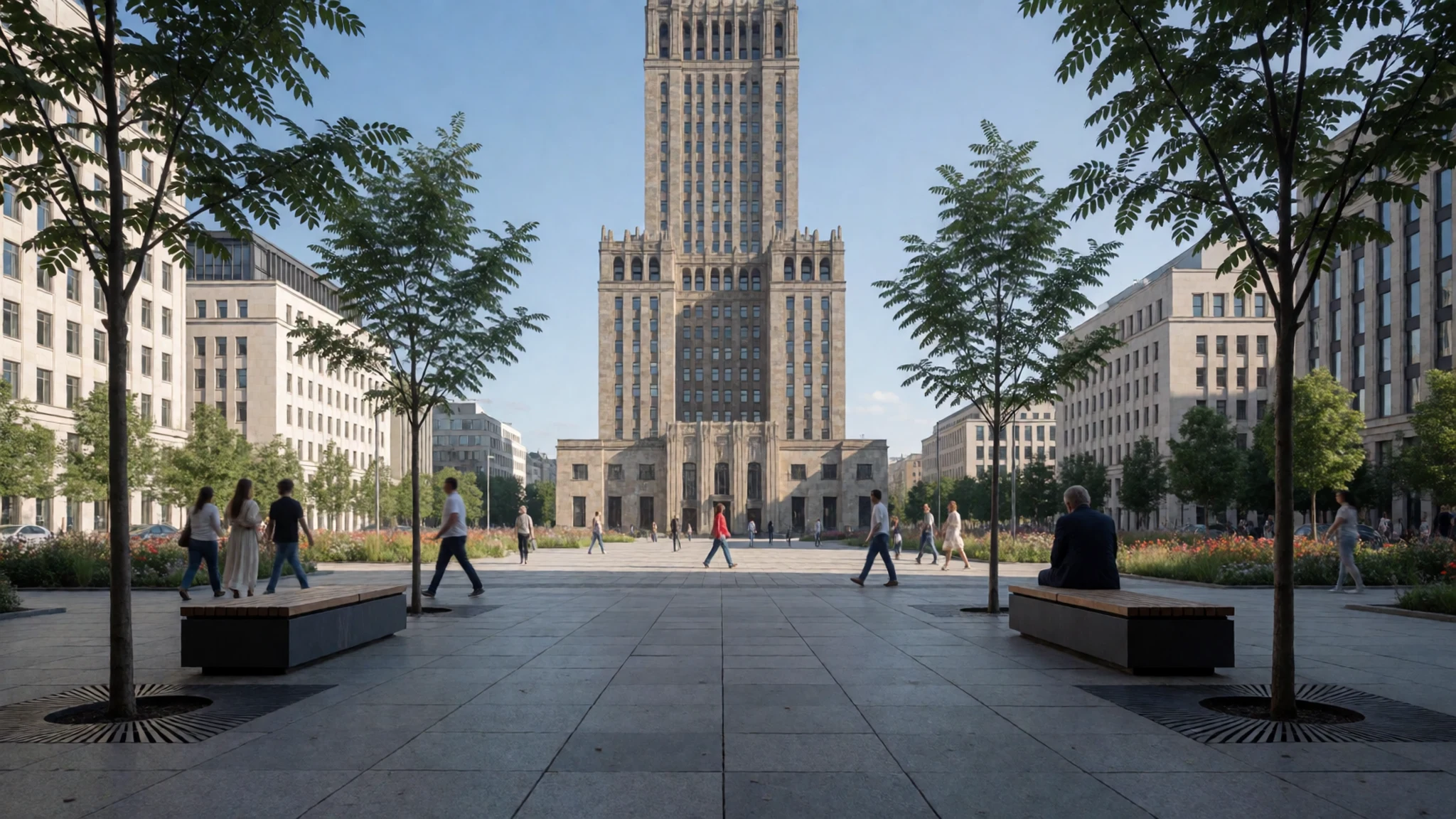
Culture
Warsaw treats music as civic infrastructure, not as a seasonal extra. Warsaw keeps its orchestras and companies in several houses at once. The Polish National Opera works at Teatr Wielki; the National Philharmonic has its own hall; the National Theatre and the Chamber Opera add drama and singing on a modest scale. Roma and Buffo are music theatres of a lighter kind, and the Palace of Culture and Science contains the Congress Hall, a large auditorium used for concerts. Across the year the calendar runs from the International Frédéric Chopin Piano Competition to Warsaw Autumn, a festival of contemporary music, and through Jazz Jamboree, Warsaw Summer Jazz Days, the International Stanisław Moniuszko Vocal Competition, a Mozart festival and a festival of early music. Parallel to the concert halls, Warsaw has a large house and techno scene and is a European centre of underground electronic music, with clubs as serious as the opera house is formal.
Music also shows up on the street, not only on a poster. Summer brings the Cross-Culture Festival, with concerts, workshops and film, and the Singer's Warsaw Jewish Culture Festival; autumn brings the Warsaw Film Festival and Warsaw Autumn. The Long Night of Museums keeps galleries open late, and cafes stay open with them. None of this replaces ordinary courtesy in a city that is also a parish city and a capital. In Warsaw churches, cover your shoulders, keep your voice low, and leave flash photography for the street outside.
What to wear
Warsaw's traditional dress belongs to Mazovian and wider Polish custom rather than to a costume still worn on the tram. For feast days and folk stages, women wore full embroidered skirts, linen blouses, fitted velvet bodices and flowered headscarves; men wore linen shirts, wool trousers and long coats, with the noble kontusz, a long robe girded by a silk sash, surviving in historical pageants and national ceremonies. Łowicz-style stripes and floral embroidery, from the countryside west of the capital, still appear on scarves and table linens sold as textiles, and amber jewellery is a common Polish keepsake. Those clothes are for festivals, weddings and choirs, not for the office.
On an ordinary weekday the city dresses like any northern European capital. Office workers wear dark coats, wool and neat shoes; students wear trainers, puffer jackets and denim; evening crowds around the concert halls smarten up without turning formal. Summer is lighter, with shirts, dresses and sandals, and winter is a serious coat, a hat and shoes that can handle wet cobbles and salt.
A visitor should pack for that swing and for sacred buildings. Shoulders and knees covered will do for churches such as Holy Cross. Comfortable flat footwear matters in the Old Town, where the lanes are cobbled and uneven. A smart casual layer is enough for the opera if you decide to go, and a waterproof jacket earns its place in spring and autumn.
What to eat
- Pierogi — milk bars and Old Town cafes
Pierogi are boiled or fried dumplings that Warsaw serves stuffed with potato and cheese, minced meat, cabbage and mushroom, or sweet curd. In Warsaw they turn up in milk bars, plain workers' canteens, and on Old Town cafe menus aimed at visitors. Fried onion on top is the usual finish.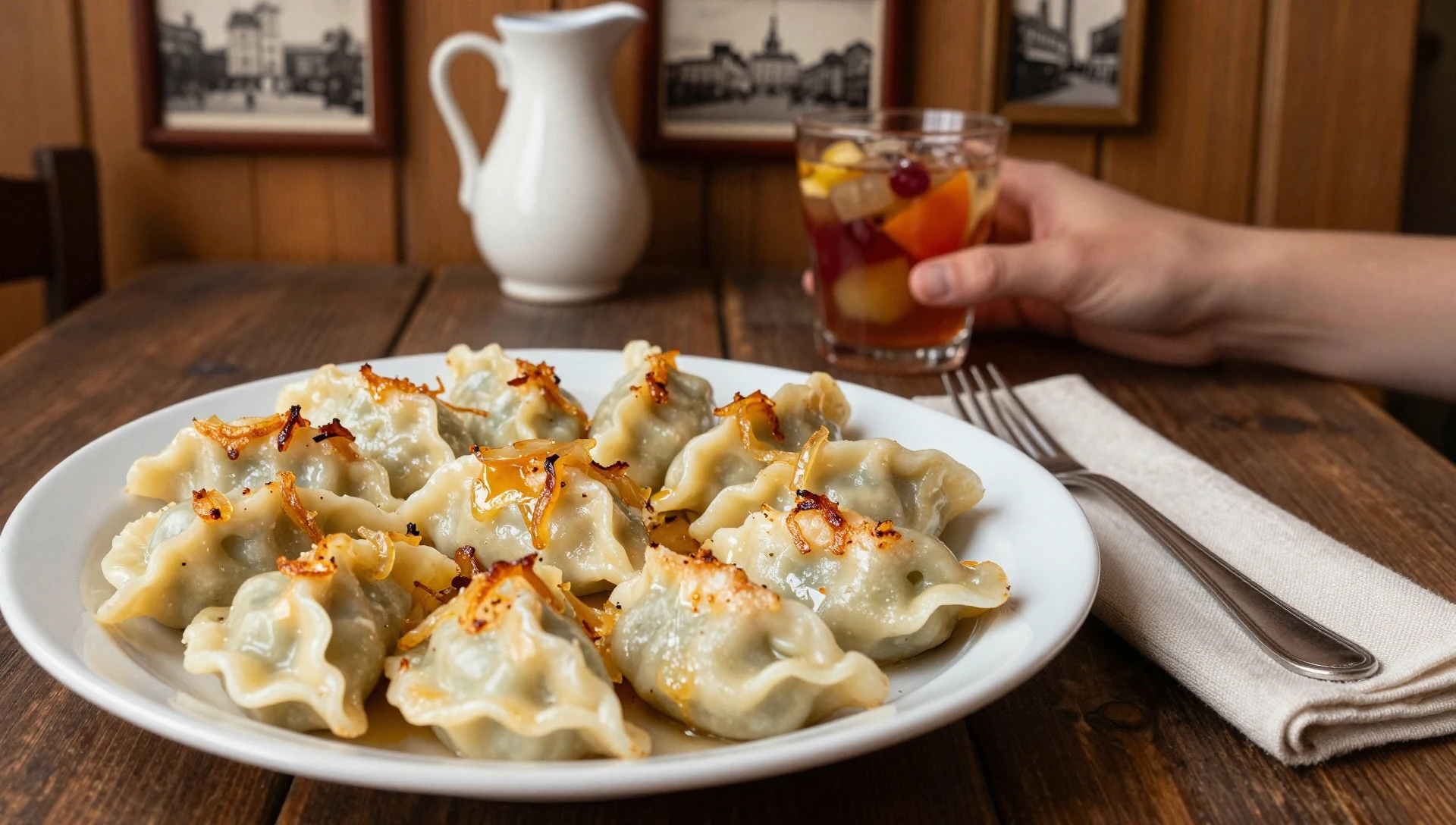
- Bigos — Polish eateries in Śródmieście
Bigos, hunter's stew, is cabbage cooked slowly with meat, sausage and dried mushroom until the pot turns dark and savoury. Warsaw restaurants that specialise in Polish cooking keep it on the winter menu, and some homely lunch rooms serve it by the plate with bread.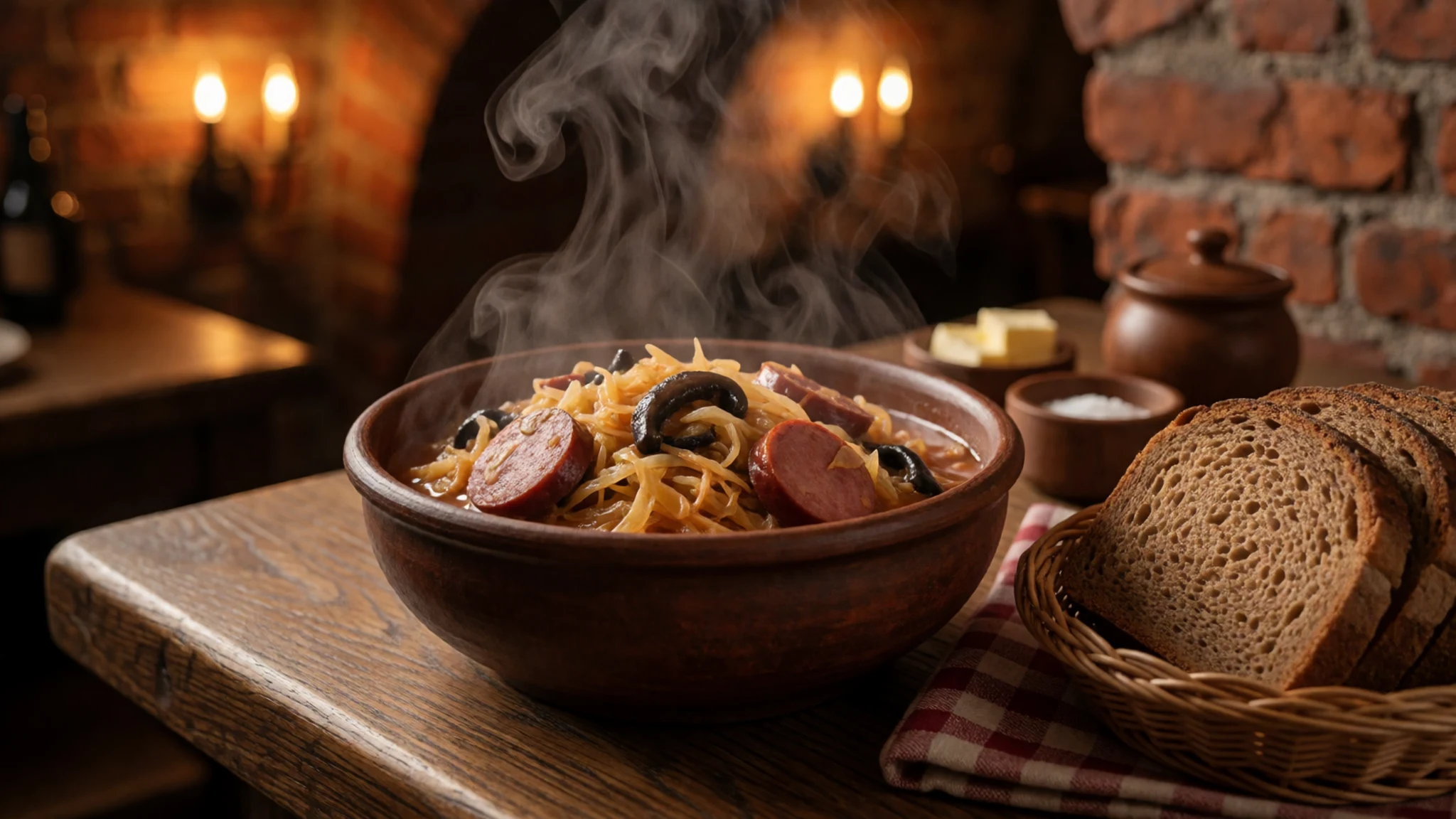
- Żurek — milk bars and weekday lunch counters
Żurek is a sour rye soup, pale and tangy, served with boiled egg and slices of sausage. Warsaw milk bars and simple lunch counters sell it as a midday bowl, often with bread on the side. It is heavier than it looks, and a good bowl in cold weather. - Kotlet schabowy — milk bars and family eateries
Kotlet schabowy is a breaded pork cutlet, fried and served with potatoes and a cold beet salad or cabbage. It is the everyday plate of the milk bar, cheap in spirit and generous in size, and family eateries across Warsaw still build lunch around it. - Barszcz — Polish eateries in the cold months
Barszcz is a clear beetroot broth, deep red and slightly sour, drunk from a cup or poured over dumplings. In Warsaw it appears with Christmas cooking and, through the cold months, on the menus of Polish eateries. A pastry stuffed with mushroom, a pasztecik, is the classic thing to dip.
Plan it
Best time. In Warsaw, May, June, September and October are good months for walking the Old Town and the river paths. July and August are warmer and busier. November to March is cold, with short days, though concerts continue.
How long. 3–4
Getting there. Warsaw Chopin Airport (WAW), in Okęcie about 8 km south of the centre, connects by city train or bus. Modlin (WMI), about 40 km north, serves low-cost flights; a shuttle reaches Modlin station for the regional train into the city. See https://um.warszawa.pl for tickets.
Budget. mid
Tips
- Book early for the Chopin competition and large festival weekends.
- Reach Castle Square early if you want quieter photographs.
- Carry a card and some cash for cafes, markets and church boxes.
- From Chopin, take the train or bus rather than waiting on a taxi rank.
- Choose shoes that can handle Old Town cobbles.
Etiquette
- Cover shoulders and knees in churches, and skip flash during a service.
- Ask before photographing performers or worshippers.
- Keep voices down on trams and give up a seat freely.
Nearby
Sources
- Wikidata Q270 (CC0)
- Wikipedia (rev 1381316119) (CC BY-SA 4.0)
- Wikivoyage (rev 5421915) (CC BY-SA 4.0)
- Photo photos/01-castle-square-22346p.jpg (CC BY-SA 4.0)
- Photo photos/02-aleja-niepdleglosci-warsaw-2022-aerial-cropped.jpg (CC BY-SA 4.0)
- Photo photos/03-2021-warszawa-rynek-starego-miasta-p-nocny-fragment-strony-k.jpg (CC BY-SA 4.0)
- Photo photos/04-kolumna-zygmunta-iii-wazy-warszawa-cropped.jpg (CC BY 3.0)
- Photo photos/05-warsaw-2023-183.jpg (CC BY-SA 4.0)
- Photo photos/06-kamienica-al-r-2-w-warszawie-2021.jpg (CC BY-SA 3.0 pl)
- Photo photos/07-bazylika-wi-tego-krzy-a-w-warszawie-2021.jpg (CC BY-SA 3.0 pl)
- Photo photos/08-prudential-w-warszawie-2021.jpg (CC BY-SA 3.0 pl)


