Bhimbetka rock shelters
Bhimbetka rock shelters, India
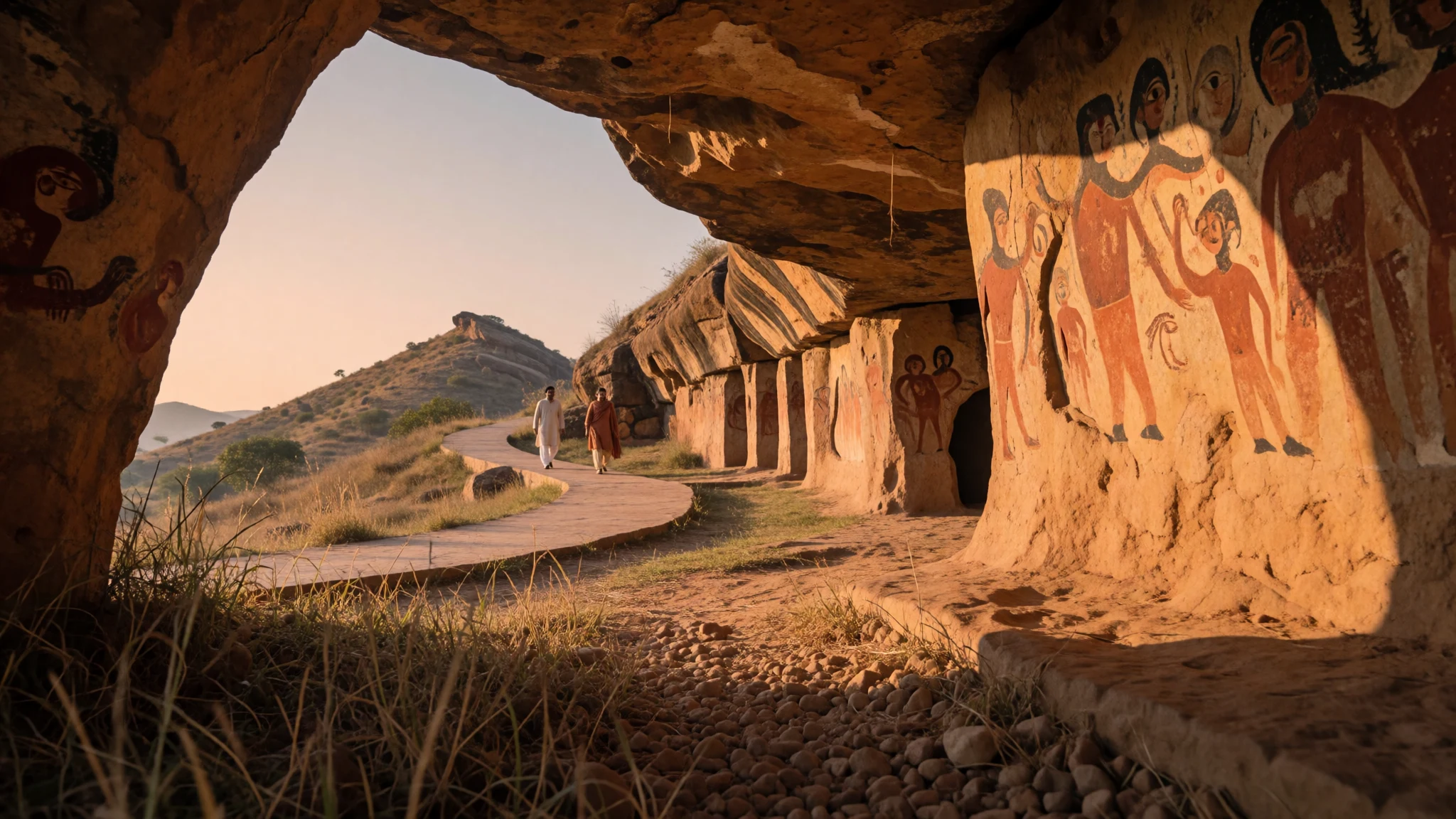
Bhimbetka rock shelters feel like stepping into deep time, where sandstone walls carry millennia of human stories.
The place
Bhimbetka rock shelters are a prehistoric archaeological site in central India, in Madhya Pradesh, near the Raisen district—about 45 kilometres south-east of Bhopal. The setting is part of the draw: seven low hills sit along the Vindhya Range edge, and the shelters are embedded in sandstone. Over the wider complex there are more than 750 rock shelters and caves spread across roughly 10 km, so the site doesn’t feel like a single “stop” as much as a whole landscape of painted overhangs.
What makes Bhimbetka genuinely gripping is the human timeline you can feel in the art. The shelters preserve early traces of people moving through the Stone Age, and evidence of later cultural shifts over time. Some paintings are linked with Mesolithic-era life—animal scenes, hunting imagery, and hints of movement and dance. Later work can also show warriors on horseback. Even when individual motifs are hard to read at a glance, the sheer continuity of mark-making on the rock is the point.
Visits are usually guided because the layouts can be confusing and the “which cave is which” details matter once you’re up close. The footpaths and uphill sections are manageable, but it’s not a sit-and-stare kind of day—expect walking, standing in shade only when you find it, and taking time to look carefully at the colours and textures of the sandstone.
Bhimbetka isn’t usually as lively as larger heritage centres. The main comfort challenge is the long hot stretch from April to June, so planning around the drier, cooler months—especially November through February—makes everything more enjoyable.
Its story
Bhimbetka’s story begins long before “tourism” existed, when hunter-gatherer groups sheltered under sandstone overhangs and left behind repeated traces of life. Archaeologists link activity here with very early periods and later phases, stretching from Paleolithic and Mesolithic times into historical periods. That long sequence is why the site feels less like a museum and more like a record of changing ways of living—tools, subsistence, and even how people pictured animals, movement, and community.
A key part of Bhimbetka’s appeal is that the art doesn’t only show what people hunted; it also hints at how they spent time—movement, expressive scenes, and the social world around them. Some of the oldest paintings are associated with Mesolithic-era life, while later works bring in different themes, including figures on horseback. Seeing these layers in the same landscape makes the site feel cumulative rather than repetitive.
Bhimbetka also has a modern “discovery” chapter. The site gained attention in 1957, when V. S. Wakankar spotted these shelters and worked with an archaeological team to investigate further. That mix—very ancient drawings on one hand, and mid-20th-century archaeology on the other—adds to the feeling that the past was waiting in plain sight.
In practical terms, the experience is shaped by the walk between clusters of shelters and by the rules about where you’re allowed to go. The complex is within Ratapani Wildlife Sanctuary, which is part of why you’ll see guidance about staying on the paths. The ground is uneven, the shade can be thin, and the safest approach is calm, slow looking: stop at each shelter, let your eyes adjust, and only move on when the story of that panel makes sense.
What to see
- Rock shelters with prehistoric paintings — Seven-hills area (within the Bhimbetka complex)
Bhimbetka rock shelters are the star: clusters of caves and overhangs where prehistoric artwork sits on sandstone. Look for animal scenes and expressive figures, and notice how colours vary across shelters and where the rock has weathered. A guide helps match the right panels to the story of the site.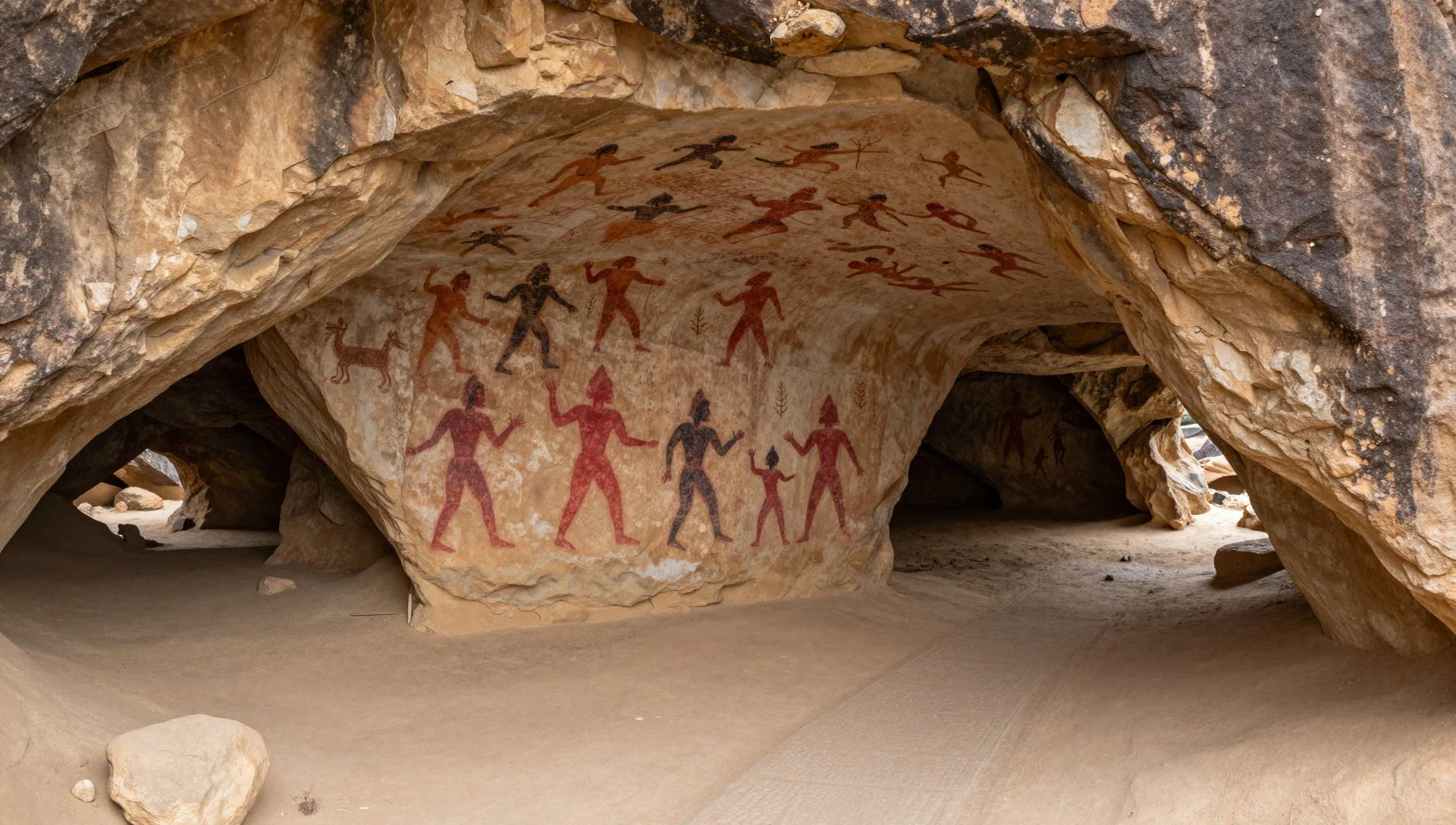
- Rock Shelter 8 paintings — Bhimbetka sector
Rock Shelter 8 is often used as a reference point because the paintings are clear enough to study while you’re standing close. You’ll see pigment colours against the lighter sandstone, and you can compare the style and subject matter with other shelters in the same visit route. It’s a good place to get your “eye in”.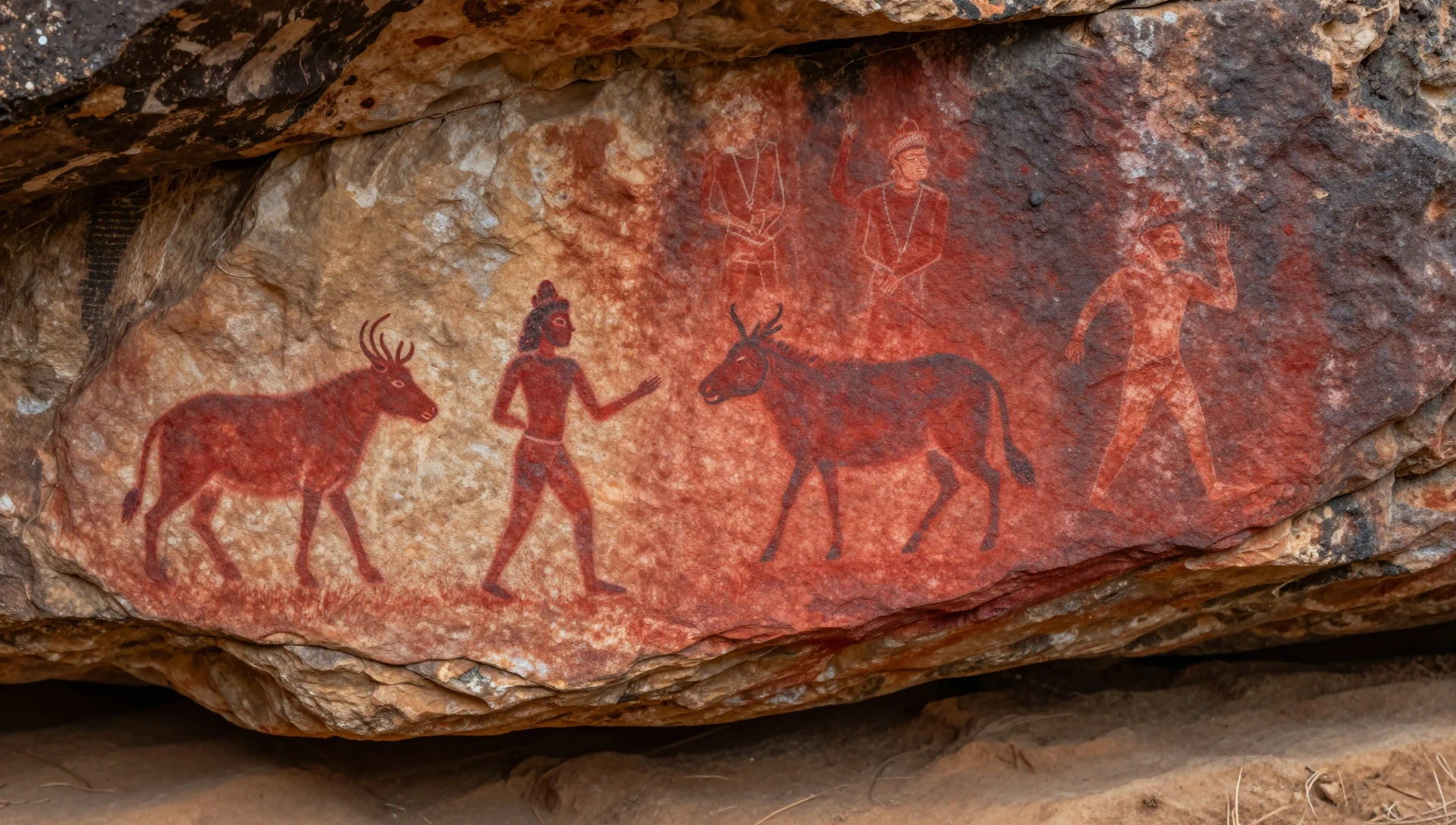
- Pathway and inside-route view — Main approach and internal walking route
The approach and internal pathways are part of the experience at Bhimbetka—there’s a walk-up element and the route connects shelters across the complex. Staying on the marked path keeps the day smooth and avoids the surrounding woods, which is important because the area is within a wildlife sanctuary.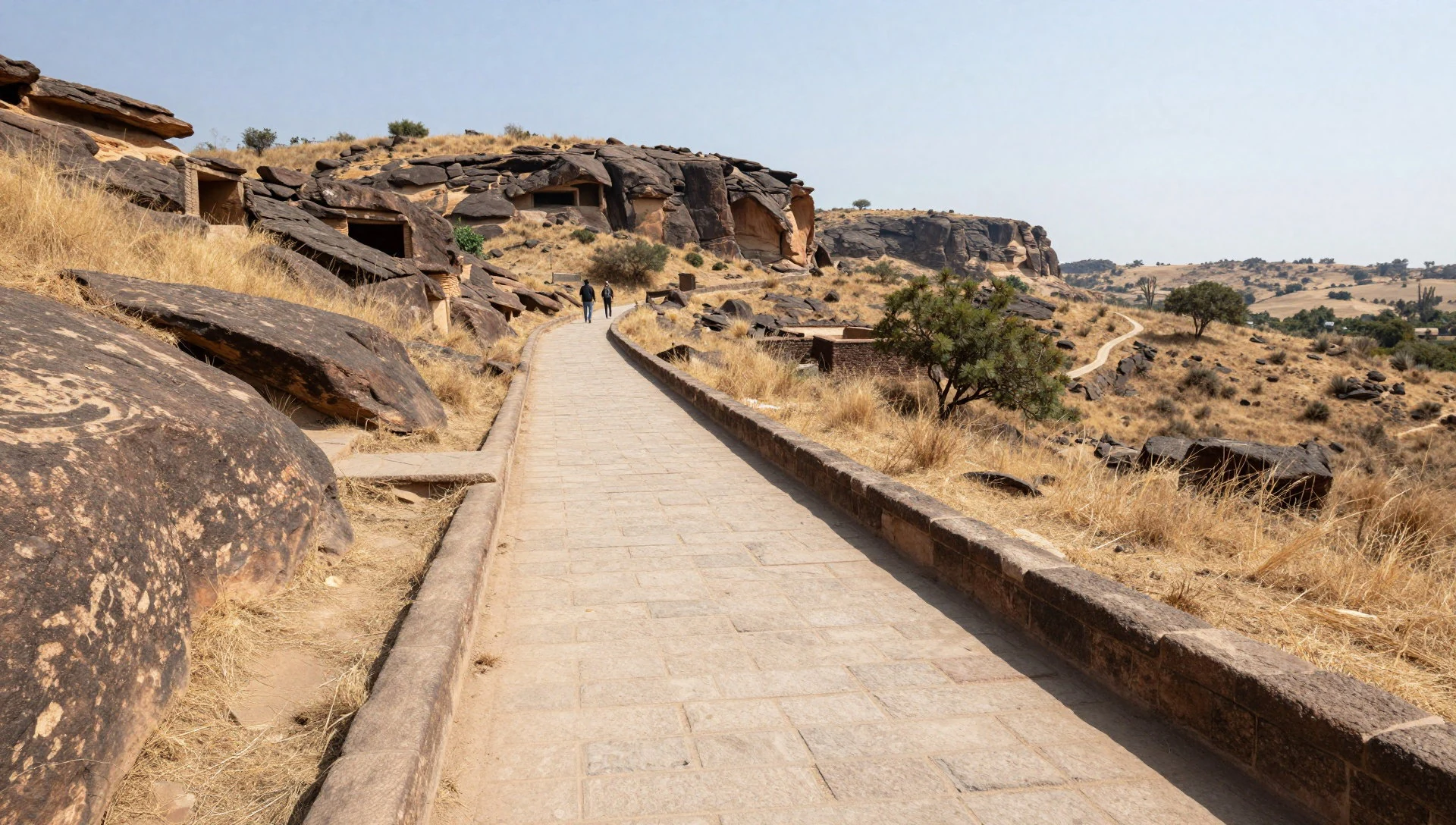
- Information points and interpretive views — Entrance / visitor area
Interpretive spots on-site help you orient the sequence of shelters and understand how the site is organised across the hills. Even if you’re not a “numbers and periods” person, these panels give the context that makes the paintings easier to read from a distance. Spend a few minutes before you start moving quickly.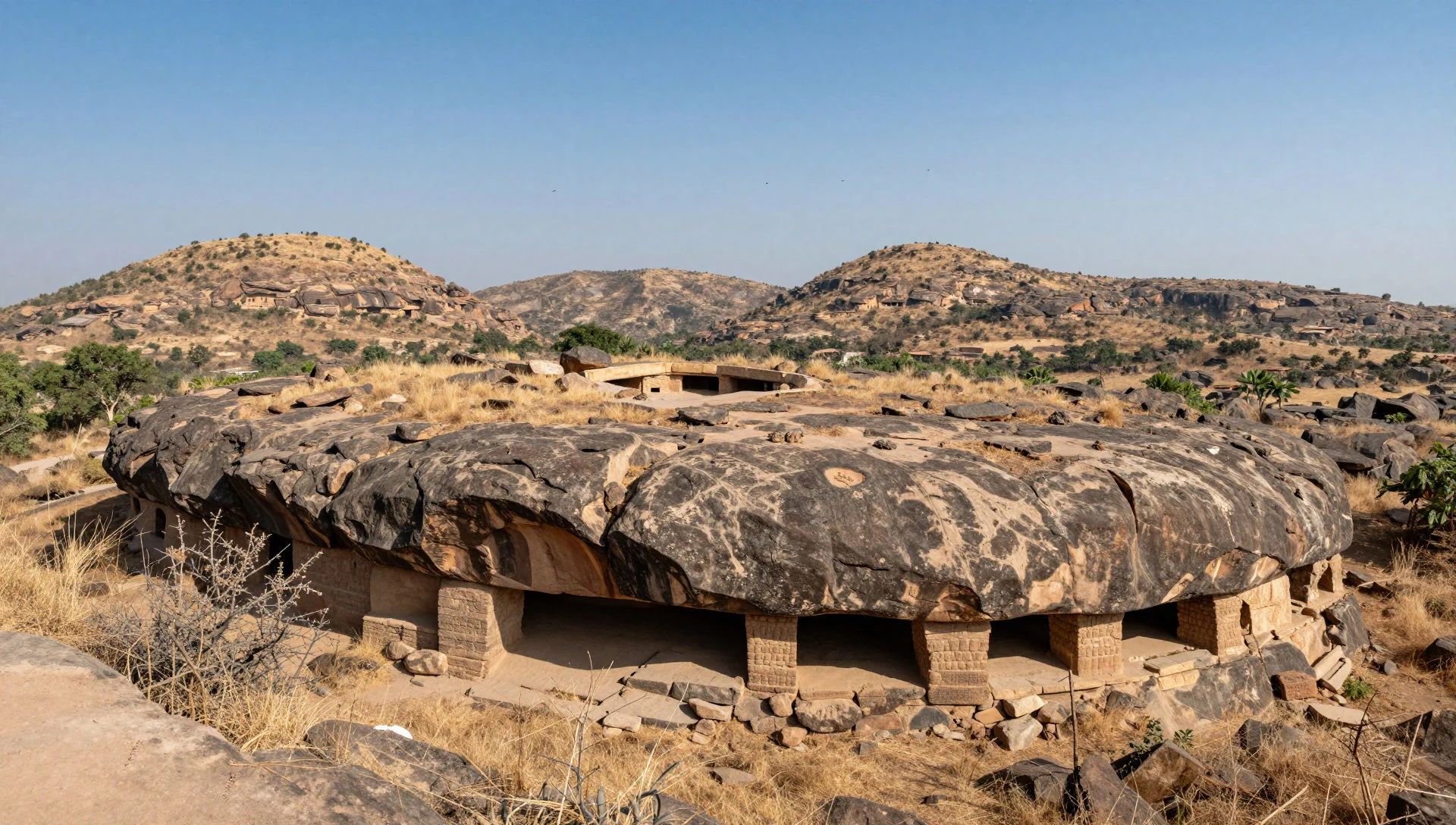
- Entrance to the Bhimbetka site — Bhimbetka entrance
The entrance area sets the tone: Bhimbetka isn’t a manicured garden, it’s an archaeological landscape. From here, the day becomes walking, looking, and adjusting to the pace of a guided route. Go early enough to reduce the heat pressure, because the walks can feel longer once you’re thirsty.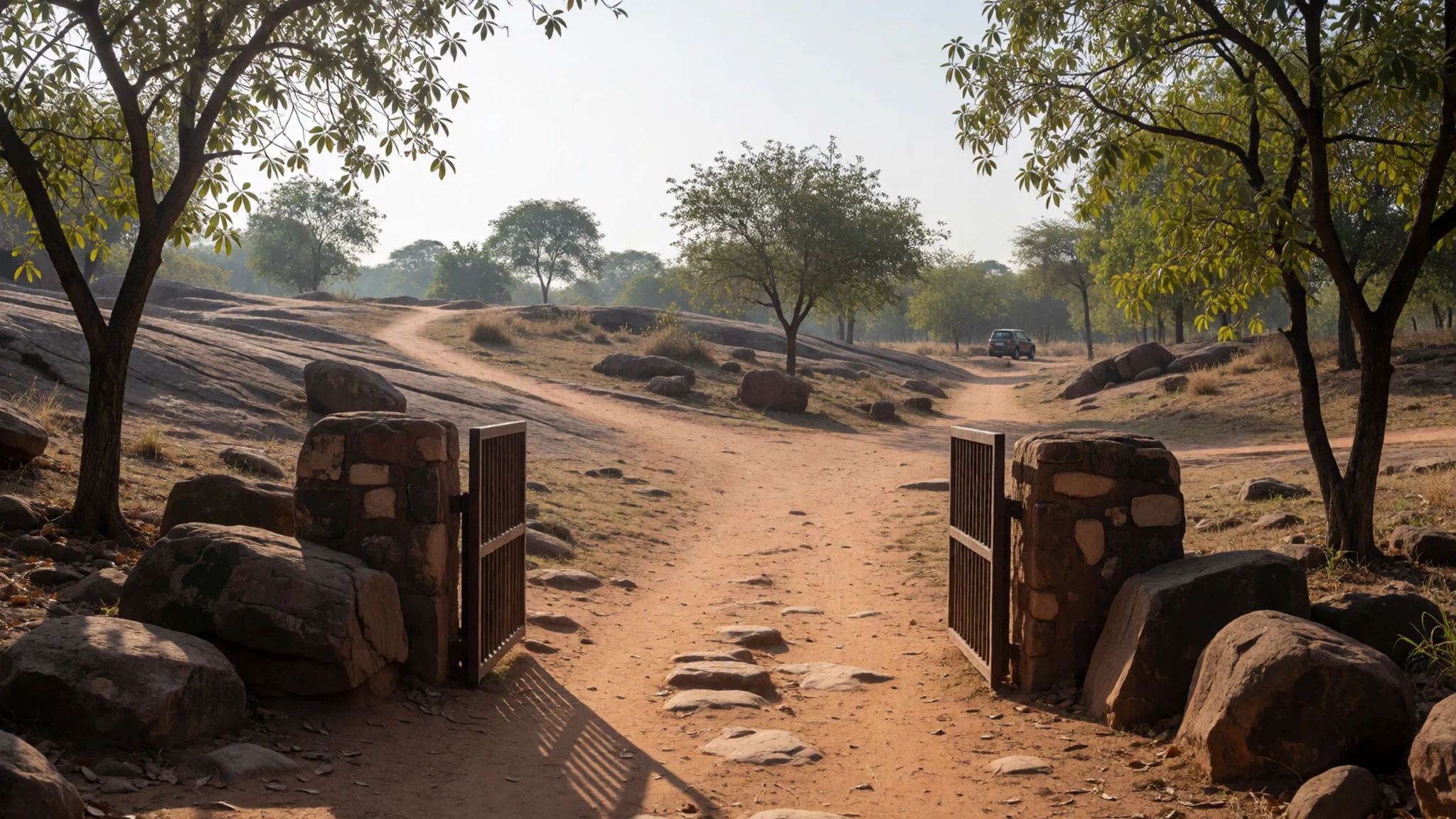
Culture
Bhimbetka rock shelters sit inside Ratapani Wildlife Sanctuary, and the shelters themselves are part of a protected archaeological landscape. Photography is usually possible, but treat people like you would at any heritage site: don’t block others while someone is trying to read a painting panel, and keep your movement controlled around cave mouths and narrow shelter spaces.
Food and drink matter for respect and comfort. No food is permitted inside the site, so pack your essentials and plan to have a meal before entering or after leaving. There’s also not a water dispenser at the site (as of February 2018), so carrying water isn’t just practical—it’s how you avoid turning your visit into a scramble.
Most visitors are there to look closely, so resist the urge to rush from one shelter to the next. Give yourself time to stand still and see the pigments as the light changes. If there’s a guide, follow their pacing and instructions; “shortcut” routes through the surrounding woods aren’t the point and aren’t safe.
Visitor etiquette: stay on the marked paved paths, avoid eating once inside, and don’t stand in front of other people’s view of the paintings.
What to wear
Bhimbetka is an outdoor, walk-heavy archaeological visit, so clothing is mostly about sun, dust, and modesty around cave entrances. Traditional dress in the surrounding region includes saris and salwar kameez—beautiful, but at Bhimbetka the practical version matters more than the labels. Visitors today often wear lightweight cottons or breathable trousers and long-sleeved tops that cope with warm weather and reduce sun exposure.
If you visit in the cooler, drier months (November to February), layers help because even mild days can feel cooler in shade near the rock shelters. In warmer periods, light colours and breathable fabrics are your friends. Closed-toe footwear is a must for uneven surfaces and uphill stretches; sandals tend to be a bad fit once you’re walking on paths.
For religious or cultural sensitivity, dress modestly around the site—avoid very short outfits at entrances and consider a scarf for covering shoulders if you prefer it. Keep a small day bag with water, and consider a hat or cap; shade comes and goes quickly around the shelters.
Visitor-ready rule: choose comfortable, modest, closed footwear and breathable layers you can move in on a warm uphill walk.
What to eat
- Packed snacks before entry — Outside the Bhimbetka site, before entry
Because eating isn’t allowed once you enter the site, it helps to carry a light snack beforehand. Think simple, non-messy food you can eat outside before you start the walk, then focus on the shelters once you’re inside.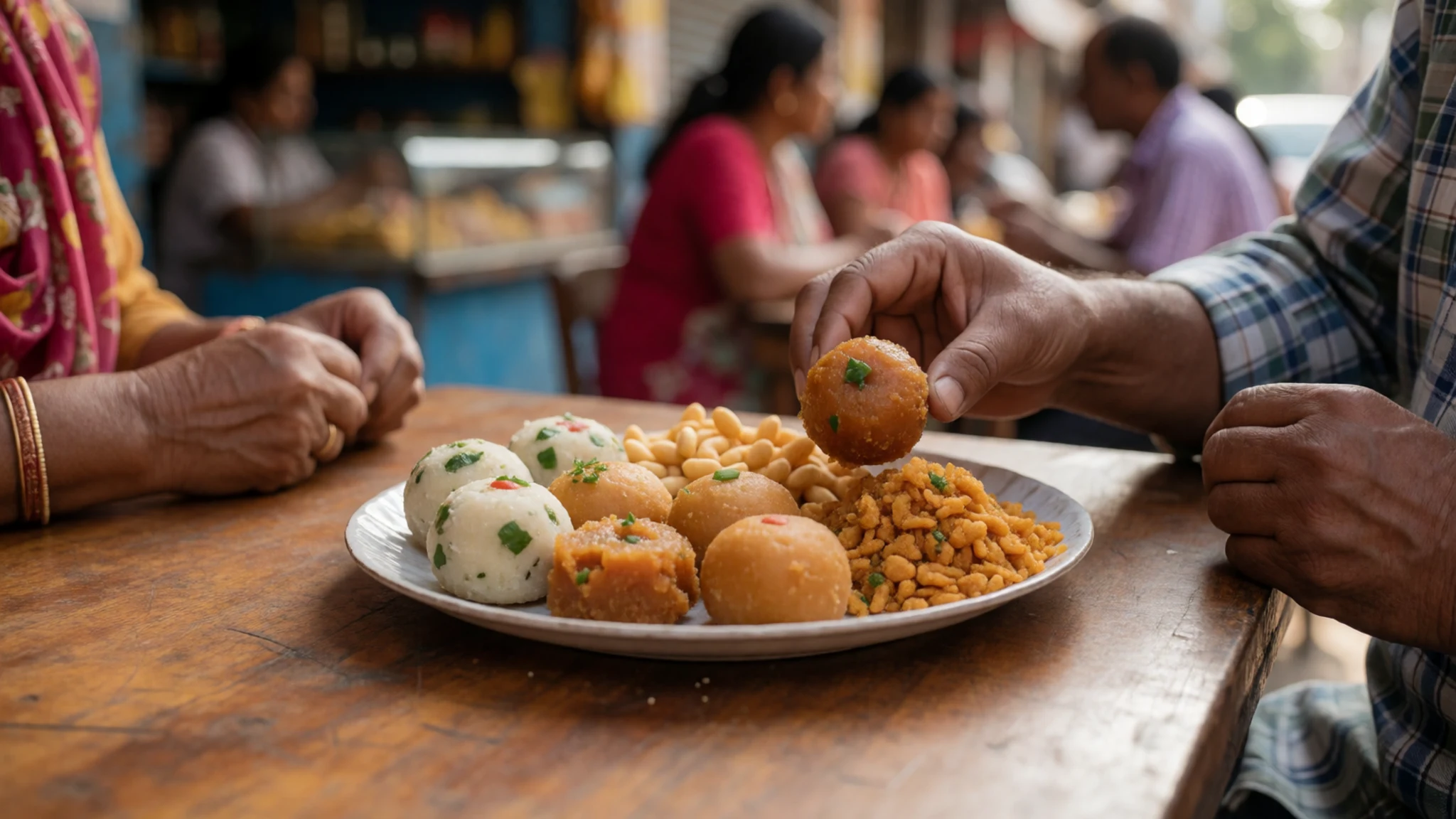
- Small canteen snacks on-site — On-site canteen area
Bhimbetka has a small canteen set up as a formality, but it’s limited. If you forget something, it’s the simplest fallback; however, don’t count on it for a full meal, especially if you’re visiting at a busy time.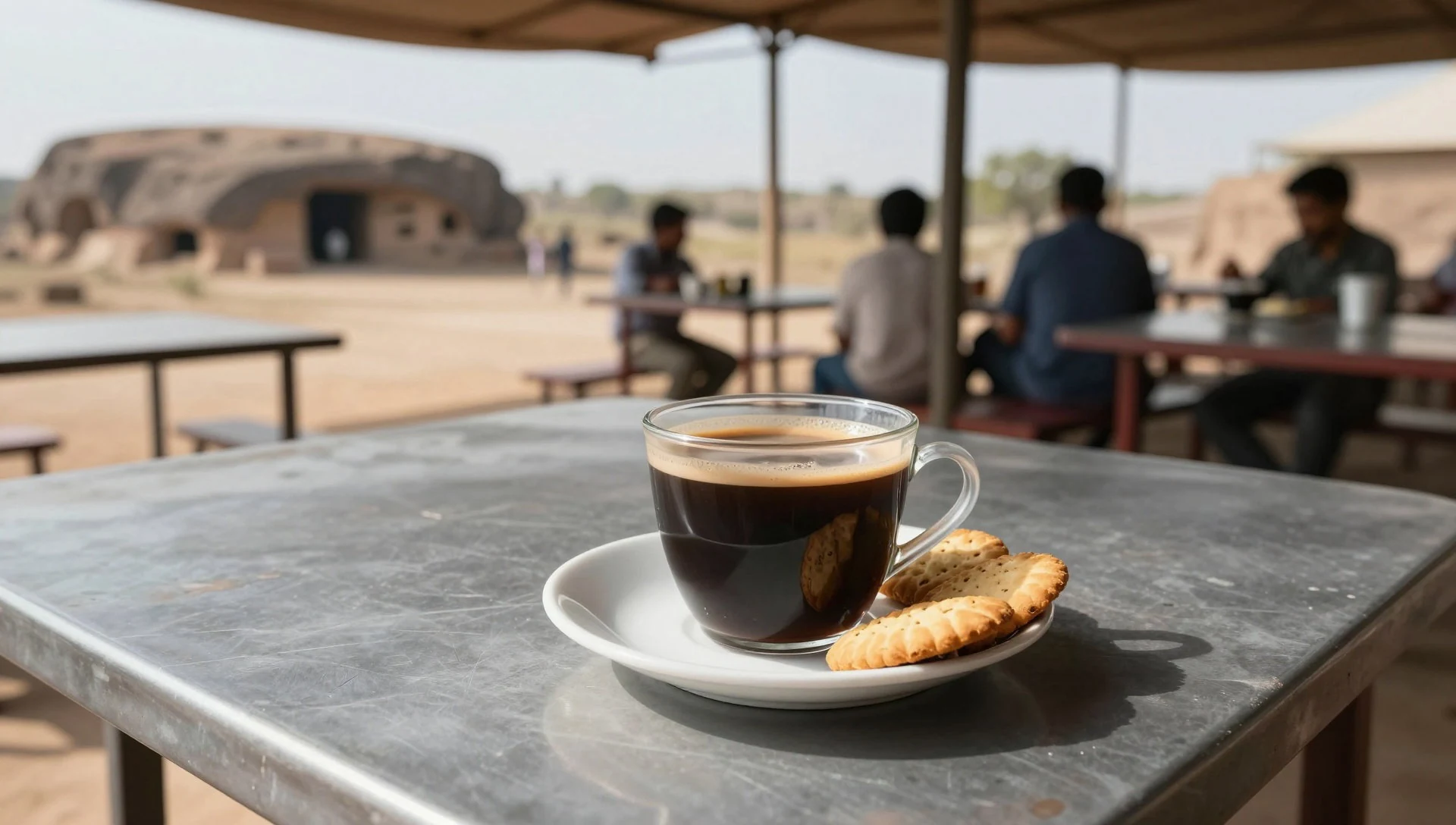
- Water bottles you carry yourself — Bring from Bhopal or on arrival at the entrance
A water dispenser wasn’t available on the site as of February 2018. Bring multiple water bottles and keep sipping as you walk, particularly when the weather is hot and you’re moving between shelter clusters. - Simple roadside meals in the Bhopal region — Bhopal or along the route
Since lodging and longer stops are generally based around Bhopal, many visitors end up eating there before or after the trip. Look for straightforward vegetarian options at casual eateries so you can keep the day focused on the site. - Markets and snack stops near the pickup point — Stops around Bhopal transport routes
If you’re travelling by bus or taxi from Bhopal, use the time before you reach the entrance for snacks and water. Small stops on the way are usually better than trying to solve food needs once you’re already inside the complex.
Plan it
Best time. October–February for cooler, more comfortable sightseeing; summers in central India are very hot, so the heat can make walking between shelters tiring and less enjoyable.
How long. 2–3
Getting there. Fly or take rail to Bhopal, then use a taxi from Bhopal to Bhimbetka (around 45 km). By bus is also possible: ask the driver to drop you at the T junction on the main road, then follow the guided route from there with a walk uphill to the cave paintings.
Budget. mid
Tips
- Plan for a slow, close-looking day; the shelters reward time, not rushing.
- Consider hiring a guide at the cave paintings so the shelter cluster makes more sense as you move around.
- Start early in the day if you’re visiting in the colder months to reduce the feeling of carrying a hot bottle later on.
- Carry multiple water bottles because there’s no water dispenser on-site (as of February 2018).
- Stay on the paved path and don’t wander into the surrounding woods.
Etiquette
- Don’t eat once you enter the site; eat outside before you go in or after you come out.
- Stay on the marked paved paths instead of strolling off-route in the sanctuary area.
- Keep your viewing respectful—don’t block others when people are trying to look at painting panels.
Nearby
Sources
- Wikidata Q331603 (CC0)
- Wikipedia (rev 1370428661) (CC BY-SA 4.0)
- Wikivoyage (rev 5285221) (CC BY-SA 4.0)
- Photo photos/01-bhimbetka-cave-paintings.jpg (CC BY-SA 2.0)
- Photo photos/02-rock-shelter-8-bhimbetka-02.jpg (CC BY 3.0)
- Photo photos/03-path-way-bhembetika-2.jpg (CC BY-SA 4.0)
- Photo photos/04-information-palette-bhimbetka-3.jpg (CC BY-SA 4.0)
- Photo photos/05-1-of-the-rock-shelter-caves-at-bhimbetka-madhya-pradesh.jpg (CC BY-SA 2.0)
- Photo photos/06-entrance-of-bhimbetka.jpg (CC BY 3.0)
- Photo photos/07-entry-to-auditorium-cave.jpg (CC BY-SA 4.0)
- Photo photos/08-dancing-painting-at-bhimbetka.jpg (CC BY 3.0)


