Sanchi
Sanchi, India
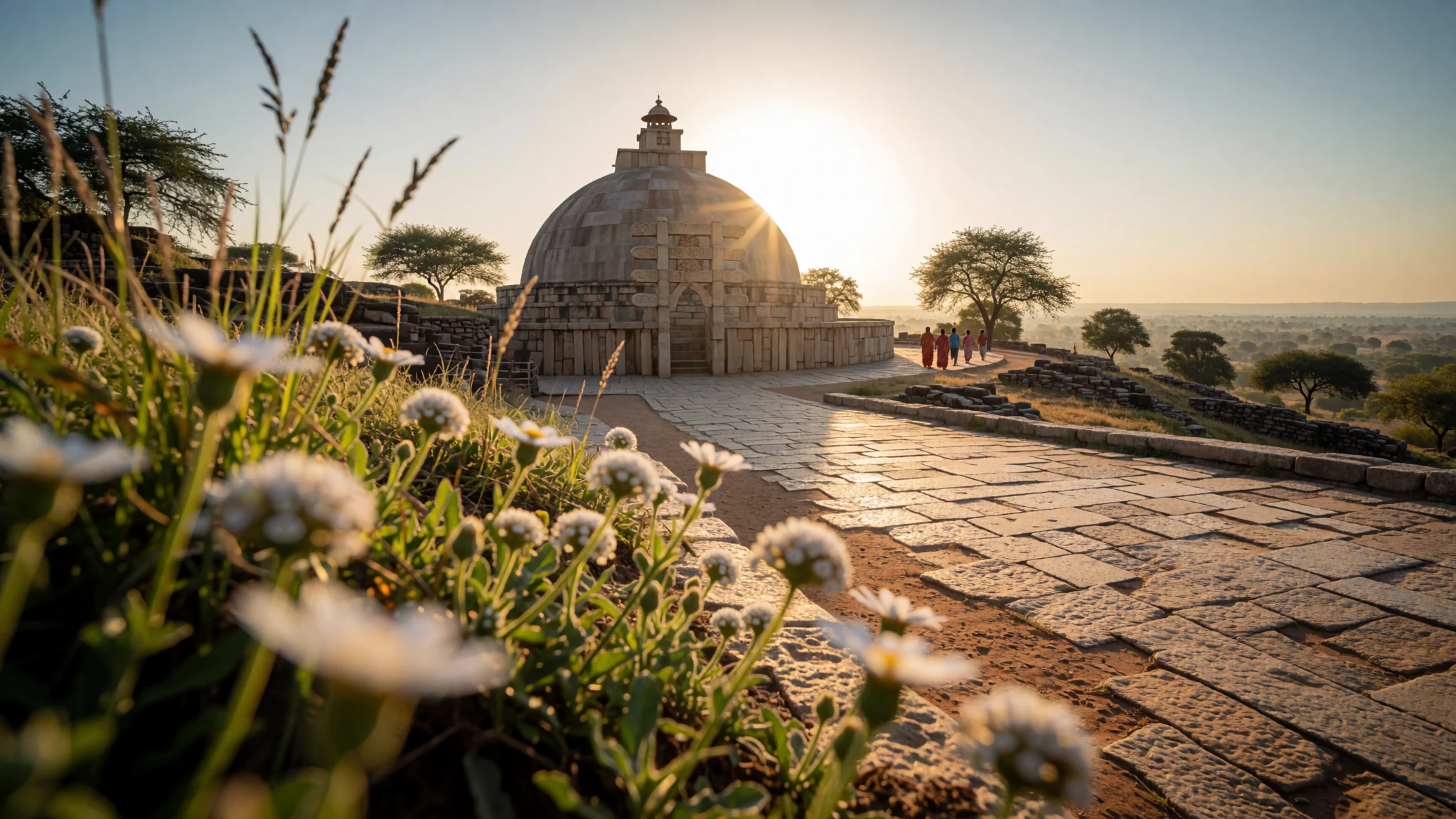
Sanchi is a compact hilltop Buddhist complex in central India, built around one of the country's oldest stone monuments, and it is easy to see in a single morning.
The place
Sanchi is a Buddhist complex on a hilltop in Raisen District, in the central Indian state of Madhya Pradesh, and its centrepiece is the Great Stupa. The village of Sanchi Town sits at the foot of the hill and has grown up around the monument, so the lodgings, eateries and ticket area are all close together. Raisen town, the district headquarters, lies a short drive away, and the state capital Bhopal is within comfortable road distance. The whole site, village included, fits within roughly one square kilometre, so visitors can walk between everything without much effort.
The Great Stupa is among the oldest stone structures in India, and it matters as a landmark of the country's architecture. Its core was a plain hemisphere raised over relics of the Buddha, topped by a parasol-like chatra that signalled high rank and sheltered the relics. Later, carved stone gateways and a railing were added, and the monument took on the appearance it has today. Scattered across the surrounding hills and valleys are many other stupas, some clustered in fortified settings, so the Sanchi area is best understood as a landscape of Buddhist sites rather than a single monument.
The Archaeological Survey of India looks after the complex, and the upkeep shows: paths are clear, the carvings are protected, and the hilltop feels orderly. Weekends and holidays tend to be busier, while weekday mornings are quieter and cooler.
Its story
The story of Sanchi begins with the Mauryan emperor Ashoka, who ordered the original stupa built over relics of the Buddha. The first version was a simple brick dome, a hemisphere that marked the sacred remains and gave devotees a place to walk around. The sources say Ashoka's wife Devi was the daughter of a merchant from nearby Vidisha, that she was born at Sanchi, and that the couple married there. That personal link is part of why the site feels rooted in a human story as well as in the wider history of Buddhism.
Over the following centuries the monument changed. Four elaborately carved gateways, one on each side, and a stone balustrade encircling the whole structure were added, turning a plain brick mound into a richly decorated stone complex. The carvings tell episodes from the life of the Buddha and scenes of worship, and they remain the site's most admired feature. The complex does not seem to have been abandoned quickly. It appears to have stayed in use into the early medieval era, when further structures were built on the hill.
Vidisha, the source of Devi's family, had once been the capital of the ancient Malwa kingdom, so Sanchi sat within a region of real political weight. The monuments therefore record both a royal patron and the religious life of the wider community that kept them going.
What to see
- The Great Stupa (Stupa 1) — Sanchi Hill, above Sanchi Town
The Great Stupa is the centrepiece of the hilltop, a large dome with a stone railing around its base. Its four gateways face the compass points, and each carries carved scenes. Give yourself time to walk the circuit slowly, because the carving and the proportions look different from every side of the monument.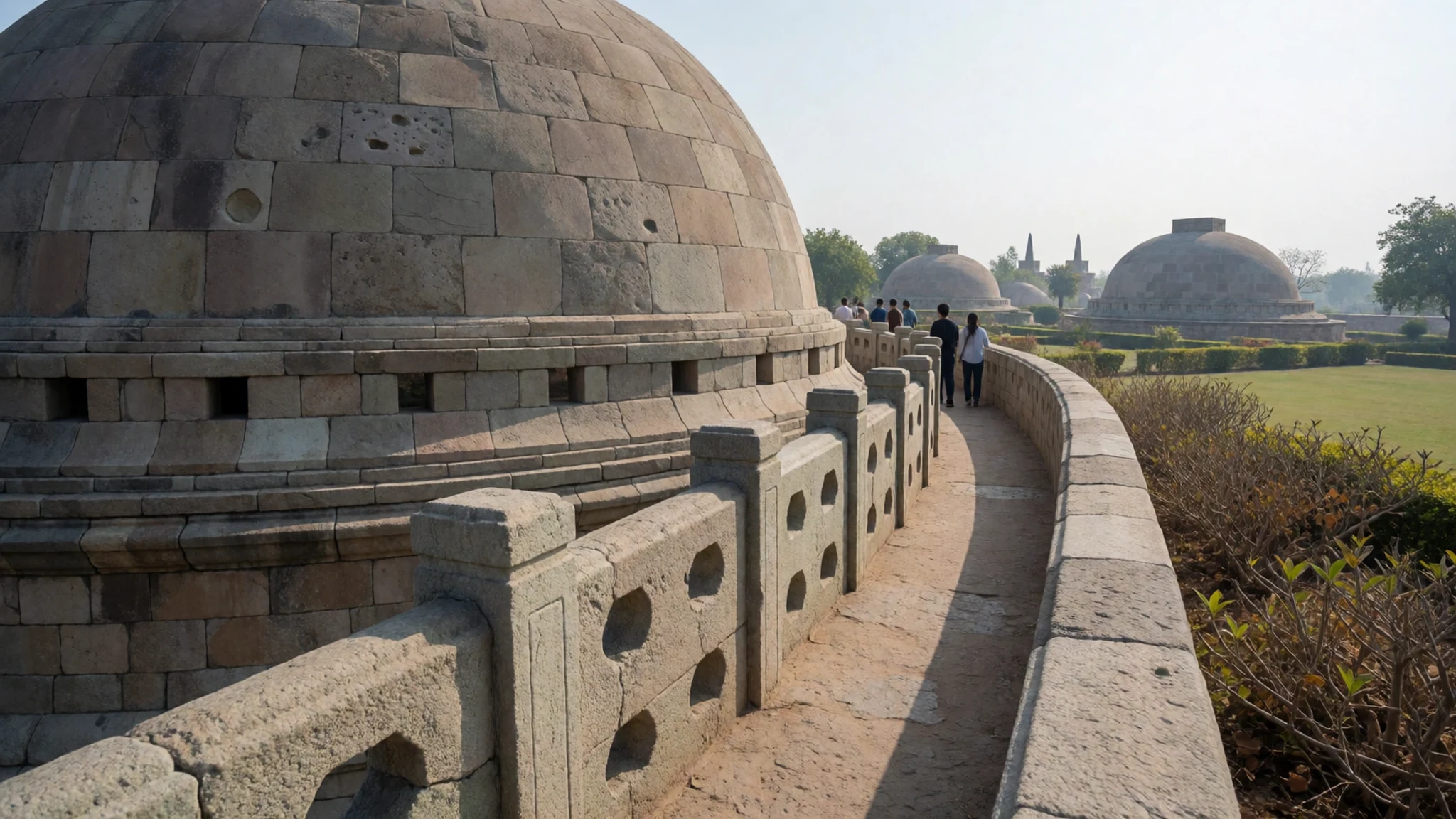
- The four toranas — The four gateways of the Great Stupa, Sanchi Hill
The four gateways, one on each side of the Great Stupa, are the carvings most visitors come to see. Their panels show episodes from the life of the Buddha, alongside animals, lotus motifs and figures that reward a close look. The east gateway is a good place to start, and the morning light helps bring out the relief.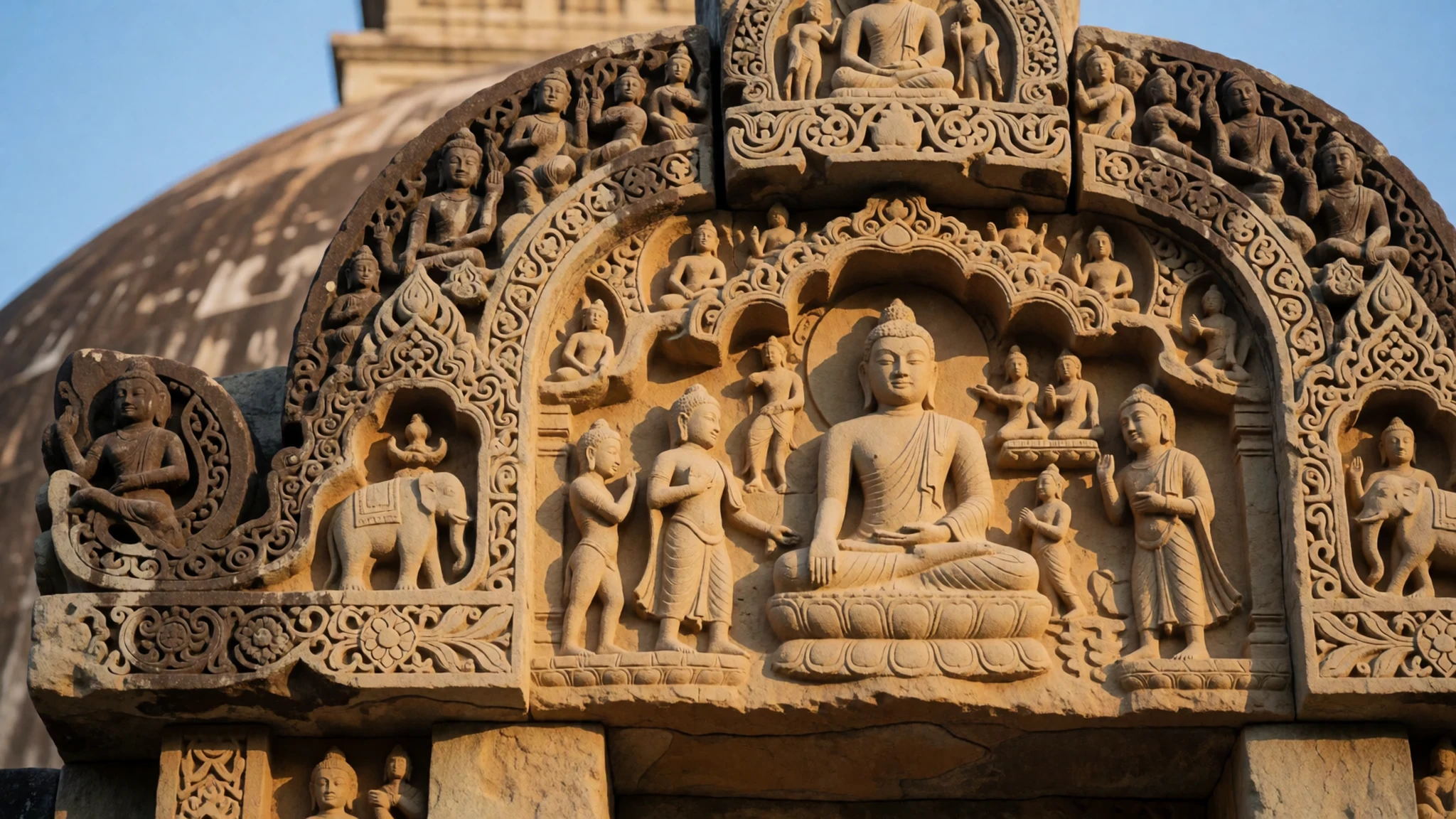
- Stupa 3 and its south gateway — Sanchi Hill, a short walk from Stupa 1
Stupa 3 sits a short walk from the Great Stupa and is smaller, though its south gateway holds some of the site's most detailed reliefs. The panels show worshippers and scenes connected with the stupa's relics. The area is usually quieter than the main path, so it suits a slower pause in the visit.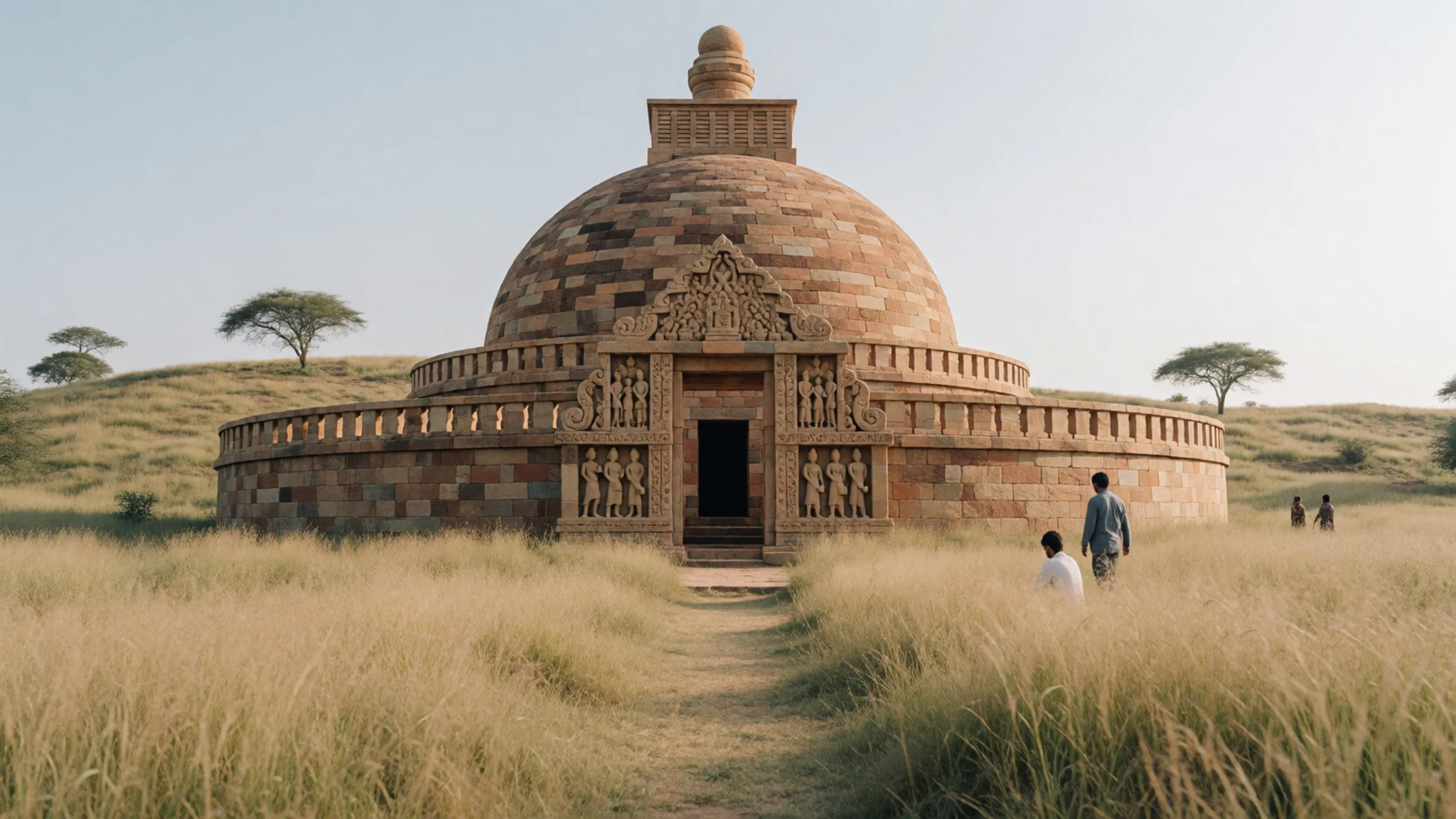
- The pillar of Ashoka — Sanchi Hill, within the main complex
The pillar of Ashoka is a polished stone column linked to the emperor who first commissioned the stupa, and it is one of the site's landmarks. A reconstruction of its capital shows how the top may have looked when the column was new. Stand back to take in its height, then head to the Archaeological Museum in Sanchi Town to see the carved capital with its four lions, which is displayed there rather than on the hill.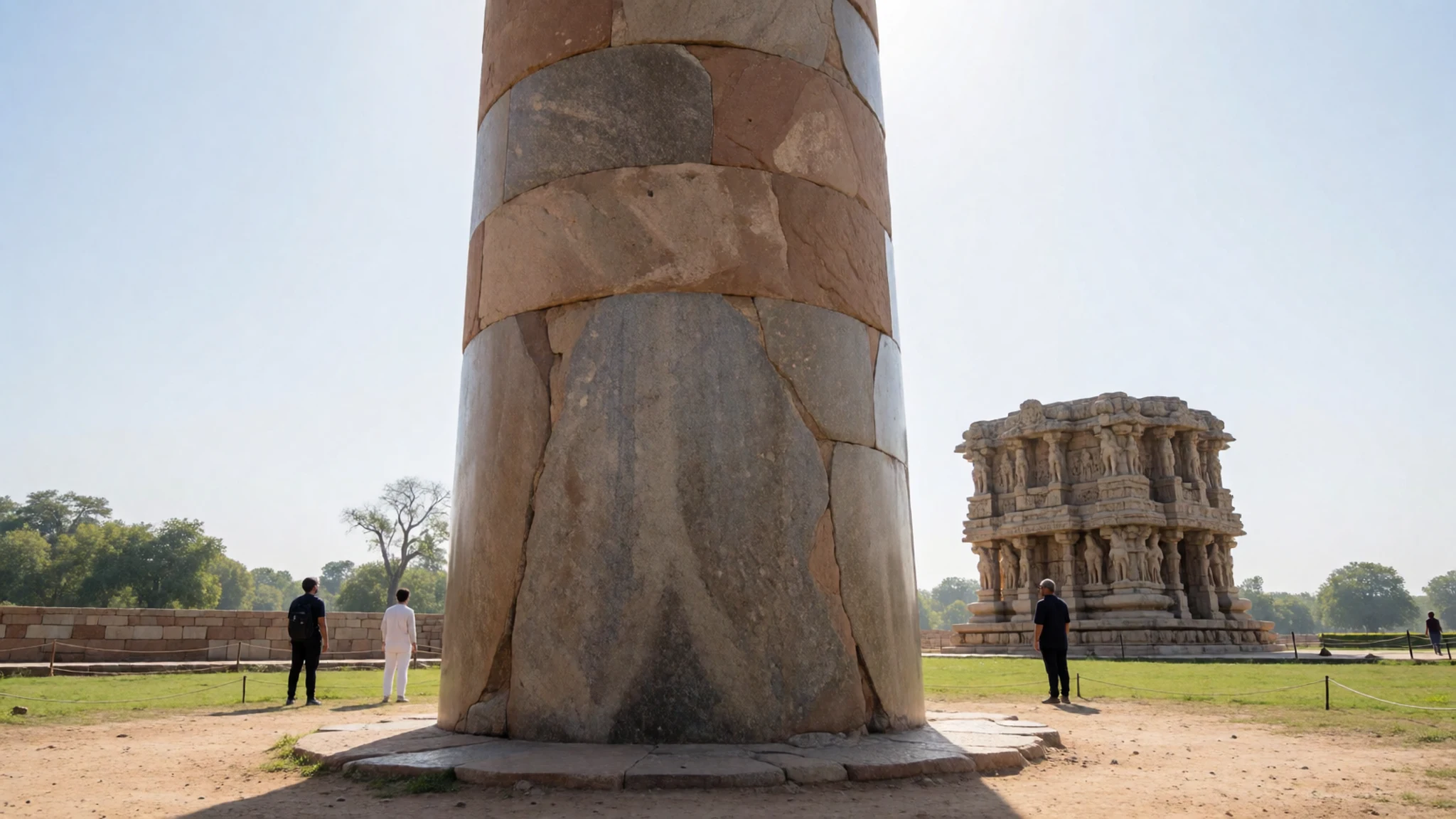
- Archaeological Museum — Sanchi Town, near the village
The Archaeological Museum in Sanchi Town displays sculptures, tools and fragments found in the area, some of them very ancient. Metal objects and carved pieces help explain the everyday lives of the people who built and used the stupas. Visit before climbing the hill, so the carvings you see there make more sense.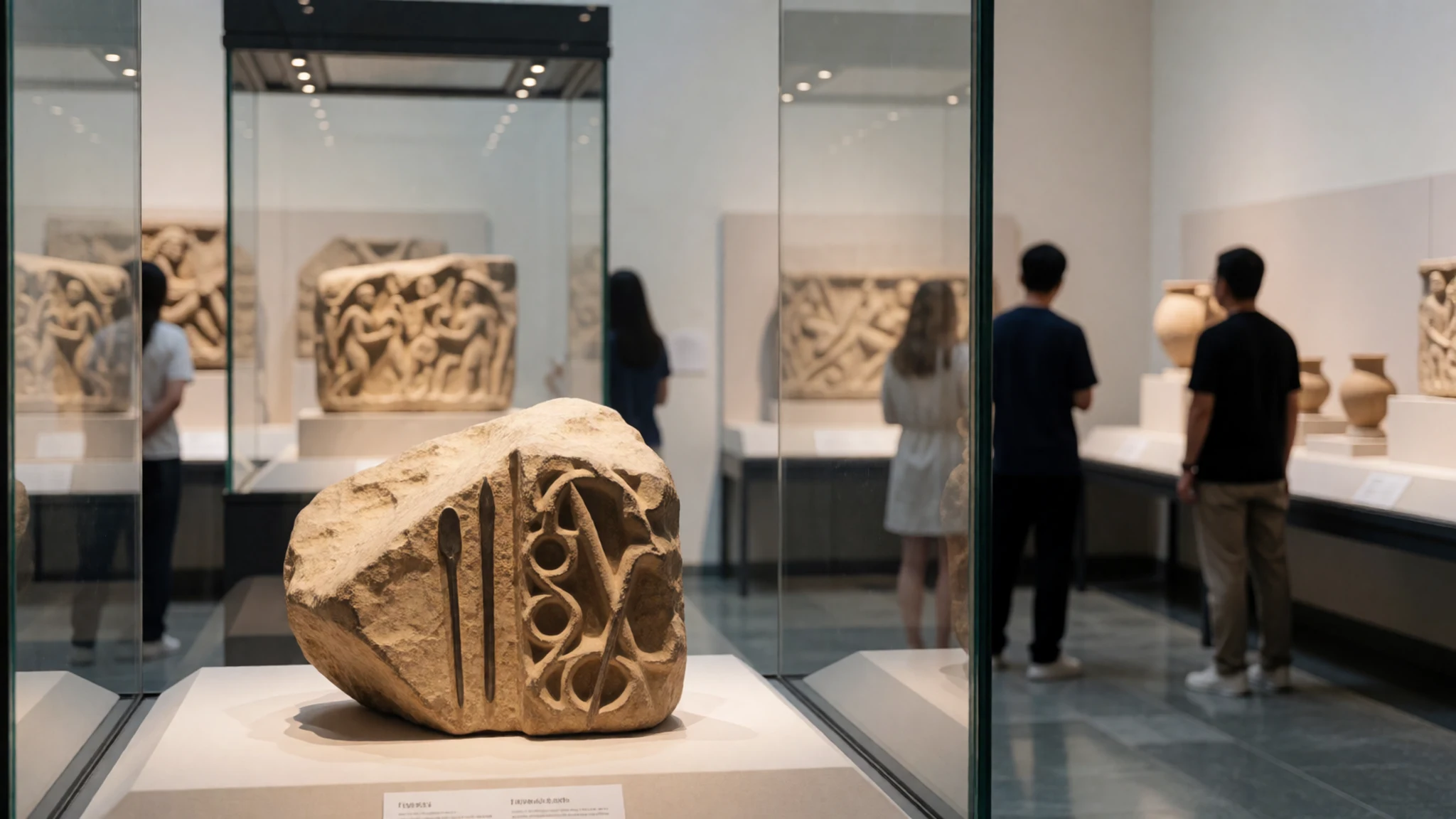
- Satdhara — Satdhara, a few kilometres west of Sanchi
Satdhara lies a few kilometres west of Sanchi and holds forty stupas. The relics of two leading disciples of the Buddha, Sariputra and Mahamoggallana, were unearthed there and are now enshrined in a newer vihara. It is a quiet place, so bring water and arrange a taxi or a shared vehicle from the village.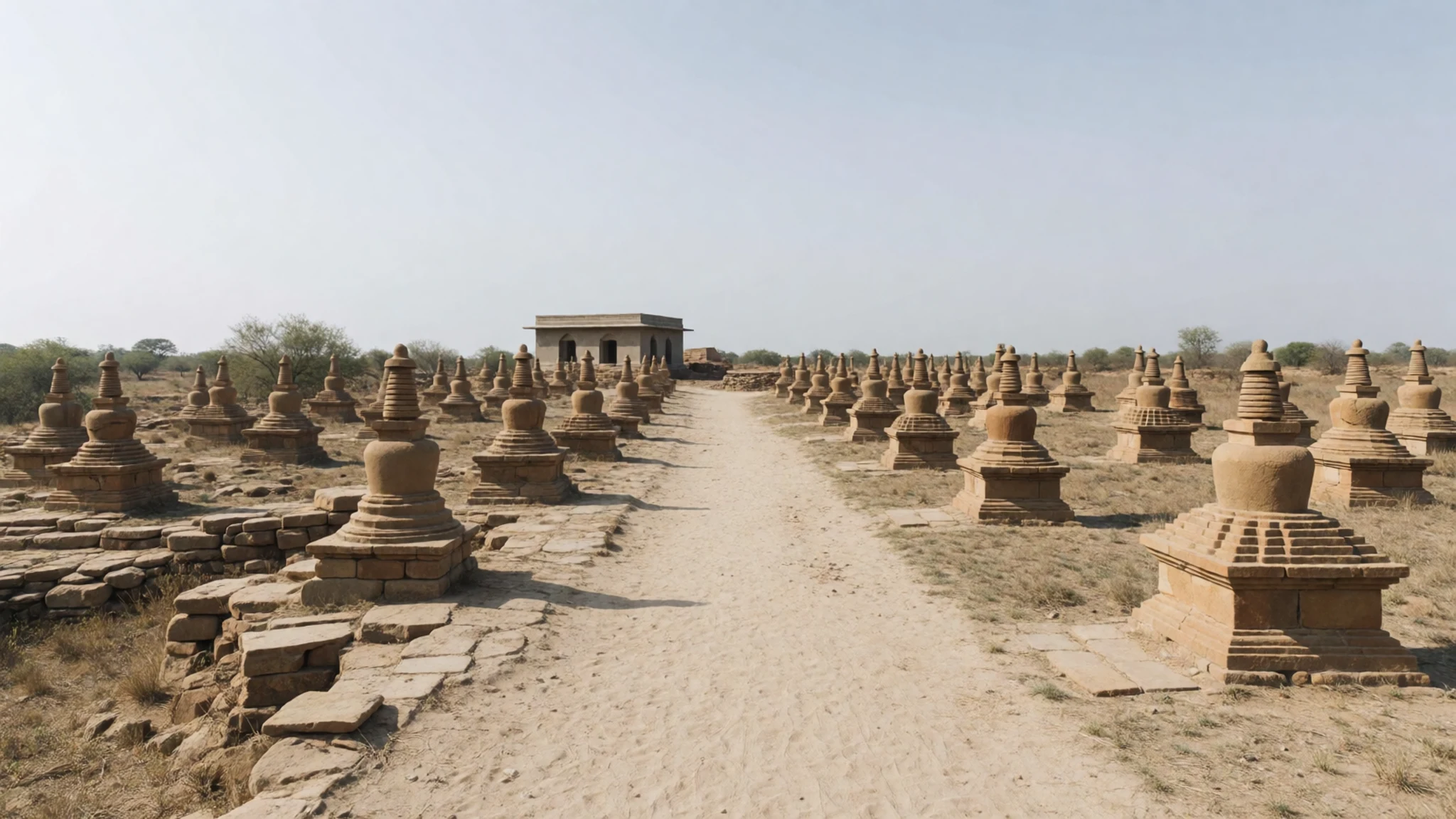
Culture
Sanchi is an active Buddhist site as well as a monument, and visitors are expected to behave accordingly. The Archaeological Survey of India looks after the complex, and its staff keep watch over the main paths and the carved gateways. Much of the site's value lies in its carvings, so the atmosphere asks for care rather than formality. Photography is generally accepted across the hill, but ask before photographing monks, pilgrims at prayer or families at the stupas, and keep a respectful distance from anyone who is worshipping.
The mood changes through the day. Mornings are calm, with pilgrims and walkers circling the stupas before the tour groups arrive. Most people approach the monuments in a loose clockwise direction, which is the traditional way to circle a stupa, and they tend to follow it without being asked. Voices carry on the hill, so keep conversations low near the monuments and avoid loud music or phone calls in the central area.
Sanchi Town is a working village as well as a visitor base. Dress is informal in the streets, but a more modest standard suits the walk up to the stupas and any visit to the village temples. Shops and eateries close early in the evening, so plan purchases for the afternoon. Walk clockwise around each stupa, as pilgrims do, and keep off the carved railings and gateways.
What to wear
Traditional dress around Sanchi follows the wider pattern of central India. Women have long worn the sari, usually in cotton or silk, and the salwar kameez, a long tunic worn over loose trousers, is common across the region. Madhya Pradesh is known for handloom weaving, and two of its best-known names are Chanderi and Maheshwari. Chanderi cloth is a fine blend of cotton and silk, while Maheshwari is light, often with a checked or striped border. Men in the villages often wear a dhoti, or a long shirt with trousers.
What people wear now is a mix. Office workers and young people in the towns wear jeans with kurtas or shirts, while older women in the villages still favour saris and the ghagra-choli, a long skirt with a cropped blouse and a veil. Weddings and festivals bring out brighter silks and embroidered fabrics.
For a visit, think modest and practical. Cover your shoulders and knees, especially around the stupas and the carved gateways, and carry a light shawl or scarf that you can use if you enter a shrine. Cotton keeps you cool in the heat. Footwear matters more than fashion here: the paths are uneven stone and gravel, so choose closed shoes with good grip, and take them off if you enter a shrine where others are doing the same.
What to eat
- Thali — A vegetarian thali house or dhaba on the main road into Sanchi Town
A simple thali brings rice, dal, seasonal vegetables, roti and pickle together on one steel plate. Look for it at a vegetarian thali house or a dhaba on the main road into Sanchi Town, where a fixed meal is the norm. Ask what is freshest that day.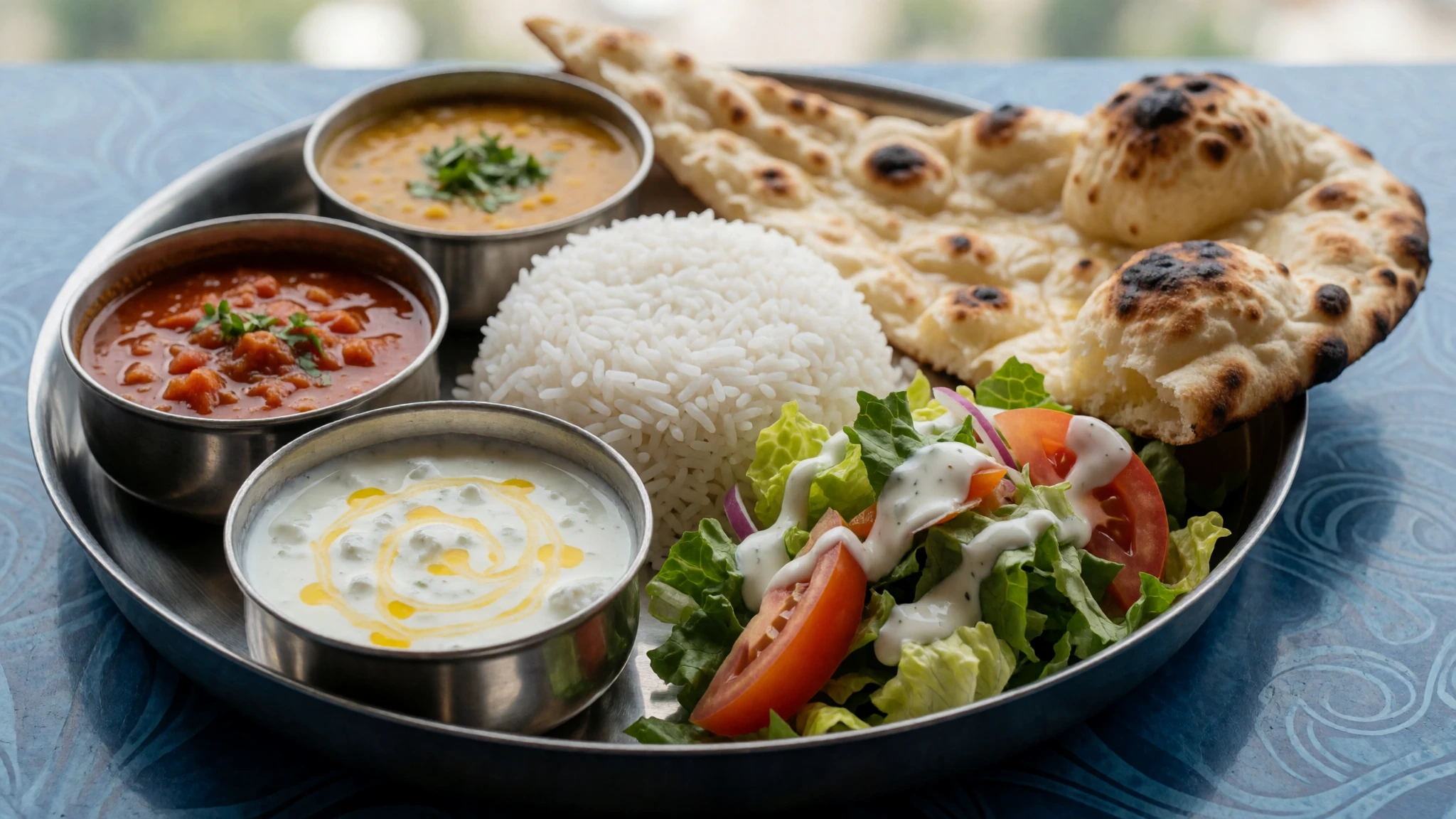
- Poha and jalebi — The morning stalls near the village bus stop
Flattened rice cooked with mustard seed, curry leaves and peanuts is a staple breakfast across this region. It is often served alongside crisp, syrup-soaked jalebi. It is a sensible way to start a morning visit before the heat builds.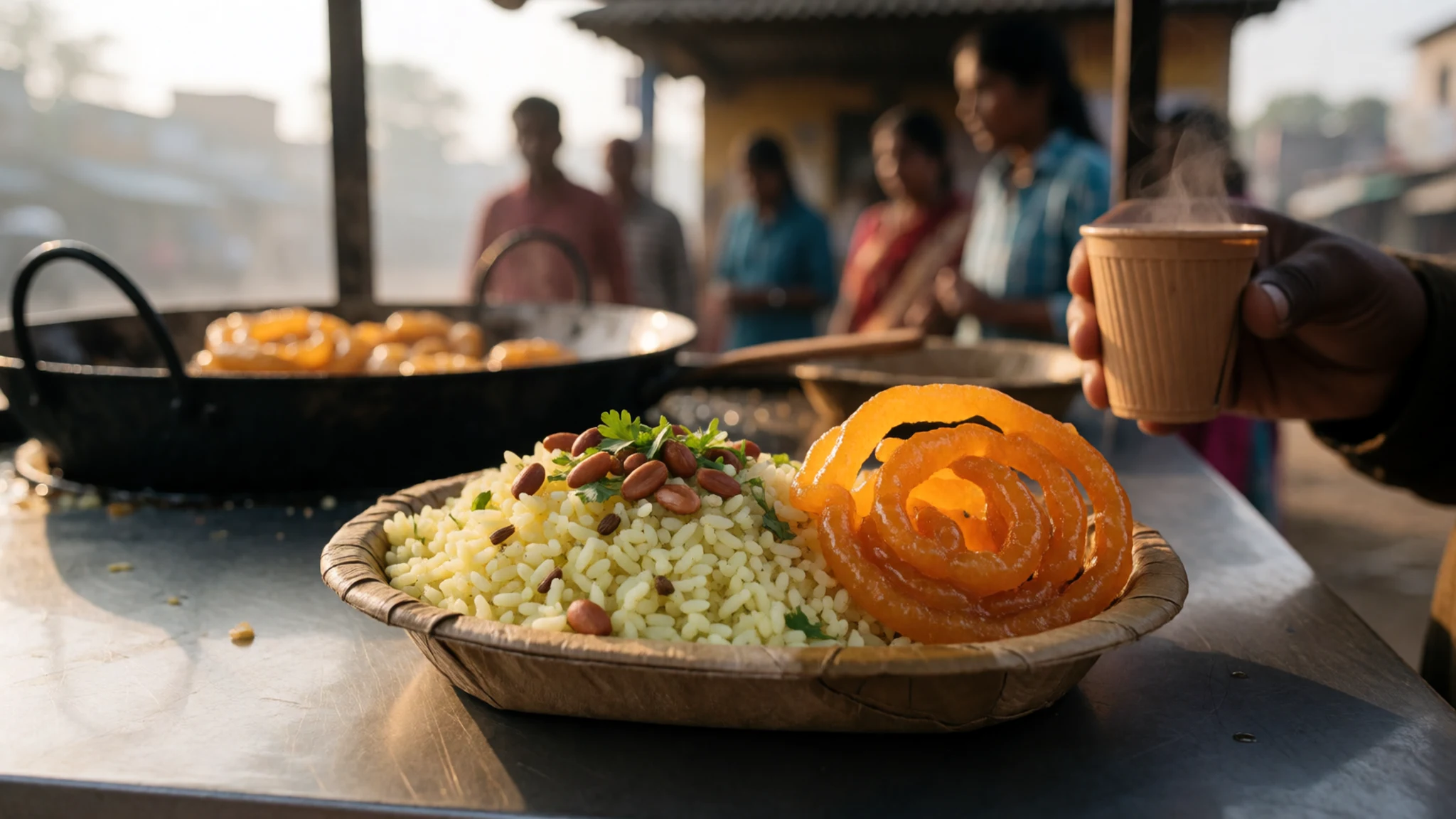
- Indo-Chinese fried rice and noodles — Busy eateries in Sanchi Town, especially near the market
Chinese-style fried rice and noodles, often with vegetables or paneer, appear on many village menus, reflecting the continental and Chinese options available locally. They suit a traveller who wants something familiar after a long day of walking. Choose a busy place where the food is cooked to order. - Sugarcane juice — Vendors near the bus stand and the approach road
Fresh sugarcane juice, pressed on the spot, is a cooling drink on a hot afternoon. Vendors set up near the bus stand and along the approach road. Hygiene varies, so pick a stall where the press looks clean and the glass is rinsed in front of you, or skip it. - Masala chai and samosas — Tea stalls by the approach road to the site
Milky masala tea served in small glasses is the easiest way to pause between monuments. Samosas, fried until golden, usually come alongside it. The stalls by the approach road are simple and quick, and they make a good place to sit in the shade.
Plan it
Best time. October to February is the most comfortable window, with cooler days and clearer skies, while March already turns hot. April and May get hot, and the monsoon from June to September brings rain and humidity that make the stone paths slippery and the walk harder.
How long. 1–2
Getting there. Reach Bhopal by air or rail, then take a bus towards Vidisha that stops close to the village. Sanchi also has a railway station near the village, and Vidisha station is a less-known option nearby.
Budget. low
Tips
- Go early in the morning, before the midday heat and tour groups
- Carry sealed packaged water and check the seal before you drink
- Carry cash for small purchases in the village and at the bus stand
- Visit the museum first for context before the hill
- Pair the visit with Satdhara if you have a second day
Etiquette
- Walk clockwise around each stupa and keep off the carved railings
- Dress modestly on the hill and in the village
- Ask before photographing monks, pilgrims or families
Nearby
Sources
- Wikidata Q181123 (CC0)
- Wikipedia: Sanchi Stupa (rev 1380752170) (CC BY-SA 4.0)
- Wikivoyage: Sanchi (rev 5286946) (CC BY-SA 4.0)
- Photo: Stupa 1, Sanchi, West torana (Bernard Gagnon) (CC BY 3.0)
- Photo: East Gateway, Stupa 1 (Biswarup Ganguly) (CC BY 3.0)
- Photo: Sanchi Stupa No2 (Kevin Standage) (CC BY-SA 2.0)
- Photo: Front View, Sanchi Stupa no. 3 (Photo Dharma) (CC BY 2.5)
- Photo: Temple 17, Buddhist Monument, Sanchi Hill (Biswarup Ganguly) (CC BY 3.0)
- Photo: Sanchi pillar of Ashoka (F.C. Maisey) (Public domain)
- Photo: Simulation of Sanchi capital of Ashoka (Ashok Shrikhande) (CC BY-SA 2.0)
- Photo: Adoration of the pillar of Ashoka, Stupa 3 South Gateway (Nandanupadhyay) (CC BY 3.0)


