Awash National Park
Awash National Park, Ethiopia
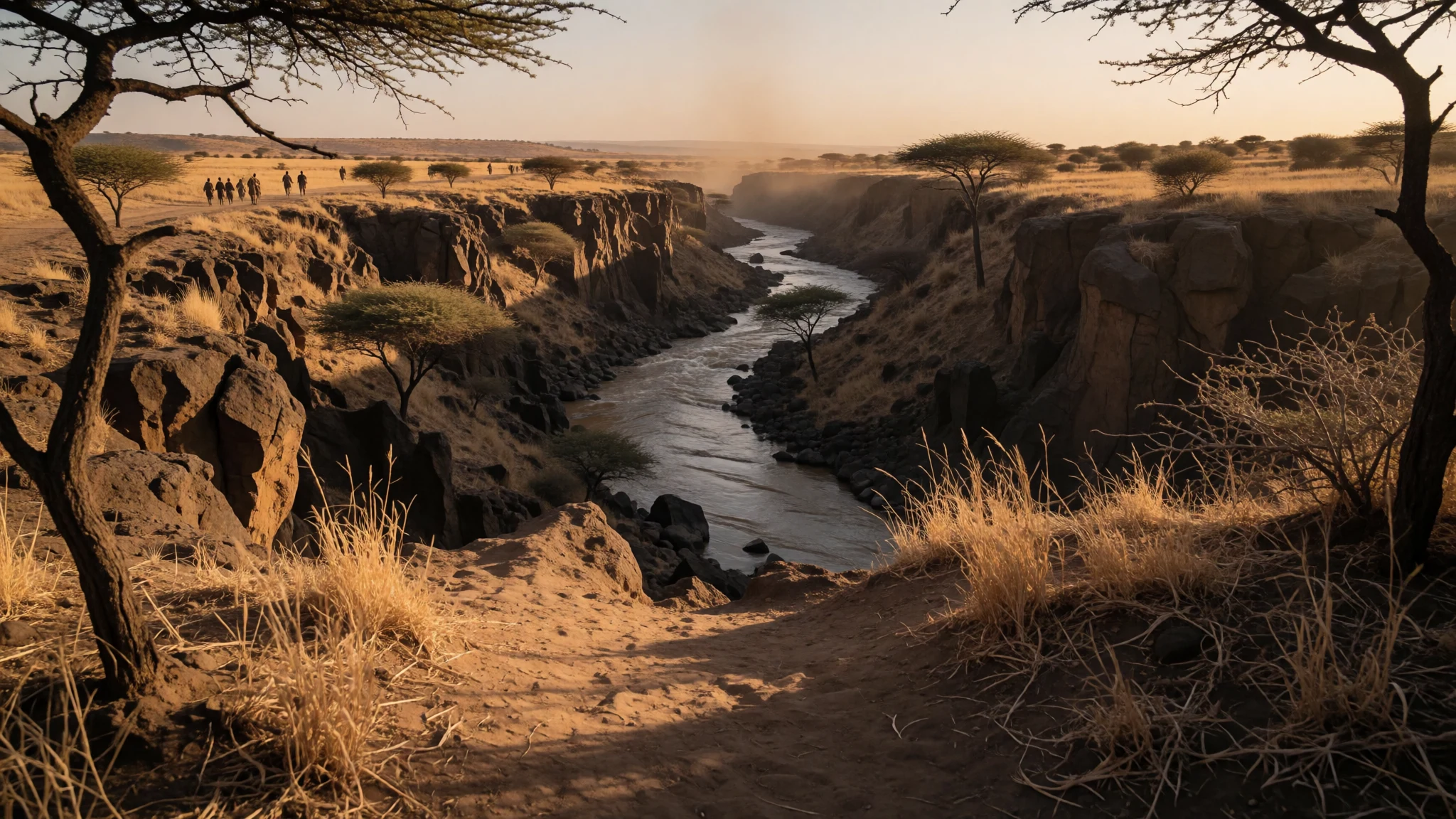
Awash National Park is a classic Ethiopian road-trip safari with waterfalls, hot springs, and steady chances to spot animals.
The place
Awash National Park sits in Ethiopia along the border of Oromia state and Afar state, stretching across parts of the Afar Region and the East Shewa Zone of Oromia. The park covers about 827 km², with much of the land around 900 m in altitude. It’s also not far from Addis Ababa by Ethiopian standards, and the setting makes it feel like a landscape you can actually drive through: acacia woodland, grassland plains, river corridors, and a volcanic backdrop.
What makes Awash feel different from many “drive-and-snap” parks is how varied the scenery is in a relatively short distance. The Awash River forms a strong spine for the visit, with gorge viewpoints and waterfalls (best when the rains have recently done their work). In quieter pockets you’ll hear and see wildlife using the river’s edge as a living route, and in the upper Kudu Valley at Filwoha there are hot springs tucked among palm groves.
Rainfall here follows a bimodal pattern: there’s a rainy season followed by a long dominant dry stretch that can run up to 10 months. That means conditions change even within the same year. During wetter periods, the waterfalls can look and sound more dramatic; in the dry season, visibility often improves for spotting animals, but the landscape can feel more dusty and sparse. Either way, it’s a rural, working landscape—expect a more local, less “theme-park” atmosphere than you might find in more heavily touristed safari destinations.
Its story
Awash National Park’s story is tied up with Ethiopian development and the ways protected areas can reshape everyday life. The park was established in 1966, though the authorising act took a further three years to be fully passed. For travellers, that history matters because the park is not a sealed-off wilderness: the land around it has long supported people’s livelihoods, including the indigenous Karayyu Oromo communities.
When the park was set up, it wasn’t happening in isolation. At the same time, the Metehara Sugar Plantation was created to the south. Together, these two moves changed the balance of land use in the region. The brief reality—what the historical record flags—is that livelihoods were endangered by these establishment efforts, which contrasts with the Ethiopian government’s stated intention that such projects would benefit local people.
This is one of those places where the “landscape appreciation” part of a visit sits next to a more complicated background. On a wildlife drive, it can be tempting to focus only on what’s out on the track: oryx beisa, kudus, dik-diks, tortoises, gazelles, and baboons that may appear near water. But if there’s any takeaway, it’s to look at the park as a landscape in negotiation—between conservation aims, regional livelihoods, and development pressures.
Practically, that also explains the tone of a trip: keep expectations grounded, respect local communities you pass en route, and remember that the park’s scenery is both natural and shaped by human decisions over decades.
What to see
- Awash waterfalls — Awash River area
Awash waterfalls tend to look best during or just after the rainy season. From a lodge or viewing point, you may even catch movement near the rocks at the top, and baboons can sometimes be seen crossing near the water.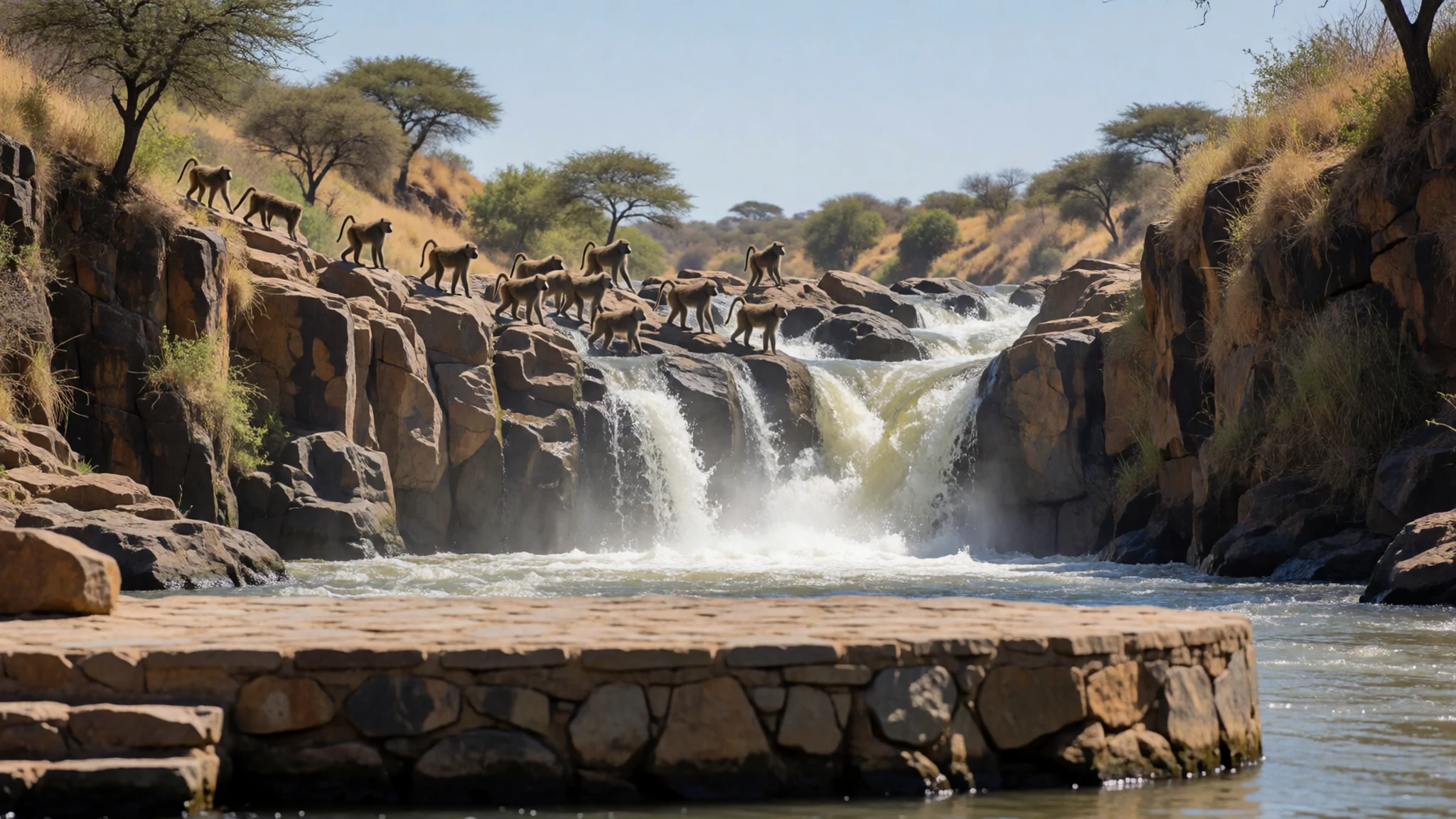
- Animal tour in the park — acacia woodland and grassland zones
Animal viewing is commonly done by car, following habitat along the river and plains. Look out for oryx beisa, kudus, dik-diks, sulcata tortoises, and Soemmerring’s gazelles, with olive baboons sometimes visible; Afar people and camels may also be seen.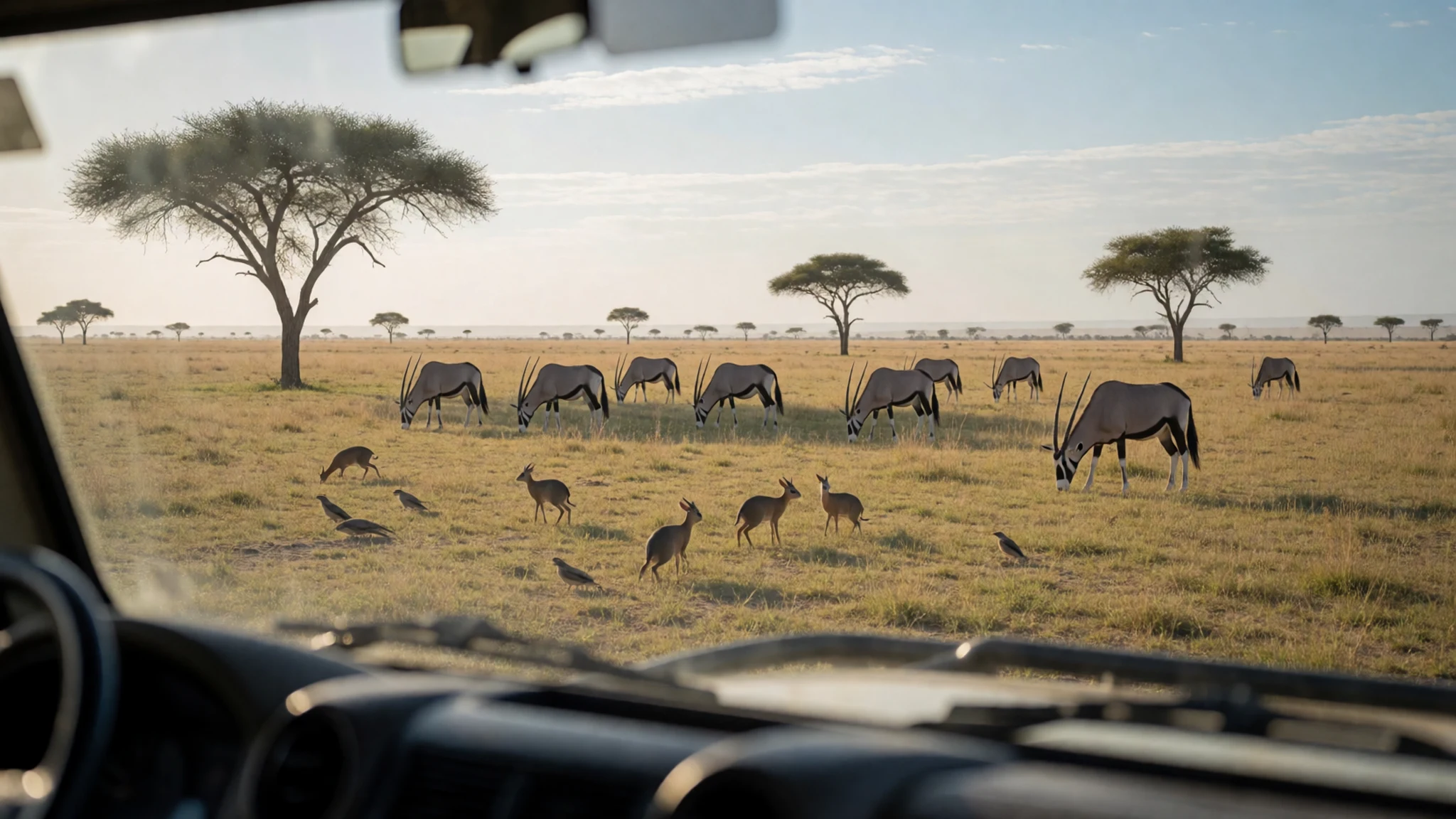
- Viewpoint on the Awash River gorges — Awash River gorges
For a sense of scale, head for a viewpoint over the Awash River gorges and one of the tributaries. It’s the kind of spot where the light changes quickly, and it helps to plan around clearer weather for better sightlines across the ravines.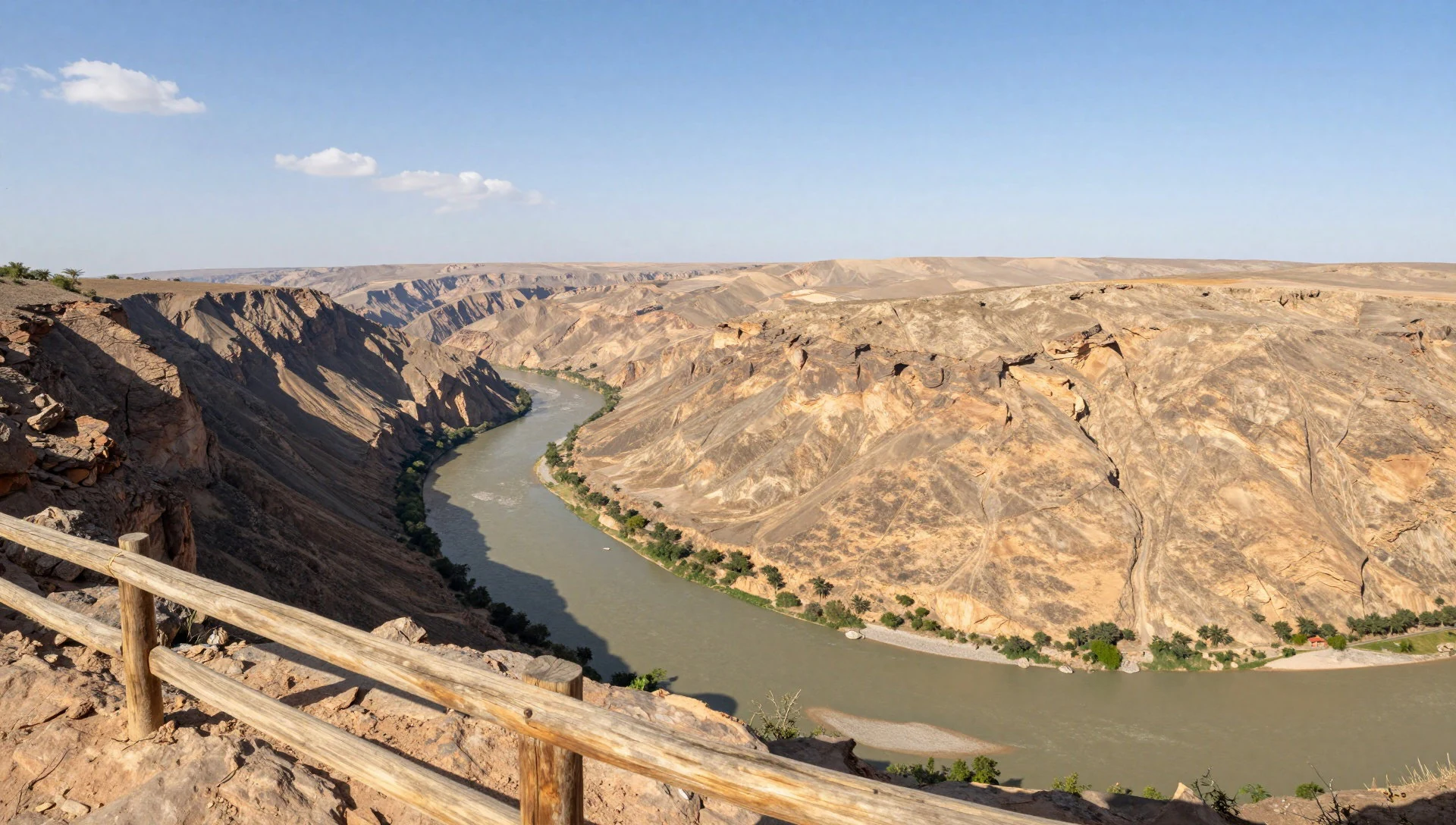
- Hot springs at Filwoha — Upper Kudu Valley (Filwoha)
In the upper Kudu Valley at Filwoha, hot springs sit in a greener pocket with palm groves at the river bed. It’s a welcome contrast to the drier park stretches, and it’s a good stop when the rest of the day becomes dusty.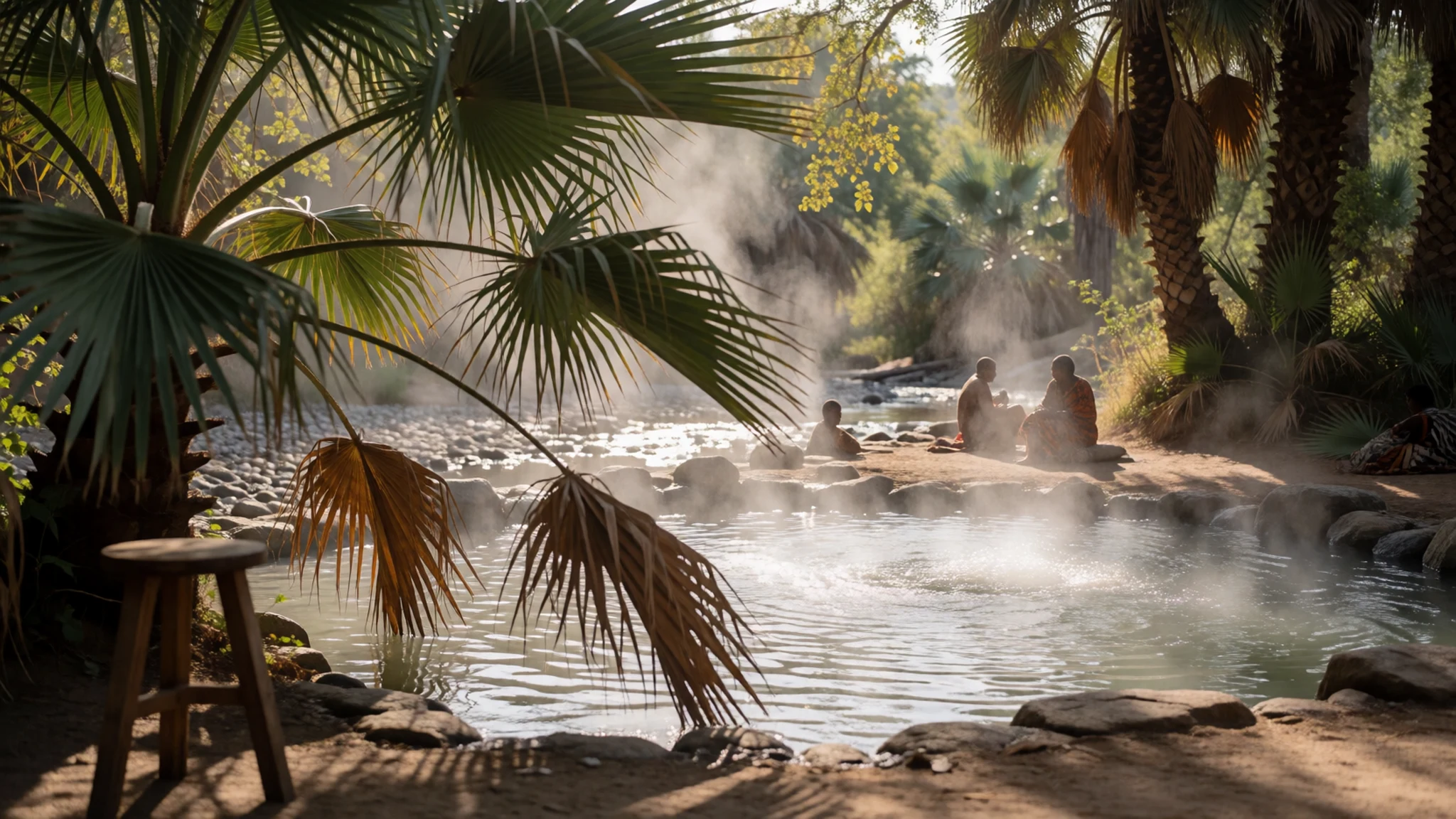
- Mount Fentale — western Awash National Park
Mount Fentale is a dormant stratovolcano in the western part of Awash National Park at higher altitude. It’s more about the geology and the backdrop than a “quick summit” plan—think of it as a landscape feature that frames long drives and evening skies.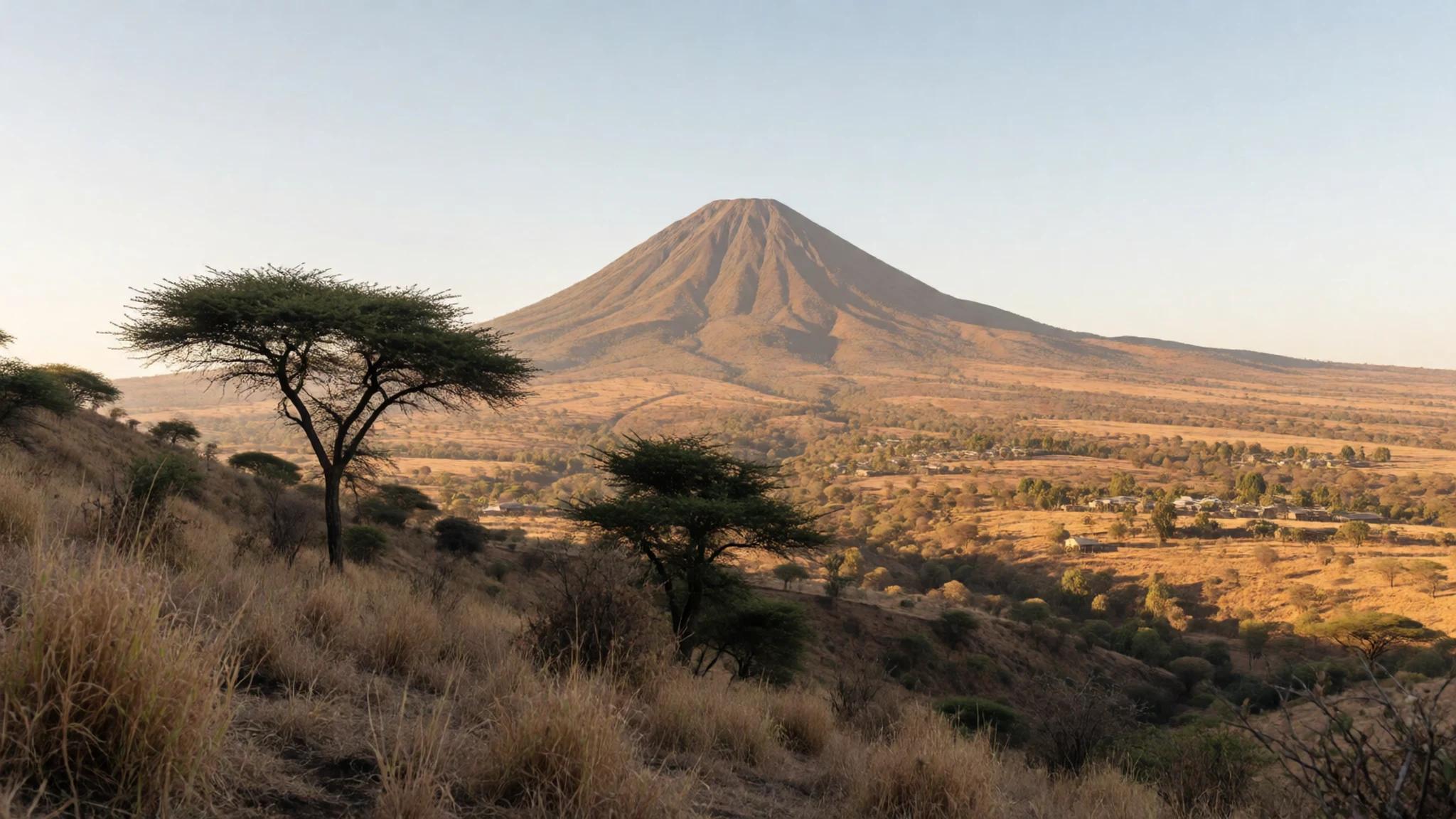
Culture
Awash National Park feels less like a “remote resort” and more like a living, rural region where the park edges meet villages, roads, and river life. As you travel in, you’ll likely pass between Metehara and Awash town areas, and the park itself is divided by the Addis Ababa–Dire Dawa highway. Because of this, the cultural rhythm is often about sharing space—roadside interactions, sightings of people and livestock, and the quiet presence of communities in the wider landscape.
The Afar presence is especially relevant around sightings: sometimes Afar people and their camels appear during animal-viewing drives. In practice, that means patience is part of the experience. When animals come into view, it’s worth slowing down and watching from a respectful distance rather than trying to rush a perfect photograph.
Dress and behaviour are usually more important than “tourist etiquette” in these areas. Keep voices low near wildlife and water, don’t block paths, and be careful with your footing on rocky or uneven river edges. If you’re visiting waterfalls or viewpoints after rains, remember that the environment can be slippery and unstable.
Visitor etiquette: Keep noise down near people and wildlife, dress modestly, and ask before photographing individuals, especially around local livestock.
What to wear
In Awash National Park, clothing is mostly about sun, dust, and modesty rather than fashion. The park sits in low-to-mid altitude terrain and sees long dry spells, so lightweight layers work best: a breathable shirt, long trousers or a long skirt, and a hat that can handle strong light. When you move near river edges and waterfalls, closed-toe shoes or sturdy sandals with grip are a better call than flip-flops.
For traditional wear, the region is commonly associated with Ethiopian textiles and everyday dress traditions, but visitors will see a mix of styles depending on where they are in the wider country. Out in park areas, many people wear practical clothing for walking and working, while more traditional garments may appear around communities.
For a visitor, the key is respect and practicality: bring a light rain layer if the rainy period is active, and carry a small scarf or shawl for covering shoulders if visiting local areas. Nights can feel cooler in upland pockets, so a thin fleece or warm top can help if your trip includes viewpoints and longer time sitting in the vehicle.
Shoes: choose something you can walk on when paths get rocky or wet, because a short “look around” can turn into a slippery scramble near water.
What to eat
- Ethiopian-style grilled meat — roadside eateries en route
Look for simple meat dishes (often grilled) at roadside stops between Addis Ababa and the park gateway towns. These are usually filling, quick to order, and easy to eat between drives.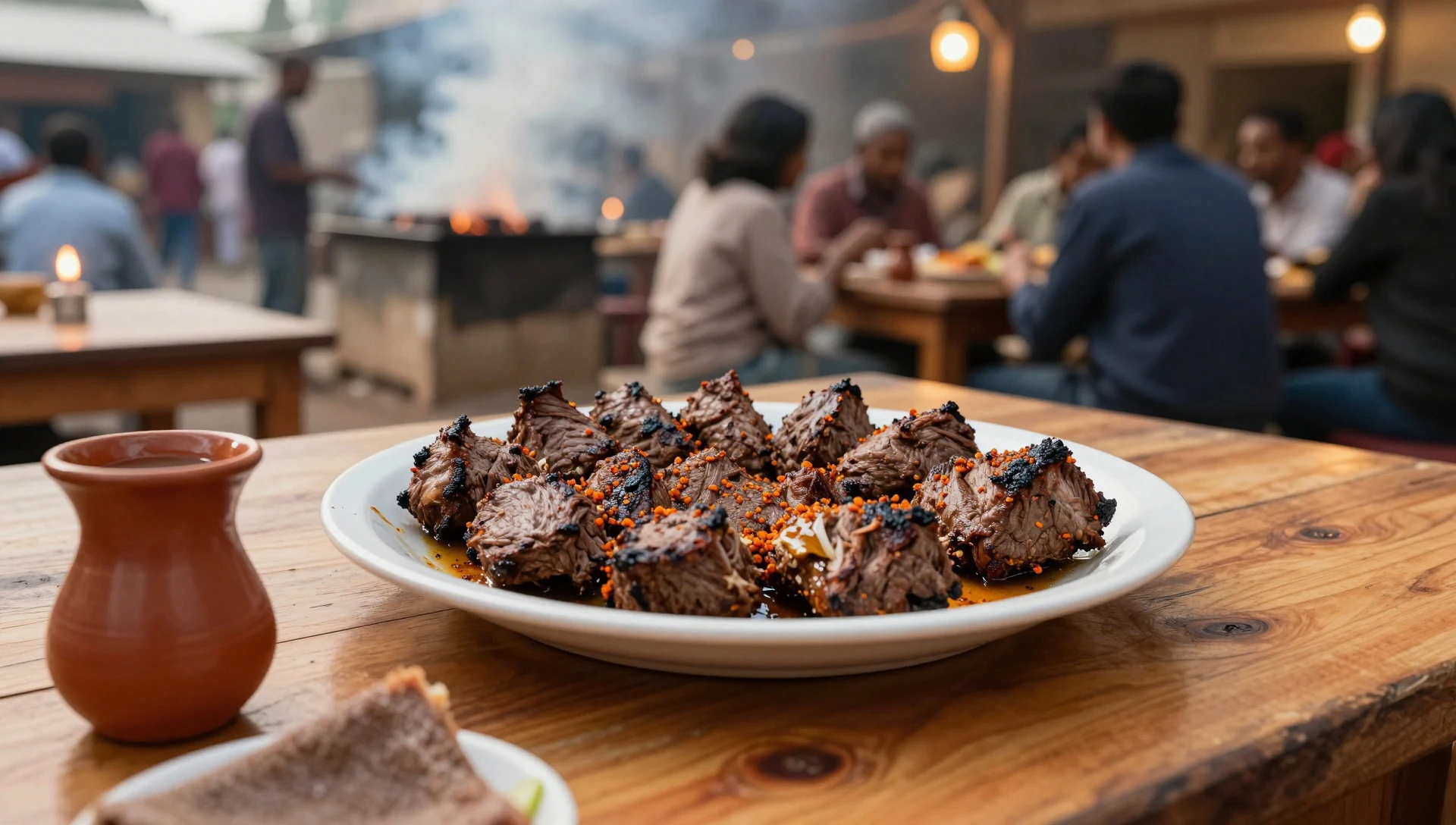
- Tibs — restaurants in Addis Ababa and nearby towns
Tibs are a go-to Ethiopian main made with sautéed meat and spices. In practice, it’s commonly available at local restaurants around Addis Ababa and on the road toward Awash, depending on what’s been prepared that day.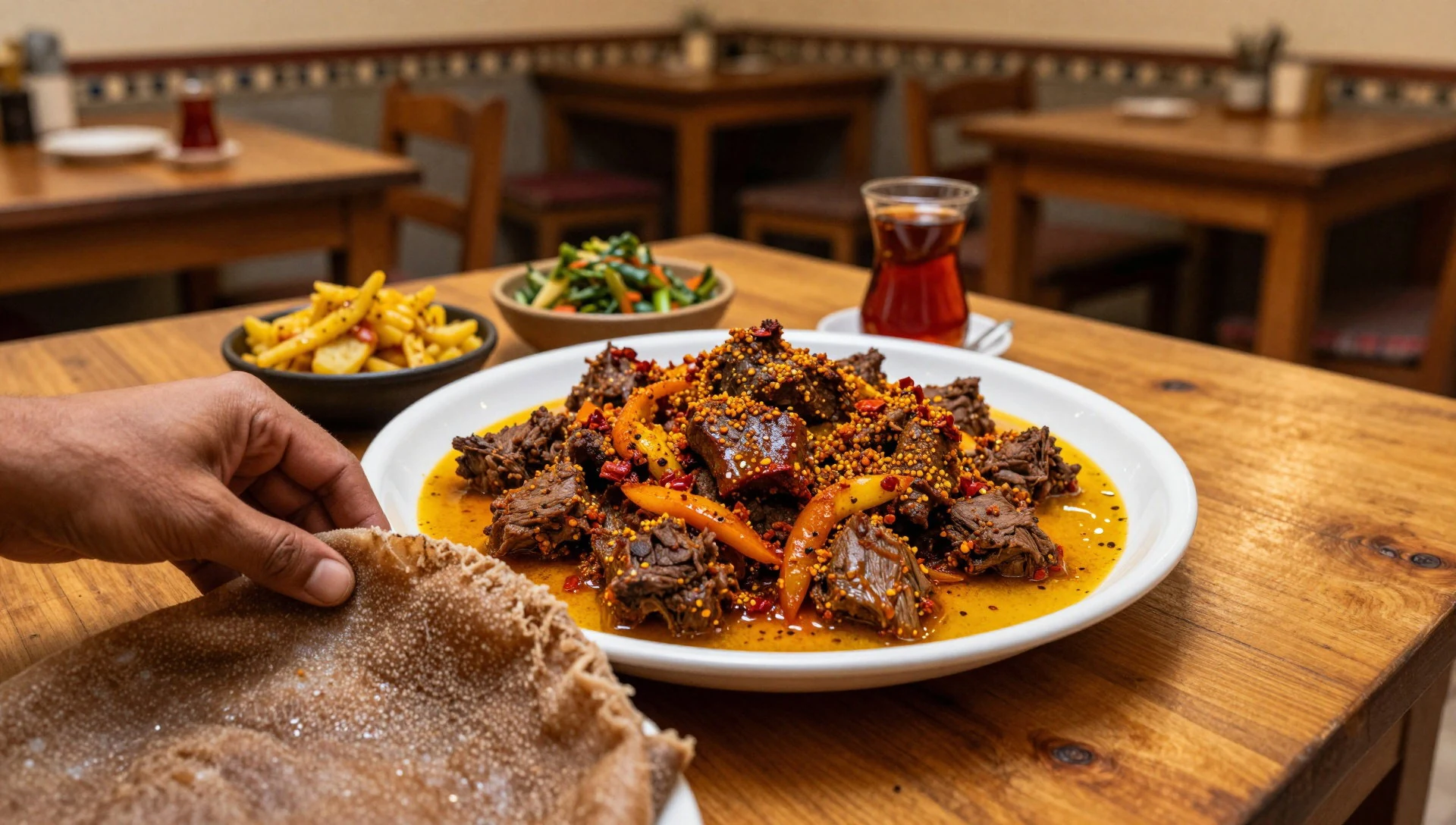
- Injera with stews — local restaurants near Metehara and Awash
Many meals revolve around injera served with lentil or vegetable stews. It’s a practical choice for a park day because it doesn’t require special tools and can be shared easily after a long drive. - Shiro (spiced chickpea stew) — local eateries around Awash-area towns
Shiro is a thick, spiced chickpea stew that’s often served with injera. It tends to be widely available and works well when the weather is hot and time is tight between viewpoint stops. - Fresh fruit and sweet drinks — small shops and roadside stops
Because drives can be long and the air can feel dry, fruit and sweet drinks at small stops can be a lifesaver. Keep it simple: choose what looks clean and fresh rather than chasing fancy brands.
Plan it
Best time. Late October–November and March–April for clearer safari conditions; the rainy season can boost waterfall flow, while June is the rainy season and August is hot and humid.
How long. 3–4
Getting there. Drive from Addis Ababa (about 200 km; roughly 3 hours) via the Addis Ababa–Adama Expressway. The park entrance lies between Metehara, 14 km to the west, and Awash, 16 km to the east.
Budget. mid
Tips
- Plan game drives around the times animals are most active and keep an eye on water sources near the river.
- If waterfalls matter, time the visit for or just after the rainy season for stronger flow.
- Carry water and sun protection; the dry stretches can be harsh even when temperatures feel manageable.
- Expect the park to be approached through towns and a highway corridor—allow time for checkpoints and local road conditions.
Etiquette
- Stay in your vehicle on wildlife-viewing routes and keep a respectful distance.
- Be mindful around people and livestock; ask before photographing individuals.
- Keep noise low near waterfalls and river viewpoints, where wildlife may be moving quietly.
Nearby
Sources
- Wikidata Q791635 (CC0)
- Wikipedia (Awash National Park) (CC BY-SA 4.0)
- Wikivoyage (Awash National Park) (CC BY-SA 4.0)
- Photo photos/01-parc-national-d-awash-ethiopie-chutes-d-eau-2.jpg (CC BY 3.0)
- Photo photos/02-parc-national-d-awash-ethiopie-chutes-d-eau-3.jpg (CC BY 3.0)
- Photo photos/03-parc-national-d-awash-ethiopie-rivi-re-1.jpg (CC BY 3.0)
- Photo photos/04-awash-national-park-ethiopia-50779383857.jpg (CC BY 2.5)
- Photo photos/05-awash-national-park-ethiopia-50779280296.jpg (CC BY 2.5)
- Photo photos/06-parc-national-d-awash-ethiopie-oryx-1.jpg (CC BY 3.0)
- Photo photos/07-awash-national-park-52001991051.jpg (CC BY 2.5)
- Photo photos/08-awash-national-park-52002518390.jpg (CC BY 2.5)


