Amazon rainforest
Amazon rainforest, Peru
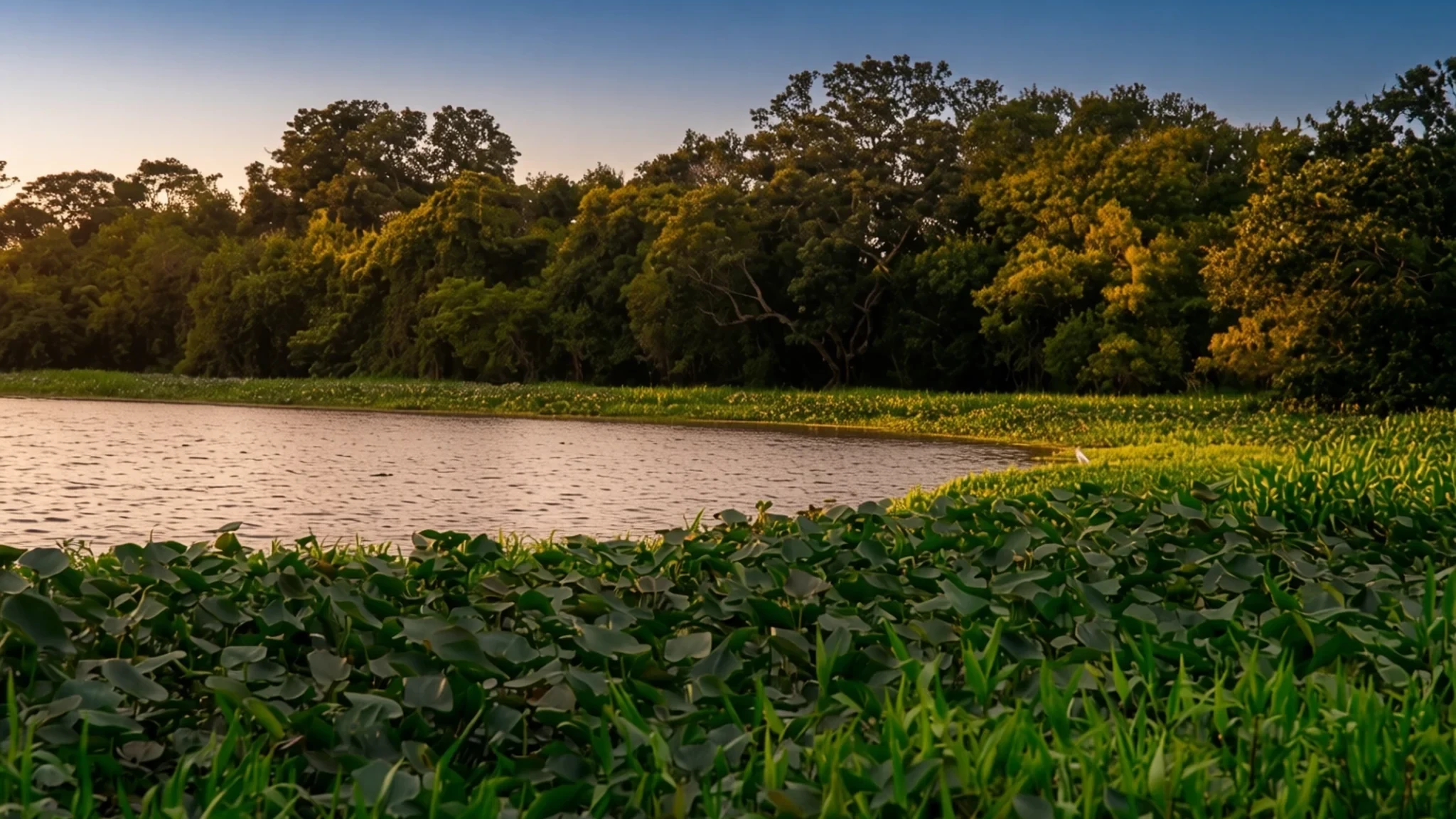
The largest tropical rainforest on Earth, a slow green world of rivers, flooded forest and living communities, best entered by boat.
The place
The Amazon rainforest covers most of the Amazon basin in South America, a region shared by nine countries. Most of the forest lies within Brazil, with large areas in Peru and Colombia and smaller stretches in several neighbouring nations. Its size is hard to hold in the mind. It is the largest and most biodiverse tropical rainforest in the world, and it makes up over half of what remains of the planet's rainforests. About 34 million people live across the basin.
Rather than a single wall of green, the basin is a mosaic. Seasonally flooded forest rises and falls with the rivers, while higher ground stays dry. Wide, brown rivers carry silt down from the Andes, whereas darker, slower blackwater rivers run stained by plant acids. Canopy trees tower over a dim understorey, and the air stays warm and wet for much of the year.
Most journeys start in river cities such as Manaus in Brazil or Iquitos in Peru, then continue by boat or small plane into the forest. Life here runs on the water: fishing villages, riverside farms and families who read the seasons better than any guidebook. The forest is best understood slowly, from a canoe, at dusk, with a guide who can name the birds you cannot see.
Its story
People have lived in the Amazon for at least 11,200 years, according to evidence from a rock shelter excavation in Brazil. Over time they built settlements along the forest's edges and reshaped parts of it with fields and orchards. For a long time scholars assumed the poor soils could support only small populations, but recent work has overturned that view. Sites in what is now eastern Ecuador, along with large coastal settlements, point to dense and organised societies.
Estimates of the population at the start of the sixteenth century vary widely, but several million people is a common figure, living in coastal towns and inland villages alike. Francisco de Orellana, a Spanish conquistador, was the first European recorded to descend the river's full course, in 1542. His accounts of large settled communities were once dismissed as exaggerated, yet newer research suggests he may have been describing real places. Diseases carried from Europe, smallpox among them, are thought to have devastated these societies within a few generations, and forest may have reclaimed their abandoned fields.
In the twentieth century the British explorer Percy Fawcett searched for traces of a lost civilisation in the Amazon. His expeditions produced little conclusive evidence, and he vanished on his final trip, a disappearance that has fed legend ever since. Today the story is one of ongoing contest. Deforestation, mining and cattle ranching press on the forest, while indigenous and riverside communities work to protect their land.
What to see
- Meeting of the Waters, Manaus — Manaus, Brazil
Just outside Manaus, the dark, tea-coloured Rio Negro meets the pale, silty Solimões, and the two streams run side by side for a long stretch before blending. It is an easy boat trip from the city and a good first look at the basin's two water types. Go early, when the light is soft and the boats are fewer. Operators vary, so compare options in town before booking.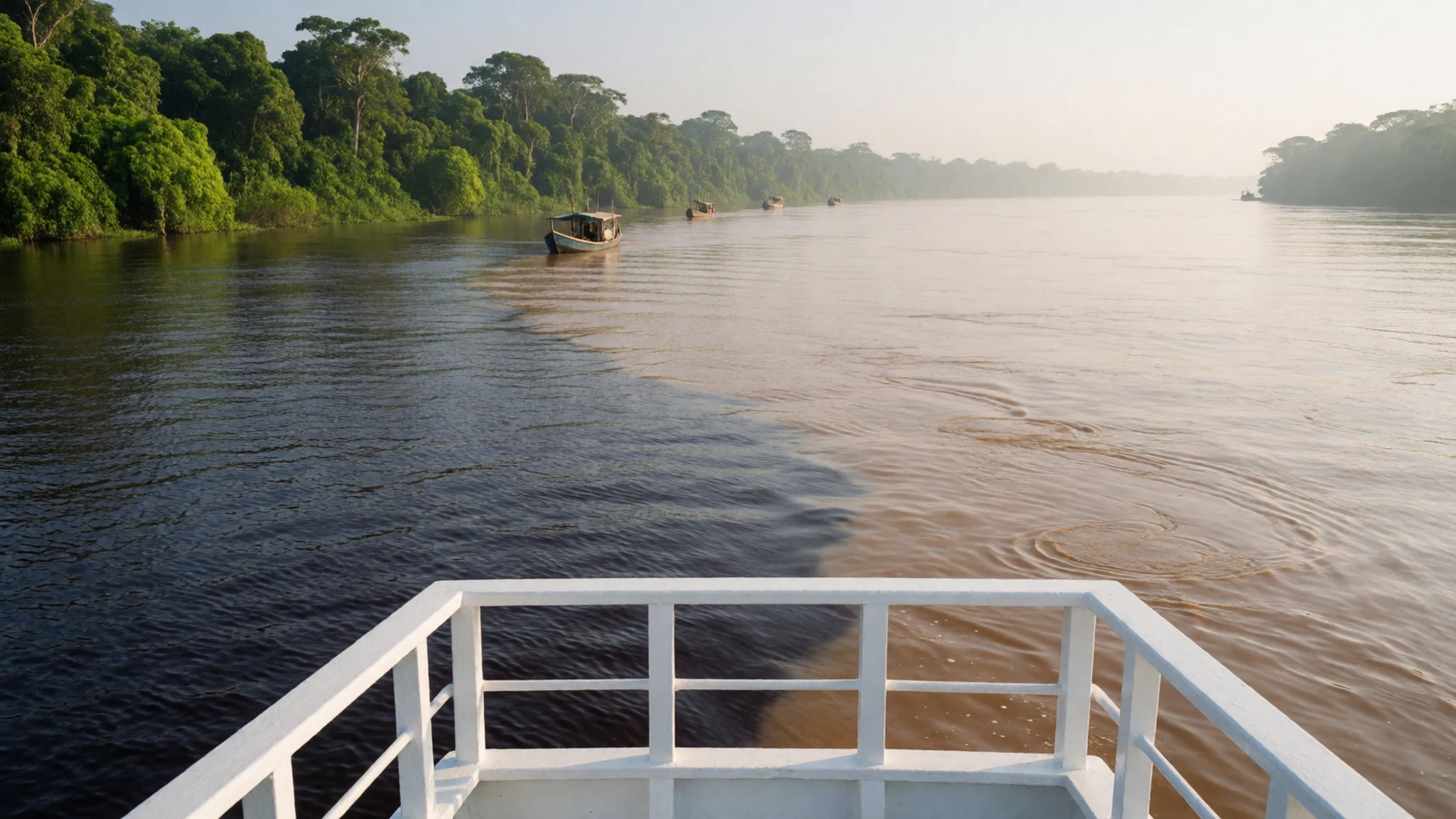
- Forest north of Manaus — Reserves north of Manaus, Brazil
Reserves north of Manaus protect forest that has been studied for decades, with research towers that let scientists measure the air above the canopy. Guided walks show buttress roots, strangler figs and the damp layers of leaf litter underfoot. Expect heat, humidity and insects, and bring long sleeves. A good guide matters more than the trail itself.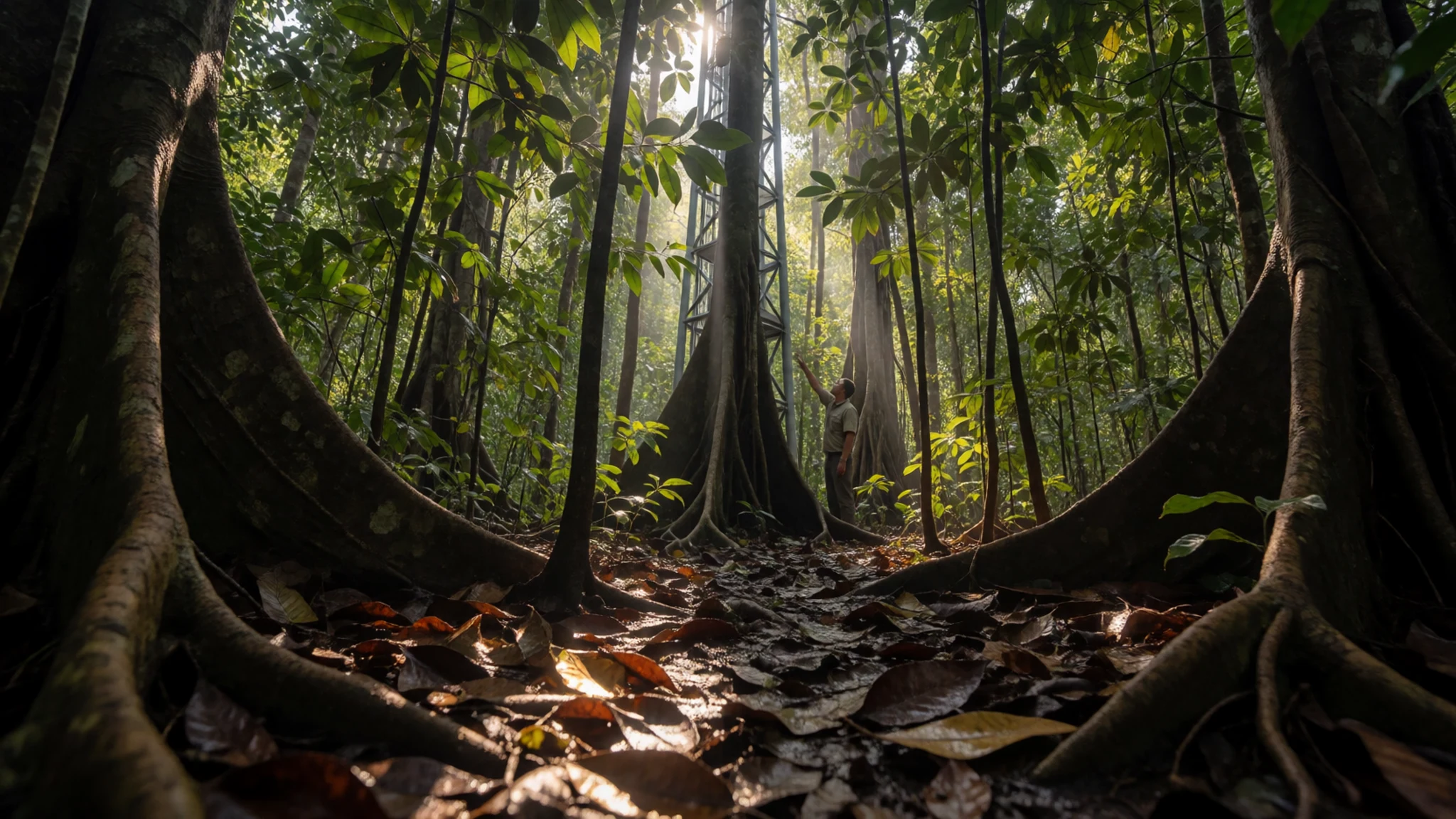
- Iquitos — Loreto region, Peru
Iquitos is a river city in north-eastern Peru, reached by air or by boat, and it is the usual base for trips into the Peruvian Amazon. Its old rubber-boom mansions and busy riverside market show how the city grew up around the water. Use it to arrange lodge stays and boat trips, and expect a slower pace than in Lima.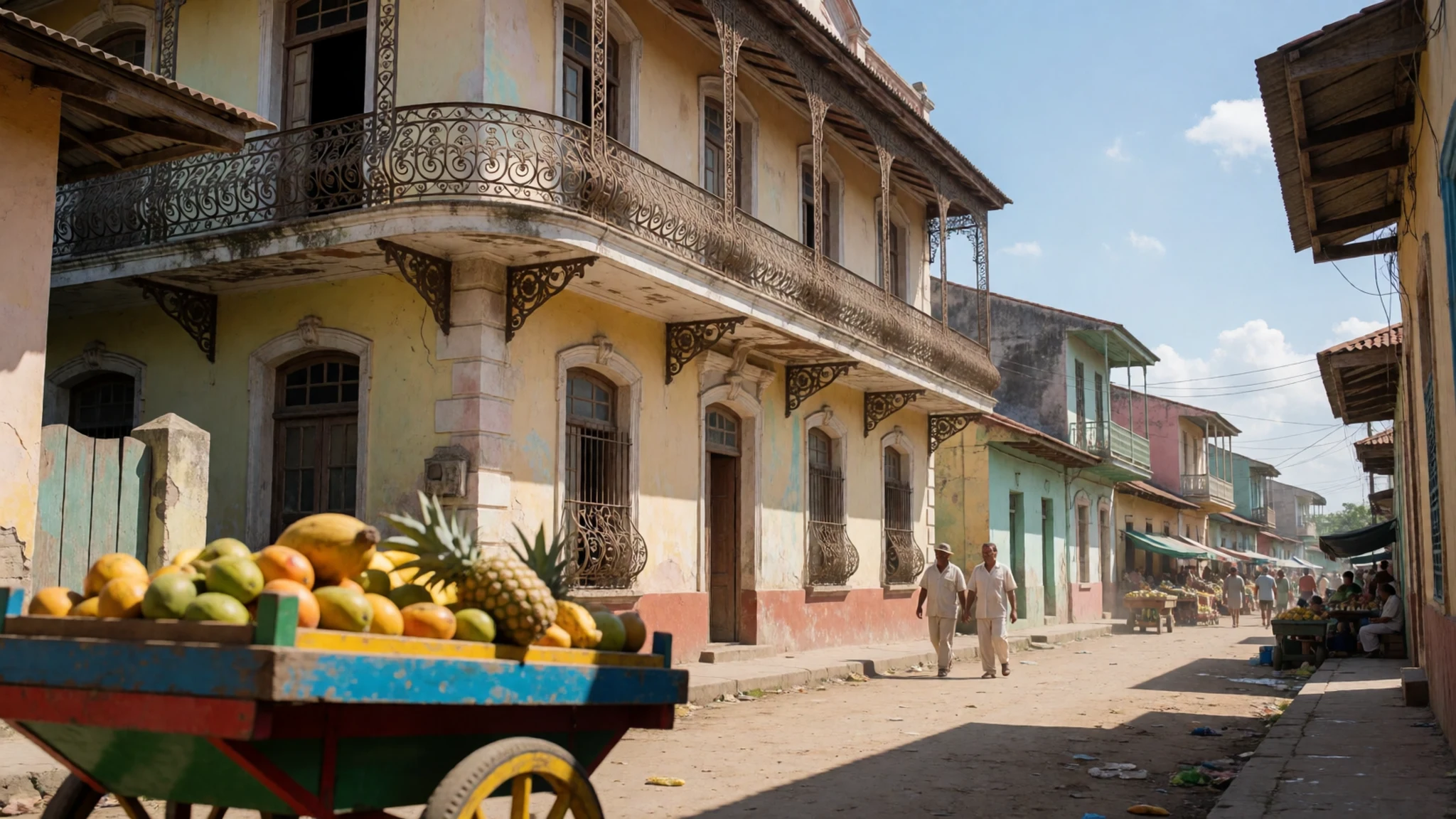
- Mamirauá Sustainable Development Reserve — Amazonas state, Brazil
This large reserve sits where the Solimões and Japurá rivers flood the forest each year. Local community guides run most trips, using paddles and quiet engines where possible. Book through community-based operators, since the money usually stays in the villages that protect the forest. Water levels change the route, so ask what the season allows.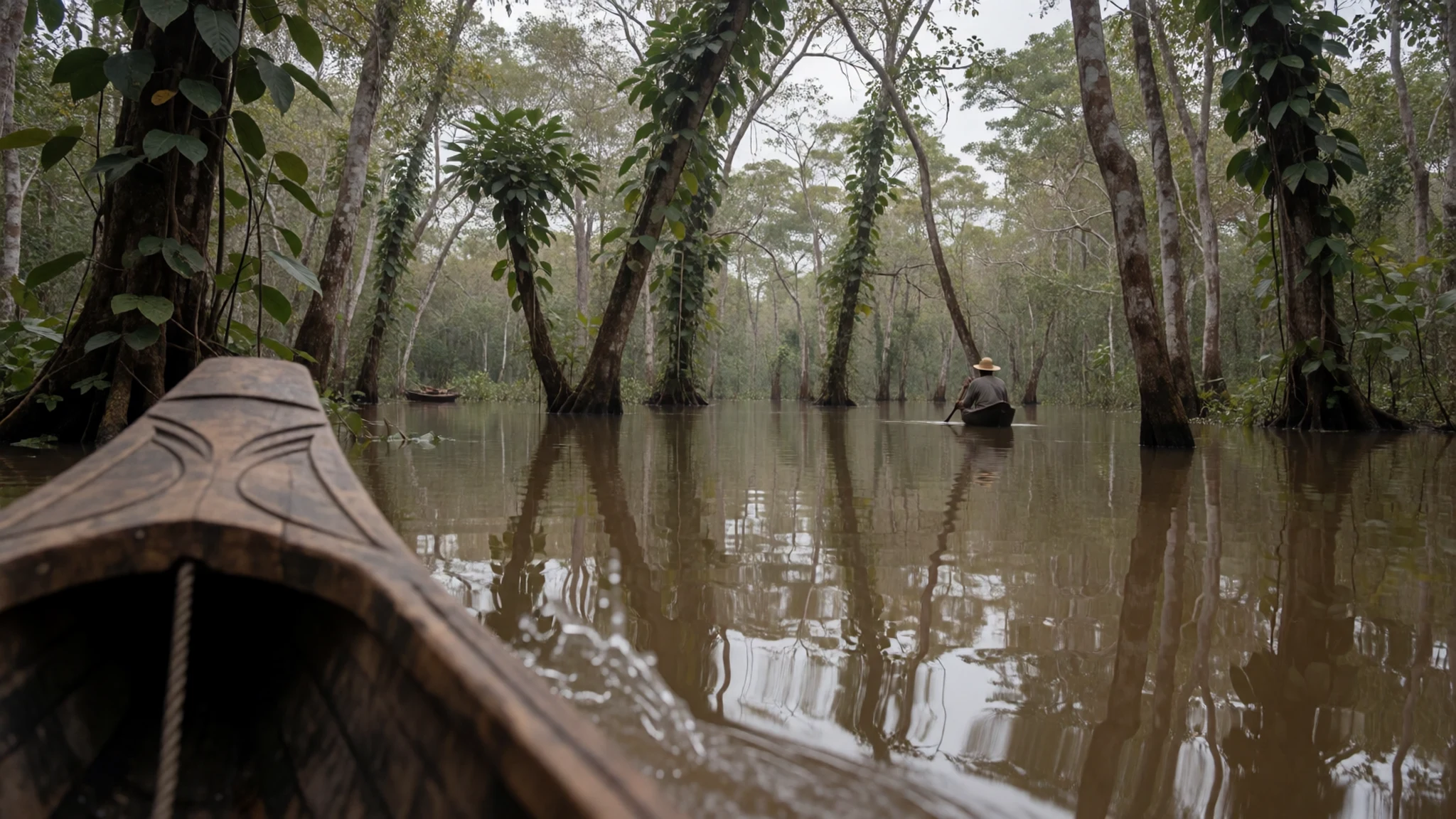
- Tambopata — Madre de Dios region, Peru
Tambopata, near Puerto Maldonado in south-eastern Peru, is known for clay licks where macaws and parrots gather in the morning. Lodges here sit deep in the forest, reached by a boat ride and a short walk. Book well ahead for dry-season weeks, and carry insect repellent and a rain layer. The licks are best watched early, before the midday heat.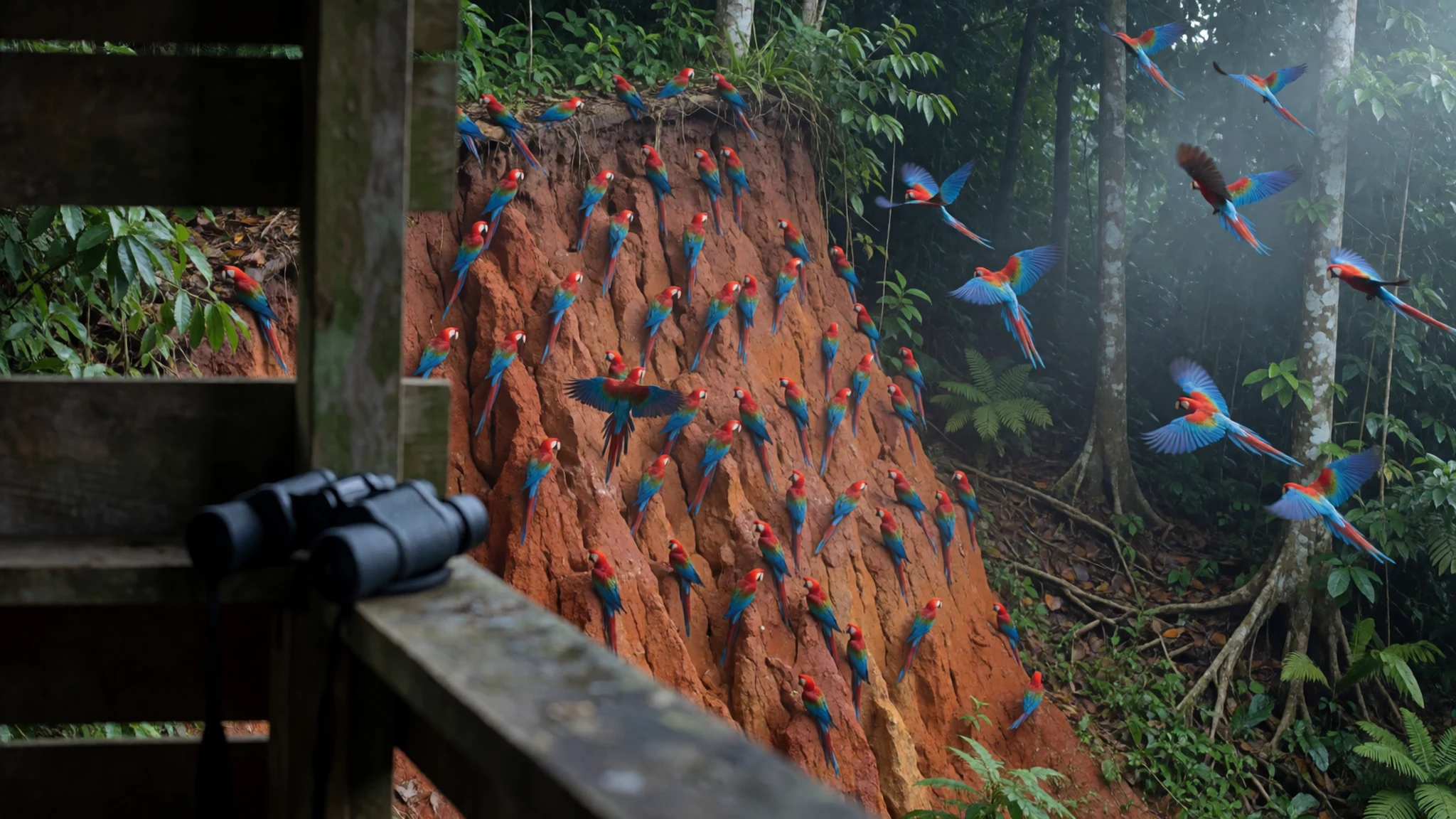
Culture
Hundreds of distinct peoples live in the Amazon, and daily life follows the rhythm of the rivers. Riverside families, known in Brazil as ribeirinhos, have fished and farmed these banks for generations, and many welcome visitors who understand how local life works. Indigenous communities often govern their own territories and set their own rules about outsiders, including whether visitors may enter at all. Some groups remain largely isolated and have chosen to stay that way. The sensible response is to keep a respectful distance, never seek them out, and report any sighting to local authorities. Visits to communities are usually arranged through a local association, which can explain customs such as gifts, visiting hours and where to sit. Ask before photographing anyone in a village, and never photograph people who have chosen not to be contacted.
What to wear
Traditional dress in the Amazon varies widely between peoples, and much of it is worn on ceremonial occasions rather than every day. Many communities have used plant fibres, cotton, feathers, seeds and beads, and body painting with natural dyes such as urucum, a red pigment from the annatto seed, remains part of ceremonies in some villages. Riverside communities have long worn practical cotton clothing suited to heat and work on the water.
What people wear now is largely everyday clothing: t-shirts, shorts, long trousers, cotton shirts, rubber boots for wet ground and sun hats. Football shirts are common in Brazilian river towns, and many young people in Manaus and Iquitos dress much like their counterparts in the cities.
A visitor should dress for heat, humidity and insects. Light, quick-drying long sleeves and trousers help against mosquitoes and scratches, and a hat and rain layer make sense in every season. Closed, sturdy shoes suit muddy trails, and many lodges supply rubber boots. Modest clothing is appreciated in villages, and swimwear belongs near the water, not in the town centres.
What to eat
- Tacacá — evening food stalls on the waterfront in Manaus
A hot broth made from tucupi, a yellow sauce pressed from cassava, with jambu leaves that leave a faint tingle on the tongue and dried shrimp floating on top. It is a classic evening snack from street stalls in Belém and Manaus. Eat it from a bowl at the stall, standing or on a plastic stool.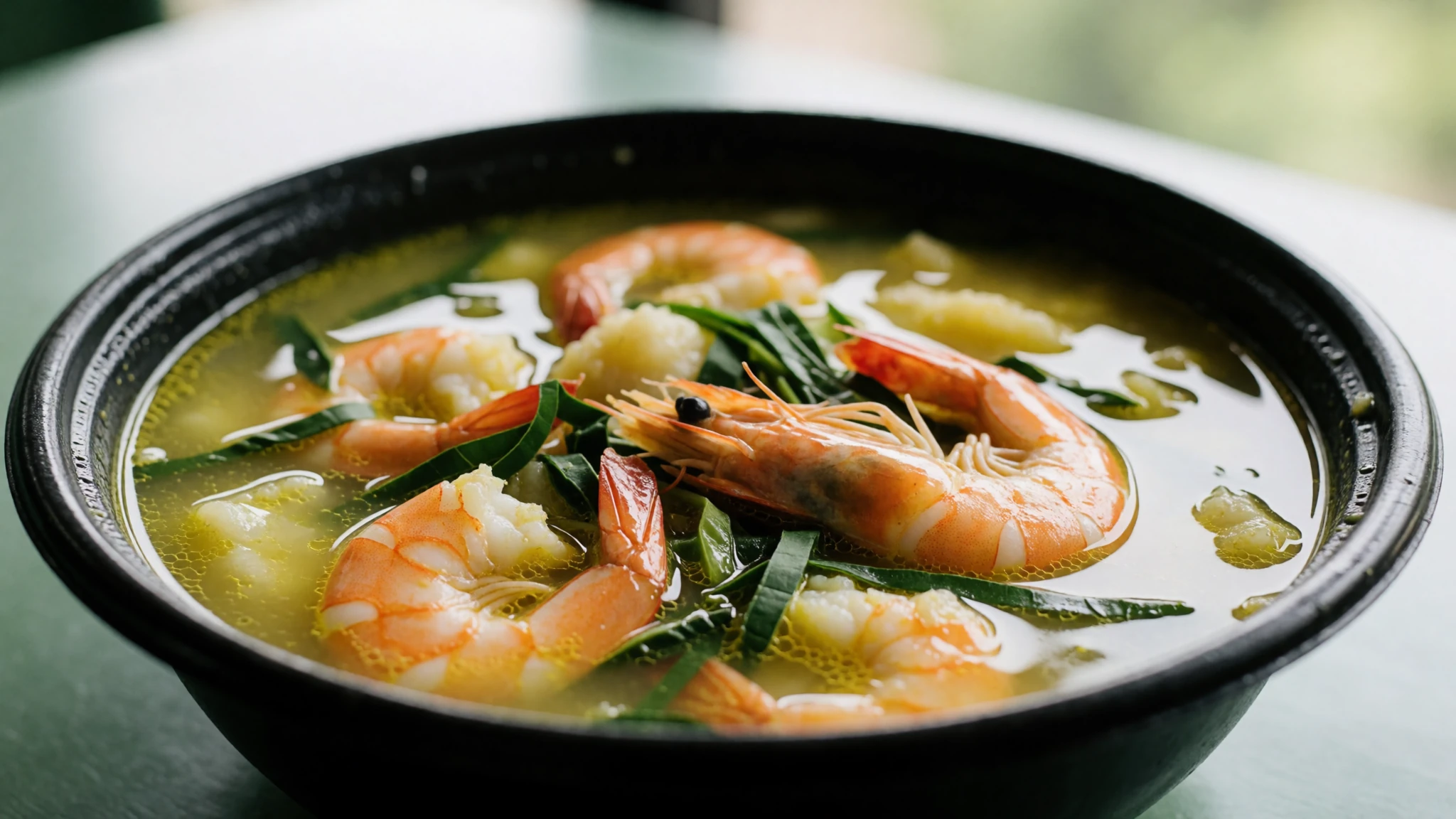
- Pirarucu — the fish market at Mercado Adolpho Lisboa, Manaus
Pirarucu is one of the largest freshwater fish of the basin and is salted and dried for sale. Its firm, flaky flesh is cooked in stews or grilled over charcoal. Seek it out in fish stalls where it is sold by the slab, since the market is the best place to see the fish whole.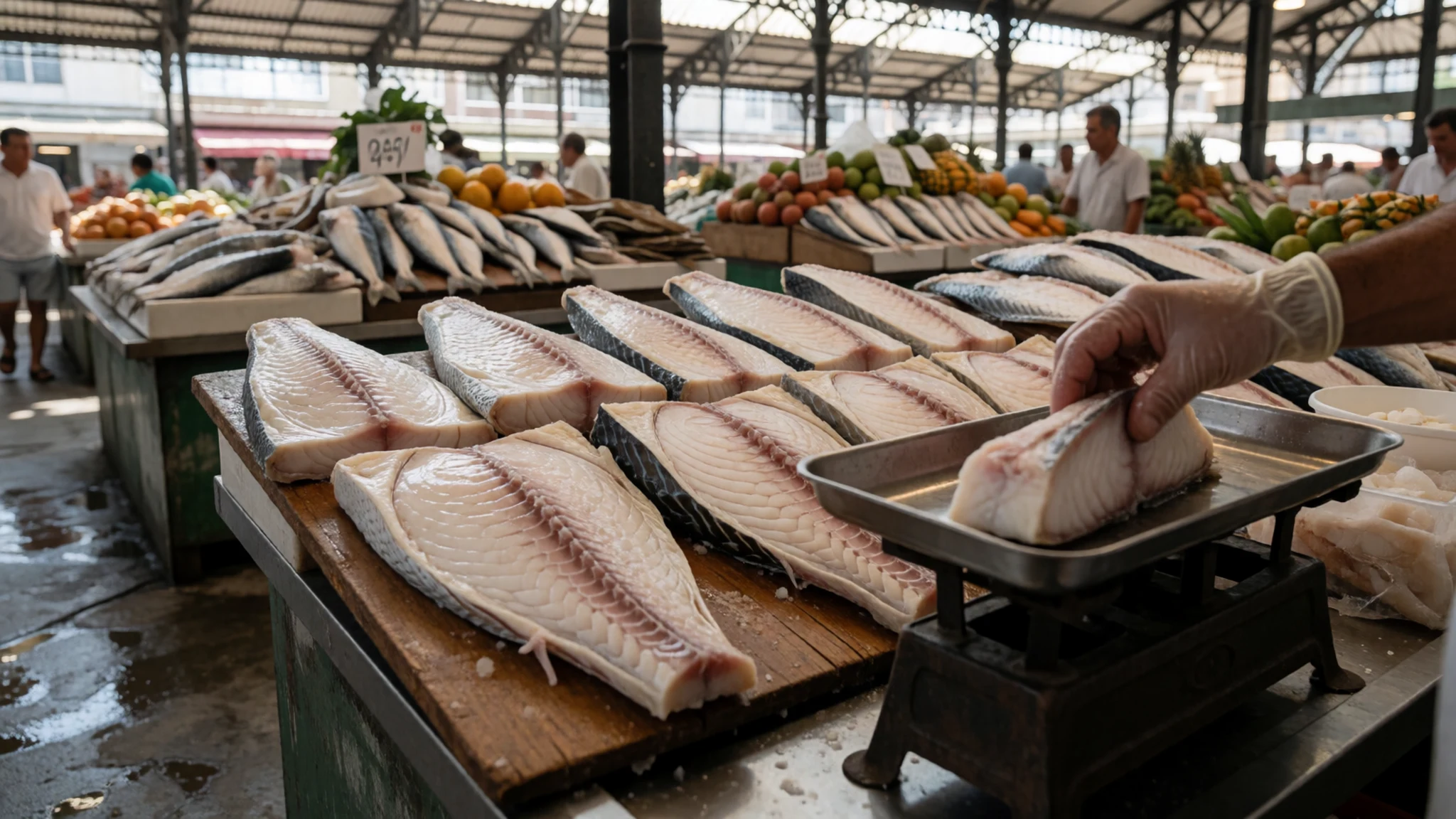
- Tambaqui — riverside eateries in Manaus and Iquitos
Tambaqui is a deep-bodied river fish, usually grilled whole on a wooden board or stewed with tomato, onion and cassava flour. Its rich flesh suits a simple squeeze of lime. Riverside eateries serve it with rice and farinha, and it is often one of the freshest things on the menu.
- Açaí — juice bars and morning markets in river towns
Açaí is a thick, deep purple pulp from a palm berry, traditionally eaten savoury with fish or shrimp in Brazil rather than sweetened in a bowl. Juice bars sell it cold, and the pulp is often mixed with manioc flour. Try it at a stall where locals are eating, not only in tourist cafés. - Farinha — market stalls and family kitchens in riverside villages
Farinha is toasted cassava flour, granular and slightly sour, and it sits on the table at almost every meal. People sprinkle it over fish, beans and rice, and it adds texture to soups. Buying a bag at a market is an easy way to bring a taste of the region home.
Plan it
Best time. July to October, when water is lower and trails, beaches and sandbanks are easier to reach. January to May brings high water, when boats reach flooded forest but some paths are underwater. Humidity is high all year.
How long. 5–7
Getting there. Fly to Manaus in Brazil or Iquitos in Peru, then continue by riverboat or small plane, with the final leg usually by boat.
Budget. high
Tips
- Book lodges and guided trips several months ahead for the dry season
- Pack insect repellent, a basic first-aid kit and a rain layer
- Carry cash for riverside villages and small shops, where cards are often not accepted
- Go out early for birdsong and cooler walking
- Carry water and ask your guide about hydration on long walks
Etiquette
- Follow community rules on entering villages, including gifts and visiting hours
- Ask before photographing people, and never photograph anyone who has chosen to be left alone
- Take all rubbish back to town rather than leaving it at lodges or on the river
Nearby
Sources
- Wikidata Q177567 (CC0)
- Wikipedia (rev 1378382105) (CC BY-SA 4.0)
- Wikivoyage (rev 5331974) (CC BY-SA 4.0)
- Amazon Manaus forest, Phil P Harris (CC BY-SA 2.5)
- Amazon17, Alliance of Bioversity International and CIAT (CC BY-SA 2.0)
- Naturalist on the River Amazons, figure 4 (Public domain)
- Inneres eines Schabono 4, Ludwig Winklhofer (CC BY-SA 2.0 de)
- Índios isolados no Acre 5, Gleilson Miranda / Governo do Acre (CC BY 2.5)
- Ribeirinhos, Rebeca Maia Joaquim (CC BY 3.0)
- Walking tree, Richard Hardy (CC BY-SA 4.0)
- Amazon CIAT (2), Alliance of Bioversity International and CIAT (CC BY-SA 2.0)


