Zorkul
Zorkul, Afghanistan
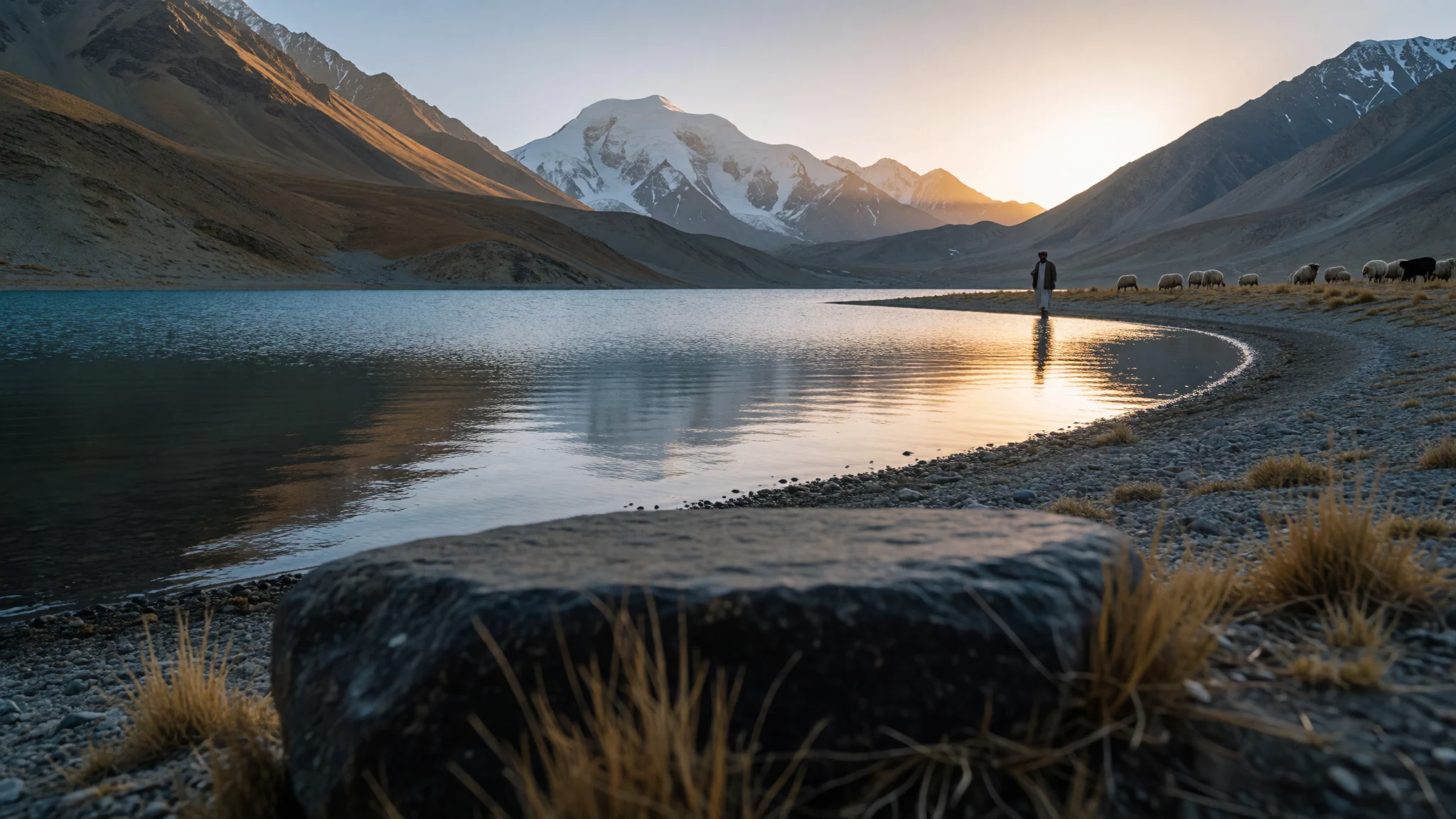
Zorkul is a remote border lake high in the Pamirs, where Afghanistan meets Tajikistan and one of the Amu Darya's headwaters begins.
The place
Zorkul sits at 4130 metres in the Pamir Mountains, a long, narrow lake that doubles as a border. Afghanistan's Wakhan District lies along one side and Tajikistan's Gorno-Badakhshan region along the other. The water stretches about 25 km from east to west, and the frontier follows it before bending south towards the glaciated mass of Concord Peak. Both countries have protected the setting: Wakhan National Park covers the Afghan bank, Tajik National Park the opposite one, and the northern shore falls within the Zorkul Nature Reserve. The Great Pamir range rises to the south. At the western end the lake empties into the Pamir River, which carries the border downstream and counts as one of the sources of the Amu Darya. The landscape is treeless high steppe and bare slopes, with thin air, long hard winters and a short season when the ice has gone. Settlement is sparse, and the silence and distance are much of the point. Reaching it is a serious undertaking, not a casual excursion. Afghanistan is under strong advice against non-essential travel, foreign visitors there must work through licensed operators or registered guides, and border rules can change at short notice. Anyone considering the region needs current official advice and a realistic view of risk. Most photographs of the lake are taken from the Tajik shore, which is where the reference view of the western end was shot.
Its story
Zorkul has been known to outsiders for centuries because the Silk Road ran close by. Chinese records called it the Great Dragon Pool, a name that hints at how remote and weighty the lake seemed to those who wrote about it. Marco Polo's account probably alludes to it, though the passage is not certain. The first European known to have reached the water was John Wood, a British naval officer, in 1838. Local people called the lake Sir-i-kol. British writers later called it Lake Victoria, after the queen, although Wood himself had declined to give it that name, and the label Lake Victoria in the Pamirs was used for a time to keep it apart from the far larger African lake. Nineteenth-century politics then fixed its modern role. The wider territory had come under Durrani rule in 1750, and in 1895 Russia and the Emirate of Afghanistan agreed that the lake and the river leaving it would form their shared frontier. The settlement also set the area aside as a reserve, kept the soldiers of both empires back from the line, and ruled out permanent communities nearby. That arrangement helps explain why the shores are still so thinly settled. The old dragon name and the Victorian label show how many outsiders have tried to claim a place that mostly belongs to ice, wind and distance.
What to see
- Western end of the lake — Western shore, Tajik side
The western shore is the classic view of Zorkul: a flat sheet of water in a wide, treeless trough, with pale slopes closing in on both sides. Reference photographs were taken from the Tajik side. Light changes quickly here, so early morning and late afternoon give the clearest colour and the least wind on the water.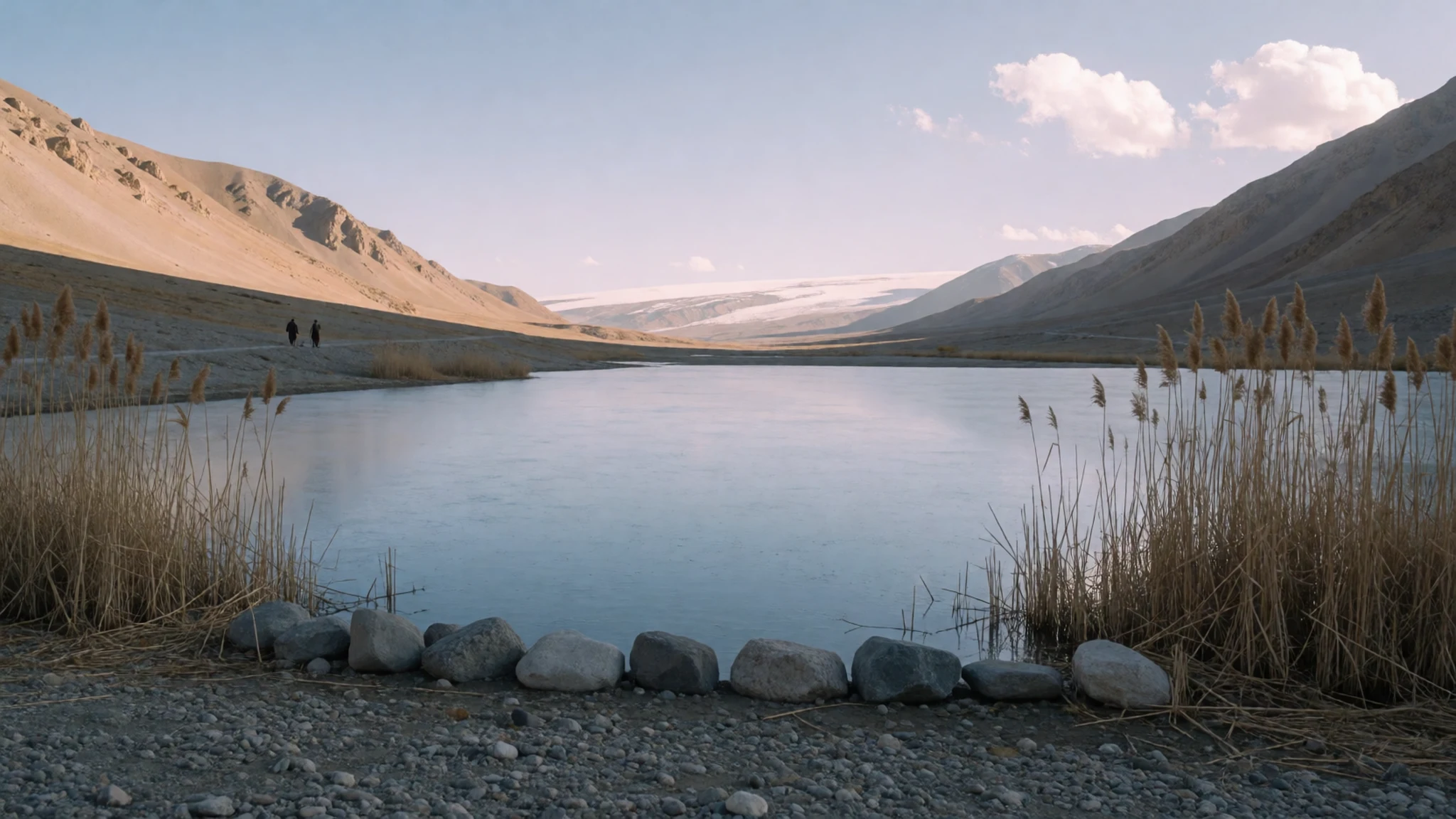
- Source of the Pamir River — Western outflow
Where the lake narrows and spills west, the Pamir River begins its run along the border. Standing here makes the geography easy to grasp: this outflow feeds the Amu Darya system, which carries mountain water far across Central Asia. Expect braided channels, gravel and wet ground, and take care near soft banks.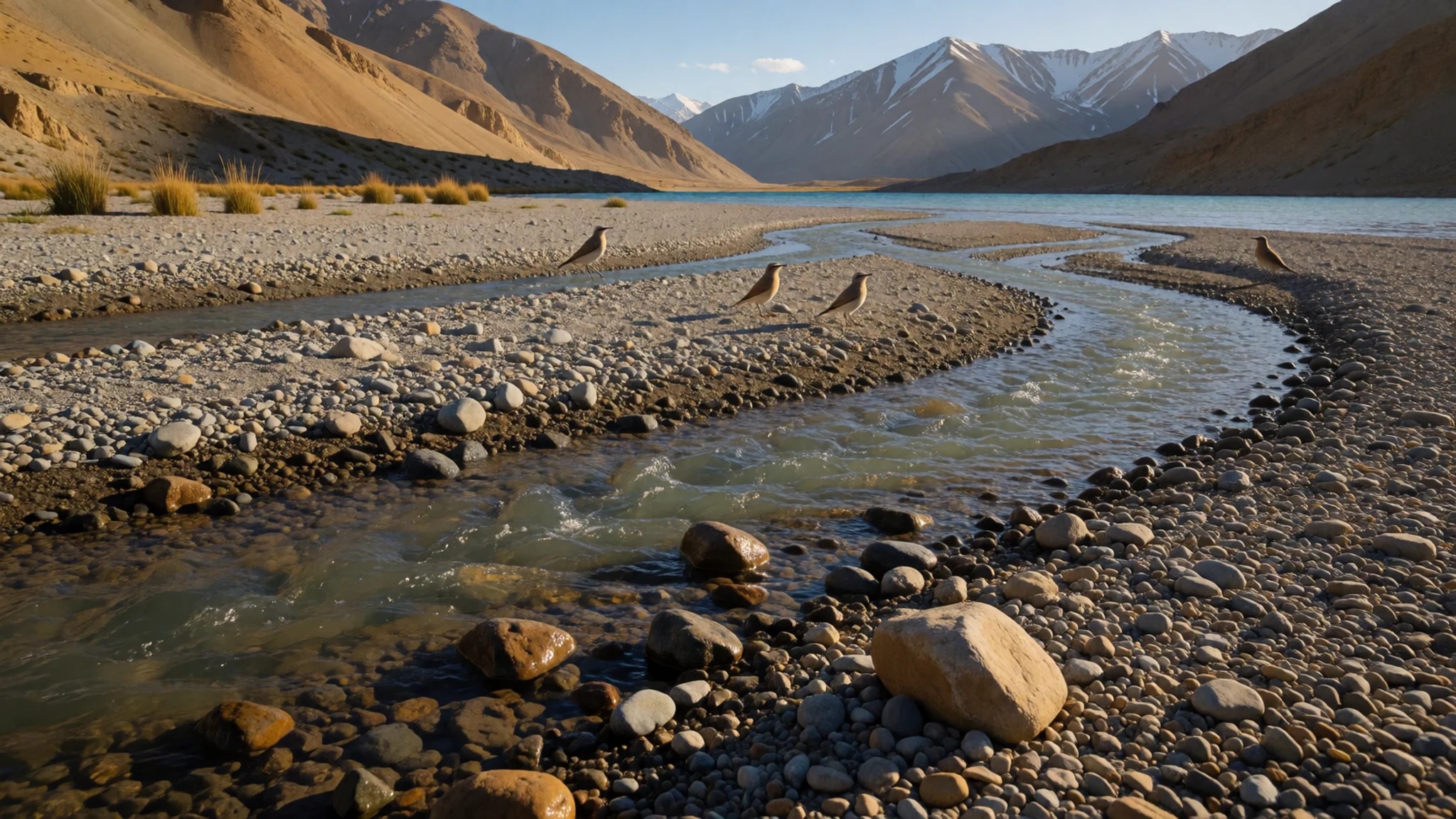
- Zorkul Nature Reserve — Northern shore, Gorno-Badakhshan
The northern shore lies inside a protected reserve, set up to keep the lake and its surroundings quiet. Access depends on permits and local rules that change, so it is best treated as a place to ask about through licensed guides. Wildlife watching is the draw, with patience and binoculars worth more than any itinerary.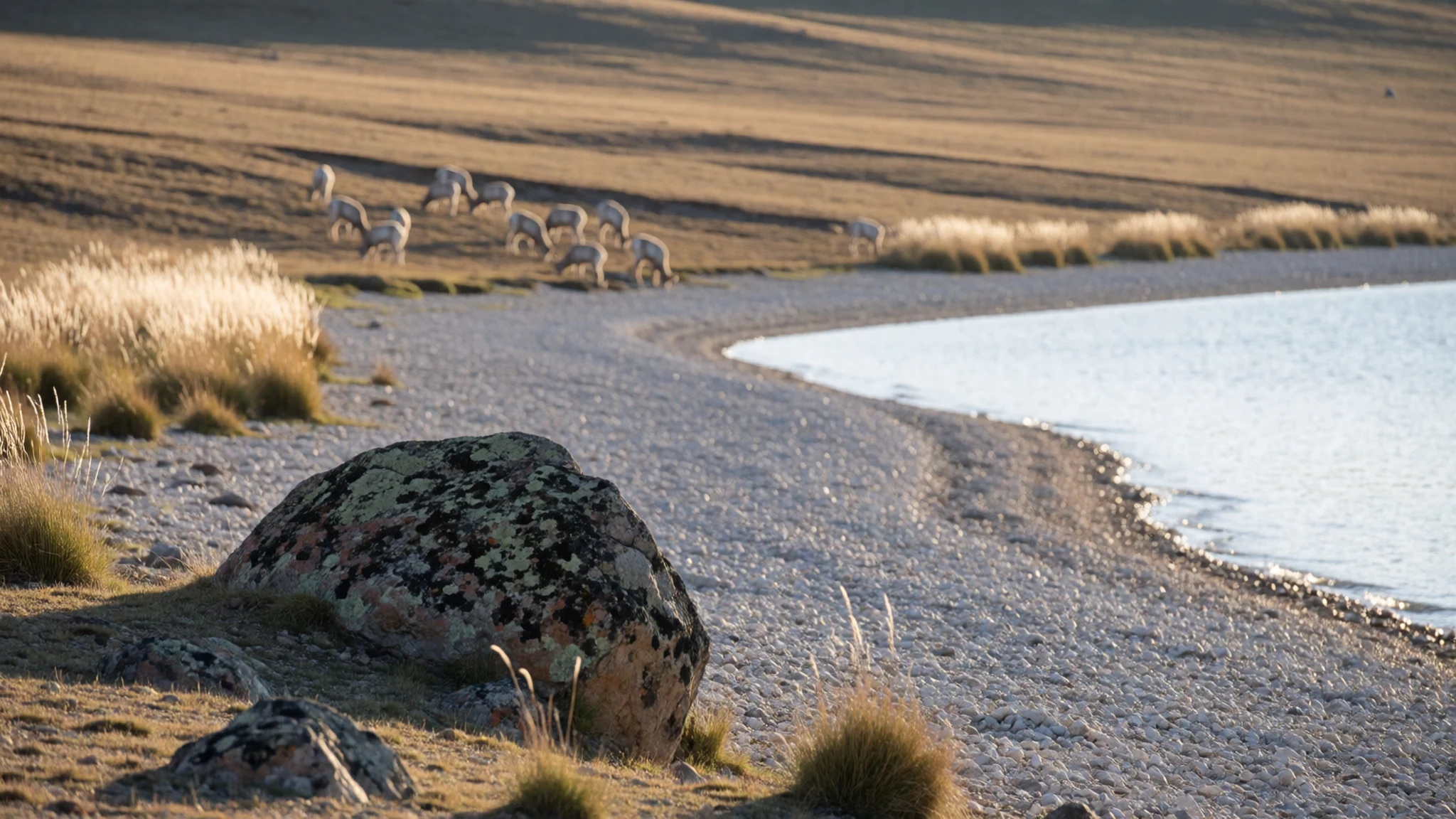
- Great Pamir and Concord Peak — South of the lake, Wakhan District
South of the lake the Great Pamir rises into snow, with Concord Peak the bold landmark on the horizon. These ranges form the Afghan backdrop to the lake and give the border its shape. Clear days are most likely in the warmer months, but cloud can gather quickly over high ground.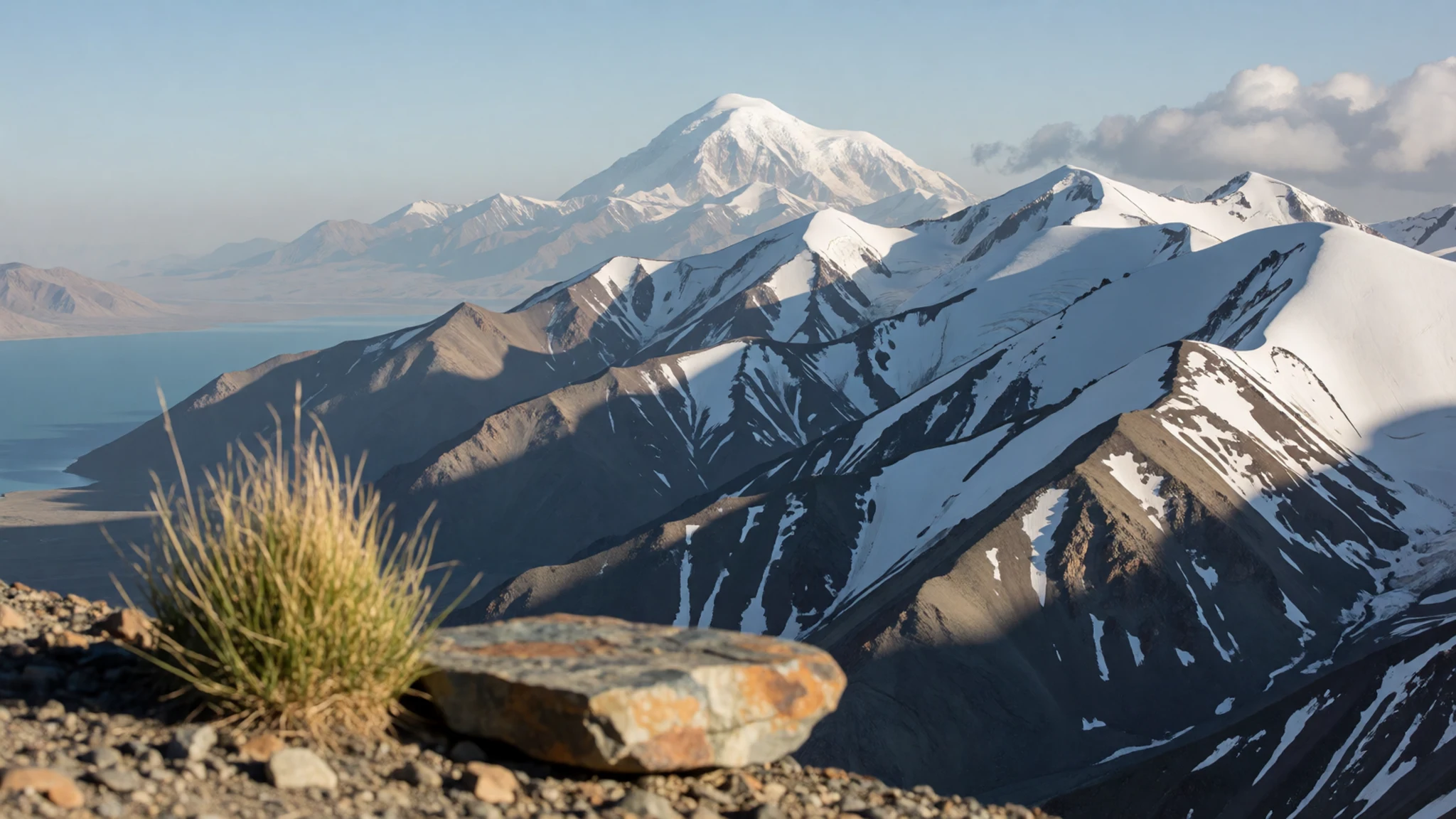
- Gordon's view of Lake Victoria — Historic image of the lake
A nineteenth-century drawing by Thomas Edward Gordon shows the lake as early British visitors saw it, under its old English name. It is useful for comparison: the broad basin and bare surroundings look strikingly familiar today, which says something about how little the shoreline has changed.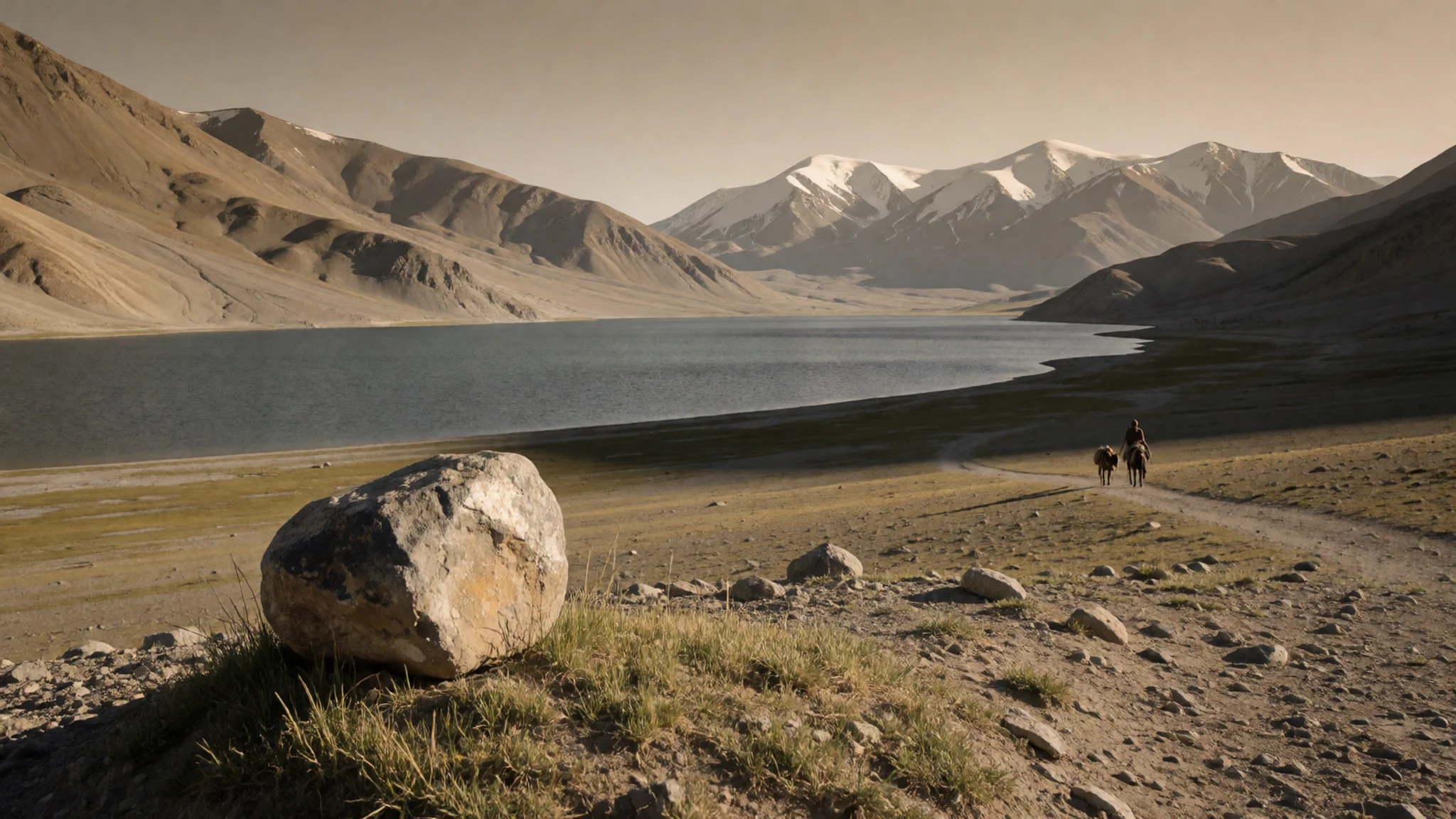
Culture
Zorkul lies where Afghan and Tajik Pamir life meet, in country where people have long moved animals between high pastures and where hospitality counts for more than comfort. Across Afghanistan, welcoming a guest is a point of honour. A visitor invited indoors can expect tea, sweets and bread to be offered again and again, and a flat refusal can wound. Hosts tend to read a clean plate as a sign that more is wanted, while leaving a great deal untouched can suggest the food was not liked, so a steady pace and warm thanks work best. Islam shapes the rhythm of the day, including prayer times and norms of modesty, and in remote valleys these are followed closely. The political context matters too. Since the change of government in 2021, many Afghans, women especially, live with real fear about the future, and people who worked for the former government, foreign organisations, rights groups or the media may be at personal risk. Visitors should avoid pressing anyone about politics, past jobs or family, and should not record or name people who have spoken openly. Guides and hosts are the best source of local guidance, and their advice on where to go and whom to speak to should be followed. Ask before photographing any person, especially a woman, and accept offered tea with your right hand and a word of thanks.
What to wear
Zorkul is too high and remote for fashion in any city sense, so clothing here is governed by cold, wind and sun. Traditional dress across Afghanistan's mountain north-east is the shalwar kameez, loose trousers under a long tunic, in cotton for summer and wool for colder months, often with a waistcoat. Men wear a woollen pakol cap or a turban, and a thick shawl or quilted coat called a chapan over the top when the weather turns. Women wear long, often embroidered dresses with headscarves, and bright stitching on caps and cuffs is a feature of Pamir communities. Today people mix these garments with practical imports: down jackets, fleece, wool hats, rubber boots and trainers. Visitors should dress for altitude and local norms together. At 4130 metres that means thermal base layers, a windproof shell, a warm hat, gloves, sun cream and good sunglasses, because ultraviolet light is strong in thin air. Sturdy, well broken-in boots matter for loose stone and wet ground. Women should carry a headscarf and wear loose long sleeves with long trousers or skirts. Men should avoid shorts and sleeveless tops. Colour need not be sober, but tight or revealing clothes will draw attention and can cause discomfort for hosts.
What to eat
- Naan — Any village or town bakery, and family kitchens
Afghan naan is a long, oval flatbread, usually a mix of white and wholemeal flour and often scattered with sesame, nigella or poppy seeds. It comes warm from the oven and is eaten with every meal, torn by hand and used to scoop up stews.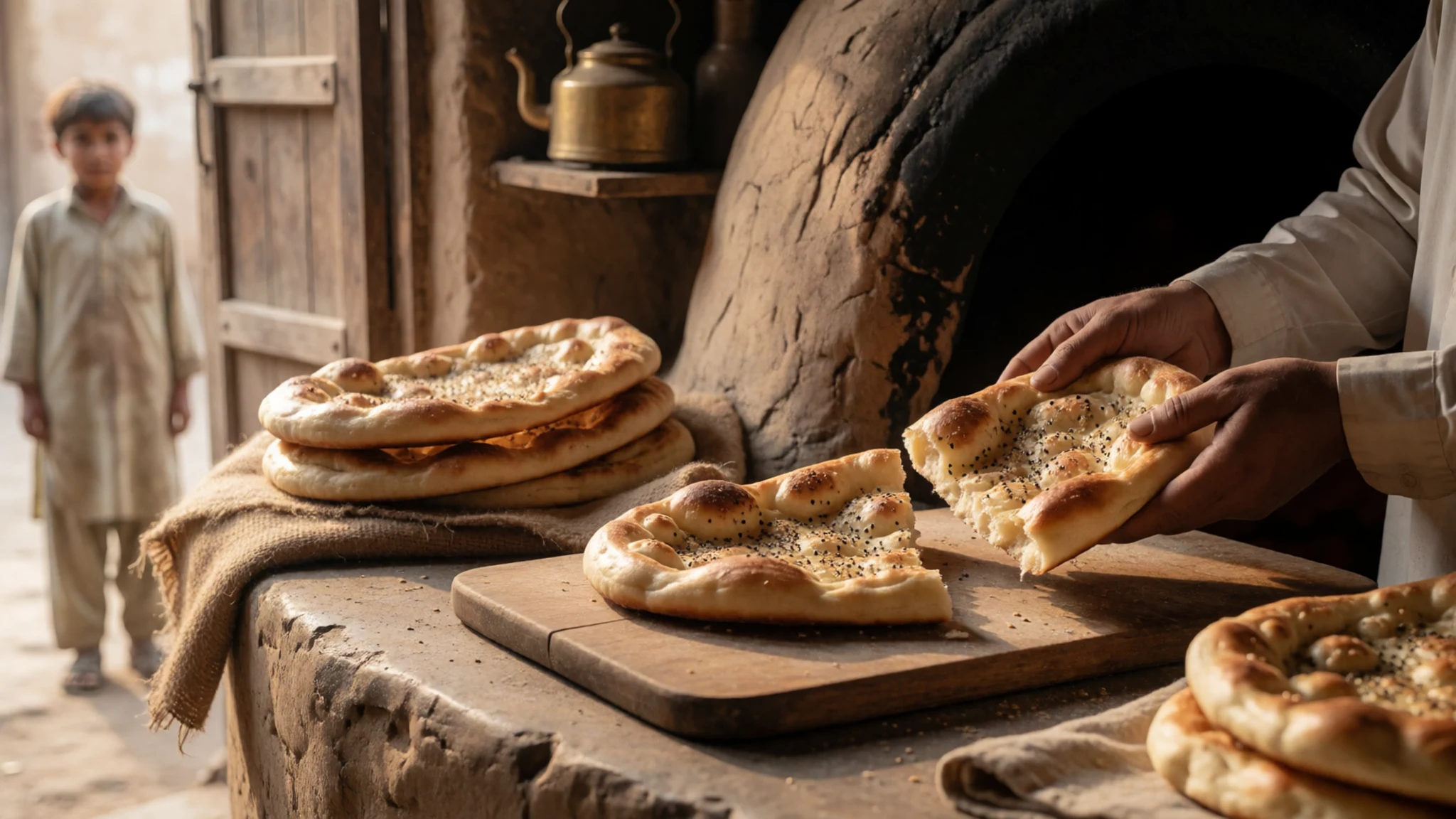
- Obi non — Bakeries and bread stalls in larger towns
Obi non is an Uzbek-style round bread, thicker than naan and usually made with white flour. It has a soft crumb and a firm crust, and it travels well, which makes it handy for long journeys across the high country.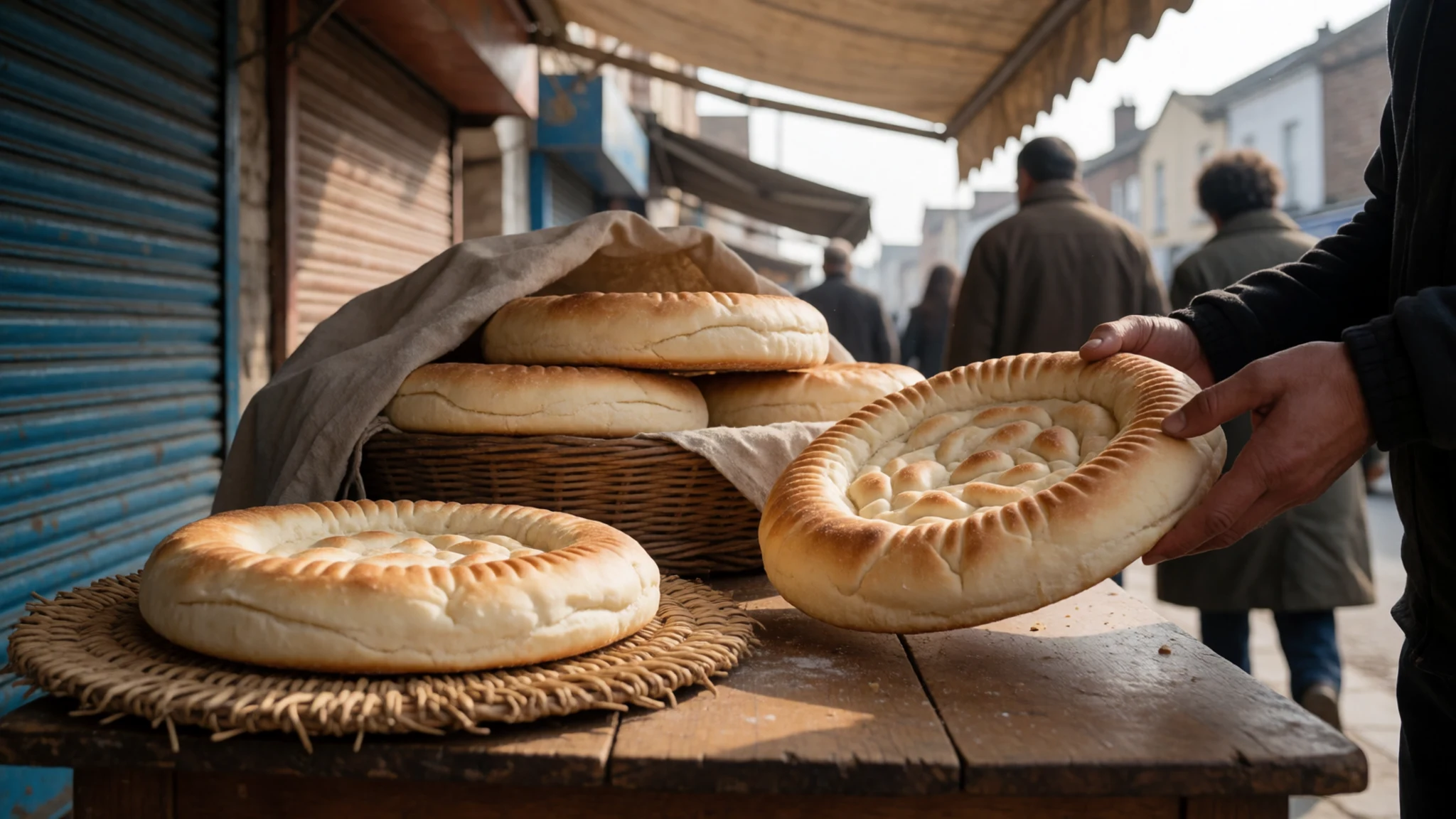
- Lavash — Roadside eateries and kebab stalls
Lavash is a very thin bread that doubles as a plate. Cooked meats and stews are laid on top, and the bread soaks up the juices, so it is eaten at the end of the meal rather than discarded. - Kabuli pulao — Family homes, weddings and larger town eateries
Rice is the centrepiece of Afghan eating, and kabuli pulao is the classic: steamed rice with lamb, lentils and raisins, topped with fried carrot strips and sometimes chopped pistachios or almonds. It is the dish most often served to guests. - Chai with sweets — Any home, tea stall or roadside rest stop
Tea is the first thing offered to any visitor, usually served green or black in small glasses, with sugared almonds, dried fruit or sweets alongside. In cold mountain country it is both a courtesy and a practical way to warm up.
Plan it
Best time. July to September, when the ice has retreated and the high passes are most likely to be open. Winters at this altitude are long, hard and cold, so the lake is not a cold-season destination.
How long. 5–7
Getting there. On the Afghan side, the eVisa route requires entry through Kabul International Airport, followed by a long overland journey east into the Wakhan with a licensed operator. On the Tajik side, travellers usually work from Dushanbe or Khorog along Pamir roads. Check current permit and border-zone rules for either approach.
Budget. high
Tips
- Read current government travel advice first: Afghanistan is under strong advice against non-essential travel
- Book through a licensed operator or registered guide, as independent sightseeing is not allowed in Afghanistan
- Allow days to acclimatise, because the lake sits at 4130 metres and altitude sickness is a real risk
- Border crossings can close at short notice, so keep the schedule flexible and carry cash in small notes
Etiquette
- Accept hospitality graciously and do not refuse offered tea or food outright
- Ask before photographing people, especially women
- Dress modestly, with arms and legs covered
Nearby
Sources
- Wikidata Q226748 (CC0)
- Wikipedia: Zorkul (rev 1366937242) (CC BY-SA 4.0)
- Wikivoyage: Afghanistan (rev 5425291) (CC BY-SA 4.0)
- Photo: Lake Zorkul, Tleonardi (CC BY-SA 4.0)
- Photo: Thomas Edward Gordon, Lake Victoria, Great Pamir (Public domain)

